Tag: asia

  • Ikea teams with Asus to launch furniture for gamers

    Ikea teams with Asus to launch furniture for gamers

    KEA announced a partnership with ASUS Republic of Gamers in September 2020, and the fruits of that team-up are now appearing, right on schedule.

    As expected there is a wave of products releasing for customers in China, ahead of an expected launch for Western markets in around October of this year.

    The range includes everything from gaming chairs and adjustable desks, the sort of furniture you might expect, alongside even more gaming-focused accessories like headset stands, a ring light for streamers, a CPU stand with its own castors, and more.

    It’s an impressive list of options, but the most exciting part of it, as was expected, are the prices, which trend low. The MATCHSPEL gaming chair, for example, is set at ¥999.00, which converts to around £112, a price that beggars belief compared to what some on the market are asking for.

    Best PS5 games 2021: Amazing PlayStation 5 titles to pick up By Max Freeman-Mills: 5 February 2021

    There are desks specifically aimed at gamers that cost even less, and that’s before you get to the likes of the accessories, which are all slapped with low price tags too.

    That makes the line an exciting prospect, given that we know that it’s planned for a more global expansion later this year. You can view the whole range on Ikea’s Chinese website here, for now, to get a sense of what it looks like, although we don’t know which exact products will make the leap, or whether they all will.

  • Ford Says It Will Nearly Double Electric Auto Investment

    Ford Says It Will Nearly Double Electric Auto Investment

    Ford announced Thursday it is accelerating its investment in electric cars, but cautioned that the industry-wide shortage of semiconductors would pinch profits in 2021. The US auto giant, released fourth-quarter and annual results and said it plans $22 billion in electric car investment through 2025, nearly twice the earlier plan. The announcement is the latest big bet on electric autos by a legacy automaker in the wake of upstart Tesla’s growth and in anticipation of Biden administration initiatives to encourage emission-free vehicles.

    Last week, Ford’s rival General Motors set a target of having most of its fleet emissions-free by 2035. But Ford said annual operating profits could be dented by $1 to $2.5 billion due to lost auto sales connected to the semiconductor shortage.

    Earlier Thursday, Ford said it was trimming output of its F-150 because of the supply issue, following on the heels of other automakers, including GM that announced Tuesday it was shutting productions at three plants, and slashing output in half at another due to chip supply.

    Ford said it was trimming the output of its F-150 because of the supply issue, following on the heels of other automakers.

    “The semiconductor situation is changing constantly, so it’s premature to try to size what availability will mean for our full-year performance,” said Chief Financial Officer John Lawler.

    “Right now, estimates from suppliers could suggest losing 10 to 20 percent of our planned first-quarter production.”

    Ford reported a fourth-quarter loss of $2.8 billion, compared with a loss of $1.7 billion in the year-ago period.

    Revenues fell 9.3 percent to $36 billion.

  • McLaren Artura To Make World Debut On February 16

    McLaren Artura To Make World Debut On February 16

    McLaren Automotive will bring the full force of its expertise in hybrid powertrain engineering with the introduction of the new Artura. The company revealed its plans to bring the new high-performance hybrid car last year and now it’s closing in on its world debut. The company has revealed that the Artura hybrid supercar will make its world debut on February 16.

    The Artura marks the beginning of a new era for the pioneering British company. Building on the expertise in electrification first showcased in the McLaren P1 hybrid hypercar unveiled in 2012 and more recently the Speedtail Hyper-GT, which entered production this year as McLaren’s fastest ever car with a top speed of 403 kmph, the Artura is McLaren’s first High-Performance Hybrid series-production supercar.

    The new Artura marks the debut of an all-new compact twin-turbocharged V6 petrol engine, designed to combine with an electric motor in a new lightweight hybrid powertrain that retains the performance benefits of McLaren’s larger capacity V8 engines and has the additional attraction of improved torque response at low engine speeds to deliver scintillating acceleration. The Artura can also run on electric power alone for everyday emission-free urban journeys.

    The first car to be built on an all-new, platform architecture optimized for electrification and designed and manufactured in the UK at the McLaren Composites Technology Centre, the Artura furthers McLaren’s commitment to super-lightweight engineering principles that have their roots in motorsport. The additional mass of the High-Performance Hybrid system, for example, has been largely offset by the application of weight-saving technologies throughout the chassis, body and powertrain.

    Additionally, the McLaren Carbon Lightweight Architecture (MCLA) at the heart of the Artura not only enables the car’s class-leading weight advantage, it is also the base for the dynamic excellence inherent in every McLaren.

  • Cleaner UI is being tested for Google Maps

    Cleaner UI is being tested for Google Maps

    Google Maps does a lot more than get you safely from point “A” to point “B” on time. It also tells you where you can find restaurants that serve certain food in the city that you’re visiting, where you can find some entertainment nearby and more. The bottom line? Google Maps provides those on the go with very important information that they need to get through the day.

    Google is testing a new look for the Google Maps app that replaces the white bar now found on the top of the route option screen with the user’s starting location and his destination. Icons resembling the different modes of transportation such as driving, public transportation, walking, biking, and others are now gone from the destination box.

    These options are now found in a scrollable list moved to the bottom half of the display. Each mode of transportation shows how users how long it will take them to reach their destination using that mode. A “Depart at” button allows the user to set a specific time to start a journey, and an “Options” button will likely offer users routes to avoid highways, tolls, and more.

    The new UI makes it easier for Google Maps users to see the difference in transportation time for their route depending on the mode of transportation being used. The new route option interface is currently being tested so don’t waste too much time wondering why you don’t see it yet on your phone. Google, as we told you recently, is testing a split-screen interface for Maps’ Street View navigation.

    If for some reason you don’t have Google Maps on your phone, you can tap the appropriate link to install the app from the Apple App Store or the Google Play Store.

  • DHL Global Forwarding Asia Pacific recognized as Certified Top Employer 2021 second time in a row

    DHL Global Forwarding Asia Pacific recognized as Certified Top Employer 2021 second time in a row

    DHL Global Forwarding, the air and ocean freight specialist of Deutsche Post DHL Group, was recognized as Top Employer for 2021 in Asia Pacific. The certification attests to DHL’s achievement in implementing HR best practices, focused on fostering a positive work environment and encouraging its employees’ personal and professional development. In addition to being certified Top Employer 2021 in Asia Pacific, DHL Global Forwarding was also once again named Top Employer globally and in 34 countries, including India, Indonesia, Malaysia, Philippines and Thailand. The Top Employers Institute Global Certification Program annually certifies and recognizes companies in participating countries who demonstrate excellence in people practices.

    During the pandemic, Deutsche Post DHL Group’s purpose of “Connecting people. Improving lives” proved more pertinent than ever. Employees kept the network running 24/7 to ensure a steady supply of Life Sciences & Healthcare necessities further highlighted the commitment and importance of each individual at DHL Global Forwarding and the rest of the Group.

    “With more than half a million employees across the globe, Deutsche Post DHL Group counts our people as our greatest asset. By ensuring that our superstars are happy at work and fired up to give their best each day, we are creating a virtuous cycle that feeds into great business outcomes. We are delighted that the Top Employers Institute has recognized DHL Global Forwarding Asia Pacific’s people-first strategy with the Top Employer 2021 award,” said Kelvin Leung, CEO, DHL Global Forwarding Asia Pacific.

    The Top Employers Institute program certifies organizations based on the participation and results of their HR Best Practices Survey. This survey covers six HR domains consisting of 20 topics such as People Strategy, Work Environment, Talent Acquisition, Learning, Well-being and Diversity & Inclusion and more. In total, the program has certified more than 1,600 Top Employers in 120 countries/regions across five continents.

    “Receiving the Top Employer award again this year has revalidated that our human resource strategy for DHL Global Forwarding Asia Pacific is on the right path. However, we are not resting on our laurels and we are continuously innovating to stay ahead of the evolving needs of our people, our business and the environment that we are operating in,” said Celine Quek, Vice President and Head of Human Resources, DHL Global Forwarding Asia Pacific.

    At DHL Global Forwarding, training opportunities and talent development programs are consistently reviewed and benchmarked against industry requirements. All employees go through a mandatory DHL Certified International Forwarder (CIF) program upon induction to ensure that they adhere to the same global standards as colleagues in the global network, abiding by the strictest code of conduct and business principles. In its fifth year, the CIF is a key initiative with a portfolio of culture and capability enhancing programs that support DHL Global Forwarding growth strategy.

    Further, DHL Global Forwarding started initiatives to promote diversity and inclusion in the company, such as “Women at DHL Global Forwarding, Freight”, which enables more women to fill leadership roles. The initiative aims to promote a cultural mindset with a keen focus on equal opportunities by offering work arrangements, transparency, and career support.

    Another initiative, “Well-being at DHL Global Forwarding, Freight” engages employees  by examining how employees’ tasks, expectations, stress levels and working environments affect their overall health and happiness. Especially in challenging times, such as when a global pandemic is affecting nearly every aspect of life, a pulse check and active management of employees’ well-being are crucial. The organization encourages employees to boost their “well-being” in three ways: Be Social, Be Present, Be Active.

    Top Employers Institute CEO David Plink says: “Despite the challenging year we have experienced, DHL Global Forwarding has continued to demonstrate the power of putting their people first in the workplace. We are proud to share this year’s announcement and congratulate the organizations who have been certified in their respective countries through the Top Employers Institute program.


  • AirAsia ‘super app’ to help struggling airline rebound from pandemic

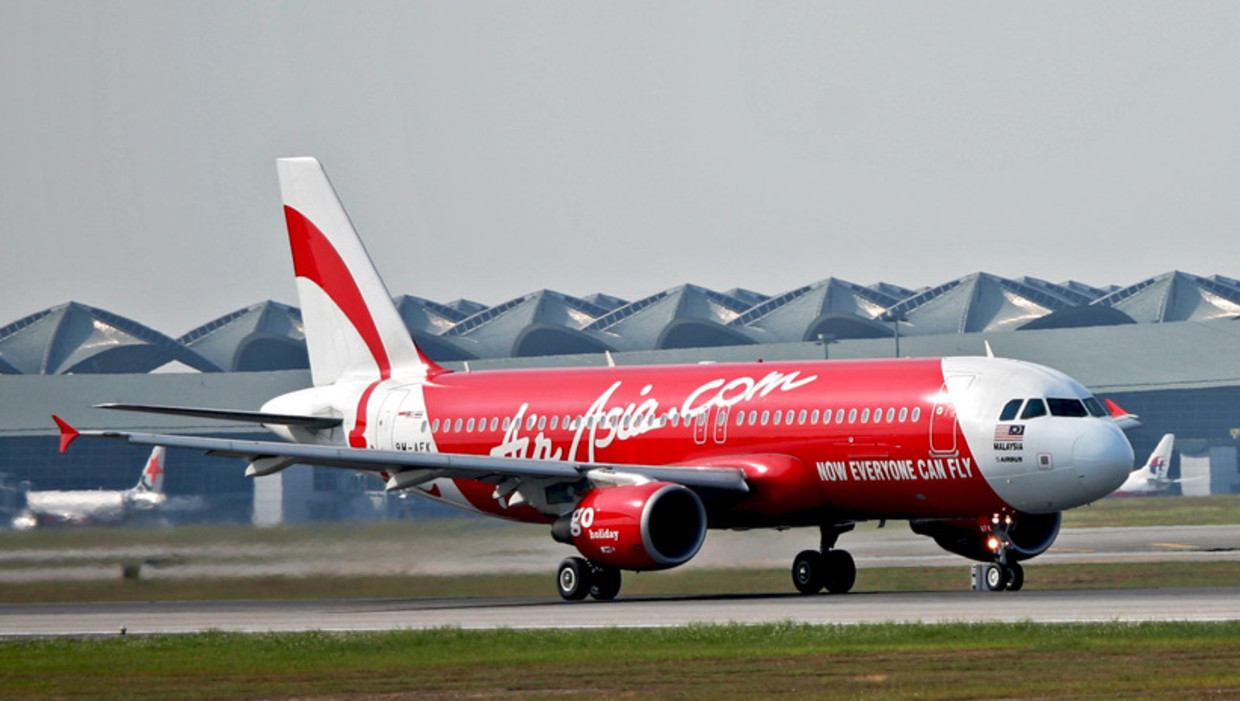
    AirAsia ‘super app’ to help struggling airline rebound from pandemic

    AirAsia Group Bhd chief executive officer, Tan Sri Tony Fernandes, said the global pandemic and country lockdowns that ensued last year served as a great opportunity for the company to work on growing its “super app”.

    The group’s website airasia.com has already been providing airline and travel-related services. However, in October last year, it unveiled the rebranding of the “super app”, combining 15 types of products and services under three pillars — travel, e-commerce and fintech.

    According to Japan’s NHK World’s interview with Fernandes recently, the app now has 16 million users a month.

    He said the airline is in a good position to succeed given its growing know-your-customer (KYC) data and wants a non-airline business to rival his airline business in a few years’ time.

    “One of the greatest assets of an airline is data. It’s KYC. It’s passport information. We have ID information. We have strong loyalty card information. People who fly have a bit more money, so there is also credit card information.

    “If you take a Grab or a GoJet, they are generally transacting at a lower value, they may not have as much information as we do over the last 19 years. So knowing what you want, we can personalize a lot of things and I think that’s one of our advantages,” he said in the video interview dated Feb 1.

    The airline industry has been hit the hardest in the wake of the Covid-19 pandemic as many flights are forced to be halted and plane fleet temporarily grounded, plummeting business performance and forcing many to be out of job.

    Fernandes said his aim is for the airline to continue attracting customers at a low price while making money, and then take the opportunity to sell other things digitally to the customers. He added that he hopes to hire back all the staff that had to be let go during the pandemic.

    The budget airline saw its worst quarter during the second quarter of last year at the peak of lockdown measures in Malaysia and around the region, as revenue dipped 96% to RM118.96 million as of June 30, 2020 compared with RM2.92 billion in the previous year while it registered a net loss of RM992.8 million versus a net profit of RM17.3 million a year earlier.

  • Fighting Amazon over retail deal, India’s Future says staring at insolvency, hit to bank loans

    Fighting Amazon over retail deal, India’s Future says staring at insolvency, hit to bank loans

    If India’s Future Group cannot sell assets, $4 billion in bank loans and debentures will be at risk, pushing its retail unit into insolvency, the company said in a court filing on Wednesday against Amazon.com Inc, which wants to block the sale.

    A court in New Delhi blocked Future Group’s sale of retail assets to Reliance Industries on Tuesday after Amazon raised objections to the deal.

    The corporate battle has embroiled sprawling businesses led by two of the world’s richest men: Amazon’s Jeff Bezos and Reliance’s Mukesh Ambani.

    Amazon had argued that Future breached contracts by selling retail assets to Reliance. The court sided with the U.S. firm, saying an earlier order from an arbitrator that put the Future-Reliance deal on hold was valid.

    Future – which had argued the arbitrator’s order was not binding – on Wednesday filed a challenge against the court’s ruling, saying the company’s creditors would be at “significant risk” if the Reliance deal fails.

    Other than an estimated 300 billion rupees ($4.1 billion) hit to bank loans and debentures, the deal’s failure would also impact livelihoods of 50,000 employees and 6,000 small- and medium-sized vendors, it said.

    “It is inevitable that FRL (Future Retail) will go into liquidation … The magnitude of damage that may be caused to the public at large is unimaginable,” Future said the court filing, seen by Reuters.

    The appeal is set to be heard on Thursday before a bigger two-judge bench in New Delhi.

    Future, India’s second-largest retailer with more than 1,700 stores, and Amazon did not respond to a request for comment.

    Shares of Future Retail dropped 5% in early trading on Wednesday. Reliance Industries fell as much as 1.2%, but recovered later.

    The Delhi court on Tuesday asked Indian authorities to maintain status quo on the transaction, effectively putting the Future-Reliance deal on hold.

    Indian stock exchanges and the country’s antitrust watchdog had already cleared the deal, though it was awaiting approval from a law tribunal.

    Future in its appeal said Tuesday’s Delhi court order “rendered stillborn” the approvals.

    “The sole and sheer intent” of Amazon was to prevent Reliance – which is also venturing into e-commerce – from acquiring Future’s assets, the Indian firm argued in the filing.

    Amazon, which had its sights set on ultimately owning part of Future’s retail assets itself, has argued a 2019 deal it had with a unit of Future contained clauses prohibiting the Indian group from selling them to anyone on a “restricted persons” list, including Reliance.

  • Pizza Hut, KFC sales shrink in China as Covid-19 locks restaurants out

    Pizza Hut, KFC sales shrink in China as Covid-19 locks restaurants out

    Running restaurants in China is tough when a big part of the population stays home to avoid catching the coronavirus.

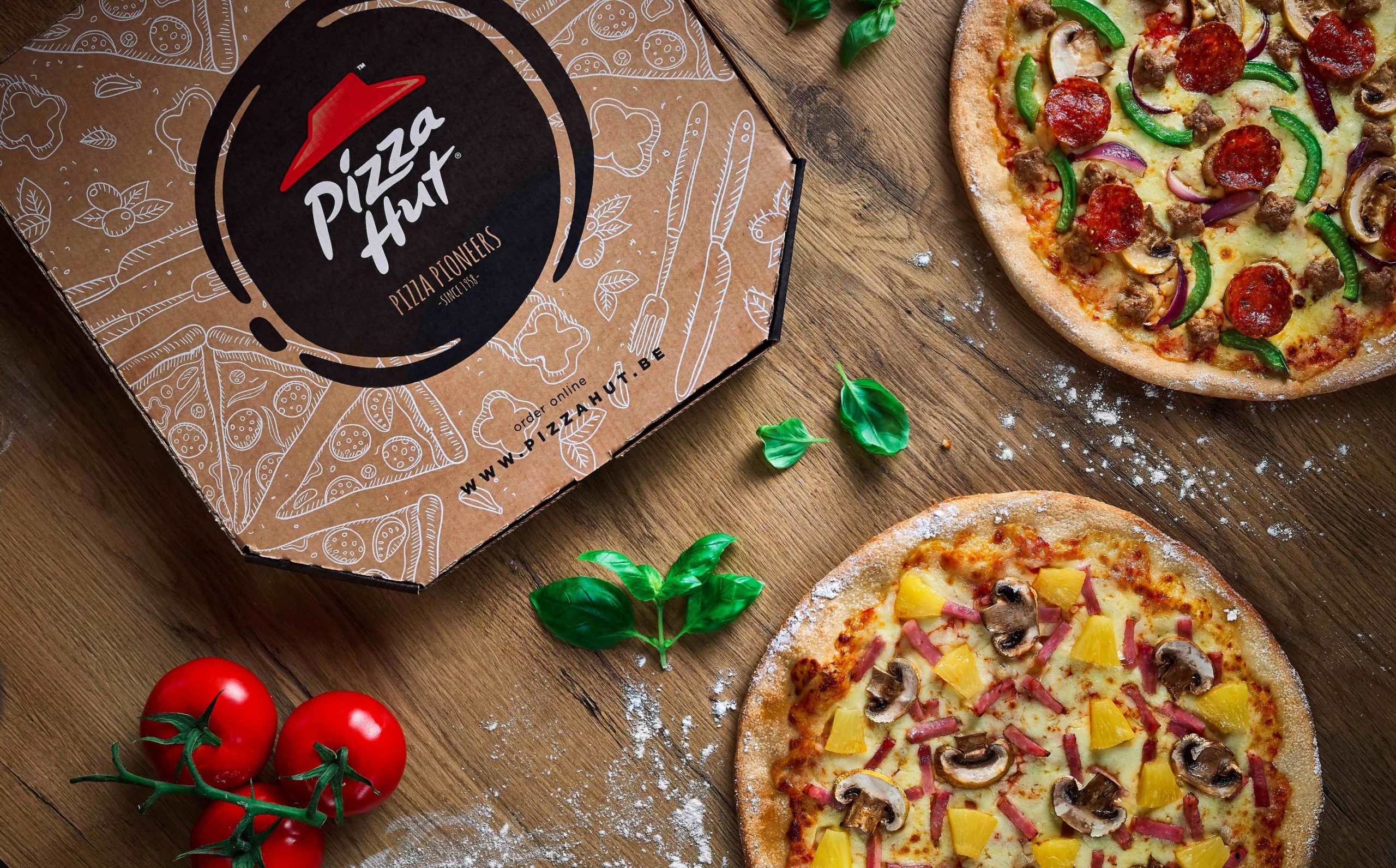
    Yum China , operator of KFC and Pizza Hut in the country, gave a glimpse of the current predicament in results posted after the U.S. close Wednesday. It has temporarily closed more than 30% of its restaurants in China, and business has been bad even for the ones that remain open. Sales during the Lunar New Year holiday were down 40%-50% compared with last year, excluding newly opened outlets.

    The company, which was spun off from Yum Brands in 2016, said it may report operating losses for this quarter—and even for the full year if the trend continues. Yum China’s New York-listed shares fell 3% in after-hours trading.

    KFC and Pizza Hut aren’t the only chains that have had to shut restaurants because of the outbreak, which has infected nearly 30,000 and killed more than 500 so far. Starbucks and McDonald’s have also temporarily closed some of their outlets in China. The former, in particular, could get hurt as customers opt to stay at home instead of chilling out in its coffee shops.

    Yum China could soften the blow with its delivery business, which accounted for nearly a quarter of its revenue last quarter. It said it would also try to reduce its costs. Some of these—food, labor, advertising and rent—are variable, but the company will still incur substantial fixed costs through the closure period.

  • HSBC Considers Relocation of Top Execs

    HSBC Considers Relocation of Top Execs

    The bank is reportedly considering moving a number of its top executives to Hong Kong or Singapore to strengthen its push in Asia.

    Among the relocations being considered are the two co-heads of its investment bank, Greg Guyett and Georges Elhedery, who are currently located in London, reported on Thursday.

    The move of its top decision-makers to Asia, where the bank makes most of its money, comes almost a year into its restructuring under chief executive Noel Quinn. The bank is preparing to announce the outcome of a strategic review later this month.

    HSBC has been undergoing an overhaul to focus on fee-generating businesses and reducing its operating costs. The bank has also said it intends to increase its rate of investment in Asia, particularly in wealth, the Greater Bay Area, South Asia, trade finance, and sustainable finance while scaling back investments in Europe and the U.S.

    Earlier this week, HSBC has internally appointed Daniel Chan, its current Hong Kong business and commercial banking head, to lead the bank’s new Greater Bay Area office, located in Guangdong.

  • Valiram names new regional executive team

    Valiram names new regional executive team

    Premium retailer Valiram has announced a series of executive appointments across the group, including regional outposts in Thailand and Indonesia.

    Linda Lim is named Country General Manager, Thailand, while Kunal Kapoor has been appointed Country General Manager, Indonesia. Warodom Pranbunpook takes on the role of General Manager of the retail group’s sports division.

    As reported, former DFS Group Global Fashion Operations Director Jason Blejwas recently joined Valiram as group-level Senior Vice President Merchandising and Planning.

    Valiram said the appointments would steer its business to new heights amid challenging times.

    Valiram Chief Executive Officer Ian Lim commented: “Valiram has always been committed to creating exceptional experiences for our customers throughout our businesses across the region, and we believe that these individuals will continue to uphold that commitment and drive success in their respective divisions and markets.”

    Linda Lim has experience in luxury retail in both local market and travel retail formats. She was instrumental in the growth of the Kate Spade New York brand in Malaysia, Singapore, Indonesia, Australia, and Vietnam, overseeing the launch and operations of 30 stores.

    Her experience in Valiram’s travel retail division includes managing the beauty and fragrances category as well as fashion brands Dunhill, Coach, Hugo Boss and Polo Ralph Lauren in Kuala Lumpur International Airport in Malaysia and Resorts World Sentosa, Singapore.

    Kapoor has over 15 years in luxury and fashion retail, including management experience in the Middle East.

    He joined Valiram in December 2019 as General Manager of the group’s travel retail division.

    Pranbunpook has 19 years of experience in management of leading global brands in Thailand and Southeast Asia. Prior to joining Valiram, he was ASICS Country General Manager Thailand.

    As General Manager of Sports, he will oversee the expansion and development of the sports division, which, according to Valiram, has been on a growth trajectory since its launch in May 2020, with the opening of Thailand’s largest Nike store.

  • Instagram working on TikTok-like vertical Stories feed

    Instagram working on TikTok-like vertical Stories feed

    Instagram borrowed the short-form video format from TikTok and rebranded it as Reels. Now, the Facebook-owned platform is looking to clone another one of TikTok’s ideas.

    The social media giant has announced that it’s in the process of testing a TikTok-like vertical feed for Instagram Stories, a feature that was rather ironically borrowed from rival Snapchat.

    Alessandro Paluzzi was the first to spot the new feature and his screenshots reveal a fairly simple UI that informs users about the new ability to scroll vertically to view Stories.

    Instagram, which confirmed the feature’s development to TechCrunch, is probably planning to prioritize videos over photos moving forward, hence the updated Stories feed.

    Adam Mosseri, the Head of Instagram, recently implied that Reels and IGTV videos could be merged into a single content format alongside regular videos. After all, most users likely don’t know the difference. This would leave Instagram with a much cleaner and, more importantly, clearer UI for users to navigate.

  • Vietnam Airlines suffers $483 mln loss

    Vietnam Airlines suffers $483 mln loss

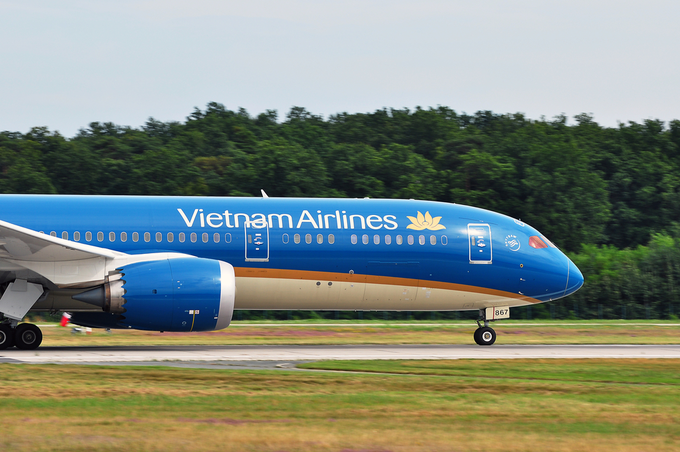
    Vietnam Airlines reported a loss of over VND11.1 trillion ($483 million) last year as the Covid-19 pandemic grounded all its international flights.

    The figure was lower than its projection in December of over VND12 trillion.

    Revenues were down nearly 59 percent to VND40.83 trillion as its total number of flights fell by over 27 percent to 86,978.

    The government recently approved a bailout for the carrier, with the State Bank of Vietnam (SBV) allowed to provide a refinanced loan of up to VND4 trillion at zero interest.

    Vietnam Airlines also received permission to issue more shares to existing shareholders to increase its capital.

    The country’s aviation industry suffered badly last year due to flight restrictions to curb the spread of the novel coronavirus, and the number of air passengers plunged by 41 percent to 32.3 million, according to the General Statistics Office.

  • Growing 5G demand will drive major 2021 smartphone market recovery

    Growing 5G demand will drive major 2021 smartphone market recovery

    The global smartphone market was only one of the major industries to suffer a big and largely unexpected decline in 2020 as a direct consequence of the coronavirus pandemic, but while the COVID-19 threat is projected to linger this year and potentially even beyond that, 2021 should mark the beginning of a beautiful rebound.

    The first signs of an imminent recovery showed up during last year’s third calendar quarter, when shipments were down around the world by a measly four percent compared to the same period of 2019, becoming evident in the final three months of 2020, as the year-on-year sales decline further contracted to one percent according to Counterpoint Research. In contrast, the same market intelligence firm estimated the mobile industry’s Q1 and Q2 slumps at 13 and a record 26 percent respectively.

    Clearly, there’s no way to go but up now that people are slowly regaining their appetite for both mid-range and high-end handsets pretty much in all key regions, and according to a hot new report published by Gartner, worldwide sales could register a healthy total increase of 11 percent in 2021.

    While that’s unlikely to be enough to boost the market to its pre-pandemic levels, this year’s forecasted 1.53 billion units would come incredibly close to the 1.54 billion smartphones sold in 2019. The aforementioned 11 percent growth is expected to be mainly driven by “mature” markets across Western Europe, Asia Pacific, and Latin America on a regional level, as well as rising demand for 5G-enabled devices essentially everywhere.

    Affordable 5G models starting as low as $200 could be particularly successful in 2021, especially in emerging European and Asian countries. Overall, 5G smartphones are likely to exceed 500 million unit sales, accounting for around 35 percent of the entire market. In comparison, 2019 saw less than 20 million 5G-capable handsets reach the hands of their owners, with said number growing to more than 200 million last year.

    Unfortunately, Gartner’s latest report doesn’t go into any detail regarding the prospective evolution of the world’s top mobile device vendors this year, so it’s not entirely clear yet who will drive the 11 percent global hike from that perspective.

  • Standard Chartered Grows CCIB Unit in Singapore

    Standard Chartered Grows CCIB Unit in Singapore

    The bank has made a pair of Singapore-based senior appointments to its Corporate, Commercial and Institutional Banking (CCIB) segment as it increases its focuses on growing this business.

    Former regional head of client coverage, CCIB, ASEAN and South Asia, Chow Wan Thonh, has been named global head of the bank’s Global Industries Group, Standard Chartered announced in a statement on Thursday.

    Chow joined the bank in 2019, bringing with her over 25 years of experience in the banking industry, having held a number of senior leadership roles in international banks supporting corporate and institutional clients.

    At the same time, Heidi Toribio, who joined the bank in 2013, will replace Chow as Asia co-head of client coverage. She was most recently the bank’s global head of financial institutions. Toribio counts 25 years of banking experience, having previously worked at international banks in a variety of management positions.

    Standard Chartered said the pair have played a key role in accelerating the growth of its CCIB business in Singapore and globally.

    Paul Skelton, Global Head of Client Coverage in CCIB, said in the announcement that corporates’ financing needs are rapidly evolving, as businesses navigate uncertainties while seeking new growth opportunities

  • Facebook appears to be using misleading data to attack Apple’s new privacy feature

    Facebook appears to be using misleading data to attack Apple’s new privacy feature

    Starting with iOS 14.5, iPhone users will be asked to decide whether they want to opt-in to getting tricked by third-party apps. Allowing the trackers to do their thing means that when users do make a purchase online or merely visit an online store, they will get inundated with ads for related products on their phones and tablets. Facebook, which generated nearly $85 billion in ad revenue during the fourth quarter of last year, says that its advertising business could shrink by as much as 50% because of Apple’s new feature. The social media network also claims to be concerned for small businesses that will be hurt if most iOS users, as expected, decide not to allow themselves to be tracked.

    Facebook has been giving evidence of the damage that Apple could do to small businesses by citing certain examples. However, a pair of marketing professionals have written a piece in the Harvard Business Review claiming that this so-called evidence uses figures that have been “overstated,” “cherry-picked,” “misleading,” and are part of a disinformation campaign.”

    For example, Facebook claimed in a full-page newspaper ad that “Without personalized ads, Facebook data shows that the average small business advertiser stands to see a cut of over 60% in their sales for every dollar they spend on ads.” However, as marketing pros Bart de Langhe and Stefano Puntoni wrote in the Harvard Business Review, this data is misleading because Facebook bases the data on a metric known as ROAS or return on ad spend. The information this provides is the amount of revenues associated by advertising as opposed to the amount of revenue caused by advertising.

    If certain consumers were going to make purchases anyway, their spending is not caused by the advertising and the resulting decline would be less than 60%. As the two marketing pros wrote, “The problem with the 60% figure is that Facebook doesn’t report anything about the two kinds of campaigns it was comparing. For all we know, they might involve different industries, different companies, different products, different times, different places — and if they did, then Facebook’s comparison wouldn’t mean much. In fact, it might just show that companies who knew their customers well achieved a higher return on advertising spend than companies that didn’t.”

    Besides the above example, Facebook also incorrectly repeated certain figures. For example, Facebook posted on its website and in its ads that “Forty-four percent of small to medium businesses started or increased their usage of personalized ads on social media during the pandemic, according to a new Deloitte study.” But that figure was misleading; the authors looked at Deloitte’s numbers which included the percentage increase in targeted advertising on social media for companies in nine industries. Telecom and Technologies had the largest increase at 34%. Facebook’s figure of 44% was not only overstated, the industry that Facebook chose to use was the one best suited to fit its argument.

    Let’s examine this again. Facebook said, “Forty-four percent of small to medium businesses started or increased their usage of personalized ads on social media during the pandemic.” If you read this without double-checking the figure, you’d believe that Apple’s new opt-in policy on targeted ads was affecting as much as 44% of small and mid-sized businesses. However, as noted above, the largest industry increasing its targeted advertising during the pandemic was Telecom and Technologies with a 34% hike. As de Langhe and Puntoni wrote, “Facebook, it seems, cherry-picked the data that best supported its case, and then increased the size of the cherries it picked by a third.”

    The authors say that they are not trying to dismiss the concerns that small businesses have over Apple’s new privacy policy. However, “Under Apple’s new plan, companies will have to explain their data-collection practices when submitting new apps or making updates, and many users won’t give permission to have their behavior tracked online. Facebook says it wants to stand up for small businesses in the face of these changes, which it is perfectly entitled to do. But disinformation about advertising effectiveness isn’t the way to do that.”