Apps for creating short musical, visual, attention-grabbing clips have been all the rage these years. We’ve been through viral platforms such as Vine, Musical.ly, TikTok, and now, we’ve got BARS. Facebook seems to want in on the fad as it just came out with a new app that allows you to release the rapper within you by easily recording and sharing up to 60-second-long clips. The experimental app, currently in its beta version, is only available in the App Store for iPhone users—but who knows where time will take it.
The way the app works is very simple. It’s got a database of hundreds of professionally created beats to choose from and rap to. Rather than creating music alongside friends, as in Facebook’s similar app Collab, BARS aims to offer an easy and accessible platform for aspiring rappers to share their individual talent. It offers features like autotune, and auto-suggestion of rhymes for your lines as you rap. The app also offers an entertaining “Challenge” mode, made to feel more like a game and which provides word cues for freestyling. There are plenty of customizations available, including a variety of visual and audio filters, to personalize the production.
The app was developed by a team of aspiring rappers who are also part of Facebook’s NPE (New Product Experimentation) development team. They personally realized the value such a platform could bring to young musicians, perhaps green in the music world but passionate about sharing their talent. The pandemic lockdown, which has closed performance venues and formerly available public platforms to musicians, influenced the app’s creators to allow artists to share their work online even if they could not do so live.
As the app is still being perfected, it remains to be seen how well BARS will do in the App Store. Although it is publicly available for download, there is a growing waitlist which new users must join to participate in a closed beta test before full public access.
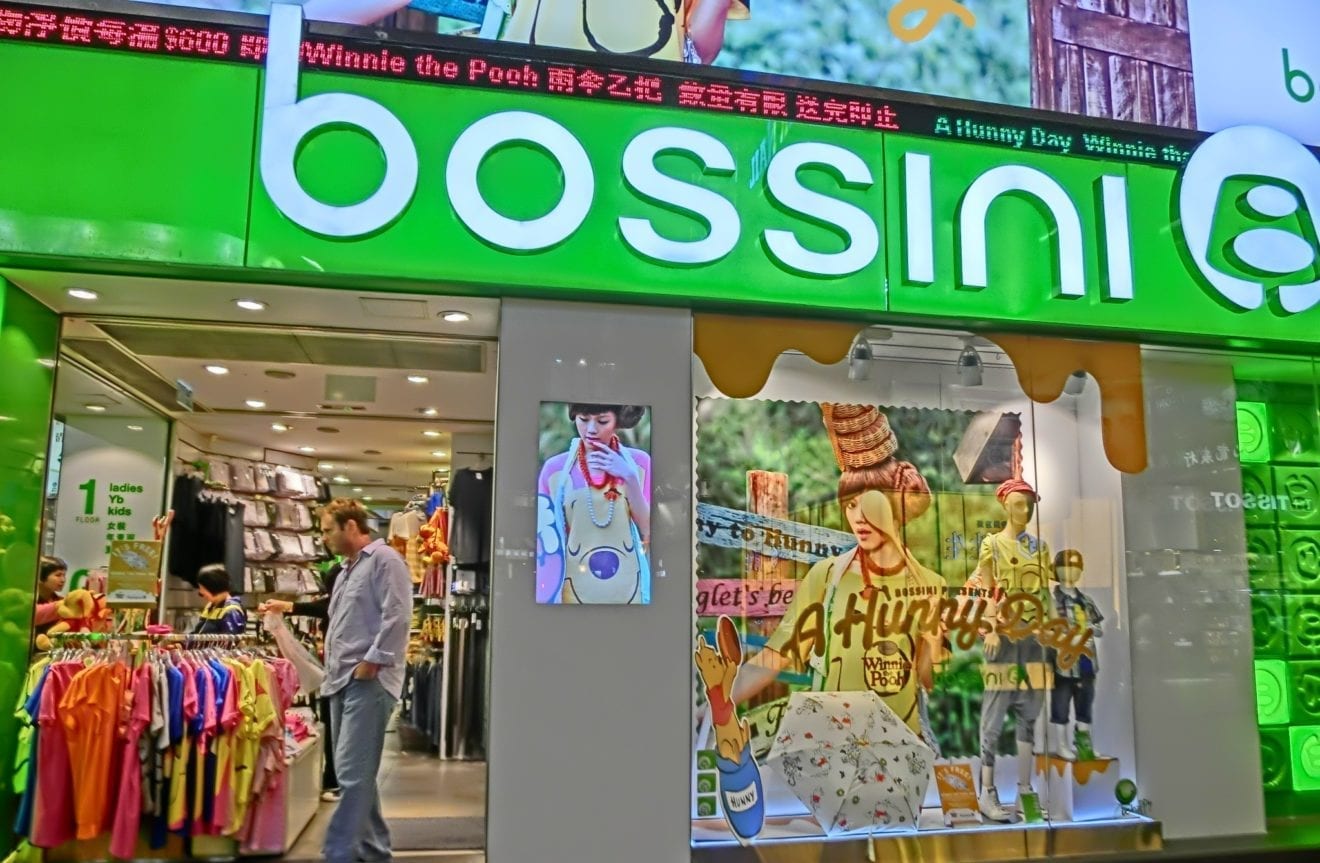
Casual apparel retailer Bossini says it will close more stores in Hong Kong as many landlords remain unwilling to convert leases to turnover-based rents.
The company has reported a loss of US$11.2 million for the December half after sales fell 25 percent.
With Hong Kong and Macau accounting for 66 percent of sales in 2019, cross-border travel restrictions to both territories meant that share fell to 55 percent last year. Revenue in Hong Kong and Macau fell by 38 percent year on year.
“The overall shop rental expenses remained at a very unreasonable level with several landlords still unwilling to provide rent concessions, despite some landlords had already switched to pure turnover-rent arrangement,” said chairman Victor Herrero in a stock exchange filing.
“This will inevitably involve the closure of certain loss-making retail shops… We will continue to renegotiate with landlords to seek rent relief and reduction. Where landlords are reluctant to respond reasonably to our requests, we will close those shops.”
Group revenue reached $60.3 million. Outside Hong Kong and Macau, sales rose by 2 per cent in Mainland China, but fell 9 per cent in Singapore. This was the first complete trading period not to include Taiwan, which the company exited by the end of last June.
Looking forward, the company expects the pandemic to continue to impact its business.
“The group’s performance is expected to remain under significant pressure for the remaining financial year with travel restrictions and social-distancing measures still largely in place,” said Herrero.
But the company is upbeat about its ability to withstand the ongoing pressure caused by the pandemic.
“Overall, the group is formulating and implementing strategies ranging from brand re-positioning, product segmentation and pricing, distribution channels, production and supply chain management, marketing and promotion to IT infrastructure,” he said.
“We believe all of these would collaboratively equip us with a solid foundation and pave the way for our expansion and tap into market opportunities in the mid- to long-term.”
French luxury group Kering has taken a 5 percent stake in Vestiaire Collective, a leading platform for second-hand clothes and handbags, betting that the booming resale market will help it woo younger and more environmentally conscious shoppers.
The purchase is part of a 178 million euro (US$215 million) financing round announced on Monday which valued Vestiaire Collective at more than US$1 billion, the companies said.
U.S. investment firm Tiger Global Management also invested in the platform, while existing shareholders including Vogue publisher Conde Nast and French private equity firm Eurazeo put more money in.
The pre-owned fashion market has enjoyed rapid growth over the last three years, with a further acceleration during the coronavirus pandemic, thanks to younger shoppers’ heightened focus on sustainability and also homebound consumers looking for good deals on second-hand clothes.
“There is a real shift happening that is going to shape the future of the fashion industry, and as a leader, in the sector, we want to shape that trend,” Kering’s digital chief Gregory Boutte told reporters.
The proportion of secondhand pieces in closets is predicted to grow from 21% in 2021 to 27% in 2023, with the value of the sector estimated to be worth over $60 billion by 2025, the companies said in a statement. Paris-based Vestiaire Collective said its transaction volume doubled in 2020.
Luxury groups have traditionally been wary of secondhand sellers, which weaken their control over the distribution and pricing of their brands and, according to critics, can help spread counterfeit goods. But that is changing, and Kering’s star brand Gucci last year announced a partnership with U.S.-based resale platform The RealReal.
British shirt-maker Thomas Pink is set to be revived after former JD Sports executive Nick Preston acquired the brand.
According to the Mail on Sunday, Nick Preston has brokered a deal to take control of LVMH’s shirtmaker brand, including its intellectual property but not its website or shops.
The retailer ceased operations last year amid the Covid-19 pandemic, as LVMH Group was seeking to sell the brand. Last December, the French luxury group removed Thomas Pink from its “Fashion and Leather Goods” website page.
According to Retail Gazette, Thomas Pink updated its own website last month, saying “We’re excited to announce that we’re returning to our roots with the same team that has helped build Thomas Pink Shirtmakers over the years”.
“We have some things to iron out and button-up, but will be back soon with an improved website to offer you the highest quality English shirting made for modern life that you have come to know and love.”
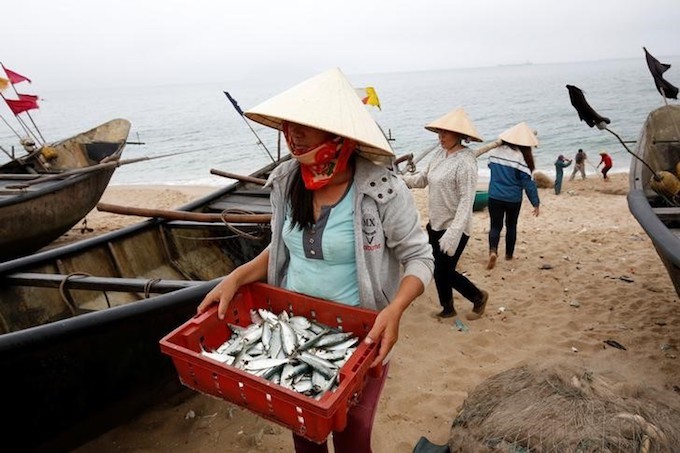
Seafood exports in the first two months of 2021 rose by 2.2 percent year-on-year to over $1 billion, according to the Vietnam Association of Seafood Exporters and Producers.
Pangasius fish accounted for 21 percent of the exports at $214 million, up 1.7 percent. Shrimp exports topped $380 million, a year-on-year decrease of 0.8 percent.
VASEP explained that, due to the impact of Covid-19, global demand is high for products that could be preserved for long, are easy to cook at home and are reasonably priced such as frozen and processed white leg shrimp.
Black tiger shrimp exports plunged due to high prices.
VASEP estimated exports would be worth $640 million in March, with shipments to the U.S., E.U. and CPTTP trade deal member countries continuing to rise.
The solution introduces 5G capabilities such as large bandwidth, low latency, high reliability and multiple connections into various industries, and integrates technologies such as AI, IoT, cloud computing, big data and MEC to enable the digitalisation of whole industries and build fully-connected intelligent private 5G networks for vertical industries.
At present, public 5GC is oriented to consumer applications, so it cannot meet industry users’ ultra-high requirements for security, latency, reliability, network control rights, energy consumption and usage environment. ZTE i5GC addresses this by deeply integrating and optimising 5GC functions. It uses 2U general servers to achieve the integration of multiple network functions (NF) and a plug-and-play one-stop deployment mode to achieve minimal space, minimal energy consumption and minimal operation and maintenance (O&M).
This solution provides non-professional industry users with rapid and accurate 5G network access deployment and excellent service experience. In addition, ZTE i5GC can be flexibly customised according to a user’s diversified requirements for security, traffic processing and autonomy, and provide different function combinations and deployment forms for different scenarios. For instance, the user plane function (UPF) is deployed to the edge, traffic is forwarded nearby, and user data is locally managed. In addition, ZTE i5GC employs a 3GPP service-based architecture (SBA) to seamlessly interconnect with a 5G public network. It can integrate third-party multi-access edge-computing (MEC) applications through open interfaces to achieve flexible expansion and rapid iteration of edge applications, so as to explore and breed 5G killer applications in the vertical field.
Towards the construction of business-grade 5G networks, ZTE has implemented in-depth 5G applications for use in vertical fields such as mines, medical treatments and ports. For example, for a 5G smart mine project, ZTE uses i5GC to deploy a complete set of 5G networks underground, meeting the mine’s compact space and explosion-proofing requirements, and achieving full coverage from key 5G networks. ZTE i5GC will continue to focus on industry projects, promote the understanding of industry requirements, work with enterprises and operators to build a 5G application ecosystem, help expand the ‘blue ocean market’ opportunity for 5G for business, and drive 5G large-scale commercial use and value monetisation.
The Philippine Amusement and Gaming Corporation, or shortly PAGCOR reports nearly 33 million USD profit from casino operations in 2020. The revenues of PAGCOR fell to a great extent due to the COVID-19 pandemic and the restrictions that came with it.
PAGCOR operates numerous state-owned casinos and slot machine clubs throughout the Philippines. It has its own casino brand, the Casino Filipino, and the corporation is responsible for the regulation of other private gambling venues as well.
2020 Has Been a Tough Year
Andrea D. Domingo, the chairman and CEO of PAGCOR, claims that the offshore gaming operations and the revenues of the government-owned corporation declined mainly because of the pandemic.
“The local gaming industry employs about 132,000 direct hires. It also generates many other economic activities and businesses like restaurants, hotels, malls in Integrated Resorts (IRs), services, transport and real estate. There will be more economic employment opportunities when other gaming stations and casinos open,” Andrea Domingo said in her keynote address during the kickoff of ICE-Sigma Asia Digital on June 8 2020.
In March 2020, PAGCOR had to suspend the gaming operations in the Philippines to help the government fight against the COVID-19 and avoid the further spread of the virus amongst the citizens. This measure forced Filipinos to look for other ways to fulfill their passion and be able to gamble. For example, they started to play in online casinos. This report about online casinos shows those casinos which are legal to play in the Philippines.
Finally, traditional casinos had to wait to be reopened until the end of August. However, they could operate only with a 30% capacity limit.
Huge Decrease in Revenues
According to the statement of comprehensive income, PAGCOR was able to close 2020 with a total revenue of 624 million USD (Php30 billion) from gaming operations. This number is the lowest seen in the last seven years, so the corporation had some struggles last year. Compared to the previous year, PAGCOR revenues declined by 60.41%. In 2019, PAGCOR’s total revenues stood at 1.57 billion USD (Php75.76 billion). In 2020, over 148 million USD (Php7.14 billion) was the income from casino customers, and more than 562 million USD (Php27.05 billion) came from junket operations, non-casino customers, and other income.
While PAGCOR’s income from junket gaming operations (nearly 8.3 million USD – Php398 million) was halved compared to last year, the income from licensed casinos also fell largely, to more than 239 million USD (Php11.52 billion). The income from the Philippine Offshore Gambling Operators (POGOs) was the least affected by the decrease, it went down by more than 18% to nearly 97 million USD (Php4.66 billion).
Reduced Expenses
As the corporation had less income in 2020 than it had in the previous year, less money was deducted from the income in the form of gaming taxes and contributions towards the government. The amount of taxes and contributions dropped by 60.41% from 827 million USD (Php39.77 billion) to 328 million USD (Php15.75 billion).
Although PAGCOR had to suffer a huge decline in revenues, the corporation’s expenses also dropped by more than 42%. The total expenses decreased to 388.55 million USD (Php18.68 billion) from the previous 670.61 million USD (Php32.24 billion). PAGCOR cut costs mainly by making fewer payments to corporate social responsibility projects, although these did not stop altogether. Also, PAGCOR had reduced costs (for example, maintenance and other operating expenses) as a consequence of the casinos being closed for several months in 2020.
PAGCOR’s Profit Fell by 83.75%
After all, PAGCOR reported almost 33 million USD profit (Php1.57 billion) from casino operations in 2020. It is 83.75% less than in 2019 when it was 201.14 million USD (Php9.67 billion).
Future Expectations
When it comes to the expectations for 2021 and the upcoming years, it is hard to say if PAGCOR will be able to produce the same amount of revenues as it had back in 2019, before the whole COVID-19 crisis has hit the gaming industry, or not. Everything will depend on the fact whether the casinos can be reopened fully, and how successfully PAGCOR can expand online gambling in the Philippines.
Currently, because of the pandemic, there are still some special restrictions in place in the country that have to be also applied in the casinos. For example, only every second slot machine can operate, and there is a maximum limit regarding the number of players at the table. Only three players are allowed to play at the same time per table. Moreover, at the entry, it is obligatory to measure the temperature of everyone who wants to enter the casino, and every player has to wear a mask inside the building.
Although the number of new COVID-19 cases seems to be stabilized now between 1500 and 2000 per day, it is not sure how long these restrictions will remain in place. Also, we can’t rule out the possibility of having more strict measures in the future that can come again with the closure of the casinos.
Online Gambling Expansion May Be the Solution
To increase the revenues from casino operations and mitigate the financial loss caused by the pandemic recently, PAGCOR’s main focus is on the expansion of online gambling. It has permitted certain land-based casino resorts (for example, City of Dreams, Solaire, and Okada in Manila) to provide online gambling activities in December. Those casinos that hold a Philippine Inland Gaming Operator (PIGO) license can expand their activities to offer online gambling for verified high rollers. So those gamblers who want to play online must be frequent visitors of the casino resort in question, and they must be already registered in the casino’s player database.
While PAGCOR permitted legal online gambling only for high rollers, it is still not sure if the corporation will potentially extend these online casino games to non-high rollers in the future.
According to CEO Andrea D. Domingo, the Philippine Inland Gaming Operator licenses are beneficial to everyone. Firstly, PIGOs are a great way to collect revenues. The incomes from PIGO operations are taxed at a quite high rate, 30%. Secondly, these licenses can effectively help to stop illegal online gambling in the Philippines.
All things considered, hopefully, 2021 and the years after can be more profitable for PAGCOR than 2020 was. Even if the land-based casinos are not operating at full capacity now, there is a chance that higher revenues may be expected due to the newly introduced PIGO licenses and the increasing income from off-shore gaming operations.
Back in June 2013, Google bought Waze for a reported $1.1-1.3 billion. Since then, Google has handpicked some of Waze’s best features and added them to Google Maps. Features such as speed limit warnings, incident reports, and a speedometer have become part of Google Maps over the years. Another feature from Waze is coming to Google’s mapping and navigation app.
Rolling out gradually to Google Maps users is a notification warning them that they are approaching a railroad crossing. The notification appears at the bottom of the screen and says “Expect Delays” because of the crossing. The map shows the location of the railroad crossing by denoting it with a round yellow icon with railroad tracks. It isn’t clear whether Android, iOS, or users of both platforms will get the railroad crossing notification first. It should be seen in the U.S. to start with the feature expanding to more countries over time.
Some Google Maps users are starting to receive notifications when they approach a railroad crossing.
It should be pointed out that Google has yet to announce this new feature. Often, when the company is adding multiple new features to Maps, Google will write a lengthy blog post that discusses the app’s new capabilities.
Besides helping users navigate from point “A” to point “B” with turn-by-turn directions, Google Maps has matured to become a guide helping people visiting a strange city find places to eat, things to see, where they can stay the night, and much more.
Volvo Cars is rolling out its first ever over-the-air (OTA) software update on the XC40 Recharge, the company’s first fully electric car. Starting soon, XC40 Recharge drivers in Europe will receive a range of updates, including new features, bug fixes and stability improvements to the car’s infotainment and propulsion systems. The introduction of OTA updates means that customers no longer have to visit a workshop in order to enjoy the latest software and new, updated features on their electric Volvo.
It also means that a new Volvo is no longer at its finest when it leaves the factory, but keeps improving over time as additional OTA updates are launched.
The update is available automatically and XC40 Recharge drivers only have to accept the download and installation.
“The benefits of over-the-air updates are obvious,” said Henrik Green, chief technology officer. “Yesterday you still had to drive to the workshop in order to get the latest updates to your car. Today you simply click OK and your electric Volvo takes care of the rest. It couldn’t be easier.”
Features included in this latest software update are a new base software for the car’s main electronic systems, an increase in charging speed and an improved driving range.
There are also updates to the Android Automotive operating system that powers the car’s infotainment system, as well as an important safety-related propulsion bug fix.
Finally, the software package also includes updates to a variety of items such as Bluetooth connectivity, climate timers, the car’s digital owner’s manual and the 360-degree camera. The update is available automatically and XC40 Recharge drivers only have to accept the download and installation.
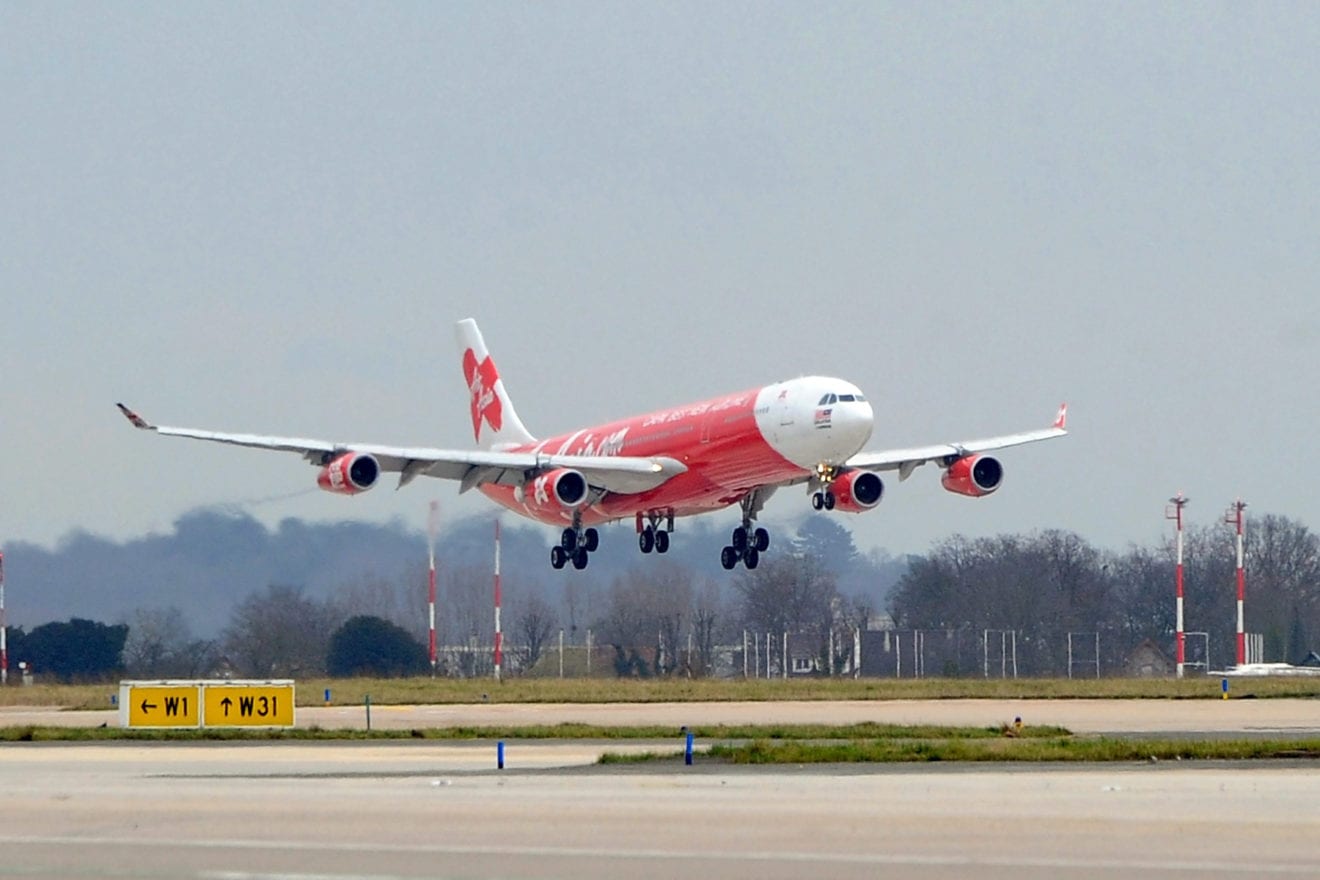
Beleaguered AirAsia X stayed in the red at the operational level, despite narrowing its losses on a quarter-to-quarter basis.
For the three months ended 31 December, the long-haul, low-cost carrier, which is undergoing debt restructuring, reported an operating loss of MYR356 million ($87.8 million). This compares to the previous quarter’s MYR426 million loss.
It offered no year-on-year comparison of its financial results, as it shifted its financial calendar in December, citing an ongoing Scheme of Arrangement. This meant that the carrier’s current and subsequent financial year would end on 30 June, instead of 31 December.
For calendar 2020, the sister unit to Malaysia’s AirAsia Group racked up operating losses of more than MYR1.2 billion.
AirAsia X reported a quarterly revenue of just MYR54.7 million, marginally lower than the previous quarter’s MYR60 million revenue.
As with previous quarters, it took no revenue from scheduled flights, as its network remains effectively frozen amid pandemic-driven travel restrictions. The bulk of its revenue for the quarter — at MYR47 million — came from aircraft operating lease income.
The carrier’s expenses for the quarter were MYR419 million, about 13% lower than the previous quarter. Depreciation costs, as well as maintenance and overhaul expenses, made up the bulk of the carrier’s costs for the period.
AirAsia X narrowed its net loss quarter on quarter, at MYR174 million.
The troubled airline reiterated its plans of returning to the black, through a rationalisation of fleet and routes. These include focusing on routes in core markets with proven demand, as well as terminating unprofitable routes.
In October, the carrier announced a debt restructuring plan, as it continued to bleed amid the coronavirus pandemic.
A few months later, in mid-December, it unveiled plans to raise RM500 million from a new share issuance, which it described as a “critical component” of its restructuring plan.
Since then, a UK court has allowed the carrier to convene a meeting with its creditors, to seek approval for its restructuring.
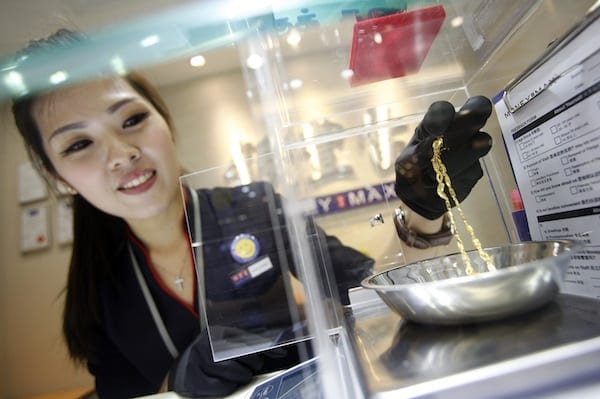
Vietnamese pawn shop chains have been attracting increasing investment for several years now as large demand for quick loans prompt their expansion.
Leading jeweler Phu Nhuan Jewelry (PNJ) recently announced that it would acquire a 30 percent stake in pawnshop chain Golden Friend Jsc.
The Ho Chi Minh City-based pawn shop chain was founded in 2017 with a charter capital of VND1 billion ($43,400), which was raised after six months to VND10 billion.
The company introduces itself as a strategic partner of PNJ. It has 21 pawn shops, all located inside PNJ stores.
Earlier this month, HCMC-based pawn shop chain T99 raised VND20 billion from a famous singer, after having received a similar amount from another celebrity last year.
Another chain, F88, one of the earliest pawn shops chains in the country, raised VND10 billion from a celebrity in 2019 after receiving funds from foreign investors like Mekong Enterprise Fund III and Granite Oak. The chain has 180 shops in 25 localities.
Pawn shop chains have become more popular in recent years, as they attract customers by offering more professional services than traditional pawn shops.
Some of them say customers can get a loan money in 15-30 minutes via a quick review process for collateral assets, which can include smartphones, jewelry, motorbikes and cars.
Most chains have been posting impressive growth figures. F88 last year saw outstanding loans rise 230 percent from 2019 while revenues rose 220 percent. The actual figures were not disclosed.
The chain, which has nearly 2,000 employees, saw its equity rise 160 percent last year. It raised VND400 billion through bonds last year.
Another chain, Vietmoney, saw its revenue rise 270 percent year-on-year last year. It has recently sold a 30 percent stake to two foreign investment funds.
T99, which only entered the market earlier this year, targets having 500 shops nationwide in the next three years and to list on the stock market.
Observers say that the pawn shop industry has high growth prospects thanks to a high demand for quick loans.
Around 48 percent of the population has incomes of under $300 per month, and these are potential customers for consumer loans, according to financial data service provider FiinGroup.
The CEO of F88, Phung Anh Tuan, said it is estimated that 70 percent of Vietnamese citizens still lack access to professional financial services, and this means there is great growth potential for the pawn shop industry.
Le Dat Chi, deputy head of the School of Finance under the University of Economics Ho Chi Minh City, told local media that as there are many Vietnamese who are not eligible to receive loans from banks, pawn shop chains will serve their credit demand.
However, more regulations are needed to manage this type of service so they will not be taken undue advantage of by loan sharks, which could have bad consequences for the financial system, he added.
State-owned lenders have been achieving slower credit growth than the industry average for the last five years while private banks are on the fast lane.
Of the ‘Big Four’ state-owned banks, BIDV, Agribank and VietinBank recorded growth rates that were less than the industry average of 14.6 percent a year in 2016-20 period, according to a note by Rong Viet Securities.
Vietcombank was the only one to buck the trend with growth of 16.2 percent.
“Most of the increase in the credit market share in recent years went to private lenders, while the state-owned lenders’ share dwindled,” the report said.
The latter lost a combined 1.42 percentage point of the market share, it said.
Part of the reason has been state-owned lenders’ inability to increase capital and to dilute state ownership, it said.
Meanwhile, private lenders like Techcombank, Military Bank and VPBank posted average growth of over 20 percent in the period, while Saigon Hanoi Bank achieve 18.8 percent and ACB, 17.4 percent.
Some like TPBank and VIB even achieved growth rates of over 30 percent and 25 percent though their share of credit remained small at 1.4 percent and 1.9 percent.
Rong Viet Securities analysts said since credit would continue to play an important role in helping the economy achieve GDP growth of 6-8 percent, lending growth is expected to remain in double digits.
Casinos want the government to allow Vietnamese entry to make up for foreigners’ inability to come to the country due to Covid-19 flight restrictions.
A group of casino owners recently petitioned authorities that their facilities in major travel destinations such as Quang Nam and Ba Ria – Vung Tau should be allowed to take advantage of domestic demand.
Their revenues have plummeted due to the lack of foreign visitors amid flight restrictions, they said.
Only two casinos, one on the southern island of Phu Quoc and the other in Van Don in the northern province of Quang Ninh, are now allowed to admit Vietnamese.
The government has for long treated gambling as a “social evil” and prohibited Vietnamese from entering casinos. In January 2019, it began a three-year trial to open certain casinos to Vietnamese. The program does not specify the list of casinos, and licenses are instead given on a case-by-case basis.
Vietnamese who want to gamble in a casino must be over 21, earn a minimum of VND10 million ($430) a month and have no criminal record or objections from their family.
The entry fee is VND1 million ($43) for a day and VND25 million ($1,000) for a month.
Vietnam has eight casinos which earned total revenues of VND2.5 trillion in 2019, according to Ministry of Finance data.
At Casino Corona in Phu Quoc, the first to allow Vietnamese entry, locals accounted for 45 percent of gamblers in 2019.
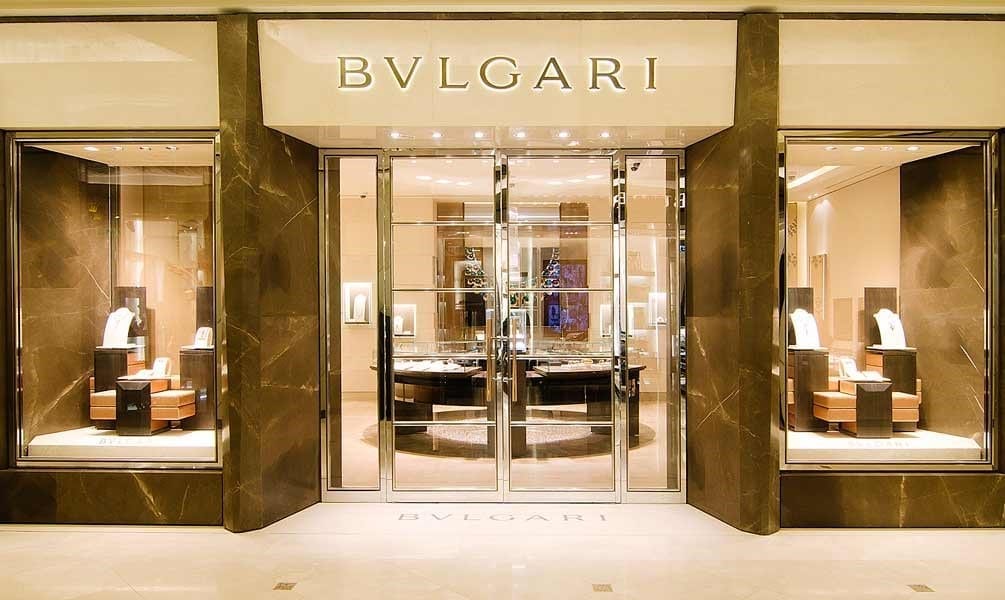
Italian luxury brand Bvlgari has returned to Vietnam and opened its first store in HCMC.
The store opened in a shopping mall in District 1, HCMC, in February but without a formal opening ceremony due to the Covid-19 outbreak and official orders not to congregate in large numbers.
The brand is known for its Bvlgari Serpenti jewelry and watches, the B.Zero1 Jewellery collection and Octo Finissimo watches.
Some of its products cost more than €25,000 ($30,180).
The brand used to be sold in Vietnam through a local distributor, Imex Pan Pacific Group, until March 2019. In October that year, it established a subsidiary in the country.
A Bulgari Vietnam spokesperson told VnExpress it returns to Vietnam due to the potential of the market owing to rapid urbanization and economic growth.
It is the right time to return since “we will be able to approach our potential customers, who usually buy luxury products when traveling to foreign countries,” the spokesperson said.
According to the market and consumer data provider Statista, the Vietnamese luxury goods market is expected to be worth $1.14 billion in 2021 and grow at 7.17 percent annually until 2025.
Bvlgari, founded in 1884 sold a majority stake in 2011 to French luxury group Moët Hennessy Louis Vuitton.
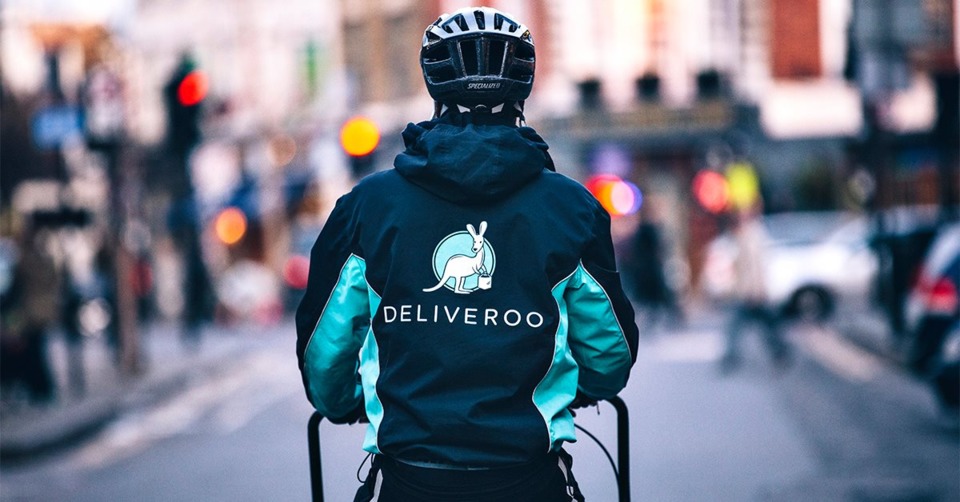
Deliveroo announces today the results of its Deliveroo for Business survey, in which nearly 100 corporate partners with over 10,000 employees were polled to reveal changing workplace food habits amidst the COVID-19 pandemic. Main findings reveal that businesses in Hong Kong are eager to embrace more workplace catering options, as well as extend food allowances and rewards to employees working from home.
2020 saw many offices throughout the city adopt new work from home policies. 91% of Deliveroo’s corporate clients have implemented various types of work from home or flexible work arrangements since the start of the pandemic. With more than half of businesses (55%) surveyed saying they plan to maintain this way of working for the foreseeable future, Deliveroo is seeking new ways to assist its Deliveroo for Business partners, and offer solutions to their employees so that they feel engaged, connected and rewarded whether they are working in offices or remotely. With more remote work being adopted, still companies have yet to implement new measures in view of this. 34% of companies have not organised any virtual social events since the outbreak of Covid, and 47% of companies wanted to organise events or celebrations but were not able to because of the pandemic.
Jeanette Smerin, Head of Deliveroo for Business, Hong Kong & Singapore, said: “We understand that the past year has been a difficult one for team and company bonding with the ongoing social distancing restrictions, but despite the challenges we remain dedicated to creating new and exciting ways to bring Deliveroo perks to our client’s employees. As staff parties, year-end celebrations and holiday events have long been linked to employee appreciation and boosting staff morale, we are working with our partners to optimise services that can conveniently reward staff from the comfort of their homes. This includes offering vouchers from Deliveroo partnered restaurants and on-demand grocery stores so that employees can easily order their favourite food or grocery items to their home.”
Last year Deliveroo announced grocery delivery partnership with British retailer Marks & Spencer, renowned convenience chain 7/11 and Japanese mega-store Don Don Donki to deliver not only delicious food but also household items. These services are not only seen as a valued company perk, but are beneficial in a practical sense, with Deliveroo on-demand grocery services on the rise and more neighbourhoods beginning to offer a variety of popular restaurant options.
With Hong Kong infamous for its late working hours, whether it be from the office or at home, 45% of companies polled revealed that they offer individual food allowances to employees, however only 10% allow employees to order from anywhere they want. With work from home trends showing no signs of abating, Deliveroo is encouraging more companies to adopt flexible ordering policies, which will subsequently help foster a more caring corporate culture, particularly if they adopt health-focused food allowances. Currently, nearly half (47%) of employers from the survey said they had provided team lunch orders in the past, while 34% offered snacks and sweets, and 29% opted to give employees fresh fruit. With food being a vital tool in maintaining healthy and attentive employees, companies would be advised to expand their offerings outside the office, with 35% of those polled limiting their food orders to the workplace, in comparison to home-based orders.a
Other data within the survey revealed that Chinese cuisine was the most popular to order for office meals (71%), followed by Western (65%), and Japanese (57%). 38% reported ordering salads, a trend Deliveroo expects to increase as more health-focused policies may be adopted post-COVID-19. Meanwhile 74% of businesses listed employee preference as the key factor when they consider which restaurants to order from, showing a growing interest amongst employers in listening and responding to the needs of their teams. The survey also found that online food platforms now have an important role to play in how people recycle, with 77% of surveyed partners indicating that they are more inclined to order from restaurants that supply eco-friendly packaging, an encouraging figure that will likely push the industry into adopting more sustainable practices.
Smerin added: “Here at Deliveroo for Business, we’re committed to catering to our clients’ needs and expanding our DFB offerings whether it be in office catering, or at home solutions from our restaurants partners or on-demand grocery services or corporate pantry services. That is why the survey is vital to unlocking evolving trends and keeping up to date with the city’s ever-changing needs. We are interested to learn that companies would welcome pantry services providing fruits and snacks to their employees. As we create new campaigns and release new offers to keep spirits up throughout the pandemic and beyond, we are dedicated to providing more options for companies in this new working style in the future.”
As more employers embrace Deliveroo for Business and see the potential for its office catering services, the food delivery platform is dedicated to expanding its corporate offerings. For instance, Deliveroo is exploring the possibility of adding a corporate pantry subscript on service this year to offer companies snacks, fruits, and nuts in the office – 58% of respondents indicated that they would be interested in this type of service. Deliveroo also remains committed to providing new and innovative employee reward-based schemes, such as gift cards to restaurant partners and grocery stores, as well as helping companies to improve on their green credentials.