Tag: asia

  • LVMH completes $20 billion acquisition of Tiffany, replaces leadership team

    LVMH completes $20 billion acquisition of Tiffany, replaces leadership team

    LVMH Moët Hennessy Louis Vuitton SE installed new management at Tiffany & Co., as the French conglomerate seeks to place its imprint on the U.S. jeweler and steer it through the pandemic.

    LVMH executive Anthony Ledru is returning to Tiffany, where he previously oversaw North American operations, as chief executive, effective immediately. Alexandre Arnault, the son of LVMH CEO Bernard Arnault, was appointed executive vice president of product and communications. Michael Burke, the CEO of Louis Vuitton, will become Tiffany’s chairman.

    Tiffany’s current CEO Alessandro Bogliolo will depart on Jan. 22. Reed Krakoff, the chief artistic director, and Daniella Vitale, executive vice president and chief brand officer, also will leave after a short transition.

    LVMH completed its $15.8 billion acquisition of the U.S. jeweler on Thursday after months of wrangling over the price that led to both companies suing each other. Bernard Arnault threatened to pull out of the deal, arguing that the Covid-19 pandemic had harmed Tiffany’s business. In the end, he agreed to pay a 2.6% discount to the original price.

  • Viettel revamps as it eyes to enter Cuba

    Viettel revamps as it eyes to enter Cuba

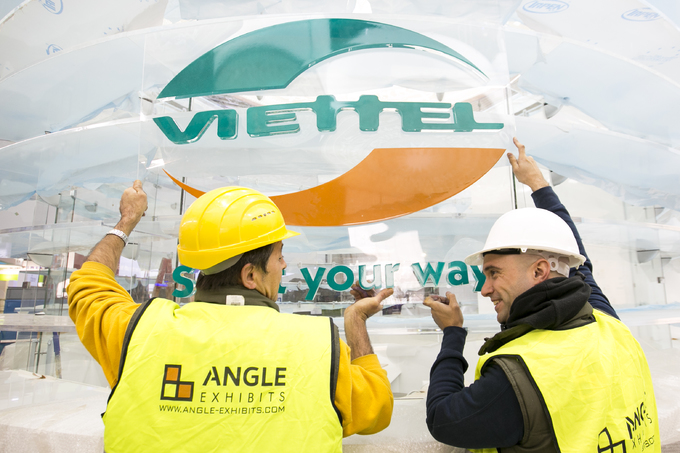
    Viettel Group, Vietnam’s largest mobile network operator, which is wholly owned and operated by the Ministry of Defense, has plans to expand to sister socialist countries Cuba and North Korea, both of which are in the early stages of building up mobile phone networks. Earlier plans to expand to Venezuela have been put on hold owing to the dismal economic state of the latter nation.

    According to Viettel executives, the company is seeking to hold negotiations with the two countries in order to gain a foothold in their underdeveloped wireless markets.

    In Cuba, the company is waiting for a decision by Empresa de Telecomunicaciones de Cuba, the state-owned telecom provider and operator of the sole mobile network Cubacel whether it would grant Viettel a license.

    In North Korea, where Koryolink, a joint venture between the North Korean state and Egypt’s Orascom Investment Holdings, has reached millions of subscribers since its 2008 launch, Viettel had sought permission to build a mobile network as early as in 2010 but is still waiting for sanctions to be lifted and for the country to open its market to foreign investors.

    Viettel in its international expansion has set sights on a number of otherwise overlooked destinations. It began its global expansion by setting up a joint venture in Laos in 2008 and became the largest mobile phone operator in Cambodia after launching operations there in 2009. Since that time Viettel has expanded its operations to Burundi, Cameroon, East Timor, Haiti, Mozambique, Peru, Tanzania and eventually Myanmar.

    Between 2015 and 2017, the company invested over $2.23 billion or its foreign expansion strategy and by 2017, Viettel’s international operations covered an area of more 350 million potential subscribers. The company has invested in heavily in infrastructure in Myanmar where it is seeking to double its five million-subscriber base by the end of this year.

    The company has said that it will stop investment in the African market where the company has struggled to make a profit due to poor economic growth. According to telecommunications industry insiders, Viettel is in talks to buy stakes in existing telecommunication firms in Indonesia and Malaysia and a 20% stake in an unnamed European mobile carrier. Plans are to expand further in Bangladesh, Nepal, Belarus and Ukraine in the near future.

  • JK Tyre Partners With Hyundai To Supply Tyres For The Creta

    JK Tyre Partners With Hyundai To Supply Tyres For The Creta

    JK Tyre India has joined hands with Hyundai Motor India to become its official tyre partner for the Creta. JK Tyre has been introducing hi-technological products that are specifically designed for Indian roads. The top-end variants of the Hyundai Creta are equipped with 17-inch alloy wheels and JK Tyre will be supplying its UX Royale 215/60 R17 radial tyre to the Korean carmaker. The tyre has been designed to suit the dynamics of the model and bring in a good balance between handling and right comfort.

    Commenting on the partnership, VK Misra, Technical Director, JK Tyre and Industries said, “We are proud to further strengthen our partnership with Hyundai India for one of India’s best-selling SUV’s Creta. Through this collaboration, we aim to provide supreme quality tyres with cutting-edge features to complement the ride quality for the customer. JK Tyre’s best-in-class technologies in radial tyres and tyre testing mechanism will ensure safety of customers driving Creta in multiple terrains. We are confident that this association will further strengthen our market presence and we look forward to a continued and reinforced partnership with Hyundai Motors.”

    Commenting on the partnership, Hyundai Motor India said, “All New Creta has been a benchmark SUV ever since it was launched in March 2020. Offering customers exceptional performance, unparalleled comfort & convenience as well as opulent aesthetics, the Creta continues to be the customers’ brand of choice. Our partnership with JK Tyre to offer the Creta with UX Royale 215/60 R17, continues to carry forward this SUV’s premium offering with superior handling & driving dynamics.”

    JK Tyre is claiming that the UX Royal 215/60 R17 tyre is the perfect fit for Hyundai Creta. With its 5-Rib asymmetric design, variable draft groove technology, stable shoulder tread blocks, waffle groove and aero wing design, it supports the dynamics of the car very aptly. JK Tyre is also the official tyre partner of Kia Motors for the Seltos.

  • Vietnam’s retail sales see lowest growth in nine years

    Vietnam’s retail sales see lowest growth in nine years

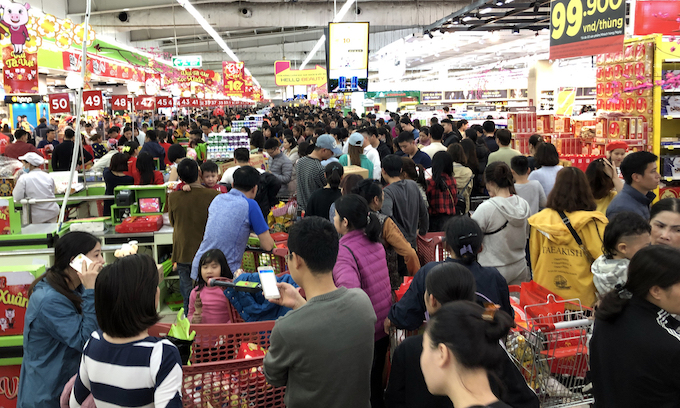
    This year’s retail sales growth was much lower than 9.5 percent seen in 2019 and was also the lowest rate in the 2011-2020 period due to the significant impact of the COVID-19 pandemic.

    Revenue from retail sales of consumer goods exceeded 3.9 quadrillion VND, up 7 percent year-on-year or accounting for 79 percent of the total. Especially, revenue increased by 10.7 percent for food and foodstuff; 7.5 percent for the group of household appliances, tools and equipment; 3 percent for garments and 1 percent for cultural and educational services.

    Meanwhile, revenue from accommodation and catering services dropped by 13 percent year-on-year to 510.4 trillion VND, making up 10 percent of the total. Last year, the revenue from these services saw a yearly increase of 9.8 percent.

    Other services also experienced a slight revenue decline of 4 percent to 535 trillion VND in 2020.

    However, VNDirect Securities forecast that the nation’s retail sales growth would bounce back to pre-COVID-19 levels next year, reaching 8.5-9 percent year-on-year.

    The projection was made on the back of the country’s successful containment of COVID-19, which was a major contributor to the economic rebound in the third quarter that saw unemployment fall 0.23 percent against the previous quarter to 2.5 percent.

    VNDirect also predicted that consumer confidence would likely recover soon, against a backdrop of COVID-19 vaccines expected to be available in 2021.

    With the rapid growth of the middle class and rising per capita income, domestic consumption remained the main growth driver of the retail industry, even during COVID-19.

    The Ministry of Industry and Trade expected the domestic trade sector’s added value to contribute 13.5 percent to GDP by 2025 and total retail sales of goods and services to grow around 9-9.5 percent annually over the next five years.

    The ministry forecast that total retail sales would reach nearly 350 billion USD by 2025.

    The market’s recovery offers huge opportunities for retailers to expand their distribution networks.

    Saigon Co.op is targeting to add at least 2,000 stores to its chain over the next five years, with revenue rising 8-10 percent annually.

    Major Japanese retailer Muji, which sells a wide variety of household and consumer goods, has opened its first store in Vietnam, in HCM City, and is planning to open another in Hanoi, it added.

    Inflation forecast to be controlled less than 4% in 2021

    Many essential goods prices are forecast to fluctuate in 2021, thus the Consumer Price Index (CPI) will rise more sharply than in 2020. However, the average price hike for the whole year is projected to be less than 4%, as the target set by the National Assembly (NA).

    This comment was proposed by experts at a seminar held by the Academy of Finance on January 5 to discuss price fluctuation in 2020 and forecast for 2021.

    Nguyen Anh Tuan, Director of the Price Management Department, said that both objective and subjective impacts have made the Government and ministries and branches’ task of stabilizing the macro-economy, promoting growth, and controlling inflation face great challenges. Therefore, the department had built and set up a price management scenario for this year, closely following the NA target of controlling inflation at below 4%.

    In that context, price management has been directed by the Government and the Prime Minister to implement a prudent point of view, closely coordinating to ensure the harmonization of common goals.

    It was difficult to predict prices of commodities this year, so the Price Management Department would continue to work closely with ministries, agencies and localities to drastically and effectively implement the public management, administration and price stabilization under market mechanisms to control inflation according to set targets, said Tuan.

    At the same time, it would continue to implement the market price roadmap for public services and essential goods.

    Economic expert Ngo Tri Long said that 2021 is still very unpredictable, so price management should be operated in a prudent, flexible and proactive manner. Fiscal policy should coordinate closely with monetary policy and other macroeconomic policies in order to control inflation in accordance with the set targets; at the same time, contributing to supporting and removing difficulties for production and business, and the lives of people affected by the COVID-19 pandemic.

    According to Nguyen Duc Do, Deputy Director of the Institute of Economics and Finance, in 2021, when the disease is better controlled thanks to vaccines, and the world and domestic economy recovers; inflation compared to the same period last year tends to increase again.

    Da Lat aims to welcome 4 million tourists in 2021

    Da Lat city greeted more than 58,000 visitors during the 2021 New Year holiday from January 1 to 3, said Ms. Tran Thi Vu Loan, Deputy Chairwoman of the Da Lat People’s Committee.

    Of this, domestic visitors reached 57,500, a year-on-year increase of 44% while foreigners numbered over 500, a year-on-year decrease of 92%. Total number of visitors staying overnight was 48,000.

    While the tourism industry of many countries in the world and many localities in the country are greatly affected by the COVID-19 pandemic, the number of tourists choosing Da Lat for their destination on New Year is remarkable and is expected to open prospect for the city’s tourism industry in 2021.

    In 2020, Da Lat welcomed four million tourists; down 44% compared to 2019. Of which, over-staying visitors were more than 3.6 million, down 24.7%.

    It is forecasted that by 2021, the COVID-19 pandemic may still be complicated; the local tourism industry focuses on attracting domestic tourists, with many programs linking tours, stimulating tourism demand during the tourist season and holidays. It aims to welcome more than 4 million visitors this year./.

  • Honda Two-Wheeler India Announces Voluntary Retirement Scheme For Employees

    Honda Two-Wheeler India Announces Voluntary Retirement Scheme For Employees

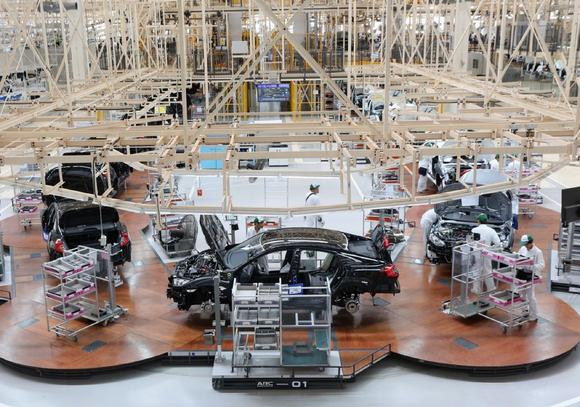
    Honda Motorcycle and Scooter India has initiated a voluntary retirement scheme (VRS) for the company’s permanent employees. The decision comes in the middle of challenging market conditions and a downturn in the Indian economy, although the automotive industry has seen somewhat of a bounceback after the challenges from the COVID-19 pandemic. The VRS will run from January 5 till January 23 this year and cover permanent employees, barring director-level officials. Permanent employees who have completed 10 years with the company as on January 31, 2021 or who are above 40 years of age can opt for the V ₹

    In a statement, HMSI said that the Indian auto industry is going through an exceptionally challenging phase from the past three years “considering the prolonged demand slowdown and overall economic fallout from the COVID-19 pandemic.”

    “The VRS scheme announcement for our associates is a part of Honda’s overall production realignment strategy across all 4 factories to improve our operational efficiency with the objective of ensuring long-term business sustainability,” HMSI said in a press statement.

    “As part of this strategy, the Voluntary Retirement Scheme (VRS) option for all eligible permanent associates. It gives a new opportunity to those associates who may wish to explore new dimensions in their life and empowers them with best among the industry financial and healthcare benefits, while helping the organisation improve its overall operational efficiency,” the statement added.

    Under the VRS, Senior Managers, Vice-Presidents and permanent workmen can get a maximum amount of ₹ 72 lakh. Managers can get ₹ 67 lakh, Deputy Manager , Assistant Manager, Senior Executive, Executive and Assistant Executive. The company is also offering ₹ 5 lakh extra for the first 400 employees who opt for the scheme.

    In December 2020, HMSI reported domestic sales of 2,42,046 units, just a 5 percent increase over the same month a year ago. Exports accounted for 20,981 units, with total December 2020 sales at 2,63,027 units. The October to December 2020 quarter stood out as the first quarter of the current financial year where Honda reported positive sales.

  • Deutsche Bank Taps Singapore Fintech for Digital Assets POC

    Deutsche Bank Taps Singapore Fintech for Digital Assets POC

    The two sides will jointly explore a proof-of-concept (POC) using a grant under the Monetary Authority of Singapore’s Financial Sector Technology and Innovation (FSTI) scheme.

    Deutsche Bank Securities Services will work with Singapore-based blockchain development firm Hashstacs to explore the technological and practical feasibility of digital assets interoperability, liquidity, cross-border connectivity and smart contract templates.

    The POC will also explore the support of sustainability-themed digital bonds, according to a joint statement on Thursday,

    We see a clear place for an integrated platform that can service cross-border issuer-investor needs in Singapore and around the world, Jeslyn Tan, global head of product management, securities services at Deutsche Bank, said about the collaboration.

    Founded in 2019, Hashstacs previously partnered with Malaysia’s national stock exchange on a blockchain POC project for its bonds marketplace, and is working with EFG Bank to co-develop a blockchain platform that will enhance and simplify the processes of structured products.

  • Foreign automaker says it is in talks with Apple to develop self-driving car

    Foreign automaker says it is in talks with Apple to develop self-driving car

    Late last month we discussed speculation that the self-driving Apple Car would undergo production as soon as 2024. There were thoughts about whether Apple would be able to handle the onerous task of manufacturing a vehicle. Many pointed out that it is not the same thing as producing a phone. As a result, some theorized that instead of making an automobile from scratch, Apple would provide its self-driving technology to a mainstream car developer for a price, perhaps via a royalty deal.

    On Thursday, South Korea’s Hyundai Motors said that it is in talks with Apple about working together to develop a self-driving car. News of the talks electrified investors who sent Hyunda’s shares up over 20%. CNBC’s Chery Kang was told by Hyundai earlier today, “We understand that Apple is in discussion with a variety of global automakers, including Hyundai Motor. As the discussion is at its early stage, nothing has been decided.” A report from the Korea Economic Daily said that it was Apple that suggested working with Hyundai and that the latter firm was in the process of reviewing the proposed terms of a collaboration between the two companies.

    Development of the vehicle and the battery were reportedly included in the proposal. The car could be released in 2027 said CNBC’s report. Speaking of the battery, last month we pointed out that the cell rumored to be used on the vehicle is considered to be “next level” and would feature a “monocell” design. More room would be made available inside the battery for the placement of additional active materials. This would allow a car to travel longer distances between charges.

    TF Securities analyst Ming-Chi Kuo, the man who knows more about what Apple will do in the future than anyone outside of CEO Tim Cook, says that everyone is getting too bullish about the Apple Car. Part of the reason why Kuo made this comment is that by his reckoning, the vehicle might not be released until 2028. The project, known as Project Titan inside Apple, has supposedly passed a review inside Hyundai. An approval is still required from Hyundia chairman Chung Eui-son.

  • Washington Mulls Alibaba and Tencent Ban

    Washington Mulls Alibaba and Tencent Ban

    Just weeks before the end of the current U.S. administration, authorities are reportedly discussing the expansion of a blacklist of companies linked to China’s military with the inclusion of major tech giants, Alibaba and Tencent.

    Discussions considering the inclusion have been underway for a few weeks amongst State and Defense Department officials, according to a report citing unnamed sources.

    The original blacklist was released in November with 31 companies including the likes of surveillance firm Hikvision and semiconductor maker SMIC.

    Most recently, the Chinese military investment ban also included an unusual case involving China Mobile, China Telecom and China Unicom Hong Kong. After an initial decision to delist the three Chinese telecommunication firms, the New York Stock Exchange (NYSE) reversed the call this Monday before making yet another reversal on Tuesday.

    Sources said that there was ambiguity about whether or not the aforementioned firms were subject to the bans which subsequently led U.S. Treasury Secretary Steven Mnuchin to phone NYSE president Stacey Cunningham to tell her he disagreed with the decision to reverse the delisting.

    The investment bans are part of a series of moves made by the Trump administration to drive decoupling between U.S. capital and the Chinese economy.

    In addition to military-linked companies, Washington also seeks to tighten on Chinese firms that fail to pass U.S. auditing standards, pressuring them with the prospects of delisting from American bourses.

    This follows a series of headline accounting scandals amongst U.S.-listed Chinese companies such as the $300 million inflation of sales figures at Luckin Coffee or 83 tons of collateralized fake gold bars at Kingold.

  • VietinBank reports record profit

    VietinBank reports record profit

    VietinBank, Vietnam’s third largest lender by assets, has reported a 40 percent increase in standalone profits in 2020 to VND16.5 trillion ($715 million).

    This is its highest ever profit, and chairman Le Duc Tho, speaking at a meeting on Wednesday, attributed it to a surge in non-interest income and reduction in operation costs.

    While it has not published its financial statement for the year, the bank said in a press release that consolidated debts rose by 7.7 percent and non-performing loans were less than 1 percent.

    Its non-interest income jumped 35 percent, lifting it as a ratio of total income from 16.5 percent in 2019 to 20 percent.

    Income from services, foreign exchange trading and treasury operations increased by 12 percent, 24 percent and 70 percent.

    The bank targets 8-11 percent credit growth in 2021 and 10-20 percent growth in standalone profit and consolidated profit, and keeping non-performing loans to under 2 percent.

  • DBS Opens Tech Academy in Upskilling Drive

    DBS Opens Tech Academy in Upskilling Drive

    The bank has launched an in-house digital training institute to equip its 5,000-strong technology workforce with cutting-edge skills for the future.

    The Future Tech Academy covers three technology disciplines: Site Reliability Engineering, Data Processing and Analytics, and Application Security, with more programs to be added over the next year.

    Having our own DBS Future Tech Academy gives us the agility to adapt our training curricula according to the bank’s needs and enables us to stay ahead of the massive changes around us, Jimmy Ng, DBS group chief information officer, said.

    The curriculum DBS is offering incorporates a blended pedagogical approach tapping on both external experts as well as internally developed content and certifications.

    DBS believes that this will enable employees to acquire the latest technology skillsets from external industry experts and immediately apply their new skills to relevant technology projects being rolled out by the bank, it said in a statement on Thursday.

    Growing the Talent Pool

    UOB and Standard Chartered have also previously launched programs to train their staff to adapt to the digital era, with the latter launching a learning hub in Singapore in December 2020 to boost the job readiness, career prospects and future competitiveness of its Singapore workforce.

    Growing the pool of technology talent in Singapore will place the country in good stead as we respond to the disruptions ahead, Ng said.

  • US absolves Vietnamese tire exporters of dumping

    US absolves Vietnamese tire exporters of dumping

    The U.S. has made a preliminary determination that most Vietnamese tire exporters did not dump products in the U.S. and not subjected them to anti-dumping duties.

    Six producers and exporters of passenger vehicle tires from Vietnam, who account for over 95 percent of Vietnamese tire exports to the U.S., were found to not dump following an investigation by the Department of Commerce that began last June.

    But some other companies were hit with a 22.3 percent anti-dumping duty, with the Trade Remedies Authority of Vietnam saying it was because they did not fully cooperate with U.S. authorities.

    The U.S. has imposed duties of 13.25-98.44 percent on South Korea, Taiwan and Thailand. A final determination will be issued on May 14.

    The U.S. imported nearly $4 billion worth of tires from the four in 2019, with Vietnam accounting for $469.64 million.

  • Once successful fitness studio goes belly-up

    Once successful fitness studio goes belly-up

    Fitness studio chain Lamita has announced the closure of all of its 16 centers after Covid-19 caused it to go bust.

    Vu Thi Thuy Linh, the CEO of Lamita Fitness, said the main reason for the failure has been Covid-19 and not internal problems but admitted she was at fault for not realizing the risk of expanding the business despite the pandemic.

    “The pandemic has left the company unable to revive, resulting in cash flow imbalance and unpaid wages, and so we had to make the decision to shut down,” Linh said.

    “If we had not relied on the investment fund but on ourselves, developing steadily just like seven years ago, then maybe all of these regretful outcomes could have been avoided.”

    Founded in 2012, Lamita started off as a dance center called Zumba Hanoi. In 2018 restructured, changed its name to Lamita and developed the Lamita Fitness, Lamita Star, Lamita Shop, and La Pham brands.

    It used to have 65 studios and 200 employees before the pandemic outbreak. But, starting in July 2020, it began to close some and cut staff since it was unable to pay their wages as Covid-19 hit cash flows. By August only 16 studios were left.

    In 2019, Linh persuaded Do Thi Kim Lien, chairman of Song Duong Surface Joint Stock Company, and Pham Thanh Hung, chairman of Century Real Estate Investment and Development Joint Stock Company, to invest VND10 billion ($435,000) for a 35 percent share in Lamita Fitness, but the former failed to bring in the money as promised.

    At the end of 2019, Lamita Fitness got in touch with a domestic investment fund. In February 2020 it got its business appraised and was valued at VND100 billion. Linh claimed that the fund had agreed to invest VND30 billion for a 30 percent stake.

    Then, a month later, Covid-19 broke out and Lamita found itself mired in difficulties since, despite not receiving the investment from the fund, it had to maintain the growth it had committed to. It thus had to pay growing rents and staff salaries despite having little income.

    When the Government imposed social distancing, it retained all its studios and staff thinking the pandemic would soon pass. In the middle of 2020, it reopened, but business was non-existent and the lack of cash flows was beginning to tell.

    Linh plans to revive Lamita, reduce its scale and launch online products. It has agreed to refund the fees people paid for dance lessons, but those staying back can get a 50 percent discount when the next course starts.

    Lamita is the first business in the fitness industry to fail in 2021. Last year WeFit, an application connecting gyms and spas, went bankrupt due to Covid-19.

  • Google Appoints Cloud Business Leader for APAC

    Google Appoints Cloud Business Leader for APAC

    He succeeds Rick Harshman, who leaves the organization for a new opportunity after almost five years in the role.

    Google has appointed technology leader Karan Bajwa as vice president for Google Cloud in APAC, the company announced in a statement on Tuesday.

    Bajwa, who is currently based in India, where he leads Google Cloud’s operations in the country, will relocate to Singapore in 2021 for the expanded role in which he will lead all regional revenue and go-to-market operations for Google Cloud, including Google Cloud Platform (GCP) and Google Workspace.

    Before joining Google in March 2020, Bajwa a managing director for India and South Asia at IBM for almost four years. Prior to IBM, he worked with Microsoft for nine years, his last role being the managing director for the company’s operations in India.

    Google Cloud is growing rapidly in a region that is fast adopting digital transformation tools, particularly in the financial services space. Among its clients are BRI Bank, Gojek, NTUC Fairprice Co-Operative, Goldman Sachs, Citi, ANZ Bank, and more.

    The company launched its GCP regions, from where its public cloud resources are located, in Jakarta and Seoul last year, with planned expansions in Dubai and Melbourne in 2021.

    «With the disruptions of 2020 behind us, a true test of 2021 will be how companies replatform and build on the cloud not only for resilience but agility and innovation, and I’m excited for the opportunity to lead Google Cloud’s business in APAC to maximize this next phase of growth,» Bajwa said about his new appointment.

  • Financial Platform GoBear Shuts Down

    Financial Platform GoBear Shuts Down

    The startup said the global pandemic has created a challenging operating environment, and it is unable to raise additional funds from existing or new investors.

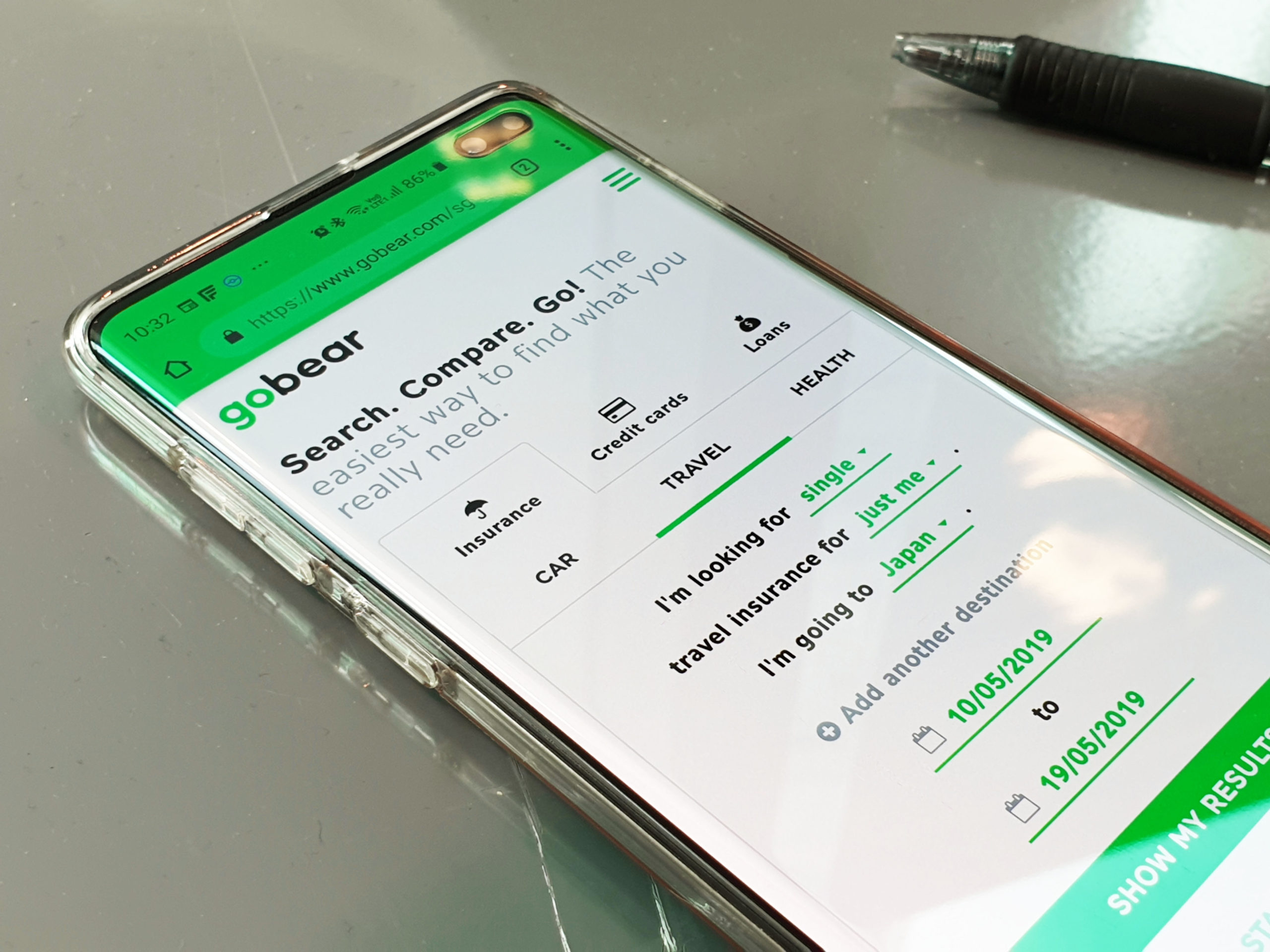
    Singapore-based financial comparison and data platform GoBear has announced that it will begin a formal process to shut down operations, after a prolonged period of weakened demand for some financial products and services, in particular travel insurance, as a result of the Covid-19 pandemic.

    GoBear has made the difficult decision to close the business. Our purpose was to improve the financial health of people across Asia and I’m proud and grateful for the contributions that all our employees and partners have made towards that mission, Adrian Chng, CEO of GoBear, said in a statement on Tuesday.

    The company said its financial resources is likely to be sufficient to fulfill its existing commitments to customers, employees, suppliers and partners, and that it will work with the relevant authorities to ensure adherence to local laws and regulations.

    GoBear, which was founded in 2015, operates a platform for insurance, banking and lending products in seven markets in Southeast Asia. The startup’s founders, chief technology officer Ivonne Bojoh and chief commercial officer Marnix Zwart, departed in November 2019.

    In September 2020, GoBear announced that it would cut 22 staff across its operations, product, and technology teams – 11 percent of its global workforce of 200.

    The platform raised a total of $97 million in funding, including $17 million from long-term investors, Dutch venture capital firm Walvis Participaties and life insurance, pensions and asset management firm Aegon as recently as May 2020. The same month, it acquired Singapore-based digital lending platform AsiaKredit.

  • Shrimp exports to rise 15 pct

    Shrimp exports to rise 15 pct

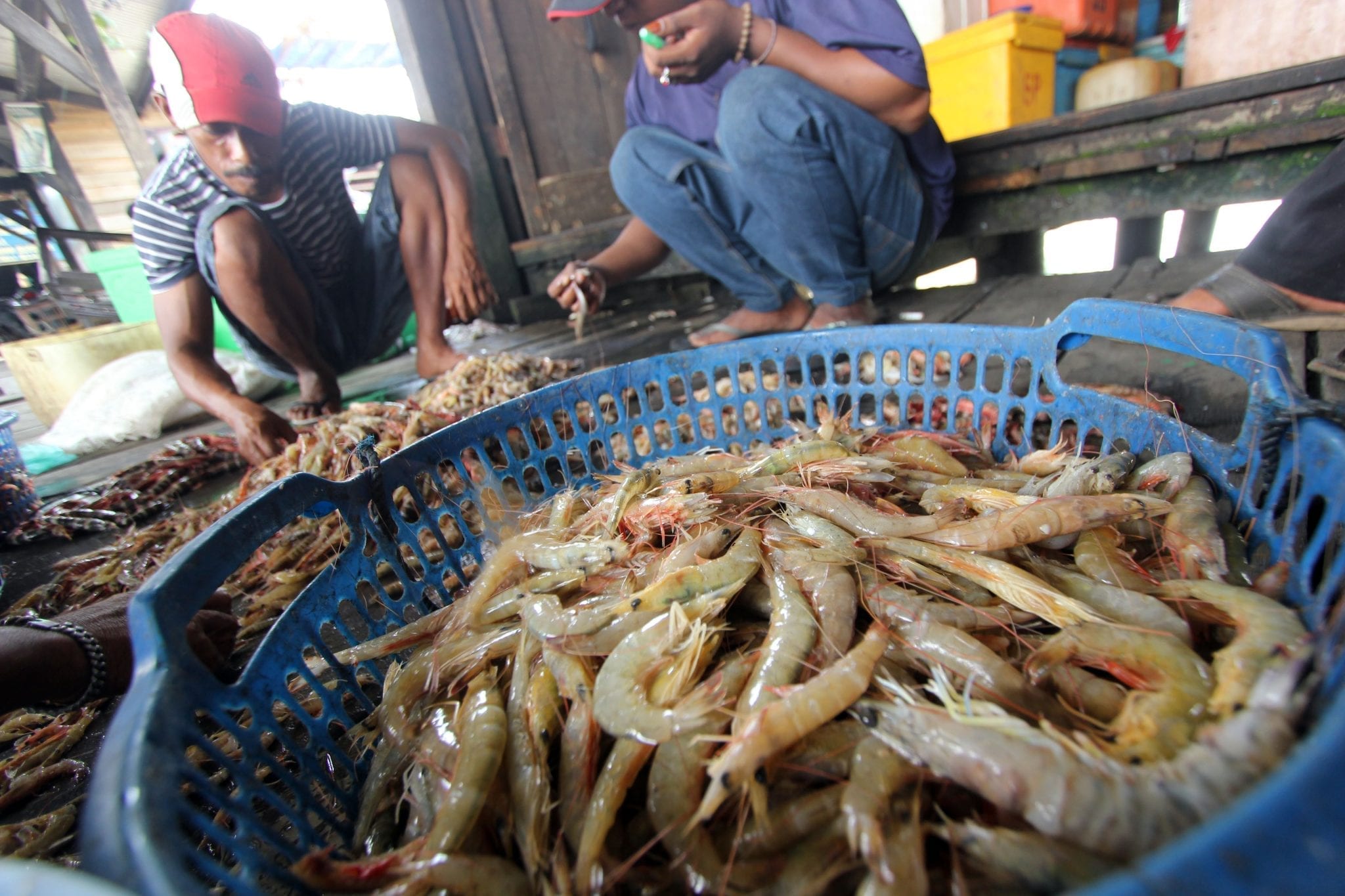
    Vietnam has advantageous conditions to increase shrimp exports by 15 percent year-on-year to top $4 billion in 2021, industry insiders say.

    Global demand has remained stable while other shrimp exporting countries have not recovered from pandemic impacts, according to the Vietnam Association of Seafood Exporters and Producers (VASEP).

    China is the biggest shrimp producer in Asia, yet it lacks shrimp supply for processing and consumption.

    Vietnam’s shrimps will benefit from tariff cut under new-generation FTAs that the country has signed.

    However, Vietnamese shrimp exported will have to face strong competition from India, where low production costs make its export prices more competitive, according to the Agro Processing and Market Development Authority.

    China has imposed import restrictions based on quality, quarantine, and procedural issues which can result in a plunge in shrimp exports to the neighboring giant.

    Shrimp exports are set to increase by 12.4 percent in 2020 to $3.78 billion despite the major impact Covid-19 has had on the seafood industry.