Tag: asia

  • Singapore Tightens Oversight of Crypto Exchanges

    Singapore Tightens Oversight of Crypto Exchanges

    MAS powers have been expanded to include regulatory measures on crypto service providers, even if they may not possess the money or cryptocurrency involved.

    The Monetary Authority of Singapore (MAS) is enhancing its regulatory framework and updating the Payment Services Act to keep pace with changes to international standards and to better mitigate the money laundering and terrorism financing related to digital payment tokens.

    Any entity that facilitates the transmission, exchange or storage of DPTs – also known as cryptocurrencies – will now have to be licensed, MAS said on Monday.

    The new legislation will help minimize the risk of DPT service providers being exploited by criminals to launder illicit proceeds or hide illicit assets, said Minister for Transport Ong Ye Kung, who is also a board member of MAS, during the second reading of the Payment Services (Amendment) Bill in Parliament on Monday.

    The amendments also give MAS powers to impose measures on DPT service providers to ensure better consumer protection and to maintain financial stability and safeguard the efficacy of monetary policy.

    We have seen recent development of new forms of DPTs which values are pegged to stable assets to gain users’ confidence. It is therefore important for MAS to be able to respond to market developments and address new risks in a timely manner, MAS said.

    The Payment Services Act, which was introduced in January 2020, provides comprehensive regulation for companies handling activities ranging from digital payments to the trading of tokens such as bitcoin and ethereum, and gives MAS formal supervisory powers for cybersecurity risks and controls on money laundering and terrorism financing.

  • Grab seeks $750 million term loan

    Grab seeks $750 million term loan

    Southeast Asian ride-hailing and food delivery firm Grab is seeking a $750 million term loan, a term sheet showed on Monday after it announced that total group net revenue jumped by about 70% year-on-year in 2020 and had recovered to comfortably above pre-pandemic levels.

    “In addition, we’ve hit our growth and profitability targets, and reached several new milestones,” Ming Maa, Grab’s president, said in an emailed newsletter update on the business.

    Hours after the update, Grab and one of its subsidiaries were seeking a five-year loan of $750 million for general corporate purposes, according to a term sheet seen by Reuters.

    Grab declined comment on the term sheet.

    Backed by global investors including Softbank Group Corp, Grab has evolved from a ride-hailing app operator to a one-stop shop for services such as food delivery, payments and insurance, helping the company to become Southeast Asia’s most valuable start-up with a valuation of more than $15 billion.

    “We’ve continued to be disciplined with spending and prudent in stewarding our shareholder capital, with monthly EBITDA spend being reduced by approximately 80% over the last 12 months,” Maa said.

    Grab said in October that third-quarter group revenue had risen to more than 95% of pre-coronavirus levels and its food business accounted for more than 50% of revenue.

    The company’s food delivery business, in which net revenue nearly tripled year on year in the third quarter, is expected to achieve breakeven by the end of 2021, it said on Monday.

    Sources have said that investors in Grab and Indonesian rival Gojek are backing a merger of the two, but a deal is far from finalised. Both companies have talked up their strengths.

  • Maison Margiela opens new retail concept store in Shanghai

    Maison Margiela opens new retail concept store in Shanghai

    Set to open on December 18 in Shanghai’s Reel Department Store, the new 160sq m boutique is the brand’s first store in China with the new store concept.

    Founded in 1988 and headquartered in Paris, French luxury fashion house Maison Margiela produces both haute-couture collections and ready-to-wear collections. The brand’s products include womenswear, menswear, footwear, fine jewellery, fragrance and home goods which will all be available at the new boutique.

    The new concept store has been designed by Dutch architect Studio Anne Holtrop in line with Creative Director John Galliano’s vision. The store is fitted with artisanal furnishings and hand-cast textile moulds. The ceilings and walls are painted in a dark-green gloss that creates a shimmering shine.

    This new store has been inspired by the brand’s first concept store that launched in London’s Bruton Street, this was followed by Avenue Montaigne in Paris, and Osaka Shinsaibashi Parco in Japan.

  • Gojek Plans Merger With E-Commerce Giant

    Gojek Plans Merger With E-Commerce Giant

    The Indonesia-headquartered super-app is reportedly in advanced merger talks with local e-commerce marketplace Tokopedia, ahead of a planned initial public offering of the combined entity.

    Indonesia’s two most valuable start-ups have signed a detailed term sheet to conduct due diligence of each others’ business, a «Bloomberg» report on Tuesday said.

    The deal would create an internet powerhouse valued at $18 billion, with businesses that include ride-hailing and payments to online shopping and delivery.

    According to the report, which cited people familiar with the matter, the two sides have considered a potential merger since 2018, but talks recently accelerated after plans for Gojek to merge with regional rival Grab fell through. Masayoshi Son, founder of Softbank, an investor in Tokopedia, is reportedly backing the merger as he is losing patience with Grab chief Anthony Tan’s reluctance to cede some control in the combined entity with Gojek.

    Two weeks ago, Gojek said its payments and financial services arm GoPay would be increasing its stake in Bank Jago from 4.1 percent to 22.2 percent, as part of its bid to accelerate financial inclusion in Asia.

    The partnership will allow Gojek users to access digital banking services through its platform, as well as to instantly open a bank account with Jago and manage their finances via the super-app.

    Earlier this year, Gojek acquired Jakarta-based mobile point-of-sale (POS) market leader Moka for $130 million. It is the second POS SaaS platform that Gojek has acquired after Nadipos (now rebranded as Spots) in late 2018.

  • Trend Micro Announces World’s First Cloud-Native File Storage Security

    Trend Micro Announces World’s First Cloud-Native File Storage Security

    Trend Micro, the leader in cloud security, today announced the world’s first cloud-native, fully serverless file storage security tool for organizations building applications in the cloud. Trend Micro Cloud One – File Storage Security is designed to mitigate threats across the cloud environment and support strict compliance requirements.

    The explosion of cloud-based file and object storage presents a new attack vector for threat actors to target with malicious files. Cloud One – File Storage Security provides automated anti-malware scanning to keep information safe and ease compliance needs.

    “Global organizations are increasingly looking to public cloud providers to drive IT agility, cost savings and business growth. But while the provider deals with security of the cloud, the customer is responsible for everything inside their cloud environment,” said Mark Nunnikhoven, vice president of cloud research for Trend Micro. “This is a highly scalable, automated scanning tool that’s fast to deploy with no added infrastructure, allowing organizations to confidently store cloud files and data associated with their cloud applications.”

    Backed by Trend Micro’s 30+ years of cybersecurity experience and industry leading threat intelligence, the tool blocks known bad files, and looks for hidden or changing malware variants.

    The scanner itself is a lightweight, cloud-native serverless function that’s designed for minimal operational overhead. This architecture enables fast, seamless deployment and flexible integration with organizations’ existing custom workflows for added value.

    The tool supports various compliance requirements that call for anti-malware scanning of cloud files while maintaining data sovereignty.

    Trend Micro Cloud One – File Storage Security is available now for AWS S3, with support for Microsoft Azure Blob storage and Google Cloud Storage coming soon.

    Using Trend Micro’s Cloud One platform, teams can implement a range of security services and compliance checks without hindering agile cloud development and deployment. This single cloud-native security seamlessly complements and integrates with existing AWS, Microsoft® Azure™, VMware®, and Google Cloud™ toolsets.

  • 6ixty8ight opens first franchised store in China

    6ixty8ight opens first franchised store in China

    Hong Kong-based lingerie and fashion label 6ixty8ight has opened its first franchise store in Mainland China.  The 6ixty8ight franchised store is located at Daruncheng Shopping Centre in Henan, its first brick-and-mortar outlet in the province, and spans about 153sqm. It features6 a full range of lingerie, nightwear, loungewear, apparel and accessories.  According to the company, the franchising model is part of 6ixty8ight’s expansion strategy to reach more customers in Asia.

  • Bolttech expands in Taiwan via device protection partnership with Samsung

    Bolttech expands in Taiwan via device protection partnership with Samsung

    bolttech today announced its latest partnership with Samsung in Taiwan, together arranging for mobile device protection to owners of new Samsung Galaxy smartphones and tablets through the Samsung Care+ programme. The expansion of the bolttech and Samsung partnership follows recent tie-ups in Indonesia, Philippines, Thailand, and Vietnam.

    The Samsung Care+ programme in Taiwan will offer device repair and care services covering accidental and liquid damage as well as an extended warranty for up to one year after the expiry of the manufacturer’s warranty. It also covers device replacement for robbery and snatch theft and includes a convenient doorstep pickup and delivery. This programme is exclusively available in Samsung experience stores for selected Galaxy smartphone and tablet users.

    Launched in 2020, bolttech is an international insurtech business integrating three complimentary capabilities – device protection, insurtech exchange, and digital insurance, with a mission to build the world’s leading technology-enabled ecosystem for insurance and protection.

    Mark Simmons, Chief Executive Officer, Device Protection, bolttech, said, “We’re thrilled to build upon our collaboration with market leader Samsung to bring easy access to next-generation device protection to customers in Taiwan. Recognising the pain points for mobile phone users in Taiwan, we launched our door-to-door repair services to help customers stay connected when something goes wrong with their phones or tablets.”

    More information about Samsung Care+ in Taiwan can be found here: https://www.samsung.com/tw/offer/samsung-care-plus/

  • Polestar 2 To Get Pixel LED Headlights

    Polestar 2 To Get Pixel LED Headlights

    Polestar 2 is already gunning to be a big player in the EV scene, come this winter solstice, the company revealed insights into the advanced lighting technology it’s using in the headlamps and the tail lights of the electric car.

    Reportedly, the Polestar 2 is fitted with Pixel LED headlights as a standard in the launch edition. These feature active high beam technology which allows drivers to leave their lights on high beam, to move forward in complete visibility, without blinding oncoming drivers or having to switch between modes.

    Each lamp on front of the compact EV has 84 individual LED pixels forming a matrix – within these clusters each LED is controlled individually both while driving and when the car is unlocked. This enables Polestar 2 drivers to leave the car on high beam while maneuvering in the dark to automatically shade when a car approaches without affecting the sight of other drivers.

    Per Polestar, this active high beam technology can accommodate up to five oncoming vehicles, working fully automatically. The front fog lights are also getting a twist – the LEDs in these lamps automatically activate at low speeds and light up on turning of the steering to further enhance visibility on curves and zig-zag stretches.

    At the rear, the Polestar 2 has an exciting lighting strip running across the trunk. The full-width wrap-around light bar comprises 288 LEDs featuring adaptive lighting – in the day the LEDs shine bright for optimal visibility and automatically dim by the night to prevent drivers in the tail from being dazzled.

    Interestingly, this Pixel LED tech is available in all markets where legislation allows – this excludes the States where regulations don’t permit such fancy lighting in cars. Polestar promises to push out the feature as an over-the-air (OTA) update, when and if the regulations change in the US and other markets where Polestar 2’s extravagant lighting show is not permitted currently.

  • Henrik Fisker Drops Hint On Next EV From The Automaker

    Henrik Fisker Drops Hint On Next EV From The Automaker

    Famous car designer and the Chairman and CEO of Fisker Inc., Henrik Fisker, recently confirmed that its next product could be a lifestyle EV truck. He is known for some of the iconic cars such as BMW Z8, Aston Martin DB9, Aston Martin V8 Vantage, and Fisker Karma. Fisker confirmed this development through his official LinkedIn profile, teasing the rear quarter shot of the EV truck, which seems to be aggressively designed. The EV maker aims to create the lightest and most efficient pickup truck in the world. However, the image is just a teaser, but the final product will be way more radical.

    Last month, the designer took to Twitter confirming that he has started designing his new vehicle, which will be radical. The company will also be launching its first all-electric luxury SUV globally next year.

    In a LinkedIn post, Fisker said, “Ok, yes, next vehicle might be a lifestyle pick up truck! But not just any truck! We want to create the lightest, most efficient EV pick up in the world! Making it, the most sustainable! image is just a teaser! Not the final: final will be way more radical!”

    We know that the upcoming electric pickup truck will be christened Fisker Alaska that was teased on Twitter last month. The company also plans to launch a range of new, advanced and radical electric vehicles, faster than any EV maker yet. We are not sure if this is the same truck that Fisker teased in December. But it’s worth noting that the CEO used the world radical for both the teasers.

  • Big state banks gradually lose credit market share

    Big state banks gradually lose credit market share

    The credit market share of Vietnam’s three largest banks has fallen by 2.7 percentage points in the last two years due to liquidity constraints.

    The three, all state-owned and listed and the country’s largest by assets, Vietcombank, Vietinbank and BIDV, account for 34 percent of all loans outstanding, securities company VDSC said in a note last week.

    But this represents a 2.74-percentage-point fall even as the four largest non-state banks, Techcombank, VPBank, Military Bank (32.42 percent state-owned), and ACB, increased their share of loans outstanding by 1.6 percentage points.

    During the two years ending in the third quarter of 2020, VietinBank’s share fell by 1.96 percentage points, BIDV’s by 0.7 percent and VCB’s by less than 0.1 percent.

    The big fall in VietinBank’s market share is because it has been strapped for cash. There have been no major infusions of capital in the past few years, return on equity has been low, bonuses and employee welfare funds cause a big drain on resources, and the government appropriates much of its earnings.

    This situation has been exacerbated by Basel II standards, which prescribe a capital adequacy ratio (CAR) of 8 percent of risk-weighted assets for all financial institutions. Thus, to lend more, banks have to increase their charter capital.

    Though the Government has agreed to reduce its ownership in state-owned banks from 65 percent to 51 percent by 2025, it has yet to be implemented.

    But the government issued a decree in October allowing state-owned banks to pay dividends in stocks to increase their capital, helping them improve their growth prospects in the medium and long terms.

    According to the State Bank of Vietnam, banks’ total outstanding loans were worth VND8.69 quadrillion ($376.87 billion) at the end of the third quarter.

    Credit growth is expected to be 11 percent in 2020, down from 13.5 percent in the previous year.

  • Container shortage hits exports

    Container shortage hits exports

    Exporters complain they face difficulty delivering goods due to a shortage of containers, whose rentals are rapidly increasing as a result.

    The Vietnam Maritime Administration (VMA) on Monday wrote to container shipping lines, instructing them to publicly declare their freight rates and surcharges, warning it would not countenance profiteering or unreasonable prices, which cause difficulties for exporters and disrupt the shipping market.

    It has received numerous complaints about inflated prices due to a shortage of containers and ships.

    Most shipping lines have hiked freight by 2-10 times in the last two months, depending on the sector. For instance, while it normally costs $1,420 to ship a 20-foot container to the U.K., it rose to $5,420 in November and $7,200 in December.

    Before October renting a container from the U.S.’s Los Angeles to Vietnam cost $700-1,000, but this increased to $5,000 in November.

    Phan Minh Thong, CEO of Phuc Sinh, one of the largest pepper and coffee exporting companies, said the cost of a container increased by 700 percent yet many of his orders were not delivered because “they were unilaterally canceled by the shipping company.”

    “There have been occasions when we reached an agreement with the shipping line at night but were told in the morning it was canceled because they received a higher bid. On some days we received cancellation notices for 40-50 containers.”

    From shipping 40-50 containers a day, Phuc Sinh was down to three to five in November and December.

    As a result, they had to buy less from suppliers, reducing from nearly 10 tons a month to three tons or less now though it is the harvest period for items such as pepper and coffee.

    The Vietnam Association of Seafood Exporters and Producers has advises its members to have plans in place to minimize supply chain disruptions and export losses.

    It had expected rising exports in the fourth quarter to take seafood exports for 2020 to $8.6 billion, but lack of containers and ships in the last two months could affect this.

    The Covid-19 pandemic is the main reason for the container shortage, Kieu Ngoc Phuong, deputy general director of Tan Thanh Trading Mechanic JSC, which manufactures and distributes containers, said.

    Many are stuck at ports since they could not be emptied, while the pandemic itself has caused many shipping lines to go bankrupt, she said.

    “The number of customers contacting Tan Thanh to rent containers has increased by 10 times from normal months. We have to reject a lot of orders because we cannot meet all the demand.”

    Concurring, Thong also said shipping lines had to cut routes this year, resulting in a shortage of cargo space, and there has been a slowdown in goods processing and freeing up empty containers at ports in Europe and North America, the world’s two biggest import markets, while demand during the year-end holiday season is huge.

    According to the Ministry of Industry and Trade, China has been getting containers from various countries by paying high prices following a serious shortage earlier this year.

    It did so just in time to see exports rise 21 percent year-on-year in November, as manufacturing recovered post-pandemic, creating a general scarcity in the region.

    Given the situation, the VMA assured that it would inspect shipping lines and crackdown if there are deliberate violations of transparency rules.

    The Ministry of Industry and Trade forecasts the shortage of ships and containers to continue until March or even longer if Covid-19 is not controlled.


  • Toyota’s e-Palette Autonomous Vehicle To Be Put To The Test In The Real World

    Toyota’s e-Palette Autonomous Vehicle To Be Put To The Test In The Real World

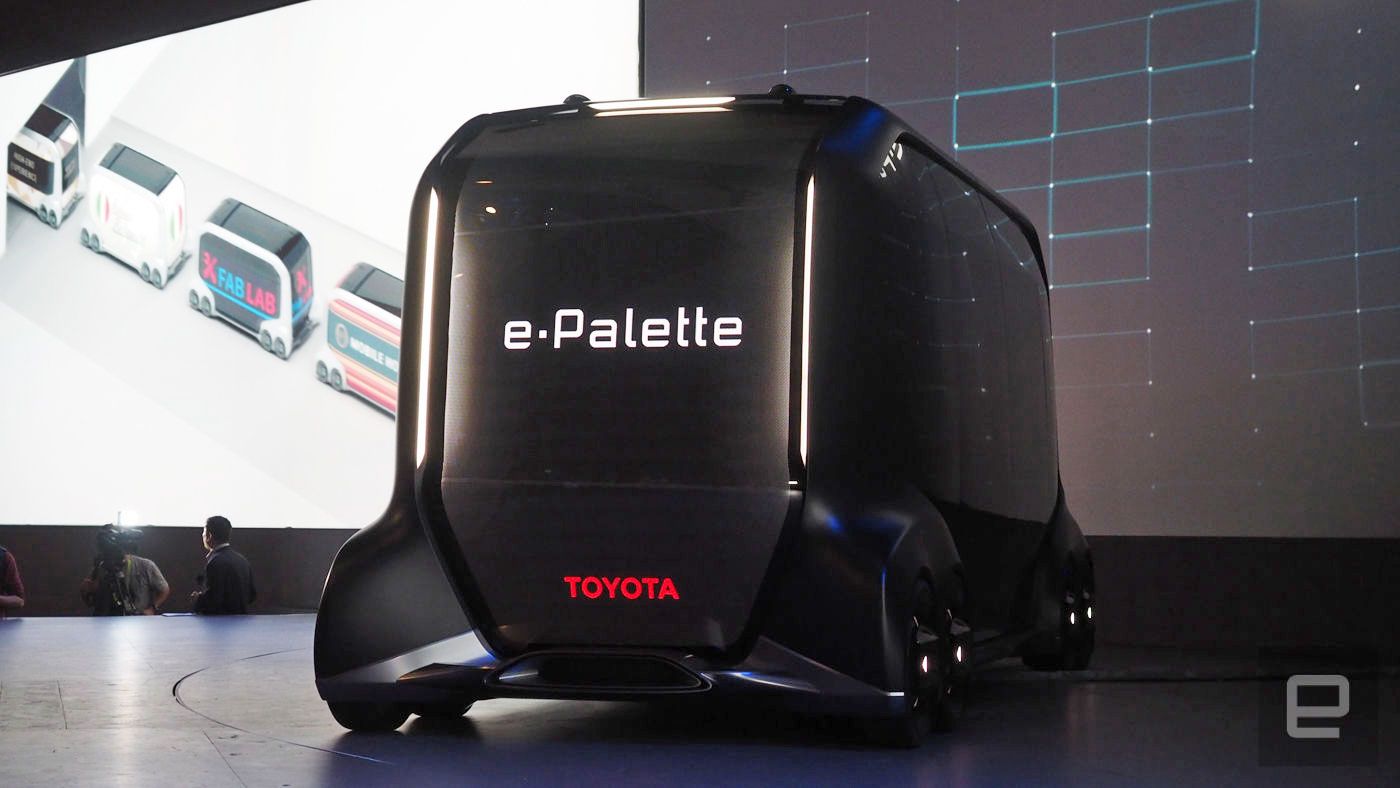
    Toyota Motor announced an operations management system to support the providing of services that will enable practical use of the e-Palette, a battery-electric vehicle for autonomous mobility. In collaboration with a range of partners, it is also planning to operate the vehicles in Woven City, a fully connected prototype city, while targeting commercial use in multiple areas and regions in the early 2020s.

    Toyota has developed an operations management system for e-Palette vehicles based on the Toyota Production System (TPS) ideology.

    When announcing his goal to transition Toyota to a mobility company at the January 2018 CES, President Akio Toyoda also announced the e-Palette as a symbol of mobility that goes beyond cars to provide customers services and new value. The e-Palette, with automated driving functions, had its debut at last year’s Tokyo Motor Show. It will provide a loop-line bus transportation service for athletes and related staff in the Olympic and Paralympic villages at the Olympic and Paralympic Games Tokyo 2020 that were postponed until July this year.

    Toyota has developed an operations management system for e-Palette vehicles based on the Toyota Production System (TPS) ideology. This operations management system will be provided as new functions on Toyota’s Mobility Services Platform (MSPF)*2 and will consist of the Autonomous Mobility Management System (AMMS), for connecting to vehicles and the e-Palette Task Assignment Platform (e-TAP) for connecting to people. The system will reduce customer waiting times and alleviate congestion to ensures services provide safety, peace of mind and comfort.

    With the aim of achieving the ultimate TPS-based just-in-time mobility service, AMMS is able to dispatch e-Palette vehicles when needed, where needed, and in the amount needed. Operation schedules can be changed flexibly, with vehicles automatically dispatched and returned, according to real-time mobility needs. When additional vehicles are introduced into service, the intervals between vehicles are adjusted to ensure even spacing of services. Vehicle abnormalities are also automatically detected and, if that happens, the vehicles are automatically returned to the depot and replacement vehicles are immediately dispatched on the route to ensure the stability of operation. In an emergency, the vehicles can be stopped and returned to service remotely, with an extra level of safety management, to provide passengers with peace of mind.

    Keiji Yamamoto, President of Toyota’s Connected Company, commented, “As per the Toyota Philosophy that President Akio Toyoda introduced at our recent financial results announcement, we see our vision as “Creating Mobility for All” and believe that every person working at Toyota should take action that delivers happiness to mankind in line with our mission of Producing Happiness for All. One of the platforms for executing these actions is the e-Palette. With the addition of an operations management system, the evolved e-Palette will be refined and will grow with the never-finished, ever-growing Woven City.”

    Human-centric, Woven City is a prototype city for testing and developing technologies such as automated driving, MaaS, personal mobility, robotics, smart homes and artificial intelligence, with e-Palette vehicles planned for operation there. Operating within a real-world environment where people live will provide a range of lessons through which the platform will continually evolve to enable services that provide customers with safety, peace of mind and comfort. Going forward, Toyota aims to work with partners to commercialize the e-Palette vehicles in multiple areas and regions in the early 2020s.

  • Crypto Rumbles Central Bank Sovereignty

    Crypto Rumbles Central Bank Sovereignty

    The private sector has long driven innovation on digital currencies but as fintech’s plans became more powerful, central banks sprang to attention. Their main concern? Keeping monetary policy in their purview.

    The most tantalizing tales in cryptocurrencies this year weren’t written by Libra or bitcoin, but by national or supranational projects like the digital euro. While investors raced to get in on bitcoin’s record-smashing highs, the government projects warrant a closer look.

    What central banks are trying to do is replace the storage carrier of money with a new one – cloud instead of long-play (LP), so to speak. The aim is to kill several birds with one stone.

    The first is to stave off a private sector-led attack on central bank sovereignty. The second is enabling efficiencies in the financial system, and the third is to lay a foundation for seamless oversight of monetary transactions.

    Taken in turn: a central bank ensures financial stability while overseeing systemically-relevant market infrastructure. To hand over a central instrument in its arsenal is to jeopardize its own mandate. Replacing a country’s own currency with another – which frequently happens in unstable countries, where dollars effectively become the leading currency – is a good example, or when a privately-controlled alternative takes over for reasons of efficiency.

    Admittedly, crypto is far from this scenario, but the thought experiment is a worthwhile one. We need to assume that multinational companies like Amazon or Alibaba will in future control and executive an enormous portion of private consumption: they own the value chain, from manufacturer to end consumer. They are intimately familiar with customer needs and aren’t shy about cultivating the data with the help of artificial intelligence.

    The next logical step in cementing this position is to introduce their own currency. This would dramatically simplify the purchasing process as well as create a vast common currency area spanning producer, commercial dealer, suppliers, to consumers.

    None of this is a problem as long as employees are paid in U.S. dollars, euros, or krona and use a major currency to buy a trading one. But if they are, for example, partly paid in Amazonas or Alibabas, central banks cede part of their authority to the private sector. The initial hostile official response to Libra is the logical consequence of this.

    The Swiss central bank’s «Project Helvetia» as part of the BIS’ innovation hub sidesteps the first question in favor of tackling the second, central digital revolution issue. Traditional banks are still grappling with the conversion to digital banking: continually under siege from newer upstarts without any historical baggage and far zippier organizations.

    The Swiss National Bank’s digital franc is meant to enable efficiency gains and simplify monetary transactions. This is a much more defensive strategy than other central banks have elected – notably the European Central Bank, Sweden’s Riksbank, or the People’s Bank of China – but the pragmatic approach fits the Swiss system of thinking well.

    In lockstep with infrastructure provider SIX, which belongs to the banks, genuine and measurable advances would represent a great step towards a digital future. The Swiss stock exchange operator plans to go live with its digital asset trading venue, SDX, next year. A digital Swiss franc would suit the SNB’s financial intermediaries perfectly.

    Switzerland is hardly ready for the third and conclusive step: a digital version of cash is being actively discussed elsewhere (namely in Sweden and China). Some aspects of digital money – efficiency versus cash and crucially, the traceability of transactions – are too tempting to resist.

    Of course, all types of criminals could be disrupted in their activities with such a step. But the accompanying supervision of citizens contradicts Switzerland’s understanding of government and privacy – and should be rejected. The complete replacement of cash in Europe and the U.S. isn’t on the horizon either for the same reasons, even if digital money eventually will find a niche besides paper.

    Despite the rapid advancement of the topic in recent months, we’re still at the dawn of developments. 2021 is sure to bring promising new developments, and the ECB is likely to devote considerable resources to rolling out a digital euro (or ultimately spike the project).

    In Switzerland, SDX and «Project Helvetia» are poised to take their next steps. The U.S. has been noticeably absent in the discussion, though January’s change in administration may mark a new tack in digital assets.

  • AirAsia and Penang Tourism Collaborate to Provide More Value Deals for Domestic Tourists

    AirAsia and Penang Tourism Collaborate to Provide More Value Deals for Domestic Tourists

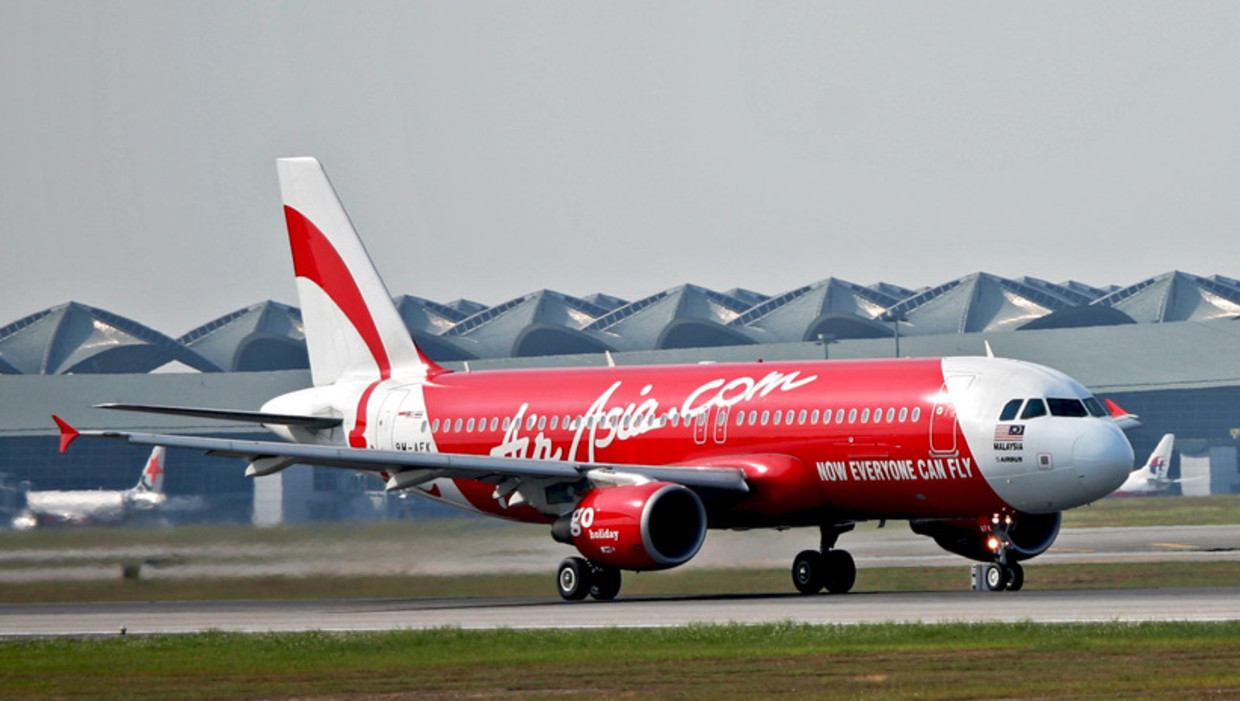
    AirAsia and Penang Global Tourism (Penang State Tourism Bureau) have announced a new collaboration that will offer more travel options and value-added services to domestic tourists visiting Penang.

    The partnership will see airasia.com, the Asean super app pair-up with Penang Global Tourism Board to offer travelers a variety of Penang travel bundles as well as a joint marketing effort.

    Penang State EXCO For Tourism And Creative Economy (PETACE), YB Yeoh Soon Hin said, “We are observing a positive rebound on tourism activities and we are working towards accelerating the recovery of tourism, supporting jobs and the economy and increasing tourism receipts. Partnering with key travel players like airasia.com will assist us to amplify our efforts and to offer more diverse travel and tourism products by leveraging on their wide product offerings.

    “I am proud to say that Penang is at the forefront once again in assuring safe travels to our visitors. In July 2020, Penang launched the ‘Penang Responsible Tourism’ campaign. Furthermore, we have also launched the COVID-19 safety accreditation program to strengthen preventive measures undertaken by Penang’s tourism industry players. These initiatives are the first-of-its-kind in Malaysia, intending to instill confidence in travelers when visiting Penang.”

    “To further reiterate, Penang is the first in Malaysia to kickstart the “Penang Responsible Tourism” campaign and the accreditation program.”

    airasia.com Chief Commercial Officer, Amanda Woo said, “We would like to thank Penang Global Tourism Board for working with us to provide more value for travellers. Now, visitors to Penang can conveniently plan their trip with all the exciting offers made available through this collaboration under one platform on airasia.com. We hope people will take the opportunity to explore and enjoy more of what Penang has to offer.

    “We are also expanding our network from Penang to Kota Bharu with three times weekly flights which commenced yesterday, while the new route from Penang to Sibu is set to kick off in January 2021. We hope the added connectivity will provide much-needed accessibility for the Northern travelers, as well as to revive the domestic tourism industry. ”

  • Daimler AG And Infosys Announce Strategic Partnership For IT Infrastructure

    Daimler AG And Infosys Announce Strategic Partnership For IT Infrastructure

    Daimler AG and Infosys announced a long-term strategic partnership for a technology-driven IT infrastructure transformation. After the receipt of all regulatory approvals, Daimler AG will transform its IT operating model and infrastructure landscape across workplace services, service desk, data center, networks and SAP Basis together with Infosys. The partnership will enable the company to deepen its focus on software engineering and to establish a fully scalable on-demand digital IT infrastructure and anytime-anywhere workplace. The collaboration will empower Daimler to strengthen its IT capabilities, and Infosys, its automotive expertise.

    As software becomes modular, digital infrastructure continues to play an important role in defragmentation. Daimler will work towards a model that ensures a robust IT infrastructure across its plants and regions and supports consolidation of its data centers, scaling its IT operations, and bringing innovations to the fore. Some of the key deliverables from this partnership include – a smart hybrid cloud, leveraging Infosys Cobalt and leading cloud providers, accelerating the multi-cloud journey with a focus on open source adoption. A carbon-neutral solution, by consolidating and rationalizing data centers across all regions. Standardized technology stack by bringing in an eco-system of best of breed partners. Creation of a state of the art Zero Trust network with seamless technology upgrades. Persona-driven and cognitive, AI-powered anytime-anywhere workplace solution that empowers the end-users.

    As a part of this partnership, automotive IT infrastructure experts based out of Germany, wider Europe, the U.S., and the APAC region will transition from Daimler AG to Infosys. Infosys is well placed to realize this transition as an expert having integrated more than 16,000 employees through other partnerships in recent years with a high acceptance, retention, and satisfaction rate. The transfer will also enable Infosys to bolster and grow its automotive business while offering employees strong prospects for long-term career growth and development.

    Talking about the partnership, Jan Brecht, Chief Information Officer (CIO) of Daimler and Mercedes-Benz, said, “Software becomes modular and IT infrastructure becomes big. Daimler will take three steps at once to transform its IT infrastructure: consolidation, scaling, and modernization. We need to think of infrastructure beyond the size of our company. With Infosys we found a partner to scale, to innovate and to speed up. Moreover, this is a strategic partnership for Daimler’s IT capabilities and Infosys’ automotive expertise. Infosys wants to grow with us in the automotive industry, which gives career opportunities for our employees. With this partnership, Daimler also strengthens its overall technology investment and partnership strategy.”