Tag: asia

  • Citi Appoints APAC Tech Vice Chair

    Citi Appoints APAC Tech Vice Chair

    Will McLane was named Asia Pacific vice chairman of technology at Citi, according to an internal memo, in addition to his existing role as vice chairman of the global financial institution’s group (FIG).

    We have asked McLane to assist the APAC technology team in covering clients for unique stations to help scale BCMA’s (banking, capital market advisory) innovative pitching efforts globally, the memo said, adding that he would continue to support FIG clients in Asia.

    According to the bank, McLane alongside other seniors in Asia, has applied innovative techniques for pitching such as videos, multimedia, props, and more in the last 18 months.

    This role is a natural extension for [McLane], as he has been instrumental in providing critical thought leadership and creativity in pitching, resulting in several landmark transactions, the memo continued.

    Scaling these innovative approaches and aligning them with our global relationships will help differentiate Citi, particularly in the current COVID-challenged operating environment.

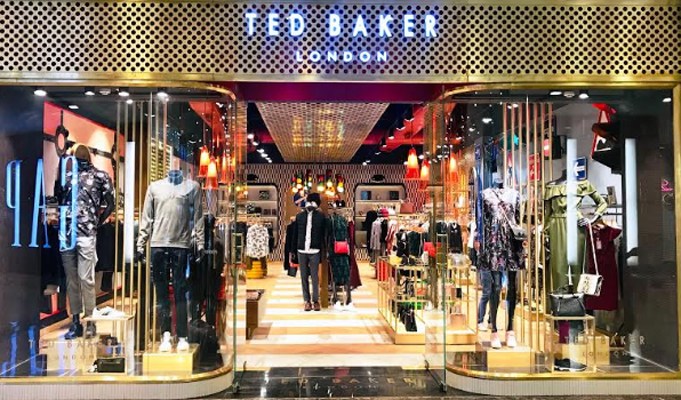
  • Ted Baker plots new heading after hefty loss

    Ted Baker plots new heading after hefty loss

    British lifestyle brand Ted Baker is seeking to raise £95 million to strengthen its balance sheet in the wake of the Covid-19 pandemic and fund a strategy for expansion dubbed ‘Ted’s Formula for Growth’.

    The plan was revealed along with its results for the year to January 25 during which global sales slipped 1.4 percent to £630.5 million, which the company attributed to discounting to remain competitive against its rivals.

    Wholesale revenue rose by 9.6 percent on the back of expansion into footwear, without which it would have slipped 3.7 percent on a like-for-like basis. Store sales were down by 5.3 percent and licensing revenue down 14.1 percent.

    Recently appointed CEO Rachel Osborne says the new strategy and recapitalization plan will strengthen the company as it rides out the Covid-19 crisis which has had significantly more impact on global retailing since Ted Baker’s financial year closed. Revenue was down 36 percent during the 14 weeks from January 26 to May 2 as stores were shut down in many parts of the world.

    “The Ted Baker brand is much loved, it has a unique personality and character built up over many decades, and that provides us with a remarkably strong foundation from which to continue our international growth,” said Osborne.

    “Over the past six months, our new executive team has pulled together and undertaken a thorough review of the business, identified key opportunities, and acted decisively in a number of areas. I am confident that our transformation plan will enable us to capitalize on our opportunities and deliver value for all of our shareholders.”

    Ted Baker reported a loss of £79.9 million for the year, a significant turnaround from a £30.7 million profit for the year prior. The company said the deficit was due to £84.6 million of non-underlying expenses, mainly an inventory write-down, store asset impairments, and a £7.6 million loss related to the sale of the Asian business.

    The strategy Osborne will now lead, Ted’s Formula for Growth, will focus on making the most of the company’s strong brand, its diversified channel footprint, (retail, wholesale and license channels; multiple product categories and geographic spread), combined with substantial investments during the past five years in IT, CRM, logistics, and infrastructure.

    The company will focus first on stabilizing the foundations of the current business, which has been disrupted in recent months by multiple executive changes, driving growth, and achieving operational excellence.

    The company wants to re-energize the brand, increase engagement, and encourage more people to consider purchasing the brand. It seeks to attract more customers and “gain a higher share of wallet and lifetime value through deeper and broader relationships with new and existing customers” using technology to increase customer acquisition and retention, and increase conversion online.

    The company wants to expand its product range and relevance to make clothing more relevant to all-day occasions, and drive accessories, footwear, and large license partner categories.

    In an outlook note, the company said it plans to cut the number of its suppliers from more than 150 to 100, reduce its stock cycle from three years to two, and reduce staff costs at both head office and in stores.

    By 2023, Ted Baker expects to achieve sales growth of around 5 percent and a pretax earnings margin of between 7 and 10 percent.

    Emily Salter, retail analyst at GlobalData, said that although Ted Baker’s sales are likely to start improving in the next few weeks as stores across Europe start to re-open, recovery will be slow for it as many consumers will be unwilling to return to shopping locations and economic uncertainty will be high, reducing the propensity to spend on premium brands.

    “Prior to the onset of Covid-19, Ted Baker’s sales were suffering as the appeal of the brand was waning as it struggled to resonate with shoppers, with the store and online revenue falling by 5.3 percent and 2.4 percent respectively for the year to February. Although the retailer blamed discounting for this decline, the fact that it was unable to drive growth online points to problems with the relevance of the brand.

    “It now has a permanent CEO and CFO to help address these issues but turning the business around will not be an easy feat as consumer shopping habits are likely to change in the long term due to Covid-19, with shoppers purchasing less frequently and increased spend shifting online,” she said.
  • BeChef plans 50-strong shared kitchen network across Japan

    BeChef plans 50-strong shared kitchen network across Japan

    BeChef has launched a shared kitchen in Kyoto, with plans to host 300 eateries across Japan within the next three years.

    The first BeChef + Kyoto-branded shared kitchen occupies a 50sqm area which features three separate kitchens. There is available space for up to six stores, which can work with different delivery services, including UberEats and Rakuten.

    The Kyoto shared kitchen also houses a dine-in space for customers.

    “For those involved in the restaurant business, I think opening a business independently is a big dream,” said Masafumi Tobe, representative director. “However, about 70 percent of restaurants close after three years of operation, and it is said that only about 10 percent of the stores are still open after 10 years.”

    According to BeChef, brands opening at the BeChef + Kyoto shared kitchen will not be charged fees to move in or out and restaurants affected by Covid-19 will be exempted from administrative fees.

    BeChef is to open more facilities in Fukuoka, Tokyo, and Osaka later this year. The company said that it aims to host 300 eateries in 50 facilities nationwide within three year

  • Teafolia closing down, Singapore’s latest victim of the virus outbreak

    Teafolia closing down, Singapore’s latest victim of the virus outbreak

    Singaporean bubble tea brand Teafolia has permanently ceased operations in the territory.

    A Facebook post announcing the closure cited the “current economic situation” as the reason for shuttering its outlets. The brand had traded in Singapore for the past three years.

    Teafolia temporarily closed two of its three outlets during Singapore’s circuit breaker period, a lockdown imposed to counter the spread of the coronavirus pandemic on the island. It permanently closed its Bedok Mall outlet for reasons of “economic circumstances” a fortnight ago.

    Teafolia was popular amongst locals for fruit teas, milk-based drinks, and slushies as well as bubble tea. Its website lists one store in Los Angeles, USA, although it remains unclear whether or not the brand’s sole international location remains in business.

  • CIMB Appoints Group CEO

    CIMB Appoints Group CEO

    He succeeds Zafrul Tengku Abdul Aziz, who resigned as group CEO of CIMB Group Holdings and CEO of CIMB Bank in March to join the Malaysian cabinet as finance minister.

    CIMB Group, Malaysia’s second-largest financial services provider by assets, has appointed Abdul Rahman Ahmad as group chief executive officer/executive director for CIMB and CEO/executive director of CIMB Bank, effective June 10, the bank announced in a statement.

    Abdul Rahman brings more than two decades of experience in leadership roles across several industries, including as CEO of Malaysian Resources Corporation, CEO of Media Prima, CEO of government-linked private equity firm Ekuiti Nasional, and president and most recently as group CEO of asset management firm Permodalan Nasional.

    As the industry undergoes fundamental changes, he will bring a fresh perspective to lead CIMB’s continued transformation and build upon its successful ASEAN franchise, CIMB chairman Mohd Nasir Ahmad said in the statement.

    CIMB offers consumer banking, commercial banking, investment banking, Islamic banking, and asset management products and services. Headquartered in Kuala Lumpur, the Group is present in all 10 Southeast Asian nations, with 697 branches as of March 31, 2020.

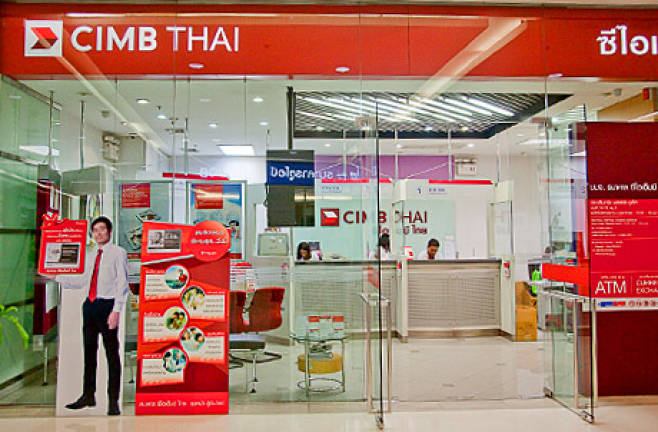
    Beyond Southeast Asia, the Group has market presence in China, Hong Kong, India, Korea, the U.S., and U.K. CIMB Group operates its business through three main brand entities, CIMB Bank, CIMB Investment Bank, and CIMB Islamic. CIMB Group is also the 92.5 percent shareholder of Bank CIMB Niaga in Indonesia, and 94.8 percent shareholder of CIMB Thai in Thailand.

  • Amazon is making Alexa even more powerful with a slew of new features

    Amazon is making Alexa even more powerful with a slew of new features

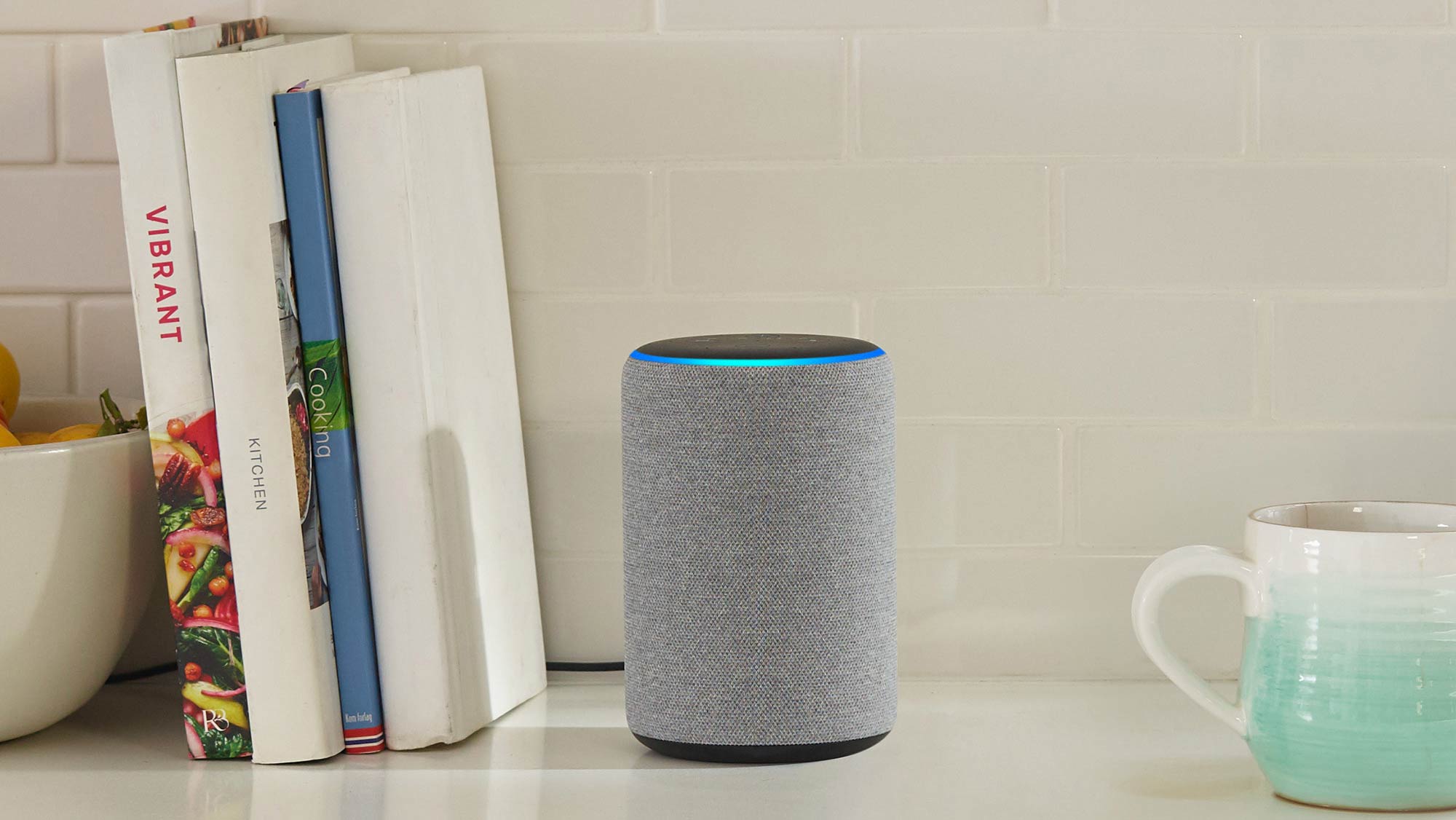
    When it comes to smart speakers, Amazon dominates the US market with its Alexa-powered Echo devices. According to a report published early this year by eMarketer, nearly 70% of US smart speaker users will own an Echo in 2020, down from 73% last year.

    The more reason for Amazon to continue to improve Alexa, its personal digital assistant powering many home devices in the United States. Amazon announced recently a host of new features that are now available in Alexa or will be in the coming weeks. Here are some of the most important new Alexa features recently introduced by Amazon:

    • Drop In for all of your devices – customers can now use group Drop In to instantly connect all of their Echo devices into a group conversation. Simply say, “Alexa, drop in on all devices” to start an audio intercom call to have conversations like “what should we have for dinner?” or “does anyone want anything from grocery store?”
    • Reminders on all devices – customers in the U.S. can now set reminders to play across all their Alexa devices, a frequently requested feature. In the Alexa app, customers can choose “All devices” when creating an individual reminder or enable the feature for all reminders by going to Settings > Reminders and opting into “Announce on all devices.”
    • Photo sharing and reactions – you can easily share photos with your Alexa contacts from your Echo Show and the Alexa app. Now, when someone shares a photo with you, you can send a reaction back by choosing one of three animated emoji options, including “laugh,” “love,” and “wow.”
    • Daily Music Pick – Amazon Music revealed Daily Music Pick, a new Alexa feature in which artists provide customers with daily music recommendations. Just say “Alexa, play the Daily Music Pick” and each day a new artist will select a song, album, or playlist that they’ve been enjoying at home.

    Besides these new features, Amazon announced that Echo Auto is making its way to Australia and that Alexa is now available for Volkswagen Golf 8 owners in the UK, Germany, France, Italy, and Spain. Also, Lenovo Smart Tab M10 FHD Plus (2nd Gen) and Sonos Arc, a new premium smart soundbar launching on June 10, will be getting Alexa built-in.

  • Google releases new features for some of its Android apps

    Google releases new features for some of its Android apps

    If you own an Android smartphone, you’ll be getting a handful of nifty features in the coming months. However, if you own a Pixel phone, you’ll be getting most of these new features starting this week.

    Along with the new features coming to Pixel phones today, Google announced a few of its Android apps will be updated with meaningful improvements. For example, the Digital Wellbeing app is now getting a Bedtime mode, which replaces Wind Down. When it’s enabled, Bedtime mode uses DND (Do Not Disturb) to silence notifications, calls, and texts during sleep. Also, enabling Bedtime mode will make your phone fade the colors to black and white.

    The new update will make it easier for users to customize how and when to turn on Bedtime mode. It’s now possible to choose to have it turn on automatically or after you plug in your phone to charge.

    Google also added a new option that will allow users to pause Bedtime mode without having to adjust their schedule. If your Android smartphone has Digital Wellbeing and parental control settings, then you should be able to use Bedtime mode as well.

    The Clock app will also receive a new Bedtime tab, which lets you set daily sleep and wake times to better organize your sleep schedule. You’ll receive reminders before bedtime and an option to play calming sounds from various music streaming services like Calm, Spotify, and YouTube Music.

    Moreover, those with smartphones that feature Digital Wellbeing will be able to pair with Bedtime mode to further prevent interruptions while sleep. Last but not least, the Clock app is getting a so-called Sunrise Alarm to wake you up more gently.

    Also, the YouTube app now offers a new option that allows users to set a bedtime reminder. You’ll be able to choose to see the reminder at bedtime or after the video completes.

    Finally, the Family Link app got updated with the option to set restrictions for children, such as managing screen time activity, app downloads, in-app purchases, and bedtime for their device. The app lets you establish daily bedtime schedules and modify them as needed.

    The new bedtime features will be rolled out to Pixel devices starting today.

  • Yum China Lifts Off Beyond Burger in KFC, Pizza Hut, Taco Bell

    Yum China Lifts Off Beyond Burger in KFC, Pizza Hut, Taco Bell

    Yum China has entered into a partnership with plant-based meat manufacturer Beyond Meat to trial a burger at selected KFC, Pizza Hut, and Taco Bell locations within the country.

    The agreement marks the introduction of Beyond Meat’s Beyond Burger in Mainland China.

    “We see great potential for the plant-based meat market in China,” said Yum China CEO Joey Wat. “This latest introduction … is expected to capture valuable consumer feedback across different regions in China. It will enable us to optimize flavors and processes and help assess the potential for larger-scale rollouts in the future.”

    Beyond Meat founder and CEO Ethan Brown said Chinese consumers are seeking out the nutritional and environmental benefits of plant-based meats.

    The burger will be available at five KFC locations in Beijing, Chengdu, Hangzhou and Shanghai. The Pizza Hut offering will launch at six Shanghai locations and will constitute part of the brand’s first-ever burger offering. Taco Bell will offer a taco made with the plant-based Beyond Burger patty at three stores in Shanghai.

    All Beyond Burger promotions will be sold as a three-day limited offer.

    The move follows Starbucks China launching a range of foods using plant-based meat alternatives, including two pasta dishes and a wrap featuring Beyond Meat and another dish using OmniPork.

  • Liverpool FC opens E-commerce platform in Japan

    Liverpool FC opens E-commerce platform in Japan

    Liverpool FC has partnered with soccer shop Kamo to launch its first online store in Japan.

    The Liverpool FC online store offers a wide range of replica kits and the brand’s authentic merchandise, apparel and fashion accessories, including the exclusive Hello Kitty x LFC Collection.

    “As a key player in the football and sports-retail industry, we know this store has been a long time coming for Liverpool FC fans here,” said Ken Kamo, president of Kamo.

    “We’re looking forward to working together to bring supporters here closer to the club they love.”

    Launched in 1968 as a small football shop, Kamo operates 23 brick-and-mortar stores and an e-commerce site, offering a selection of sport brands including Puma, New Balance and Adidas.

    Senior VP at Liverpool Football Club Mike Cox, said: “I’ve been able to see first-hand how passionate our fanbase is here and as one of the world’s premier shopping destinations, it’s an exciting opportunity for the club to connect with supporters in the region.”

  • Vietnam retail sales bounce back after virus outbreak shutdown ends

    Vietnam retail sales bounce back after virus outbreak shutdown ends

    Vietnam retail sales have dropped just 4 percent over the first five months of this year, despite a four-week shut down due to the Covid-19 crisis.

    According to the General Statistics Office (GSO), the retail revenue reached more than US$82.36 billion from January to May.

    ‘Non-essential’ stores across the country were closed from the end of March through most of April, with only supermarkets and pharmacies allowed to continue to trade. However, throughout the closure, all retailers were allowed to sell goods online.

    In May, after restrictions were lifted, Vietnam retail sales surged 27 percent from April’s figures.

    Sales of consumer goods accounted for 80.6 percent of retail revenue, increasing by 1.2 percent year on year.

    Growth sectors included fresh-food products and home appliances while educational products and apparel sales fell by 8.2 percent and 3 percent respectively

    Although restaurants and other catering businesses have resumed their operations, the F&B sales fell 26 percent year on year across the first five months of this year.

  • JPMorgan South & Southeast Asia CEO to retire

    JPMorgan South & Southeast Asia CEO to retire

    The Chairman and CEO of South & Southeast Asia for JPMorgan, Kalpana Morparia is reportedly planning on stepping down from her role in Q1 2021.

    Morparia first joined the firm in 2008, and in addition to her regional roles acts as the Senior Country Officer for JPMorgan in India, based in Mumbai. Speaking of the offer to join the firm, Morparia said: “Out of the blue, I received this offer from JPMorgan. This was again one of the great turns of fate that I joined a great organization like JPMorgan. Despite all the negative clouds you see today in the country, I believe in the great growth story of India. JPMorgan is extremely focused on serving its clients in India.

    Prior to joining the American firm, she was affiliated with ICICI Bank, an Indian multinational banking and financial services company, for over three decades.

    She first joined ICICI in 1975, beginning in the bank’s legal department, as she pursued a Law degree following her science-focused studies. In 1991, Morparia traveled to the USA to study capital markets at Davis Polk & Wardwell. Subsequently, she enacted the listing of ICICI Bank in 1999 on the New York Stock Exchange and is credited with the 2002 merger of ICICI Bank and ICICI.

    Morparia will be succeeded by Madhav Kalyan as Senior Country Officer for JPMorgan India, who currently serves as Managing Director and CEO for the India operation, entering the role in Q4 2009, according to his LinkedIn.

    Leo Puri is reportedly going to be appointed as Chairman of South & Southeast Asia, joining JPMorgan in Q1 2021, and Murli Maiya will take up the reins as CEO. Both will report to JPMorgan’s CEO for Asia Pacific, Filippo Gori.

    In a statement, JPMorgan said: “Kalpana Morparia, Chairman, South and Southeast Asia, informed the firm of her desire to retire. She has agreed to stay with the firm until Q1 2021, and help lead the firm’s efforts in South and Southeast Asia as we and our clients adapt to the new economic and work environment.”

    “Leo is a very senior and experienced finance professional who will bring a wealth of industry knowledge and depth of relationships. He will be dedicated to covering our critical external stakeholders, including key clients, regulators and industry bodies,” the company statement continued.

  • DHL Global Forwarding moves critical goods from China to Ghana

    DHL Global Forwarding moves critical goods from China to Ghana

    PPE shipment was transported as part of DHL’s dedicated weekly air freight solution from China to Africa; UbuntuConnect – the specific air freight solution for the China-Africa lane – will be extended due to high demand.

    DHL Global Forwarding, the leading international provider of air, sea and road freight services is leveraging its global network to facilitate the air transportation of critical personal protective equipment from China to Ghana, via Dubai. From the capital city, Accra, the shipment is distributed across the country to equip front-line healthcare workers in their fight against Covid-19.

    This was made possible as part of DHL’s dedicated 100-ton weekly air freight service from China into the Middle East and Africa launched last month. Aptly named after the Nguni Bantu word for “humanity”, UbuntuConnect sees cargo being consolidated across China into Guangzhou City and shipped via Dubai to several countries across Africa, within a span of two to three days. Leveraging Dubai’s strategic geographical locations as the gateway between the Orient and Africa, DHL has transported two shipments to Ghana thus far and expects more in the coming weeks.

    “The ongoing pandemic is causing a dearth in global air freight capacity making it ever critical that we continue to amass our resources globally to ensure a stable supply chain, especially for medical and critical supplies. With UbuntuConnect, we are carving out specific routes from the transit hub in Dubai to Africa, so life-saving essentials can continue to reach local communities in Ghana,” said Serigne Ndanck Mbaye, CEODHL Global Forwarding (West Africa) and Country Manager, Ghana.

    DHL Global Forwarding has been operating UbuntuConnect since April 21 to meet the ongoing demand for medical equipment and personal protective gear such as masks, gloves, hand sanitizers and goggles. From May 26, DHL Global Forwarding will begin to consolidate cargo across China, for an uplift in Shanghai – as part of ongoing efforts to adjust the network as needed to best meet customers’ needs.

  • Volkswagen Group Announces Personnel Changes In Technical Development and Product Line Organisation

    Volkswagen Group Announces Personnel Changes In Technical Development and Product Line Organisation

    The Volkswagen Group has announced personnel changes in technical development and product line organization. Dr. Matthias Rabe has been named Member of the Board for Engineering at Bentley effective August 1, 2020. He succeeds Werner Tietz, who moves to SEAT as Executive Vice-President for Research and Development as of July 1. Dr. Matthias Rabe joined the Volkswagen Group in 1988 after completing his studies in mechanical engineering at RWTH Aachen. Having held several senior management posts, he moved to Shanghai Volkswagen as Head of Chassis and Electrical Development in 1992. He took over as Head of Group Research at Volkswagen AG in 2003.

    He then assumed responsibility for Body Development at the Volkswagen Passenger Cars brand from 2007 to 2011. In January 2011, he moved to SEAT in Martorell as Executive Vice-President for Research and Development. Matthias Rabe is currently Chief Technology Officer of the Volkswagen Passenger Cars brand in Wolfsburg.

    Axel Andorff will take over from Tietz, who assumes responsibility for the midsize and MEB Product Line at Skoda. He takes over from Matthias Glodny, who becomes Head of the Modular Toolkits, Drivetrains and Modules Product Line at Volkswagen Passenger Cars brand.

    Axel Andorff holds a degree in industrial engineering and joined the Volkswagen Group a year ago. He began his professional career as a trainee at DaimlerChrysler in Stuttgart in 2000. In 2001, he became assistant to the Purchasing Director at Mercedes-Benz Cars and was placed in charge of the series purchasing interior at Mercedes-Benz in 2004. Three years later, Axel Andorff was given responsibility for setting up and heading purchasing at Daimler Greater China in Beijing. He moved to Stuttgart to head project management for Mercedes-Benz New Compact Cars in 2009. In 2013, he became Head of Product Concepts and Planning Mercedes-Benz Compact Cars and Electric Vehicle Architecture. He was appointed Executive Vice-President for Research and Development at SEAT in Martorell in 2019.

  • South Korean duty-free retailers closing downtown stores

    South Korean duty-free retailers closing downtown stores

    South Korean duty-free retailers are temporarily shuttering metropolitan stores in response to a significant decline in tourist numbers caused by the coronavirus epidemic.

    Numerous outlets at prime tourist destination Jeju Island will be closed this month. A Lotte Duty-Free store that has already been operating under reduced hours since February will close pending the resolution of the crisis. Hotel Shilla’s store, which has suspended trading on weekends and holidays throughout the outbreak, will cease trading for a fixed one-month period.

    Jeju Island tourism has faltered significantly in recent months under heavily-reduced international flights, with a 99.2 percent drop in foreign tourist numbers year-on-year during April.

    The South Korean duty-free retailers shuttering stores also include Shinsegae Duty-Free’s locations in Gangnam and Busan will close on Sundays and Mondays from this month on, while airport duty-free stores under all local operators are largely closed for business at this time.

  • Apple takes action to close most U.S. stores after looting occurs

    Apple takes action to close most U.S. stores after looting occurs

    Some Apple Stores were looted last night as the U.S. suffered through another night of violent protests related to the death of George Floyd. Floyd was killed when a Minneapolis police officer put his knee into the man’s neck for nine minutes even though he was handcuffed, compliant with all of the officers’ demands, and no longer a threat. All four officers were fired and one charged with third-degree murder.

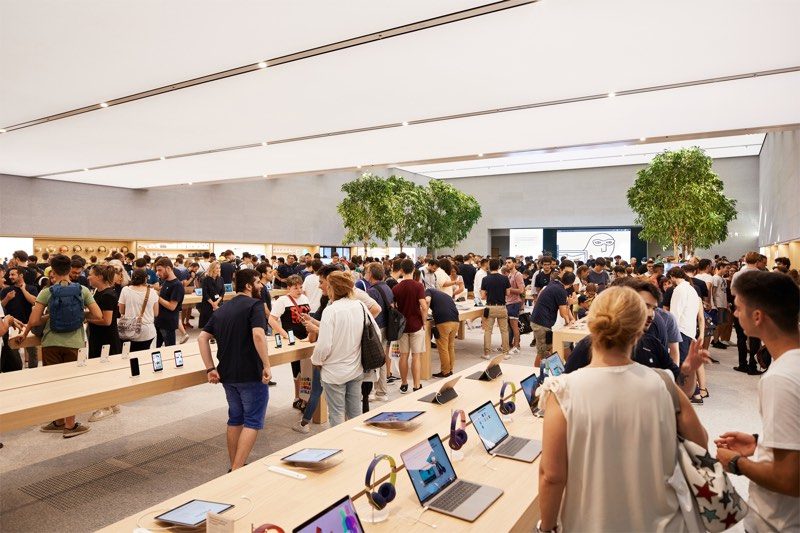
    To protect its employees from the violence, Apple has decided to temporarily close some of its brick and mortar locations. These stores had only recently reopened after being shut down because of the coronavirus pandemic. Apple Stores that were damaged or looted included locations in Portland, Philadelphia, Brooklyn, Salt Lake City, Los Angeles, Charleston, Washington, D.C., Scottsdale, and San Francisco. Some of the stores that were heavily damaged are closed indefinitely while others will reopen on Monday. Apple today said, “With the health and safety of our teams in mind, we’ve made the decision to keep a number of our stores in the US closed on Sunday.”

    One Twitter subscriber named Brian Mitchel tweeted about the Apple Store Uptown located in Minneapolis. The store was looted, boarded up, looted again, and boarded up again. In Portland, the Apple Store at Pioneer Place had tall windows smashed on all sides. This location had just reopened two days ago and it now will take some time to repair the store to make it safe for customers. Video from Portland’s KOIN 12 shows people running into the aforementioned Apple Store and running out with boxes of iPhones and iMacs in their hands.

    What the looters probably don’t know is that the iPhones that they steal from looted stores won’t work. Since 2016, demo iPhones in a particular Apple Store do not work if removed from that store. In the latter situation, these demo units will only respond to “Find My iPhone.”

    Out of the 271 U.S. Apple Stores, 140 stores had reopened over the last couple of weeks. It isn’t clear whether the violence will delay the reopening of the remaining 131 locations. Apple’s retail chief Deirdre O’Brien said earlier this month that “Our new social distance protocol allows for a limited number of visitors in the store at one time so there may be a delay for walk-in customers. We recommend, where possible, customers buy online for contactless delivery or in-store pickup.”

    If you decide to visit an open Apple Store, O’Brien says, “In every store, we’re focused on limiting occupancy and giving everybody lots of room, and renewing our focus on one‑on‑one, personalized service at the Genius Bar and throughout the store. We’re also taking some additional steps in most places. Face coverings will be required for all of our teams and customers, and we will provide them to customers who don’t bring their own. Temperature checks will be conducted at the door, and posted health questions will screen for those with symptoms — like cough or fever — or who have had recent exposure to someone infected with COVID‑19. Throughout the day, we’re conducting enhanced deep cleanings that place special emphasis on all surfaces, display products, and highly trafficked areas.”

    Because of the COVID-19 pandemic, the fiscal third quarter for Apple was looking glum even before the looting forced the company to close most U.S. Apple Stores today. And again, stores with extensive damage are going to be closed for some time.