Tag: asia

  • HBO Now waves goodbye to older Apple TVs

    HBO Now waves goodbye to older Apple TVs

    The HBO Now app waves goodbye to 2nd- and 3rd-gen Apple TVs. The company has removed the app from the devices above after extending the deadline for two additional weeks. Initially, the deadline was set for the end of April, but after complaints from users, the date was pushed back to May 15.

    Third-gen Apple TVs launched eight years ago, and HBO thinks it’s time for an upgrade. However, people don’t buy set boxes as frequently as other gadgets (mobile phones, for example), and many of them are still using these older Apple TV models. The timing is not perfect either – there are rumors of a tvOS hardware refresh later this year, so don’t rush to the stores yet.

    HBO Go will have to go, too – it will be available for a couple more months and then follow HBO Now’s fate. The upcoming HBO Max streaming service will also be supported on the 4th-gen and later Apple TVs. All in all, everything points toward an upgrade, but if new hardware is in the pipeline, a little patience can be a wiser choice.

  • Cashed-up Chinese consumers are buying more local brand names

    Cashed-up Chinese consumers are buying more local brand names

    Wealthy Chinese consumers are spending up large on domestic brands sold online, according to new data from local e-commerce giant JD.

    The data shows that 490 out of 572 high-performing brands which surpassed RMB100 million (US$14 million) in transaction volume from January to April this year were domestic. Out of 230 brands surpassing a transaction volume of RMB 300 million ($42.2 million) during the period, 79 were domestic brands – and 125 out of 151 brands surpassing RMB500 million ($70.3 million) were also domestic.

    Key insights from JD’s data suggested that domestic brands are gradually becoming the top choice of Chinese consumers as quality improves, with the proportion of domestic brand consumption increasing year-by-year in 1st-tier cities as more well-educated and well-paid consumers buy more. Female consumers aged below 25 pay more for domestic brands and pay more attention to them, and in general, domestic brands are attracting more high-income consumers.

    Furthermore, almost all consumers of domestic brands throughout last year were shown to be sensitive to product reviews, indicating an emphasis on product quality and the general pursuit of high-quality consumption.

    Last year, growth rates of domestic brands in terms of the quantities of products, brands, and orders were all more than 20 percent higher than those of international brands year on year. That growth gap further expanded to 30 percent in the first quarter this year following the coronavirus outbreak.

    In terms of transaction volume for domestic versus international brands for the whole of last year, the proportion of domestic brands in categories including maternal and baby, sports and personal care increased rapidly. In particular, facial cleansing products, female care products and other categories exceeded more than 150 percent on average. Imported products grew the most in categories such as toys and musical instruments, cleaning, and paper products.

    E-commerce channels helped domestic brands reach lower-tier markets throughout last year, with 5th and 6th tier cities remaining the primary driving force of consumption of domestic brands. Even so, the situation is evolving in 1st tier cities, which are slowly turning to embrace more domestic brands.

  • Malaysia’s Sunway Pyramid launches online portal for Hari Raya

    Malaysia’s Sunway Pyramid launches online portal for Hari Raya

    Malaysia’s Sunway Pyramid mall has launched an online platform to help customers purchase safely during Hari Raya celebrations this year.

    Sunway Pyramid’s online store offers more than 100 brands ranging from beauty, home decor, healthcare, footwear to digital lifestyle. Several online campaigns will be organized including exclusive promotions and interactive content for the Hari Raya celebrations and a three-day flash sale at the end of this month.

    “The past two months have definitely been a challenging period for us all, and we wanted to give our retailers the opportunity to reach their customers within a few clicks,” said Kevin Tan, COO of Sunway Malls. “Not all retailers have the capability to establish an online presence and so, we hope this will help strengthen their business operations for greater survivability post-MCO,” he said referring to Malaysia’s Movement Control Order introduced to fight the spread of Covid-19.

    According to Tan, the online launch is the group’s latest attempt at digital transformation to “provide shoppers with added convenience and help bolster retailers’ businesses”.

    For shoppers’ safety during the festive season, Malaysia’s Sunway Pyramid mall, together with the rest of the Sunway malls have put strict measures including scanning a QR code and registering when entering the mall.

  • Vestiaire Collective kicking off on Zalora

    Vestiaire Collective kicking off on Zalora

    Fashion e-tailer Zalora has partnered with global pre-owned fashion platform Vestiaire Collective.

    Zalora’s Hong Kong customers can now access more than 5000 authenticated Vestiaire items across womens’ and mens’ categories via the firm’s website and app. Plans are currently in place to extend the offering to other Zalora markets.

    The partnership is an effort to promote circular fashion, intending to inspire consumers to be more conscious of their consumption habits. All Vestiaire products listed on Zalora undergo two rounds of checks to ensure authenticity and quality. All orders are fulfilled by Zalora’s own delivery network.

    “Zalora is committed to promoting sustainability in the region and is determined to shape a sustainable fashion ecosystem,” said Zalora CEO Gunjan Soni. “Companies now need to work together to evolve from just reducing the impact to making a positive impact.

    “Our partnership with Vestiaire Collective effectively expands our pre-loved category, offering more choices to our Zalora shoppers and giving them a chance to partake in joining the circular fashion movement.”

    “Vestiaire Collective is excited to partner with Zalora to further increase our local footprint of circular fashion within Asia,” said Vestiaire’s APAC chief regional officer Pierre Everling. “Sustainability is one of the founding pillars of our business and we’re thrilled to open the doors of pre-loved fashion to more users in new markets, allowing more people to embrace circularity in their daily lives.”

  • General Motors Instructs Mexican Suppliers To Prepare To Resume Operations

    General Motors Instructs Mexican Suppliers To Prepare To Resume Operations

    The president of General Motors Co’s Mexican unit advised suppliers to prepare to resume operations after the Mexican government said the automotive industry could exit the coronavirus lockdown before June 1 with adequate safety measures.

    “We are now beginning a new phase given the Mexican government’s official announcement earlier this week to consider the transportation manufacturing industry as essential for the country’s economy,” Francisco Garza, president of General Motors de Mexico, wrote in an email to suppliers dated on Friday that was viewed by Reuters.

    Noting the Mexican government is due to publish final safety rules on Monday, Garza added: “Once those final guidelines are known, we will be in a position to move swiftly to comply.”

    GM is tentatively planning to restart operations at its auto assembly plant in the Mexican city of Silao on Wednesday, according to a message to workers seen by Reuters on Sunday.

    Hundreds of workers at General Motors and other auto companies have gone back to work to make face shields, surgical masks and ventilators in a wartime-like effort to stem shortages of protective gear and equipment.

    Workers at the plant in the central state of Guanajuato that has been idled for weeks due to the coronavirus outbreak had previously been told to plan to return to work on Monday.

    GM did not immediately respond to a request for comment.

    The Mexican government’s announcement, made on Friday, means that automakers from as early as this week can begin reconnecting supply chains between Mexico and the rest of North America, which depends heavily on parts made south of the U.S. border.

    Senior U.S. politicians and auto companies had pressed the Mexican government to reopen factories.

    Some politicians are wary, however, of opening too fast. Mexico registered its first case of the coronavirus weeks after the United States and Canada and the toll of daily infections and deaths in the country reached new peaks over the past few days.

    Mexico has registered 49,219 cases of the coronavirus and 5,177 deaths.

  • Subaru Says Full-Year Profit Rose 16%

    Subaru Says Full-Year Profit Rose 16%

    Subaru Corp on Monday posted a 15.7% rise in annual operating profit in the year that ended in March as it recovered from production delays and product recalls last year, but warned of uncertainties from the coronavirus outbreak this year.

    Profit was 210.3 billion yen ($1.96 billion) for the year just ended, up from 181.7 billion yen a year earlier under international financial reporting standards. It exceeded a consensus estimate of 204.7 billion yen profit drawn from 17 analysts polled by Refinitiv.

    Subaru declined to give an earnings forecast for the current business year, citing uncertainties about the longer-term impact of the coronavirus outbreak on its operations and sales.

    It saw a 3% rise in global vehicle sales in the year to March to 1.03 million units, bouncing back from last year, when a defective steering component and measures to improve inspection tests had stopped output for two weeks at its sole assembly plant in Japan.

    The issue stems from faulty airbags made by Japanese automotive parts company Takata.

    The automaker managed to grow sales for the year despite a 40% drop in global sales in March, when vehicle plants and car showrooms around the world began to close due to coronavirus lockdown measures ordered in many countries.

    The automaker resumed limited vehicle production at its plants in Japan and the United States on May 11 after weeks of closure.

    Though global automakers have begun to restart vehicle plants, anemic demand, supply chain disruptions and social distancing measures at factories are expected to limit output in the coming months.

    Some analysts believe industry-wide global auto sales could slump by a third this year and that any recovery will be slow and patchy as job losses and reduced incomes weigh on consumer spending.

  • Facebook buys GIPHY for $400 million

    Facebook buys GIPHY for $400 million

    Facebook announced yesterday that it is acquiring GIPHY. The latter started in February 2013 as a search engine for GIFs and it was apparent that co-founders Alex Chung and Jace Cooke were on to something after they attracted one million users during GIPHY’s first week. Soon, GIPHY was allowing users to post, embed, and share GIFs on Facebook.

    Half of GIPHY’s traffic comes from Facebook-owned apps with Instagram making up 50% of that figure. The other apps include WhatsApp, Messenger, and the Facebook app. After the transaction closes, people will still be able to upload GIFs, and developers and partners will still have access to GIPHY’s APIs. More importantly, GIPHY’s creative community will still be able to create the usual “great content.”

    While Facebook didn’t announce the price of the transaction, Axios says that GIPHY cost Facebook $400 million. In 2014, Facebook closed on its purchase of messaging app WhatsApp; that purchase was paid for in Facebook stock and was originally valued at $19 billion. By the time the deal closed, a rally in Facebook’s shares brought the price of the transaction to a stunning $21 billion. A couple of years before, Facebook purchased Instagram for $1 billion in what turned out to be one of the biggest steals in the history of technology.

    Facebook says, “By bringing Instagram and GIPHY together, we can make it easier for people to find the perfect GIFs and stickers in Stories and Direct. Both our services are big supporters of the creator and artist community, and that will continue. Together, we can make it easier for anyone to create and share their work with the world…GIFs and stickers give people meaningful and creative ways to express themselves. We see the positivity in how people use GIPHY in our products today, and we know that bringing the GIPHY team’s creativity and talent together with ours will only accelerate how people use visual communication to connect with each other.”

  • HTC U Ear true wireless earbuds seen on FCC’s website

    HTC U Ear true wireless earbuds seen on FCC’s website

    HTC is gearing up to join the insanely competitive wireless earbuds market. The company’s debut wireless hearables, the HTC U Ear have been spotted on FCC, implying that they could be here anytime.

    In addition to revealing the name of the wireless earphones, the listing also contains images that give us a good look at them. Design-wise, they bear a lot of resemblance to the Apple AirPods. They have a glossy black finish and come in a cube-shaped box. Although the USB-C charging port can be seen in the images, we don’t know if wireless charging will also be supported. It also looks like they will ship with a USB A-to-C cable.
    The true wireless headsets market is currently dominated by Apple. However, just cloning AirPods wouldn’t necessarily work for HTC. Back in 2010, HTC acquired a major stake in Beats Electronics to help with smartphone sales. However, nothing much came out of the deal, and by 2013, the company had sold back its stake.
    Later on, Apple bought Beats, and the acquisition totally paid off. In fact, it’s believed that the takeover helped Apple gain an insight into the Bluetooth headphones market trends, which ultimately resulted in the birth of the AirPods and the jack-less iPhone.
    The success of AirPods has led rivals to create similar products of their own. Google, Amazon, and Microsoft have all jumped the bandwagon, and OnePlus is also expected to follow suit.
    Microsoft, Apple, and Google also use their software to their advantage. For instance, the Surface Earbuds offer Office 365 integration, and the Pixel Buds 2 provide hands-free activation of Google Assistant and live language translation. Amazon’s Echo buds feature always-on Alexa and are priced aggressively.
    Thus, unless the HTC U Earbuds offer something that makes them stand out and are priced competitively, they will be just another pair of wireless earbuds.
  • Apple to reopen 25 U.S. Apple Stores this coming week

    Apple to reopen 25 U.S. Apple Stores this coming week

    Deirdre O’Brien, Apple’s Senior VP of Retail + People, published an open letter today on Apple’s website. In the letter, O’Brien notes that nearly 100 Apple Stores around the world have reopened. First, let’s have a little recap. The company was one of the first insides of China to take action right away, and by using social distancing Apple was able to slow the spread of the virus. Apple has continued to develop a set of rules that it has stuck within China and elsewhere, and this has allowed it to safely keep its stores open for months. It plans on bringing over these rules to the U.S.

    On March 13th, Apple reopened its retail stores in China, and on April 18th it opened its one location in South Korea. Last Monday, an Apple Store in Idaho became the first in the states to turn the lights back on again and as of today, there are 99 brick and mortar Apple Stores open for business. In the coming week, there will be 25 more U.S. stores re-opening along with 12 in Canada and 10 in Italy.

    O’Brien says, “Our commitment is to only move forward with a reopening once we’re confident we can safely return to serving customers from our stores. We look at every available piece of data — including local cases, near and long‑term trends, and guidance from national and local health officials. These are not decisions we rush into — and a store opening in no way means that we won’t take the preventative step of closing it again should local conditions warrant.

    You can check the status of any Apple Store by going to this website and typing in the store’s zip code. Each reopened store will limit the occupancy and make sure that everyone has sufficient room. The Genius Bar will focus on one-to-one personalized service. Team members and customers will be required to wear face masks and those without a mask will be provided one by Apple. Customers will have their temperatures taken at the door and posted health questions will screen for those with a fever or a cough, or who had recent exposure to someone affected. During the day Apple will allow the stores to be deep cleaned with “special emphasis on all surfaces, display products, and highly trafficked areas.” And many Apple Stores will provide curbside pick-up and drop off. Online orders can be picked up from an Apple Store or shipped to a home address. As O’Brien wrote, “you can continue to find the same excellent standard of customer service and support online and over the phone to help you with any questions you might have.”

    The executive in charge of the Apple Store, Deirde goes on to add, “The response to COVID‑19 is still ongoing, and we recognize that the road back will have its twists and turns. But whatever challenges lie ahead, COVID‑19 has only reinforced our faith in people — in our teams, in our customers, in our communities. Down the road, when we reflect on COVID‑19, we should always remember how so many people around the world put the well‑being of others at the center of their daily lives. At Apple, we plan to carry those values forward, and we will always put the health and safety of our customers and teams above all else.

    Thank you for all you’re doing to support the COVID‑19 response — whether that’s volunteering, donating, sharing gratitude for our medical workers, or maintaining social distance to protect the health of our communities.”

    Apple has 510 Apple Stores worldwide with 271 of them located in the United States.

  • Steelcase launches its first online store in Hong Kong and Singapore

    Steelcase launches its first online store in Hong Kong and Singapore

    US office furniture company Steelcase has launched online stores in Hong Kong and Singapore.

    The Steelcase online stores offer a wide range of office chairs, desks and accessories to help people working remotely adapt their homes for work, such as personal tables that slide in over a sofa to add a work surface.

    As many workers have to work from home during the Covid-19 pandemic, the demand for improving their working space has significantly increased. “As we worked to equip their remote teams, we saw an opportunity to make some of our products available to individuals, to improve their work-from-home experience,” said Samantha Giam, director of product marketing at Steelcase Asia Pacific.

    “We wanted to provide a simple way for our customers to access the most ergonomic products and will explore opportunities for further online stores in other cities across the region”, said Maria Bourke, communications director at Steelcase Asia Pacific.

    Founded in 1912, the US-based furniture company is globally accessible through a network of channels, including more than 800 retail dealer locations.

  • Puma explores sustainable technologies with Central St Martins students

    Puma explores sustainable technologies with Central St Martins students

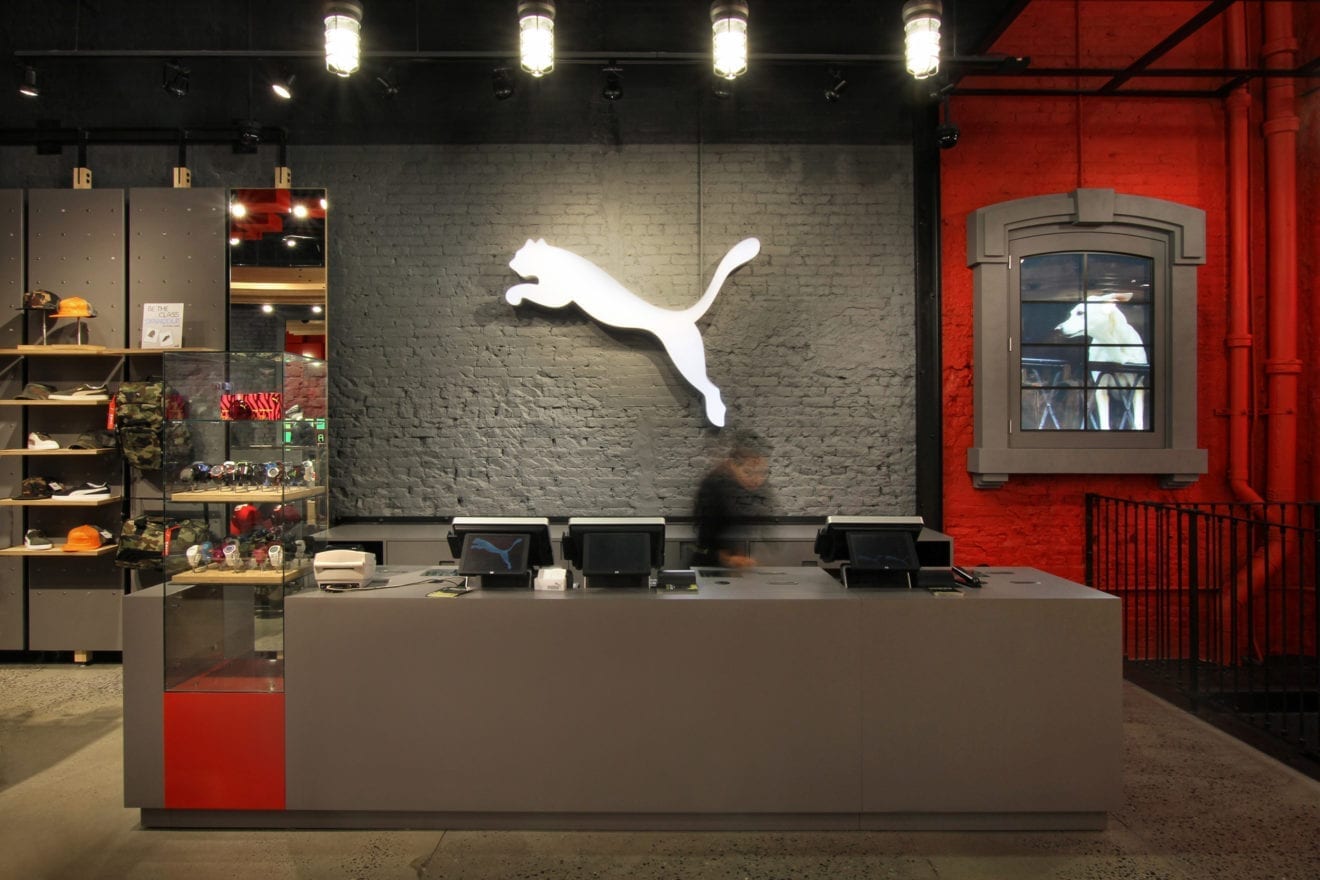
    Puma has partnered with London design school Central St Martins to launch a new collection using sustainable technologies.

    The Puma x CSM Collection uses new dyeing technologies including “Dope Dye”, which is a process using less energy, water, and chemicals than conventional wet processing, and digital printing technology which reduces waste and chemicals.

    With these technologies, Puma is able to reduce water consumption during making the clothing by up to 17.4 percent. These technologies will be rolled out in other sectors of Puma’s product range after being tested in this collection.

    “Reducing waste goes beyond the production cycle, which is why Puma also delved into new ways to make its marketing more sustainable,” the company said in a statement.

    The Puma x CSM collection, which includes footwear, apparel and accessories for both men and women, is available on Puma’s website and in selected stores.

  • DFS Group starts winding down Changi Airport liquor business

    DFS Group starts winding down Changi Airport liquor business

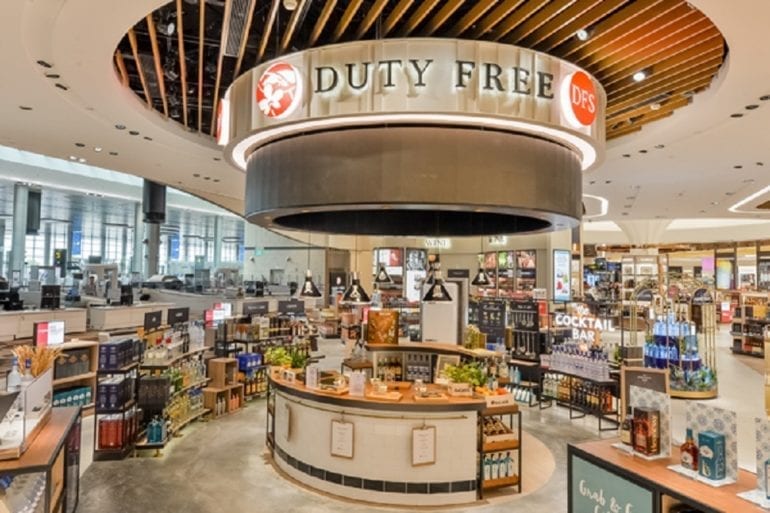
    DFS Group will close all of its stores at Changi Airport on June 8 as its 35-year tenure as wine and spirits concessionaire comes to an end.

    With two of Changi Airport’s four terminals now mothballed in the wake of the Covid-19 crisis, and the number of travelers passing through the remaining ones at a record low, DFS Group has taken to selling more than 200 wines and spirits online at iShopChangiWines.com, offering discounts of up to 70 percent off regular price. The company says it will absorb taxes and duties for customers, who do not have to travel to receive the discount.

    From now until May 22, daily flash deals will run on the site as well.

    “As one of DFS’ most esteemed allies for the last 35 years, we thank Changi Airport Group for their ongoing support and partnership,” said Aymeric Lacroix, DFS Group MD Asia South.

    “We will continue to serve our customers with the same passion for excellence that has distinguished us at Changi Airport until our official exit in June.”

    DFS Group opted not to bid to renew its concession at Changi Airport because it did not believe it could continue to trade there viably.

    “Our decision not to bid was based on our unique understanding of the business environment as the current operator of this concession at Changi,” chairman and CEO Ed Brennan said in a statement last August.

    The LVMH-owned group withdrew from Hong Kong International Airport as well, several years ago. At Changi, DFS Group will be replaced by South Korea’s Lotte Duty-Free.

    DFS Group’s Changi exit applies only to its high-profile liquor concession. The company will continue to operate its multi-label “Fashion Avenue” at Terminal 3 and various brand boutiques across all operating terminals.

    Since winning the Liquor and Tobacco concession in 1985, DFS Wines and Spirits opened numerous stores across Singapore Changi Airport, including in Terminal 2 (1990), the first of its kind Duplex store at Terminal 3 including the Raffles Long Bar (2015), the second Wines & Spirits Duplex store at Terminal 2 (2016) and the first ‘walkthrough’ retail concept store at Terminal 4 (2017).

    “For 35 years and over 300 thousand hours, DFS has been in operation at Changi Airport. Over three wonderful decades of memories and friendships later, it has become an iconic go-to stop for passengers leaving and arriving in Singapore, carrying more than 700 different wines and spirits brands, and selling more than 200 million bottles,” said Lacroix.

  • Lego boosts its China cred with first locally inspired theme Monkie Kid

    Lego boosts its China cred with first locally inspired theme Monkie Kid

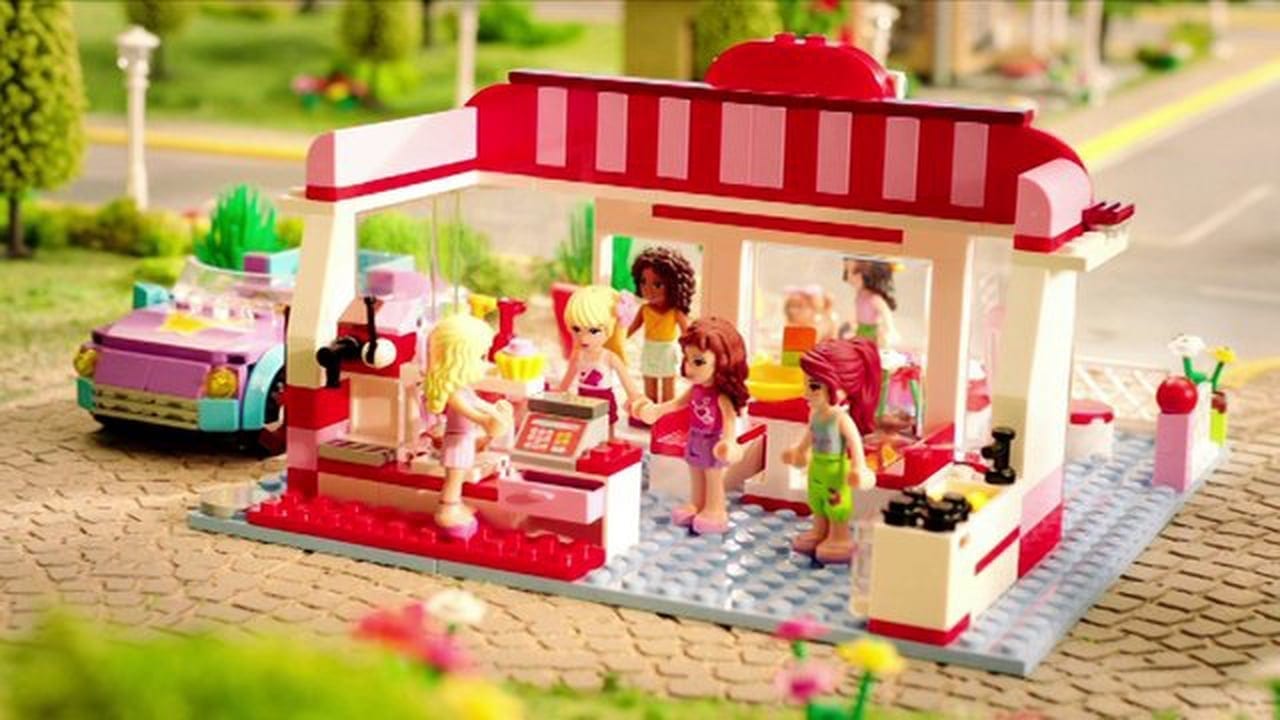
    Danish toy brand Lego has launched Lego Monkie Kid, its first Chinese-inspired theme to boost its engagement with Asian customers.

    Inspired by the famous Monkey King from the 500-year-old Chinese novel ‘Journey to the West’, Lego’s Monkie Kid is the brand’s first theme to embrace Chinese stories known by many families across Asia.

    Lego Monkie Kid, the untold chapter of the Monkey King, includes eight sets with multiple characters, vehicles and hidden features.

    “I have been touched and inspired by China’s rich history and culture, the passion and pride of the people and the incredible creativity of China,” said Simon Lucas, senior design director at Lego.

    “It has been an honor and privilege to be able to immerse me in China’s culture of storytelling, in particular – Journey to the West and the Monkey King. The epic stories and incredible characters have been a huge inspiration to the Lego design team and me.”

    The Lego Monkie Kid launch is a part of the company’s plan to boost its China presence as the company has seen the potential of this market. In the last three months, Lego has opened stores in Mainland China and Hong Kong despite the unstable situation of Covid-19 pandemic.

  • Japanese clothing firm Renown collapses

    Japanese clothing firm Renown collapses

    Heritage Japanese clothing firm Renown has filed for bankruptcy. The company is best known for its D’Urban and Arnold Palmer brands, although business has been in decline since its heyday in the 1990s due to increasing competition and the rise of e-commerce. It was once one of the largest apparel manufacturers on the globe.

    According to a report in Nikkei, the 118-year-old firm – now under the majority ownership of Chinese textiles and clothing firm Shandong Ruyi – has become Japan’s first such victim of the Covid-19 pandemic, cauterized from its revenue stream by the closures of department stores and regular retailers.

    The bankruptcy was approved on Friday, the same day it was filed with the Tokyo District Court, listing ¥13.9 billion (US$130 million) in liabilities. Renown had previously posted a net loss of ¥6.7 billion ($62.55 million) in the last financial year. Shares in the firm are now likely to be delisted from the first section of Tokyo’s stock exchange.

    Analysts expect the clothing firm Renown to take about a month before the company identifies a turnaround partner to enable it to resume business.

  • Don Don Donki accelerates Hong Kong expansion

    Don Don Donki accelerates Hong Kong expansion

    Japanese discount retailer Don Don Donki is to open up to three more stores in Hong Kong imminently, including a flagship in Causeway Bay.

    Don Don Donki will take over the site of the former HMV flagship store at Pearl City Mansion, spanning four floors, offering plenty of space for its unique dine-in Japanese food court concept which has proved hugely popular in its Singapore stores.

    The new flagship will have a footprint estimated at 50,000sqft, considerably larger than its debut store in Hong Kong at Mira Place in Tsim Tsa Tsui, Kowloon.

    The giant store is tentatively scheduled to open this summer.

    Meanwhile another pending store opening at Tseung Kwan O has been confirmed at Monterey Place – part of the O’South retail portfolio – owned by Phoenix Property Investors. The outlet, the chain’s fourth in the city, will be 25,000sqft in space leased for HK$500,000 (US$64,500) monthly. It is expected to open during the last quarter of the year.

    There is also widespread speculation that Don Don Donki has chosen a site in Central on Hong Kong Island where it will open a fifth outlet. However, the location has yet to be revealed.

    Don Don Donki trades as Don Quijote in its home market of Japan but chose a different name in offshore markets where other entities had already registered businesses trading under the Spanish fictional character.

    The company sells a full range of discount merchandise, mostly sourced from Japan, including groceries, health-and-beauty products ready-to-eat meals, snacks, and liquor, as well as fresh produce.

    Regional operator Pan Pacific International Holdings, which has four stores in Singapore and two in Thailand. Don Quijote operates about 40 stores in the US and has begun construction of another in Guam.

    Don Don Donki’s second store opened at OP Mall in Tsuen Wan.