Tag: asia

  • UBS Cuts CEO Sergio Ermotti’s Pay

    UBS Cuts CEO Sergio Ermotti’s Pay

    UBS boss Sergio Ermotti’s pay fell more than 10 percent in 2019, amid a setback for the wealth manager in a landmark French criminal trial. Private bank co-boss Iqbal Khan was paid $8.4 million to defect from Credit Suisse.

    The Swiss-based bank cut pay for outgoing CEO Sergio Ermotti to 12.5 million ($12.9 million) last year from 14.1 million francs in 2018, according to UBS’ annual report published on Friday. The bank said it weighed the impact of a French criminal ruling against UBS last year for top executives, as well as the «resulting share price development».

    The long-standing UBS boss, who is a notable shareholder as well, remains the highest-paid banker at the Swiss wealth giant – and likely among the top earners of European bank CEOs as well. UBS paid its new-co-head of private banking, Iqbal Khan, 8.2 million francs to defect from Credit Suisse last summer, the report reveals. His annual pay isn’t disclosed.

    Ermotti hands over to UBS’ next CEO, Ralph Hamers, in November. Hamers’ 1.75 million euro ($1.9 million) pay-day in 2018 illustrates the stark differences between corporate Switzerland and the eurozone: the Dutch banking veteran was due for a 50 percent pay rise two years ago for running ING – until Dutch politicians put the kibosh on it.
  • HSBC Hires Wealth Teams Across Asia

    HSBC Hires Wealth Teams Across Asia

    HSBC has announced the launch of a new global business, combining retail banking and wealth management and global private banking. Recruitment for wealth teams across Hong Kong, Singapore and mainland China is on track.

    HSBC’s new unit will become one of the world’s largest global wealth managers with $.4 trillion in assets, with nearly half of the assets from Asia, according to a media release on Monday. Wealth and personal banking will cover the entire spectrum of private wealth, from retail clients to ultra-high net worth (UHNW) individuals.

    Across Asia, where wealth pools are growing faster than in any other region, HSBC’s wealth revenues grew 12 percent in 2019 (year on year) to $.7 billion.

    This move creates one of the world’s largest and fastest-growing wealth franchises, centered in Asia and serving clients around the world. HSBC’s wealth propositions are compelling, increasingly digital and support individuals no matter where they are in their wealth journey, from first-time investors – to clients considering generational planning needs, Charlie Nunn, CEO of Wealth and Personal Banking, HSBC, said.

    In 2019, HSBC grew affluent and emerging high net worth clients globally in Premier1 and Jade, respectively, by 7 percent and 14 percent year on year. Over half of Jade’s total clients globally are in Asia. Global private banking, where profit before tax grew by 19 percent, attracted a record $23 billion of net new money in 2019, two-thirds of which were in Asia. 2019 also saw an increase in Asia client assets of 22 percent to $51 billion.

    Recruitment for wealth teams across Hong Kong, Singapore, and mainland China is on track. Since 2017, both businesses have recruited 800 people, including private bank relationship managers, investment counselors, UHNW solution specialists, and product specialists, and Jade directors and relationship managers, investment and insurance specialists.

    In 2019, four Jade Centres were opened across Singapore, Hong Kong, and Shanghai. This year, HSBC has recently opened two more Jade Centres in Hong Kong and plans to open one in Beijing.

  • OCBC Cuts Days In Issuing First Electronic Banker’s Guarantee

    OCBC Cuts Days In Issuing First Electronic Banker’s Guarantee

    OCBC Bank has issued an electronic banker’s guarantee (eBG), making it the first lender to tap on Singapore Custom’s Electronic Guarantee Program.

    OCBC Bank became the first bank to leverage Singapore Customs’ electronic Banker’s Guarantee program launched on Monday, issuing an electronic banker’s guarantee (eBG) to Singapore Customs on behalf of vCargo Cloud, an Infocomm Technology solution and service provider that performs customs declaration services for forwarders and shippers.

    It has taken some time for trade finance to be digitalized, but the momentum has picked up over the last few years. Already, close to half of our trade transacting customers who were previously sent in paper trade applications are now doing so via our internet banking portal Velocity@ocbc,» said Melvyn Low, Head, Global Transaction Banking, OCBC Bank in a media statement.

    «And now, with this inaugural eBG, we have seen the end to end digitalization of the Banker’s Guarantee process, which is a milestone for the trade industry’s digital transformation,» added Low. OCBC Bank said its API connectivity with the Networked Trade Platform (NTP) has enabled the bank to electronically transmit details of its customers’ eBG to Singapore Customs.

    As a result, the time taken from an application – which can be done via the bank’s business online banking platform Velocity@ocbc – to delivery of the Banker’s Guarantee to Singapore Customs, has gone from 7 working days to 1 working day. Businesses can benefit from this more efficient process as it mitigates the risk and costs that result from delays and disruptions to their imports into Singapore.

  • Tesco executives mull final bids for Thai, Malaysian businesses

    Tesco executives mull final bids for Thai, Malaysian businesses

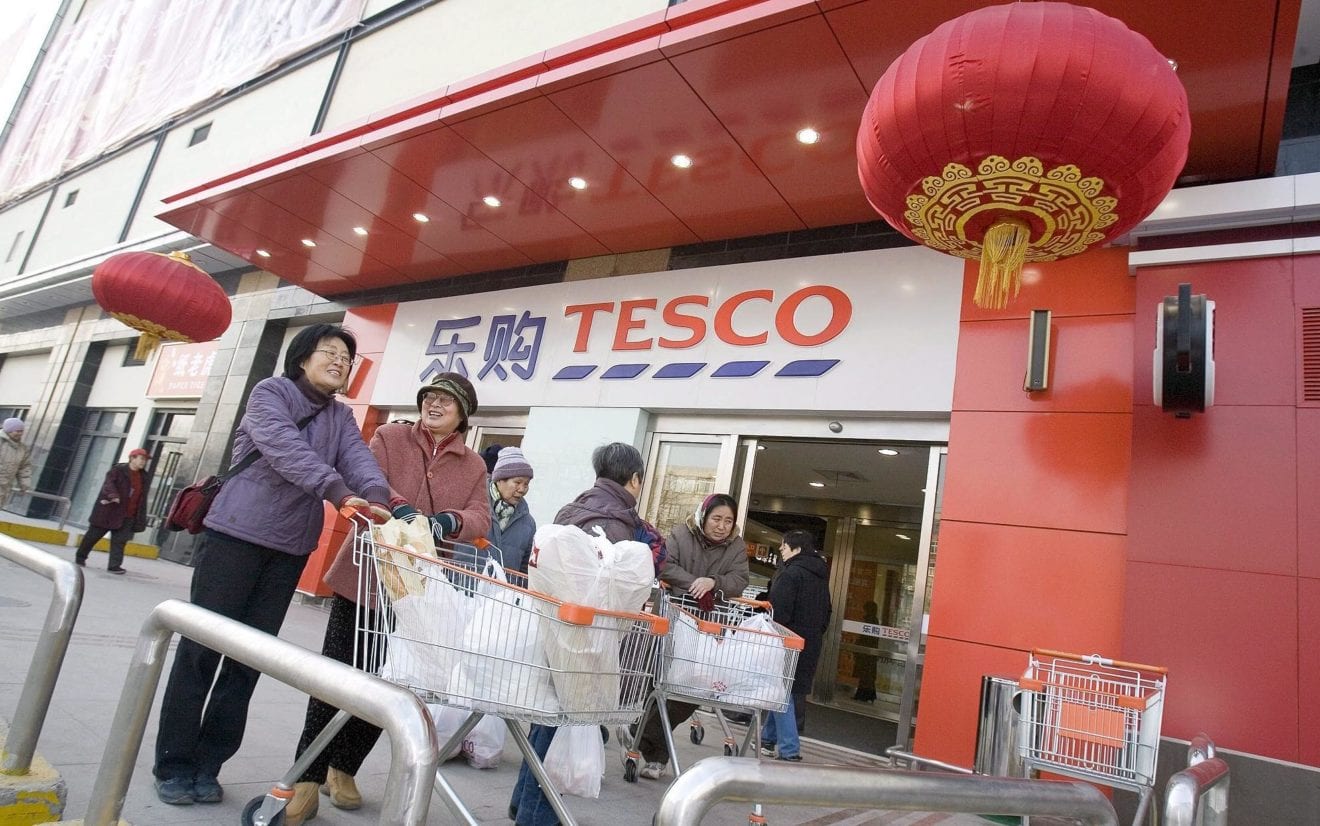
    Tesco executives and advisors will this week start evaluating offers for its Thai and Malaysian businesses following Friday’s deadline for binding offers.

    However, with the asset valued somewhere in the region of US$9 billion, there is no certainty any of the bids will be accepted. A decision is expected this month.

    Tesco has yet to confirm how many bids were received, but analysts expect a three-way battle between some of Thailand’s largest companies: CP Group, controlled by Dhanin Chearavanont, Central Group, controlled by the  Chirathivat family, and TCC Group, controlled by property and beer magnate Charoen Sirivadhanabhakdi. Another potential bidder is petroleum group PTT which is expanding its Cafe Amazon network regionally and has an interest in diversifying from its core petrol-retailing business.

    Tesco operates about 2000 supermarkets and convenience stores in Thailand and a further 74 in a Malaysian joint venture with Sime Darby Group.

    For Central Group, which last month raised US$2.5 billion in an IPO of its retail business, the Tesco operation would have substantial synergies with its supermarkets and convenience-store business.

    CP Group, meanwhile, has an interest in effectively buying back the Thailand operations, which evolved from the supermarket business it sold to Tesco in 1997 to raise cash during the Asian Financial Crisis. CP owns the Sam Makro grocery warehouse business with 130 stores along with the Thai 7-Eleven franchise which now numbers more than 11,000 stores.

    In the half-year to August 24, the Tesco businesses in Thailand and Malaysia achieved sales of $3.3 billion and an operating profit of $219 million.

    Exiting the Southeast Asian business may come with complications. Thailand’s government has already flagged its interest in a sale to existing local entities, commenting that the deal must not violate anti-monopoly laws.

  • Central Retail to invest US$575 million on expansion this year

    Central Retail to invest US$575 million on expansion this year

    Thailand’s Central Retail Corporation achieved 8 percent revenue growth last year to US$7.1 billion and an 11-per-cent boost in profit to $394.7 million.

    CEO Yol Phokasub said the improvement reflected “robust platforms” in every country in which it operated: Thailand, Vietnam and Italy.

    “We increased market share in every product category, including fashion, food and hardlines, whilst we also grew our customer base in each market with our strong eco-systems,” he said.

    Central Retail is on track to achieve a five-year goal of achieving 8-10-per-cent average annual income growth and earnings growth of 10-11 percent.

    This year, Central Retail is investing $575 million into expanding its business in its three core markets, exclusive of mergers and acquisitions.

    In Thailand it plans to open three Robinson Lifestyle stores, seven Thai Watsadu stores and 3 Baan and Beyond stores, as well as expanding its food and specialty-store networks.

    In Vietnam it will open six supermarkets under the existing Big C banner and its new brand Go!

    It also plans to refurbish some existing stores and open more outlets under its LookKool, Kubo and SuperSports banners.

    In Italy, it will refurbish its department stores in Florence and Rome, and focus on leadership in the lifestyle-luxury segment of the market.

    “After many uncertainties in both the global and Thai economies this year, whether from the strong Baht, the COVID-19 epidemic, reduced tourist arrivals or declining consumer confidence, Central Retail must exercise caution in its business operations, closely monitor various issues and use technology to manage costs effectively,” said Phokasub.

    “Our multi-category and multi-format platforms give us flexibility and adaptability to rapidly changing and volatile situations. This offers us an advantage and a good opportunity to reach customers, providing them with new experiences through our robust omnichannel platforms.”

    Central Retail achieved sales growth online of about 56 percent last year.

    “This year, we forecast sales through the omnichannel platforms to account for over 10 percent of Central Retail’s sales,” he said.

  • Three reasons why Asian retailers are upgrading their e-commerce platforms

    Three reasons why Asian retailers are upgrading their e-commerce platforms

    There is currently an almost endless array of technologies and innovations that Asian retailers can invest in as they look to future-proof their business and meet the expectations of the next generation of customers.

    But when Tofugear surveyed retail executives across Asia as part of its 2019 Asia Digital Transformation Report, it was striking to see that the biggest technology investment priority for retailers was actually e-commerce platforms.

    One in two respondents (53 percent) indicated that they will invest in their e-commerce platform over the next 12 months, while a further 20 percent stated they would do so over the next two to four years. Contrast that to the 2018 edition of the survey, when just one in four respondents said that they intended to invest in their e-commerce platform over the ensuing year. Last year, business intelligence and data analytics were the most pressing investment areas.

    In today’s omnichannel age, it may seem odd for Asian retailers to still invest so heavily in their e-commerce platforms. After all, many retail businesses have already had their online stores in place for some time now. However, here are three reasons why e-commerce is being placed at the top of retailers’ ‘to do list’:

    Tofugear’s digital transformation survey included responses from retailers based in countries such as the Philippines and Malaysia, where marketplaces such as Lazada and Shopee are dominating the online retail scene. With these marketplaces offering sophisticated personalization and often a wide range of fulfillment services, local retailers have had to invest in their own e-commerce storefronts as they mount a fightback.

    When retailers were asked what they thought was the single biggest challenge they are currently facing, one in five mentioned the ability to achieve omnichannel retailing. Consumer expectations have increased dramatically over recent years and shoppers need e-commerce sites to offer functionality such as being able to check stock in specific stores or arranging click-and-collect in any location they prefer.

    At the same time, retailers are also looking to use their stores as local fulfillment hubs for online orders. To do so, retailers need to have a single view of inventory and use a distributed order management system. As part of this investment, retailers are making the necessary upgrades to their websites to accommodate such an omnichannel approach.

    There was a surge in investment in e-commerce platforms just over five years ago – when many retailers transitioned to mobile-optimized sites – but technology and consumer demands have continued to evolve since then. An increasing number of retailers are now turning to emerge technologies such as artificial intelligence to upgrade the customer experience on their e-commerce platforms.

    For instance, visual-search technology is a seamless way for customers to get the appropriate search results based on images of a product they are looking for. AI-driven chatbots and the ability to offer voice-assisted ordering through smart speakers such as Google Home are also being considered by retailers.

  • Starbucks Japan to open greenhouse store in theme park

    Starbucks Japan to open greenhouse store in theme park

    Starbucks Japan is to open a greenhouse store in western Tokyo this month, set in a theme park celebrating flora and fauna.

    Located inside the Hana Biyori greenhouse operated by Yomiuriland park, the Starbuck greenhouse cafe occupies a 1500sqm area, featuring colorful flower chandeliers and abundant greenery including begonia, fuchsia, petunia, geranium and bellflower.

    As can be seen from the artist’s impressions, large aquarium tanks will also be a central feature of the store.

    With 20 projectors and 18 speakers, the cafe will present an audio-visual experience filled with digital and real flora several times a day.

    Starbucks Hana Biyori will open its doors to the public on March 14.

  • Axa Mandiri Lays Out Plans to Grow Premium Income

    Axa Mandiri Lays Out Plans to Grow Premium Income

    Axa Mandiri Financial Services, one of Indonesia’s major insurance companies, expects to maintain double-digit growth in premium income this year, by tapping into the large customer base of its parent company, Bank Mandiri.

    Axa Mandiri Financial Services (Axa Mandiri)’s president director Handojo G. Kusuma said that the insurer would market its products more intensively to customers of Bank Mandiri, which has one of the largest customer bases in the country.

    We hope to book double-digit growth in premium income by tailoring insurance products to the special needs of Bank Mandiri customers, said Kusuma, who was quoted in the «Jakarta Post» (behind paywall).

    Despite having worked together with Bank Mandiri for many years, Axa Mandiri’s penetration among the bank’s clients was still below optimal levels, he noted.

    To realize the targeted double-digit growth in premium income, Axa Mandiri did a data analytics study on Bank Mandiri’s market segmentation. «By understanding the needs of each segment better, we will be able to improve upselling and cross-selling,» Kusuma added.

    To effectively market to the millennials, the company would study the behavior and characteristics of customers in that segment and offer an affordable and easy-to-understand retail package that would be relevant and convenient for them, Handojo explained.

    For the growing halal market, the company planned to expand its portfolio of sharia-compliant products to between 20 percent and 25 percent of its business in the upcoming year from 4 to 5 percent at present.

    If we look at the market share potential, we can say that 90 percent of Indonesians are Muslims, hence we will continue to grow our sharia business, said Axa Mandiri sales director Henky Oktavianus.

    He added that the company was still studying the sharia market segmentation of its sister company, Bank Syariah Mandiri, to understand what products to offer its clients and how best to sell them.

    Axa Mandiri booked a gross premium income of 9.5 trillion rupiahs ($698.5 million) in 2019, an increase of 11 percent from 8.59 trillion rupiahs in 2018. Net investment touched 668 billion rupiahs in 2019, following a deficit of 1.68 trillion rupiahs in 2018.

    As a result, revenue totaled Rp 10.74 trillion in 2019, a 44 percent year-on-year increase. Net profit, therefore, rose 6 percent to  1 trillion rupiahs in 2019.

    Axa Mandiri is jointly owned by Bank Mandiri, which has a 51 percent stake, and Axa Group’s National Mutual International, which holds 49 percent.

  • BNP Paribas Negative On India’s Consumption Recovery

    BNP Paribas Negative On India’s Consumption Recovery

    The expectation for India’s consumption to recover in 2020 is getting pushed out further, according to forecasts by BNP Paribas.

    Given that the nation’s slowest economic expansion in 10 years has led to a deceleration in local consumer staples sales for the sixth straight quarter, the brokerage expects India’s consumption recovery to be delayed.

    There is a lack of meaningful catalysts for consumption to recover to its potential in the year to December, Kunal Vora, a Mumbai-based analyst at BNP Paribas Securities India wrote in a note to clients. A sustainable recovery in rural income growth and a sharp uptick in consumer sentiment index are necessary for recovery.

    The brokerage last month turned negative on the consumer goods sector, pointing out that lower raw material prices and tax cuts were masking underlying weakness in sales. Consumer sentiment in the nation has worsened to an almost five-year low while manufacturing slack at companies widened to the most on record, data from the Reserve Bank of India showed this month.

    The federal budget for the year starting April 1 didn’t offer much in terms of big-bang stimulus to boost rural incomes. Meanwhile, economic growth is still weighed down by bad debts in its banking sector. The three months to Dec. 31 marked the sixth consecutive quarter of moderation in aggregate revenue growth for consumer staples, and management commentaries indicate companies are uncertain about the timing of recovery.

  • Shazam finally adds Apple Music integration on Android

    Shazam finally adds Apple Music integration on Android

    It’s been almost two years since Apple acquired Shazam, the music recognition software that everyone installs on their phones. To this day, Shazam would allow Android users to connect to the Spotify app to add songs to playlists or even play them within the app.

    Apple Music users must have been frustrated that Shazam doesn’t feature integration with their favorite music streaming service, even after the app was bought by the Cupertino-based company.

    Luckily, things are about to change for the better. Apple Music integration is now making its way to Shazam users on Android. When you receive the update that adds the new feature, you should be able to see the Apple Music option in the Settings menu of the Shazam app. Simply tap the Connect button next to the service and if you have an active subscription, you’ll be able to share playlists and play songs recognized by Shazam.

    At the moment, it’s unclear whether this is a server-side or a straightforward update that you can download from the Google Play Store. What we do know is that even Shazam users with a slightly older version of the app installed have started to see this feature on their Android phones.

  • Tesla Shares Slump As Coronavirus Hits China Car Registrations

    Tesla Shares Slump As Coronavirus Hits China Car Registrations

    Shares of Tesla Inc fell as much as 14% on Thursday on concerns about the impact of the coronavirus on the electric-car maker’s vehicle registrations in China. Data from LMC Automotive showed that 3,563 Tesla vehicles were registered in China in January, up from 853 vehicles a year earlier, but down from the 6,613 vehicles registered in December. Tesla registrations fluctuate significantly from month to month, LMC data showed. The automaker typically delivers many more vehicles in the final month of a quarter than in the first month. In October 2019, Tesla owners registered just 763 vehicles, LMC data showed.

    Tesla did not respond to requests for comment. The selloff in Tesla shares highlights the growing concern about the health of the Chinese auto market as the government and companies contend with the disruption of the coronavirus outbreak.

    China Association of Automobile Manufacturers had earlier said that overall vehicle sales fell by almost a fifth in January, hurt by Lunar New Year holidays that started earlier than last year and by the coronavirus disruptions.

    The electric-car maker said earlier this month that the outbreak would delay deliveries of its Model 3 cars in China.

    While the virus originated in China’s Wuhan province late last year, local governments began imposing travel curbs and warning residents to avoid public spaces in the last two weeks of January. Tesla shares were trading down at $685 and were set for their fourth consecutive session of losses. Tesla’s stock has, however, jumped about 60% so far this year.

  • Hyundai Shuts Down Factory In Korea After Worker Tests Positive For Coronavirus

    Hyundai Shuts Down Factory In Korea After Worker Tests Positive For Coronavirus

    “The company has also placed colleagues who came in close contact with the infected employee in self-quarantine and taken steps to have them tested for possible infection,” Hyundai Motor said in a news release. The company added that it was disinfecting the factory.

    Ulsan is less than an hour from Daegu, the epicenter of the outbreak in Korea.

    Hyundai operates five car factories in Ulsan, which has an annual production capacity of 1.4 million vehicles, or nearly 30% of Hyundai’s global production. Hyundai employs 34,000 workers there in the world’s biggest car complex.

    The factory that was shut down produces sport utility vehicles such as Palisade, Tucson, Santa Fe and Genesis GV80.

    A factory run by Hyundai supplier Seojin Industrial had been closed after the death of a virus-infected worker there. It reopened Wednesday.

    Meanwhile, South Korea’s top carrier, Korean Air Lines Co Ltd, said on Friday it would cut the number of flights to the United States in March.

    It plans to check temperatures of passengers traveling to the United States before boarding and said it would not allow anyone with a temperature higher than 37.5 Celsius to fly.

    It said it would expand these procedures to other routes.

    One of its flight attendants who served the Incheon to LA route has tested positive for virus.

  • Retail, e-commerce biggest marketers in Vietnam

    Retail, e-commerce biggest marketers in Vietnam

    Retail and e-commerce accounted for nearly a quarter of online marketing in Vietnam last year as players compete for more customers.

    The category claimed 23.9 percent of $1.26 billion spent on online ads in the country, Ho Chi Minh City-based advertising company Adsota reported.

    It was followed by fast-moving consumer goods (FMCG) with 12.9 percent and automobiles with 6.7 percent.

    Vietnam digital advertising spending by industryRetails & e-commerceFMCGAutomobilesFinancial servicesTourismTelecomTechnologiesOthers

    “Figures indicate the resources e-commerce businesses are willing to invest in digital advertising in recent years, linked to the “money burning” race of Shopee, Lazada, Sendo and Tiki,” the report stated.

    Rising expenditure follows Vietnam’s growing market of internet users. The country ranked 14th in the world in its number of smartphone users at 43.7 million last year, a rate of 44.9 percent.

    In a number of app downloads, Vietnam ranked second to Indonesia in ASEAN and seventh globally. The most popular app categories in Vietnam are games, photography and social.

    Vietnamese spend 2 hours and 33 minutes on social networks, 17 minutes higher than the world average, according to U.K.-based We Are Social.

    Vietnam’s online advertising expenditure is set to reach $1.4 billion in 2022.

  • Carrefour China achieves its first quarterly profit in seven years

    Carrefour China achieves its first quarterly profit in seven years

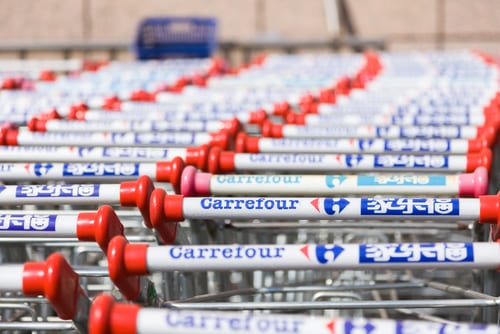
    Carrefour China has achieved its first quarterly profit in seven years according to the Tian Rui, CEO of Suning Group, which bought the former French hypermarket group last September.

    During the past five months, the Carrefour China business has improved its operating efficiency through the digital transformation of its stores and the accelerated integration with the Suning ecosystem.

    Tian Rui says post-acquisition, Carrefour China’s management team focused on consumer needs and strengthening marketing, operations and membership management. The business was integrated into the Suning FMCG’s supply chain, strengthening the range and supply of merchandise.

    And the company’s stores and product offering were integrated into the Suning Convenience Store app on February 6. Since then, the average daily order volume of Carrefour Flash Delivery has increased by 202 per cent month on month. On February 21, the average daily order volume was up 329 percent month on month.

    This digital transformation has seen the 209-strong store network deliver goods to customers living within 3km of a store within one hour, and for those within 10km of a store within half a day.

    “Carrefour China is the core business of Suning FMCG matrix. In 2020, we will accelerate store upgrades, supply chain construction, and other ecological integration with Suning to recreate the glory of Carrefour like seven years ago,” said Tian Rui.

  • Apple promised first Apple India store next year

    Apple promised first Apple India store next year

    Apple CEO Tim Cook says the first Apple India store is on track to open next year.

    Cook made the announcement in response to a question at the firm’s annual shareholder meeting. The company’s plans for the region have been anticipated for some time, following the relaxation of government regulations affecting foreign retailers, easing the requirements of local sourcing and scrapping a law making it mandatory for brands to open physical stores before launching online.

    Apple has already taken steps to manufacture products in India, partnering with Taiwanese company Wistron to make the iPhone 6S and 7 models there.

    In May last year, the company said it was shortlisting sites for the first Apple India store in the commercial hub of Mumbai.

    “India is a very important market in the long term,” said Apple CEO Tim Cook in a statement earlier last year. “It’s a challenging market in the short term, but we’re learning a lot. We plan on going in there with sort of all of our might.”

    Rushabh Doshi, an analyst at global research firm Canalys said last year that having its own flagship stores might be just what Apple needs to reinforce its premium image.

    “A store just before the next launch will be the perfect timing for Apple to restart its Indian growth story.”