Tag: asia

  • Hanoi-Saigon flight time climbs 5 mins a month

    Hanoi-Saigon flight time climbs 5 mins a month

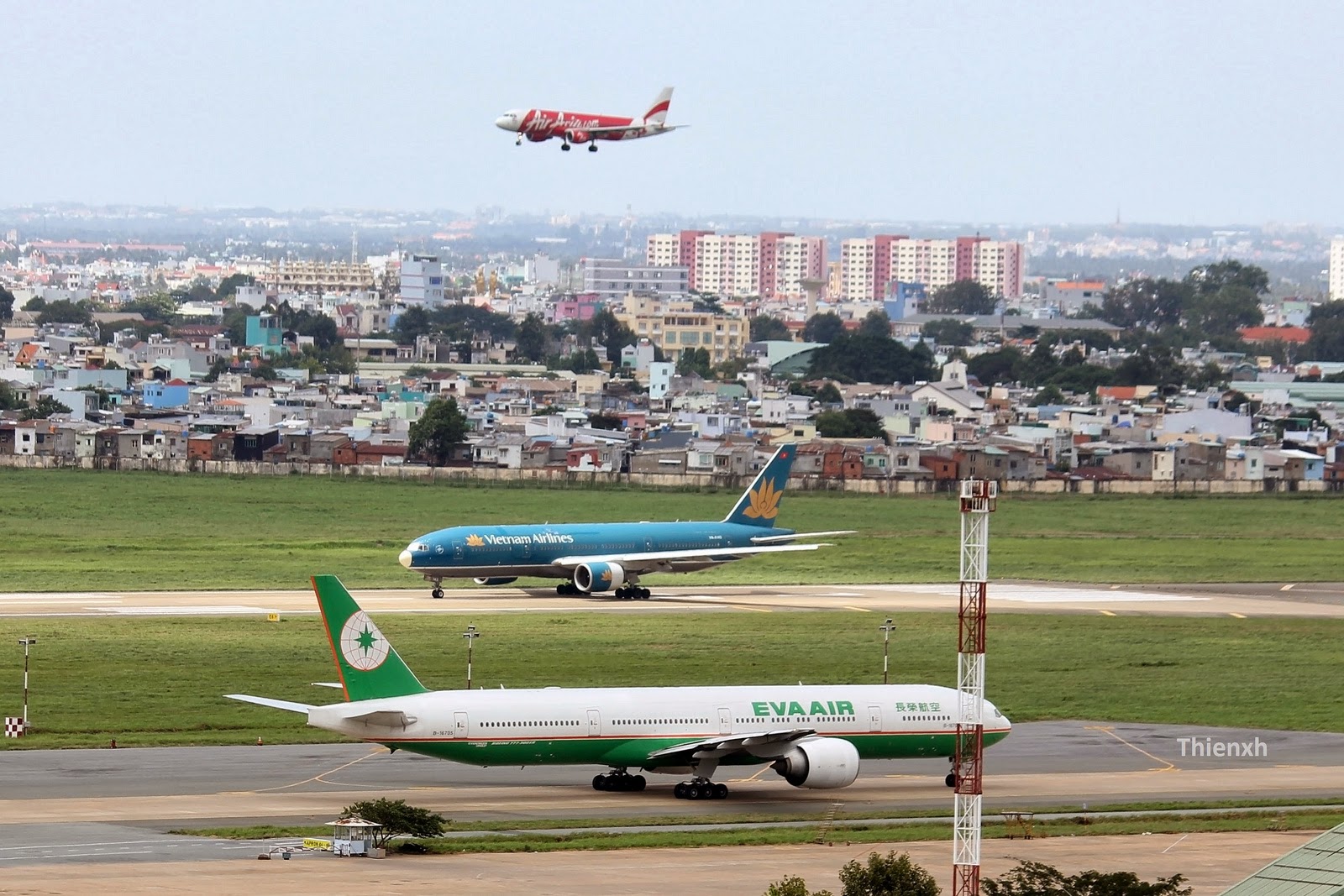
    Flying from Hanoi to Saigon takes five minutes more per month due to overload at Tan Son Nhat International Airport. Duong Tri Thana, Vietnam Airlines CEO, told a forum Wednesday continued delays at Tan Son Nhat could drag down flight quality and hamper economic growth.

    The route itself ranked as the sixth busiest domestic route in the world for 2019, up one spot from last year. Le Hong Ha, deputy general director of the flag carrier, said Tan Son Nhat has recorded low punctuality due to overload, with airlines forced to adjust flight times that cause take-off delays up to 15 minutes.

    Lai Xuan Thanh, chairman of the Airports Corporation of Vietnam, said this year, foreign airlines have struggled to find berths at Tan Son Nhat.

    The airport could only provide 2-3 percent more slots this year, meaning passenger growth is capped at 5 percent year-on-year, he added.

    However, the country is allowing the operation of new airlines despite the overload. Private carrier Bamboo Airways launched its first flights earlier this year, while three more airlines are awaiting licensing.

    Dinh Viet Thang, head of the Civil Aviation Authority of Vietnam (CAAV), said Vietnam still holds great aviation potential, with an estimated 150-180 million air passengers predicted by 2025.

    Only five airlines operate daily routes in Vietnam, with the figure in Thailand at 16, Indonesia at 12, the Philippines at 10 and Singapore at 6.

    Vietnam plans to upgrade existing and build new airports to accommodate surging travel demand, a third terminal proposed for Tan Son Nhat to up capacity by 20 million passengers a year. Tesla Plans Increasing Imported Model 3 Prices In China From January

  • Sabeco to charter aircraft to transport outstanding workers home for New Year

    Sabeco to charter aircraft to transport outstanding workers home for New Year

    Vietnam’s biggest brewer Sabeco is set to charter four aircraft and a number of buses to ferry 2,000 outstanding workers home for Tet. It will cost Sabeco over VND5 billion ($217,000), and the company will identify the workers together with the management of industrial parks in HCMC and the neighboring provinces of Binh Duong and Dong Nai.

    A charter flight each will fly from HCMC to Hanoi and the central towns of Vinh, Dong Hoi and Quy Nhon.

    The 1,000 people going by bus will go to the central provinces of Quang Ngai, Binh Dinh, Phu Yen, and Khanh Hoa, the Central Highlands provinces of Dak Lak and Lam Dong and the southern provinces of Kien Giang and Ca Mau.

    Hoang Dao Hiep, deputy general director of Sabeco, said this would be the second year the company and the Youth Union provide transportation for the best-performing workers for Lunar New Year.

    This year it is on a larger scale, and the process to select the workers too started earlier — at the beginning of December.

    Tet (The Lunar New Year) falls in late January 2020. Last year too the company had chartered four aircraft.

    Sabeco is owned 53.59 percent by Vietnam Beverage, a subsidiary of Thai beverage company ThaiBev. The Vietnamese government, represented by the Ministry of Industry and Trade, owns a 36 percent stake in the company.

    In its latest financial report, Sabeco reported revenues of over VND28.3 trillion ($1.22 billion) in nine months, up 10 percent year-on-year. Revenue from beer in the period accounted for 86 percent of total, or VND24.3 trillion ($1.05 billion).

    In the third quarter alone, post-tax profit was highest among all brewers in Vietnam at almost VND1.46 trillion ($63 million), up over 40 percent year-on-year.

  • China forces new mobile network subscribers to provide facial scans

    China forces new mobile network subscribers to provide facial scans

    A controversial law which forces new mobile subscribers in China to first provide scans of their face has now been implemented.

    To sign up for a new plan, Chinese consumers will still need their national ID card but will now also be forced to supply facial scans. First announced in September, Beijing says it’s taking the step to “protect the legitimate rights and interest of citizens in cyberspace.”

    The measure is designed to reduce fraud. However, privacy campaigners believe it’s also part of Beijing’s desire to ensure no-one is truly anonymous online.

    Being able to link digital identities to real-world individuals helps to silence dissenters. At a time when protestors in Hong Kong are facing brutality for expressing their view that Beijing has infringed on the country’s autonomy, the new measures have naturally raised further concerns.

    Another fear is how the collected facial scans are being used after verification. Strict data laws in many Western countries require explicit consent as to how data is stored and used, but such laws are practically nonexistent in China.

    Facial scans may be used to further train national facial recognition algorithms that have already been used for oppressive purposes.

    China uses a robust facial recognition system in Xinjiang, a Muslim-dominated region. Geofencing is used in tandem with facial recognition to alert the authorities if targets venture beyond a 300-meter safe zone.

    Beijing maintains the system in Xinjiang is vital to tackle numerous incidents of violence and unrest, which it links to Islamic extremists. However, Human Rights Watch has condemned the policies as a “violation of international human rights norms.”

    China boasts the world’s largest surveillance network with around 170 million security cameras and plans to install a further 400 million over the next three years.

    In a bid to quickly understand this massive resource and provide actionable insights, Beijing is turning to AI.

    The world’s most valuable AI startup, SenseTime, is a Chinese firm that provides technology for the government’s surveillance network.

    SenseTime’s Viper system aims to process and analyze over 100,000 simultaneous real-time streams from traffic cameras, ATMs, and more, to automatically tag and keep track of individuals.

    It’s unclear whether SenseTime will have direct access to facial scans collected by the Chinese government, but it seems likely scans will be used by the authorities to find those it deems a threat.

  • South Korea boasts of hitting almost four million 5G subscribers

    South Korea boasts of hitting almost four million 5G subscribers

    The Ministry of Science and ICT in South Korea reports the country is close to hitting the milestone of four million 5G subscribers.

    While it’s often debated whether South Korea or the US was first to launch a commercially available 5G network, both countries were among the first.

    This leadership makes South Korea closely watched by industry observers for how their 5G rollout is progressing, including the pace of adoption.

    5G adoption is happening fast in South Korea. As of October, the ministry reports that 5G networks across the country had 3.98 million subscribers.

    In September, the ministry says 516,000 more people subscribed to 5G services. In fact, a minimum of half a million new 5G subscribers have been added every month since networks launched in April.

    If that pace continued throughout October and November, it’s likely the four million 5G subscribers milestone has already been exceeded. While Christmas in South Korea isn’t as present-oriented as in the West, the holiday may also provide some further uptick in adoption in December.

    To date, the highest rise in subscribers was in August when Samsung launched its Galaxy Note 10 5G smartphone.

    SK Telecom has the most 5G subscribers with 1.77 million, followed by KT’s 1.21 million and LG Uplus’ 1 million.

    Traffic growth has also been substantial. In October, the ministry notes a total of 105,000 terabytes of traffic was recorded on 5G networks. Users consumed an average of 28 gigabytes of data that month.

    In a bid to handle the exploding amount of traffic, South Korea plans to double 5G spectrum allocation by 2026.

    While 5G networks in South Korea are currently not standalone and use 3.5GHz spectrum, the country plans to develop standalone 2.8GHz spectrums early next year.

  • Russia seeks to replace Wikipedia as it accelerates ‘sovereign internet’ plans

    Russia seeks to replace Wikipedia as it accelerates ‘sovereign internet’ plans

    Russia is reportedly seeking to replace Wikipedia with a state-run online encyclopedia as it accelerates plans for a “sovereign internet”.

    According to a Reuters report, Russia plans to spend around $30 million setting up the Wikipedia replacement and creating a department to keep it stocked with manipulated verified content.

    Russian president Vladimir Putin is said to believe that Wikipedia contains misinformation. Given Putin’s background as a foreign intelligence officer in the KGB, and the alleged disinformation campaigns spread by Russia’s infamous “troll farms,” it’s likely he knows a thing or two about the subject.

    Being a community-driven resource, Wikipedia has certainly found itself hosting misinformation from the amusing to the dangerous. Of course, rights campaigners are concerned it’s just an excuse to control what information Russian citizens can access – especially given Russia already has a history on this issue.

    Back in 2015, Roscomnadzor – the branch of the Russian government which polices media and the internet – ordered ISPs to block Wikipedia. The offending article was about charas, a form of marijuana. Roscomnadzor claimed the page constitutes instructions on how to make the drug.

    That same year, Russia blocked the entirety of Reddit over a post about hallucinogenic mushrooms.

    Russia is once again clamping down on web access in the country and even intends to create a “sovereign internet” that can still function cut off from the outside world if needed.

    Russia was going to temporarily unplug from the global internet as part of an experiment to ensure that the nation can still function without it.

    Russia’s fear is that – due to organizations that maintain the international DNS system is based around the world, but none in Russia itself – the nation could be disconnected from the web in an extreme scenario.

    A draft law called the Digital Economy National Program would require Russian ISPs to ensure they’re able to operate if foreign powers isolate the country.

    The second experiment in Russia tasked ISPs with redirecting traffic to government routing points to filter and censor it similar to China’s so-called Great Firewall. It’s likely this approach that will be used by Russia to redirect Wikipedia traffic to the state-run alternative.

    While there’s been relative physical peace between Russia and other world powers for decades, cyberwarfare has been ongoing and increased in recent years amid high-profile attacks on critical infrastructure linked to Russian state hackers and the aforementioned disinformation campaigns.

    International coalitions such as NATO have threatened Russia over allegations of cyberattacks and political interference. NATO allies are drawing up cyber warfare principles for more robust future responses to attacks.

    NATO has even said a cyberattack may trigger Article 5 which stipulates an attack on one member is seen as an attack on all, and commits to a joint response. To date, it’s only been triggered once following the September 11th terrorist attacks in the US.

  • Optus claims making world’s first 5G data call using 2300MHz spectrum

    Optus claims making world’s first 5G data call using 2300MHz spectrum

    Australian telecommunication company Optus is claiming that it has made the world’s first 5G data call by making use of a 2300MHz spectrum.

    Optus conducted the test in Sydney with Ericsson kit. According to the company, it is the only Australian telecommunications firm with shares in the 2300MHz and 3500MHz spectrum bands.

    Optus network managing director Dennis Wong said: “With its lowest frequency, the 2300MHz spectrum band, in the future, will finally offer our customers even higher speeds, as well as provide greater depth of coverage that will allow even more customers to benefit from 5G services.” Optus was looking to activate its 2300MHz spectrum “sometime” in 2020, Wong added.

    In its latest Mobility Report, published last month, Ericsson predicted that global 5G subscriptions will exceed 2.6 billion within the next six years. By this time, 5G will cover 65% of the world. The firm also believes that total mobile subscriptions, including to previous generation networks, will reach 8.9bn from 8bn over the next six years. The current average monthly data-traffic-per-smartphone is expected to increase from around 7.2GB today to 24GB in the same timeframe. Over a quarter of the worldwide subscriptions will be 5G by 2025 and will account for around 45% of global mobile data traffic.

    A Deloitte survey published last week argued that two in three consumers are more likely to buy a new phone once 5G-compatible devices are available. The survey also found that 16% of consumers who are using smartphones said that 5G capabilities will be the most crucial factor when they choose their next phone. While 26% chose display quality as their top preference, 22% opted for brand.

  • Inmarsat has high hopes for fitting GX to carriers across Asia-Pacific

    Inmarsat has high hopes for fitting GX to carriers across Asia-Pacific

    Even as Indian carriers lag behind in introducing inflight connectivity for passengers, there is action in the Asia-Pacific region, which is expected to account for roughly 40% of new commercial aircraft deliveries over the next 20 years.

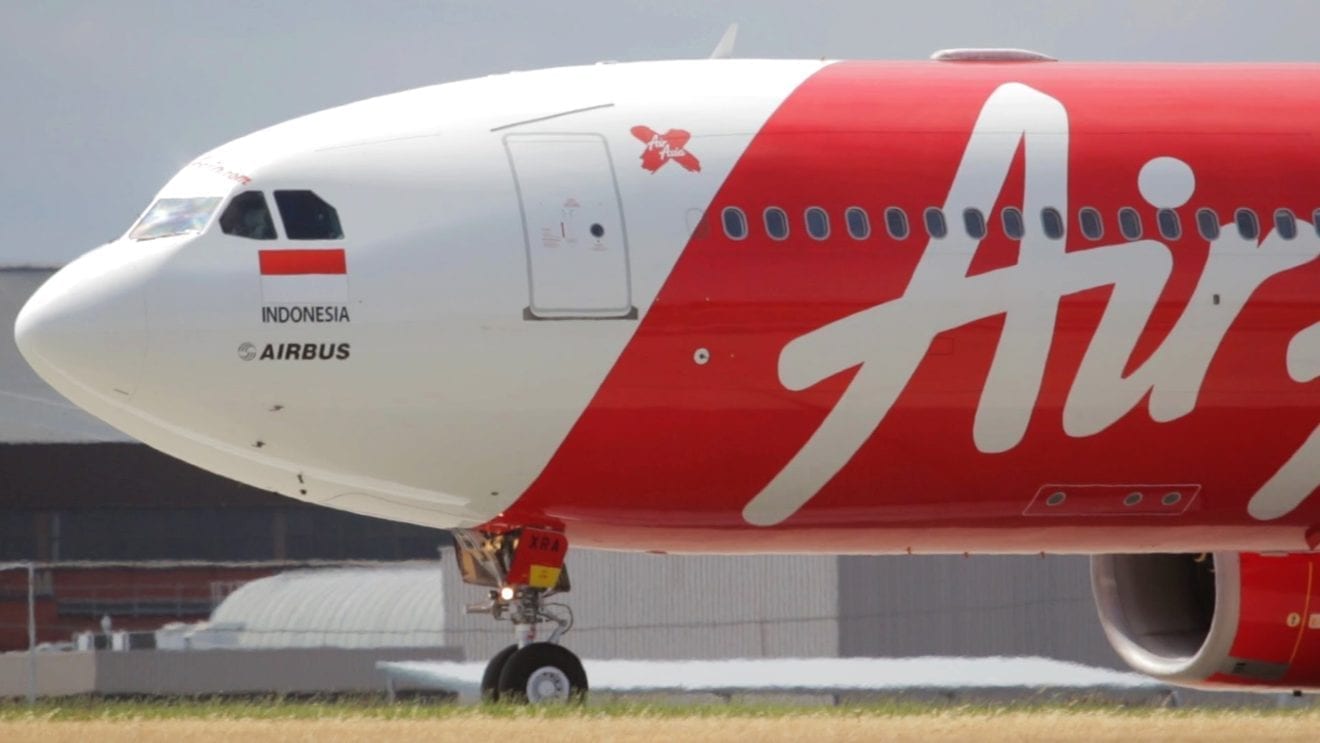
    Inmarsat, which has high hopes for the region, says six AirAsia aircraft have been fitted with its GX Aviation Ka-band connectivity system.

    The service offers an improved experience over the Inmarsat SwiftBroadband-powered texting solution on offer at AirAsia.

    Passengers can avail of MB packages of data for the GX service, a model that is being increasingly adopted by airlines but which is not without its detractors. A 200MB package for MYR58 (roughly $14US) is positioned by AirAsia as being the “best for streaming”.

    For its part, AirAsia is thrilled to be offering GX on half-a-dozen aircraft. The company’s RedBeat Ventures subsidiary, ROKKI, manages the service, which has been integrated into its broader entertainment and e-commerce platform.

    “Some people are noticing what we are doing,” enthused AirAsia Group CEO Tony Fernandes in a tweet. He added: “Making products affordable and increasing quality. Bravo!”

    The service is slated to be implemented fleet-wide across AirAsia’s Airbus A320 and A330 models in 2020. This requires installation of the Honeywell JetWave terminals atop AirAsia’s fuselages, a time-consuming endeavor. But AirAsia may be compelled to quickly equip, as passengers are eager to get online.

    Other GX Aviation airline customers in the Asia-Pacific region include Air New Zealand, Singapore Airlines and Philippine Airlines.

    But new business opportunities abound. The Asia-Pacific region is expected to become the largest single market for broadband-enabled services in the next two decades, says Inmarsat regional vice president APAC Chris Rogerson, and Inmarsat believes it is in the right position to help them realize the full potential of a fully connected fleet today.

    “We foresee that by 2021 the majority of airlines will be offering inflight connectivity,” Rogerson tells RGN.

    Whether these carriers will ultimately offer free Internet browsing remains to be seen. Air New Zealand has already done it, and passengers are pleased. Inmarsat Aviation president Philip Balaam tells RGN that when a free WiFi service first goes live, passengers tend to push the system hard, but that “usage tends to settle back into more normal usage” thereafter.

    Regarding the free model, he says, “I strongly suspect that that’s a trend that we will see in general over time” or at least “a component of free. Now whether you provide full free and full free to everyone is something else. That’s more of a segmentation issue than anything else. But the idea of having ubiquitous free service to some level of SLA [service level agreement], I think we are on that journey.”

    In addition to supporting cabin connectivity and connected IFE, airlines are adopting GX for operational benefits, including real-time mapping for pilot electronic flight bags (EFBs) as well as other real-time crew and health monitoring applications.

    But GX is not the only service on offer for Asia-Pacific carriers. Among competitors in the space, Panasonic Avionics has an entrenched position in the region, counting several Chinese airlines as customers for its eXConnect-branded Ku-band connectivity solution, in addition to All Nippon Airways, Cathay Pacific Airways, Garuda Indonesia, Japan Airlines, Singapore Airlines, and Thai Airways.

    Last year, Panasonic further bolstered its connectivity portfolio by becoming a strategic value-added reseller for GX. Intriguingly, Rogerson tells RGN that the deal also enables Inmarsat to offer Panasonic’s NEXT IFE solutions to Inmarsat’s commercial aviation customers.

    “Over the past year, Inmarsat and Panasonic have made significant progress with aligning our processes and systems. This has been our core focus… [covering] important areas such as sales process, contracts, technology, and operations processes,” he says.

    India, meanwhile, one of the fastest-growing countries in civil aviation, is still in a huddle over inflight connectivity. Last year, licenses for In-flight and Maritime Communications (IFMC) were cleared by regulators.

    Inmarsat’s Indian teleco partner, state-owned telco BSNL, holds approval to offer connectivity to Indian airlines operating within and outside India, as well as foreign airlines transiting through Indian airspace. “As a result, Inmarsat will be set to begin offering GX Aviation services over Indian skies from early 2020,” assures Rogerson.

    Some carriers are already primed to offer the GX service to passengers. Indian budget carrier SpiceJet, for instance, has GX equipment installed on 13 Boeing MAX 737s. But these, like the rest of the MAX world fleet, have been grounded since last March.

    Even when the MAX is recertified, a hurdle awaits. Clearances are required from the Indian Space Research Organisation (ISRO) for a foreign satellite to be used.

  • Apple drops iOS 13.3, iPadOS 13.3, tvOS 13.3 and more

    Apple drops iOS 13.3, iPadOS 13.3, tvOS 13.3 and more

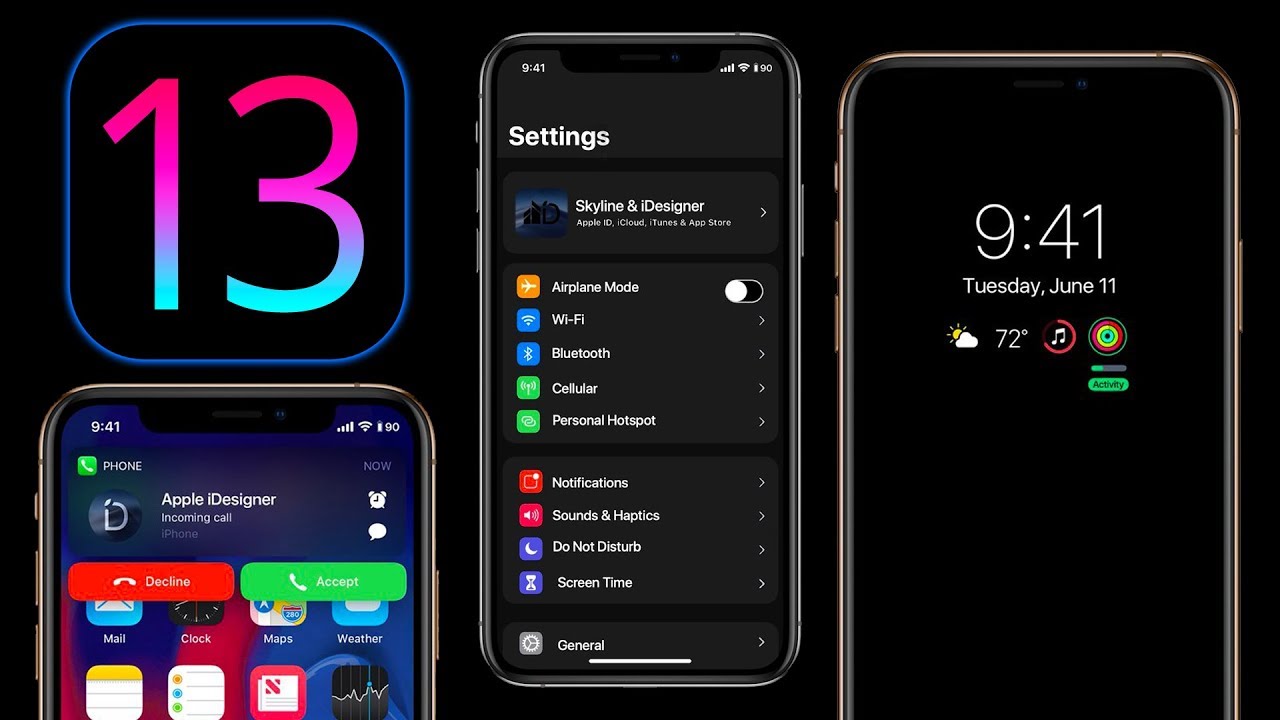
    Today is a day of operating system updates for Apple as the company dropped iOS 13.3, iPad OS 13.3, HomePod 13.3, tvOS 13.3 and watchOS 6.1.1. The update to iOS 13.3 for the iPhone and iPad OS 13.3 for, well, you know, adds Communication Limits support in Screen Time. The latter measures how long you use your phone or tablet, what apps you use the most, and allows parents to limit their children’s use of certain apps.

    With the new feature, users can decide who they can communicate with and when they can communicate with them during “Downtime.” This is a setting on Screen Time that when enabled, prevents the user from opening certain apps, receiving notifications and getting phone calls during certain time periods except for apps and callers that are selected as “Always Allowed.” By default, Downtime, when enabled, will run from 10 pm to 7 am local time. With the new Communication Limits, parents can prevent their kids from calling, texting or using FaceTime with anyone else but them after a certain time of day.

    With the update, Apple answered complaints from users about Memoji and Animoji stickers. The stickers were showing up alongside the emoji keyboard and users went into a conniption. But after installing iOS or iPad OS 13.3, users can disable this feature by going to Settings > General > Keyboard > Emoji.  In Apple News+, stories from The Wall Street Journal and other newspapers now have a new layout and stories can be liked or disliked with a tap. In Canada, articles in the Stocks app are now available in both English and French. Top stories can now have a “Breaking” or “Developing” label to users find the latest and most important content.

    Several bug fixes and improvements are part of the new update. When trimming a video in Photos, users will be able to create a new video clip. Bugs have been exterminated that prevented a message from being deleted in Gmail and prevented new messages from loading in Mail. With the update, screenshots shouldn’t look blurry any more when disseminated via Messages, and if you cropped or used Markup on a screenshot, it will save with the changes that were made. Missed call badges should now disappear, and Voice Memo recordings can now be shared with other audio apps. In addition, Apple says that the update addresses an issue that made some wireless chargers charge more slowly than expected. It also corrects an issue that had the Cellular Data setting incorrectly show as being “off,” and one that prevented users from turning off Dark Mode when Smart Invert was enabled. The update also takes care of an issue that caused incorrect characters to show up in Messages and duplicate sent messages in Exchange accounts.

    In tvOS 13.3, Apple gives users the option to bring back the “Up Next” queue in the Top Shelf app. Apple had changed this to show clips of previews and trailers called “What to Watch.” This is found in the Home Screen section and after updating to tvOS 13.3 users can go to Settings > Apps > TV to make the change. Apple is also disseminating watchOS 6.1.1 for Apple Watch users. There are no new features in the update, but it does contain some bug fixes and performance improvements.

    And HomePod OS 13.3 has also been released.  With the update, Apple’s smart speaker will do better at recognizing the voice profile of family members. It also will allow family members to enable or disable personal requests and fixes an issue that could prevent music playback from resuming on a stereo pair after a phone call.

  • Android Auto now lets you customize your app drawer

    Android Auto now lets you customize your app drawer

    Android Auto went through a lot of changes lately that made it a much better app, and the improvements are still coming. The only issue with these timely updates is that they’re not available to everyone at the same time. The latest Android Auto update has just starting to roll out and it includes one highly-requested feature – the ability to customize the app drawer.

    Redditor pkoya1 claims Google now lets Android Auto users choose which apps they want to appear in the app drawer. Unfortunately, the new feature is not available for everyone yet, and trying to download the Android Auto app from the Google Play Store won’t help.

    It looks like this is a server-side update that will be pushed out in waves, so it will probably take some time to reach all customers. In the screenshot attached to the article, several apps can be selected to appear in the Android Auto app drawer.

    Some of them like Google Play Music or Maps can’t be removed since they are core system apps. However, depending on what phone you use, you might be able to uninstall Google Play Music if you’d rather use Spotify instead. Keep an eye out on the new feature if you’re using Android Auto.

  • Tencent’s WeBank to Power China’s Blockchain Network

    Tencent’s WeBank to Power China’s Blockchain Network

    The Shenzhen-based firm will provide the tech for the country’s national blockchain consortium. WeBank, China’s first digital bank, will provide the technical infrastructure for the country’s nationwide blockchain-based service network (BSN), according to a Chinese state media report.

    BSN plans to offer infrastructure services for any Chinese or international entity that uses blockchain. According to the agreement, BSN will use WeBank’s open-source FISCO BCOS blockchain application ecosystem, and WeBank will provide technical support and training for BSN developers, the report said.a

    China is attempting to build a nationwide blockchain network to serve a range of state-controlled public services across the country, including telecommunications and energy management.

    Users in various industries often face dilemmas such as high cost of forming a chain, heterogeneity of the underlying platform, and inability to interact with data. Promoting the construction of public infrastructure at the bottom of the blockchain has become the meaning of pursuing the development of the digital economy, the report said.

    Led by the State Information Center, a think tank affiliated with the National Development and Research Commission, China’s highest central planning agency, the BSN consortium includes firms like WeBank, Huobi China, UnionPay, China Mobile and China Telecom.

    The project has been tested in 25 cities across China as well as Hong Kong and Singapore. It is expected to be tried out in more than 200 cities by 2020.

  • Traditional match producer to shift focus

    Traditional match producer to shift focus

    Vietnamese matchmaker Thong Nhat Match JSC plans to modernize operations due to dwindling sales. The company’s board said it would halt match production next year and delist its DTN shares from the unlisted public companies bourse (UPCoM).

    Annual match sales hit near 100 million boxes last year, down 45 percent from 10 years earlier, and set to plummet further this year, a business report shows.

    The domination of lighters is largely to blame for falling demand, along with the rising cost of wood, it added.

    The company plans to focus on lighter production, though it sold only 80 percent of a targeted 18 million units last year.

    Thong Nhat Match was established in 1956 as a state-owned company, operating the first factory in northern Vietnam. It was equitized in 2002, and now has charter capital of VND22 trillion ($950 million).

    Its after-tax profit was VND2.27 billion ($98,000) in 2018, up 10 percent year-on-year.

    The Thong Nhat matchbox, featuring a printed flying dove, boasts decades of popularity.

    Alongside other traditional companies like Thuy Ta Ice-cream and Thuong Dinh Footwear, all operating over 60 years, Thong Nhat Match has been struggling to grow in the modern competitive market.

  • H&M’s Cos China to launch clothing rentals with YCloset

    H&M’s Cos China to launch clothing rentals with YCloset

    H&M Group’s higher-end clothing brand Cos is to trial renting out its clothes in China through rental platform YCloset.

    Swedish retail company H&M Group said it has partnered with YCloset to run a three-month trial to explore the circular business model.

    “The rental subscription has an additional sustainable aspect to it, as customers will be able to buy the product for a reduced price when the rental period is over, giving them another chance to enjoy the garments,” said the company.

    Cos MD Marie Honda said that the brand’s quality will lend itself well to the rental system. The brand is described by the group as one that merges high fashion attributes with ground-level pricing.

    “Cos collections are designed and made to last; longevity has been an integral part of the Cos design ethos since the brand began 12 years ago,” she said.

    H&M Group said YCloset’s 15 million registered users will enable the group to learn more about Chinese customers and their demographics.

    In November, H&M launched a rental service through its Stockholm flagship store, which also offers repair services with an atelier where customers can get their fashion favorites mended or upgraded.

    The clothing rental service market was estimated at US$1 billion last year.

  • The Shilla Duty Free unveils new brands in Singapore

    The Shilla Duty Free unveils new brands in Singapore

    Travel retailer The Shilla Duty-Free has launched a raft of new brands at its Changi Airport health-and-beauty concessions, marking its fifth anniversary in Singapore.

    The new brands are on display at a refreshed retail space at the Terminal 3 Departure Check-in Hall store (in the public area) which features a modern, tropical look, with earthy hues of woods and whites.

    The new brands are from South Korea, Singapore and Europe, ranging from Banyan Tree and Too Faced to cult beauty favorites including COSRX and Too Cool For School. They will also be stocked at selected stores airside.

    The new brands also include Annick Goutal from France, Age 20’s, Vidivici, First Aid Beauty, Too Faced, Cosme J-Cos and JM Solution.

  • Indonesia retail sales growth at five-month high

    Indonesia retail sales growth at five-month high

    Indonesian retail sales grew at their fastest rate in five months, according to government data.

    Growth levels are currently at 3.6 percent, the highest increase over last year’s figures in five months. Growth for the previous month stood at just 0.7 percent.

    The figures were released as part of a central bank survey, which showed that sales of food and auto parts were largely behind the measured increase. Sales of communications equipment, however, were lower than expected during the period.

    The survey results predict growth in Indonesian retail sales for November at 3.4 percent.

  • Tata subsidiary sells two giant Indian malls

    Tata subsidiary sells two giant Indian malls

    Two giant Indian malls, in Nagpur and Amritsar, have been snapped up by Virtuous Retail South Asia for US$100 million.

    The 1 million sqft Amritsar centre and 700,000 sqft Nagpur property were bought from Tata Realty and Infrastructure’s Trilium shopping mall portfolio, according to a report on Livemint. Virtuous, which is building a portfolio of Indian malls, is the retail development subsidiary of investment company The Xander Group. The company also recently acquired a 20-acre site from Raymond Limited in Thane, near Mumbai, where it plans to develop a mall.

    “This has been a year of active investments for us to broaden our shopping centre portfolio,” said Sid Yog, VRSA’s founder and chairman told Livemint. “Going forward, we would also explore acquisition opportunities in Kolkata and Hyderabad and add properties to the cities we are already present in.

    “We believe even gateway regional cities like Nagpur and Amritsar have significant population and retail consumption to make them attractive for us.”.

    VRSA now has more than 13 million sqft of Indian malls operating or under development across Delhi-National Capital Region(NCR), Mumbai, Bengaluru and Chennai along with smaller cities such as Surat, Mohali, Amritsar and Nagpur.

    The company says it plans to renovate and rebrand the newly acquired Indian malls.

    Meanwhile, Sanjay Dutt, MD and CEO of Trilium says the sale reflects the company’s strategy of exiting tier 2 and 3 cities.