Tag: asia

  • Tata subsidiary sells two giant Indian malls

    Tata subsidiary sells two giant Indian malls

    Two giant Indian malls, in Nagpur and Amritsar, have been snapped up by Virtuous Retail South Asia for US$100 million.

    The 1 million sqft Amritsar centre and 700,000 sqft Nagpur property were bought from Tata Realty and Infrastructure’s Trilium shopping mall portfolio, according to a report on Livemint. Virtuous, which is building a portfolio of Indian malls, is the retail development subsidiary of investment company The Xander Group. The company also recently acquired a 20-acre site from Raymond Limited in Thane, near Mumbai, where it plans to develop a mall.

    “This has been a year of active investments for us to broaden our shopping centre portfolio,” said Sid Yog, VRSA’s founder and chairman told Livemint. “Going forward, we would also explore acquisition opportunities in Kolkata and Hyderabad and add properties to the cities we are already present in.

    “We believe even gateway regional cities like Nagpur and Amritsar have significant population and retail consumption to make them attractive for us.”.

    VRSA now has more than 13 million sqft of Indian malls operating or under development across Delhi-National Capital Region(NCR), Mumbai, Bengaluru and Chennai along with smaller cities such as Surat, Mohali, Amritsar and Nagpur.

    The company says it plans to renovate and rebrand the newly acquired Indian malls.

    Meanwhile, Sanjay Dutt, MD and CEO of Trilium says the sale reflects the company’s strategy of exiting tier 2 and 3 cities.

  • Amore K-beauty store pops up in Singapore with Lazada

    Amore K-beauty store pops up in Singapore with Lazada

    An Amore K-beauty store has launched in Singapore in partnership with Lazada, both online and offline.

    The store sells popular AmorePacific brands such as Sulwhasoo, Innisfree and Laneige as well as “cult” brands such as Hanyul and Iope. Amore will sell from a physical store in Funan with an online-to-offline channel on Lazada. Buying items in-store will require customers to scan a barcode and complete their purchase on Lazada.

    “We are proud to be the platform of choice for top retail brands, and are pleased to partner AmorePacific on this first-of-its-kind project to jointly develop our New Retail capabilities together,” said Lazada Singapore CEO James Chang.

    The Amore K-beauty shop will host beauty workshops by South Korean makeup artists and feature new technology from Seoul to help customers better understand their skin needs.

  • Australian fashion label Tony Bianco to launch in China

    Australian fashion label Tony Bianco to launch in China

    Australian fashion brand Tony Bianco is launching its first international location in Beijing.

    The label is partnering with verteran Chinese retail specialist firm Shanghai Smile Commercial – which has ushered multiple foreign fashion brands into China – in a joint venture to launch the brand in the territory.

    “A few years ago there was a noticeable increase in daigous sourcing the Tony Bianco brand to send back to clients and that has continued to grow, said company director Anthony Bianco in a Ragtrader report. “It was the start of our research phase into what a store in China could hold for a brand like ours.”

    The new store will officially open on December 21 at Chaoyang Joy City, showcasing the brand’s SS19 and AW19 collections.

  • Gmail update lets users send emails as attachments

    Gmail update lets users send emails as attachments

    Google is making it easier to forward emails to multiple recipients via Gmail. The latest update lets you attach emails to other emails in Gmail without having to download them. Simply drag and drop the email you want to forward inside your email. In fact, you can drag multiple emails into a new thread, which makes the new feature even more useful.

    Another method to insert emails in a new thread to select the emails from the Gmail inbox and then choose to “Forward as attachment” from the three-dot menu. You can even reply to an email by adding multiple emails in the compose window via drag and drop.

    There are a couple of important details that Google mentions in the announcement. First off, all attached emails become .eml files. Secondly, you can attach as many emails as you want. Last but not least, every attached email will open in a new window.

    The new feature revealed by Google today will be available to all Gmail users, not just Gsuite members. However, according to Google, the rollout may take up to 15 days starting on December 9, so everyone should get it by the end of the year.

  • Google Maps’ incognito mode now available for iOS users

    Google Maps’ incognito mode now available for iOS users

    You might recall that back in October, Google disseminated an update that added incognito mode to the Android version of Google Maps. First, we do need to get something straight for all of you philanderers our there. This mode doesn’t allow you to travel to your weekly rendezvous sight unseen as though you were wearing Harry Potter’s “Cloak of Invisibility.” Instead, when Maps’ incognito mode is enabled, searches made on the app and places you navigate to are blocked from being added to your Google account. As a result, you won’t receive any personalized recommendations in the Maps app (like places to dine) and your Location History will not be updated. Today, Google has announced that this feature is now available on the iOS version of Google Maps.

    In addition, Google points out that a new feature called bulk delete will be coming to Android users next month; this will allow them to find and delete multiple places from their Timeline and Location History in one fell swoop. But Google wants you to make sure that you know what you’ll be missing by not allowing it to keep your Location History. If you use incognito mode or delete Location History, you won’t be able to see wait times at restaurants and grocery stores (which is computed using “aggregated and anonymized Location History information”). You also won’t be able to see previews of the parking situation at your destination, be given a time-to-leave alert, use “Your Match” to calculate how much you might enjoy a particular eatery and use the Explore tab to find nearby coffee shops, parks restaurants and more.

    Lastly, Google is adding a much needed new feature to the Android version of the Google Opinion Rewards app. The app allows you to build up Play Store credit by answering survey questions. Depending on what is being asked, users can score 10 cents to nearly $1 each time they participate. The credit must be used within a year, something that not every user knew. Recently, there were some complaints about credits disappearing from the app after they had expired. To make sure that users don’t waste any credits, an expiration date for the oldest credit will now appear underneath the account owner’s current balance.

    We’ve used the app during the year and all it takes is a few seconds of your time. And the credit can be used to purchase videos, books, apps and to make in-app purchases. Android users can install the app from this link. Because Google Play Store credits would be useless to iOS users, this version of the app pays out in small cash credits that are deposited into a PayPal account.

  • Retail grocery market in Asia is expecting a double-digit growth

    Retail grocery market in Asia is expecting a double-digit growth

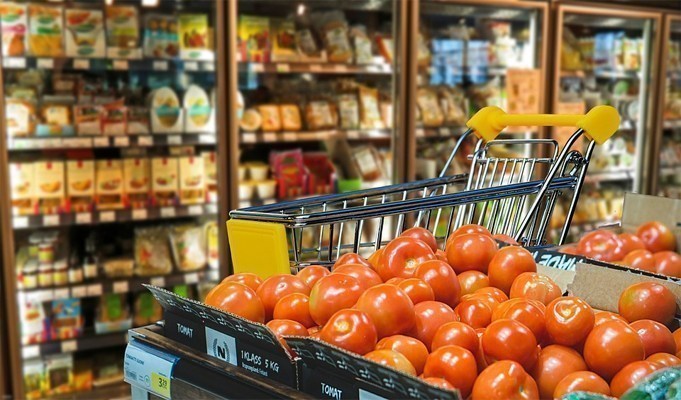
    The global grocery market is at high by the influence of Asian grocery market. Though there has been certain stagnation in growth in Western Europe and North America, the overall global grocery sales set to reach about US 10 trillion by the year 2023 that includes half of the additional sales which will mainly be from Asia. The grocery industry in the Western Europe and North America are struggling to sustain their positive growth in a saturated market, the worldwide grocery business is doubtful to weaken. Asia which is home to the world’s fastest growing economies can see a rapid rise in the grocery business globally and is expected to create additional USD 1.9 trillion retail grocery sales by 2023.

    Since 2011, the global grocery industry of USD 8.77 trillion had grown by 6.9 percent annually according to the market researchers. According to the IGD which was released by the leading grocery training and research charity in December 2018 had focused on the positive trigger which the Asian markets are creating over the global trade. According to IGD report, nearly half or about 44% of the extra sales is actually expected from Asian market while, additional USD 1.9 trillion of the sales is projected by 20 global players from 2018 to 2023 which is around 28% extra sales. The sales in Asia keep growing in demand and is likely to add about 47% of additional spend over the groceries from 2018 to 2023. Many physical casinos have also come up with table games also.

    Due to the high fixed costs, thin margins and the need to handle different products, the grocery retail is still under pressure. The grocery business had dropped in several mature economies due to the market saturation and the increased competition from a lower priced format like dollar stores and the discount chains. About 20-50 % of the market share in Germany had been captured by the discounters. It’s also rapidly increasing in Ireland, Netherland, US and Canada as well.

    The changes in consumer behavior to opt for a specialty store or a convenient one had also reduced the sales in mandatory supermarket brands. Though most of the popular supermarket chains provide hundreds to thousands of items for the broad choice of their customers, customers are now looking for the selected product category throughout the board. Now customers trying to avoid the one stop shopping choices which they earlier used to have in various multiple retail outlets that also include the drug stores, online, warehouse clubs, dollar stores etc. They mainly focus on value-for-spent which has to be highest while making any kind of purchase.

    The US has observed shirking in the market share of their traditional grocers. According to a study, the grocery store openings had dropped by about 28.8 percent year after year in 2017. Similarly, the biggest players in Britain have been left with 68.5 % against 76.3% combined market share which was about 5 years ago. According to the industry data, the grocery sales have just risen by 2% in saturated and mature economies over the last decade and more than half of the profits from 2012 to 2017 have taken a blow.

    According to a recent study which was carried out in December 2018, it had claimed that the sales in Western Europe and the US may take a hit from US $200 billion to US $700 billion without taking any measure to get adopted to automation or consumers personalization, as consumers opt for alternative options like the discount stores, farmers markets and the online segments by the year 2026.

    Though there is a slowdown in the Western Europe, the European grocery market has an existing euro 191 billion which is expected to reach about euro 228 billion by the year 2022 which will be 16% of the global grocery sales. This growth in the global grocery sales is mainly expected to come from the East and central European economies like Russia, Poland and Romania.

    All of these countries are getting benefited by the liberalization of the economy and have better integration with various European countries. Countries like Japan, China and Korea have emerged to be the biggest growth triggers for the grocery sales in Asia. China which is actually the 2nd largest market in the US is expected to be a global leader by 2022 with a growth rate of 32.6%. According to the IGD report the top 10 global retailers by their revenues will be in Asia and will show higher growth in the next 5 years.

    The GDP in Indonesia, Pakistan, India, Vietnam, Philippines continues to improve due to which their contribution to the global growth is significant. With the modernization in trade and the retail infrastructure, the overall business environment has become easy. The grocery retail is expected to reach about US 700 billion by the year 2022 in India which is currently ranging from US 440 billion to the US 600 billion. When we consider the grocery trade format in Asia it includes the specialty, small hypermarkets, convenience stores, stores close to the workplace or the residential hubs etc. The convenience stores are growing their sales at a faster rate in Asia with the changing shopping habits of the customers and increased store networks.

    According to the IGD’s forecast these are expected to grow at a rate of 6.6% every year till 2022. In most of the Asian countries, the retail partnerships have also improved to a great extent. With the latest developments in technology and the self checkout technology it’s now very easy to manage the grocery retail operations in much efficient and cost-effective ways. According to the latest study, the global beverage sales and online food sales is expected to rise by 80% in the next 5 years that in turn results in keen decline by 2022 in the traditional form of brick and mortar sales. In Asia the online grocery shoppers are at a leading rate with 37% of buyers from Asia- Pacific when compared to the buyers from Europe which are just 13%.


  • Dalian Wanda to open 17 malls this month

    Dalian Wanda to open 17 malls this month

    Chinese real estate developer Dalian Wanda Group will reportedly open 17 shopping centres this month.

    The group recently opened its 300th plaza in Hubei province, a 105,000sqm shopping centre based in Xianning – the first enclosed mall in the city – including a 275m indoor shopping street and an Imax theatre, as well as hosting 200 retailers.

    Wanda is poised to open four new plazas on December 20, followed by three on December 28 and 31. The group intends to operate 323 plazas in total by the end of the year, the majority of new locations in low-tier cities.

    The group has opened centres in 188 cities in 30 provinces nationwide.

  • Bacardi launches Aberfeldy pop-up store at Taoyuan International Airport

    Bacardi launches Aberfeldy pop-up store at Taoyuan International Airport

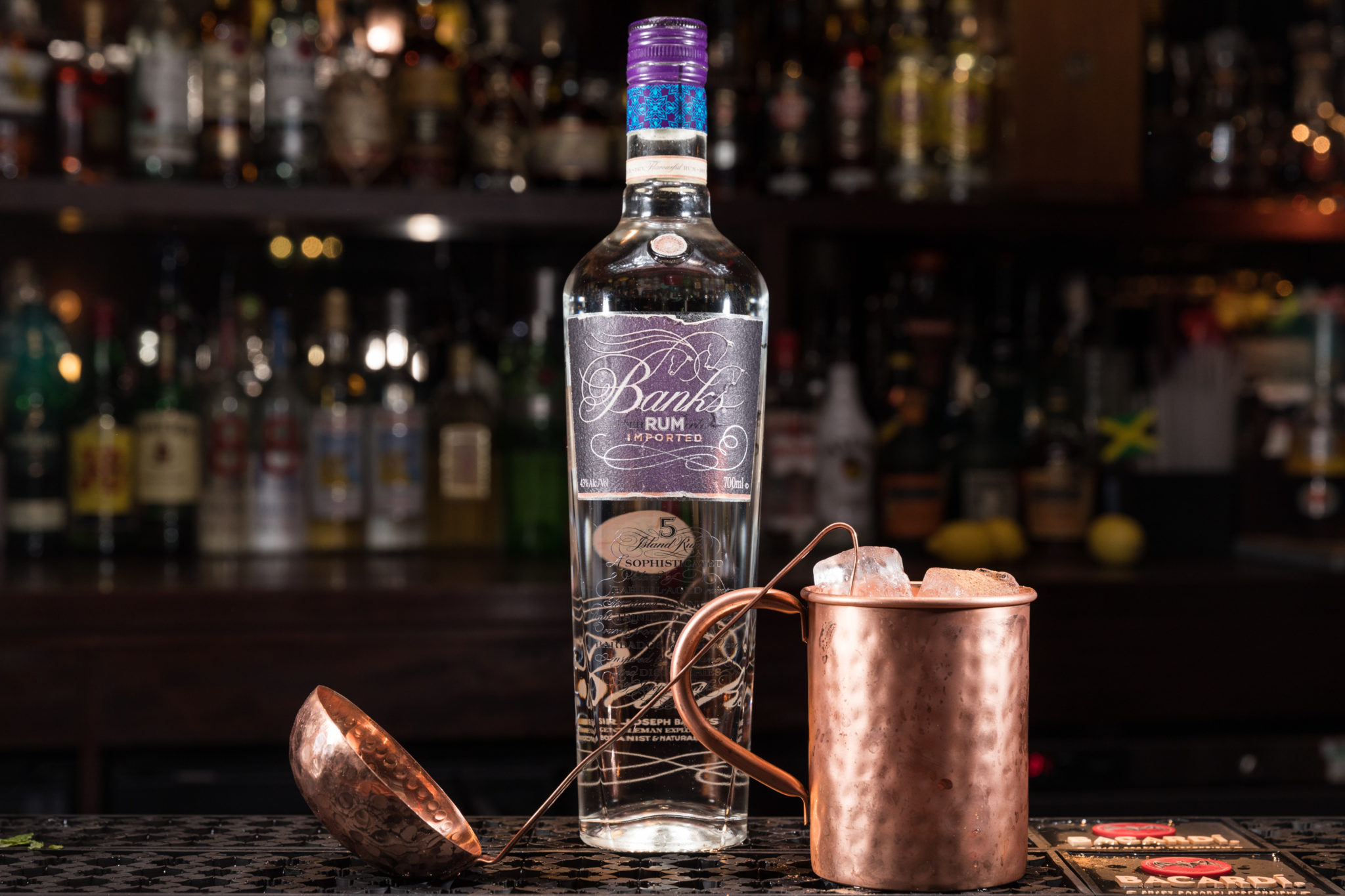
    Bacardi Global Travel Retail has launched a glittering Aberfeldy pop-up store in partnership with Ever Rich Duty-Free at Taiwan’s Taoyuan International Airport.

    The pop-up store will run until the end of February, during what is the region’s peak holiday travel time.

    The Aberfeldy store features two global-travel-retail-exclusive single malts, the Aberfeldy 16yo and Aberfeldy 21yo, both finished in ex-madeira wine casks.

    “Taiwan is a truly dynamic market for Aberfeldy,” said Gaurav Joshi, regional director Asia Pacific, Bacardi Global Travel Retail. “Building on the exceptional success of last year’s airport campaign, we have now gone a step further to draw the shopper deeper into the Aberfeldy story, its craft and heritage and our constant commitment to age statements in the sublime quality of the Aberfeldy range.

    “We are also giving them their own chapter in the story with an individual and resonant link to this multi-award-winning single-malt brand by making the purchase a distinctly personal experience,” he said.

    The Aberfeldy pop-up store also features digital presentations, pyramid display units and a golden waterfall feature to represent the Pitilie Burn.

    Customers who purchase the two exclusive single malts can personalize their bottle by having it dipped in golden wax and sealed with their initials.

  • Hong Kong giftware retailer G.O.D opens new concept store

    Hong Kong giftware retailer G.O.D opens new concept store

    Hong Kong lifestyle design and retail brand G.O.D. has launched a new concept store at PMQ.

    The store is conceived as a gallery of contemporary Hong Kong art and design to provide a platform for progressive artists from all corners of the globe who will be exhibiting works inspired by Hong Kong.

    “We aim to push creative techniques and bring collections, which merge boundaries, foster collaboration across artists/artistic discipline and merge East and West,” a spokesperson from the giftware retailer G.O.D said.

    The store features a new snack shop “The Mess”, serving Home Kong-style rice rolls and milk tea or Gaggia Milano coffee.

    Contributing local artists include Ernest Chang, Godown Collection, Keyon Lee, Lousy, Mick Chan, Paul Turner, Parents Parents, Wong Ting Fung and Xeme.

  • Furla Hong Kong unveils new store design at Harbour City

    Furla Hong Kong unveils new store design at Harbour City

    Italian luxury brand Furla has relocated within Harbour City, revealing a new store design concept.

    Located on the second floor, the 1500sqft Furla Hong Kong outlet features a wide selection of handbags, small leather goods and other accessories.

    The facade showcases a Champagne gold anodized steel frame with the brand’s logo. The interior features Italian grey tiles and wooden flooring together with a textured-paint wall and an onyx feature wall.

    “We are thrilled to expand our presence in Harbour City with a bigger boutique, which features our new store design,” said Alberto Camerlengo, CEO of the Furla Group.

    “The Furla Hong Kong store concept is modern and sophisticated, providing an essentially Italian shopping experience to our customers from all over the world.”

  • Shops without stock draw crowds in South Korea

    Shops without stock draw crowds in South Korea

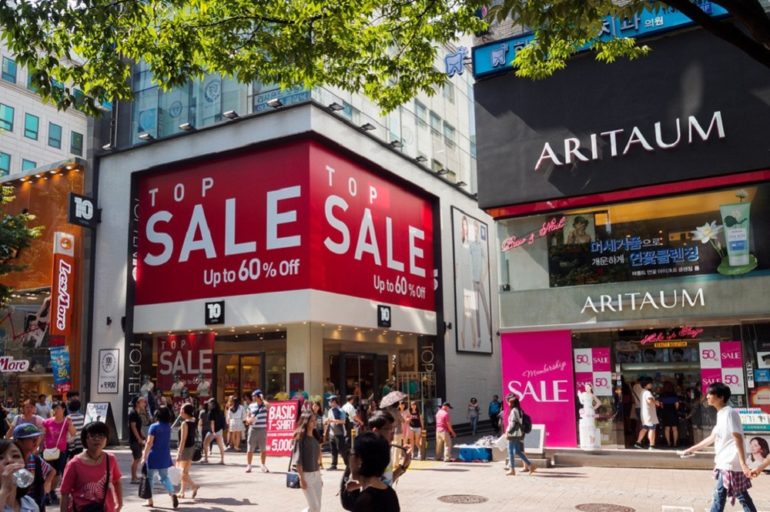
    There’s a new trend capturing South Korean consumers’ attention: shops without stock, focusing on experience rather than instant retail sales.

    With a growing number of consumers choosing and purchasing products online or on mobile devices, hands-on stores that target such customers are becoming a new marketing trend.

    Amore Seongsu, which opened in early October as a customer experience-oriented store of AmorePacific, a South Korean cosmetics giant, had surpassed 24,000 cumulative visitors as of December 5, about two months after its opening.

    At Amore Seongsu, customers can test and experience the brand’s cosmetics – but nothing is for sale in this shop without stock.

    Visitors can apply and spray products tailored to them from the beauty library, which features more than 30 brands and 2300 products from AmorePacific.

    Furthermore, Amore Seongsu offers various other services, including makeup classes, flower box- and perfume-making classes every month to encourage customers to participate.

    “We only offer customers the opportunity to check out products suitable for them at our stores, and customers purchase the products online afterward,” said an official from AmorePacific.

    Online shopping transactions of cosmetics reached 1.15 trillion won (US$966 million) as of October, up 28 percent year on year. Meanwhile, sales via mobile devices rose 32 percent to 648.8 billion won, according to Statistics Korea.

    In fact, data shows that 20 percent of customers who visit Amore Seongsu purchase products from the brand online within a week of their visit.

    In addition, AHC, a cosmetics brand operating under Carver Korea, opened its flagship store “Future Salon” in Myeong-dong, Seoul, in late October.

    American mattress maker Simmons opened a cultural complex, Simmons Terrace in Icheon, Gyeonggi Province, last year.

    Moreover, Aekyung Industrial Co, a South Korean household-goods and cosmetics maker, also launched Luna Signature, a hands-on cosmetics store near Hongdae in Seoul, in June. The two stores also place more weight on experience rather than sales.

    “We don’t put much importance on sales performance at experience stores,” a source from Aekyung said. “If we increase brand awareness by communicating with more consumers, it will lead to an increase in sales online.”

    The furniture industry, which already operated showrooms and flagship stores, has also recently attracted visitors by decorating exhibition and sales halls as cultural spaces.

    American mattress maker Simmons opened a cultural complex, Simmons Terrace in Icheon, Gyeonggi Province, last year. It has welcomed more than 100,000 visitors in just one year since its opening.

    In addition to the showroom-like shops, museums and exhibitions featuring gardens, lounges and brand stories have been set up at Simmons Terrace.

    “Customers do not purchase products immediately on site, but visitors become strong potential customers,” a furniture industry source said.

  • Stores close, jobs shed as Hong Kong retailers survive downturn

    Stores close, jobs shed as Hong Kong retailers survive downturn

    Thousands of stores will close and 5600 jobs will be lost as Hong Kong retailers try to recover from a “severe” sales decline brought on by social unrest and declining mainland visitor numbers, according to a survey by the Hong Kong Retail Management Association.

    Conducted between October 29 and November 22, the survey revealed that 97 per cent of retailers polled have recorded losses since the protest activities began in June with the vast majority of those describing their losses as “heavy” or above moderate.

    The HKRMA said retailers planned to lay off staff if trading conditions did not improve. Based on survey responses, the association calculated that with some 270,000 people working for Hong Kong retailers currently, cuts “may exceed 5600 in the next six months”. And with 64,000 retail outlets currently operating in Hong Kong, as many as 7000 retail stores may close.

    Some companies have stated that even if they have not reached a severe level of trade decline, they anticipate closing stores within the next six months.

    The HKRMA urged shop owners to offer different rents to their retail tenants according to the degree of loss of the shop. Rent and staff costs are the biggest expenses retailers face in doing business and would naturally be the first to need adjusting to maintain commercial viability.

    Chairman Xie Qiu Anyi said rent reductions of 30 per cent were required to provide a lifeline to retailers.

    “All stakeholders need to support the retail industry in the future,” she said in a statement translated from Chinese. Currently, 80 per cent of survey respondents reported inadequate rent relief from landlords.

  • UBS Unveils Top Ten Questions for Real Estate

    UBS Unveils Top Ten Questions for Real Estate

    In its annual report titled: Top 10 real estate questions for 2020, the team at UBS Asset Management Real Estate & Private Markets looks ahead at the key questions facing the industry for the year ahead.

    In 2019, much of the financial community, including UBS Asset Management were wrong-footed by the abrupt, global reversal in monetary policy. The team anticipated a small, but continued rise in interest rates and an adjustment «with some delay» in property yields.

    This was not the case and instead, rates have gone the other way. The questions (and corresponding insights) highlighted in this year’s outlook focus on the questions detailed below:

    1. As interest rate policies increasingly test the Zero Bound, what is the floor for property yields?

    The lowest yields reported have been in Hong Kong (prior to the political protests) from a global perspective, where office and retail yields reached 2 percent, and Singapore where luxury residential yields fell to just 1.5 percent. In France, Paris office yields are now just around 2.8 percent. Arguably, index-linked bond yields are the best comparator for property yields given expectations for inflation to push up rents.

    2. How should property investors position themselves for an economic recession?

    As businesses are inclined to turn towards their core activities while incorporating tighter ESG standards at the same time, investors should de-risk their office strategies to core locations and ESG-compliant assets. As the retail sector is in structural flux, leading to shorter leases in the face of slower growth, it has become more difficult for investors to de-risk, leading to historically low allocations.

    Logistics benefits from the challenges in retail but space itself face headwinds caused by the decline in manufacturing. The evolution of supply chains supports investment in more recession-resistant urban sites. Residential, senior housing, and medical offices benefit from the more predictable demographic developments, and despite increasing regulatory pressures provide more predictable income during an economic downturn. As real estate as a whole has lower leverage than pre-GFC, interest rates remain low, and the banking sector is more tightly regulated, lower risk debt can also provide recession protection.

    3. Now that industrial returns are starting to slacken, which sector will take over as the outperformer?

    Despite sounding controversial, 2020 could be the year that some retail assets make a comeback – with heavy caveating. Any outperformance from retail will be exclusively on an asset-level basis, and not a market level. And also given the stages of retail value decline to date, it is only the U.S. and possibly the UK where values have dropped to a point that opportunistic buys may make sense.

    However, in these markets, for very selective assets that demonstrate all the right attributes of tenant mix, dominance, and sensible rental levels, the substantial discount which can now be achieved on the purchase price means that much of any future decline in values and rents have already been absorbed.

    4. Will climate risks get increasing consideration as an ESG investment criterion?

    ESG is being increasingly integrated into the operational processes of nearly all economic sectors and the property investment industry is no exception. Over the years, ESG assessments in the real estate asset class are increasing in complexity and comprehensiveness, with social and governance factors now complementing a former energy-centric approach. It is not only the case that properties impact the environment. They might also be the victims of environmental degradation. Furthermore, building and urban design will be influenced by the intensification of microclimate anomalies, such as urban heat islands.

    In addition to new requirements in a building structure, the increasing intensity of natural hazards will likely lead to changes in risk mitigation measures, such as a surge in the level of property insurance premia. As extreme weather events are showing increasing occurrence, it’s likely that their negative impact on property will gain more and more attention.

    5. Retail is going through a major transition. What are the best examples of successful adaptation?

    It has been a tough year for retail. This is not necessarily a sign of crisis, but as the team argued before, it is a process of reinvention. Most company failures come as no surprise as those with outdated business models and large legacy store portfolios fall by the wayside. There are, however, examples of successful adaption. E-commerce has freed consumers from the necessity of shopping so retailers have to make them want to shop.

    There are clear signs of robust sales in stores and schemes that invest time and money in the retail environment, riding on «Experiential retail» trends. Some of the most successful retailers are those that fuse their online platform with their physical stores. In various U.K. locations private equity is targeting the conversion of low-value retail warehouses into urban logistics, while in Asia and the U.S, similar investors have retrofitted urban retail into offices and hotels.
  • Line Pay Taiwan Forms Cross-Border Payments Alliance

    Line Pay Taiwan Forms Cross-Border Payments Alliance

    The digital wallet and fintech service for messaging app Line will allow people from Japan, Korea and Thailand to use their local mobile payment services when in Taiwan.

    Line Pay has announced a cross-border mobile payment alliance to connect the ecosystems of payment operators Line Pay Japan, Rabbit Line Pay (Thailand), Naver Financial (Korea), and NHN PAYCO (Korea), the firm announced in a statement on Monday.

    This will allow users of services in the alliance to make cross-border payment services in the partnering services’ countries. Operations are planned to be launched by the first quarter of 2020, and Line said it plans to grow the number of partners in the future so users from more countries can benefit from the alliance

    We hope to build a path for all LINE Pay users and merchant partners in Taiwan to transcend national borders and to share a borderless payment experience, Line Pay Taiwan chairman WoongJu Jeong said in the statement.

  • DBS Wealth Management Expands Avaloq Partnership

    DBS Wealth Management Expands Avaloq Partnership

    The two partners, which have worked together for more than 10 years, will refine client solutions and accelerate DBS Wealth Management’s digital-led growth strategy using Avaloq’s cloud-based platform.

    Swiss banking software provider Avaloq will expand the scope of its partnership with DBS and help its wealth management arm to deliver more personalized services and enhance its advisory and solutions offerings, the firm announced in a statement on Wednesday.

    The bank will also work with Avaloq on modernizing its technology architecture across tech stacks, application programming interface (API), microservices, open shift containerization and cloud-native applications, which will facilitate better integration with fintechs and other stakeholders, the statement said.

    Discussing the expanded partnership, Sim S Lim, group head of Consumer Banking and Wealth Management, said DBS «is committed to becoming a tech company in our own right by continually investing in and upping the ante in our digital infrastructure, capabilities and solutions.»

    Avaloq has in recent months bolstered its business in Asia with a number of new or expanded deals, including Maybank Premier in Singapore, and Indonesia’s largest banking group Mandiri.