Tag: asia

  • Retro-Themed Hyundai 45 Concept Teased Ahead Of Frankfurt Motor Show Debut

    Retro-Themed Hyundai 45 Concept Teased Ahead Of Frankfurt Motor Show Debut

    The future is 8-bit. At least that’s what Hyundai’s new ’45’ concept suggests that was recently teased, ahead of its debut at the upcoming Frankfurt Motor Show on September 10, 2019. Inspired by the automaker’s first model in the 1970s, the 45 fully-electric concept car will act as a symbolic milestone for Hyundai’s future EV design, according to the company. The car that the automaker speaks of is the Hyundai Pony that was introduced in 1975 and was the first mass market car in South Korea. The Hyundai 45 concept not only pays homage to the Pony but also takes a retro design cue or two for its EVs.

    While the teaser does not give out any major details about the Hyundai 45 concept, we do get a clearer look at the silhouette of the car that is more angular and boxy than we thought. The dot-matrix taillights though do standout and certainly something we wouldn’t mind seeing on the production EV cars of the future too. It also sits well with the neo retro theme fo the car, something Honda too explored successfully with its new E, electric compact car.

    Hyundai is known for making some bold styling choices and while its current cars get that ‘Sensuous Sportiness’ design language, this would be a welcome change. We will, of course, get the complete look at the new 45 in a few days from now at Frankfurt and we do expect something radical from the Korean carmaker.

  • BlackBerry To Offer Cybersecurity For Future Jaguar Land Rover Model

    BlackBerry To Offer Cybersecurity For Future Jaguar Land Rover Model

    Jaguar Land Rover and technology firm BlackBerry today announced the expansion of the companies’ corporate partnership to develop next-generation intelligent vehicles for the carmaker. As part of the extended collaboration, the BlackBerry, a trusted security software and services company, will help JLR develop future-ready vehicle safety technology for the automotive market. The company will share its Artificial Intelligence and Machine Learning technologies like – BlackBerry QNX and BlackBerry Cylance, to develop vehicle safety systems, with a range of capabilities like – predictive software maintenance and cybersecurity threat protection.

    For instance, the BlackBerry QNX, an integrating software will be used to help develop Jaguar Land Rover’s next-generation vehicle architecture, making it safer. On the other hand, its consultants and security testing technology, BlackBerry Cybersecurity Consulting services will help identify security vulnerabilities in connected and autonomous vehicles, across the full software library used in a vehicle.

    Speaking about the partnership Ralf D Speth, Jaguar Land Rover CEO, said “Jaguar Land Rover and BlackBerry share a common objective in bringing the most intelligent vehicles to reality. I am delighted that our partnership with BlackBerry continues to go from strength-to-strength, a company whose technology innovations uniquely address the expanding safety needs of the automotive industry.”

    As for John Chen, Executive Chairman & CEO, BlackBerry, he said, “BlackBerry is a trusted partner of the automotive industry because of our heritage and innovations in secure communications. We are pleased to be Jaguar Land Rover’s chosen partner for safety-certified technology, as we advance Artificial Intelligence and Machine Learning technologies to transform automotive safety.”

  • Google Assistant adds new WhatsApp integrations

    Google Assistant adds new WhatsApp integrations

    WhatsApp is the most popular messaging app in the world, although in the U.S. it is third. No matter how you slice it, the Facebook-owned app is extremely popular. And so is Google Assistant. The virtual digital assistant can send text messages through WhatsApp (just say “O.K. Google, send WhatsApp message”) which comes in handy if you are sending a message that you want encrypted. Of course, the recipient of your message must be a WhatsApp member.

    But suppose you want to make a video or voice call using Assistant? Well, it used to be that video calls would automatically go through Duo or even Hangouts. Voice calls simply go through your carrier’s network. But as we pointed out, WhatsApp has a lot of pull. Remember, Facebook paid $21 billion for the messaging app in a deal that closed in 2014. So today Google announced that Assistant will now make voice calls and video calls through the WhatsApp Android app.

    To make a video call through WhatsApp, you can say “Hey Google, WhatsApp video John.” Google didn’t say how to initiate a voice call, but we would guess that it would go something like “Hey Google, WhatsApp call John.” Unfortunately, Google doesn’t go into great details about this with its announcement today, and neither WhatsApp video calls or voice calls worked for us. It could be that Google jumped the gun and let the cat out of the bag too early, or the new WhatsApp integrations are slowly rolling out to Android phones. Regardless, it is the little touches like this that help make Google Assistant the most useful of smartphone-based virtual helpers.

  • Starbucks and Alibaba Launch Voice Ordering and Delivery through Tmall Genie

    Starbucks and Alibaba Launch Voice Ordering and Delivery through Tmall Genie

    Starbucks is taking another step toward evolving the digital customer experience for customers in China by launching voice ordering and delivery capabilities within Alibaba’s smart speaker, Tmall Genie. Customers can now order their favorite Starbucks beverages and food simply by using their voice for delivery within 30-minutes. Leveraging Alibaba’s on-demand food delivery platform, Ele.me, the voice ordering capabilities for Starbucks, further extend the customer experience within Starbucks digital ecosystem.

    The launch of the new service marks the one-year anniversary of Starbucks and Alibaba’s strategic partnership which advances the New Retail infrastructure and digital power in China – one of the fastest-growing markets in the world for coffee consumption. The announcement also builds on several significant collaborations between the two companies that enable a seamless Starbucks Experience for Chinese customers, such as establishing back-of-house kitchens, Star Kitchens, within Alibaba’s Freshippo supermarkets in China.

    “We are thrilled to provide our cutting-edge Artificial Intelligence technology through Tmall Genie to serve Starbucks digitally-savvy customers in China,” said Miffy Chen, general manager at Alibaba A.I. Labs which leads the development of Tmall Genie. “Earlier this year, we launched food order and delivery service through Ele.me in response to our users’ needs for on-demand local services. We’re excited to introduce an even more diverse and enriched experience on our platform through Starbucks voice ordering and provide a direct benefit to Chinese consumers within their daily routine.”

    “The Starbucks feature through Alibaba’s Tmall Genie ushers in a new era of digital customer engagement for Starbucks, leveraging ground-breaking digital technology to create an unprecedented experience that elevates our connection with customers to new heights,” said Molly Liu, vice president and general manager, Digital Ventures, Starbucks China. “We are focused on ensuring that Starbucks voice ordering is truly personal, and we look forward to offering our customers more convenient moments and new opportunities to engage with Starbucks on a single integrated platform as they move throughout the day.”

    Through Alibaba’s Tmall Genie, customers place an order using their voice and can track their order in real-time within the 30-minute delivery timeframe.

    Starbucks® Rewards members also can earn Stars and receive membership updates, including benefits, on the Tmall Genie. Soon, members will be able to receive personalized recommendations when using voice commands to place orders that are tailored to previous order preferences and popular items from Starbucks seasonal menu. As another added benefit, Starbucks fans in China can also listen to the latest Starbucks in-store playlists through Alibaba’s music streaming app, Xiami Music.

  • Tapestry CEO dumped as share price plunges

    Tapestry CEO dumped as share price plunges

    New York-based luxury accessories and lifestyle house Tapestry has ousted its CEO suddenly due to the company’s poor sales results and plunging share price.

    Tapestry – parent of Coach, Stuart Weitzman and Kate Spade – has lost more than half of its value within the last year, from US$50 to $20.44 on Tuesday.

    The company announced overnight that CEO Victor Luis would leave both his executive role and his seat on the board with immediate effect. He has been replaced by Jide Zeitlin as CEO, the board’s current chairman who will continue in that role as well.

    The company has also named Susan Kropf, a current member of the Tapestry board, as a lead independent director.

    Luis has led Tapestry for five years and in its announcement, Zietlin paid tribute to Luis’ achievements.

    “Early in his tenure, he was a critical part of Coach’s development outside of North America, first as president and CEO of Coach Japan and then assuming responsibility for the brand’s entire international organization. Over the past five years as CEO, Victor was instrumental in the successful transformation of Coach and the establishment of Tapestry as New York’s first house of modern luxury lifestyle brands.”

    Luis oversaw the acquisition of luxury footwear brand Stuart Weitzman. However, three weeks ago Tapestry disappointed shareholders and analysts after its latest add-on Kate Spade, showed weak growth. Fourth-quarter profit fell from $212 million to $149 million on sales of $1.5 billion.

    Zeitlin said the board remains committed to Tapestry’s multi-brand model while recognizing the need to sharpen its focus on execution,

    “Given the continued strength and momentum at Coach – the largest brand at Tapestry – our top priority remains driving significantly improved performance at our acquired brands.”

  • Clot opens Juice store at K11 Musea

    Clot opens Juice store at K11 Musea

    Fashion label Clot has opened a Juice store at K11 Musea mall in Tsim Sha Tsui.

    The store opened on Tuesday, featuring a curated selection of brands – including exclusive in-house labels Clot and Clottee, alongside a range of top-tier names such as Fear of God, Alyx, A-Cold-Wall*, 99%is, Needles, White Mountaineering and Ambush.

    The new store will also carry signature streetwear imprints from the likes of Pleasures, Wacko Maria, and P.A.M, as well as lifestyle items from Kuumba and Medicom Toy, amongst others.

    Juice K11 Musea will also feature a sneaker wall with styles from Nike, Adidas, Converse and Vans as well as more niche footwear labels including Hoka and Salomon.

    With a modern design that still incorporates elements from its other local boutiques, the Juice store at K11 Musea will display a rotating selection of modern art and regularly host exclusive events and special releases.

  • Panerai opens pop-up store in China

    Panerai opens pop-up store in China

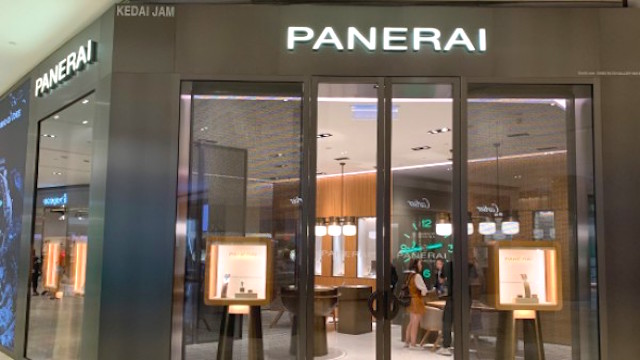
    Florentine high-end sports-watch brand Panerai has opened its first pop-up store in Greater China in Hong Kong’s Harbour City Ocean Centre.

    The 75sqm store follows a new ad-hoc design concept developed by Panerai’s creative director Alvaro Maggini. Guests are plunged into the “new Panerai universe” at the store through VR glasses, engaging in a multi-sensory installation that features dangerous sea creatures in an aquatic habitat of rocks, sand and shells.

    The store is showcasing its latest novelties for the very first time in Hong Kong, focusing on the brand’s Luminor Due blue dial titanium watches.

  • StanChart Inks Fintech Tie-Up

    StanChart Inks Fintech Tie-Up

    Digitalization in trade finance continues to gain momentum in Asia with Standard Chartered adding another industry milestone, partnering with tech firm Traydstream to leverage their trade document matching service capabilities.

    In order to help clients shift away from conventionally manual and time-consuming data matching processes, Standard Chartered’s partnership will leverage Traydstream’s platform populated by data and artificial intelligence-based matching tools. The solution aims to prevent trade financing cycle delays and potential impact to working capital needs – an issue made all the more important in the region due to an ongoing trade war.

    Standard Chartered will first offer the document matching service to clients in Singapore before rolling it out to its key trade export markets globally.

    According to Standard Chartered’s global head of documentary trade product management, Samuel Mathew, its decision to partner with Traydstream was due to the tech firm’s platform capabilities and fit with its emerging markets footprint.

    This strategic agreement further builds on the Bank’s export capabilities by allowing our clients to reduce discrepancies in their trade documents with Traydstream’s data and AI-based matching tools,» Mathew said.

    Standard Chartered’s efforts to leverage financial technology in trade finance are not limited to document matching. It is part of an eight-bank alliance that jointly developed «Voltron», a trade finance platform, on which HSBC – one of the developers – recently executed its first yuan-denominated blockchain-based transaction.

  • Uniqlo Billionaire Founder Seeks Woman for Successor

    Uniqlo Billionaire Founder Seeks Woman for Successor

    70-year old Japanese billionaire founder of Uniqlo, Yanai Tadashi, said he prefers to be succeeded by a woman, in a move he foresees will bode better for the region’s largest retailer.

    The job is more suitable for a woman,» said Yanai Tadashi, president and founder of Fast Retailing, which owns Uniqlo as one of its subsidiaries, in a report. «They are persevering, detailed oriented and have an aesthetic sense.

    In addition to succeeding the throne, Yanai also highlighted ambitions to increase the female ratio of senior executives to more than half after reaching 30 percent of management positions last year.

    On the prospects of Maki Akida, an 18-year female veteran powerhouse that managed stores in Japan and China, becoming the successor, Yanai said It’s a possibility.

    Yanai’s expresses his commitments to not only more females in senior positions but also the development of youth and supporting workers in emerging markets. Yet despite the ESG-oriented nature of these remarks, he does not wax lyrical about Fast Retailing’s ethical superiority but rather how such moves are aligned to business needs.

    We’re in the business of selling clothes – it’s not so good that we’re old, he said, on youth.

    And on worker support, the firm will invest $1.8 million in a partnership with the International Labour Organisation (ILO), a United Nations arm, to support factory workers in Indonesia. The ILO will continue exploring ways for Fast Retailing to improve worker protection in other countries where it has contract factories.

    If we expand in a place where incomes are not growing, we cannot sell clothes, Yanai said, highlighting Southeast Asia as a key growth market for the firm.

  • Cost-cutting, focus on profitable sales drive ‘modest improvement Myer

    Cost-cutting, focus on profitable sales drive ‘modest improvement Myer

    Myer saw a “modest improvement” in its first full year under CEO and managing director John King’s turnaround plan, despite challenging trading conditions in the second half which tempered some of the department store’s first-half gains.

    Most of the improvement came from reduced costs, primarily rent and wages, rather than an increase in sales, with roughly $33 million cut out of the business over the year ended June 30, 2019.

    Total sales fell 3.5 percent year on year to $2.99 billion in FY19, and comparable-store sales were down 2.9 percent.

    Excluding sales in Apple products, which Myer exited in May, comparable store sales were down 1.3 percent. Both total sales and comparable store sales fell at roughly the same rate as they did in FY18.

    An increased focus on profitable sales, including a shift in the sales mix away from concessions and towards Myer ‘exclusive brands’, contributed to an improvement in operating gross profit margin 38.85 per cent, up 65 basis points year on year. Operating gross profit was $1.2 billion, down 1.9 per cent year on year.

    Excluding implementation costs and individually significant items related to redundancies and lease provisions, Myer posted a 7.2 percent improvement in earnings before interest, tax, depreciation, and amortization.

    Net profit after tax was up 2.2 per cent year on year to $33.2 million.

    King made it clear during an earnings call with analysts and investors that the department store is sticking to the customer-first plan he laid out last September.

    “We will continue to focus on the customer, we’ll continue to deliver against this plan in the best interest of our customers and shareholders,” King said on the call on Thursday.

    “The plan we started is a plan we’re delivering against today, and will be the plan we’ll be delivering against in the coming months.”

    King also announced the appointment of Tony Carr as the company’s new executive general manager of supply chain. Carr was previously head of logistics at ASOS.

  • UOB Completes Indonesian Asset Manager Acquisition

    UOB Completes Indonesian Asset Manager Acquisition

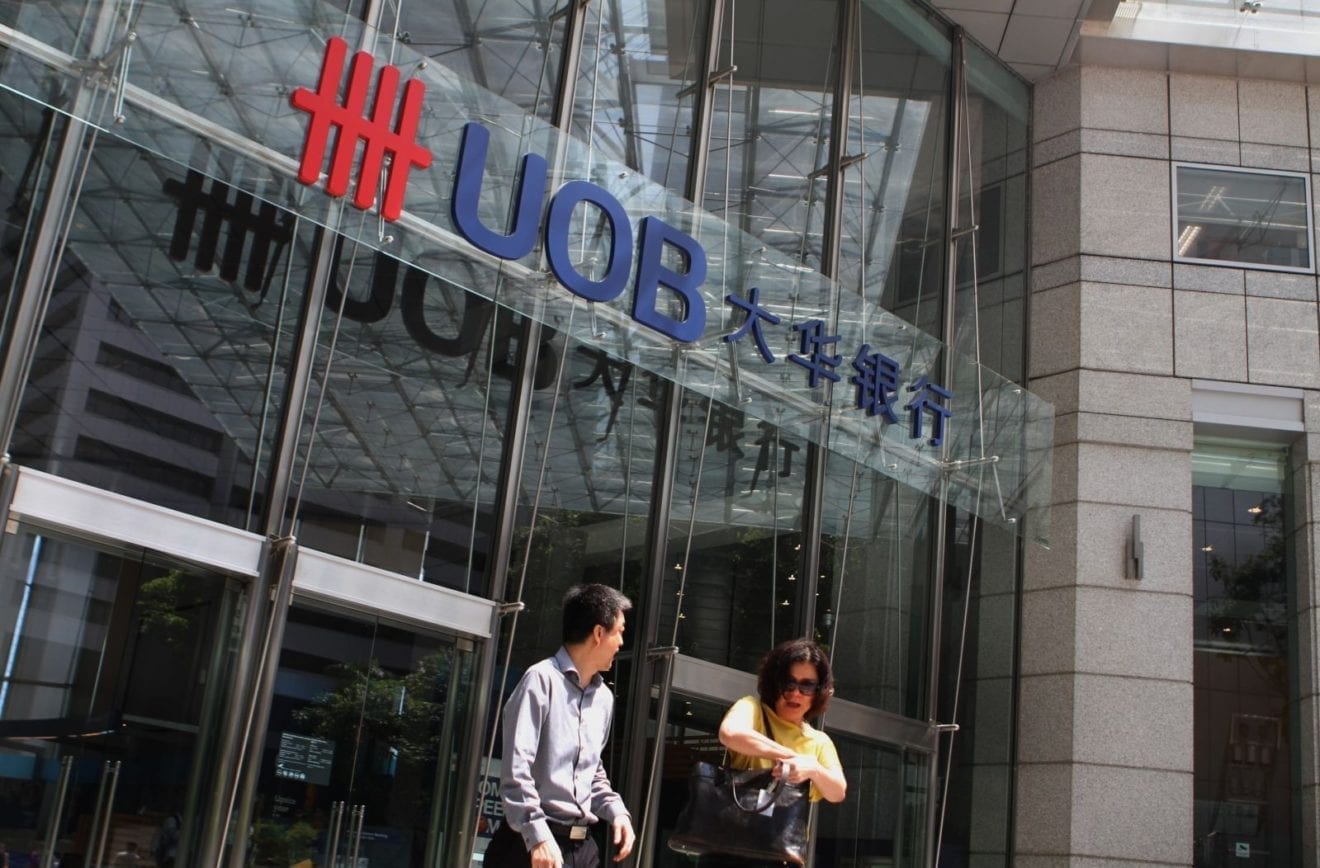
    UOBAM is strengthening its franchise in Southeast Asia through its expansion into Indonesia, the region’s largest market, with the acquisition of PG Asset Management.

    UOB Asset Management, a wholly-owned subsidiary of UOB, has completed its acquisition of a 75-percent stake in Indonesia’s PG Asset Management (PGAM), the bank said in a media statement on Wednesday.

    The Jakarta-based asset manager, which also has a branch in Surabaya, conducts conventional and structured fund management activities, including managing mutual funds, hedge funds, private equity and REITs, for retail and institutional investors.

    «We see immense potential in Indonesia’s asset management industry, driven by its economic development, increasing affluence and rising demand from individuals and institutions for investment solutions to protect and to grow their assets,» Thio Boon Kiat, Group CEO of UOBAM, said about the acquisition.

    The deal, valued at S$2.25 million, was previously announced in November 2018.

    In the statement, UOB said it is optimistic about Indonesia’s asset management industry, given its «favorable demographics and positive economic outlook.» It noted that the country’s mutual fund industry rose 11 percent year-on-year in 2018, with the industry valued at IDR536.88 trillion (S$52.2 billion) as of end-July 2019, citing data from the country’s Financial Services Authority

    PGAM was founded in 2011 and holds an investment management license in Indonesia. Its other shareholder is Multikem Suplindo, a wholly-owned subsidiary of Celebes Capital.

    UOB Asset Management manages 55 unit trusts in Singapore and is one of the largest unit trust managers in terms of assets under management, with S$33.6 billion ($24.9 billion) in clients’ assets as of end-June 2019, according to the bank. It now operates in eight markets across Asia: Brunei, China, Indonesia, Japan, Malaysia, Singapore, Taiwan and Thailand.

  • AirAsia India Airbus A320 Aborts Takeoff Due To Dog On The Runway

    AirAsia India Airbus A320 Aborts Takeoff Due To Dog On The Runway

    An AirAsia Airbus A320-200 aborted its take-off on Sunday (01/09/19) due to a dog appearing on the runway. The flight from Goa to Delhi was delayed by 50 minutes while the aircraft’s braking systems were checked.

    Reports Aviation Herald, Flight I5-778 was cleared to take off at around 08:25 local time. The A320 (registration VT-IXC) began rolling but its crew was instructed to abort a few seconds later. The A320 rejected the take-off at a relatively low speed and returned to the apron.

    Following normal procedure, the flight crew assessed the effect of the aborted take-off on the aircraft’s systems. After 50 minutes the plane was again cleared to take-off, and this time did so successfully.

    Flight I5-778 landed at Delhi’s Indira Gandhi International Airport just 30 minutes behind schedule. Writes News in Flight, a spokesman for Goa airport said,

    Goa’s Dabolim civilian airport operates within an Indian military base called INS Hansa. The airport is jointly used by civilian and military jets. With over seven million passengers passing through the terminal each year the airport’s airside aprons suffer severe congestion.

    A second airport is in the process of being built in Mopa, north of Dabolim. The Indian government intends this airport to become the main civilian hub for Goa’s burgeoning tourist trade, thereby easing congestion at GOI.

    Dabolim will continue to receive civilian passengers.

    An investment in the old airport of around Rs.4 Bn (US$60 million) is set to improve the passenger facilities by the provision of a larger terminal and more adequate parking. Whether the expansion works will also include better perimeter security is yet to be seen.

    The sight of dogs on Indian runways is all too common. In 2018, the Directorate of Civil Aviation identified at least 20 airports that were at risk of canine incursions. At all 20 of these sites, animals could enter freely through perimeter barriers.

    Passenger safety at these sites was deemed to be compromised by the number of animals accessing the operational areas.

    On August 13th, a similar incident at Goa was reported by Aviation Herald. This time an Air India Airbus aborted its landing due to the pilot’s reporting a group of dogs on the runway.

    The flight crew of the A320-200N Flight AI-33 from Mumbai to Goa performed a go-around due to the animals being on the ground, although the Tower Controller did not see the dogs. The aircraft landed safely on the second attempt.

    According to reports, there are an estimated 200 dogs in the vicinity of the airfield.

    In response to public concern about the safety of passengers arriving and departing at Goa, the AAI revealed their intention to be more pro-active.

  • AirAsia X orders 42 new long-haul Airbus jets

    AirAsia X orders 42 new long-haul Airbus jets

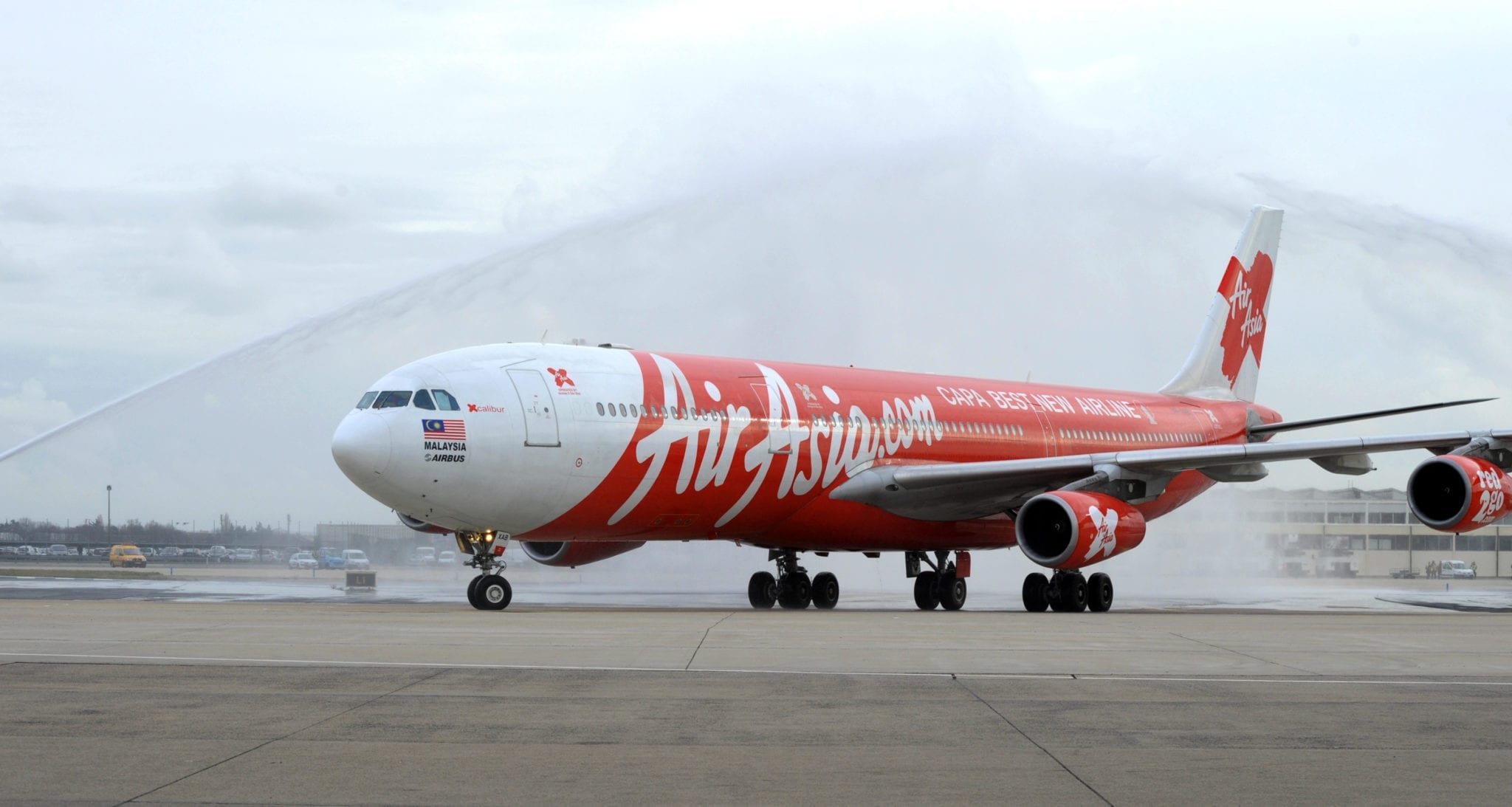
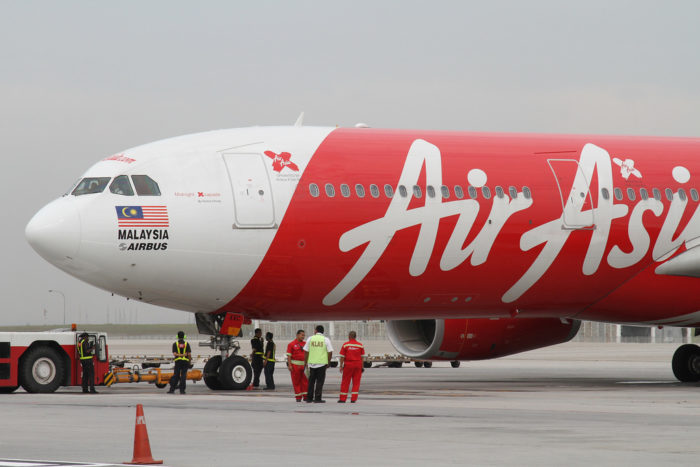
    AirAsia X, the long-haul part of the AirAsia Group, has now finalized a major order with Airbus for 12 more A330-900 and 30 A321XLR aircraft.

    The contract was signed today by Tan Sri Rafidah Aziz, chairman of AirAsia X, along with Guillaume Faury, CEO of Airbus, in KL, in the presence of Mahathir Mohamad, the Malaysian PM.

    Tony Fernandes, the CEO of the AirAsia Group, says the two aircraft are the perfect equipment for long-haul, low-cost operations.

    “This order reaffirms our selection of the A330neo as the most efficient choice for our future wide-body fleet. In addition, the A321XLR offers the longest flying range of any single aisle aircraft and will enable us to introduce services to new destinations.”

    Aziz says the order showed the airlines’ commitment to long haul air travel.

    “This will move our long-haul service sectors up to a higher level and allow AirAsia X to look at expanding beyond the eight-hour flight radius, such as to Europe for example.”

    The new contract increases the number of A330neo (new engine option) aircraft ordered by AirAsia X to 78, reaffirming the carrier’s status as the largest airline customer for the type. Meanwhile, the A321XLR (long range) order sees the wider AirAsia Group strengthen its position as the world’s largest airline customer for the A320 “family”, having now ordered a total of 622 aircraft.

    AirAsia X currently operates a fleet of 36 A330-300s on services to points within the Asia-Pacific region and the Middle East. In addition, in August the first A330neo joined the fleet of AirAsia’s Bangkok-based long haul affiliate, AirAsia X Thailand. The aircraft is the first of two leased A330neos joining the airline’s Thai affiliate by the end of the year.

  • Oracle Cloud Accelerates Expansion to Bring Infrastructure to Customers

    Oracle Cloud Accelerates Expansion to Bring Infrastructure to Customers

    To support its customers around the world, Oracle today announced, at the annual Oracle OpenWorld, that it plans to launch 20 new Oracle Cloud regions by the end of 2020, for a total of 36 Oracle Cloud Infrastructure regions. This expansion includes regions in new countries and dual, geographically separated regions in the U.S., Canada, Brazil, U.K., EU, Japan, South Korea, Australia, India, UAE, Saudi Arabia, Israel, and new government regions in the U.K. and Israel. In addition, Oracle is announcing updates to its roadmap for its interconnect with Microsoft Azure.
    More customers and partners can harness the power of Oracle Cloud to unlock innovation and drive business growth. With these dual regions, customers can deploy both production and disaster recovery capacity within their country or jurisdiction to meet business continuity and compliance requirements. Customers will now have access to all Oracle Cloud Infrastructure services including Oracle Autonomous Database; as well as Oracle Fusion Applications, in these regions.

    “Enterprise customers worldwide require geographically distributed regions for true business continuity, disaster protection and regional compliance requirements. Multiple availability domains within a region will not address this issue,” said Don Johnson, EVP, Oracle Cloud Infrastructure. “Unlike other cloud providers, Oracle is committed to offer a second region for disaster recovery in every country where we launch Oracle Cloud Infrastructure services, a strategy that’s aligned with our customers’ needs.”

    Oracle Cloud has opened 12 regions in the past year and currently operates 16 regions globally—11 commercial and five government—the fastest expansion by any major cloud provider.
    Available regions include:

    • Americas: Phoenix, Ashburn, Toronto, Sao Paolo
    • Europe: Frankfurt, London, Zurich
    • Asia: Tokyo, Seoul, Mumbai, Sydney
    • Government: two U.S. Government regions, three U.S. DoD regions

    Rapid expansion in commercial and government regions
    Oracle expects to open an average of one region every 23 days over the next 15 months for a total of 20 additional regions (17 commercial and three government). As planned, 11 of the countries or jurisdictions served by local cloud regions will have two or more regions to facilitate in-country or in-jurisdiction disaster recovery capabilities. Oracle’s Gen 2 Cloud Infrastructure makes this possible through highly-optimized region deployment technologies, which can implement an entire software defined data center and customer-facing cloud services in days.
    Oracle Cloud is scheduled to build new cloud regions in the U.S. (Bay Area, CA), Canada (Montreal), Brazil (Belo Horizonte), U.K. (Newport, Wales), European Union (Amsterdam), Japan (Osaka), Australia (Melbourne), India (Hyderabad), South Korea (Chuncheon), Singapore, Israel, South Africa, Chile, two in Saudi Arabia and two in the United Arab Emirates. Oracle also intends to open two regions for usage by the U.K. Government and one for the Government of Israel.
    Microsoft Interconnect expansion in new locations, including government regions
    Oracle is expanding its regions interconnected with Microsoft Azure. Since June 2019, Oracle has announced two commercial regions that are interconnected with Microsoft Azure—Ashburn and London. In the next few quarters, it is globally expanding the interconnect to U.S. West, Asia and Europe. Similar to commercial regions, Oracle Cloud and Microsoft Azure will extend their interoperability into government regions. This will now enable joint Oracle and Microsoft government customers to more easily move applications to the cloud, preserving their existing technology investments while taking advantage of next generation cloud native technologies.

    Oracle Cloud meets needs of the enterprise

    “As the cloud is now being used by enterprises globally for more mission-critical workloads, Oracle is demonstrating that its enterprise-grade credentials are resonating with customers, leading to a combination of customer retention and growth. According to Oracle it is seeing more and more existing customers committing to the Oracle Cloud, as well as growth in new customers moving to the Oracle Cloud,” said Roy Illsley, distinguished analyst, infrastructure solutions, Ovum. “Oracle’s aggressive global data center expansion plan is helping in its growth. With its reputation for reliability, high performance and security, we believe Oracle is increasingly becoming an influential enterprise-class cloud provider.”

    Today, Oracle is the only company delivering a complete and integrated set of cloud services and building intelligence into every layer of the cloud: from cloud infrastructure, to tools for application development and integration, to cloud applications for finance, enterprise resource planning, customer experience, and analytics. Oracle Autonomous Database and Oracle Analytics, and platform services for application development and integration will be available in these regions. Oracle Fusion Applications now run on Oracle Cloud Infrastructure in five data center regions, and will be available in all global regions within a few months after each region’s launch. This will be the most distributed cloud application platform in the market, able to satisfy in-country and in-jurisdiction data sovereignty requirements. Customers requiring integration between Oracle Cloud Applications and on-premise applications will also benefit from the global availability of cloud-based integration services.

    Specifically architected to meet the needs of the enterprise, Oracle’s Generation 2 Cloud offers customers a compelling array of advanced Cloud Services. With Oracle Cloud Infrastructure, customers benefit from best-in-class security, consistent high performance, simple predictable pricing, and the tools and expertise needed to bring enterprise workloads to cloud quickly and efficiently.


  • Deliveroo Announces First Rider Awards to Acknowledge the Incredible Work of Riders in Hong Kong

    Deliveroo Announces First Rider Awards to Acknowledge the Incredible Work of Riders in Hong Kong

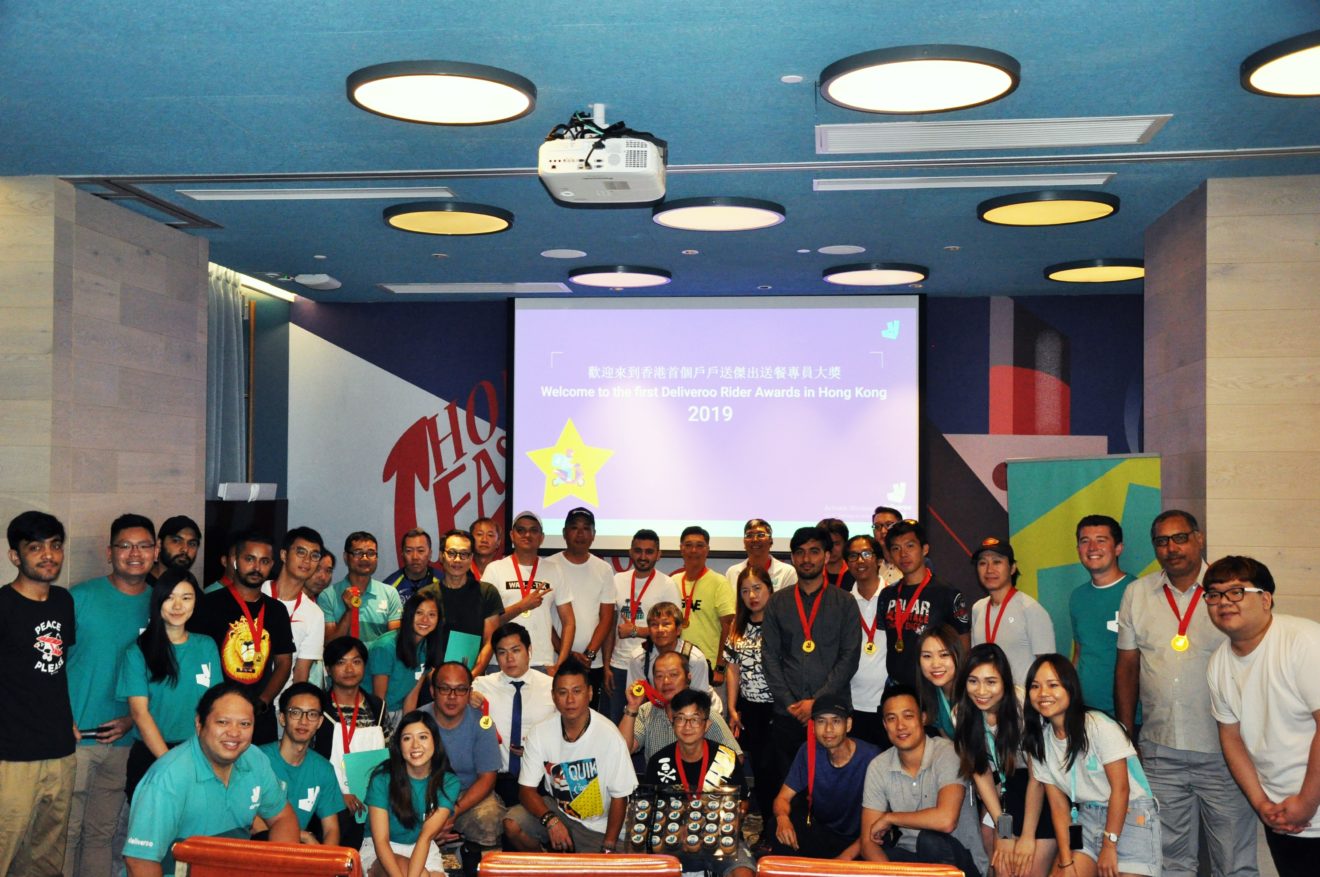
    Deliveroo today hosted Hong Kong’s first Deliveroo Rider Awards, a new program to recognize the hard work of riders across Hong Kong, and to instill a sense of pride to the riders who make the biggest difference for customers, partner restaurants and the Hong Kong community.

    Restaurants and riders are invited to nominate and vote on the Deliveroo riders they feel go above and beyond to deliver great service. The winners are awarded a certificate, a medal, a polo shirt, a sports waist bag sponsored by Shell and vouchers from Pizza Express and Golden Prince Thai Restaurant during the Rider Awards ceremony today. The criteria for nominations include maintaining a positive attitude in all forms of interactions and upholding road safety guidelines. Riders are at the heart of Deliveroo’s mission in Hong Kong to bring the best selection of local restaurants direct to people’s doors. New technology and functionality from Deliveroo are further supporting riders to deliver the best service to customers.

    Brian Lo, General Manager of Deliveroo Hong Kong and Taiwan, said, “Deliveroo puts enormous value on our team of self-employed riders, who ensure that Deliveroo can bring fantastic meals from a huge variety of restaurants to people across Hong Kong with speed and efficiency. They are critical to our success and in the ecosystem. Congratulations to all of our riders recognized in the Deliveroo Riders Awards and we look forward to more opportunities to publicly acknowledge and encourage the fantastic work of the team!”

    Roy Ng, Director of Golden Prince Thai Restaurant, said, “It is inspiring to see how Deliveroo is setting the standards for the food industry and honouring the riders who consistently perform to the best of their abilities — no matter the condition. We highly value and appreciate the hard work of all the riders. We deliberately chose convenient locations for our restaurant where the riders are able to pick up the food without any hassle. When we see riders arriving at our restaurants with big smiles on their faces, it cements the confidence we have in Deliveroo being able to always safely deliver our food to the customers. Well done to all the riders! Hopefully our vouchers can serve as some encouragement for them.”

    One rider recognised in the Deliveroo Rider Awards is Mr. Lam, who commented, “It is such an honour to be nominated and win at the Deliveroo Rider Awards. Being a rider is a wonderful opportunity to enjoy flexible, well-paid work and bring delicious meals to the Hong Kong