Tag: asia

  • Maybank Kim Eng To Launch Trading Capabilities for Southeast Asia

    Maybank Kim Eng To Launch Trading Capabilities for Southeast Asia

    Maybank Kim Eng, Maybank’s investment banking arm, announces its selection of Australian-headquartered fintech firm, Iress, as the software provider for online trading and market data.

    Iress’ ViewPoint will be rolled out progressively to Maybank Kim Eng’s clients in Singapore, Malaysia, Thailand, and Vietnam. The expanded agreement with Iress will enable Maybank Kim Eng clients to research and trade on the multi-asset, multi-currency online interface.

    After the successful implementation of Iress’ Pro and market data software, we’re pleased to now be offering ViewPoint to our growing customer base to share the benefits of their state-of-the-art tools and capabilities,» said Jeffrey Goh, managing director, and regional head of brokerage, Maybank Kim Eng.

    ASX-listed Iress has been providing financial software to clients in Asia since 2010 and to Maybank Kim Eng since 2015.

    Prior to ViewPoint, Maybank Kim Eng had already implemented Iress’ aforementioned  «Pro» which provides real-time market data and in-depth analysis across 200 global markets from which trade orders can be made directly to the «Iress Order System».

  • Deutsche Bank Hires Head of China Onshore Wealth Management

    Deutsche Bank Hires Head of China Onshore Wealth Management

    Deutsche Bank’s recruitment drive for the private bank in Asia persists, this time with the hire of a new head of onshore wealth management in China.

    Jeffrey Yen Chieh Peng joins the bank as managing director and head of China onshore wealth management, effective today. According to the bank’s announcement, Peng will oversee and strengthen the onshore platform, develop and execute long-term expansion strategies and advise on the overall Greater China business.

    In his new Shanghai-based role, Peng report to Kanas Chan, head of North Asia wealth management; Feng Gao, chairman of Deutsche Bank (China) Co., Ltd. and China chief country officer of Deutsche Bank; and Rose Zhu, president of Deutsche Bank (China) Co., Ltd.

    Prior to joining Deutsche Bank, Peng was most recently with Bank of Singapore where he was a managing director and head of strategic alliance and «IAM Excellence Center» for Greater China and North Asia. Previously, Peng also spent 11 years with UBS where he was last an executive director and head of wealth management investment products and services in China.

    Despite cost-cutting pressures, the bank has stayed in line with its commitment to focus on wealth management, especially in high growth markets like Asia. And within the region, the bank’s recent moves signal its focus on major markets: China and India.

    The bank’s persistent hiring drive recently included the addition of three ex-Julius Baer bankers covering the non-resident Indian segment. And on China, the bank not only notes the still rapidly growing wealth from the segment but an increasingly business-friendly onshore environment.

    We see opportunities in onshore China markets as the high-net-worth client segment grows exponentially, while the environment grows increasingly business-friendly and promising, said Deutsche Bank’s Kansas Chan.

    Peng’s hire is to support our Global China Strategy, investing in and strengthening our onshore and offshore China platform.

  • Domestic online E-commerce spending up

    Domestic online E-commerce spending up

    Online spending on local sites has strengthened in July and helped to boost the country’s total online retail sales compared to the previous corresponding period.

    Spending on New Zealand sites rose 18 percent compared to the previous year – again driven by food and grocery categories in recent months.

    New Zealand’s total online retail spending in July was 9 percent higher than a year ago. Excluding the food and liquor sectors, annual online spending was equivalent to 11.1 percent of retail sales, according to both Statistics New Zealand and Bank of New Zealand’s indices.

    Spending growth at offshore sites fell slightly in July, with online spending down 3 percent on July last year.

    Spending on entertainment media among international e-commerce companies grew strongly but was offset by broad-based softening across most other categories at offshore sites.

    Gary Baker, director of institutional research at Bank of New Zealand, said annual online spending across the retail categories they cover is running at just over $4.6 billion, excluding GST.

    “This is equivalent to 8 percent of total retail sales reported in Statistics NZ’s Retail Trade Series (RTS), comparing like-for-like categories,” Baker said.

  • BSH Home Appliances appoints new director for APAC

    BSH Home Appliances appoints new director for APAC

    BSH Home Appliances Group has appointed Gunjan Srivastava as executive VP, head of Asia Pacific.

    The appointment reflects the company’s focus on driving accelerated growth across the region, including Singapore, Malaysia, Indonesia, Thailand, India, Australia and New Zealand.

    Gunjan has more than 15 years of experience in the durable-goods sector, with core expertise in fortifying brand portfolios. Prior to this appointment, Gunjan was the CEO of BSH India, where he was instrumental in spearheading the firm’s growth over five years, introducing new verticals and doubling its market footprint.

    “I’m both humbled and excited to continue strengthening the BSH brand and fortifying our presence in the region,” said Gunjan. “In my years leading BSH India, I’ve had the chance to gain an in-depth understanding of how to drive vigorous growth for BSH in a high potential market. Asia Pacific is a vastly diverse region, where there is an immense opportunity for us to increase visibility, gain market share, and further consolidate our leadership.”

    In his new role, Gunjan will be focusing on maximising the opportunities in the various Asia Pacific markets that BSH has subsidiaries in.

    “In order to meet consumer needs that are in constant flux, BSH has a clearly defined objective: to become the industry leader for digital services and kitchen experiences for connected consumers, by producing innovations that offer tangible benefits and help make their lives better,” said Gunjan.

    BSH Home Appliances recently opened its first UnserHaus Customer Care Centre and a UnserHaus Experience Centre in Singapore. Meaning “our house” in German, the centre is a lifestyle concept featuring Bosch and Gaggenau appliances in a home-like environment.

    While waiting for their appliances to be repaired, customers can visit either the dining room, which provides a hands-on experience with built-in appliances like dishwashers, coffee machines and ovens; or the living room, where they can sit down, unwind and relax with music or a wide-screen television. There is a children’s playing space as well.

    All products at UnserHaus come tagged with a QR code that allows visitors to purchase and pay for them online.

  • Hong Kong retail sales down last month

    Hong Kong retail sales down last month

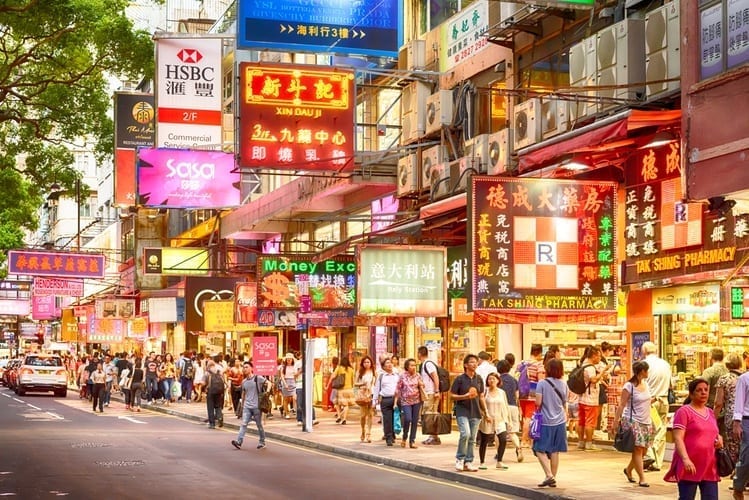
    Hong Kong retail sales in July plunged by 11.4 percent as ongoing protests and the China-US trade war took their toll.

    The fall was widely expected with several large retailers projecting double-digit declines based on their own internal monitoring during the month.

    A government spokesman said the decline in retail sales reflected “weak local consumer sentiment and significant disruptions to inbound tourism and consumption-related activities arising from the recent local social incidents”.

    He said the Census and Statistics Department (C&SD) expected Hong Kong retail sales will likely stay weak in the near term, as escalated US-Mainland trade tensions and subdued economic conditions continue to dampen consumer sentiment.

    “The situation may even deteriorate further if the social incidents involving violence do not come to a stop.”

    July’s decrease followed a 6.7-per-cent decline in June when the current round of protests commenced. For the first seven months of the year, sales are down by 3.8 percent year on year.

    After netting out the effects of price changes, July’s figure was even bleaker, down 13 percent compared with a decline of 7.6 percent in June and a year-to-date 4.4 percent.

    Retail sales to visitors usually account for about 50 percent of the total market in Hong Kong, so the key category of watches, jewelry, and luxury goods – the largest category – plummeted by 24.4 percent in July.

    Apparel sales fell by 13 percent, medicines, and cosmetics by 16.1 percent, and commodities in department stores by 10.4 percent.

    Categories less reliant on visitors performed better: sales of food, alcoholic drinks, and tobacco were down by 2.3 percent, consumer goods, not classified elsewhere by 1.4 percent, and books, stationery, newspapers, and gifts by 6 percent.

    Sales of electrical goods fell by 17.4 percent, of footwear and accessories by 10.1 percent and of furniture and fixtures by 8.7 percent.

    The only category to post growth year on year was supermarket sales, which rose by a modest 1 percent.

  • BreadTalk Group to buy Food Junction

    BreadTalk Group to buy Food Junction

    Listed Singapore food-and-beverage company BreadTalk Group is to buy foodcourt operator Food Junction Management (FJM).

    A subsidiary of BreadTalk, Topwin Investment, has signed a sale and purchase agreement to pay S$80 million for FJM, which operates 12 foodcourts in Singapore and three in Malaysia. A fourth is on track to open next year at The Mall in Johor Bahru.

    BreadTalk Group sees synergies between the FJM business and its own foodcourt operations – it owns Food Republic and Food Opera-branded sites in Singapore, Greater China, Thailand, Cambodia and Malaysia. The combined operation could share support services and rationalise supply arrangements.

    FJM is owned by Singapore investment company Auric Pacific Group Limited.

  • ‘Sporting idol experience’ unveiled inside Puma NYC flagship

    ‘Sporting idol experience’ unveiled inside Puma NYC flagship

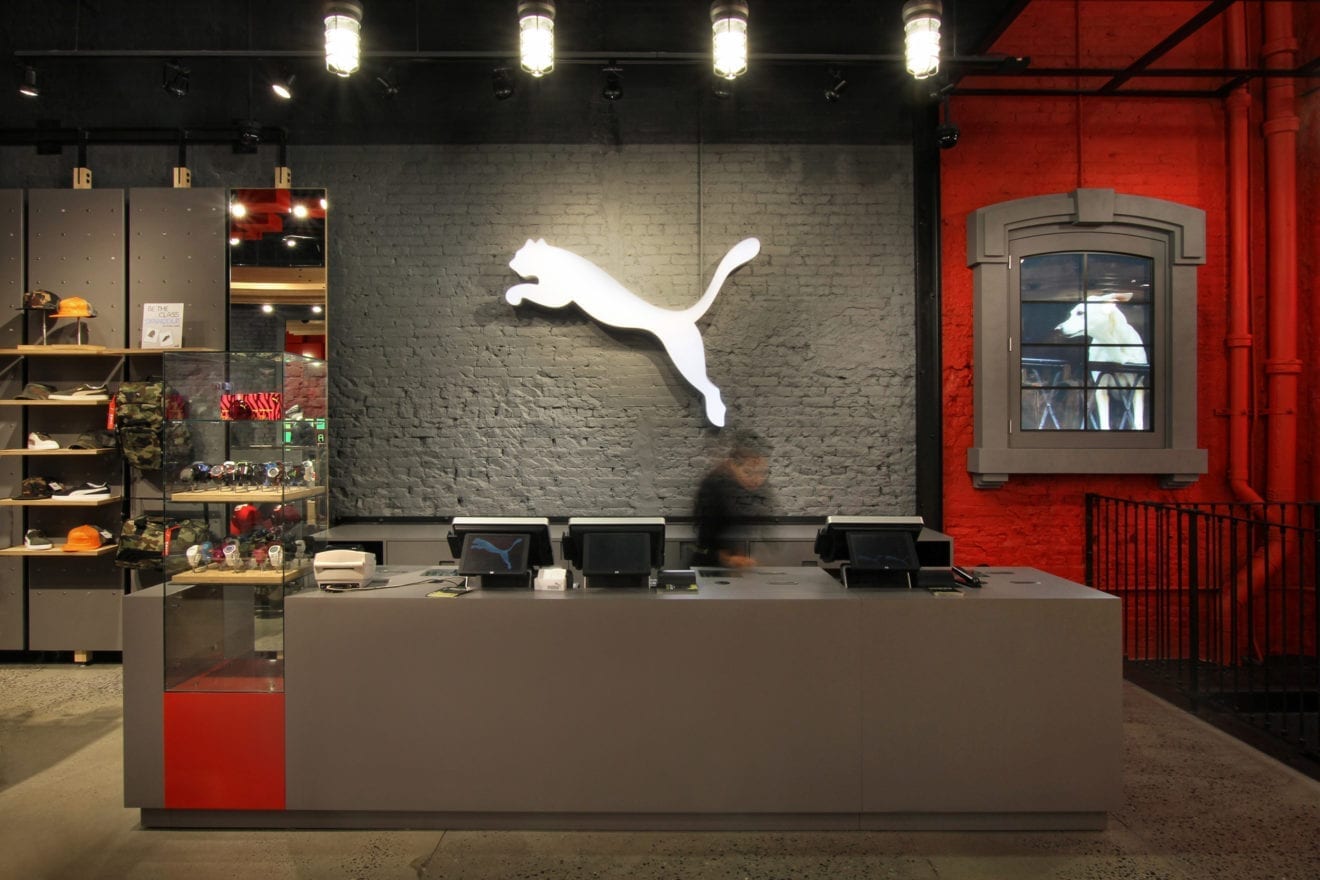
    A “unique and immersive” retail experience awaits visitors to the new Puma NYC flagship store unveiled on Fifth Avenue.

    The athletic footwear and apparel brand have opened a two-story store which features an industry-first multi-sport, multi-sensory Skill Cube, designed and developed by human experience design studio Green Room.

    The creative platform integrates global Puma brand ambassadors into an immersive experience, positioning them as virtual training buddies – an approach established, through behavioral research, as key to better engaging the lifestyle traits of Puma’s Gen Z target audience.

    Respected for their training regimes and prowess, athletes Lewis Hamilton, Antoine Griezmann and Romelu Lukaku host coaching sessions that transport customers either to a virtual football stadium or a disused warehouse; an experience specifically designed to deliver the best authentic footwear trial whilst still in store.

    “Facilitating unique and immersive experiences is central to our long-term commercial strategy and the Skill Cube New York delivers on this in every way,” said Puma’s global head of commercial marketing Jason Isenberg. “This is truly a one-of-a-kind experience, and we are confident that our shoppers in the Puma NYC flagship store will find it extremely engaging and compelling.”

    Once inside the Skill Cube, visitors are immersed in a multi-sensory environment incorporating 270° floor to ceiling LCD content screens, graphic projection, motion sensing devices, dynamic lighting and surround sound. The floor covering is a high-quality, multi-sport, synthetic turf, designed to bring the footwear benefits to the fore by simulating authentic trial conditions, further enhancing a life-like experience.

    Converging analog and digital worlds, the Teamsport experience kicks off in a virtual Puma locker room with footballers Griezmann or Lukaku; trialists are transported to a CGI replica of a capacity-filled San Siro Stadium. Reconstructed to a superior level of detail and adaptability – featuring an impressive 5 million individual blades of grass – the virtual environment offers full flexibility and control over 152 lights, independent movement of all 80,000 football fans in the crowd and updatable sponsorship boards, TV screens and pitch patterns.

    Visitors to the Puma NYC flagship’s Skill Cube are scored on their performance and at the end of the experience, the stadium comes alive with confetti cannons, fireworks, and a cheering crowd. The training experience then transports participants into a warehouse to train with Lewis Hamilton, who takes them through three trials; ladder, jab and jump.

    “Our approach was to encourage engagement and disrupt ‘autopilot customer’ browsing,” said digital experience director Martyn Palmer. “By introducing a highly curated approach to the experience zone, we have succeeded in creating a harmonious customer journey that mixes physical and digital interactions to elevate a positive product experience.”

  • Siam Piwat gives mall space to disabled and underprivileged suppliers

    Siam Piwat gives mall space to disabled and underprivileged suppliers

    Thai shopping-centre operator Siam Piwat has created special zones in two of its malls stocking products made by people with disabilities, underprivileged people and special-needs children.

    Called Made by Beautiful People, the products are now available at IconCraft on the fourth floor of IconSiam and in the ODS (Object of Desire Store) on the third floor of Siam Paragon. Both malls are in Bangkok.

    The initiative is an expansion of its ongoing social contribution Citizen of Love, launched in 2009 in which it aims to “share love, provide opportunities and bring pride and equality for all Thais”.

    Space for the Made by Beautiful People displays is provided free by Siam Piwat.

    “With an aim to inspire, to create opportunities and generate sustainable careers and income for the underprivileged people, the company offers full assistance for the sales and marketing of the products,” said a Siam Piwat spokesperson.

    “Products now available are from seven pioneering charitable organizations and groups:  Vocational Development Center for the Disabled, Light for the Disabilities Foundation, Anusarnsunthon School for the Deaf, Arunothai for Special Needs Project, Autistic Thai Foundation, Na Kittikun Foundation, and Sikkha Asia Foundation.

    “The ultimate goal is to culminate an empowering space, a creative showcase of their works and their talents, a place where products made by people, whose hearts know no boundaries, are connected to local consumers and visitors from across the globe,” said the spokesperson.

  • Tiffany to open Blue Box Cafe in Hong Kong

    Tiffany to open Blue Box Cafe in Hong Kong

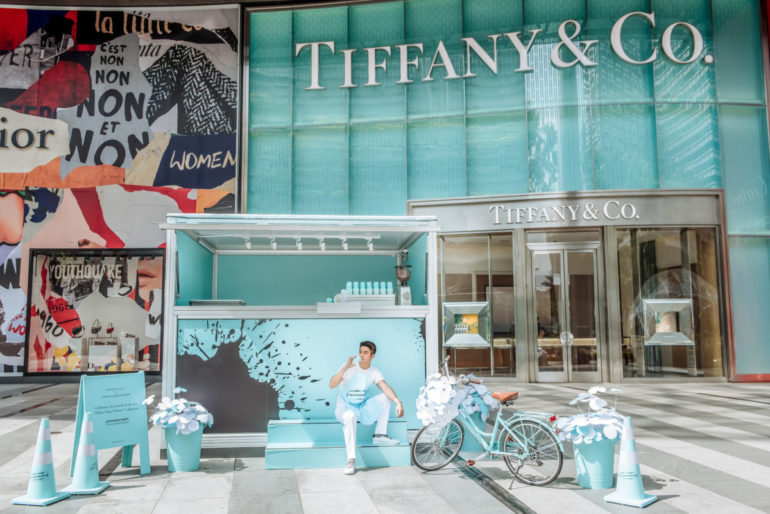
    Luxury jewelry retailer Tiffany & Co is set to open its largest flagship store in Asia at One Peking Road – and with it the first Blue Box Cafe in Hong Kong.

    The flagship and cafe – the first in Asia –  will soft open early this month and mid next month respectively. Both outlets have been designed to offer new experiences for long-time patrons of the firm, with One Peking Road displaying the full range of the house’s products and the cafe bringing a slice of New York City to tropical Hong Kong.

    The cafe features the brand’s own crockery and utensils to complement the cultured ritual of afternoon tea, reflective of the artistry and craftsmanship of the house.

    In anticipation of The Tiffany Blue Box Cafe in Hong Kong opening, reservations for seating are being taken through the firm’s online platform, allowing online users the chance to be the first to experience something which has, until now, only been available in Tiffany & Co’s flagship store in New York City.

  • Topsports China plans IPO

    Topsports China plans IPO

    Chinese sportswear firm Topsports International is set to proceed with an IPO in Hong Kong, despite economic uncertainties and ongoing protests in the city.

    The Belle International subsidiary is expected to launch its IPO this month, provided it qualifies for the listing. It is expected to be raising up to $1 billion from the exercise, which will see it among the few major firms to start trading on the exchange amidst continuing protests.

    The spinoff was first proposed more than a year ago by the company’s private equity owners Hillhouse Capital and CDH who took Belle private in a US$6.8 billion deal in July 2017.

    The prospectus for Topsports’ IPO says the company is China’s largest sportswear retailer in terms of retail sales value. It enjoyed a 15.9 percent market share last year.

  • Trump Prods General Motors Over Its Auto Plants In China

    Trump Prods General Motors Over Its Auto Plants In China

    U.S. President Donald Trump, who is engaged in a trade war with Beijing, said on Friday that the largest U.S. automaker, General Motors Co, should begin moving its operations back to the United States.

    “General Motors, which was once the Giant of Detroit, is now one of the smallest auto manufacturers there. They moved major plants to China, BEFORE I CAME INTO OFFICE. This was done despite the saving help given them by the USA. Now they should start moving back to America again?” Trump said in a post on Twitter.

    Trump appeared to be referring to a Bloomberg News story that reported GM’s hourly workforce of 46,000 U.S. workers has fallen behind that of Fiat Chrysler as the smallest of the Detroit Three automakers. Over the past four decades, GM has dramatically cut the size of its overall U.S. workforce, which numbered nearly 620,000 in 1979.

    GM did not directly comment on Trump’s tweet.

    “GM’s China operations are not a threat to U.S. jobs,” the company said in a fact sheet, noting that its joint ventures have sent $16 billion in equity income to GM since 2010 and that it has invested $23 billion in U.S. operations since 2009.

    GM’s U.S. hourly workforce has fallen by about 4,000 jobs since the end of 2018 to about where it was a decade ago.

    Trump’s ire with GM comes as contract talks with the United Auto Workers union with the Detroit Three automakers intensify ahead of a Sept. 14 deadline. Trump has previously attacked GM for building vehicles in Mexico and for ending production at plants in Michigan, Ohio and Maryland and threatened to cut GM subsidies in retaliation.

    GM’s decision to close four plants in the United States is a central issue in the contract talks.

    Trump has made boosting auto jobs a key priority and has often attacked automakers on Twitter for not doing enough to boost U.S. employment. His 2020 re-election bid will hinge on holding key industrial battleground states like Wisconsin, Pennsylvania and Michigan that narrowly voted for him in 2016.

    China is the world’s largest auto market, and government policy favors automakers assembling vehicles there, and not importing them from overseas.

    In response to Trump’s latest tariffs, China said last week it will reinstitute 25% tariffs on U.S.-made vehicles. The U.S. is imposing 15% tariffs on more than $125 billion in Chinese goods starting Sunday.

    GM sold 3.6 million vehicles in China last year accounting for 43% of its worldwide sales. GM booked $2 billion in equity income from its China operations last year.

    GM imports a small number of vehicles from China. In June, the Trump administration rejected a request from GM to exempt its Chinese-made Buick Envision from a 25% U.S. tariff on sport utility vehicle models.

    The midsize SUV has become a target for U.S. critics of Chinese-made goods, including leaders of the UAW members in key political swing states such as Michigan and Ohio.
  • General Motors Cuts Some 350 Jobs In Thailand Operations

    General Motors Cuts Some 350 Jobs In Thailand Operations

    General Motors has cut about 350 jobs from its Thai subsidiary’s operations, a labor representative said on Friday, slashing more than 15% of the workforce for the U.S. automaker that has two factories in Thailand.

    Thailand is a major manufacturing hub in the competitive Southeast Asian auto market.

    Boonyeun Sookmai, coordinator for Labor Relations Group for Eastern Thailand, told Reuters more than 350 employees and contractors at General Motors (Thailand) were affected by the cuts, which employees and contractors were told about this week.

    GM did not confirm the number of layoffs but said in a statement it was “necessary to right-size” its operations.

    “We are taking every measure to support employees whose roles are impacted,” the statement said.

    It added: “There is no change to our ongoing business in Thailand – we continue to build and sell world-class trucks, SUVs and engines for Thailand and the world.”

    The company has about 1,900 employees in Thailand, according to the Bangkok Post, in operations that include a vehicle assembly plant that produces 180,000 units per year.

    Thailand is a regional vehicle production and export base for the world’s top vehicle manufacturers, including Toyota, Honda and Harley-Davidson.

    The auto industry accounts for about 10% of the Thai economy and has been one of a few growth drivers at a time of falling exports.

    Previously booming domestic auto sales have cooled in Thailand with finance firms using stricter lending criteria. Thai domestic car sales contracted in July for a second straight month, down 1.1% from a year earlier.

    GM has two plants in Rayong, a province on Thailand’s eastern seaboard, for vehicle assembly and another for powertrain and engines. Its vehicle assembly plant began operations in 2000 and the latter in 2011.

    The plants in Thailand produces vehicles for the domestic market and export under the Chevrolet and Holden nameplates.

  • Ather Energy Launches New Compact Home Charger Ather Dot

    Ather Energy Launches New Compact Home Charger Ather Dot

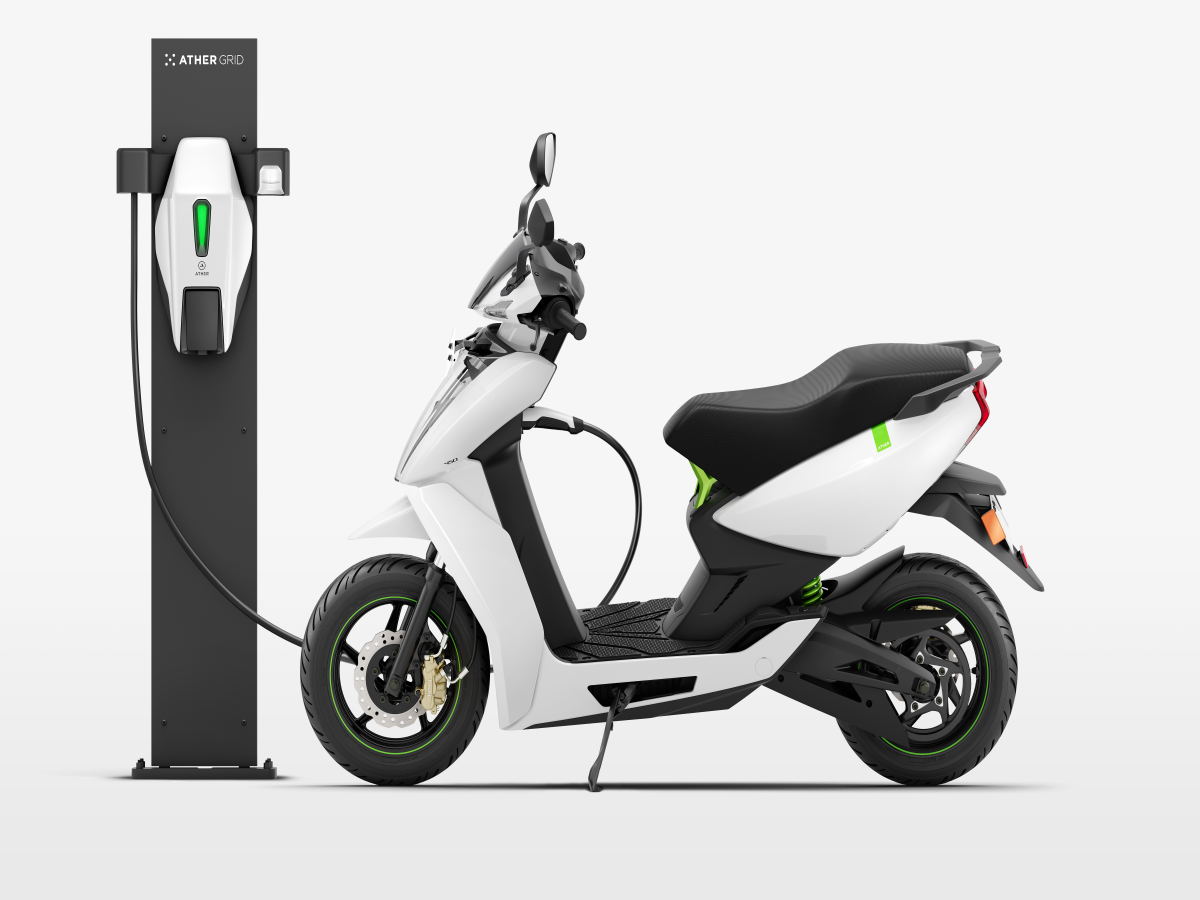
    Electric scooter start-up Ather Energy has announced the launch of a new home charging point – Ather Dot, for its Ather 450 customers in Chennai & Bengaluru. The new charger has been designed specifically for the Ather 450 electric scooter and company says that it took a lot of feedback from its existing customers to make this charging point smaller, lighter and easy to install. The new Ather Dot comes with surge protection and authenticated power transfer so that it’s safe and works only with an Ather scooter. The new Ather Dot also comes with several safety measures like auto cut-off function and it also gets app integration, which means owners can also monitor the charging levels through their mobile app.

    In its official launch announcement, Ather Energy said, “Ather has been working with its customers in the past year to make improvements and changes to its intelligent scooter, the Ather 450. One of those was to take the charger off-board. Taking it off helps in improving weight distribution and also improves vehicle dynamics. All this without a drastic change in the charging performance.”

    The new Ather Dot comes with surge protection and authenticated power transfer so that it’s safe and works only with an Ather scooter

    The new Ather Dot unit weighs just 3.5 kg and comes with a 2-metre long output cable and 1.2-meter long input cable. The charging unit delivers a 60 V, 12 A DC supply, which is capable of offering 0 to 80 percent charge in just 4 hours and 30 minutes, while 0 to 100 percent takes 5 hours and 15 minutes. Ather says that the charging patterns data show that most Bengaluru owners charge either overnight or during the day at their workplace. So, the slight spike in the charging time will not affect the charging behavior and usage of the owners. Furthermore, the charging time at the Ather Grid, the company’s fast chargers placed across the city, remains the same.

    Customers can get their new Ather Dot installed by the company for ₹ 1800, which includes standard installation, consumables, labour charges and even GST. However, Ather says that the installation of Ather Dot is a simple process, and for customers who might want to get the unit installed by their local electricians, the company will provide an installation manual as well.

    The new Ather Dot charging point will be shipped to them post completing the payment for the Ather 450 and prior its delivery. While the unit will be delivered to all Chennai customers along with scooter, in Bengaluru, all the customers taking delivery after October 2019 will get the Ather 450 with the new charging point.

  • Maruti Suzuki Expands Its Arena Retail Channel To 450 Showrooms Across India

    Maruti Suzuki Expands Its Arena Retail Channel To 450 Showrooms Across India

    Maruti Suzuki started transforming its dealerships to a more modern and digitally integrated Arena Experience Centres back in 2017. Within two years the company has expanded to a total of 450 Arena showrooms across 323 cities in India. Maruti decided to go premium with separate Nexa dealerships for models like the Baleno, S-Cross, Ignis and the Ciaz, which helped it position the brand as an upmarket carmaker, but there was a concern that required to be addressed. Following the digitalization trend and upgrading its showrooms to suit the liking of new-age customers, the rationale behind Arena was also to make sure that its existing and small car customers don’t feel left out.

    Speaking on the new milestone, Shashank Srivastava, Executive Director (Marketing & Sales), Maruti Suzuki India said, “We launched Maruti Suzuki Arena with a strategy to transform our network and meet the expectations of offering an evolved car buying experience to the young, dynamic and contemporary Indian customers. The two-year milestone is a marquee statement to showcase our commitment towards customer satisfaction. We are delighted to celebrate over 450 Arena showrooms and we look forward to offering experiences with revolutionary design and innovative technology that are at par with global benchmarks.”

    Arena showrooms are equipped with touchscreens to give every detail to the customers before they approach towards the car to get hands on experience. Specifications, features, color options, EMI options, Accessories, etc information are available on the touchscreen panel and customers even get the option of online and offline purchase. Maruti Suzuki is also integrating iCreate configurator in Arena dealerships to offer a 360-degree view of the car. Maruti Suzuki claims that users are also active on the Arena website and it has around 4.74 million visitors every month.

  • Indonesia’s New Capital Already Attracting Speculators

    Indonesia’s New Capital Already Attracting Speculators

    Indonesia’s decision to relocate its capital from Jakarta to eastern Borneo is already attracting speculators and inflating land prices, according to a local industry body, which is urging President Joko Widodo to take measures to differentiate between pure profiteers and real developers.

    I’ve heard that land prices are rising already, said Soelaeman Soemawinata, chairman of the Association of Indonesian Real Estate Companies which represents more than 5,000 member firms.

    We must set developers and speculators apart. Speculators don’t develop anything as they just wait until land prices increase, and then sell. Developers expect the government to secure the land, which can be developed by them.»

    The government controls about 180,000 hectares of land in the future capital, triple of Jakarta, in a $33 billion project to build the new landmark city from scratch with support from both the public and private sector. Indonesia plans to begin construction by 2020-end and start the relocation in phases starting from 2024.

    Despite limited access to lands in the East Kalimantan province due to it mostly being protected and commercial forestry under government control, developers remain upbeat with various plans underway from basic infrastructure to luxury condos.

    Still, the association and Soemawinata want further tightening to screen participants. He said the association wanted President Widodo to provide a legal basis for the participation of private developers» considering that construction could last through several regimes.

    The move to relocate Indonesia’s capital is meant to ease pressure on the congested and sinking Jakarta and spread economic activity outside the island of Java.