Tag: asia

  • China’s Car Wreckage Cries Out For Consolidation

    China’s Car Wreckage Cries Out For Consolidation

    Chinese carmakers are involved in a slow-motion wreck. Falling sales hit Geely Automobile Holdings and Great Wall Motor harder in the first half than rivals partnered with foreign marques. Both companies have started seeking JVs, too. A better route to recovery would be industry consolidation, and soon.

    Domestic manufacturers are getting crunched from every direction. The withdrawal of government incentives last year caused customers to accelerate their purchases. Geely, whose parent company owns Volvo, blamed new emissions standards for its aggressive price cuts, and by extension a 40% fall in profit through the end of June. The bottom line at $9 billion SUV maker Great Wall shrank 60% for similar reasons. Beijing is also now slashing subsidies for electric vehicles, putting even more pressure on margins.

    Some sympathy might be expected from the central government, which considers autos a “pillar” industry. Yet Beijing is also aware the country has far too many car companies, and that too many of them rely too heavily on shared revenue from overseas JVs, which has crippled their export competitiveness. Sales of BMW models, for example, made up 90% of revenue at $5 billion Brilliance China Automotive, whose profit fell just 9% in the first half; Guangzhou-based GAC relies on its relationship with Toyota to compensate for slackening demand for its unfortunately named Trumpchi sedan.

    Local manufacturers are losing market share at home. It was down to 36% in July, after they ceded 3.9 percentage points from a year earlier. Even Geely and Great Wall, which had found some market traction for their own models, have started flirting with overseas rivals. The better ones, however, are mostly taken.

    Domestic mergers make more sense. Geely and Great Wall are up against mordant state-backed giants such as FAW, along with dozens of smaller rivals and hundreds of EV startups. Local officials stubbornly prop up weak manufacturers to preserve employment, which keeps them running but weak. The long-expected combination of FAW with Dongfeng and Changan, for example, has yet to happen. It’s time to start revving up these sorts of deals.

  • Hyundai Group Unveils New Integrated E-Scooter For Last Mile Mobility On Future Vehicles

    Hyundai Group Unveils New Integrated E-Scooter For Last Mile Mobility On Future Vehicles

    Speaking on the new concept, DongJin Hyun, head of Hyundai Motor Group Robotics Team said, “This is the vehicle-mounted personal scooter which could be featured in future Hyundai Motor Group vehicles. We want to make our customers’ lives as easy and enjoyable as possible. Our personal electric scooter makes first- and last-mile commuting a joy while helping to reduce congestion and emissions in city centers.”

    Research data by global consultancy McKinsey & Company has released data suggesting that the last mile mobility market is expected to grow to $500 billion by 2030. The new integrated e-scooter is another step in that direction. The e-scooter is mounted on a vehicle and is automatically charged using the electricity generated when driving. A key change since the 2017’s concept has been the shift from front-wheel drive to rear-wheel drive that was essential for enhancing safety and stability as it positions weight near the rear. In addition, the engineers have added a suspension set-up to the front wheel for a smoother ride on rough surfaces.

    Hyundai’s integrated e-scooter features a 10.5 Ah lithium-ion battery, which enables a top speed of 20 kmph and can travel up to 20 km in a single charge. The scooter is light with a weight of 7.7 kg that makes it highly portable, while its tri-folding design makes it light and compact. The scooter also features a digital display that puts out a host of information including the speed and battery status. The e-scooter is also equipped with LED headlights and two taillights for enhanced visibility at night. Hyundai is also looking to introduce regenerative braking on the scooter to increase the range by seven percent.

  • Android 10 release date confirmed: Here’s when Google will release it to Pixel phones

    Android 10 release date confirmed: Here’s when Google will release it to Pixel phones

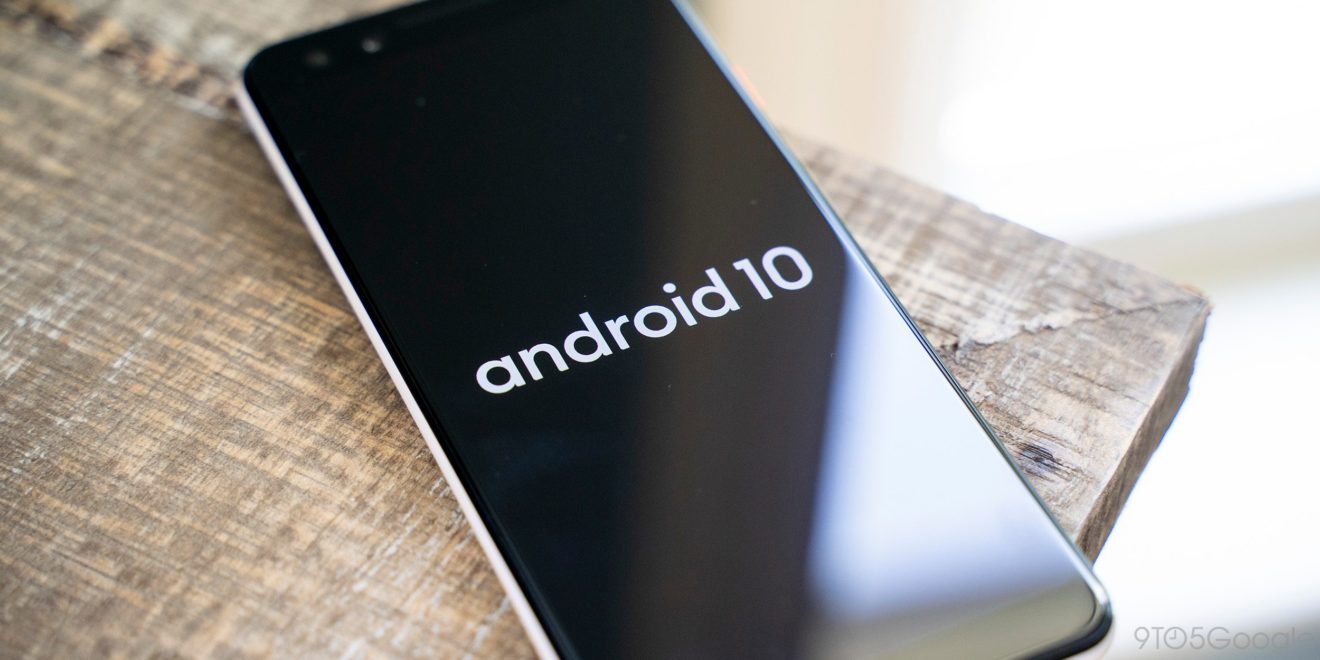
    It seems that Android 10 will be officially released for Pixel phones on September 3, 2019. This will be the official debut of Android 10 on phones, but of course, it will take a bit longer for all the other Android manufacturers to update their devices.

    This piece of saucy info comes straight from the horse’s mouth – two independent Google Support agents have confirmed with us and a reader of ours that, yes, the next major software update will be released to Pixel devices in eight days’ time. Who knew that you could learn so much by simply asking…

    The update will most certainly arrive to all Pixel devices, including the Pixel 3/3XL, 3a/3a XL, as well as older troopers like the Pixel 2/2 XL. As a pleasant surprise, the original Pixel and Pixel XL, which were released all the way back in 2016, will also get Android 10 despite being outside of their two-year support window. That’s a neat bonus for the early adopters of Google smartphone lineup, which were promised two years of software updates and three years of security support.

    A change of heart at Mountain View

    It’s been merely a few days since we willy-nilly parted ways with Android’s sweet naming scheme of old. Forever gone are the dessert names that became a signature feature of the operating system. As a reminder, there have been a total of 14 dessert-theme Android releases. These are Android 1.5 Cupcake, Android 1.6 Donut, Android 2.0-2.1 Eclair, Android 2.2 Froyo, Android 2.3 Gingerbread, Android 3.0-3.2 Honeycomb, Android 4.0 Ice Cream Sandwich, Android 4.1-4.3 Jelly Bean, Android 4.4 KitKat, Android 5.0-5.1 Lollipop, Android 6.0 Marshmallow, Android 7.0-7.1 Nougat, Android 8.0-8.1 Oreo, and Android 9 Pie. Speculation about Android 10’s dessert name hit a wall as just few compatible sweets started with “Q”, the letter that was slated to grace 2019’s Android release.

    All we know about Android 10 so far

    Among the new features that will grace Android with the arrival of its next version are native support for foldable phones, 5G, Live Captions, Smart Reply, Suggested Actions, as well as improved security and privacy features. Other features that are worth mentioning are seamless background updates, improved suite of digital well-being and parental controls functionalities, and finally, the coveted dark mode.

    But when will my phone receive Android 10?

    As usual, it takes Android manufacturers some time to prepare the major Android software updates for their devices. Samsung, for example, usually takes three to four months to develop, test, and distribute the goods to its userbase. In case you’re using one of Samsung’s current or former flagships, then you’re in for a patient wait. Here’s when we expect some of the more popular Samsung phones to receive Android 10 with One UI 2.0:

    Galaxy S10+, S10, S10e Galaxy Note 10
    International Late December 2019 / Early January 2020 Mid-late January 2020
    US Unlocked February 2020 February-March 2020
    Verizon Late January 2020 February-March 2020
    T-Mobile Late January 2020 February-March 2020
    AT&T Late January 2020 February-March 2020
    Sprint Late January 2020 February-March 2020
  • Android users can now silence Google Assistant

    Android users can now silence Google Assistant

    Do you cringe when Google Assistant starts verbally running off at the mouth with an answer to your question? While it might be information that you need to know, it also might be a good time for a silent response. Thankfully, Google has come up with a solution.  A new section has been added to the support page for the Google Assistant that tells users how to turn off its speech output.

    Turning off the speech output will not affect the answers that you get from Google Assistant. You will see the responses on your phone, but they won’t be read out loud. To turn off the speech output of Google Assistant, touch and hold the home button on your Android device or say “OK Google” or “Hey Google.” When the Assistant box comes up from the bottom, tap on the compass icon on the bottom right of the screen. After that, tap on your profile picture or initial in the upper right corner of the display. Go to Settings > Assistant. From there, go to “Phone” and then “Voice and speech.” Tap Speech Output and a box will appear with two options. To shut Google Assistant up, select “Hands-free only.” To get the digital assistant’s voice to return, follow the above instructions again and when you get to the last box, select “On.”

    Apparently, many Android users are not able to find the “Voice and speech” section on Assistant. Well, first of all, the support page was just updated today so we assume that the update is only now rolling out. We were able to find it on our Pixel 2 XL running Android 10 beta 6. We should point out that Google did not note in the support page that this is a feature limited to Android 10, so if you’re running Android 9 or even Android 8, there is no harm checking to see if you can silence Google Assistant.

    Since typing in a question for the Google Assistant always results in a non-verbal response, the new feature comes into play only on inquiries that are spoken to the virtual digital helper.

  • Facebook reportedly working on a new app called Threads

    Facebook reportedly working on a new app called Threads

    In an attempt to catch up with Snapchat, Facebook is reportedly working on a new app called Threads, which will allow users to share their status, location, and other information with closest friends.

    The app will be designed as a companion app to Instagram is meant to let users share information with their “close friends” list on Instagram. The app is already being tested internally at Facebook, but the company declined to comment for the time being.

    Illustrated screenshots from Threads, the new messaging app from Facebook and Instagram have already been obtained by the media. Although they’re not captured in-app, some of the features are visible such as automatic sharing between users and the people on their “close friends” list on Instagram.

    Users will be able to opt in to automatic sharing, while the app will update the status of the user sharing information with their friends such as location, speed and more. Apparently, Facebook chose no to let the app share your actual real-time location, instead, it will notify your friends that you’re “on the move.”

    There’s also an option that will allow Threads users to update their status manually. However, sharing information is just a secondary focus, as the app’s core remains messaging. All messages from friends will appear in a central feed and there will be green dots showing which of your friends are active.

    Whenever one of your friends posts a story on Instagram, you’ll be able to see that within Threads. Also, the app has a camera that lets users capture photos and videos, which can be sent to close friends.

    Unfortunately, it’s unclear when and if Facebook will actually release Threads to the general public. The internal testing is meant to determine whether or not the app might be useful, so it will take some time before we’ll hear about it again; or not.

  • AirAsia Good hub opens in Kuala Lumpur

    AirAsia Good hub opens in Kuala Lumpur

    AirAsia Foundation opened its first social enterprise hub, Destination: GOOD, at the weekend, marking a new milestone in its social entrepreneurship advocacy.

    Located downtown Kuala Lumpur in the former Rex Cinema premises now called REXKL, Destination: GOOD retails more than 400 responsibly and ethically produced goods sourced from over 30 social enterprises from around ASEAN.

    More than a shop, it aims to be an exchange that fosters collaboration between ASEAN social entrepreneurs and community-based enterprises.

    “In the last seven years, we have awarded 24 grants to innovative ASEAN social enterprises to help them grow. We realised that to expand our reach, we needed to create broad-based platforms to speak to new markets and audiences. Through Destination: GOOD, we hope to do just that and make social enterprise goods and services accessible to anyone seeking sustainable travel and lifestyle solutions,” said AirAsia Foundation executive director Yap Mun Ching.

    Malaysia’s Minister of Finance, YB Lim Guan Eng, joined AirAsia Group executive chairman Datuk Kamarudin Meranun and AirAsia Group CEO Tony Fernandes at the opening ceremony.

    Also present to share their stories were 10 of AirAsia Foundation’s Malaysian social enterprise partners, including The Basikal, Langit Collective and The Picha Project.

    On the sidelines of the shop opening, AirAsia Foundation signed a Memoranda of Understanding (MoU) with Kraftangan Malaysia to bring Malaysian crafts to a new audience and with Minconsult Sdn Bhd, the AirAsia philanthropic arm’s first corporate partner, to jointly fund social enterprise outreach activities in Kuala Lumpur. Over the past two years, AirAsia Foundation has operated Destination: GOOD as a pop-up store in various locations, including Kuala Lumpur International Airport (klia2). This is the first time the shop will have a permanent address in the city centre.

  • OPSM goes luxe and large in Sydney

    OPSM goes luxe and large in Sydney

    OPSM has opened its biggest flagship in Australia, following the renovation of its George Street store in Sydney.

    The store, which doubled in size to 200sqm, now houses the widest selection of glasses and sunglasses in the retailer’s network, including a large range of luxury frames from brands such as Oliver Peoples, Tiffany & Co, Prada, Chanel and Giorgio Armani.

    The range also includes a significant selection of ‘alternative fit’ frames designed to fit customers with a narrow nose bridge, so all face shapes are catered for.

    “Staff are trained to assist customers with all face shapes and styling concerns while also speaking multiple languages,” said Alfonso Cerullo, general manager at OPSM’s parent company Luxottica.

    The store also features the latest in optometry technology, including a retina scan machine, which provides a 200-degree view of the eye.

    Cerullo said the retailer is committed to providing an in-store experience that is “second to none”.

  • Online fashion-tech startup Salt Attire launches its offline retail experience

    Online fashion-tech startup Salt Attire launches its offline retail experience

    Online fashion tech startup for women’s workwear Salt Attire has launched its first offline experience store in Gurgaon.

    Located at Galleria Market in Gurgaon, the store will feature premium collections of workwear apparel, jewellery and accessories.

    Apart from ready-to-pick garments, Salt Attire offers bespoke clothing, tailored to customer measurements, based on an on-demand manufacturing model at no additional cost. The store helps customers tailor the items to their body measurements and get hands-on help and guidance to attain the perfect fit.

    After realising the gap in India when it comes to high-quality formals, business casuals and workwear for women, and understanding that the demand for such clothing is only going to increase as more women are entering the workforce, founder Dipti Tolani conceptualised a one-stop store for 9 am–9 pm clothing needs, where any piece of clothing that selected could be worn both to work and after.

    “The store has been a need at multiple levels,” said Tolani. “Firstly, we had a lot of requests to come and visit us in person and inquiries for a store visit. Until now, we had been hosting some of our existing customers in our office itself. Customers now have a lot more freedom to customise as per their preferences in-store; styles, fabric, etc,” she said.

    “Also, given our price points, which are relatively in the premium range compared to the other fast fashion e-commerce websites, the offline, in-store experience is a better offering for customers who want to touch-feel the fabric and try on the garments first.”

    The growth trajectory of the company is not limited to apparel but also involves finely crafted minimalistic jewelry suited to the working professional. By next month, the brand will also launch a formal handbags category.

    Planning to launch multiple offline stores in major cities by next year, the firm aims to offer other verticals as well to capture a larger section of urban consumers.

  • New Pricerite at MegaBox embraces omnichannel, accepts cryptocurrencies

    New Pricerite at MegaBox embraces omnichannel, accepts cryptocurrencies

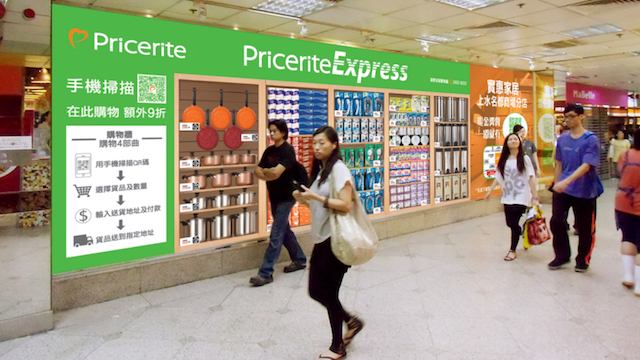
    Pricerite has opened its third new New Retail concept store, at MegaBox in Kowloon Bay.

    The 36,000sqft Pricerite at MegaBox has been designed to seamlessly merge the furniture retailer’s physical store offer with its omnichannel approach.

    And it claims to be the first retail chain store in Hong Kong to accept cryptocurrencies.  All Pricerite stores are now accepting Bitcoin (BTC), Ethereum (ETH) and Litecoin (LTC) as payment method. The store’s cash registers will instantly convert the cryptocurrencies into Hong Kong dollars according to the real-time exchange rate. Customers with a Lightning Network-supported cryptocurrency wallet can finish the BTC transaction in several seconds.

    “Following the immense success brought by the opening of Pricerite’s first-of-its-kind New Retail concept store last year, we are making another big leap forward,” said CEO James Leung. “Continuing with our commitment to the integration of advanced technologies with human talent, we … adopted a wide range of state-of-the-art retail technologies, providing customers with an all-rounded shopping experience.”

    One of the technologies the company has employed is a Virtual Store online, which simulates the actual environment of the Pricerite at MegaBox store. Customers can browse the aisles and click on a product on the shelf to read its details and price, before adding it to their cart should they wish to buy it.

    Leung says the online shopping experience runs 24 hours a day and offers an almost totally true-to-real-life experience.

    Another technical highlight is a smart kiosk in the new store which provides information such as inventory levels in the store and the availability of products in nearby stores if they are out of stock at MegaBox.

    Pricerite’s Pepper the robot, has been updated, offering far more information than the loyalty program advice the first generation Pepper in Nathan Road was known for. Pricerite says the new-generation Pepper is the first retail robot in Hong Kong developed to provide and search the information of more than 10,000 products.

    And the company’s 3D mobile app has been upgraded to provide a more fluid customer experience when customers are measuring if a furniture item will fit inside their home. The app merges the simulated apartment with the actual environment captured via the phone camera before it shows a 1:1 display of all furniture pieces in the real home environment. Users can ‘browse’ the apartment at his or her own pace in a first-person view. This app then offers typical apartment templates and a wide range of furniture options.

    The Pricerite at MegaBox offers delivery services in as little as four hours.

    During launch phase, the service will be available only for Kowloon customers who buy products with the ‘Pricerite Speed Delivery’ tag online or at the MegaBox outlet.

  • Gap’s second quarter sales decline reflects ‘a company in retreat’

    Gap’s second quarter sales decline reflects ‘a company in retreat’

    Gap’s second quarter has proven to be mostly a continuation of the first, with negative results across nearly all segments of the business.

    This is hardly surprising as the fundamental trading strategy has not shifted, so there is little reason to expect a different outcome. In this context the CEO’s assertion that Gap is “running towards” the next step in its evolution is rather misleading. In our view, the company tends to move at what can best be described as a glacial pace.

    As usual, the main issues come from the Gap brand where global comparable sales fell by a sharp 7 per cent, a figure made all the worse by the fact that the decline comes off a 5-per-cent dip last year. Within the US, total sales at the Gap brand dropped by 11.4 per cent.

    Some – but by no means all – of this was down to store closures. However, on an underlying basis it is very clear that Gap’s products remain firmly out of fashion with consumers. GlobalData Retail’s research shows shoppers are in retreat from Gap and – worryingly – discounting is becoming an increasingly ineffective tool in drawing them in to stores and online even to browse. Over Gap’s second quarter, some of this may have been down to the generally elevated level of discounting in the apparel market, but we also attribute the complete dearth of newness and inspiration within Gap ranges for the decline in shopper numbers.

    None of this is new. It is an old story that has been told time and again. However, our fear is that instead of bottoming out, the declines at Gap could accelerate if the consumer economy softens. When money is tight it is very easy for consumers to avoid spending at retailers that give them no compelling reason to do so – and Gap fits perfectly into this category.

    Old Navy, which usually comes to the rescue of the group, also had a bad quarter. On a global basis, comparable sales slid by 5 per cent. Within the US, total sales were down by a more modest 1.2 per cent. Most of the blame for the softness could be attributed to market dynamics, which remained poor over most of the second quarter. However, from store visits some of the product missteps from early in the year were not corrected and the assortments going into the summer selling season were less compelling than usual.

    There is scope for Old Navy to make the necessary corrections as it heads into fall, but a bad third quarter will throw up major questions as to whether the brand has lost its once golden touch. This would be a disastrous prospect for Gap as it looks to spin off the business.

    Fortunately, there were some better numbers from Banana Republic, at least within the US where total sales rose by 3.1 per cent. Improvements to quality and some better pieces within the assortment have helped to lift conversion and basket sizes from existing customers. While Banana Republic remains a shadow of its former self, there is reason to believe it is on the road to recovery. That said, we do not think much of the initiative to get into the rental business. For a brand of Banana Republic’s price point and position, we do not see rental as the right solution and believe the company would be better advised to continue focusing on developing compelling products and rebuilding its reputation.

    Away from the big three brands, there are clear signs of progress with Athleta which is growing rapidly thanks to new store openings and good brand traction. This business has good forward potential and over the next few years should make a more meaningful contribution to the company’s growth and bottom line.

    Overall, the high-level view is that Gap is a company in retreat. Its profits and sales are in decline and it doesn’t seem to have many credible plans to reverse that position.

  • Burger King China operator mulls Hong Kong IPO

    Burger King China operator mulls Hong Kong IPO

    Burger King China’s owner is mulling a public listing in Hong Kong which could value the business at around US$1 billion.

    According to sources quoted by international business media, the Hong Kong plan is a fallback after plans to list the business in the US last year were shelved.

    Burger King China is owned by Turkish-based company TAB Food Investments. It currently operates about 1000 stores across 150-plus cities in Mainland China.

    One source said the IPO could raise about $200 million, although a fixed figure has not yet been set and the idea is still under consideration. If an IPO proceeds, it would most likely be early next year.

    TAB Food Investments is the world’s largest master franchisee of the Burger King brand, with more than 1700 stores across China and its home market.

    Asked for comment on the reports, the company’s chairman Erhan Kurdoglu told a journalist: “We always assess IPO possibilities. However, there’s no concrete development on that front as of now.”

    TAB Food Investments also holds the franchise rights for Popeyes Louisiana Kitchen and recently announced plans to roll out more than 1500 outlets in China during the next 10 years.

  • Flagship Razer store in Las Vegas opens next month

    Flagship Razer store in Las Vegas opens next month

    A flagship Razer store in Las Vegas is set to open next month’s, the gaming brand’s largest outlet anywhere in the world and its second in the US after San Francisco.

    The 2400sqft Linq Promenade outlet will open to gamers and the general public on September 7 in a location that sees nearly 22 million global visitors annually.

    “It was totally natural for us to build our next retail presence in Las Vegas, where so many of our fans would be able to experience and enjoy our entire gaming ecosystem,” said RazerStores global director Christine Cherel. “Together with Caesars Entertainment, we have been scouting for the perfect spot for over a year – and now we have found it, right at the heart of one of the best places for entertainment in the world.”

    Dubbed RazerStore LV, the Razer store in Las Vegas will aim to encourage and foster an avid gaming community, with esports and gaming events organised weekly.

    “The introduction of Razer to The Linq Promenade will create an immersive destination for gamers at the heart of the Strip,” said Caesars Entertainment’s senior VP of attractions, retail and leasing, Shaun Swanger. “With the addition of Razer, The Linq Promenade and Las Vegas continue to thrive as the global epicenter of tourism, technology and entertainment.”

    The new two-level brand gallery and retail store features a massive 16-HD-panel-display wall broadcasting interactive live streams and tournaments in full surround sound to onlookers inside and outside.

    PC gamers can set new records playing blockbuster titles on Razer Blade gaming laptops, while console gamers can compete head-to-head in fighting games on Panthera Evo arcade sticks or Wolverine controllers. Mobile gamers can also compete on the 120-Hz display-powered Razer Phone 2.

    Razer, which is co-headquartered between San Francisco and Singapore, opened its first US RazerStore at the Westfield Mall in Downtown San Francisco in May 2016. Two more stores are located in Hong Kong and Taiwan.

  • Change of heart for Chinese Takashimaya

    Change of heart for Chinese Takashimaya

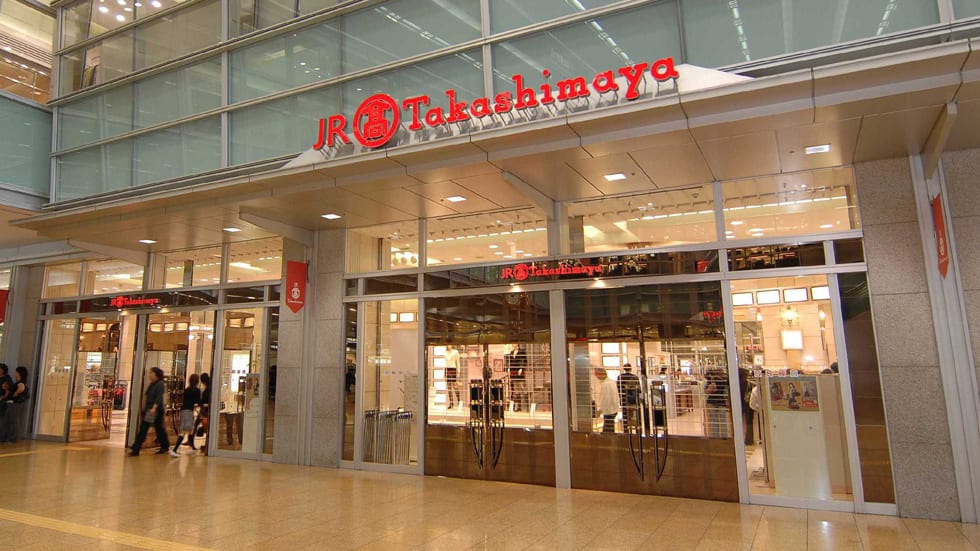
    Takashimaya in China has reversed its decision to shut down its Shanghai store after negotiating a rent reduction.

    “Due to support from the landlord and Shanghai Changning District, we can expect improvement in profitability of the business,” read a statement from the firm.

    Takashimaya in China has not turned a profit since its launch in 2012 despite its location in close proximity to a large and affluent Japanese community. Takashimaya was anticipating a ¥2–3 billion (US$18.7–28.1 million) loss at the end of this financial year before the reversal.

    It is not clear whether or not the firm received assistance from the Chinese government to continue operating, although tax incentives may have been likely. The closure of Takashimaya would have had a significant effect on the local area’s economy given the recent sale of a large interest in nearby rival store Carrefour following years of losses.

    An online commentator referenced in a Nikkei report wrote, “The problem with Takashimaya is its location, which is far away from the main road and the poor goods on offer. Probably only ghosts will shop there.”

  • Netflix tests feature that helps members quickly find content they like

    Netflix tests feature that helps members quickly find content they like

    If the recommendations made to you by Netflix’s algorithms haven’t excited you in the past, there is good news on the way. Spotted first by a Twitter user named Jeff Higgins, the video streamer is currently testing a feature on iOS devices called Collections. Content is curated by Netflix’s team of experts and the titles are placed in different categories based on factors like genre, tone, storyline and character traits. Some of the different categories include “Dark & Devious TV Shows,” “Prizewinning Movie Picks,” “Watch, Gasp, Repeat,” “Let’s Keep it Light,” “Netflix Is a Joke,” and Women Who Rule the Screen.”

    Those iOS users chosen to test the new feature will find the option to use Collections in the upper right corner of the Netflix homepage where you would normally find “My List.” Tap on a collection category that you find appealing and the page expands to reveal thumbnails of the titles in that specific collection. Above those thumbnails, you’ll see an explanation of what this collection is all about. For example, tap on “Real & Riveting” and you’ll see that the titles in this group are documentaries such as Woodstock, and American Factory.

    “We’re always looking for new ways to connect our fans with titles we think they’ll love, so we’re testing out a new way to curate Netflix titles into collections on the Netflix iOS app,” a Netflix spokesperson confirmed to TechCrunch. “Our tests generally vary in how long they run for and in which countries they run in, and they may or may not become permanent features on our service.”-Netflix

    Netflix is under more competitive pressure than ever before. For example, take Disney+, expected to launch this November 12th. For $6.99 a month, subscribers can stream on four screens simultaneously, set up to seven user-profiles and view streaming content in 4K resolution at no extra charge. To get those features on Netflix, a subscriber would have to pay $15.99 a month.

    By offering Collections, Netflix hopes to provide recommended titles that its subscribers want to see. The more time its members stay on Netflix, the less they will feel the need to sign up for a rival streaming service. As the video streamer says on its iOS app, Collections is “an easy way to find shows and movies you’ll like.”