Tag: asia

  • Singapore retail sales slip in June

    Singapore retail sales slip in June

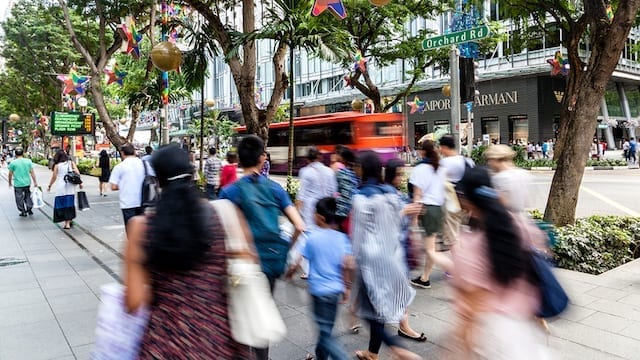
    Singapore retail sales – excluding motor vehicles – decreased by 2.7 percent in June, according to Statistics Singapore.

    The headline figure, which includes motor vehicles, was down 8.9 percent, reflecting the high volume of cars sold in June last year and a lower COE quota for May to July this year.

    Month-on-month, Singapore retail sales were down 0.4 percent, excluding vehicles.

    Online accounted for 5.5 percent of the S$3.5 billion in retail spending for June.

    Sales of furniture & household equipment declined 15.1 percent year on year, attributed to higher sales in the sector during last year’s Hari Raya festive season. Similarly, the computer & telecommunications equipment and watches & jewelry sectors reported sales down by 7.7 percent and 4.8 percent respectively, driven in part by lower demand for handphones and jewelry.

    Sales of medical goods & toiletries and of apparel & footwear both grew by 1.4 percent.

    Compared to the same period last year, sales of food & beverage services grew by 5.3 percent in June, estimated at $864 million, compared to $820 million in June last year.

    Sales by fast-food outlets grew by 10.6 percent compared to June last year, due partly to the opening of new outlets by some major fast-food chains. Food caterers, restaurants and other eating places (such as cafes)were up by between 3.2 percent and 5.7 percent during the period.

  • Shiseido to create Tory Burch beauty products

    Shiseido to create Tory Burch beauty products

    Global beauty firm Shiseido has entered into a long-term partnership to create and sell a range of Tory Burch beauty products.

    Shiseido will have an exclusive worldwide license to develop, market, and distribute Tory Burch beauty products.

    The agreement goes into effect on January 1 next year. The Tory Burch beauty products license will be managed by Shiseido Group’s Americas region headquartered in New York City. Through the partnership, Shiseido will provide Tory Burch with a global platform and dedicated resources to elevate its beauty business, cultivating opportunities as a multi-platform, global lifestyle beauty brand.

    For Shiseido, this partnership will expand its global fragrance portfolio and create further opportunities for collaboration.

    “Shiseido is on an exciting journey to achieve its long-term mission of ‘Beauty Innovations For A Better World’,” said Shiseido president and CEO Masahiko Uotani, “and we are honored to welcome Tory and the Tory Burch brand to the Shiseido family and pursue this mission together as partners.

    “Shiseido is dedicated to creating value for all of its partners and we are excited to share the benefits of Shiseido’s platform, R&D resources, technology portfolio and Centers of Excellence with the Tory Burch brand to help maximize its significant potential and opportunities for growth and development.”

    “There are great synergies between our companies,” said Tory Burch, the eponymous brand’s executive chairman and chief creative officer, “including a deep respect and connection to our customers, a passion to support women’s empowerment and an aligned long-term strategic vision.

    “We could not be more excited to build a global lifestyle fragrance and beauty concept in partnership with Shiseido, a realization of a long-time dream.”

  • Starbucks India Speeding up store rollouts

    Starbucks India Speeding up store rollouts

    Starbucks India plans to ramp up its store rollout. The global coffee chain opened 25 new stores in the last financial year and 30 new stores this year with local partner Tata Global Beverages – but plans to open a far greater number of new stores in the near future, according to Tata Starbucks CEO Navin Gurnaney, with an investment of more than US$6.4 – 7.1 million.

    “We spend anywhere between $213,000 and $284,000 to build a store,” said Gurnaney in an interview with the Business Standard. “We would not be being aggressive with our store growth if we didn’t see potential. We think the market is very strong. Excellence is always well received and we believe we have an excellent experience, partners and products. We are extremely bullish on India. India is one of the top five growing markets for Starbucks internationally.”

    Starbucks India stores serve an average of 270,000 customers per week, with 90 percent of their chosen beverages being coffee.

    “People don’t come to us just to buy a sandwich,” added Gurnaney. “It is always an accompaniment with a beverage. The coffee category has been growing with all groups of people and the millennials are certainly gravitating towards coffee. But not just millennials, it is also the 30 years something upwardly mobile, better traveled and better-educated people which are growing in India.”

    While there has been some speculation that Starbucks Tata is considering an acquisition of a rival brand, Gurnaney insisted that Starbucks India outlook is extremely optimistic, and that future plans are to be “thoughtfully aggressive”.

    Starbucks entered India with its first store in Mumbai launching in 2012.

  • Changes force all Android reminders to go through Google Assistant

    Changes force all Android reminders to go through Google Assistant

    In addition, Google is now forcing all reminders to go through Google Assistant. Android users were once able to add a reminder or edit one through the Google app if Assistant was disabled. Now, if you try to do this, a prompt appears telling you to turn on Google Assistant since the virtual digital assistant “is ready to help you get things done.” You won’t be able to do anything reminder-wise unless Google Assistant is turned on. If you have your phone set to a language not supported by Google Assistant, you won’t be able to set reminders on the phone.

    Also changed is the user interface which is now done up in Material Design. The new UI eliminates the gray dividers, and the blue floating button is now in Google’s four-color plus sign. Each reminder includes a checkbox replacing a swipe. And reminders that are overdue will jump out at users thanks to a big red badge that says “OVERDUE” in caps. Additionally, the UI for creating a reminder no longer automatically asks you to choose a place where you want to be reminded. If you want the reminder to appear at a certain location, you will have to ask Assistant to “remind me to (fill in the blanks) when I get to (a specific location).”

    The changes have already hit our Pixel 2 XL and could very well be on your Android phone as well.

  • Nestle starts selling Starbucks-branded coffee in China

    Nestle starts selling Starbucks-branded coffee in China

    FMCG giant Nestle started selling Starbucks-branded coffee in Mainland China today, seeking to tap growth in a market where it says coffee consumption per capita remains low compared to global standards.

    Nestle last year paid US$7.15 billion for exclusive rights to sell the US chain’s coffees and teas globally and began selling Starbucks-labelled products in Europe, Asia and Latin America in February.

    The world’s largest food company will start selling 21 Starbucks-branded capsule and instant-coffee products on Chinese e-commerce platforms like Alibaba’s Tmall and JD, as well as to offices and hotels in tier-1 cities, both companies said.

    “We believe China is the most exciting market in general but especially for coffee because… per capita cup consumption is quite low as compared to Asia,” said Rashid Aleem Qureshi, Nestle’s CEO for the Greater China region.

    “Right now the overall soluble coffee [market] in China is growing between 3 to 5 percent a year and we believe that by bringing this exciting new business opportunity we should be able to grow faster than that,” he said, referring to a category that includes capsule and instant coffee.

    Nestle’s move comes as the Swiss company experienced slower first-half growth in China, its second-largest market, where other categories like mainstream baby foods have struggled compared to pricier options.

    China’s per capita coffee consumption is about six cups a year, compared to 400 in Japan and 300 in South Korea, Nestle said.

    The partnership with Starbucks would help Nestle add a premium coffee option to the range of products it already sells in China, such as Nescafe instant coffee range and Nespresso capsule coffees, Qureshi said.

    Starbucks China CEO Belinda Wong said the Nestle deal would open two new avenues to sell its products in China, where it has been investing heavily in its store network and delivery amid tougher competition from local startups.

  • Mophie’s new wireless pads will charge three Apple devices at once

    Mophie’s new wireless pads will charge three Apple devices at once

    Remember AirPower? The multi-device wireless charging pad was canceled by Apple in March 562 days after it was unveiled on September 12th, 2017. During that same event, Apple introduced the iPhone 8, iPhone 8 Plus and the iPhone X. AirPower was supposed to allow an iPhone, an Apple Watch and the AirPods wireless charging case to power up at the same time. While we might not see Apple unveil a similar accessory for some time, the Apple Store will soon start selling a pair of wireless chargers made by mophie. These products will be exclusive to the Apple Store.

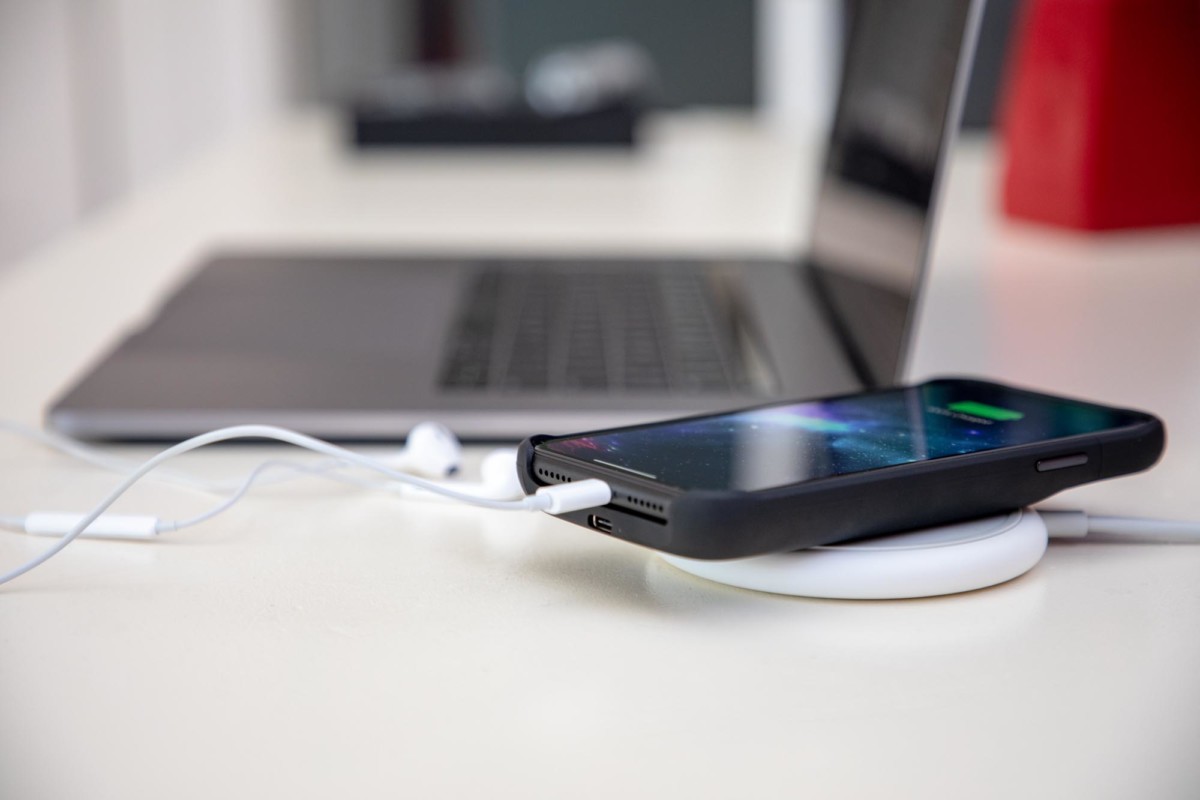
    Mophie’s wireless charging dual pad looks similar to the now-canceled AirPower, and while there are only two hot spots on the pad, an extra USB-A port on the accessory allows the user to charge an iPhone, an AirPods wireless charging case and an Apple Watch all together at the same time. The pad will charge at 7.5W and will be priced at $99.95.

    For $139.95, or $40 more, the Apple Store will sell the mophie 3-in-1 wireless charging pad. This has the two hot spots like the other model and an extra USB-A port for an Apple Watch. But it also includes an Apple Watch charging connector so that while you’re wirelessly charging the timepiece, it will be held at a perfect angle to use the smartwatch’s Nightstand mode. This pad also charges wirelessly at 7.5W.

    “The compact mophie Wireless Charging Pad conveniently recharges your compatible Apple iPhones and Wireless Charging Case for AirPods. Just place your iPhone or AirPods on the pad and a steady, efficient charge of up to 7.5W begins on contact. With the pad’s two fast charge spots and extra USB-A port, you can simultaneously charge your iPhone, AirPods, and connect your Apple Watch cable.”-Apple Store

    While listings for the mophie wireless charging dual pad and the 3-1 wireless charging pad appear on the Apple Store website, they are incomplete. Both are missing photos of the accessories and accompanying videos.

  • King Living launches showroom in Canada

    King Living launches showroom in Canada

    Australian furniture business King Living has opened its first showroom in Canada, continuing the brand’s global roll-out which has seen stores open in Shanghai, Singapore, Malaysia and New Zealand.

    Located in a newly renovated 1000sqm heritage building in shopping district South Granville, Vancouver, the showroom will offer sofa designs, dining ranges, contemporary bed and mattress ranges and outdoor collections.

    King Living chief executive Anna Carrabs said the Canadian launch is a key component to the furniture retailer’s global growth strategy – with Vancouver being the first of many more showrooms in the American region.

    “King Living has already expanded into the Asian market with showrooms in Singapore, Malaysia and Shanghai, which have proven to be very successful in the roll-out of King Living internationally,” Carrabs said.

    “Showrooms will always be a huge part of the King DNA. We want customers to see, feel, test, and get to know the pieces in the flesh. All our designs are investment pieces made to last, so the tactile experience a showroom offers will always be incredibly important.”

    According to Carrabs, the Australian reputation for quality goods has set them apart from international competitors and has been the driving force behind its global expansion.

    “One of our biggest challenges has been challenges has been ensuring we find the right location for our King Living showrooms,” Carrabs said.

    “It is so important that our stores reflect our core values and Australian way of life. It took a considerable amount of time to find our showroom in Vancouver.

    “We wanted to be part of the vibrant shopping district which features around great galleries and gourmet restaurants so now, King Living is right at home.”

  • Taiwanese bubble-tea brands caught in Hong Kong protest backlash

    Taiwanese bubble-tea brands caught in Hong Kong protest backlash

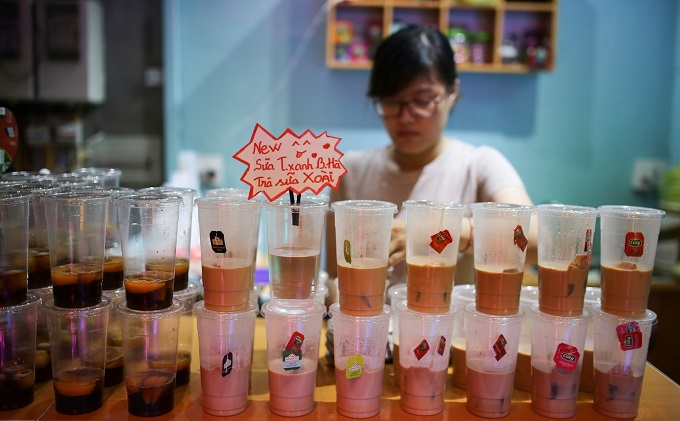
    Internet users on the Chinese mainland have blacklisted popular Taiwanese bubble-tea brands after a Hong Kong franchise urged solidarity with street protesters in the Asian financial hub.

    The online furore began when Yifang Fruit Tea, a maker of the tea-based drink, closed one of its Hong Kong shops for a day and put up a sign that said in Chinese: “Stand together with Hong Kongers”.

    Photos of the sign circulated on mainland social media this week, angering users who accused the firm of backing Hong Kong independence. Calls for a boycott spread to other Taiwanese bubble tea brands like Gong Cha, HeyTea, CoCo and A Little Tea.

    Yifang and the others were blacklisted by users of China’s microblog Weibo. A white list promoted “good” brands.

    “Rest assured, I won’t spend another cent on you. Yifang is rubbish,” a Weibo user named ProfiteroleK wrote in a comment that received more than 1500 likes.

    Hong Kong is facing its worst crisis since returning to China from British rule in 1997, as sometimes violent protests since June against a now-suspended extradition law have become a direct challenge to the city’s government and Beijing.

    Bubble tea was invented by Taiwan, a self-ruled island considered by Beijing as a renegade province. On the mainland, Weibo posts containing the hashtag “Taiwanese bubble tea shops” were read 350 million times in recent days.

    The run-in with Chinese social media users is another example of how companies can get caught in political issues.

    In January, Apple and Amazon were called out by a mainland state think-tank for “incorrect” Taiwan and Hong Kong references.

    The mainland franchisee of Yifang Fruit Tea said in social-media posts the company fired the part-time staff who put up the notice and permanently closed the outlet.

    However, Amigo Cheung, the brand manager of the Yifang franchise in Hong Kong, told Reuters by phone that nobody had been dismissed yet and no outlet had been shut.

    HeyTea and Gong Cha, on their social media accounts, affirmed their support for “One Country, Two Systems” or “One China”, in hopes of distancing themselves from the backlash.

    Fellow Taiwanese bubble-tea brands CoCo and A Little Tea could not be reached for comment.

    Taiwan President Tsai Ing-wen wrote in a Facebook post this week that “China’s political power has invaded into various nonpolitical areas,” citing tea as an example.

    “For people living in a society with freedom and democracy, we need to stay on high alert for issues like this,” Tsai wrote, along with a picture of a cup of ice fruit tea.

    Jennie, a mainland student studying at a Hong Kong university, said she had sympathy for protesting students but also felt caught in the middle.

    “Seeing the locals around disliking mainland people so much, I fear I’ll be driven out (from Hong Kong) by them in the future,” she told Reuters.
  • New iMessage exploit allows hackers to hijack your iPhone by simply sending you a message

    New iMessage exploit allows hackers to hijack your iPhone by simply sending you a message

    A new, “interaction-less” bug in iMessage was recently discovered that could allow hackers to gain access to your iPhone. The exploit being interaction-less means that you don’t need to do anything—download any files or click any suspicious links—to get your device compromised. What’s even worse, you don’t even need to open the iMessage app for the exploit to work.

    At the Black Hat security conference in Las Vegas this week, Google Project Zero researcher Natalie Silvanovich showed off a number of these so-called interaction-less bugs in iMessage that could be used to gain remote access to an iPhone. Apple has already patched five of them, but there are a handful that are yet to receive the company’s attention.

    Following the recently uncovered vulnerabilities in WhatsApp, Silvanovich and her colleague Samuel Groß started investigating for similar exploits in SMS, MMS, and voicemail but found none. Then, they shifted their attention to iMessage and started reverse-engineering the app, which lead to some worrisome discoveries.

    According to the researchers, the vulnerabilities that they uncovered in iMessage are likely a result of the complex (and ever-expanding) nature of the app. Apple’s messaging client not only allows users to send each other files, voice messages, photos, and Animojis, but also has many integrations with third-party apps, like OpenTable and Airbnb. This makes securing every potential backdoor increasingly difficult, though the researchers claim that Apple is actually doing a good job.

    Silvanovich says that iOS has many security checks in place, but the bug she and Groß discovered takes advantage of the underlying logic of the operating system, which makes it possible to bypass the security net. A potential attacker could send a targeted iMessage with specific content in it that Apple’s servers would interpret in a certain way and send the target a message that would then automatically trigger the exploit, granting the attacker access to the phone.

    Interaction-less bugs are highly sought after in the hacking community, as they don’t require the target to do anything. The iMessage vulnerabilities discovered by the Google Project Zero members could fetch prices in the vicinity of “millions or even tens of millions” on the exploit market.

  • Coles claims former employee stole $1.9 million

    Coles claims former employee stole $1.9 million

    Coles is suing a former employee for allegedly stealing more than $1.9 million from the company.

    The supermarket claims that Aaron Baslangic, former head of strategic initiatives and B2B for Coles Online, submitted phoney invoices requesting payment to third parties, and in some cases faked the approval of his supervisor for payments that were above his authority limit.

    In documents filed with the Supreme Court of Victoria over the past two weeks, the supermarket said it has identified 13 questionable payments made to BMW Australia, the Autralian Taxation Office and other businesses from February to June of this year.

    The amounts range from $48,000 to $413,139. More than $1.5 million was paid to a business called Katana Services, whose assets were frozen by the Victorian Supreme Court on July 30, alongside Baslangic’s assets.

    Coles said it first discovered the questionable transactions during a review of payments prior to its migration to a new platform.

    “Irregularities were detected by our internal finance checks and we promptly obtained a freezing order from the Victorian Supreme Court,” a spokesperson for Coles told Inside Retail.

    The transactions caught the eye of Coles’ finance team because some were unsupported by invoices, some were supported by invoices sent from a personal email address for Baslangic and some were for amounts above Baslangic’s authority limit.

    Five of the 13 payments were for more than $75,000, which was Baslangic’s personal authority limit. Payments above this amount required the approval of his line manager Karen Donaldson, general manager of Coles Online.

    But while the accounts team received emails from Baslangic indicating Donaldson’s approval, Donaldson said in an affidavit that she had no prior knowledge of those emails and did not approve the payments.

    Cameron Newell, head of corporate business protection for Coles Online, said in an affidavit that he could find no emails from Baslangic to Donaldson requesting approval, or from Donaldson to Baslangic granting it, suggesting that Baslangic faked his supervisor’s go-ahead.

    Donaldson said she has worked closely with Baslangic since February 2017, when he was employed by Coles’ finance team and worked as a senior finance business partner with Coles Online. He was appointed head of strategic initiatives and B2B for Coles online on July 1.

  • Google Search update lets users find their favorite Podcasts easier than ever

    Google Search update lets users find their favorite Podcasts easier than ever

    The Search app is getting even more changes, Google announced earlier. This time all the changes are aimed at those who are often looking for podcasts to listen to via Search. Currently, there are more than two million podcasts on the web, which makes it harder to find the one you want.

    Luckily, the latest update makes searching for podcasts easier than ever. Starting today, those who search for a podcast about a specific topic on Google will get results in the form of playable episodes alongside web pages, news, images, and videos.

    According to Google, these results will be displayed based on the company’s understanding of what’s being talked about on a podcast, which will provide users to even more relevant info about a topic in audio format. Moreover, Google says that we’ll soon no longer need to use the term “podcasts” when we search to see episodes.

    But there’s more, as Google confirmed that the same feature will come to Google Assistant and Google Podcasts for web, which will allow users to ask the Assistant for podcasts about a certain topic.

    It’s important to mention that these new features will be available starting today, beginning with people using English in the United States.

  • Auto Industry Slowdown Hits Lakhs Of Jobs

    Auto Industry Slowdown Hits Lakhs Of Jobs

    The slowdown in the auto sector has rendered an estimated three lakh and fifty thousand people jobless due to spiraling layoffs in the automobile industry. In Chennai’s Amabattur industrial estate the slowdown has crippled John Peter makes valve components. Over the last five months, his 8 lakh monthly turnover has dropped by ninety percent, to just one lakh. With a forty lakh private bank loan he has defaulted in repaying his monthly installment of around a lakh rupees. He has laid off 3 of his 13 workers. He has reduced the three-hour shift to one.

    He told NDTV “In today’s situation I’m neither able to pay salary for workers nor repay a loan. It’s so difficult. I don’t know what to do. Banks don’t listen when we say there is no business. They say they would come home and threaten us”.

    Chandrabose, one of his employees who used to earn Rs 18000 a month has already suffered a third of it as there is no overtime opportunity now. The father of two school-going children is now scared that the ax could fall on him soon. He says “I can live only if I have a job. Only if I have a job I can look after my family”.

    Not far away Andrew Ranjithkumar has decided to dump brake component manufacturing his family has been doing for 30 years. Orders from auto companies he says have fallen by seventy percent. Unviable, now he’s making parts for washing machines and home appliances. A third of his machines are also rusting for want of work. He said “There is no demand from the automobile sector. We are pushed towards home appliances as otherwise, we have to lay off people. We are unable to pay a salary”.

    This industrial hub with 2000 units employs around three lakh people. The industry has sought government intervention. N Sujeesh, President, Ambattur Industrial Estate Manufacturers’ Association added “We need a reduction in GST from 28% to 18 % and for subcontractors, small players from 18% to 5 %. The lending rate is high and we need to bridge the gap between interest on savings and lending rate”.

    Carmakers and industry bodies like SIAM, ACMA and FADA have been demanding to reduce the GST rates on passenger vehicles.

    With thirty-five thousand crore worth of unsold cars countrywide there’s an abnormal hike in dealers shutting down. The industry has estimated a loss of 3.5 lakh jobs from car manufacturers to component manufacturers. S E Palanivel Babu, MD of True Sai Works, a car dealer based in Salem has reduced his off -take by thirty-five percent. He says dealers with huge borrowings are collapsing.

    He also blames it on manufacturers thrusting vehicles on dealers. He believes “IN all developed countries market share is calculated on the end consumer. Only in India car market share is calculated on the basis of what manufacturers sell to dealers. This is a wrong way which leads to a wrong market share; the dealer is pressurized to hold more stocks and erosion of working capital in the long run”.

    Many in the industry hope the upcoming Diwali season could shift car sales to top gear for a turn around if the government swiftly intervenes.

  • Kathmandu lifts same-store sales in FY19

    Kathmandu lifts same-store sales in FY19

    Kathmandu has reported a 2.7 percent year-on-year increase in same-store sales in Australia in FY19, and a 3.9 percent decline in same-store sales in New Zealand year on year.

    Overall, group same-store sales grew 0.6 percent year on year in FY19, the outdoor retailer said in a trading update on its unaudited full-year results on Thursday.

    Total sales across the business grew 9.6 percent to $520 million (NZ$545 million) compared to the year prior, with Kathmandu seeing strong performance in Australia during the second half of the financial year.

    According to Kathmandu managing director and chief executive Xavier Simonet, this was due to strong winter sales in Australia, as well as the continued performance of footwear brand Oboz.

    US-based footwear brand Oboz, acquired in April 2018, is expected to see continued growth in FY20 and beyond, according to Simonet.

    The business expects to see net profit of between $52.9 million (NZ$55.5 million) and $54.3 million (NZ$57 million), based off of an EBIT of between $78.7 million (NZ$82.5 million) and $80.1 million (NZ$84 million).

    This is compared to last year’s net profit of $48.1 million (NZ$50.5 million) and $71.1 million (NZ$74.6 million).

    Kathmandu expects to release its audited full-year results in late September.

    Simonet has previously stated international growth remains a priority moving forward.

    Kathmandu appointed Amy Beck as president of its North American business in January of this year as part of this international push.

    “Kathmandu is on a journey of transformation,” Simonet said, noting that profit growth in the core Australasian business would be used to fund investment into future growth.

    “While we are focused on driving growth for our core Kathmandu business in Australia and New Zealand, we are also step by step diversifying our channels, brand and markets, particularly through Oboz which has delivered strong growth.”

  • Ecco is heading back to the Philippines

    Ecco is heading back to the Philippines

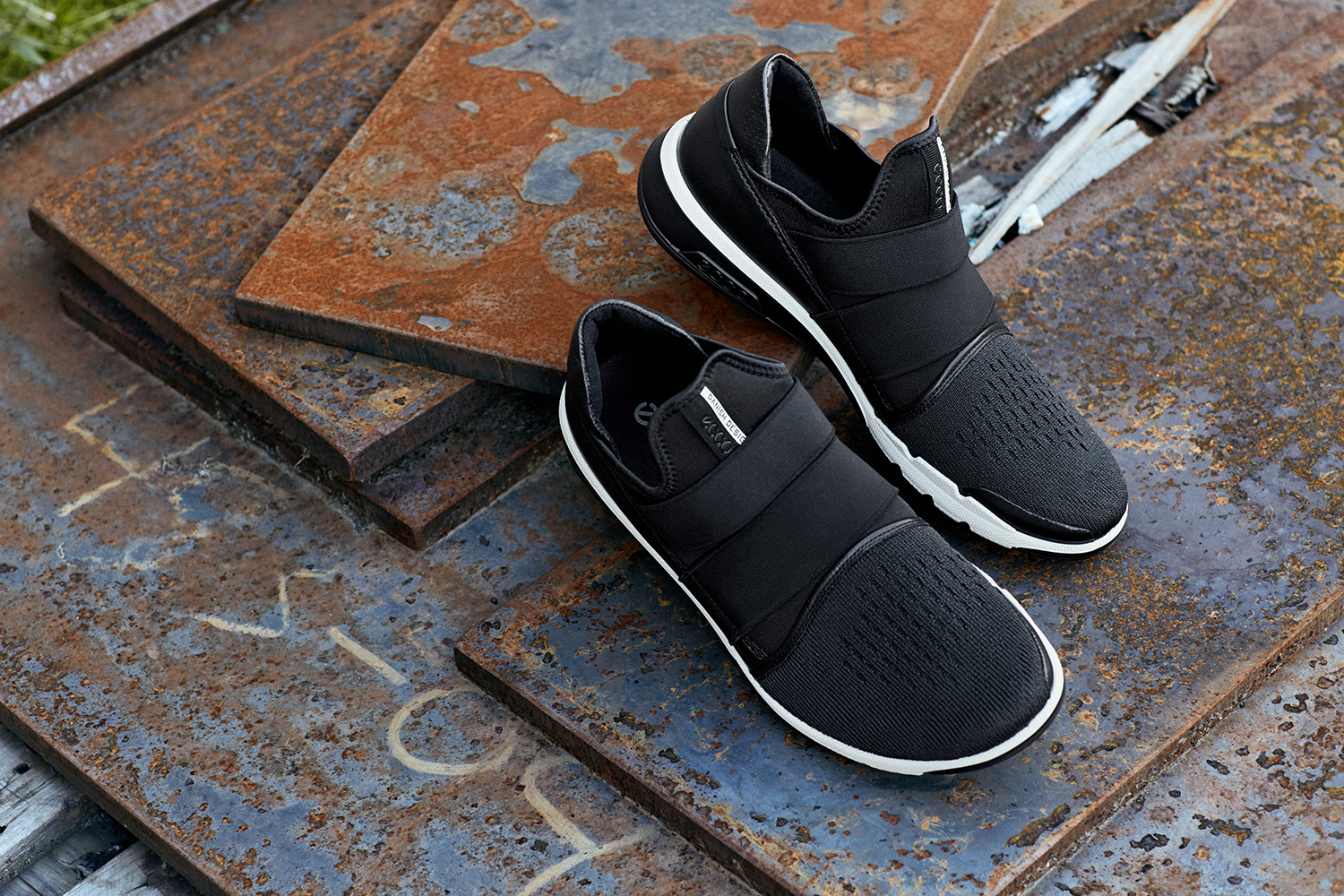
    Danish footwear brand Ecco is returning to the Philippines through a shop-in-shop concept at SM malls.

    The brand has launched spaces at SM Store Makati, SM Store Mall of Asia, and SM Megamall’s third floor Bridgeway Building. The openings are part of the label’s strategy to continue its expansion in the territory as more shop-in-shop formats and eventually, concept stores at select SM malls are being planned.

    Ecco operates in 87 countries at 2989 shops and shop-in-shops and  15,000 sales points globally. It remains one of the only major international shoe manufacturers to own and manage every step of the shoemaking process.

  • Australian dollar rises

    Australian dollar rises

    The Australian dollar has risen Thursday, buying 67.59 US cents from 67.11 US cents on Wednesday.

    Yesterday, the local currency hit a 10-year low of 66.77 US cents after New Zealand’s central bank cut the country’s cash rate by a larger than expected 50 basis points.

    The Aussie was trading as high as 67.83 US cents on Wednesday morning but fell more than 1.5 percent after the Reserve Bank of New Zealand cut its official cash rate to 1.0 percent in an attempt to reheat the country’s cooling economy.

    The Aussie’s biggest one-day decline since April dropped it more than one cent to as low as 66.77 US cents as RBNZ governor Adrian Orr spoke to media and said further cuts were possible.

    At 1335 AEST, the Australian dollar was worth 66.90 US cents, just above what had been its lowest level since March 18, 2009.

    The RBNZ’s move came a day after the Reserve Bank of Australia held the local cash rate at 1.0 percent but said it was prepared to reassess after weighing the impact of 0.25 percentage point cuts in June and July.