Tag: asia

  • HSBC Singapore Expands Foreign Mortgage Solutions

    HSBC Singapore Expands Foreign Mortgage Solutions

    Responding to growing interest among clients, HSBC Singapore now offers mortgages for investment residential properties in five cities across Australia.

    HSBC Singapore is hoping to tap on the growing number of Singaporeans who plan on buying investment properties abroad with the launch of its first overseas mortgage solution, the bank announced on Thursday.

    HSBC International Mortgage will be offered in Singapore in either Singapore or Australian dollars for investment residential properties in and around Sydney, Melbourne, Perth, Brisbane and Adelaide, with other overseas destinations to be added over time.

    Successful applicants will get HSBC Premier status, which gives them access to a relationship manager in Singapore and Australia to facilitate the process, the bank said.

    We went with Australia as the first market for this solution given the close affinity that Singaporeans have for the country on the back of their business, education, holiday or familial ties. as a result of business, education, holiday and familial ties, Ranojoy Dutta, head of Retail Products, HSBC Bank (Singapore), said.

    The bank also highlighted its own Beyond the Bricks report from 2018, which indicated that one-third of mass affluent Singaporeans currently have overseas property investments, and 70 percent plan to buy investment properties abroad.

    Singapore’s real estate investment in Australia grew 141 percent in 2018 to $3.5 billion, despite skyrocketing property prices, according to Real Capital Analytics data. According to Knight Frank’s 2018 Wealth Report, Australia was the second-most popular destination for prime property purchases among wealthy Singaporeans.

  • Internet-Only Banks Closing Trust Gap

    Internet-Only Banks Closing Trust Gap

    Trust in tech firms entering the financial sector is strong and rapidly improving to close the gap with traditional banks in Asia Pacific where 77 percent already prefer accessing their banking services via digital channels.

    According to the research firm Forrester, banks continue to lead in trust rankings regarding consumers’ financial interest but tech firms are rapidly catching up. In India, for example, Google outranked banks as the most trusted company to act in their best financial interest. In another tech-savvy nation like mainland China, companies like Alibaba and WeChat were only slightly behind their traditional competitors.

    In addition, global tech giants, payment providers, e-commerce players, and even ride-sharing leaders are threatening the pole position of incumbents by providing simple, convenient, and more personalized digital experiences.

    Across all eight markets surveyed, the preference for digital channels dominated in banking as agreed by 69 to 79 percent of respondents in any given market. 78 and 76 percent of respondents in Hong Kong and Singapore, respectively, preferred digital channels for banking with the former ranking the lowest for branch preference (7 percent).

    Digital played dominance in banking is not so much replicated in the insurance sector where only between 32 and 59 percent of respondents in the various markets preferred digital channels. In markets like Singapore and Malaysia, agents were the most preferred channel as agreed by 46 and 41 percent of respondents, respectively.

    Consumers are more likely to engage with firms that prioritize helping them improve their financial well-being, said Dane Anderson, VP, research director, and regional manager at Forrester. We expect that customers will dynamically deconstruct their personal financial services ecosystems and reassemble them with newer and better players. Traditional institutions have several advantages but will be left behind if they do not transform faster to meet the challenge.

  • Cebu Pacific to assess Mati City flights when airport is ready

    Cebu Pacific to assess Mati City flights when airport is ready

    Budget Carrier Cebu Pacific is ready to assess the viability of flights to Mati City, the capital of Davao Oriental province, as soon as the development of the airport for commercial operations starts. Cebu Pacific Director for Corporate Communications Charo Logarta-Lagamon said in an interview last week that they have always been open to that opportunity.

    “Mati has always been on our radar. But as of now, there is nothing concrete yet given that the airport is not 100% done and there is still a lot of technicalities that need to be ironed out before we can use it for commercial flights,” she said. Ms. Lagamon noted that an online campaign a few years back indicated interest for Mati among travelers. “Mati is one of the choices of netizens. Obviously, there is some market but how big the market is and will that market be viable and sustainable, that is something we need to assess,” she said.

    Last month, Mati City Mayor Michelle Nakpil-Rabat said they are working on land ownership issues relating to the airport so that they can undertake the runway expansion and open it for commercial flights. Meanwhile, Ms. Lagamon said they continue to evaluate potential routes to and from Davao City while “beefing up our Cebu and Clark hubs.” “In fact, we are launching new routes on August 9,” she said.

  • Malaysia Facing Fintech Talent Shortage

    Malaysia Facing Fintech Talent Shortage

    As the historically conservative financial industry in Malaysia becomes increasingly open to fintech developments, a shortage of talent is seeing firms scramble for talent in a limited pool of candidates.

    Financial institutions in Malaysia can’t hire fintech talent fast enough to keep pace with the growing demands of consumers, according to recruitment specialist Hays.

    A lack of technical specialists means that across the board, employers in Malaysia are prioritizing hard skills over soft skills in their recruitment efforts, according to the 2019 Hays Asia Salary Guide. Banks and fintech firms alike are short of talent including software developers, cloud engineers, network engineers, cybersecurity engineers, project managers and data scientists.

    The survey said that 60 percent of hiring managers are more inclined to employ staff based on their technical aptitude. Hiring managers said the top technical skills they are looking for are statistical analysis and data mining (voted by 55 percent), project management (52 percent), and computer skills (44 percent).

    Digitalization has made strong inroads in banking, and banks and financial institutions are partnering with fintech firms to bolster know-your-customer (KYC) processes, anti-money laundering and digital identity management. Banks might also be gearing up for competition as virtual banking is fast becoming a reality for Malaysia – Bank Negara plans to issue licensing guidelines by year-end, or as soon as the industry regulations are finalized.

    The majority of those currently making their way into fintech in Malaysia are in the first 10 years of their career or straight out of education. However, a large amount of this demographic, the techies of the future, do not see the industry as one that is beneficial to their careers, said Hays consultant Ashraf Rafiuddin.

    As such, employers are using self-promotion and training to entice younger talent, and are also hiring candidates from outside the field, including those without an IT background. This increasingly open-door policy that has been seen in the past 12 months is expected to continue into the next year, Rafiuddin said.

  • Cebu Pacific offers P88 fare promo for domestic flights

    Cebu Pacific offers P88 fare promo for domestic flights

    Cebu Pacific early Thursday announced a seat sale promo for all domestic and international flights.

    Passengers can avail of the P88 one-way base fare for local flights while one-way base fare for international flights starts at P888.

    Booking period is only available from Aug. 8 to Aug. 9, the airline said.

    Travel period for promo flights are from Dec. 1, 2019 to April 30, 2020.

  • The Salted Plum opens at Suntec City

    The Salted Plum opens at Suntec City

    Southern Taiwanese restaurant The Salted Plum has opened its second outlet in Suntec City.

    The outlet features a spacious dining area with a street ambiance, a self-service system and new dishes exclusive to the venue. The brand, which serves tapas-style Taiwanese dishes, began as a pop-up called FiveTen before launching its first permanent location on Circular Road.

    “The Salted Plum is the embodiment of how a great zi-char restaurant should be; home-style cooking that is full of comforting flavors, hearty, affordable, satisfying and above all, enjoyed with the people you love,” said founder and MD Shawn Kishore.

    “We are excited at the opportunity to welcome larger groups of diners at our new outlet while maintaining our essence and commitment to serve quality food at a reasonable price. With the ongoing labor crunch in Singapore, our self-service system is one of the ways for us to pass on the savings to our customers and ensure that they do not need to break the bank for a wholesome meal in the city.”

    The new 76-seat venue is described as “a pimped-up version of the flagship outlet”, offering diners the option of all-day Taiwanese dining experience on a budget. After placing orders at the cashier, guests are assigned order numbers for self-collection; made easy with single tray pick-ups – all dishes ordered will be placed onto a single tray.

    The Salted Plum Suntec City is decked out with communal-style high-top tables, high ceilings and street-style decor against navy-blue walls featuring vivid illustrations of signature dishes; all aesthetically lighted to capture the mood of outdoor city dining. Countertop seats and small tables are designed for a quick bite while the restaurant’s larger tables can accommodate bigger parties.

  • Standard Chartered Banks on Chinese Fintechs

    Standard Chartered Banks on Chinese Fintechs

    Standard Chartered has launched a Shanghai-based innovation lab to tap China’s tech market and improve its own capabilities.

    The eXellerator innovation lab in China alongside others in Singapore Hong Kong, London, Kenya, and San Francisco are part of the bank’s SC Ventures unit, a research and development arm focused on innovation and fintech.

    With the launch of the eXellerator, Standard Chartered aims to deepen its contribution and participation in China’s vibrant technology and innovation ecosystem, the bank said, highlighting various tech competencies including artificial intelligence, biometrics and mobile payments that could improve its client products and experiences.

    In addition, the bank also highlights the opportunity for such fintechs startups to scale their solutions across the bank’s global business and leverage the opportunity to co-create new businesses and operating models in the process.

    Rapid changes in financial technology are reshaping the future of the global banking industry, especially here in China which is home to some of the world’s most established companies leading the way in areas like artificial intelligence and Big Data, said Jerry Zhang, CEO of Standard Chartered Bank (China), stressing the Chinese market’s strategic importance to the group.

    Alex Manson, global head of SC Ventures echoed the sentiments emphasizing that a mere online banking app will not be enough to rewire the DNA. To truly rewire the DNA in banking, we need to go beyond just offering a digital interface, he said. Our eXellerators create an environment which combines innovation from both in and outside the Bank.

    The rewiring is well underway in Asia with various milestones recently achieved. In Hong Kong, it established a strategic joint venture with major local telecoms PCCW and HKT, alongside travel service provider Ctrip to build a standalone digital bank. And in India, it will be launching an open digital platform targeting SME clients with various financial and business solutions.

  • Victoria’s Secret controversial marketing chief stops

    Victoria’s Secret controversial marketing chief stops

    Longtime Victoria’s Secret chief marketing officer Edward Razek will resign following months of negative PR centered on his comments about plus-size and transgender models in a Vogue interview.

    Edward Razek, who has personally selected the lingerie brand’s models for more than 15 years, said in the interview that such models had no place at Victoria’s Secret’s fashion shows, a remark well out of step with contemporary attitudes in the industry and among the general public.

    His departure came within days of Victoria’s Secret announcing its first steps toward inclusivity with the appointment of Brazilian transgender model Valentina Sampaio, (pictured above).

    “A few weeks ago, I shared with Les [Wexner, Victoria’s Secret owner L Brands’ CEO] my desire to retire sometime around mid-August,” said Edward Razek. “It was a tough conversation to have because, as some of you must know, we have shared so much together for so many years.”

    The departure comes at a point when more than 100 models have signed an open letter to Victoria’s Secret out of concern for the safety of women aspiring to model for the lingerie brand, following allegations of sexual misconduct directed at photographers who worked with the brand. The company has also been tainted by widespread media coverage of links between Wexner and disgraced sex offender Jeffrey Epstein, now in jail on charges relating to procuring sex with minors.

    “Corporations tend to treat the discovery of abuses as public-relations crises to be managed rather than human-rights violations to be remedied,” said founder and executive director of The Model Alliance Sara Ziff. “The Respect Program provides Victoria’s Secret an opportunity not only to right the wrongs of the past but also to work towards prevention.”

    Ed Wolf, L Brands’ senior VP of brand and creative, and Bob Campbell, VP of creative for Victoria’s Secret, will take over from Edward Razek until a permanent replacement is found.

  • New lease-reporting standard will ‘significantly’ impact Xiabuxiabu results

    New lease-reporting standard will ‘significantly’ impact Xiabuxiabu results

    Chinese restaurant operator Xiabuxiabu says the impact of the new International Financial Reporting Standard 16 (IFRS 16), which changes the way leases are treated in financials, will seriously impact its profit this year.

    The Hong Kong-listed company issued a profit warning yesterday saying profit attributable to shareholders for the six months to June would decrease “significantly” compared with last year.

    “The application of IFRS 16 will result in a higher total charge to the statement of profit or loss in the first few years of the lease, and such expenses will decrease during the latter part of the lease term, therefore there is no impact on the expenses recognized during the lease term. As the group currently operates a large restaurant network with more than 1000 restaurants, the effects of the application of IFRS 16 will be significant,” said chairman H O Kuang-Chi.

    “As the results for the six months … have not been finalized, the information contained in this announcement is only a preliminary assessment by the board based on information currently available including the unaudited consolidated management accounts.”

    Xiabuxiabu will release its interim results by the end of this month.

  • Parkson closes Puchong store after just 18 months

    Parkson closes Puchong store after just 18 months

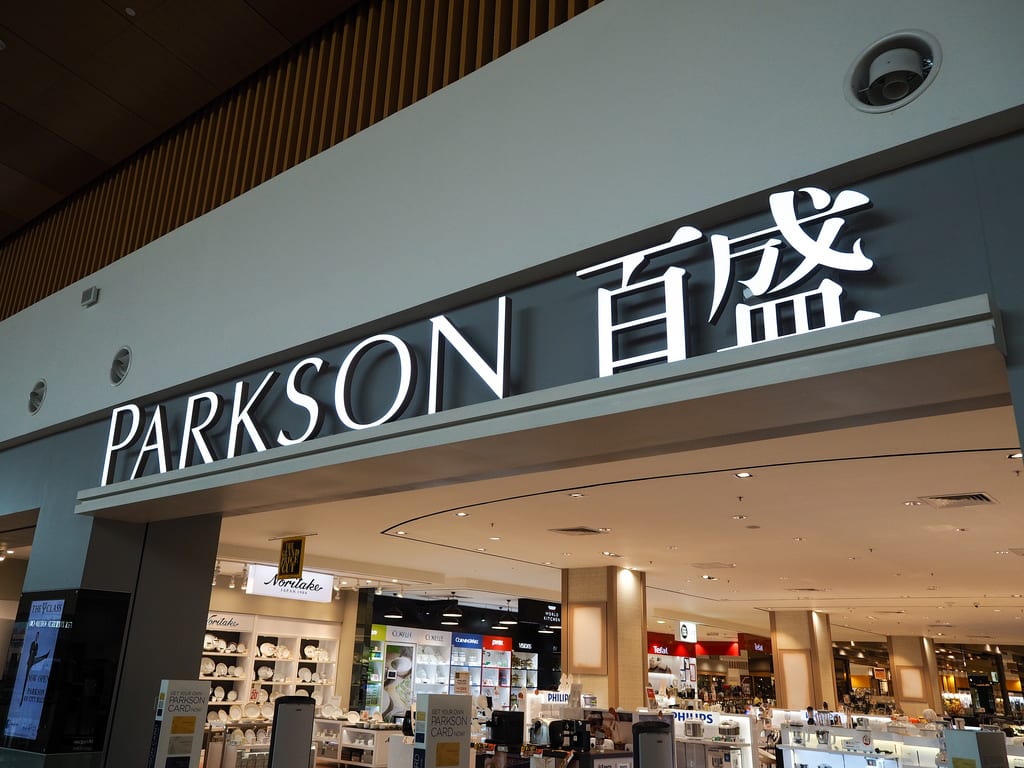
    Malaysian department store operator Parkson has closed its store in Puchong just 18 months after it opened.

    The closure follows its exit from Suria KLCC in downtown Kuala Lumpur after 20 years.

    A Parkson spokesperson said the Puchong store had not met sales expectations.

    “The retail market is very dynamic. Store openings and closures are part and parcel of our business. In Malaysia, shopping malls are mushrooming everywhere and the demographics are ever-changing. Understandably, we are always cautious and selective when choosing new store locations. However when sales do not meet expectations, we have to cut losses and move on,” the spokesman said.

    The Parkson Puchong store was located in M Square Mall at Millenia City. It opened in January last year, with 32,516sqm of retail space.

    While store closures appear to be an ongoing story within Parkson – it has shuttered multiple stores in Vietnam as well during the last two years – there are some positives to be taken from the company’s recent results. In the nine months to March 31, the company achieved sales growth above 5 percent – double the rate of Malaysia’s department-store sector, according to Malaysia Retailers Association data.

    Despite store closures, revenue in the March quarter rose by 2 percent year on year to RM788 million (US$187 million).

    Parkson currently operates 43 stores, one more than it had in 2015 but two fewer than in 2017.

  • JD increases stake in Tiki Vietnam

    JD increases stake in Tiki Vietnam

    Chinese online giant JD has become the largest shareholder in e-commerce platform Tiki Vietnam.

    JD has bought a 25.65-per-cent stake in the business, taking its shareholding past that of previous leading investor VNG Corporation, which holds 24.4-per-cent ownership in the platform. VNG has invested US$22.4 million in Tiki over the past two years.

    Tiki Vietnam has grown from an online bookstore to Vietnam’s second-largest e-commerce provider in terms of traffic, after rival Shopee.

    The firm is reportedly seeking a $100 million investment in its next funding round in order to boost its competitive edge.

  • Burberry Bespoke launches first counter at Takashimaya

    Burberry Bespoke launches first counter at Takashimaya

    Burberry Bespoke has launched its first standalone counter at Takashimaya.

    Located on Level 1 of the shopping mall, the counter is designed in the style of ‘an English bar set in a gentleman’s club’, with green-colored marble top and brass fixtures.

    There is a collection of nine fragrances created by renowned perfumer Francis Kurkdjian. Inspired by British landscapes, each perfume comes with varying concentrations.

    “For each fragrance, the concentration has been carefully chosen to offer customers the perfect blend possible. It allows the same fragrance to tell us a different translation of a story,” Francis said.

    Each bottle can be personalized with up to three monogrammed initials at the counter, and the buyer can also choose from 16 shades of leather ribbon.

  • AirAsia Wants Tools to Engage Customers Moving to Messaging Apps

    AirAsia Wants Tools to Engage Customers Moving to Messaging Apps

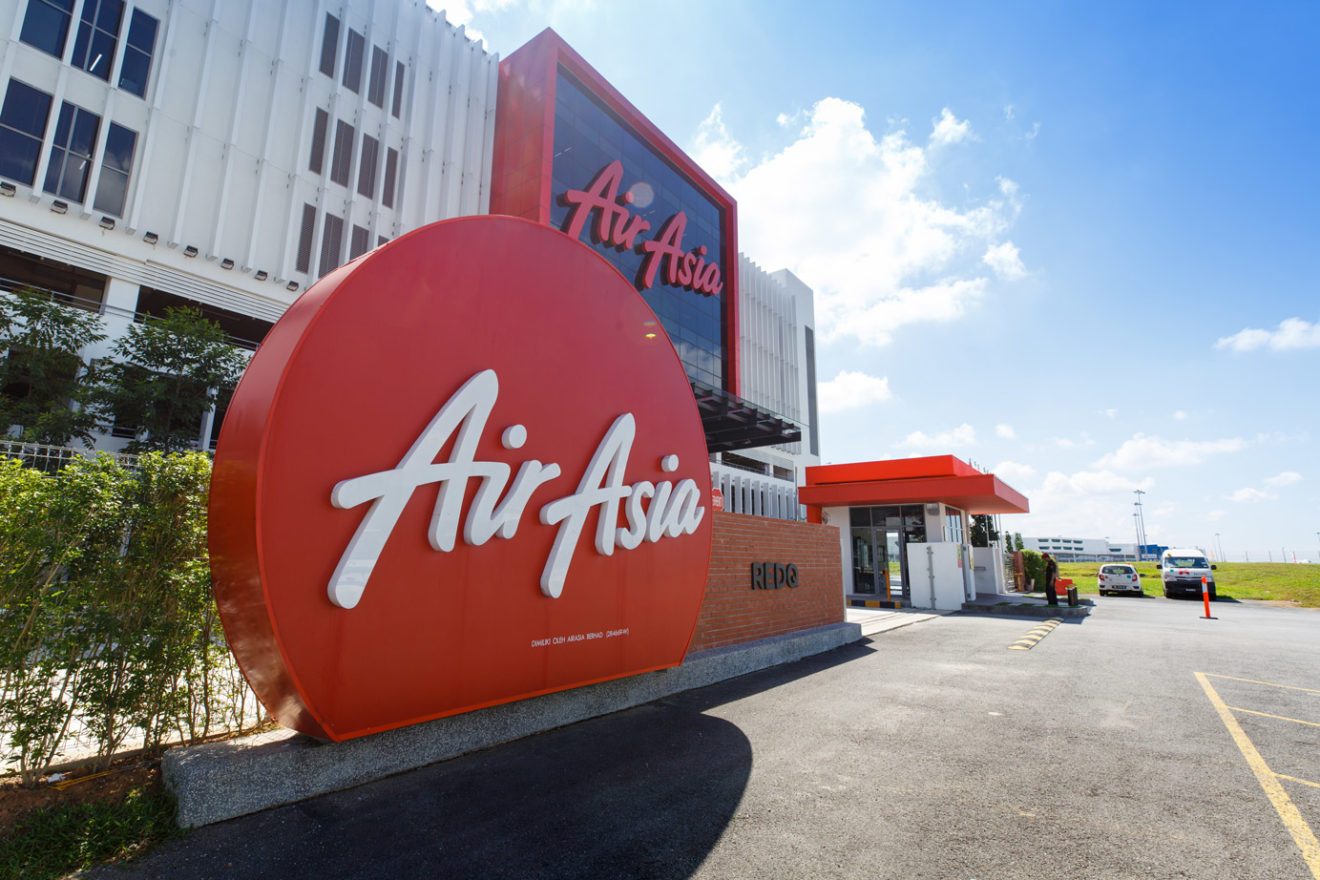
    Consumers now want to talk to businesses and find resolutions the way they talk to their friends and family, and this is pushing a big transition towards messaging channels, according to Adam Geneave, chief customer happiness officer for the low-cost Asian airline.

    The carrier added support for Tencent’s WeChat in China earlier this year and was seeing significant adoption for the platform, Geneave said in an interview. In fact, the messaging tool since had grown to become AirAsia’s biggest communication channel in the Chinese market, he noted.

    The airline’s engagement with customers through such channels played a key role in its business strategy as they enabled consumer queries to be addressed quickly, he said, and urged technology and other solutions providers to integrate messaging tools into their products.

    According to Geneave, AirAsia currently provides WeChat support via a plugin developed by Salesforce.com, which suite of products had been rolled out over the past year as part of the airline’s overhaul of its customer service infrastructure. These included Salesforce Sales Cloud, Marketing Cloud with Social Studio, Service Cloud, and Community Cloud.

    The deployment enabled AirAsia service agents across eight markets to access a unified view of customer cases from all communication channels, encompassing online, email, live chat, phone, and airport communications.

    With the transition into messaging evolving so rapidly, though, it has been difficult for the airliner and its technology partners to keep pace, Geneave said. For instance, support for Facebook’s WhatsApp still was lacking, he noted.

    “We have been very vocal in wanting such support, including for Line and KakaoTalk,” he said, noting that WhatsApp processed 65 billion messages a day worldwide and there were 1 billion active WeChat users. “The way people are interacting is changing.” He attributed AirAsia’s plans to close all its call centers this year in part as a response to this trend.

    The airline is estimated to fly 100 million passengers this year and 20 million of its service cases each year are facilitated on Salesforce platforms, which currently support more than 22,000 AirAsia employees in nine languages.

    The data that runs through these systems also allow the airline to deliver personalized experiences and facilitate better decision-making.

    Geneave explained that the different datasets were collated onto a single platform and managed at AirAsia’s command center. This was manned by duty managers who would track Salesforce dashboards to identify patterns that could affect its business and monitor tweets as well as other social media messages coming through on Social Studio.

    This provided valuable learnings about its customers and, with these insights, enabled his team to work on projects and improve processes and systems to further enhance customers’ engagement with AirAsia, he said.

    The ability to study the data and identify emerging trends also meant his team could be aware of service outages even before the IT team was alerted of it, he noted, adding that his team also tracked other relevant developments such as airports and other airlines that might and might not compete directly with AirAsia.

    The airline in January also introduced its artificial intelligence-powered (AI) chatbot, named AVA, which could handle eight languages including Bahasa Indonesia, Vietnamese, and Simplified Chinese.

    Geneave said the chatbot had been performing well and handled a significant chunk of queries coming through on its live chat. AVA also was deployed on the airline’s Facebook Messenger platform.

    Apart from operating on a strong knowledge base, he said the chatbot also continued to learn from conversations it had with customers. His team also trained it on a daily basis, he added.

    AVA’s deployment was critical to enable the airline to be more agile in the way it managed its customers, he said, noting that the chatbot could take on a significant volume and allow queries to be handled more quickly.

    Geneave also pointed to the emergence of AI and machine learning technologies as a crucial development as these would further enable AirAsia agents to react more quickly and identify trends that otherwise would have taken hours to analyse.

    Beyond customer services, too, it would give airlines the ability to save fuel – for example, by improving the way it scheduled crew rosters and managed its resources, he said.

  • South Koreans start boycotting Japanese retail goods

    South Koreans start boycotting Japanese retail goods

    As a South Korean consumer boycott of Japanese goods gains momentum, consumers are starting to share information on new and upcoming Japanese retailers coming to the country.

    The intention, reports Korea Bizwire, is to include the retail brands on the boycott list and hurt sales as soon as the stores open. Among them, Japanese brands GU and Muji are being mentioned online as possible targets.

    GU is Uniqlo’s sister brand, owned by Fast Retailing. It plans to open its second and third stores in Yongin, Gyeonggi Province and Seoul’s Times Square Mall by early next month.

    Netizens are posting articles that emphasize the relationship between Uniqlo and GU as well as FRL Korea, which currently operates the Uniqlo Korea business.

    Discord between the two countries dates back to Japan’s colonial occupation of the Korean Peninsula before and during the Second World War and controversy over forced labor and sexual slavery. It expanded into a diplomatic crisis last week when Japan threatened to throttle exports of materials essential to South Korean industries.

    Last weekend, thousands of protestors marched in Seoul, accusing Japan of an “economic invasion”. The boycott campaign against Japanese retailers has stemmed from there.

    South Korea’s Lotte Shopping and Japan’s Fast Retailing invested US$19.7 million to establish FRL Korea, owning 49 percent and 51 per cent of the company’s shares, respectively.

    That business partnership is being subject to public criticism for taking the lead in importing Japanese goods into South Korea after GU set up its flagship store at Jamsil’s Lotte World Mall and its second franchise at Lotte Mall in Yongin.

    Muji, one of the best-known Japanese brands on the boycott list, is planning to renovate its store in Times Square Mall later this month.

    The news is being shared on social media, and many netizens are already calling for a boycott of the new store.

    GU and Muji have no current plans to suspend expansion or shut down stores already in operation. However, experts who spoke to Korea Bizwire agree that the new stores won’t be able to attract customers through the ‘grand opening’ effect unless the boycott movement subsides.

  • Tens Of Thousands Losing Jobs As India’s Auto Crisis

    Tens Of Thousands Losing Jobs As India’s Auto Crisis

    Slumping sales of cars and motorcycles are triggering massive job cuts in India’s auto sector, with many companies forced to shut down factories for days and axe shifts, multiple sources said. The cull has been so extensive that one senior industry source told Reuters that initial estimates suggest that automakers, parts manufacturers and dealers have laid off about 350,000 workers since April.

    Within this previously unreported figure, car and motorcycle makers have laid off 15,000 and component manufacturers 100,000, with the remaining job losses at dealers, many of which have closed, the industry source said.

    Reuters was able to identify at least five companies that have recently cut or plan to cut hundreds of jobs, mainly from their temporary labor force.

    The downturn – regarded by industry executives as the worst suffered by the Indian auto industry – is posing a big challenge for Prime Minister Narendra Modi’s government as it begins its second term at a time when India’s jobless numbers are climbing.

    To revive the sector, auto executives plan to demand tax cuts and easier access to financing for both dealers and consumers at a meeting with officials from India’s finance ministry scheduled for Wednesday, the senior industry source said. The industry’s plight was highlighted by the Automotive Component Manufactures Association of India (ACMA), with the trade body’s director-general, Vinnie Mehta, saying the sector was experiencing a “recessionary phase”.

    The malaise has been spreading across much of the industry, both in terms of vehicle type and components as well as geographically in India’s manufacturing hubs.

    For example, Japanese motorcycle maker Yamaha Motor and auto components makers including France’s Valeo and Subros have laid off about 1,700 temporary workers in India after a slump in sales, sources told Reuters.

    Subros, which is part-owned by Japan’s Denso Corp and Suzuki Motor Corp, has laid off 800 workers. Indian parts maker Vee Gee Kaushiko has cut 500 people while Yamaha and Valeo last month reduced their workforces by 200 each, said several sources aware of the cuts.

    Meanwhile, automotive supplier Wheels India could cut its temporary workforce by as much as 800 and has started realigning its shifts, two of the sources said. The layoffs come as carmakers including Honda Motor Co, Tata Motors and Mahindra & Mahindra have implemented brief suspensions to production in recent weeks in the face of slow demand, separate sources said.

    The auto sector, which contributes more than 7% of India’s GDP, is facing one of its worst downturns.

    Passenger vehicle sales have dropped for nine straight months through July, with some automakers suffering year-on-year declines of more than 30 percent in recent months.

    Manpower is the only variable factor for companies and more workers will face the axe, said ACMA’s Mehta.

    Yamaha, Subros, Vee Gee Kaushiko and Wheels India did not respond to requests for comment.

    Valeo India said it is realigning for changing conditions and has trimmed its temporary workforce.

    The fallout from the auto slump could be huge. The sector employs more than 35 million people, directly and indirectly, accounting for nearly half of India’s manufacturing output.

    India’s jobless rate rose to 7.51% in July 2019 from 5.66% a year earlier, according to private data group CMIE. The CMIE data is more up-to-date than government figures and regarded in financial markets as more credible.

    At least 7% of temporary workers employed by 15 automakers in India have lost their jobs in recent months, said Vishnu Mathur, director-general at the Society of Indian Automobile Manufacturers (SIAM).

    “It is a conservative estimate based on our initial analysis,” he said.

    Maruti Suzuki, India’s biggest carmaker, cut its temporary workforce by 6% over the past six months.

    There is little sign of a revival.

    Tata Motors has had week-long shutdowns at four of its plants in the past two weeks, while Mahindra has said it had 5-13 days without production at various plants between April and June.

    A statement from Tata Motors said it has aligned production with demand and adjusted the shifts and temporary workers.

    Honda has stopped production of some car models at its plant in the northwestern state of Rajasthan since July 16 and is halting manufacturing entirely at its second plant in Greater Noida on the outskirts of Delhi for 15 days from July 26, two sources said.

    The company’s Indian business said that production management will be critical throughout the year and it is seeking to avoid stock build-up.