Tag: asia

  • Mercedes-Benz India To Hike Car Prices By 3% From August

    Mercedes-Benz India To Hike Car Prices By 3% From August

    Mercedes-Benz India has announced an increase in prices for select model range in India. With effect from August 2019, select Mercedes-Benz cars will see an upward revision in prices, up to 3 percent across the model range. While the company hasn’t shared the list of models that will see the price hike next month, the carmaker does mention that the current increase in customs duty on automotive parts and additional cess and excise duty on fuel has led to the price hike.

    Martin Schwenk, Managing Director & CEO, Mercedes-Benz India said, “As the leading luxury automobile maker in India, we have been relentlessly working on offering the best of products and industry benchmark customer service and ownership experience. However, a hike in customs duty on automotive parts, compounded by an increase in excise duty, and cess on fuel have had a significant impact on our bottom line. We were left with fewer options, but to make some necessary price adjustments to our product range at the moment to offset the impact of the rising input costs.”

    Last time the carmaker announced a price hike in India was back in September 2018, along with several other carmakers, after the value of the Indian Rupee reaches almost 73 compared to the US dollar.

    Recently, Mercedes-Benz India also reported a sales decline of 18.60 percent in the Indian market in the first half of the calendar year 2019. The company has sold 6561 units in the January-June period this year against 8061 units which were sold in the same period a year ago.

  • APAC Banks Face More Competition From Disruptors

    APAC Banks Face More Competition From Disruptors

    Technology and e-commerce disruptors such as Google, Alibaba and Apple are considered the biggest threat to banks, followed by payment players and Neo-banks, says Asia’s bankers.

    In markets where mobile payments have already taken root, banks and payment processors are battling tech companies on two fronts. They are working to retain their own retail card and current-account customers and attract new users to their apps and e-wallets. They also need to get and keep merchants on their side if they are to reap the economies of scale from a high-volume, low-margin sector, according to a study by The Economist Intelligence Unit commissioned by Swiss software firm Temenos.

    The survey, entitled «A Whole New World: How technology is driving the evolution of intelligent banking in Asia-Pacific», found that competition is intensifying between established retail banks and the technology and e-commerce disruptors that threaten to carve up the payment solutions market. Big tech giants Google, Alibaba and Apple are considered the biggest threat to banks (32 percent), followed by payment players such as PayPal, Ripple, and Alipay (28 percent) and Neo-banks such as Volt Bank, Varo Money and Monzo (25 percent).

    With these threats top of mind, 37 percent of Asia-Pacific bankers see mastering digital marketing and engagement as their top strategic priority by 2020.

    Asia-Pacific bankers are acutely aware of the race they find themselves in against technology giants that have the capital and scale to take market share from established players. Neo-banks are not far behind and have the flexibility to outmaneuver major banks on the margins. To remain relevant, retain customers and appeal to the evolving demands of younger generations, banks must master digital engagement, and quickly, said  Martin Frick, Managing Director of APAC at Temenos, in a media statement on Tuesday.

    To counter the possibility of losing customers to non-traditional banking competitors, some banks are following a “2 app” approach in order to counter non-traditional banking competitors. For example, Singapore’s DBS bank has its traditional banking phone app and PayLah!, an app that is used for transactions and lifestyle services. With over 1 million users for its PayLah! app, DBS DBS believes more users would come on board for its trusted data privacy and security measures.

    In contrast, big tech competition could struggle to ensure the trust of traditional bank users because of the high possibility of data leaks that have occurred in the past in the tech industry.

    One of the main issues being brought forward from the survey is how to regulate banking effectively across the APAC region. The survey highlighted the dangers of a deregulated banking environment with the dominance of the WeChat Pay and AliPay duopoly in China. Sopnendu Mohanty of the Monetary Authority of Singapore argues that a common data policy would be beneficial for the APAC region.

    A regional regulatory banking policy would be effective in creating a balanced and transparent intelligent banking industry, the survey highlights. The European Union’s General Data Protection Regulation could be an inspiration for how to push forward such regulatory oversight in the APAC region. These standards would be easier to implement in the digital economy than in the physical economy.

    Regulation across the region has developed disparately. In Australia, open banking is being driven by the government to increase competition within established regulatory frameworks. In other parts of Asia-Pacific, such as Singapore, open banking is primarily being driven by the players themselves propelled by their desire to remain competitive and resulting in a need for retrospective regulation. In China, tighter licensing and data protection rules are set to diminish Alipay and WeChat Pay’s duopoly across the broader region.

  • KFC invests millions in drive-thru-only restaurants

    KFC invests millions in drive-thru-only restaurants

    Quick service restaurant KFC announced last week it is investing $1.5 million in a “completely new concept for the fast-food industry” – a first of its kind drive-thru-only restaurant.

    Located in Newcastle, NSW, the store will feature five lanes and will utilize new technology to improve efficiency and speed in order from the on-site kitchen.

    Customers will be able to order and pay via the KFC app or website before arriving at the restaurant, and they will receive a four digit code to enter on a touchscreen receiver when they pull up to concept store, which sends the order to be prepared.

    Construction started in late June, and the restaurant is set to open in early November. The company said it potentially will roll out more drive-thru-only locations across Australia.

    “Drive-Thru Only is the latest example of KFC’s commitment to innovation, and to giving Aussies the most delicious and fresh chicken possible,” KFC Australia’s chief marketing officer Kristi Woolrych said.

    “We’re dedicated to continually building on our customer offering, that we’re always providing delicious and fresh meals, in the most convenient way to meet their busy lifestyles.”

    The store was conceptualized after KFC saw its e-commerce offering surge in popularity, with online ordering growing 100 per cent year on year for the last five years straight.

  • Country Manager, Levi Aron leaving Deliveroo

    Country Manager, Levi Aron leaving Deliveroo

    Deliveroo’s country manager in Australia, Levi Aron, is leaving the food delivery company after nearly four years at the helm of the business Down Under.

    Merten Wulfert, managing director of APAC and the Middle East, will take over the day-to-day management of the food delivery service in Australia, while the company looks for a new country manager.

    Greg Ellis, former CEO of REA Group and Scout24, will also become senior adviser to Deliveroo Australia, and is expected to aid the company’s next phase of growth and expansion.

    Aron joined Deliveroo in August 2015 as country manager for Australia, and launched Deliveroo in the market in November of the same year. Under his leadership, the food delivery platform has grown to work with 11,000 restaurants across 13 Australian cities. It has 8000 riders and reaches 11 million Australians.

    Deliveroo plans to take the company’s growth to the next level by focusing on increasing restaurant selection, rolling out more virtual brands for restaurants to increase selection for customers and sales for restaurants and providing the best service to customers and riders.

    In a statement announcing his departure on Friday, July 19, Aron said he plans to pursue external opportunities.

  • First Blockchain-Based Remittance in Philippines Completed

    First Blockchain-Based Remittance in Philippines Completed

    Major Philippines lender Union Bank has completed the first-ever blockchain-based remittance in the nation from OCBC in Singapore.

    The bank reportedly used an Ethereum-powered liquidity management system alongside its own proprietary i2i platform to complete the transaction from OCBC as a pilot. The funds were remitted to an account holder at Cantilan Bank in Surigao del Sur, a southeastern province.

    Chief fintech officer of the Monetary Authority of Singapore Sopnendu Mohantynoted that the city-state’s regulator had been exploring blockchain-based payments since 2016.

    We are excited to see this potential being realized, with cross-border payments that are cheaper, faster, and safer through the i2i network, he said.

    Rural banks have limited access to financial networks and a lag for remittances to be credited—five to seven days. Non-bank remittance counters offer faster execution but at a higher and sometimes unbearable cost for the relevant market segment.

    On the other hand, the crypto-based platform which the aforementioned banks used, Adhara, allows users to settle real-time payments at low cost and high efficiency by tokenizing assets and smart contracts on an Ethereum-based ledger.

  • China key driver for Hermes sales growth

    China key driver for Hermes sales growth

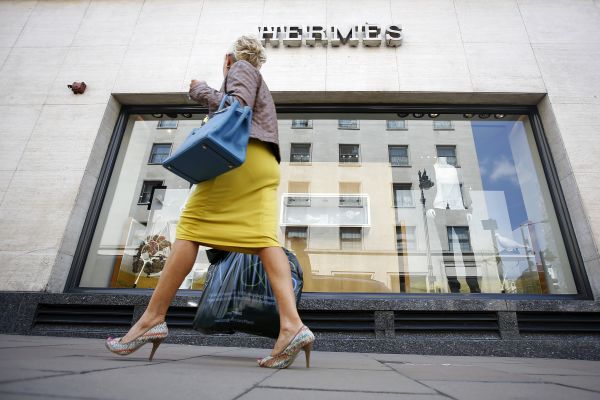
    Chinese consumers have been credited with driving a 14.7 per cent rise in Hermes’ sales in the June quarter.

    While the Sino-US trade war may have been impacting on many brands, subduing consumer confidence and generating uncertainty, the French luxury leather retailer seems immune to the tempest.

    Sales reached €1.67 billion, exceeding analysts forecasts, with first-half sales totalling €3.28 billion.

    “Hermes sales were very dynamic in the first half of 2019, in all regions and in all business lines,” said CEO Axel Dumas.

    The fastest-growing region, however, was Asia (excluding Japan) where sales soared 18.6 per cent in the second quarter, excluding currency effects. Hermes referred to “positive momentum in continental China and double-digit growth in all other countries in the area” in a statement.

    Eric du Halgouet, Hermes’ finance director, said sales in Hong Kong rose by a double-digit rate during the first half year, despite the impact of June’s pro-democracy demonstrations when two of the company’s stores had to close briefly.

    Sales in Japan rose by nearly 10 per cent.

    Sales of the company’s core business lines, including handbags, rose by 12.2 per cent, while ready-to-wear fashion and accessories achieved 16.9 per cent growth.

    Jewellery and homewares posted the highest growth, at 21 per cent.

    In the statement, Hermes said that despite growing economic, geopolitical and monetary uncertainties around the world, the group confirms an ambitious goal for revenue growth in the medium term, at constant exchange rates.

  • L’Occitane sales down in Hong Kong

    L’Occitane sales down in Hong Kong

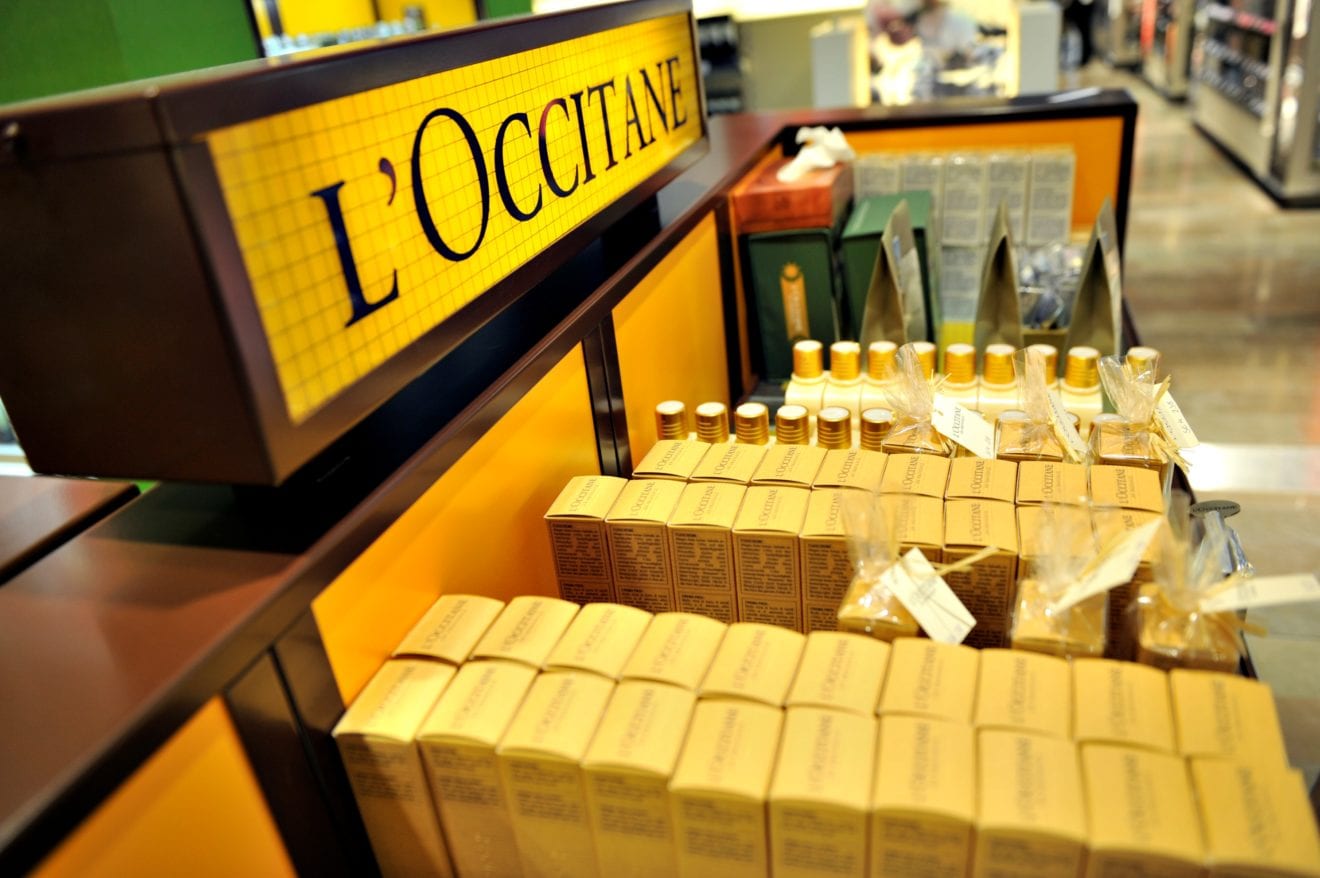
    L’Occitane sales plunged by nearly one fifth in Hong Kong and Macau during the June quarter.

    According to a stock exchange filing, the Hong Kong-listed retailer’s sales in the two territories, which includes Asian travel retail wholesale business, fell by 18.8 per cent on a currency-neutral basis. That contrasts with 9.3 per cent growth in the same quarter last year.

    On the mainland, L’Occitane sales rose by 8.3 per cent which, given the higher store count of 190 versus just 36 in Hong Kong and Macau, somewhat compensated. Sales in Japan were up by 6 per cent with sales stable in Taiwan, the other Asian market the company breaks out.

    Globally, group sales rose 18.8 per cent at reported rates and by 16.2 per cent at constant exchange rates.

    The company’s standout market was the UK which recorded a massive 253 per cent increase in sales, driven by the inclusion of the Elemis business in the quarter-on-quarter data, and recovery of the core L’Occitane en Provence brand there.

    L’Occitane sales globally reached €352.5 million. Elemis became a subsidiary of the group in March and its sales are consolidated from April.

    Globally, L’Occitane finished the quarter with 1575 stores, up a net three during the quarter.

  • Credit cards decline amid buy now pay later boom

    Credit cards decline amid buy now pay later boom

    In the twelve months to March 2019, almost half a million Australians got rid of their credit cards, with the total number of credit cards in the country falling to 14.6 million compared to the 15 million a year prior.

    This trend, highlighted in illion’s second Credit Card Nation report, suggests that Australia has surpassed ‘peak card’ and is now on a long-term downward trend in terms of credit card ownership.

    According to illion chief executive Simon Bligh, falling house prices have had the secondary effect of causing urban Australians to consolidate their financial position – including a focus on clearing unnecessary debt.

    “In the country, it’s a different story, and many parts of rural Australia have faced extenuating circumstances with their livelihoods heavily impacted by the drought,” Bligh said.

    “Farmers have needed support with their cash flow and have turned to credit cards.

    “The Australian economy is facing weak spending patterns, low wage growth, high levels of mortgage debt and low rates of saving.

    “While the number of credit cards overall is falling, those who have them are using them more often. Some consumers are struggling to manage their cash flow and are opting to drift into debt rather than pay off their bills immediately.”

    According to the report, card-based transactions are likely to continue to fall in volume due to the rise of alternative payment systems, such as direct debit, PayPal, BNPL, and payment through social platforms such as Facebook.

    According to Bligh, as credit lenders have adjusted their assessment criteria based on increased pressure from regulators, credit users who were already problematic are finding it more difficult to obtain further credit, while those who are low-risk and high-reward have been able to maintain strong credit ratings.

    “But here’s where it gets interesting – our research this time around shows that millennials are now the only group that have increased ownership of credit cards,” Bligh said.

    “Granted the numbers are small, and you may be asking why this is – especially as we know that young people under 25 pose the greatest risk of failing to pay back their debts and are almost six times more likely to be two months behind in their repayments than their parents.”

    There are two potential reasons for this, Bligh said. Firstly, millennial men are using both credit cards and buy now pay later services, and secondly that market forces may be pushing credit lenders to take on more risky endeavours to keep their numbers up as overall credit usage falls.

    “Our society is in the early stages of moving towards a buy now pay later approach for many low-cost items, with this coming at the cost of a general decline in the usage of credit cards,” Bligh said.

    “Young people are at the forefront of these changes and are using both at the moment – almost in equal measure.”

  • SM Group nearly ready to take over Harrison Plaza in Manila

    SM Group nearly ready to take over Harrison Plaza in Manila

    SM Group will assume ownership of Manila’s Harrison Plaza complex from the Martel family by next year, most likely refurbishing the seven-hectare property into a new mixed-used development.

    “The plans are being reviewed,” said a source from the firm. “It might be mixed use, but definitely there will be a mall.”

    “The area is a prime location and can be very well expanded into another sprawling mall with residential developments around it,” said SM Investments Corp chairman Jose Sio last year upon announcing the group’s plans to develop and manage the complex.

    Harrison Plaza has been a highly recognisable fixture in the city since its construction in 1976, and is often referred to as the Philippines’ first modern shopping centre. The complex has, however, fallen into decline in the years since its renovation in the early 1980s. It currently has around 200 shops.

    SM will buy out the plaza’s current owners from its contract with local government, which expires next year.

  • Flight Centre could see benefits from right-sizing

    Flight Centre could see benefits from right-sizing

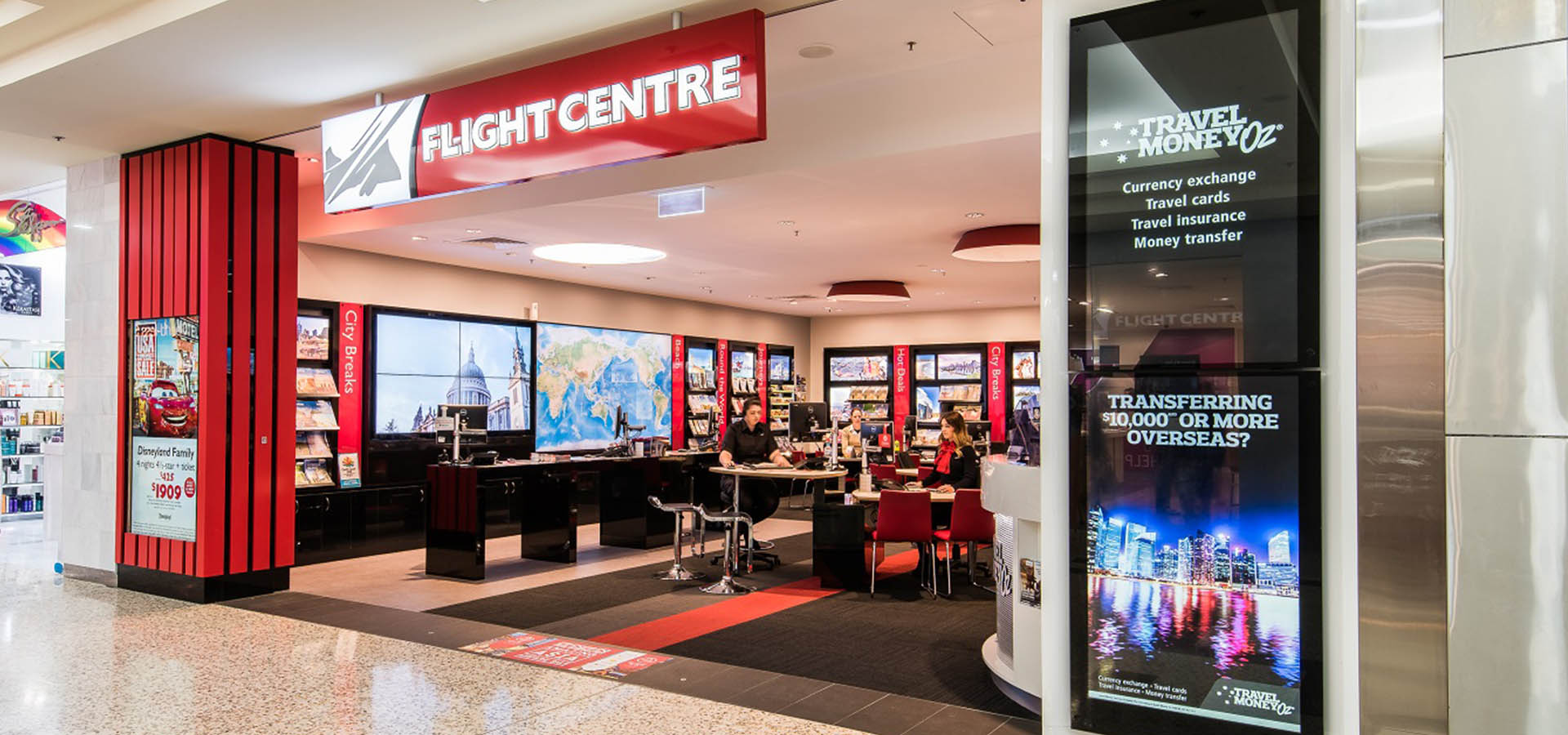
    Amid an industry-wide effort to right-size store networks, analysts at Citi have singled out Flight Centre as a business which could particularly benefit from such an effort.

    According to Citi analyst Bryan Raymond, approximately 10 per cent of Flight Centre’s store network could be culled – largely the result of a network consolidation which has led to many locations featuring several Flight Centre stores located closely together.

    “Following Flight Centre’s brand consolidation, 83 per cent of the ~950 store bricks-and-mortar network is now branded as Flight Centre. This has resulted in a high store density for a single brand, particularly as online penetration is rising,” Raymond said.

    “Our geospatial analysis of Flight Centre’s network has identified 259 Flight Centre branded stores that are located within 1km of another Flight Centre.

    “In our view, this creates an opportunity for store network consolidation to drive higher levels of profitability through lower rent and labour costs, and the expense of [total transaction value].”

    According to Raymond, this could drive an improvement of $8 million in profit before tax over two years.

    This could be particularly helpful for the brand as the Australian leisure bricks-and-mortar industry has seen a significant contraction in the last 12 to 18 months, falling from $106 million in FY18 to an estimated $29 million in FY19.

    A Flight Centre spokesperson told Inside Retail the travel retailer instead utilises this network to create more specialised business travel teams in CBD locations, and will offer “alternatives to Flight Centre” in shopping centres with multiple stores, such as the Universal Traveller brand.

    “We close some shops every year, relocate some others and, when good opportunities arise, we work closely with landlords to secure new sites and open new shops,” the spokesperson said.

    “Within Flight Centre brand in Australia, most of these openings in recent years have tended to be specialist shops and teams, rather than traditional Flight Centre shops.”

    However, many of the factors that led to the contraction of the leisure market are unlikely to continue into FY20 and FY21, Citi argues, with the leisure bricks-and-mortar industry forecasted to rebound by $5 million, to $34 million in FY20.

    Partially as a result of this market contraction, Flight Centre recently amended its guidance for the 2019 financial year from between $390 million and $420 million, to between $335 million and $360 million – roughly a 10 per cent decrease.

    “Our FY19 results will highlight the challenges we are addressing in Australia but will also underline two of our great strengths – our emergence as a world leader in corporate travel and our changing earnings profile,” Flight Centre managing director Graham Turner said.

    “While we expect Australian leisure results to improve as short-term operational improvement plans gain traction and as longer-term transformational strategies are implemented, we also expect these trends to continue.”

  • Anello opens at Changi, Singapore

    Anello opens at Changi, Singapore

    Japanese backpack and accessories brand Anello has opened its first Singapore store, at Jewel Changi.

    Targeting Singapore residents and visitors alike, the 625sqft store offers a wide selection of designs as well as exclusive and limited-edition collections specifically for the Singapore market.

    From July 23 to 29, to mark its opening, Anello Jewel Changi will be offering a 50-per-cent discount for any second item purchased

    Founded in 2015, Anello – which means “ring” in Italian – is known for its minimalist, chic designs.

    The brand now has stores in China, Myanmar, Philippines, Singapore, Taiwan, Thailand, and Vietnam.

  • Outlook for iOS update finally brings iCloud support

    Outlook for iOS update finally brings iCloud support

    Besides the usual monthly Office mobile updates that Microsoft reveals at the beginning of each month, the company releases additional updates that usually include bug fixes or minor improvements to already existing features.

    However, the latest Outlook for iOS update brings a completely new feature that will work with other apps like SharePoint, Google Drive, and Dropbox. Support for iCloud is now being added to Outlook on iOS devices, a long-overdue feature that will allow users to find specific files.

    Working alongside OneDrive, SharePoint, Google Drive, Dropbox and Box, Outlook for iOS lets those who own account on any of those services to easily find, attach or preview files, a more than welcome improvement that many people have been asked for months.

    The latest update adds some bug fixes and improvements as well, in addition to iCloud support, so expect your Outlook app to perform slightly better after the update.

  • Tim Draper and Alex Mashinsky’s Message for Singapore at World Blockchain Summit

    Tim Draper and Alex Mashinsky’s Message for Singapore at World Blockchain Summit

    In line with the Singapore Government’s strategy to adopt Blockchain technologies to revolutionize its Public and Private Sector, World Blockchain Summit opened to a packed house at the Marina Bay Sands on Thursday. For the second time in Singapore, World Blockchain Summit was strategically curated by Trescon to stimulate coherent innovation narratives around blockchain and cryptocurrencies. The summit featured keynotes from pioneers such as Tim Draper and Alex Mashinsky.

    Singapore’s conducive regulatory environment that is giving impetus to the rise in ICOs has made the small island nation an ideal launch pad for ICO startups.

    “This is the beginning of one of the most amazing sociological changes in the history of the world. We are in for one of the biggest transformation moments and it is happening in the next five to ten years. If you are issuing an ICO, this is your moment, this is the trillion and ten trillion dollar industries that you are going after.” said Tim Draper, in his powerful keynote message to Singapore.

    The 13th global edition of World Blockchain Summit was designed to address specific areas for discussions such as the legal and regulatory landscape in Asia, the outlook on blockchain and cryptocurrencies for 2020, and the role of banks in the new digital ecosystem, to name a few.

    One of the most important pioneers and innovators of modern business, Alex Mashinsky or more commonly known as the Godfather of VoIP, said in his keynote, “Cryptocurrencies, blockchain and decentralization is a revolution. It is the fourth system that is here to replace what’s not working for 7 billion people that cannot rise to the middle-class.”

    Future1Exchange, a digital crypto exchange based in Estonia, announced that Herbert Sim, widely referred to as ‘The Bitcoin Man’, about his induction into Future1Exchange as an investor and growth advisor.

    Home to the third-largest ICO market, Singapore is one of the most attractive destinations for fundraising. Trescon’s dedicated pitch competition for startups in the future-tech space, the Startup Grand Slam provided a platform for over 20 startups from around the world to pitch their ideas in front of global investors that included, Vanessa Koh, CTO of GBCI Ventures, Singapore; Herbert Sim, Founder of The Bitcoin Man, Singapore and Kevin Soltani, Founder & President of GIMA Group, California Blockchain Alliance, United States, among others. AgUnity, a global technology platform working towards connecting 1+ billion people without access to basic services was selected as winner of Startup Grand Slam by the jury members and GLBrain was selected as runner-up.

    World Blockchain Summit, Singapore edition was supported by Headline Sponsor, eBank Technology; Platinum Sponsor; Kanerika; Gold Sponsor, ACO, Bronze Partner, Organic Farm City; Pitch Partners, Capitual and Astrome

    Exhibitors included: Labuan IBFC; icte.io; Bitcrore; MDxBlocks; Beldex Exchange; AgUnity; F4map; indieOn; GLBrain; Fortunesoft IT Innovations; Minddeft


  • Skechers in Singapore opens Southeast Asia’s largest store yet

    Skechers in Singapore opens Southeast Asia’s largest store yet

    Skechers in Singapore has opened the brand’s largest experience store in Southeast Asia, at  Jewel Changi airport.

    The 5000sqft duplex store’s interior has been designed with an overall modern and sleek look, achieved through the use of bright lighting and cement panels.

    On opening day, more than 2500 shoppers and 250 invited guests were at the store to participate in activities including a fashion and dance showcase.

    “For the past 10 years, Skechers has been evolving and improving ourselves in terms of retail shopping,” said Vincent Leung, president of Skechers Southeast Asia.

    “Our clear direction is to create a wonderful customer shopping experience, with Brand Experience Stores in China, Hong Kong, and now our very first in Southeast Asia right here at Jewel Changi Airport.”

    A staircase between Levels 1 and 2 features a colourful wall mural designed by Diplomat, a group of young budding Singapore artists, adding energetic hip-hop and street-cred elements to the space.

    There is also a photo zone on Level 2, where visitors can take selfies with a fun photo-wall.

    Another highlight of the Skechers in Singapore store exclusive to Jewel is a customisation zone, where one can personalise selected Skechers shoes or apparel with embroidery or heat press.

    Guests of the opening were able to make their own customised pouch, choosing motifs to create a unique souvenir of the event.

  • Chatime creates Instagrammable 3D-painted walls in Japan stores

    Chatime creates Instagrammable 3D-painted walls in Japan stores

    Taiwanese shaken ice-tea brand Chatime has incorporated large areas of 3D-painted walls into the interior design of the tea shops in a move to target female customers who enjoy taking photos in its Japanese stores.

    The vivid 3D-painted walls were created by local Japanese designers for people to check in on social media.

    The themes and styles vary between outlets. The strategy, which follows the trend to take pictures with bubble tea for social check-ins, has seen customers spending more time queuing for a picture than for a cup of bubble tea.

    In a similar move, Chatime has launched limited products with visually appealing packages to encourage instagram posting.

    Chatime is now the fastest-growing brand in its category within the territory, with three stores opening every two months. Its shop in Shibuya 109 has regularly reported daily sales of 1000 cups. The firm’s shop in Osaka’s Shinsaibashi District has now become the brand’s top store globally in terms of sales, retailing more than 2000 cups per day.

    Chatimed expects to expand to 35 outlets within Japan by the end of this year.