Tag: asia

  • DB Schenker Awarded CEIV Pharma Certification in  Korea

    DB Schenker Awarded CEIV Pharma Certification in Korea

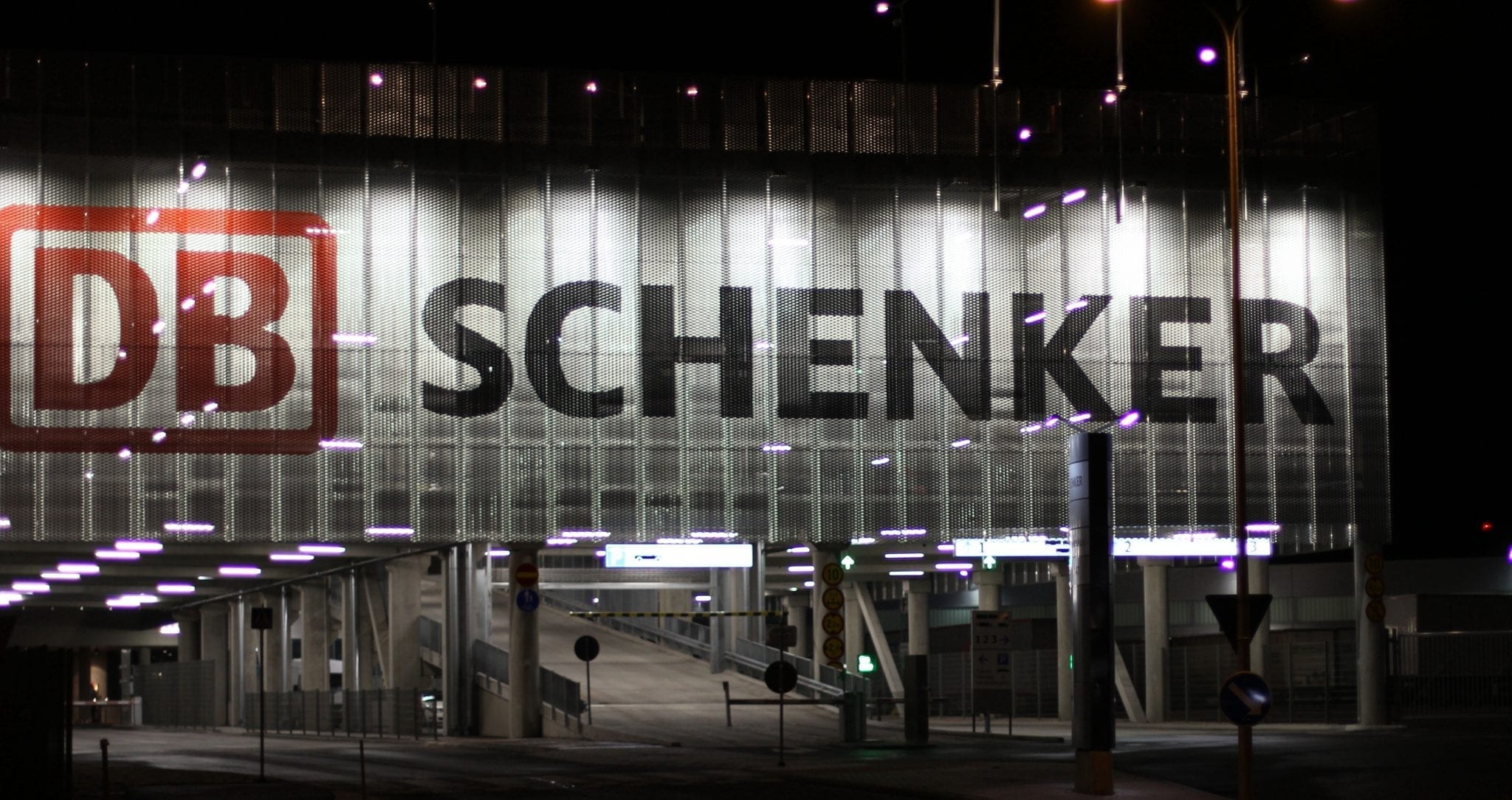
     In early June 2019, Schenker Korea received its CEIV Pharma Certification at the IATA Annual General Meeting and World Air Transport Summit in Seoul. The award ceremony on 3rd June, 2019 was organized by IATA Korea, and the certificate was presented by Mr. Alexandre de Juniac, Director General and CEO of IATA, to Schenker Korea CEO Dirk Lukat.

    The Center of Excellence for Independent Validators in Pharmaceutical Logistics, or CEIV Pharma, is an IATA program designed to address the pharmaceutical industry’s need for increased safety, security, compliance and efficiency, through the creation of a globally consistent pharmaceutical product-handling certification. The accreditation officially recognizes Schenker Korea – already an established leader in the transportation of pharmaceuticals and healthcare equipment – for its commitment to ensuring product integrity and the safety of healthcare products via air freight.

    In response to the growing demand for increased quality standards in the healthcare sector, Schenker Korea has taken a proactive stance in promoting the standardization of safety, security and compliance for pharmaceutical goods over the past year and a half.

    In January 2018, the Incheon Airport CEIV Pharma Committee was formed through the initiative of Schenker Korea by the Incheon International Airport Corporation (IIAC), with the objective of verifying end-to-end logistics processes, from the point of arrival of goods, up until the final delivery. This partnership required a strong collaboration between IIAC, Korean Airlines, Asiana Airlines, and DB Schenker. In July 2018, IATA conducted a two-week CEIV Pharma training with more than 30 representatives from the 4 participating organizations. The training was followed by a preliminary assessment in August 2018 held by IATA validators. From there, further preparation and validation ensued until the successful audit in May 2019.

    Hanmin Kim, Head of Air Freight Schenker Korea, proudly commented that the certification is an official recognition of Schenker Korea’s pharmaceutical transportation and operational capabilities. Schenker Korea will continue to actively engage in multiple services for the healthcare industry by providing the highest standards of service quality through its competent network of experts, contributing to the overall growth of the healthcare industry, globally and in Korea.

  • Google Maps update brings two new important features for commuters

    Google Maps update brings two new important features for commuters

    Google launched two new features for Maps, which will greatly help those using public transportation to commute every day. The new features, live traffic delays for buses and crowdedness predictions, will help Google Maps users to plan better for their transit ride.

    Since transit schedules aren’t always accurate due to real-time traffic conditions, Google has decided to launch live traffic delays for buses, a new tool that will feed Maps users with real-time info directly from local transit agencies.

    It will allow Google Maps users in select cities to see if their bus will be late, how long the delay will be, as well as more accurate travel times based on live traffic conditions along their route. The new feature will be visible on the map too, as you’ll be able to see exactly where the delays are on the map so you know what to expect before you get your bus.

    The second new features announced today is transit crowdedness predictions, which will allow Maps users to see how crowded their bus, train or subway is likely to be based on past rides. That way you’ll be able to take a more informed decision when taking a bus or waiting for the next one to arrive.

    Starting today, both new features will be available in Google Maps in nearly 200 cities around the globe on both Android and iOS.

  • DFS and Parfums Christian Dior launch DFS X Dior Summer Party pop ups

    DFS and Parfums Christian Dior launch DFS X Dior Summer Party pop ups

    International travel retailer DFS Group has partnered with Christian Dior Parfums on a pop-up concept to launch July 1 in Macau.

    The DFS x Dior Summer Party pop-up experience, celebrating the arrival of summer, kicks off in T Galleria by DFS, Macau through to July 31 before traveling across DFS’s global network of retail stores.

    The DFS x Dior Summer Party presents exclusive products designed for world travellers seeking to look and feel their best across all time zones.

    “We aspire to tantalize our traveling customers’ senses,” said DFS Group’s senior VP of beauty Christophe Marque, “and this beautiful pop-up is a perfect example of our commitment to combining exclusivity and entertainment with world-class brands.”

    “Parfums Christian Dior and DFS have always shared a powerful synergy when it comes to providing excitement and innovation to our customers,” said Dior Travel regional retail director Leonardo Ferracina. “Our exclusive Dior Summer Party pop-up for DFS is an indulgent start to an exciting and vibrant Summer, enriched with the signature of our Dior products.”

  • Volvo XC90 Armoured Vehicle Revealed

    Volvo XC90 Armoured Vehicle Revealed

    Volvo Cars takes a big step as a manufacturer of armoured vehicles with the XC90 Armoured car. The cars are designed and built to provide safe and comfortable travel with a high level of personal protection for the occupants. There is a growing global market for armoured vehicles at present, and a large number are manufactured with various protection ratings. Volvo already has received numerous requests over the past few years to develop an armoured XC90. The company has extensive experience of building police cars, fire engines and diverse special vehicles with high requirements in terms of function, driveability and safety. In fact, the first Volvo police car was delivered back in 1929.

    Work to develop a car with a VPAM VR8 protection rating commenced just over two years ago. A certified VPAM VR8 rating means the car has 360-degree ballistic resistance as well as explosive resistance. The armoured car is built on the Inscription version of the Volvo XC90 T6 AWD, which is manufactured at the Torslanda plant in Sweden. The size and nature of the model make it the most suitable vehicle in Volvo Cars’ product portfolio for armouring. From Torslanda, the car is sent to TRASCO Bremen GmbH in Germany, a company which has specialised for many years in building high-quality vehicles with high protection ratings.

    The high-strength steel armour is 10 millimetres thick, while the thickness of the glass can be up to 50 millimetres. The armour adds approximately 1,400 kilograms to the XC90, which brings the total weight of the car up to 4,490kg (including five occupants). To cope with the increased weight, the car is fitted with uprated suspension and new brakes. The Volvo XC90 Armoured (heavy) is available to order now and the first customer deliveries will be made at the end of 2019.

    Volvo Cars also develops another version of the armoured car (light). This means that Volvo Cars has a full portfolio of cars able to offer high personal protection. These cars are built on the XC60 T6 AWD Inscription or XC90 T6 AWD Inscription.

    These versions are geared towards different clientele than the XC90 Armoured (heavy). Users could be individuals or companies requiring a car with a higher level of protection due to a geographical risk or a heightened personal threat. A market for these types of protective vehicles also exists among security services, the police, the diplomatic corps and private individuals.

    The cars are intended for Latin America and Europe. After construction, they are retrofitted in Brazil, where there is considerable demand for these types of cars as well as substantial experience of building them. These vehicles are designed to offer lighter protection compared with the XC90 Armoured (heavy). Sales of these cars are scheduled to begin in the first half of 2020.

  • Apac consumers embracing shopping apps

    Apac consumers embracing shopping apps

    Users of shopping apps users are becoming increasingly purchase-happy in what is poised to be mobile commerce’s biggest year so far, according to a recent study by Liftoff.

    The report by the mobile-app marketing and retargeting platform also uncovers key insights into Asia Pacific (Apac) mobile shopping behaviour, suggesting the rise of “Mobile Window Shopping” in the region, which is underpinned by the low costs of installing shopping apps and acquiring new users.

    Analysing more than 90.9 billion ad impressions across four global zones, 13.6 million installs and 3.9 million registration and purchase events between April 2018 and April this year, the report identified several trends relevant to the Apac region.

    In Apac, users are clearly open to exploring retail apps, with registration rates skyrocketing and acquisition costs dropping year-on-year. But the data points to a surprising new trend – “Mobile Window Shopping”. While users install and register in retail apps with ease, the joint report shows a sizeable drop-off at the all-important purchase stage. Apac’s cost-per-first-purchase comes in at US$31.26 (up 13.3 per cent year-on-year), coupled with a low 10.1 per cent conversion rate.

    This could point to a larger retail trend: the demand for a more user-friendly shopping experience. While price tends to dominate purchasing decisions, factors such as having personal engagements with retailers and concerns on whether the retailers can capably fulfill orders are also seen as crucial by mobile shoppers.

    “For marketers looking to boost purchase rates, the key is to utilise the data they have, understand potential drop-off points and to segment and target properly,” said Adjust co-founder and CEO Christian Henschel. “Brands can then create and deliver the perfect user interaction strategies for their marketing initiatives. This personalisation is key to winning over fickle consumers and building long-term loyalty.”

    Southeast Asia’s largest country – Indonesia – presents a dynamic landscape for marketers operating in APAC; especially in terms of the number of users that can be acquired. However, turning those acquisitions into actual purchases will likely depend on how convenient the mobile app shopping experience is. The cost of an application installment is just US$1.65, but this is paired with somewhat meagre conversion rates. Another concern for marketers and retailers is that retention rates of shopping apps in Indonesia trail behind other markets studied in the region, the prime reasons being consumers having a low learning curve, lack of patience with the app onboarding process and failing to understand the long-term value of installing an app.

    “The shopping app market in Asia is growing dynamically and at an all-time-high, yet based on our findings, the number of purchases made through such apps are not as high as they could be; despite the general trend of consumers moving their browsing from store windows to the phones’ screens,” said, Liftoff VP marketing Dennis Mink.

    “Indonesia is a microcosm of the behaviors and concerns of the region’s shoppers. So, finding the right message and conveying it in the right context to the consumer can help remove these roadblocks, thereby improving retention and interest.”

  • Ford Says To Cut 12,000 Jobs In All Across Europe

    Ford Says To Cut 12,000 Jobs In All Across Europe

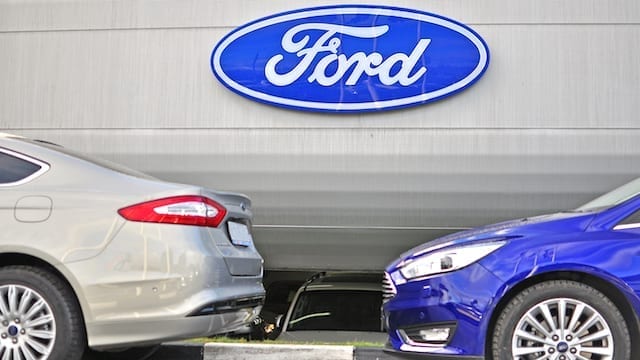
    US carmaker Ford said Thursday that it plans to slash a total of 12,000 jobs across Europe as part of a previously-announced restructuring, as it closes or sells six plants in Britain, France, Russia and Slovakia in 2019 and 2020.

    “Ford’s manufacturing footprint in Europe will be reduced to a proposed 17 facilities by the end of 2020, from 24 at the beginning of 2019,” the group said, adding that the job cuts — including 5,400 already announced in Germany and 1,700 in Wales — would come “primarily through voluntarily separation programmes”.

  • H&M to scale back store openings and focus on E-commerce

    H&M to scale back store openings and focus on E-commerce

    H&M says it will scale back its store-opening program in the year ahead, and reported strong sales in its stores this month.

    The company had already announced a 5 per cent increase in same-store sales in the second quarter; now it is estimating June’s growth at 12 per cent. It is also selling more stock at full price, lessening its reliance on discounting which had been necessary to shift an unusually high inventory during the last year.

    “Inventory increased by less than sales, the composition of inventory is better and markdowns are lower,” said CEO Karl-Johan Persson during an investor conference call. “We will see more improvements, it’s heading in the right direction.”

    As the company slows its rate of store openings, forecasting 130 now rather than the 175 flagged earlier, it will invest more on building up its e-commerce business.

    “We have decided in certain markets to hold back from new openings. We think rents are higher than they should be,” Persson said.

    Kate Ormrod, lead retail analyst at GlobalData, says the company’s results and Persson’s comments shows H&M remains on track with its transformation plan.

    “Efforts to strengthen its product ranges and availability are clearly resonating with shoppers, helping to drive full price sales and reduce markdowns. One sticking point for the first half remains profitability, with operating profit still down on the year, and margin falling from 7.3 per cent to 6.4 per cent. The true test of its strategy lies in the second half where tougher comparatives can be found – although with the retailer reporting a strong June, … the signs are encouraging.”

    She said that having been a laggard for so long in e-commerce, H&M’s investment continues apace as the retailer is still yet to fully harness the opportunities that lie within online.

    “While it now plans fewer store openings, minimising costs, the new strategy puts pressure on H&M’s existing stores and online operations to deliver.”

  • Vietjet Recognised as One of “Vietnam’s 50 Best Performing Companies in 2018”

    Vietjet Recognised as One of “Vietnam’s 50 Best Performing Companies in 2018”

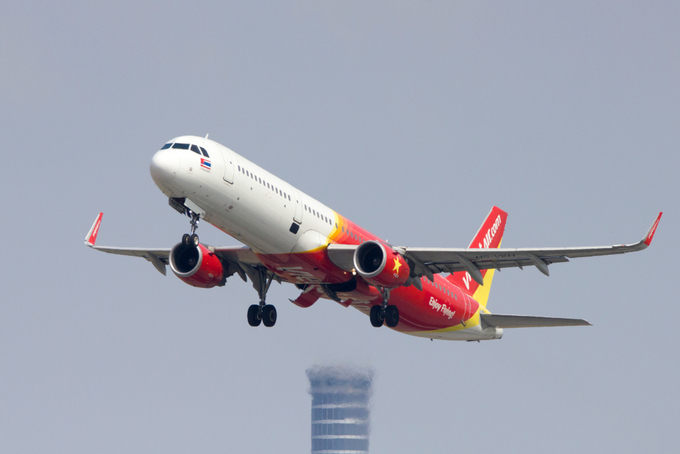
    Vietjet was recognised as one of the leading companies in “Vietnam’s 50 Best Performing Companies 2018”. Held in Ho Chi Minh City on 27 June 2019, the award ceremony celebrated the leading companies listed on Vietnam’s stock market for their significant contribution to the economy.

    The annual event was conducted by Nhip Cau Dau Tu Magazine (Investment Bridge Magazine) in partnership with Thien Viet Securities, with expert economic and business consultants from Harvard Business School. The awards take reference from world ranking charts such as Bloomberg Businessweek, Fortune and Forbes to recognise and award listed companies for their performance and business results between 2016 and 2018. Success is based on Revenue Growth Rate, Return on Equity (ROE) and Earnings per Share (EPS).

    Vietjet’s SR-CAGR (Compounded Annual Growth Rate) and ROE were at 39.24 per cent and 59.7 per cent, respectively. Market capitalisation reached 2.68 billion USD, making Vietjet one of the largest capitalised enterprises on the Vietnam Stock Market. Since its listing, Vietjet has been recognized as a representative for successful Vietnamese enterprises.

    The top 50 companies this year have a total market capitalisation of 98 billion USD, with 17 companies exceeding 1 billion USD. Enterprises in the top 50 also generated a total of 1,200,000 billion VND (approximately 51 billion USD) and 127,000 billion VND (approximately 5.5 billion USD) in profits, an increase of 52 per cent and 47 per cent compared to the same period in previous years. In the context of an unsustainable global economy due to political reasons, the performance of Vietnamese enterprises in 2018 showed the potential for strong development and sustainability from leading Vietnamese companies.

    Hundreds of influential business leaders, financial institutions, macroeconomic executives, prestigious domestic and foreign investors attended the award ceremony and also participated in talks concerning the Macroeconomic forecasts for 2019 to 2020, amongst other international and local business topics.

  • Walmart to relist Seiyu in global business revamp

    Walmart to relist Seiyu in global business revamp

    Walmart says it plans to relist its Seiyu retail business in Japan on the stock market, freeing capital to focus on its China and India business units.

    While the US retailer will retain a majority interest in Seiyu, it believes floating the unit will allow it to operate more independently.

    The move is part of a three-year business plan for Seiyu, part of a broader push to reshape Walmart’s international business.

    “As the parent loses the wherewithal to support low-performing overseas units, revamping those operations has become imperative,” observed Nikkei writer Kento Hirashima.

    Walmart had previously been tipped to sell the Japanese business unit, but has discarded that option.

    Seiyu also plans to expand its online grocery retail business and boost its range of fresh produce and prepared foods.

    Walmart forged an investment and operational alliance in 2002 before Walmart took full control six years later and Seiyu was delisted from the Tokyo Stock Exchange.

  • Apple offers tool for diabetics that integrates with its Health app

    Apple offers tool for diabetics that integrates with its Health app

    Apple has long been rumored to be working on a way for the Apple Watch to noninvasively monitor the blood glucose levels of its users. This reading is used by diabetics to determine how much insulin they need to take before eating and usually requires a finger stick to draw blood. Such a feature for Apple’s wearable could be years away. The company has been working on becoming a major presence in the health care industry, and CEO Tim Cook says that health care will be Apple’s “greatest contribution to mankind.” With that in mind, some Apple Stores have begun to sell a blood glucose reader (called a glucometer) that syncs with the iPhone, the Apple Watch and the Apple Health app.

    The One Drop glucometer, priced at $69.95, features an iPhone app and a separate Apple Watch app. The meter itself takes the data from the blood drawn by the diabetic and sends it to the One Drop app where it is integrated with Apple’s Health app. The latter will allow diabetics to see their blood glucose data and associated analytics. There is also a subscription service that delivers test strips to users of the device. Each test requires the insertion of one strip into the glucometer.

    “I believe that Apple’s perspective on consumerized, data-driven self-care is where the industry is going to be pulled to, versus the expensive, bureaucratic, not-data driven current healthcare system. Our ability to align ourselves with that, and help drive that story, is what we see as the benefit of working with Apple.”-Jeff Dachis, CEO One Drop. The One Drop app also comes with the option of purchasing additional coaching to help users manage their diabetes. Those purchasing the One Drop glucometer will receive one free year of coaching from a certified diabetes educator. And unlike most glucometers, One Drop looks like an expensive consumer electronic device. One Drop CEO, Jeff Dachis, said that the product was created to “create a sense of love and delight” when using the product. “We share a design philosophy (with Apple)” Dachis said. “We want our products and services to be beautiful so people like them. You don’t hear the word ‘beautiful’ often in the healthcare space.”

    Perhaps someday the Apple Watch will instantly give blood glucose readings to diabetics by tapping on the screen. But until then, a device like the One Drop glucometer can be purchased and used along with the Apple Health app to help diabetics better control their disease. There are also a number of iOS apps that will track blood glucose readings, but none come with the actual glucometer required to produce those readings.

    Apple’s health initiative currently revolves around its smartwatch. The Apple Watch Series 4 offers a heart rate monitor and an electrocardiogram (ECG) sensor. The latter looks for an abnormal heart rate that could be a sign of Atrial fibrillation or AFib. This condition can lead to blood clots, strokes, and death. The watch also has a fall detector that is automatically enabled for owners of the device aged 65 or older. If the owner of the watch falls, the watch senses this, taps the user’s wrist and sounds an alarm. The user can then use the watch to contact emergency services or dismiss the alarm. If the watch determines that the user is not moving after about a minute, it will call 911 itself and send a message to the watch owner’s emergency contacts; that message indicates that the user has suffered a hard fall and includes the location of the injured party. These features have already saved the lives of several Apple Watch wearers.

  • Apple Music grows to over 60 million monthly users worldwide

    Apple Music grows to over 60 million monthly users worldwide

    Apple Music and Spotify continue to compete for world domination, as both music streaming services claim they have many millions of subscribers. Up until now, Spotify was the supreme ruler with more than 100 million subscribers worldwide reported two months ago.

    Before that, Apple said it has amassed 56 million subscribers by December 2018. Six months later, the number didn’t increase as much as one would expect. French media (via Music Business Worldwide) reports Apple’s SVP of Services, Eddy Cue said the music platform exceeded 60 million users.

    We’re referring to them as users since Apple confirmed the number includes free trialists, so we’re not yet sure how many are actually paying for the service, although we do know they should probably be at least 56 million as Apple pointed out six months ago.

    With the latest improvements to its Music platform added in the latest iOS 13 version, such as time-synced lyrics, Apple hopes to bring even more subscribers under its umbrella in the coming months. It remains to be seen whether or not the pace at which Apple Music is adding new subscribers each month is too slow to beat Spotify for the world’s largest music streaming service title.

    It’s also worth mentioning that Apple Music has more subscribers in the US than Spotify and that the latter announced it reached more than 200 million monthly users back in April.

  • New Pokemon mobile game coming to Android and iOS this summer

    New Pokemon mobile game coming to Android and iOS this summer

    Many have tried to clone Pokemon GO massive financial success, but no AR (augmented reality) mobile games managed to get nowhere near Niantic’s smash hit in terms of revenue. The latest contender, Harry Potter: Wizards Unite made just 4% of the revenue Pokemon GO made on the first day.

    Well, it looks like we will soon have another Pokemon game coming to Android and iOS devices. Developer DeNA announced that Pokemon Masters will arrive on mobile platforms at some point this summer.

    This will be DeNA’s first Pokemon game, but the developer helped Nintendo launch games like Super Mario Run and Fire Emblem: Heroes. It’s also helping with the development of the upcoming Mario Kart Tour mobile game.

    Pokemon Masters takes place on the artificial island of Pasio where trainers are given control of a single Pokemon. You’ll be teaming up with other trainers to take down opponents in 3vs3 battles. The combat is based on cooldowns of your abilities and happens in real-time rather than turn-based.

    The game will probably be available for free but expect in-app purchases in that case. Check out the trailer released earlier today by developer DeNA to learn more about the upcoming game.

  • Regent No. 1 Retro-Styled Electric Motorcycle To Debut Next Year

    Regent No. 1 Retro-Styled Electric Motorcycle To Debut Next Year

    Sweden-based Regent Motorcycles is an electric motorcycle manufacturer that recently showcased the company’s first product – the retro-styled Regent No. 1 electric motorcycle. The production prototype was unveiled on May 10, 2019 at the MC Massan Swedish Motorcycle Fair, and encouraged by the response the Regent No. 1 received at that event, the company now intends to ramp up production for a commercial launch of the Regent No. 1 by May 2020. The bike is priced at 9,500 Euros (around ₹ 7.5 lakh) with a 10 per cent discount for the first 100 bikes and Regent is already accepting pre-orders on the company’s website.

    The Regent No. 1 is powered by a rear hub motor which can produced around 11 bhp of power upto 20 bhp, and has a top speed of 120 kmph. The battery is a 72 V and 80 Ah pack, offering 6 kWh capacity, and is said to offer a range of 150 km on a single charge. The bike weighs around 130 kg, and has a steel frame, standard telescopic fork and dual rear shocks featuring chromed out coilover springs. The 18-inch spoked wheels come standard with disc brakes with ABS and regenerative braking.

    Despite the retro-styling, the Regent No. 1 comes with a host of modern technology. The instrument panel is a digital touch screen infotainment system, and the bike includes built-in GPS as an anti-theft device which powers the geofencing feature. The price tag is a bit on the higher side, and Regent Motorcycles is actively looking for investors as well. If the Regent No. 1 gives any indication, the next range of electric motorcycles from Regent will be interesting to see what they offer, both in terms of technology and features.

  • MG Motor India Introduces Annual Maintenance Package For The Hector

    MG Motor India Introduces Annual Maintenance Package For The Hector

    The MG Hector has finally hit the showrooms. It’s the stepping stone for MG Motor in our market and the company is going the whole hog to ensure that the Hector doesn’t fail to appeal to prospective customers on any front. The car has been packaged really well and has upped the ante in its segment in more than one way. Besides being the first connected compact SUV it also packs in several segment-first features and is offered with multiple powertrains and gearbox options. And now MG Motor has come up with pretty reassuring after sales service plans as well.

    The company offers Five years unlimited kilometers warranty, Five years unlimited kilometers roadside assistance, Five labor free scheduled services and medical assistance via 24×7 pulse hub in case of an emergency are among the services which will be standard with the car. Other than these, the company has also introduced four annual maintenance service packages- Classic, Classic 360, Premium and Premium 360 for Hector customers. The service packs can be purchased at a premium of ₹ 8000 for the base Classic pack which will be applicable for five years. The Classic and Classic 360 provides additional scheduled maintenance plans for the Hector. The Premium and Premium 360 plans on the other hands also cover wear and tear of parts (excluding tyre, battery and accidental repair) along with scheduled maintenance plans.

    In addition to these services, MG Motor will also offer 60 percent assured resale value after three years of ownership if customers are willing to upgrade to a new model. The company is also planning to launch four new SUVs by 2021 including an electric SUV and a seven-seater version of the Hector. The after sales services and annual packages are expected to be standard across the range.

  • Bottega Veneta gets a new look in Singapore

    Bottega Veneta gets a new look in Singapore

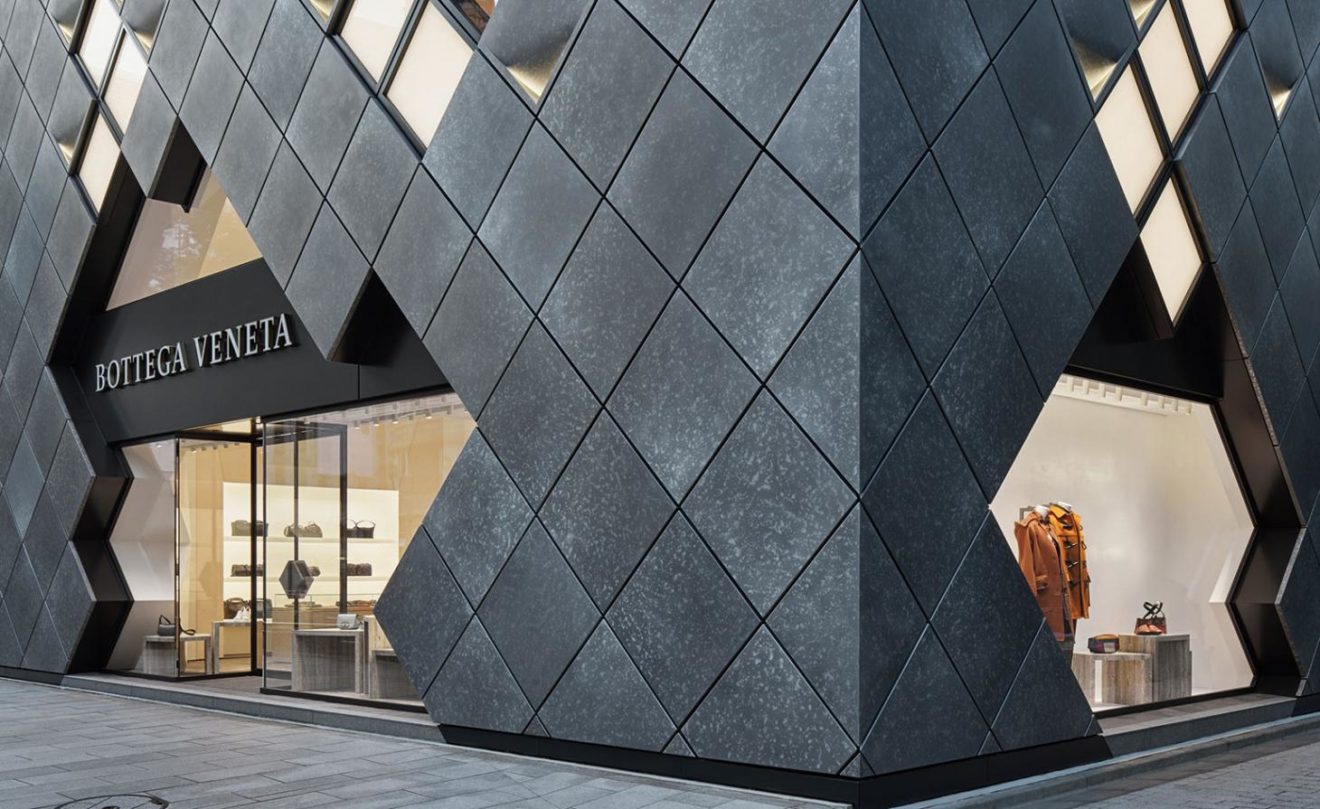
    The Bottega Veneta Singapore boutique at Ion Orchard has undergone a major makeover.

    The 255sqm store has been fully renovated in time to celebrate the arrival of the first Bottega Veneta collection designed by new creative director Daniel Lee.

    Under the theme of lightness, the space now has a new sense of openness and modernity. Walls are painted bright white or covered in plaster with a Roman ‘travertine texture’.

    Floors are covered with dark ivory limestone and pale carpets, while the ceiling is pure white.

    A pale-hued Antique Oak is used throughout the store to create linear shelves and glass-topped display tables.

    Opened in Singapore in 2009, with the first store at Takashimaya, Bottega Veneta now has four branches in the city.