Tag: asia

  • IMF head warns fintech could disrupt world’s financial system

    IMF head warns fintech could disrupt world’s financial system

    International Monetary Fund (IMF) Managing Director Christine Lagarde warned on Saturday that the increasing presence of technology giants using big data and artificial intelligence could cause a significant disruption to the world’s financial system.

    The rapid development of financial technology (fintech) has increased access to cheap payment and settlement systems for low-income households in emerging countries where traditional banking networks are scarce.

    But it has raised concern about the increasing dominance of big technology firms in mobile payments, which could force global policymakers to rethink the way they regulate the banking system and ensure financial settlements are executed safely.

    “A significant disruption to the financial landscape is likely to come from the big tech firms, who will use their enormous customer bases and deep pockets to offer financial products based on big data and artificial intelligence,” Lagarde told a symposium on financial technology held on the sidelines of the G20 finance leaders’ meeting in Fukuoka, southern Japan.

    While such innovation may help modernize financial markets, they could make the financial system vulnerable such by putting payment and settlement systems under the control of a handful of technology giants, she added.

    “This presents a unique systemic challenge to financial stability and efficiency, and one I hope we can touch on during the G20, and address in a cooperative and consistent fashion.”

    Lagarde said China presents an example of the trade-off between benefits and challenges posed by financial technology.

    “Over the last five years, technology growth in China has been extremely successful and allowed millions of new entrants to benefit from access to financial products and the creation of high-quality jobs,” she said. “But it has also led to two firms controlling more than 90% of the mobile payments market.”

    Addressing the pros and cons of financial innovation is among topics of debate at the two-day meeting of Group of 20 finance ministers and central bank heads that began on Saturday.
  • Lexus’ Safety System+ To Be Standard In All Cars In The US From 2020

    Lexus’ Safety System+ To Be Standard In All Cars In The US From 2020

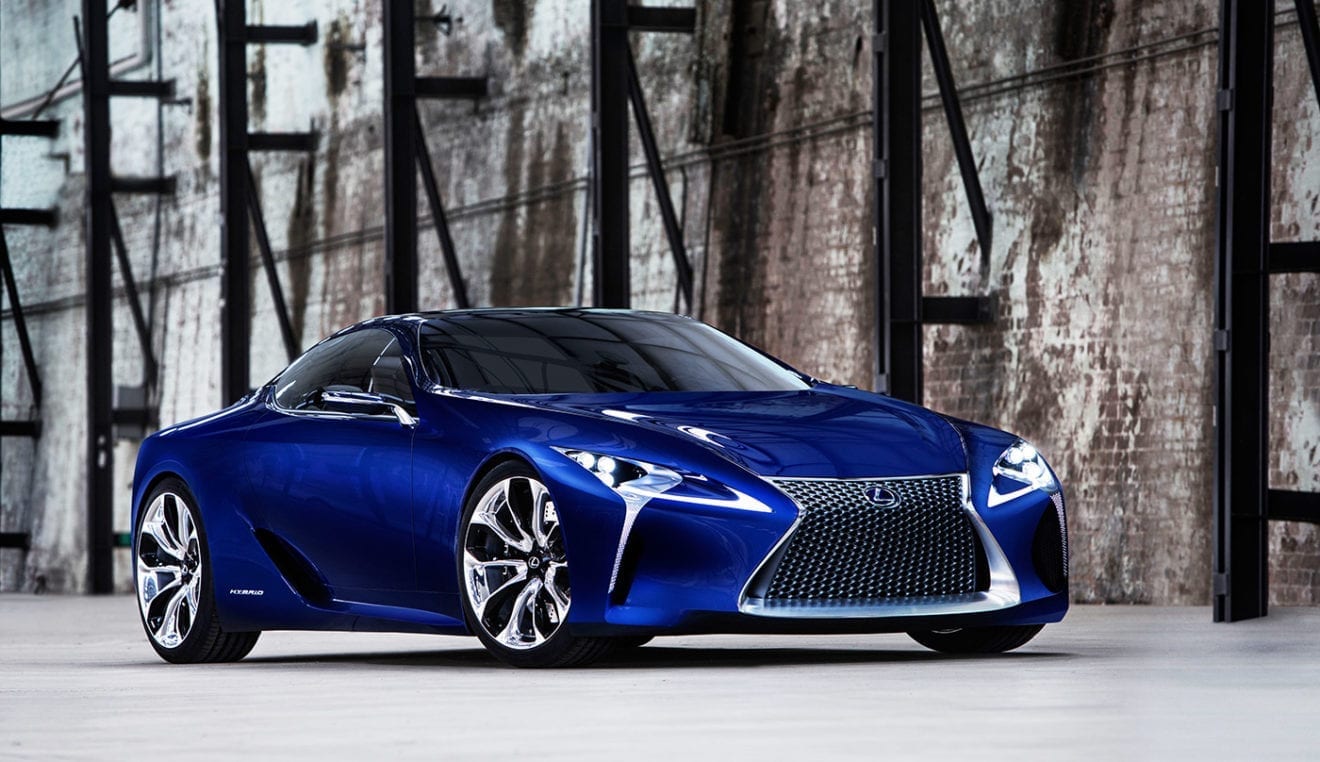
    Collisions that result in injury can often be caused by a delay in a driver’s recognition of the situation and his or her ability to react accordingly. In a move to help prevent such accidents before they happen, the Lexus Safety System+ will be a standard feature in all US Lexus vehicles starting with the 2020 model year. Designed to help protect drivers, passengers and pedestrians, the Lexus Safety System+ is an integrated suite of four advanced active safety packages anchored by automated pre-collision warning and braking.

    David Christ, group vice president and general manager, Lexus Division said, “We are working toward preventing crashes before they happen. That’s why we have developed some of the most advanced safety features on the road today, and now those systems will be standard equipment on every model we sell.”

    The Safety System+ will come with Pre-Collison System with Pedestrian Detection, a system which is engineered to help detect a preceding vehicle or a pedestrian in front of the Lexus under certain conditions. Should the system detect a pedestrian or a potential frontal collision, it’s designed to activate an audible and visual alert while automatically preparing Brake Assist for an increased braking response. If the driver does not break in time, the system is designed to automatically begin braking before impact and, in some cases, can even bring the vehicle to a stop.

    There will also be Lane departure alert which will utilize a high-resolution camera to monitor visible lane markings and determine the vehicle’s position within a lane. If an inadvertent lane departure or potential departure due to swaying is detected at speeds above 51 kmph, the system attempts to alert the driver with audio and visual warnings and steering wheel vibrations. Then there are the Intelligent High Beams which provide added visibility for the Lexus driver as well as other motorists, Intelligent High Beams offer added illumination to help keep the driver focused on the road. When the road ahead is clear, the system defaults to high-beam mode, then temporarily switches to low beams when it detects the headlamps or taillamps of vehicles ahead.

    And finally, there’s the dynamic radar cruise control which uses radar and camera technology to help maintain a preset speed and following distance from the vehicle ahead. If driving at highway speeds and the road ahead clears, the vehicle returns to its preset speed.

  • Vietnamese e-commerce platform Tiki set to raise US$100 million

    Vietnamese e-commerce platform Tiki set to raise US$100 million

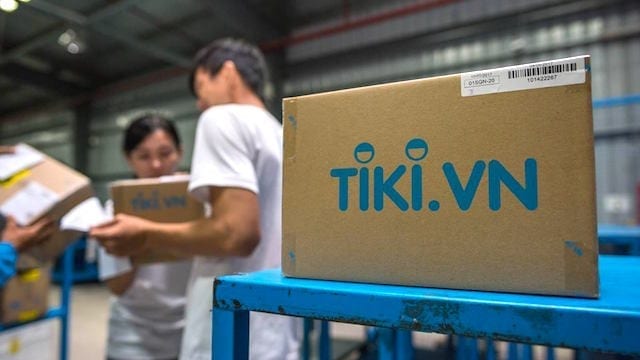
    Vietnamese e-commerce platform Tiki is raising another US$100 million from a Northstar Group-led funding round.

    The deal, was initially aiming for $75 million, but has been scaled up with support from Tiki’s current Korean backers, and may pull in as much as $150 million if certain KPIs are met.

    Tiki, which acquired competing platform Lazada last year, is now Vietnam’s second-largest e-commerce player after Shopee. It attracted a $44 million investment from Chinese industry partner JD early last year, and recently extended its national logistics operations in partnership with Vietnamese firm Unidepot.

    “Supply chain is a billion-dollar industry in Vietnam with surprisingly rapid growth,” said Tiki CEO Tran Thai Son. “However, Vietnam’s supply chain has not achieved its peak efficiency. For example, for an order worth 100,000 dong, logistics costs can be up to [25,000] dong.”

    Tiki’s infrastructural investments have seen the firm accumulate losses of around VND1 trillion ($43.3 million) over recent years.

  • Ooredoo Myanmar and friends launch digital literacy campaign

    Ooredoo Myanmar and friends launch digital literacy campaign

    Ooredoo Myanmar, Facebook and the GSMA have jointly launched a digital literacy campaign to raise awareness and increase adoption of mobile internet in Myanmar. The “Internet 1O1” (Internet One on One) campaign aims to inform and educate first time and new internet users, through one-on-one training at Ooredoo retail points and exclusive stores across the country, particularly in rural areas.

    According to GSMA Intelligence, around 21 Million people are using mobile internet in Myanmar out of a population of 54.1Million people.

    One of the biggest barriers to connectivity is a lack of digital literacy. This initiative aims to guide users through the multiple uses and benefits of the Internet and help them to do so responsibly. Ooredoo Myanmar, Facebook and the GSMA believe that digital literacy initiatives across the countrywill support internet users in Myanmar to use the internet responsibly and be empowered by it.

    Internet 1O1 will be available to consumers in Ooredoo retail stores where in-store promoters will walk consumers through internet education materials including: an easy-to-understand video explaining: Whatthe internet is, how to access it and how to stay safe online as well as showing the type of useful information consumers might need.

    Ooredoo Myanmar’s CEO Mr. Rajeev Sethi said “We are very proud to partner with industry leaders like Facebook and the GSMA in this initiative to educate the people of Myanmar on how to safely be connected, well informed and benefit from the internet. This is the first step of our “Learn with Internet to enrich your digital lives” CSR program. This initiative will enhance Myanmar citizen’s digital lives.”

  • Battle for HK Retail Customers Begins as HSBC Scraps Fee

    Battle for HK Retail Customers Begins as HSBC Scraps Fee

    As banks in Hong Kong brace for fierce competition from virtual banks, HSBC on Wednesday said it is scrapping minimum balance fees and associated charges.

    HSBC announced on Wednesday that it will scrap the minimum balance fee that applies to its 3 million customers in Hong Kong. From August 1, it will be the first bank in Hong Kong to go back to providing free basic banking services to retail customers who hold its passbook accounts, statement accounts, personal and advance integrated accounts and super ease accounts.

    To reinforce HSBC’s commitment as Hong Kong’s leading bank, it will also waive off associated charges faced by small depositors, like counter transaction fees.

    «More than 3 million retail banking customers will benefit from the removal of our below-balance fees, counter transaction fees and annual fees for most our personal savings accounts,» said Greg Hingston, HSBC’s head of retail banking and wealth management in Hong Kong, who was quoted in «South China Morning Post».

    Introduced 18 years ago, the monthly charge of HK$50 for small depositors with a passbook savings account and other basic accounts with a balance below HK$5,000 (US$640), is seen as a penalty on some of the bank’s most loyal customers.

    The move comes as the Hong Kong Monetary Authority (HKMA) issued eight virtual bank licenses since March. The virtual bank licensees, who operate solely online, are not allowed to charge a minimum balance fee to small depositors. Such zero-cost bank accounts would likely lure millions of customers away from banks who are still charging small depositors.

    The move is likely to be followed by other big lenders as they brace for the intense competition from the virtual banks due to come online later this year. Hang Seng Bank, a unit of HSBC, is also considering a plan to scrap its minimum-balance fee, according to a spokesperson.

    «Banks should draw up their fees structures in accordance with their own corporate strategies, service models and costs,» an HKMA spokesperson said. «However, the HKMA has constantly reminded banks to keep in mind the public’s expectations and needs in basic banking even while they run their banks based on business principles.»

  • Oriental Watch profit steady despite sales drop

    Oriental Watch profit steady despite sales drop

    Oriental Watch’s sales fell by 15.7 percent last year – but the company’s bottom line was only minimally affected, in part due to reduced rents.

    The Hong Kong-listed retailer says that while the number of mainland visitors to the territory recovered last calendar year, the China-US trade dispute had brought uncertainties to the market. Subdued consumer sentiment and currency rate fluctuations had also impacted on sales.

    Chairman Yeung Ming Biu said the company had focused on stringently controlling rent and other costs for the last five years. The group’s aggregate rental cost (excluding related property management fees) decreased by 4.1 percent in the year to March 31 to HK$162 million, accounting for 34 percent of the group’s overall operating expenses – almost one percentage point less than the previous year.

    That result despite relocating the company’s flagship store from 100 Queens Road, Central, to 50 Queens Road, in the heart of the city’s upscale boutiques.

    “The group believes that the change of location will further fuel the brand presence and the sales once it starts operation,” he said. “In addition, regular internal assessment on the performance of all retail stores and closedown of high-rent yet non-performing stores are also the group’s strategy for better resources allocation.”

    Group turnover last year was $2.437 billion, (US$312 million), with gross profit down just 0.7 percent to $603 million and gross profit margin up from 21 percent to 24.7 percent. Profit attributable to shareholders was $138 million, just 0.7 percent less than the prior year.

    Oriental Watch has 61 stores, 46 of them in Mainland China, 11 in Hong Kong, three in China and one in Macau.

    products and purchasing stock only when existing inventory depleted to a pre-agreed level. As at March 31, overall inventory was $824 million, down 17.7 percent from the $1.001 billion of a year earlier.

    “In parallel, the group has also continued to step up its efforts in adjusting and optimizing its brand portfolio, in order to stabilize the group’s overall sales performance and keep abreast of market trends. Oriental Watch will continue to maintain a lower inventory level for a better cash position and a sustainable business development in the future,” said Yeung Ming Biu.

  • Grab explores digital-only banking licence in Singapore

    Grab explores digital-only banking licence in Singapore

    Grab, Southeast Asia’s most valuable start-up, is exploring a move into Singapore banking as regulators in the Southeast Asian city-state consider allowing online-only banks, four people with knowledge of the process said.

    Grab is close to hiring a consultancy to advise it on its banking potential and is gearing up to apply for a digital-only bank licence in Singapore if the banking regulator decides to open up the sector, said the people, who declined to be identified as they were not authorised to speak to the media.

    Singapore-headquartered Grab’s interest in what would be its first foray into banking has not been reported before.

    When asked for a response, the Monetary Authority of Singapore (MAS) referred Reuters to its comments issued last month when it said it was studying the potential for allowing “digital-only banks with non-bank parentage” into its market.

    Hong Kong, Singapore’s fierce financial centre rival, began issuing licences earlier this year.

    A potential entry by Grab – backed by Japan’s SoftBank Group Corp – and others would mark the biggest shake-up in years for a market dominated by DBS Group Holdings Ltd, Oversea-Chinese Banking Corp and United Overseas Bank Ltd.

    The MAS could make a decision in the next couple of months on whether to admit digital-only banks with non-bank parentage, as well as the eligibility applicants, the people said.

    The city-state’s banking regulator is likely to issue only two to three licences in the first phase, two of the people said.

    The interest from Grab underscores how Asia’s non-banking firms are keen to challenge traditional banks by leveraging their technology and their user databases to offer banking services to retail customers and small businesses.

    Securing a digital banking licence in Singapore could help seven-year-old Grab to benefit from its existing data on transport movements, payment transactions and consumer behaviour, the people said.

    Last year, Grab teamed up with Japan’s Credit Saison Co Ltd to provide loans in Southeast Asia.

    Global fintech players are among other groups expected to seek licences in Singapore, with some of them looking to form joint ventures, said two of the people.

    Consultants said a digital banking licence could also appeal to Singapore Telecommunications Ltd (Singtel), which is expanding beyond its traditional carrier services into areas such as mobile payments and cybersecurity.

    “It is too premature to comment but having ventured into mobile financial services, we are open to exploring the feasibility of such an opportunity should it arise,” a Singtel spokeswoman said in an emailed response.

    In Hong Kong, affiliates of Alibaba Group Holding Ltd and Xiaomi Corp, and consortia led by Standard Chartered PLC and BOC Hong Kong Holdings Ltd were among those who won the digital-only banking licences.

    “In Hong Kong, the guidelines were quite precise in terms of what applicants had to prove in order to get a virtual banking licence, more so than in Europe,” said Dan Jones, APAC partner at consultancy Capco Digital.

    “It will be interesting to see whether MAS goes down a similar route to Hong Kong … so that the only people who can apply are established companies, rather than literal start ups.”

    As in Hong Kong, online-only banks in Singapore are also expected to launch by offering services such as savings accounts, personal loans and travel insurance, two of the people said.

  • Indonesian e-commerce site Tokopedia generates record sales

    Indonesian e-commerce site Tokopedia generates record sales

    Tokopedia, an Indonesian e-commerce site backed by SoftBank and Alibaba, said on Wednesday it generated a record $1.3 billion in gross merchandise volume (GMV) during Ramadan sale, amid soaring demand for online retail.

    The company said its biggest sales, recorded on May 17, resulted in a total transaction value that was higher than combined sales from the first six years.

    “Those transactions are happening across 97% of sub-districts in Indonesia and involved 5.9 million sellers,” said Tokopedia founder and CEO William Tanuwijaya.

    The start-up secured $1.1 billion in a funding round in December, led by Japan’s SoftBank Group Vision Fund and Chinese e-commerce giant Alibaba Group Holding Ltd. Sources say Tokopedia is valued at $7 billion.

    Shopping for clothes and gifts during the holy month of Ramadan is a significant part of the culture for Indonesia – the world’s largest Muslim-majority country.

    The Southeast Asian nation of over 260 million people is seen among the most promising global e-commerce markets, buoyed by a younger generation shifting their preference to online shopping.

    The Indonesian internet economy reached $27 billion last year and is poised to grow to $100 billion by 2025, according to Google-Temasek 2018 study.

    However, its logistical challenges are massive. The country’s 17,000 islands are sprinkled across an area bigger than the European Union, with logistical costs swallowing up around a quarter of Indonesia’s gross domestic product.

    Tokopedia’s Ramadan sale success reflects that e-commerce retailers are trying to overcome difficulties faster than expected amid higher usage of smartphones.

    Tanuwijaya told reporters that Tokopedia, which does not have its own inventory, was experimenting with artificial intelligence to predict demand and store stock in advance in partnership with warehouse operators.

    Rivals Bukalapak and Shoppee have not made their Ramadan sales public.

  • Blockchain Platform Zilliqa Partners Singapore Payments Startup

    Blockchain Platform Zilliqa Partners Singapore Payments Startup

    The partnership will enable Xfers to use Zilliqa’s smart contract functionalities and bring about new innovations to its suite of enterprise solutions.

    Blockchain technology firm Zilliqa is partnering Singapore-based fintech startup Xfers to explore the use of payment solutions powered by distributed ledger technology, the company announced at its Zilliqa Day event on Tuesday, which marked its second anniversary.

    The partnership will allow Xfers to benefit from Zilliqa’s SmartContracts infrastructure, bringing efficiencies in cost, transparency and scalability to its platform, which has over 500,000 users in Southeast Asia, the firm said. Working with Zilliqa will bring about new innovations to Xfers’ suite of enterprise solutions, which includes support for payments, disbursements, regulatory compliance, a built-in digital wallet, and more, the firm added.

    Xfers received an e-wallet license from the Monetary Authority of Singapore (MAS) in March, joining EZ-Link Card, Nets CashCard, Nets FlashPay, and CapitaVoucher as MAS-approved Widely Accepted Stored Value Facility (WASVF) providers.

    The license allows Xfers to hold money on behalf of its users, and gives it an edge over other fintech startups, as user deposits are backed by a bank, which guarantees each dollar it holds.

    Launched in 2015, Xfers processed over $260 million in payments in 2018. It is backed by 500 Startups, Golden Gate Ventures and Facebook co-founder Eduardo Saverin.

    Zilliqa, headquartered in London and Singapore, is a public blockchain platform known for use of sharding as an on-chain solution to preserve decentralization and enable greater scalability. Its blockchain is able to process 2,828 transactions per second.

  • BMW X7 And BMW 7 Series Facelift Launch Date Revealed

    BMW X7 And BMW 7 Series Facelift Launch Date Revealed

    BMW has announced that it will be launching the new 7 Series facelift and the all-new X7 SUV in India on July 25, 2019. Talking about the new 7 Series facelift, the most apparent of all the design changes is the massive kidney grille which is 40 percent larger than the one on the outgoing model. The headlights still look sleek and go well with the long bonnet which now looks more sculpted and has even gained muscle along with the fenders. The profile looks almost similar to the outgoing model and there have been subtle changes in the design at the rear.

    The new BMW 7 Series will also get a range of engine options including a new 6.0-liter, V12 motor which churns out 592 bhp and 850 Nm of peak torque and will make its way under the hood of the top-end M760 variant. Then there is the 4.4-liter, V8 motor which produces 516 bhp (up 78 bhp) and 750 Nm of peak torque (100 Nm up) and propels the car to 100 kmph in 3.9 seconds. Finally, the most in-demand of the lot will be the 740L which will now be a plug-in hybrid variant. It will get the same 3.0-liter, in-line six-cylinder engine which produces 276 bhp and 450 Nm of peak torque but will be coupled with an electric motor which will add 111 horses more taking the combined power output to 384 bhp.

    The BMW X7 is an all-new model and it will be the new flagship SUV for BMW, positioned above the X5. The BMW X7 is based on the CLAR platform which also underpins its sedan counterpart- the 7 Series and several other BMW models like the 5 Series and new generation X3. BMW is also developing the next-generation X5 on the same platform. Visually, the new X7 takes design quotient a notch higher with that massive kidney grille, slim LED headlamps and muscular bumper with wheel arches.

    Petrol engine options on the 2019 BMW X7 include the 3.0-liter, in-line six-cylinder petrol with 335 bhp and a 4.4-liter, twin-turbo V8 petrol with 456 bhp. There will also be the 3.0-liter six-cylinder diesel with 256 bhp, along with a more powerful 400 bhp version. A plug-in hybrid version is also said to be in the works, while an M badged model is the one we look forward to. All engines use the 8-speed automatic transmission and get all-wheel drive as standard. The system does come with the option to send power only to the rear wheels, while you get BMW’s Dynamic Handling Package and the Off-Road Package. Upon launch, the BMW X7 will be going up against the Mercedes-Benz GLS, Range Rover Sport and the Audi Q7.

  • Swift Calls for Collaboration on Cross-Border Payments

    Swift Calls for Collaboration on Cross-Border Payments

    Cross-border payments challenges should not be solved with closed loop systems, global payments network Swift said in a call to the payments community, including market infrastructures, banks and fintechs.

    Its white paper, Payments: Looking to the Future,» lays out the financial services firm’s vision of cross-border payments as one that is «seamless and convenient as domestic ones: instant, accessible, ubiquitous, saying the increase in cross-border flows, new technology enabling improvements, and end-customers demanding a better customer experience as changes that are shaping the global payments industry.

    Innovations in domestic retail payments have transformed entire markets, and facilitating the exchange of value beyond tightly knit domestic, single-currency communities is inherently more complex for banks, the paper noted.

    Cooperation by all players in the community is important, because the openness and universality of the envisioned system are unique; the more widely adopted the convention for moving value, the easier the circulation of value – and the more the convention will be used. Banks are key in this, Swift said, asking for the widespread adoption of its global payments innovation (GPI) service.

    According to Swift, API technologies supporting open, agile architectures are supporting the revolution in international payments as they allow fintechs to offer value-add services and banks to differentiate themselves by layering services and products.

    Payments are not an end in themselves – they exist to enable investment, trade and commerce, Swift said.

    Swift launched its GPI service in 2017 to increase the speed, transparency and tracking of cross-border payments. It currently remains optional for banks but its ambition is to create a new standard in cross-border payments, and said it expects it to be the universal standard by 2020.

    In January, it accounted for 55 percent of cross-border payment instructions carried on the network, and about $300 billion in transfers daily.

  • Tencent launches first overseas video streaming in Thailand

    Tencent launches first overseas video streaming in Thailand

    Chinese tech giant Tencent Holdings Ltd launched its first overseas video streaming service in Thailand on Friday, as it ramps up its presence outside China.

    Tencent is diversifying from its core Chinese gaming business, which has been beset by regulatory problems, pushing revenue growth to its slowest-ever in the first quarter.

    Tencent’s existing Thai user base made the country a good first target for its push into Southeast Asia, said Jeff Han, Senior Vice President of Tencent Penguin Pictures, which produces original content for the streaming business.

    “This is the market we need to first enter to try to see whether an overseas launch could be a success for us, so we can continue the challenge,” Han told reporters in a group interview in Bangkok.

    “We have our priority markets… the Chinese-speaking markets, which will be more receptive to our offerings,” he said.

    In Thailand, Tencent Video will be called WeTV and feature original Chinese content from Tencent Penguin Pictures with Thai dubbing, and content created with local partners, Han said.

    He declined to comment how much the company was investing overseas.

    WeTV adds to Tencent’s music streaming service JOOX and the mobile version of PUBG games in Thailand.

    Tencent’s video streaming subscriptions increased 43% in the first quarter of 2019 on an annual basis, contributing to a growth in digital content revenue, according to its latest results.

    Tencent Video in China claims over 89 million subscribers and more than 200 million daily active users.

  • Tokopedia enters wedding industry, buying Bridestory

    Tokopedia enters wedding industry, buying Bridestory

    Indonesian e-commerce platform Tokopedia has acquired local wedding-service marketplace Bridestory, which allows users to plan their big day on their smartphones.

    Bridestory targets the Southeast Asian wedding market, connecting couples with venues, organizers and vendors/service providers in the wedding industry. It has reportedly connected more than 3.5 million customers with at least 27,000 wedding vendors annually.

    “It all started with a web application,” said Bridestory CEO Kevin Mintaraga, “then we slowly saw the change in behavior as people became more mobile-centric. We also wanted to help brides to plan their wedding anywhere and anytime with their smartphone”.

    The Tokopedia acquisition includes Bridestory’s new service, Parent story, which help parents and expecting parents connect with age-specific activity providers for their kids.

    Tokopedia has stated that the site will continue to operate independently, while Kevin Mintaraga will join Tokopedia’s management in a VP role.

  • Apple and Google are the top two most valuable brands in wireless tech

    Apple and Google are the top two most valuable brands in wireless tech

    Quick. Name the most valuable brand name in the world. Apple? nope. Google? That answer is so 2018. According to the 2019 BrandZ Top 100 Most Valuable Global Brands rankings computed by WPP and Kantar, Amazon is the most valuable brand with a value of $315 billion. Since the report considers Amazon to be a retailer, Apple is the leader among tech brands just edging out Google with valuations of $309.5 billion and $309 billion respectively. Google was the most valuable overall brand last year.

    Besides Apple and Google, other wireless giants in the top ten include Microsoft (#4, valued at $251.2 billion), Facebook (#6, $159 billion), and AT&T (#10, $108 billion). The value of Microsoft’s brand rose 25% from last year while more modest gains were seen for Apple (+3%) and Google (+2%). The value of brands in the tech sector rose 4% on an annual basis while telecom providers saw their brands increase by 1%.

    Looking at the remaining names on the list, those with a connection to the wireless industry include Verizon (#11), Xfinity (#20), T-Mobile (#25), China Mobile (#27),  Intel (#36), Samsung (#38), YouTube (#39), Instagram (#44), Adobe (#45), Huawei (#47), Vodafone (#49), LinkedIn (#58), Xiaomi (#74) and HP (#93).

    Xiaomi made the Top 100 for the first time at number 74. The brand is estimated to be worth $19.8 billion. Among the fastest rising brands, Instagram led everyone with a 95% year-over-year increase that took the valuation of the Instagram name to $28.2 billion. Adobe (+57% to $27.9 billion) and LinkedIn (+46% to $22.8 billion) also were among the brands having the largest increase in value from 2018 to 2019.

  • Globe Telecom launches SE Asia’s first 5G broadband service

    Globe Telecom launches SE Asia’s first 5G broadband service

    Philippines’ Globe Telecom Inc on Thursday launched Southeast Asia’s first 5G broadband service, with embattled Huawei Technologies Co Ltd providing the equipment, a win for the Chinese firm despite cybersecurity worries from Western nations.

    The telecoms firm aims to offer high-speed internet to tens of thousands of homes and offices in key urban centres as part of its $1.2 billion capital spending this year, Alberto de Larrazabal, Globe’s chief commercial officer, told reporters.

    Globe would use Huawei’s equipment like radios and modems to deliver 5G quality broadband internet, he added. Huawei and Finland’s Nokia were Globe’s equipment providers for its 4G service.

    The United States had warned that next-generation 5G equipment, which some telecoms experts see as more vulnerable to attack than previous technology, could be exploited by the Chinese government for spying if supplied by Huawei, which the company denies.

    Washington, a treaty ally of Manila, had persuaded governments and telecoms operators to shun Huawei, the world’s largest maker of telecommunications equipment.

    Globe hired independent firms “to ensure that our security protocols are up to date, to make sure privacy and security issues are addressed,” de Larrazabal said.

    Philippine consumers, the world’s top social media users, often get frustrated with slow and choppy internet connections. The Philippines’ mobile internet and fixed broadband speeds lag behind its neighbours, data from Ookla’s Speedtest Global Index showed.

    It ranks 107th among 178 countries in terms of fixed broadband speed at 19.55 megabits per second (Mbps) versus the global average of 59.6 Mbps. Among 140 countries, it ranks 107th in terms of mobile internet speed at 15.10 Mbps, nearly half of the 27.22 Mbps global average.

    Globe is owned by Philippine conglomerate Ayala Corp, with Singapore Telecommunications Ltd holding a minority stake.