Tag: asia

  • Gmail on Android gets Google Tasks integration

    Gmail on Android gets Google Tasks integration

    Google Tasks has been around for years, though it was largely neglected and forgotten by both its creators and users alike. This, however, changed last year, when Google realized that it needs an up-to-date “to-do” platform that puts the focus on getting things done. That’s when the company revived Tasks as a mobile app, alongside the big redesign of the web version of Gmail.

    Said redesign also brought Tasks integration to Gmail for web, which proved to be a very convenient feature, indeed, but it didn’t appear in the Gmail app for reasons unknown. This changes with the latest update, which finally introduces Google Tasks integration to the Android Gmail app.

    Adding important emails to Tasks is quite easy. All you need to do is open the email you want to add, tap the three-dot menu in the top right corner of the screen, and select “Add to Tasks.” If you don’t have the Tasks app installed on your device, doing this will send you to the Google Play Store page of the app. If you already have and use Tasks, this will add the email to your to-do list. You can also add details, change the date and time for reminders, and include subtasks on a per-email basis, which is pretty neat.

    Tasks integration should be going live in the latest update for the Gmail app on Android, though as we’ve come to expect from Google, it’s likely going to be a staged roll-out, which means that not everyone is going to get it on the same day. We’ve already received the update, but you may have to wait a bit longer, depending on your region.

  • Tata Motors’ Passenger Car Sales Felt Last Month

    Tata Motors’ Passenger Car Sales Felt Last Month

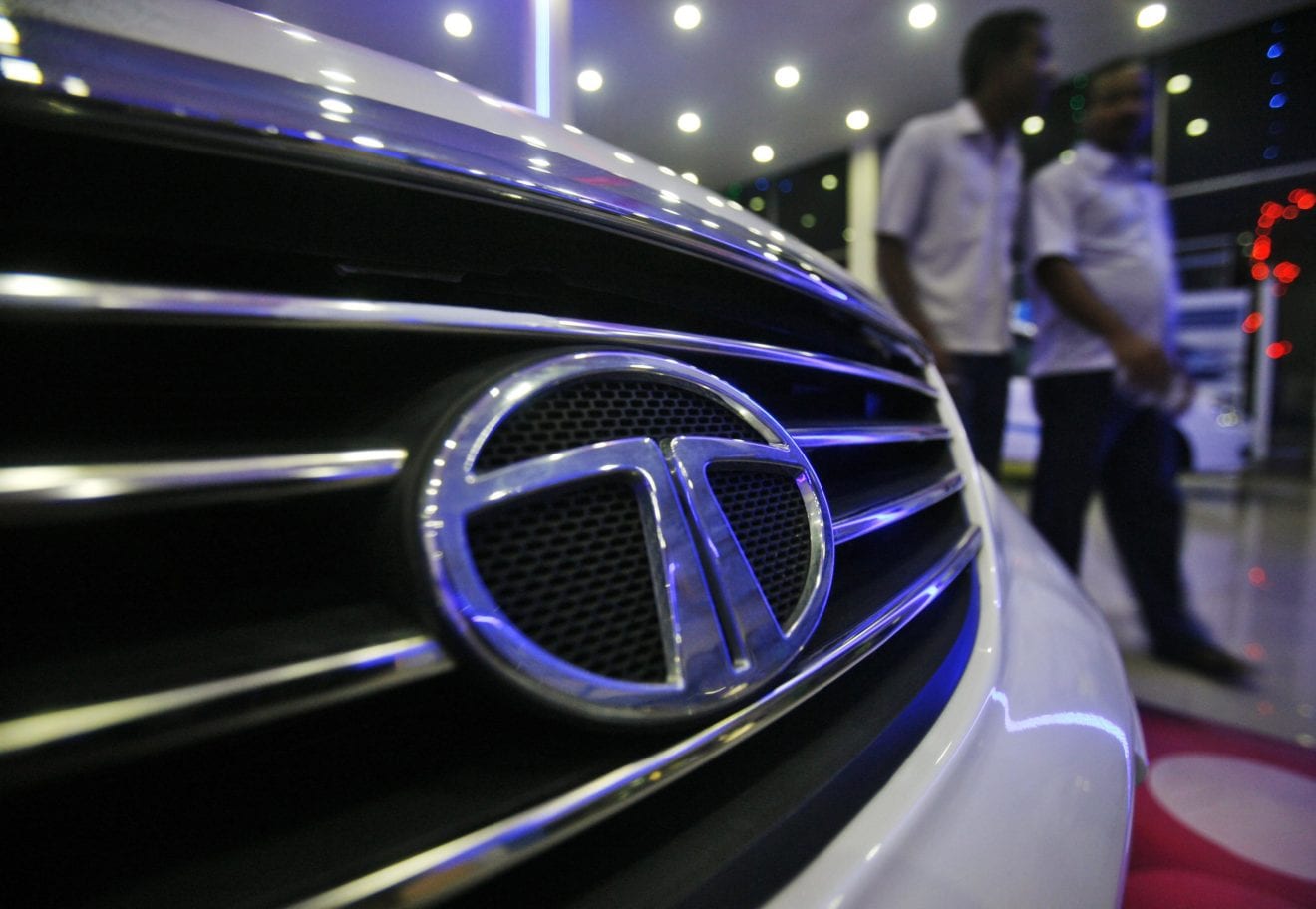
    The Tata Motors Group global wholesales in April 2019, including Jaguar Land Rover, were at 79,923 units. This number is lower by nearly 22 percent when compared to April 2018. The sales of the company’s commercial vehicles too were lower in April 2019 compared to the same period last year. The company sold 31,726 units of its commercial vehicles lower by 20 percent.

    The passenger vehicle side of the story was no different as the company’s global wholesales of all passenger vehicles in April 2019 were at 48197 units a drop of 23 percent lower compared to April 2018.

    Global wholesales for Jaguar Land Rover were 35,451 vehicles. Jaguar wholesales for the month were 13,301 vehicles, while Land Rover wholesales for the month were 22,150 vehicles.

  • Ola Aims To Deploy 10,000 Electric Two And Three-Wheelers In India

    Ola Aims To Deploy 10,000 Electric Two And Three-Wheelers In India

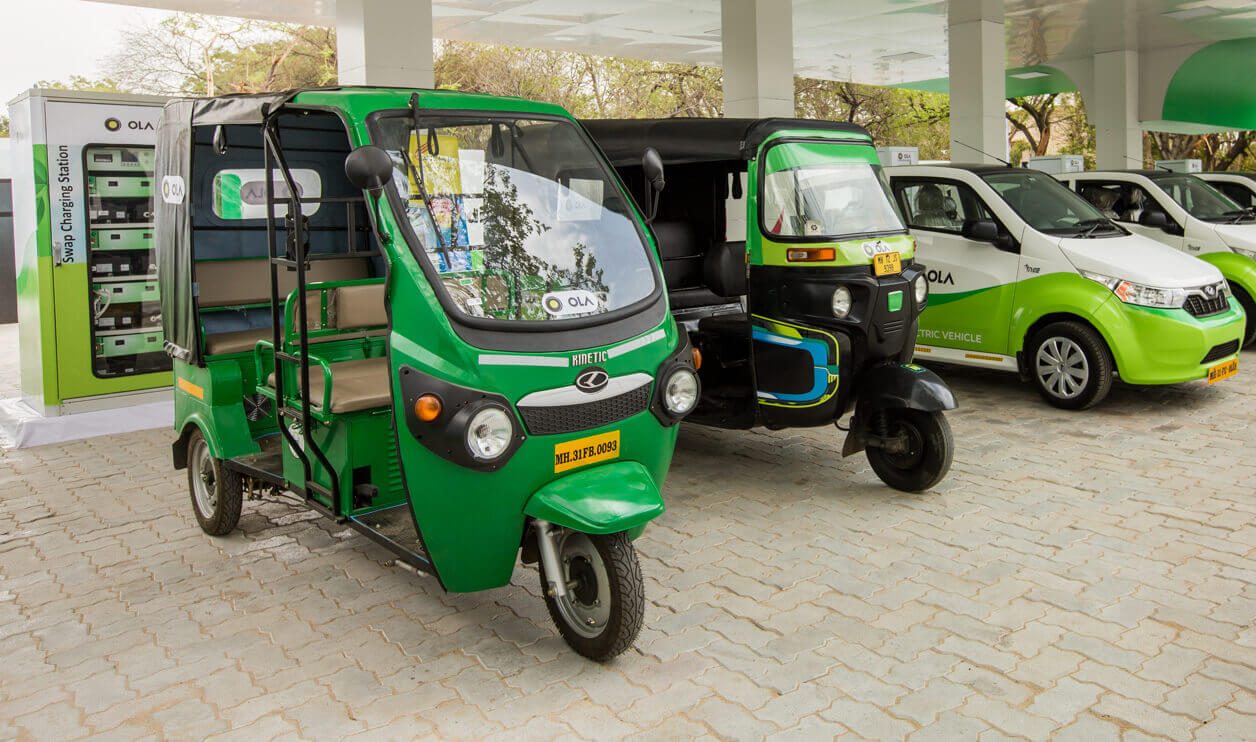
    India’s Ride-hailing service provider Ola is reportedly betting big on two and three-wheelers for its electric mobility drive. In fact, the company is expected on deploying 10,000 electric vehicles (EVs), a mix of two and three-wheelers, in India by March 2020. A PTI report claims that, according to a senior company official, the company believes that mass scale adoption of four-wheeler electric vehicles will take some more time. It was a lesson that the company learned from Ola and Mahindra’s 2017 joint pilot project in Nagpur, for which the former had partnered with the leading SUV maker for a multi-modal electric mass mobility project. It showed Ola that right now “four-wheelers are not yet ready” for such usage in India on a large scale.

    Speaking to PTI, Ola Electric Mobility (OEM) co-founder Anand Shah said, “The biggest lesson (from Nagpur) was that, (electric) four-wheelers, are not yet ready. It is going to take a couple of years for the math on four-wheelers to work.” According to Ola, right now electric three-wheelers / e-Rickshaws are the largest population of EVs by natural adoption. Further, he said, “We think two-wheelers are also emerging very quickly, partially because of policy and also because of the rising interest in the commercial use of two-wheelers, whether that is in deliveries for our own food business or any of our competitors, e-commerce companies or scooter sharing.” In fact, Ola has already started pilots with a fleet of a hundred of three-wheelers in Gurugram. Considering Mahindra has the Treo e-Rickshaw in its fleet now we wouldn’t be surprised if Ola and Mahindra come together for a new project.

    The company expects to deploy the 10,000 electric vehicles by the end of March 2020 in whichever viable cities/states of the country that are willing to work with it. The possible candidate cities include – Delhi, Maharashtra, Kerala, Karnataka, Telangana, AP, and Gujarat. All that said, Ola, hasn’t given up on it, and is confident that electrification is viable in the long run. In fact, Ola is still actively working on electric four-wheelers as well Shah said, and further told PTI “We are testing electric cars. We have tried every electric car that exists in India today, but we think it’s going to take some time for rapid four-wheeler EV adoption at scale.”

    Talking about the learnings from the Nagpur project, Shah said that they noticed a need for more four-wheeler EVs models because when they started there was only one make of electric car available in the market. He also addressed the need for appropriate battery technology for the Indian conditions and usage along with a proper understanding of infrastructure utilization to strike a balance between usage of land, power and time of the day. He also talked about electricity cost being a very significant input while mentioning that now the government is beginning to address this.

    Talking about investments for electric mobility, Shah said, “We have raised Rs 400 crore from some of our early investors — Tiger Global Management, Matrix India. That money will be spent on meeting these milestones, on getting the technology right, getting the business model right and we will keep growing from there.”

  • Online food store Grain Expanding Rapidly

    Online food store Grain Expanding Rapidly

    Singapore-based online food store Grain has raised US$10 million in series B funding. The cash will be used to accelerate growth in Singapore, and expand into Thailand.

    To do that, the company will be cooperating with Thailand’s Boonrawd Brewery group’s subsidiary Singha Corporation.

    Singha will help Grain gain clearer insights into the target audience in Bangkok, and develop better products and services.

    “Grain will work with Singha by using Singha’s extensive F&B network across the country, including logistics and distribution, to bring delightful innovations to consumers,” said Bhurit Bhirombhakdi, chairman of the executive board at Singha Ventures.

    The collaboration between the two companies aims to help online food store Grain expand in Southeast Asia and realize its regional vision.

    “We want to disrupt the F&B landscape and evolve with consumer preferences, but also have solid fundamentals,” said Yi Sung Yong, Grain’s co-founder and CEO.

  • Consumers willing to pay a premium for 5G

    Consumers willing to pay a premium for 5G

    Despite concerns surrounding the commercial proposition of 5G technology, smartphone users are willing to pay an average of a 20% premium for 5G services, according to Ericsson.

    The company’s latest ConsumerLab report on the 5G consumer potential finds that half of the early adopters would be willing to pay as much as 32% more for 5G.

    But consumers’ willingness to pay a premium for 5G is reliant on operators introducing new use cases and payment models and providing a consistently high uplink and downlink speed, the report finds.

    Meanwhile, 5G is expected to drive usage behaviors that also promise to increase revenues. The study finds that 5G is expected to significantly increase video consumption, both by enabling streaming in higher resolutions and through the increased use of augmented reality, virtual reality, and other new formats.

    Ericsson predicts that one in five smartphone users’ data usage could reach more than 200GB per month over 5G devices by 2025.

    Consumers also expect that 5G will bring additional benefits such as reducing network congestion in dense urban areas and introducing more home broadband choices.

    Based on the research, Ericsson ConsumerLab has drawn up a consumer roadmap of 5G use cases involving 31 different applications and services.

    These applications are divided into six categories – entertainment and media; enhanced mobile broadband; gaming and AR/VR applications; smart home and fixed wireless access; automotive and transportation; and shopping and immersive communications.

    “Trough our research, we have busted four myths about consumers’ views on 5G and answered questions such as whether 5G features will require new types of devices, or whether smartphones will be the silver bullet for 5G,” Ericsson Research head of ConsumerLab Jasmeet Singh Sethi said.

    “Consumers clearly state that they think smartphones are unlikely to be the sole solution for 5G.”

  • Apex Legends is coming to mobile

    Apex Legends is coming to mobile

    Respawn’s wildly successful battle royale shooter, Apex Legends, is likely getting a mobile version, EA revealed in its quarterly earnings report. Unsurprisingly, the game was a huge hit and turned into “the fastest-growing franchise we’ve ever had,” the report says.

    During today’s call, the publisher said that it has entered “advanced negotiations to bring Apex Legends to China and to mobile.” This is a strategy that both PUBG and Fortnite—Apex Legends’ biggest competitors in the battle royale genre—followed to great results, so it’s no wonder that EA is looking to replicate their success and keep Apex’s momentum going.

    Fortnite’s approach is unique, however, as it is essentially the exact same game across mobile devices, consoles, and PC, which allows for seamless cross-platform play, while PUBG’s mobile outing is a separate entity that’s limited to smartphones and tablets. Unfortunately, it is yet unclear which approach EA is planning to take with the mobile version of Apex Legends, or when the game is going to release. Seeing as how the publisher has entered an advanced stage of negotiations to port the title to mobile devices, we might see something by the end of this year, though it depends entirely on how scalable the experience is going to be.

    Respawn Entertainment, the game’s developer, further added that it is committed to “updating the game with seasonal updates, with a focus on the quality of content over novelty or speed of release.” This seems to be in an attempt to address complaints that the game is not getting enough new updates.

  • Cebu Pacific Q1 profit more than doubles

    Cebu Pacific Q1 profit more than doubles

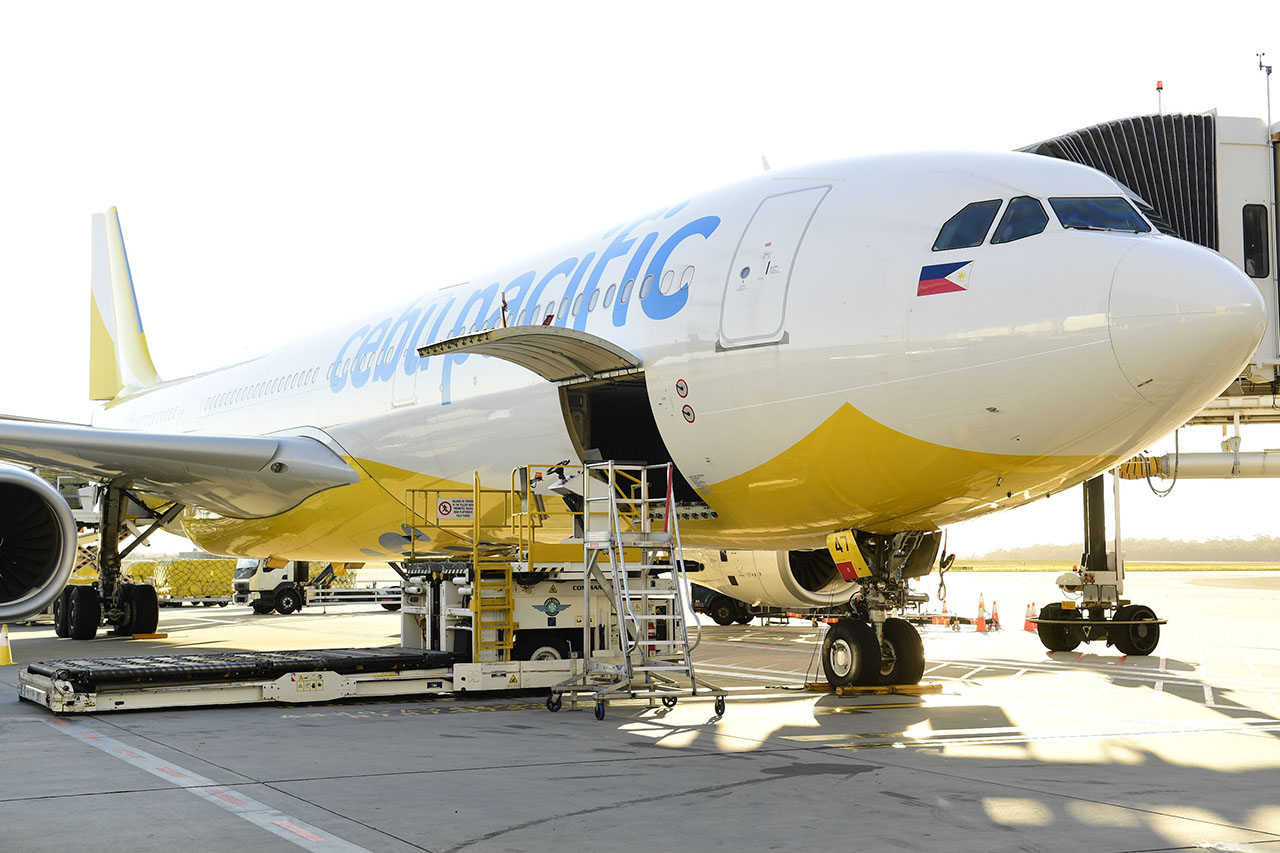
    Budget airline Cebu Pacific saw profit in the first quarter of the year more than doubled on strong demand and as fuel costs, which weighed on earnings in 2018, eased during the period.

    Cebu Pacific, owned by the Gokongwei family’s JG Summit Holdings, said in a stock exchange filing that net income from January to March this year hit P3.43 billion, up more than 138 percent compared to the same period in 2018.

    The airline, which signaled its intention to expand aggressively this year, also saw total revenues hit P21.18 billion, up 16 percent. Most of this came from passenger ticket sales, which rose 14.6 percent to P15.68 billion. Cebu Pacific, which recently took delivery of newer planes such as the next-generation A321neo, saw passenger volume increase 8.5 percent to 5.3 million. Average fares also ticked higher to P2,965, an increase of 5.7 percent.

    The airline also improved cargo revenues by 12.7 percent to P1.44 billion as well as ancillary revenues, which increased 22.7 percent to P4.1 billion.

    As noted, the carrier’s bottom line was propped up by the 4.3-percent decline in oil prices, a major operating expense.

    The company’s flying expenses alone rose 3.8 percent to P7.17 billion mainly as it ramped up operations.

    Overall, operating expenses went up 8.4 percent to P17.34 billion.

    “The increase was driven by its expanded operations, growth in seat capacity from the acquisition of new aircraft and the weakening of the Philippine peso against the US dollar,” Cebu Pacific said in its filing.

  • OCBC Cycle 2019 Expands On Green Initiatives

    OCBC Cycle 2019 Expands On Green Initiatives

    The eleventh edition of OCBC Cycle featured new initiatives associated with the environment, adding on to those implemented last year.  About 6,800 cyclists, ranging from casual riders to competitive athletes, participated in the OCBC Cycle event held on Sunday. The event’s eleventh edition expanded on its green initiatives from previous years.

    Cycling is a green sport.  I am especially glad that, this year, we have planned seven new initiatives associated with OCBC Cycle for the environment. Some are modest in scope, but it is our belief that every small thing we do matters, said Samuel Tsien, Group CEO of OCBC Bank in a media statement.

    Last year, OCBC Cycle engaged the help of the Singapore Sports Hub to recycle the plastic bottles that thirsty cyclists use by the hundreds. With the increased focus on environment conservation efforts, OCBC Cycle retained the bottle-recycling arrangements and expanded on its green initiatives this year.

    These include stopping the usage of single-use plastics in its event pack, replacing trophies for the OCBC Cycle Speedway Championships with reusable steel tumblers and used plastic containers into useful items, such as tote bags and furniture.

    Our event banners will be repurposed to make useful items such as tote bags; we will compost all fruit peels to make fertilizer.  Our goal is to work with the Singapore Environment Council to be the first event in Singapore to achieve the ‘Eco Event’ certification, added Tsien.

  • City proposal to slap luxury tax on mobile phones raises hackles

    City proposal to slap luxury tax on mobile phones raises hackles

    HCMC’s proposal to impose a special consumption tax on mobile phones has drawn protests from experts, who said they are not a luxury product. Dr. Nguyen Thanh Binh of the Ministry of Planning and Investment’s Institute of Policy and Development said the proposal should be carefully considered since no other country levies a luxury tax on mobile phones.

    The nature of such a tax is to hit luxury goods or discourage consumption of goods that use up foreign currency for imports or harm the environment or human health, he explained.

    “We have to ask ourselves whether mobile phones are essential or luxury, and what effect it has on the environment and health.”

    Mobiles are now ordinary goods used by everyone, he said.

    The city people’s committee has recently sent to the Ministry of Finance suggestions for a draft proposal on “expanding the tax base and preventing erosion of state revenues.”

    It said mobile phones are not luxury goods but not “very essential” either, and so it wants to regulate consumption to ensure it is “reasonable.”

    It also called on lawmakers to add items such as cameras, perfumes, cosmetics, gaming services, and beauty services to the list of items subject to special consumption tax to target the population segment with above-average income.

    Binh queried this rationale saying the city can simply use income tax for this.

    Nguyen Duc Nghia, chairman of Ho Chi Minh City Tax Agents Club, an association of tax consultants, said the mobile phone has become a commonplace product used by everyone.

    Therefore, a luxury tax would not have the effect of taxing only wealthy individuals and would instead affect everyone, he said.

    Truong Thanh Duc, chairman of Basico law firm, said special consumption tax is normally levied on luxury goods and those that are harmful or which the government wants to discourage people from using.

    In fact, in a quickly developing economy, this tax should be eliminated on many goods since what were once luxury goods gradually become essential items as people become more affluent, he pointed out.

    “Thirty years ago mobile phones were a luxury item but not taxed. Now it has become a popular item, with the number of telephone subscribers equaling the population. Levying a luxury tax on such a good is far from reasonable.”

    Up to 73 percent of the population uses mobile phones, on which 42 percent use smartphones and 50 million people use mobile social media, according to a report by Vietnamese digital advertising firm Adsota earlier this year.

  • Vietnam makes its very first 5G phone call

    Vietnam makes its very first 5G phone call

    Vietnam’s first 5G phone call was made Friday on the network of Viettel, the country’s largest telecommunications company. The trial called, made publicly with the participation of the Ministry of Information and Communications, showed that the speed of Viettel’s 5G mobile network connections reached 1.5-1.7 Gigabits per second, far exceeding the theoretical limit of the 4G network and equivalent to the speed of optical cable.

    Viettel said it will expand the test to Hanoi and Ho Chi Minh City, the nation’s two biggest cities, and expects to launch the commercial service in 2020. The military-run company said it is looking at many pricing plans for commercial 5G services.

    Minister of Information and Communications Nguyen Manh Hung, who led Viettel earlier, said the event marked Vietnam as one of the earliest nations in the world to successfully test the 5G network, after the U.S., Australia, Japan, and South Korea.

    “We all want to take the lead in the fourth industrial revolution and develop information and communications technology so that Vietnamese locals and businesses can compete in the global economy, and therefore, the earlier we launch the 5G service, the better,” he said.

    Viettel became the first firm to receive permission to trial 5G services in January. It was followed by MobiFone.

    Last November, Hung said at a conference that Vietnam should test 5G in 2019 and ensure nationwide coverage by 2020.

    “Vietnam should be one of the first countries to launch the network, at least in Hanoi and HCMC,” he had said. The country had been one of the last in Southeast Asia to roll out 4G services.

    5G is the latest generation of mobile Internet connectivity and should offer much faster speeds and more reliable connections on smartphones and other devices compared to the current 3G and 4G technologies.

  • Ferrari Considering Netflix And esports Involvement

    Ferrari Considering Netflix And esports Involvement

    Ferrari is considering engaging with Netflix on a second Formula One documentary as well as joining the rest of the 10 teams in the esports world championship, team boss Mattia Binotto said on Friday. Ferrari and champions Mercedes did not cooperate on the successful ‘Drive to Survive’ 10-part fly-on-the-wall series filmed by Netflix last season, arguing that they needed to focus on the title battle. When their cars or drivers did feature, it was from the official world feed television footage.”It’s certainly an interesting program. We were not participating last season as Ferrari,” Binotto told reporters at the Spanish Grand Prix, the fifth round of the 21 race championship.

    “We are considering it at the moment. We have not taken our final decision, so it’s something we will do in the next few weeks.”

    Formula One’s managing director Sean Bratches said this month that he expected a second series to go ahead, with filming already underway. Ferrari is the only ones without a presence in the official F1 esports championship, which is in its third season and involves the teams only later in the year. Mercedes won both titles last year, as in the real world.

    Binotto said Ferrari’s stance on that could change as well.

    “Esport is increasing in terms of interest and certainly as Ferrari, we are looking seriously into it,” he said.

    “We are not yet fully committed to the program but it’s something where the discussions are ongoing and we will very soon make our own decision.”

  • Huawei’s first phone with a pop-out camera is Out

    Huawei’s first phone with a pop-out camera is Out

    Over the past year or so Huawei has welcomed the notch with open arms. Nowadays, though, most companies are looking for ways to remove it and, as it turns out, Huawei is no different

    Called the Huawei P Smart Z, the company’s latest smartphone represents both it’s newest offering in the budget segment and its first attempt at an all-screen device that includes no notch or cutout.

    Targeting fans of massive displays, the P Smart Z arrives equipped with a huge 6.6-inch LCD display that boasts a 19.5:9 aspect ratio and a Full-HD+ (2340 x 1080p) resolution. As you’d expect, the huge panel is paired with uniform bezels, the only exception being the chin which is slightly thicker. Also present is a pop-out camera, thus marking the first time Huawei has used such a feature.

    Hidden inside the mechanical module is a 16-megapixel selfie camera that offers an f/2.0 aperture. This is paired over on the rear with a vertically-aligned dual-camera setup. Speaking of which, this includes a 16-megapixel f/1.8 camera paired with a dedicated 2-megapixel depth sensor. Also present is an LED flash.

    While on the topic of the rear, it’s worth pointing out that the Huawei P Smart Z follows in the footsteps of Google’s Pixel devices by adopting a dual-tone rear. But rather than using different materials or textures, Huawei has simply opted for slightly different colors.

    Regarding the internal characteristics of this smartphone, the P Smart Z is equipped with a modified version of the Kirin 710 dubbed the Kirin 710F alongside a respectable 4GB of RAM and 64GB of internal storage. Also present is Android 9 Pie straight out of the box along with the EMUI 9.0 overlay and a large 4,000mAh battery.

    The Huawei P Smart Z can be purchased right now in Italy or Spain for €279. Presumably, sales will eventually expand to other internal markets, but these details are yet to be confirmed.

  • Qualcomm shows how important Apple’s business is

    Qualcomm shows how important Apple’s business is

    Last month, just as Apple and Qualcomm were into the opening statements of their billion-dollar trial in San Diego, surprising news was released. Behind the scenes, Apple and Qualcomm had been negotiating a settlement and both companies finally shook hands on a deal. Apple paid the chip maker an undisclosed amount of money; in return, Apple received a 6-year licensing agreement (with a two-year option) and a multi-year chip supply deal.

    It was no secret that Apple was getting desperate for a company to supply it with 5G modem chips for the iPhone. Apple wasn’t totally convinced that Intel, whose 4G LTE modem chips are exclusively used on the 2018 iPhones, could deliver the 5G component in time. In fact, during the FTC v. Qualcomm non-jury trial in January, Apple supply chain executive Tony Blevins testified that the firm had spoken with Samsung and MediaTek about sourcing their 5G modem chips. And even though Intel said early last month that it would ship its chips starting in the second half of this year, Apple still felt compelled to shake hands with Qualcomm. Hours after the agreement was announced, Intel said that it was leaving the mobile 5G modem chip business.

    According to one analyst, Apple will pay Qualcomm as much as $9 for each iPhone it sells with a 5G Qualcomm modem chip. The terms of the settlement obviously benefit Qualcomm greatly, and the company has decided to reward its executives including CEO Steve Mollenkopf. The executive received a bonus consisting of 40,794 shares of Qualcomm stock. The shares are currently valued at over $3.5 million. Not that Mollenkopf was underpaid; last year he took home $20 million according to data from FactSet.

    Other Qualcomm executives received bonuses too, thanks to the settlement with Apple. Company president Cristiano Amon scored $2.14 million in Qualcomm stock and Chief Technical Officer James Thompson was given $1.65 million in company shares. Other beneficiaries included General Counsel Donald Rosenberg and interim CFO David Wise. The pair received $1.22 million and $254,000, respectively. Wise pointed out that other Qualcomm employees will receive higher bonuses too, thanks to the settlement. Investors also have benefited from the deal with Apple (assuming that they weren’t short the stock). The day before it was announced, Qualcomm’s shares closed at $57.18. Yesterday, the stock closed at $85.84, which means that it has soared 50% over the last three weeks.

    The bonuses and the stock surge are both an indication of how important Apple’s business is for Qualcomm. Apple only used Qualcomm’s modem chips on the iPhone from 2011-2015. As a result, Apple demanded and received a $1 billion incentive payment from the chip maker annually. But Apple CEO Tim Cook was upset that Qualcomm was receiving five times more in royalties than it was paying all of its other suppliers combined. Qualcomm’s royalty payments were based on the retail price of the iPhone, and that didn’t make Cook very happy either.

    Apple ended up testifying against Qualcomm at a hearing held by the South Korea Fair Trade Commission. That angered Qualcomm, as did a statement from Apple that it would have to add a second modem chip supplier due to “Qualcomm’s exclusionary conduct.” At the same time, Qualcomm learned that Apple was planning on using Intel modem chips on the iPhone 7 and it stopped sending Apple those $1 billion checks. In return, Apple told its contract manufacturers like Foxconn and Pegatron to stop paying royalties to Qualcomm. Apple sued Qualcomm in January 2017 leading to a number of suits filed by both companies against each other. All of those suits have been withdrawn by Apple and Qualcomm as part of the settlement.

    Now that Apple and Qualcomm are on speaking terms, a 5G iPhone seems a sure bet for 2020.

  • APAC Billionaires Hit the Hardest in 2018

    APAC Billionaires Hit the Hardest in 2018

    Global billionaire wealth and its population have fallen for only the second time since the global financial crisis in 2008, with those in APAC suffering the most.

    After reaching record levels the previous year, global billionaire wealth in 2018 declined by 7 percent to $8.6 trillion, while the billionaire population fell by 5.4 percent to 2,604, according to the 2019 edition of Billionaire Census, published by global ultra high net worth intelligence and data company Wealth X.

    This fall in wealth was largely caused by a slowdown in global growth, persistent trade tensions and a slump in equity markets, the report said. The findings of the report, which has been published annually since 2013, were based on Wealth-X’s global database of more than 1 million records on the world’s wealthiest individuals.

    The report noted that apart from the U.S., U.K., Russia, and France, nearly all of the top 15 countries by billionaire population saw a decline. Asia-Pacific’s billionaire population fell by 13.4 percent, driven by large declines in China, India, and Singapore.

    The region also saw the largest decline in billionaire wealth – billionaires here saw their net worth fall by an average of 9 percent, compared to 7 percent in EMEA and 6 percent in the Americas. The report attributed this to three factors: weak equity market performance on the back of slowing growth, tariff disputes, and emerging market volatility.

    Top Billionaire Countries

    1. United States (705 billionaires)
    2. China (285)
    3. Germany (146)
    4. Russia (102)
    5. United Kingdom (97)
    6. Switzerland (91)
    7. Hong Kong (87)
    8. India (82)
    9. Saudi Arabia (57)
    10. France (55)
    11. United Arab Emirates (55)
    12. Brazil (49)
    13. Italy (47)
    14. Canada (45)
    15. Singapore (39)
  • Pomelo Fashion boosts revenue by 5x with in-house tech stack forstreamlining vertical supply chain

    Pomelo Fashion boosts revenue by 5x with in-house tech stack forstreamlining vertical supply chain

    Omnichannel fast fashion company Pomelo builds a proprietary in-house technology stack to enable the seamless management of a complex vertical supply chain across its multiple locations and labels. This technology stack was developed to meet Pomelo’s changing logistical
    needs as it’s business model evolved from one based on private label sourcing to one that is fully vertically-integrated, allowing for control over every aspect of launching, building, and scaling a fashion brand.

    Named Henry after Henry Ford, who popularized the modern assembly line for mass production, Pomelo’s solutions stack forms the common foundation of its building and scaling strategy, and integrates all aspects of its processes from design, manufacturing, content creation, retailing (in-app, online, and in-store) to inventory optimization. Henry is used in Pomelo’s multiple labels and categories including Pomelo, PM, Alita, and BEET across a manufacturing base spanning Southeast Asia and China.

    “Our competitors are still using spreadsheets and paper purchase orders to manage a highly complex system of product development, manufacturing, and omnichannel retailing. As a fashion company with tech DNA, we’re building, from the ground up, a brand-new tech stack for today’s digital world that incorporates the latest in machine learning, big data, and automation,” says Lloyd Lin, Regional Vice President of Production. “We have always been focused on technology as a means to innovate key areas of the business, including our supply chain.”

    Managing Fashion Supply Chains in a Digital World Pomelo’s tech stack started as a simple back-end inventory tracker in 2015. Today, 4 years on, Henry is now capable of tracking the entirety of Pomelo’s supply chain in real-time and functions as the brand’s control center. It accurately manages profit margins and provides data-driven insights and analytics on customers’ purchase behaviors that simplify the design and purchasing teams’ buying decisions. With Henry’s help, Pomelo, and their customers, in turn, have enjoyed significant costs-savings.

    In the same vein, Pomelo’s supply chain has also seen further streamlining and innovation in 2018. The samples production process, essential to every new launch of which Pomelo has three weekly, is a long process involving multiple iterations and external vendors. In order to reduce material waste, production costs and time spent, Pomelo’s newly established samples lab automates the process of sample production. Managed entirely in-house, the lab is customized for Pomelo products, allowing for better quality control. In 2019, Pomelo plans to put in place a bidding process that allows production partners to bid on orders in their areas of specialization to further optimize the supply chain.

    The trailblazing startup, which terms itself a Digitally Native Vertical Brand (DNVB), focuses on innovating key areas of its business, like the supply chain, through technology. The results of Pomelo’s optimization push speak for themselves: in 2018, Pomelo dramatically expanded its range across labels by more than five times, and its total revenues by nearly the same amount.

    Pomelo’s technology team is primarily based in Bangkok, but also has developed resources in China and India. “The rate at which we continue to improve our technology is a long-term competitive advantage we are very excited about, and ultimately a key differentiator for Pomelo. We will continue investing in and strengthening our team, as well as our technology stack to ensure that we are setting the standard for how an omnichannel fashion brand anchored in today’s digital world should be managed.” says Pomelo CEO David Jou.