Tag: asia

  • Panasonic Flags First Profit Drop In 8 years

    Panasonic Flags First Profit Drop In 8 years

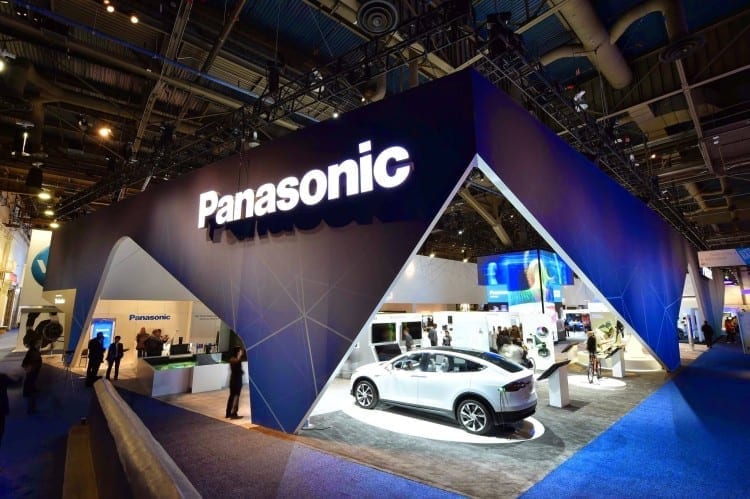
    Panasonic Corp warned profit this financial year would fall for the first time in eight years as costs to boost battery output rise and it moves to overhaul some businesses amid investor pressure to find new avenues of growth. The Japanese conglomerate expects operating profit for the year through March 2020 to slump 27 percent to 300 billion yen ($2.7 billion) from a year earlier. That is well below analyst expectations of a 12 percent decline, according to Refinitiv.

    The company is looking at a 15 billion yen loss at its automotive unit this year, it said on Thursday. Panasonic expects costs to ramp up battery production in Japan and China for a planned electric-vehicle (EV) battery joint venture with Toyota Motor Corp to weigh heavily.

    Toyota and Panasonic said they will set up a new company early next year to focus on technology that could be used to offer personalised services in the home.

    Panasonic switched its focus to corporate clients such as automakers a few years ago to escape price wars in lower-margin consumer electronics. The shift, which involved a vast migration of TV engineers to the automotive unit, helped the company restore profit growth, but its non-consumer businesses did not grow as fast as the company had hoped.

    “Over the last three years, we aimed for stable revenue and profit growth focusing mainly on the automotive business … but development costs and insufficient abilities to adjust to rapid battery production expansion limited our profits,” Panasonic President Kazuhiro Tsuga said. The business was also squeezed last year due to production delays for Tesla Inc’s mass-market Model 3 sedan.

    Panasonic is Tesla’s exclusive supplier of battery cells and industry watchers have said the Japanese company needs to cut its reliance on the U.S. electric carmaker.

    Elon Musk, Tesla’s mercurial CEO, last month blamed Panasonic for the production delays. He previously said Tesla was looking for other battery suppliers for its new Shanghai car factory.

    Tsuga, however, told a post-earnings press conference on Thursday that Panasonic’s relationship with Tesla remained good.

    “We are not just a supplier but a partner,” he said.

    Panasonic is set to deepen its partnership with Toyota, announcing earlier on Thursday they would establish a joint company to develop “connected” services to be used in homes and urban development. Panasonic also said it would sell its solar battery research arm and a solar battery plant in Malaysia to China’s GS-Solar for an undisclosed amount.


  • Hydro Flask Starts in Hong Kong

    Hydro Flask Starts in Hong Kong

    Hydro Flask, the US brand of high-performance, insulated stainless-steel flasks targeting the outdoors market, has launched in Hong Kong.

    From this month, Hydro Flask products are being sold by Hong Kong retailers through an expansion of the company’s partnership with the Primer Group. Products will be stocked through outdoor and sporting goods retailers, lifestyle stores, travel retailers and gourmet grocers.

    “We’re excited to expand our strong relationship with Primer to bring Hydro Flask to Hong Kong. It’s a key part of our global expansion and influences markets beyond Asia,” said Mike Wallenfels, VP of global sales at Hydro Flask.

    The brand’s launch is timely as growing numbers of Asian consumers are purchasing reusable containers in preference to single-use plastic and paper cups, for environmental reasons.

    The company produces containers suited to cold drinks, coffee, beer, wine and food, along with backpacks, casual clothing and accessories.

    Hydro Flask is a subsidiary of listed company Helen of Troy Limited.

  • Daimler CEO Says His Successor Will Have A Tough Job

    Daimler CEO Says His Successor Will Have A Tough Job

    Daimler’s next chief executive will have a tough job to restore margins at Mercedes-Benz, current boss Dieter Zetsche told Reuters on Wednesday, as Mercedes-Benz launched a new luxury electric car to rival Tesla.

    Zetsche, who bows out as CEO on May 22, said the German luxury carmaker needed to find a way to rebuild margins after research and development (R&D) costs at Mercedes-Benz ballooned.

    “There are many challenges ahead. We are in a situation of an economic slowdown. It is not going to be easier going forward,” he said on the sidelines of the launch event near Oslo.

    Pressure to develop electric and autonomous cars has led R&D costs at Mercedes-Benz passenger cars to rise to 14 billion euros ($15.7 billion) from around 8 billion euros four years ago, Zetsche said.

    At the same time, China, the world’s largest car market, has seen sales momentum slowing for nine months in a row, with a 5.2 percent fall in sales in March.

    Mercedes-Benz’s large electric car will hit showrooms this summer, years after Tesla launched its Model S in 2012.

    Daimler has been cautious about embracing mass production of electric vehicles at Mercedes-Benz amid concerns about operating range and customer acceptance.

    The company took a 9.1 percent stake in Tesla for around $50 million in May 2009 to learn about battery technology but sold its stake for a $780 million profit in 2014.

    Daimler launched an electric car under the smart brand in 2010, but waited until 2014 to build an electric Mercedes-Benz B-Class.

    Daimler, like other manufacturers, has struggled to make electric cars profitable, although the cost of battery packs is expected to fall as they invest in ramping up battery cell production.

    ING analysts say the total cost of ownership, including fuel prices, could reach parity between electric and combustion engined vehicles by 2025.

    In an effort to make a profit with electric cars, Daimler has opted to manufacture the Mercedes EQC in a way that enables it to be built on the same production line as a combustion engined car, retooling existing plants.

    Daimler is investing more than 10 billion euros to expand the electric EQ model range and is building battery cell production facilities.

    The Mercedes EQC will have an operating range of 445-471 kms, with a base version costing below 60,000 euros to make it eligible for Germany’s electric car environmental bonus.

    Asked whether Daimler was too late to the electric vehicle trend, Zetsche said: “For the past 40 years I have heard that German manufacturers have missed all the important trends. But apparently, customers still like cars from manufacturers that have missed the boat.”

    Zetsche took over as CEO of DaimlerChrysler in 2006 and took the decision to sell Chrysler, returning Mercedes to the top-selling luxury brand globally in 2016 and defending the title ever since.

    Zetsche said Daimler’s future hinged on making electric cars profitably.

  • Google Duo group video calling goes live

    Google Duo group video calling goes live

    Google Duo, the video chat mobile app developed by the Mountain View company, received a couple of important updates in the last year or so. Among them, group video calling was added to the app less than a month ago, but it was only made available in a few countries.

    Starting today, Google has expanded the availability of the group video calling feature to more countries, including the United States, Canada, and India. Even Google seems to confirm the new feature is available in “select regions,” but no list of markets is available yet, so we’ll have to rely on reports coming from users.

    With group video calling, Google Duo users will be able to select up to four contacts that they can call simultaneously. Simply swipe down and press the “Create Group” option in order to start adding the contacts you want to call.

    Although the feature only supports four contacts in a group call, Google plans to slowly increase the number of people that you can call simultaneously with Google Duo, although no timeframe is available at the moment.

  • YouTube Music reportedly exceeds 15 million subscribers Recently

    YouTube Music reportedly exceeds 15 million subscribers Recently

    We’ve received an official statement that disputes the reports coming from Bloomberg and Wall Street Journal claiming that Google is struggling to attract paying music subscribers. Here is what a Google spokeswoman had to say about these reports: “YouTube aggressively disputes the WSJ report stating YouTube Music subscription growth has plateaued, countering that healthy subscription growth continued through Q1 of this year.”

    Google’s music streaming service recently went through a rebranding process one year ago, as the search giant has decided to merge Play Music and YouTube Music into one product in order to avoid confusion among customers.

    We’re not sure whether or not the results met Google’s expectations, but Bloomberg reports the company’s paid music services have recently exceeded 15 million subscribers, at least according to two persons familiar with the matter.

    The number of subscribers mentioned includes both YouTube Music and Google Play Music services, as well as some consumers that are still using promotional trial accounts. If Google’s YouTube Music has just exceeded 15 million subscribers one year after its rebrand, it’s way behind Apple and Spotify.

    The former reached 50 million subscribers back in January, while Spotify announced late last month that it now has more than 100 million subscribers paying for its premium service.

    Although Google declined to comment on the numbers, it did say that the number of subscribers to YouTube Music grew 60% between March 2018 and March 2019, which is clearly good progress. It remains to be seen whether or not the company will be able to maintain the percentage with which it grew last year or even boost it a little.

  • Exabytes Announces Its Annual eCommerce Conference to be Held on 27 June

    Exabytes Announces Its Annual eCommerce Conference to be Held on 27 June

    Exabytes Network Sdn. Bhd. today announced that its annual event of Exabytes eCommerce Conference (EEC) is scheduled to be held on Thursday, June 27th at Malaysian Global Innovation and Creativity Center (MaGIC) in Cyberjaya. EEC 2019 carries the theme of Grow Global, Grow Fast and it focuses on four main areas – growing ecommerce business, ecommerce trends, marketing for ecommerce, and ecommerce automation. This year, EEC expects to attract at least 800 attendees of startups and small- and medium-sized enterprises (SMEs) from various sectors not just from Malaysia but from around the world. The one-day event is going to be packed with presentations and workshops by esteemed speakers from various industry backgrounds. Besides that, there will be at least 20 exhibitors of organizations that will take part in this year’s EEC.

    Registrations are now open online at www.exabytes.my/eec.

    Speaker highlights:

    • Anna Lebereva, Head of Growth Marketing, SEMrush;
    • ZiKang, Founder of FITGEAR & OXWHITE;
    • Lennise Ng, CEO of Dropee;
    • Diego Olivier Fernandez Pons, Scientific Advisor, Tezos Southeast Asia;
    • Roberto Cumaraswamy, CMO-on-Demand, robertocumaraswamy.com;
    • Christopher Lowe, Senior Account Manager, Insider;
    • Xin-Ci, Head of Marketing, StoreHub; and,
    • Nowrid Amin, Digital Marketing Strategist of IQI Global.

    More speakers will be announced from time to time.

    Chan Kee Siak, CEO of Exabytes said, “EEC is back for the sixth time and with a bigger goal to inspire startups and SMEs to grow their business beyond Malaysian borders. Since it started, EEC has been gaining momentum as a platform for startup entrepreneurs, C-level executives and other attendees to share, learn and network. We look forward to hosting them on June 27 in Cyberjaya.”

    “Thriving ecommerce presents opportunities. There is so much to learn about it so we’ve planned to cover a variety of topics such as analytics, big data, elogistics and mobile payment technologies. We are currently offering early-bird promo tickets and those who are interested can purchase them online at www.exabtyes.my/eec,” Chan explained.

    Started in 2014 with only 100 attendees, EEC has grown to be a popular ecommerce event in Malaysia attracting participants from around the world. In 2019, EEC targets to more than double its attendees from 396 in 2018 to a minimum of 800 this year.

    About Exabytes Network Sdn. Bhd.

    Founded in 2001, Exabytes Network Sdn. Bhd. is a leading web hosting and cloud service provider in Southeast Asia. It specializes in providing services of cloud hosting, shared hosting, email hosting, Virtual Private Server, dedicated servers, domain name registration, digital marketing and others. The Company currently serves over 100,000 small- and medium-sized businesses in 121 countries. Exabytes Network is part of Exabytes Capital Group Sdn. Bhd. It is headquartered in Penang, Malaysia. Website: www.exabytes.my.

  • Google is still working on an exciting AI feature

    Google is still working on an exciting AI feature

    Tweets sent by Google Photos product lead David Lieb indicate that the company has not given up on the Colorize feature it unveiled at Google I/O last year. The feature uses machine learning tools to add colors to old black and white photos. He said that Google hopes to have Colorize out in beta form soon and said that he’d love to hear feedback from Android users. The Colorize feature, when it does get pushed out, will show up as a filter in the Google Photos app.

    Lieb did say that Colorize needs some more work, and for proof of that, he showed a black and white photo taken during his grandparents’ wedding day (his grandmother is 104!). While Colorize did add color to the image, it also added a pink tinge to his grandfather’s pants. The Googler assures us that his grandfather did not wear pink pants at his wedding.

    Meanwhile, another feature that Google introduced at its 2018 developers conference, Color Pop, was pushed out just a week after the feature was unveiled. Using AI, Color Pop takes the background of a photo shot in Portrait mode and changes it to black and white; the subject matter remains in color. The stark difference between the two makes the subject pop, or stand out. Color Pop appears as a filter option in the Google Photos app after you snap a Portrait.

  • Vietnam Equity Firm buys into Vietnam’s Pharmacity

    Vietnam Equity Firm buys into Vietnam’s Pharmacity

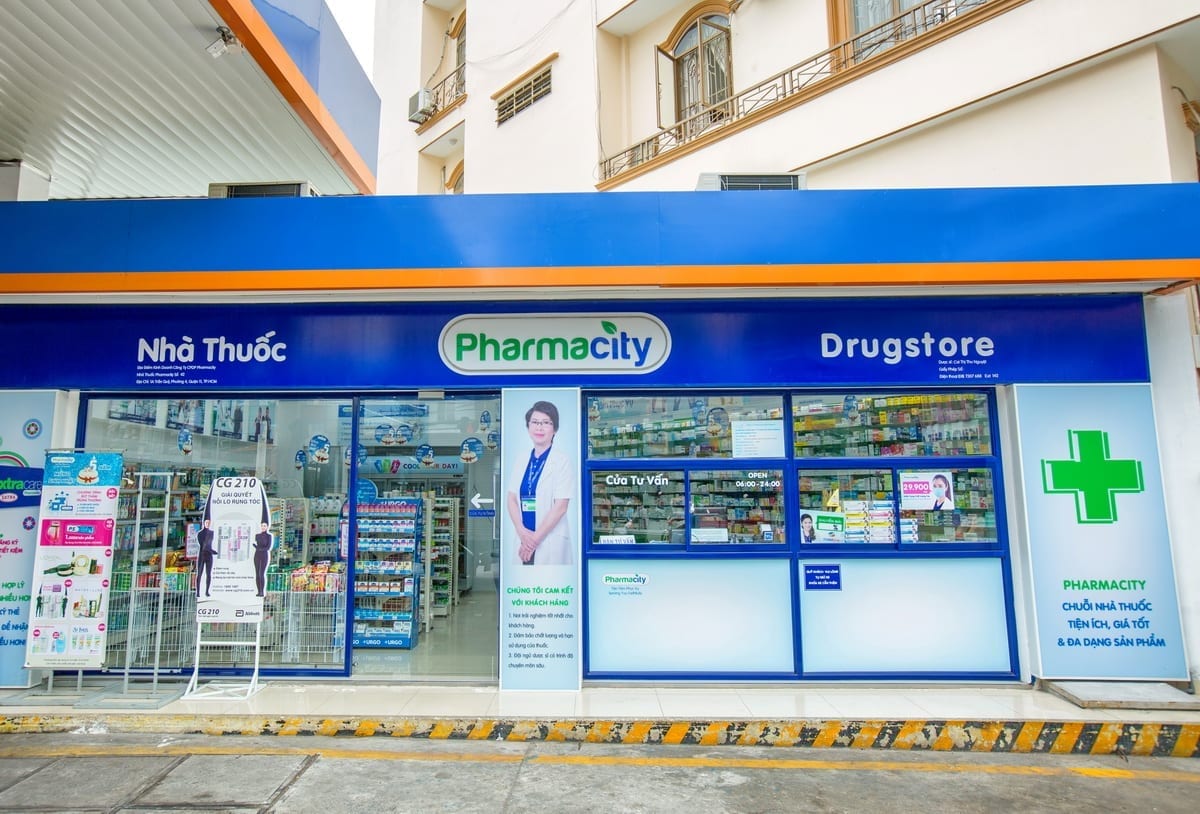
    Vietnam private equity firm Mekong Capital has issued funding to pharmacy chain Pharmacity.

    Pharmacity is now the eighth company to receive funding from Mekong’s latest financing round, following the firm’s investment in mattress producer Vua Nem last year.

    With 186 outlets retailing both traditional Vietnamese and Western medicines, Pharmacity is the country’s most widespread network of pharmaceutical products stores, with 1 million subscribers to its loyalty program. The firm is targeting 1000 outlets in VIetnam within two years.

    “Our partnership with Mekong Capital will empower us to continue improving healthcare for the Vietnamese people,” said Pharmacity founder and CEO Chris Blank, “and help accelerate our growth while better positioning us to execute on our vision and mission to build the most convenient pharmacy chain where customers fully entrust their health and wellness.”

    “The company was the first retailer in this sector to demonstrate that all of Vietnam’s regulations and compliance thresholds can be met and still generate a healthy store level profitability,” added Mekong Capital partner Chad Ovel.

  • Customs seizes $7 million worth of fake goods

    Customs seizes $7 million worth of fake goods

    Hong Kong Customs has seized 55,000 items of fake goods destined for the US during a three-month campaign to combat cross-border counterfeiting. The haul, some of which is shown in the accompanying photograph, included trainer, apparel, mobile phones and accessories, handbags and Beats-branded headphones.

    Customs officers estimated the value of the haul to be about HK$7 million.

    “Hong Kong Customs has been working closely with the US Customs and Border Protection using intelligence exchanges, and took targeted enforcement action between January and April including stepped-up inspection of suspicious express courier parcels destined for the US,” said a Customs spokesperson.

    “Hong Kong Customs will continue working closely with overseas law enforcement agencies to combat cross-boundary counterfeiting activities through intelligence exchanges and joint enforcement actions.”

    Under the Trade Descriptions Ordinance, any person who imports or exports any goods to which a forged trademark is applied commits an offense. The maximum penalty upon conviction is a fine of $500,000 and imprisonment for five years.

  • EBay still dominates online shopping in Australia

    EBay still dominates online shopping in Australia

    Australian consumers largely prefer to use international online marketplaces, despite increasing investment by local retailers in the space, according to new data from discounts platform CupoNation.

    According to the data, four out of the top five most visited retail websites in Australia were dominated by international and domestic offers by US-based retailers eBay and Amazon.

    EBay Australia was the most used retail website in Australia during the period between January and March 2019, with 194.9 million users, while its global site brought in another 36.6 million users.

    Amazon’s global site outpaced its local offering, with the US site enjoying 58.1 million users in Australia over the period, compared with 35.5 million who utilised the Australian variant.

    Sitting in between these four online-only offerings, hardware chain Bunnings brought in the most users of any Australian-owned retailer – with 41.26 million users utilising its online platform, 65 per cent of which utilised mobile to do so.

    “We want to rush slowly into this,” Bunnings managing director Michael Schneider previously told, regarding the hardware chain’s comparatively late adoption of online retail.

    “There’s no hard date or obligation… We just want to be a great place customers choose to shop at, and we recognise that customers have more choice than ever before, but selling online is just one string in a bow.”

    The next most visited websites were Woolworths, which saw 33.7 million users over the period, Coles, which saw 22.5 million, Jb Hi-Fi (29.1 million), Kmart (22.4 million), and Kogan (20.9 million).

    CupoNation collected this data through SimilarWeb and Alexa tools, compiling traffic information from the period between January and March 2019. The number of visits represented in the data is not tied to unique users, meaning a user can have use a site multiple times and it will count as multiple visits.

  • Caltex profit falls amid rising competition

    Caltex profit falls amid rising competition

    Increased competition and the rising price of crude oil had a negative impact on convenience and petrol station owner Caltex’s first quarter earnings.

    The retailer announced that earnings from both its fuels and infrastructure business and its convenience business were down in Q1 on the same period in 2018, which contributed to a net profit of $94 million, a 42.7 per cent drop on the $164 million in net profit it saw last year.

    Fuel earnings before interest and tax (EBIT) fell to $109 million, down from $156 million last year, while convenience retailing fell by over 50 per cent to $40 million, compared to an EBIT of $90 million in the three months to March 31, 2018.

    “Our result shows the impact of both lower refiner margins and a challenging retail environment this quarter,” said Caltex chief executive and managing director Julian Segal.

    “Our businesses’ strengths, including a strong balance sheet and our extensive network, as well as our steady focus on the execution of our strategy provide the foundation for delivery of our strategy in 2019.”

    Caltex said it will move ahead with the transition of franchise sites into company-owned operations, with over 70 per cent of the retail network now owned internally. The retailer also noted that agreements are in place for it to operate 99 per cent of sites by 2020, allowing the business to “better standardise and optimise the site’s performance.”

    Segal laid out the retailer’s growth plans for the remainder of 2019 for shareholders at its annual general meeting on Thursday, May 9, stating a focus on execution and discipline would assist both facets of its business deliver a stronger result in a challenging retail environment.

    “Fuels and infrastructure will continue to grow its earnings through its international business, [and] we will continue to run Australia’s largest transport fuel network safely and reliably,” Segal said.

    “Convenience retail is refocusing on our core fuel offer and will improve the in-store experience across our network to ensure we attract and retain more customers in a competitive fuels market.”

  • Panerai Opens Tsim Sha Tsui Centre Boutique

    Panerai Opens Tsim Sha Tsui Centre Boutique

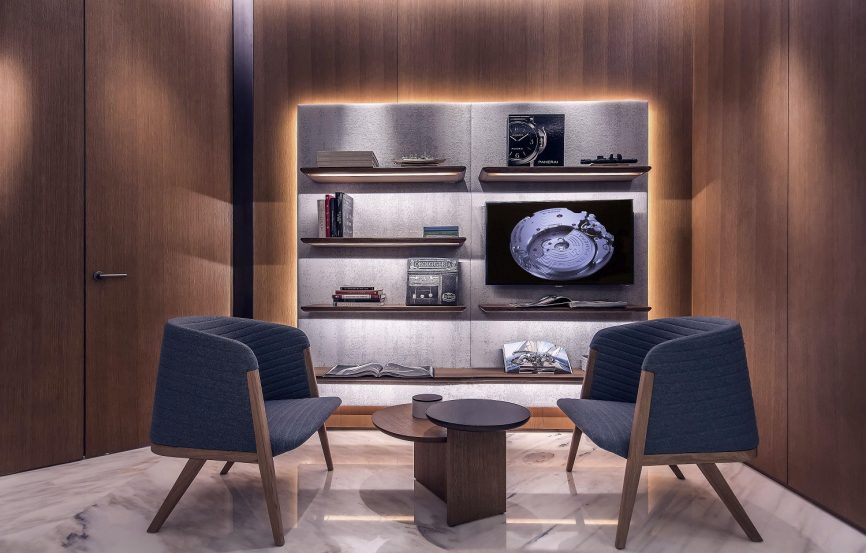
    Florentine high-end luxury watchmaker Panerai has opened a boutique in Kowloon.

    The 60sqm Panerai Tsim Sha Tsui Centre store is the fifth opened in Hong Kong, after the Landmark Prince, Canton Road, IFC and Times Square boutiques.

    The concept of the design and materials used reflect Panerai’s Italian tradition and stands as a reference to the underwater universe. The use of oak, veined Italian marble, burnished brass, bronze, and a special “reeded” glass reinterprets the watchmaker’s technical codes, as well as the brass lights and sales counters with wooden details recalling the sea and sailing ships.

    Panerai now has 85 boutiques throughout the world, five of which are in Hong Kong.

  • SM Retail Achieves Small Profit Boost

    SM Retail Achieves Small Profit Boost

    SM Retail has achieved a first-quarter profit increase of 5 percent to P2.7 billion (US$51.7 million).

    Retail revenues in the first three months rose by 13 percent year-on-year to P79 billion, while sales from specialty retail stores grew by the same percentage to P19.6 billion.

    As at the end of March, SM Retail had 2385 stores, comprising 63 department stores, 1388 specialty retail stores, 57 SM Supermarkets, 53 SM Hypermarkets, 194 Savemore, 52 WalterMart, and 578 Alfamart stores.

    The figures were included in the quarterly report of SM Investments, which boosted its profit by 26 percent to PHP10.7 billion (US$205 million).

    The gains reflected improved sales from the retail business as well as its property and banking activities.

    Consolidated revenues during the period were up 15 percent year-on-year to PHP109 billion ($2.1 billion).

    “We continued to deliver double-digit growth to both our top and bottom line in the first quarter,” said SMIC president Frederic DyBuncio. “Performance was strong across our businesses, particularly for our banks.”

  • WH Smith expands King Power partnership into Singapore

    WH Smith expands King Power partnership into Singapore

    WH Smith has widened its franchise partnership with King Power Group (Hong Kong) to Singapore.

    Until now, the franchise partnership deal struck last year covered Hong Kong only.

    The new partnership aims to grow WH Smith’s presence in Singapore and explore opportunities in rail and metro stations, ferry terminals and commercial centres. It excludes airport locations which WH Smith will continue to run directly.

    “We believe in the strength of the WH Smith brand and its business expertise as a leading international news, books and convenience operator,” said King Power MD for travel retail and duty free, Sunil Tuli.

    “The King Power Group has more than 25 years’ travel retail business presence in Asia, and we are well placed to develop the WH Smith business in Singapore.”

    “We are pleased to have extended our partnership with King Power Group,” said WH Smith MD international, Phil McNally. “We continue to be ambitious about expanding the WH Smith brand in Asia and, today, we are active and strongly growing in six countries in the region – in Singapore, Malaysia, Indonesia, the Philippines, India and China.”

  • Holidays boost Chinese e-commerce Numbers

    Holidays boost Chinese e-commerce Numbers

    An extended May Day holiday has proved a boon for Chinese e-commerce, especially among millennial consumers and high-end brands.

    Food orders among the generation group rose 112.4 per cent during the holiday period compared to last year, according to figures recorded at online delivery platform Eleme. Alibaba tourism platform Fliggy recorded a 500 per cent increase in the purchase of tourism products among people born after 2000, while online hotel orders from young parents with children under the age of three increased 77 per cent.

    Additionally, quality home appliances are now among the most highly sought-after products purchased on e-commerce sites.

    “This year’s May Day Holiday showed that people have stronger high-quality consumption demands, reflected not only in high-quality products but also in services,” said the Academy of China Council for the Promotion of International Trade’s head of international commerce Zhao Ping.

    “The growth has been driven by a surge in disposable incomes and the middle-income population,” she added.

    Millennials have now surpassed Gen-X consumers as the biggest e-commerce spenders, according to a report by market consultancy CBNData.

    “The younger generation, especially those born after 1990 and 1995, are more used to ‘fingertip’ consumption and are fast becoming disrupters in the e-commerce sector,” said CBNData business analyst Yang Qin.