Tag: asia

  • Telenor Myanmar expanding reach of LTE network

    Telenor Myanmar expanding reach of LTE network

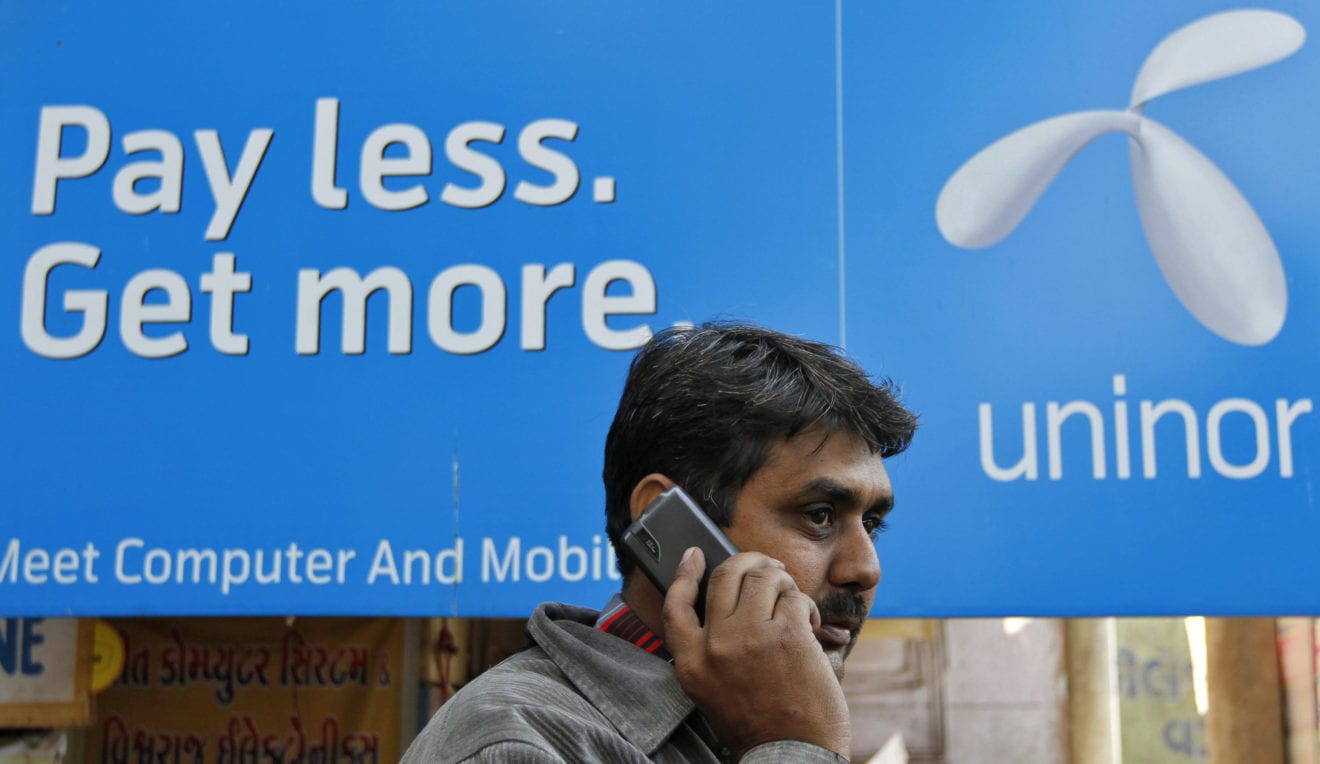
    Telenor Myanmar has announced it has nearly reached 100% of the nation’s townships with its LTE network, having rolled out over 6,100 LTE sites nationwide.

    The company’s LTE network now covers 307 townships, with the company having expanded to seven more townships during the first quarter.

    “Since the first quarter, the company has deployed 856 additional sites and aims to increase this to more than 1,100 by the end of the month,” according to Telenor Myanmar CTO Jai Prakash.

    “As per our commitment to bring the best possible things for Myanmar citizens, we have achieved our ambitious goal of establishing a network with 6100+ LTE sites in 2019,” he said.

    “We will keep upgrading our network for our customers with our best data network and also educating the population on how to use our service effectively and efficiently.”

    Meanwhile the operator has been working with Ericsson to prepare its network for 5G, having conducted a joint trial last year achieving 1Gbps downlink rates over its LTE network.

    In late November, the companies also commenced a pilot study involving the provision of IoT connectivity in Mandalay City.

  • ZTE, China Telecom launch 5G industrial service platform

    ZTE, China Telecom launch 5G industrial service platform

    ZTEChina Telecom and industrial equipment company Zhejiang Supcon have jointly developed a 5G-enabled industrial service platform designed to allow specialists to remotely assist on-site maintenance personnel.

    The Plantmate service platform allows on-site maintenance personnel to use augmented reality glasses equipped with high definition cameras to send real-time high definition images back to specialists over 5G.

    These specialists can then diagnose and troubleshoot problems remotely, communicating with on-site personnel over voice and video as well as a shared digital whiteboard.

    Users will also be able to access the maintenance specialist team at Zhejiang Supcon’s Hangzhou headquarters to obtain remote consultation and technical guidance for the company’s equipment and instruments.

    The three companies have announced plans to deepen their 5G cooperation in the industrial feed in the future to help jointly promote the implementation of a 5G industrial internet.

  • Roadmap reveals the Transition for an Android browser will Happen

    Roadmap reveals the Transition for an Android browser will Happen

    Back last summer, we told you that Mozilla is working on a new Android browser called Fenix. The app will eventually replace Firefox for Android and a support document posted by Mozilla offers something of a roadmap for this transition. After the Firefox browser app for Android receives Firefox68 in July, future updates will only carry security patches and bug fixes. The Firefox browser will be moved to the Extended Support Release (ESR) branch where Mozilla can manage engineering, testing, and release builds until Firefox reaches EOL (End-of-life) status.
    As we said, the Fenix browser will replace Firefox, but not until Mozilla is sure that Fenix has reached “migration readiness status.” So Firefox will continue to be kept secure and supported until Mozilla is sure that its new browser is ready to receive the migration of Firefox users. Based on the timeline created by the not for profit developer, Firefox will be kept alive until sometime next year.
    The timeline for Firefox, calls for an update to version 67 on May 14th, 2019 followed by the Firefox68 update to be disseminated on July 9th. After being moved to the ESR branch, the browser app will be updated in September, October, and December (again, these updates are for security and bug fixes only). As soon as Fenix is ready to receive those using the legacy version of Firefox, support for the latter will come to an end.
    Fenix was built from scratch; it will feature a brand new UI. Like Samsung’s OneUI interface, the most used elements will be found on the bottom of the screen. Swiping up on the display will show more available actions, and once you’re finished browsing on Fenix, open tabs are saved in a bundle called “sessions.” When the browser is in use, active tabs can be manually saved in sessions.
    Mozilla once said that “Fenix is not your parent’s Android browser.” We won’t know how accurate that statement is until the app is ready for prime time next year.
  • Nubia’s new Gaming handset has Fresh Features

    Nubia’s new Gaming handset has Fresh Features

    Remember when there was all that concern about the Qualcomm Snapdragon 810 SoC overheating? The fear was so real that Samsung decided to power the Galaxy S6 line with its own Exynos 7420 chipset, even in the U.S. where it usually equips its phones with a Snapdragon chip. Some manufacturers started using small (.6mm) heat pipes in order to dissipate the heat generated inside a smartphone.

    Nubia announced the first smartphone to be equipped with a cooling fan, the Red Magic 3 gaming phone. To keep the handset’s internals cool, the device combines what the company calls “state-of-the-art liquid cooling technology” with an internal fan. Nubia says that this combination increases heat transfer by 500%; not only does this keep the phone cool in the user’s hand, it also boosts the performance of the device providing a smoother experience.

    While the Nubia Red Magic 3 will launch on May 3rd in China, it also will be available next month in the U.S., Canada and Europe (including the U.K.). Pricing has not yet been announced, but the phone does feature high-end specs. The device comes with a 6.65-inch AMOLED screen with an FHD+ resolution. With a refresh rate of 90Hz (most phones refresh at 60Hz) the Red Magic 3 will offer users smooth gameplay. The Snapdragon 855 Mobile Platform is under the hood, and there will be three different memory/storage configurations (6GB RAM/128GB storage, 8GB RAM/128GB storage and 12GB RAM/256GB storage). In addition, the phone features dual front-facing stereo speakers, DTS:X and 3D sound. This creates a “cinematic soundscape” with or without headphones. Instead of having to use a gamepad accessory, the handset has touch-sensitive shoulders that can be customized.

    The Red Magic 3 is more than just a gaming phone. It happens to be pre-installed with a nearly stock version of Android 9 Pie. On the back is a 48MP camera using Sony’s IMX586 sensor, and in front is a 16MP selfie snapper. With a 5000mAh battery inside, you won’t have to worry about finding an outlet in the middle of the day, and perhaps the next day as well. And if you happen to be an ardant gamer, the RedMagicGameSpace2.0 dashboard allows you to quick-launch games, optimize settings and the fan speeds, check the temperature inside the phone, and record in-game videos. It also allows you to block notifications so that you can enjoy uninterrupted game play. The Red Magic 3 will be available in Black or Red.

    Starting tomorrow, April 29th, consumers can sign up to win an opportunity to unbox the Red Magic 3 by visiting this website. Three first prize winners will receive the Red Magic 3 before the release date, and will get to do a live unboxing and hands-on over the Red Magic website and Nubia’s social media channels. Three second prize winners will have the opportunity to buy the Red Magic 3 at 50% off and four third prize winners get to take 20% off the price of the phone.

    Back in February, Nubia launched the Red Magic Mars gaming phone in the U.S. That model features a 6-inch LCD screen with a 1080 x 2160 resolution. While Nubia called this device a gaming phone and a daily driver in one unit (which it also says about the Red Magic 3), the $399 price surely caught the eye of smartphone buyers in the states. We don’t know the price of the Red Magic 3 yet; if Nubia keeps it low, it will be hard for U.S. consumers, unlike the phone, to keep cool.

  • Verizon expands 5G to 20 more cities

    Verizon expands 5G to 20 more cities

    Following the launch of 5G services in Chicago and Minneapolis, US operator Verizon announced 20 new cities where it will turn on its 5G Ultra Wideband network this year. Verizon previously said it will launch 5G services in parts of at least 30 cities in 2019.

    The new cities include Atlanta, Georgia; Boston, Massachusetts; Charlotte, North Carolina; Cincinnati, Cleveland, and Columbus, Ohio; Dallas and Houston, Texas; Des Moines, Iowa; Denver, Colorado; Detroit, Michigan; Indianapolis, Indiana; Kansas City, Missouri; Little Rock, Arkansas; Memphis, Tennessee; Phoenix, Arizona; Providence, Rhode Island; San Diego, California; Salt Lake City, Utah; and Washington, DC.

    Verizon also said it will roll out its fixed wireless 5G Home broadband service to some of those markets, but didn’t specify which ones would see the service. The 5G Home service delivers 300 Mbps to subscribers for $50 per month for customers with Verizon wireless service or $70 per month for those without.

    Verizon said it’s now taking pre-orders for the Samsung Galaxy S10 5G, the first 5G-capable phone to launch in the US. Verizon has a limited period of exclusivity for the phone before carriers T-Mobile and AT&T can begin offering the device.

    “The Galaxy S10 5G on Verizon’s 5G Ultra Wideband network will give our customers access to incredible speeds and the latest and greatest streaming, augmented-reality, gaming, and consumer and business applications that bring us into a future powered by 5G,” said Brian Higgins, Verizon’s vice president, device and consumer product, in a statement.

    Verizon is offering new and existing customers the opportunity to trade in an eligible smartphone and save up to $450 off the S10 5G, which retails for $1,300. Verizon is offering the 256GB version of the device for $54.26 per month for 24 months with its device payment plan; while the 512GB version is available for $58.33 per month for 24 months.

    Access to Verizon’s 5G network is available only to customers who have an “Above” and “Beyond Unlimited” plans and a 5G phone. Both plans include unlimited 5G Ultra Wideband data, hotspot and 4K HD video streaming in areas where the 5G network is available. During the company’s first 5G network launches in Chicago and Minneapolis, Verizon was charging customers an extra $10 per month, but the carrier will waive that fee for a limited as a promotion.
  • Sony’s days in the smartphone Industry are Ending

    Sony’s days in the smartphone Industry are Ending

    Sony has never been able to obtain success in the smartphone industry the way it once controlled the mp3 market, the video game console market, and the television market. Trying to differentiate itself, this year’s Xperia 1 flagship, unveiled at MWC in February, features a 6.5-inch 4K AMOLED display with a 21:9 aspect ratio. Despite what would appear to be a great screen for watching streaming video on, the pricing is sure to turn some away.

    For the second time in six years, a particular hedge fund is building up a stake in Sony hoping to influence its business decisions. Those familiar with the plans say that Third Point LLC, run by Daniel Loeb, is looking to implement its own turnaround strategy for Sony. Loeb’s fund reportedly has $14.5 billion in assets and is believed to be raising money ($500 million to $1 billion) for a fund dedicated to the purchase of more Sony shares.

    The parts of Sony that Third Point wants to take a hard look at include the semiconductor and insurance businesses and the movie studio, which some believe that Amazon and Netflix could be interested in. And while the report from Reuters doesn’t mention the mobile phone business, it most likely would be a division that Loeb would prefer to see Sony jettison. Last month, the company folded its mobile unit into the same business segment that includes its TV, camera and audio products. And a report published in March stated that by next year Sony will cut the head count in its smartphone division in half.

    Jefferies analyst Atul Goyal told clients in a note sent out last week that Sony needs to exit the mobile phone business. Sony will no doubt want to gauge the reception to the Xperia 1 before it decides whether or not to stop producing smartphones. But if Third Point LLC builds a big enough stake in Sony, the decision whether to cut its losses in the smartphone industry might be taken out of the company’s own hands.

  • Mario Kart Tour beta registrations open for Android users

    Mario Kart Tour beta registrations open for Android users

    Nintendo plans to bring yet another game to Android and iOS device this summer – Mario Kart Tour. Officially revealed two months ago, the next Mario game for mobile won’t be released until at least June.

    However, Nintendo fans will have a chance to take a peek at what’s to come thanks to the closed beta program the Japanese company has just announced. Assuming you’re living in the United States or Japan, you can now register for the Mario Kart Tour closed beta on the game’s dedicated page.

    Unfortunately, it’s only Android users that are allowed to register for the closed beta, and there’s little chance the iPhone owners will be given the chance to test Mario Kart Tour before the official release.

    Obviously, the number of Android users who may participate in the closed beta is limited. According to Nintendo, if the number of applications exceeds the number of possible participants, the company will randomly select the participants.

    Android users can register for the closed beta between April 23 and May 7, while the beta test is scheduled for May 22-June 4, but these dates can be changed prior notice.

  • Samsung Brings inexpensive Galaxy Fit-e fitness trackers

    Samsung Brings inexpensive Galaxy Fit-e fitness trackers

    Unveiled back in February, the Galaxy Fit is likely get a cheaper brother, which hasn’t been officially introduced yet. Samsung was quite vague regarding the Galaxy Fit’s availability saying that Galaxy Fit-e will be launched in Q2 2019, and didn’t offer any details about pricing.

    However, we’ve just learned that the Galaxy Fit-e will be launched in the United States on May 21. Android Pit reports the fitness tracker has already been listed on Samsung Albania website with a price equivalent of just $35.

    The inexpensive Galaxy Fit-e sports a monochrome PMOLED display and a small 70mAh battery that should offer about one week of battery life. The fitness tracker is waterproof (5 ATM) and very light (15g).

    It comes with all the fitness and health specific features, including sleep and pulse tracking, notifications and exercises. Samsung Galaxy Fit-e will be available in three colors: black, white, and yellow.

    Apparently, Samsung Albania jumped the gun on the Galaxy Fit-e since no other Samsung website lists the fitness tracker yet. Also, take the information with a grain of salt until the South Korean company make the Galaxy Fit-e official.

  • Action Launcher 40 released with lots of Features

    Action Launcher 40 released with lots of Features

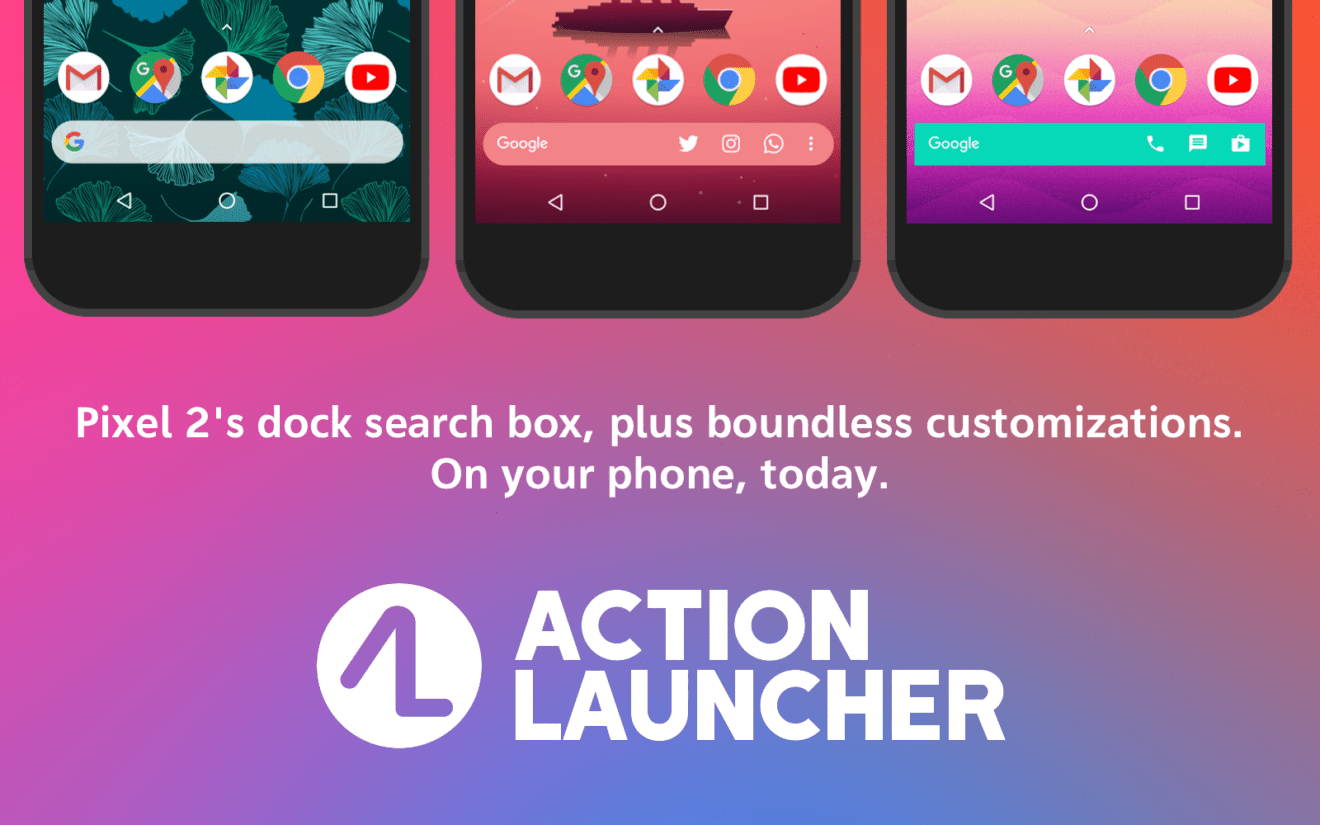
    With more than 5 million download in the Google Play Store, Action Launcher is among the most popular Android launchers. Not only for that reason, developer Chris Lacy has just released a major update that brings Action Launcher to version 40 and introduces a new icon, along with many important improvements.

    The first thing long-time Action Launcher users will notice is the new, colorful icon that’s meant to induce the ideas of customization and accessibility. Now that we’ve done with the design changes, let’s take a look of the more juicy stuff.

    Action Search is a brand new feature that allows users to search across the web deeper than ever. You can now use the new feature to check through your in-app search history and Android and Action Launcher’s settings. Basically, you’ll be able to get to a specific system or Action Launcher directly from the home screen. More importantly, Action Search is available for all users, not just those who purchased the premium version of the app.

    Along with Action Search, the update brings a brand new Action Web Search, which is a “custom built, externally hosted, Action Launcher themed web search solution,” which is meant to provide users with web, news, image and video search results.

    Last but not least, Action Launcher 40 adds the ability to specify the app’s default search engine. So, besides Google and the newly introduced Action Web Search, native support for Bing and DuckDuckGo are now available for users.

    Of course, many under the hood improvements have been implemented as well, including key bug fixes, improvements of app’s boot time, and addressing a major memory leak issue.

  • Google removes apps from the Play Store for Ad fraud

    Google removes apps from the Play Store for Ad fraud

    A successful Android app developer with over half a billion installs to its credit is having its apps removed by Google from the Play Store. DO Global, based in China, has had 46 apps erased from Google’s Android app storefront after an investigation conducted by BuzzFeed found serious issues with the apps. Before Google started taking action against the developer, DO Global had approximately 100 apps in the Google Play Store making this one of the biggest actions ever taken against an app developer by Google. The remaining apps will be removed shortly. DO Global had been a wholly owned subsidiary of well know Chinese internet firm Baidu. But last year, the unit was spun off and Baidu kept a 34% stake.

    The initial report from BuzzFeed said that at least six of the apps from DO Global would click on ads even if the app was not being used. Online security firm Checkpoint, in partnership with BuzzFeed, found the apps loaded with malware that it dubbed PreAMo.That’s because the apps fraudulently clicked on banner ads served up by mobile ad networks Presage, Admob, and Mopub. Checkpoint states that the malware was installed from these six apps a total of 90 million times.

    Some of the apps involved were credited to developers like “Pic Tools Group” and “Photo Artist Studio,” and their true ownership was hidden by DO Global. That’s another violation of Play Store rules. The developer contact information was also different on several of the apps, obfuscating their true owners. The actual titles include apps like RAM Master-Memory Optimizer; Photo Editor-Makeup Camera & Photo Effects and Crashy Cops. DO Global claims that its apps have 250 million monthly active users, and said that its mobile ad platform reaches 800 million people.

    “We fully understand the seriousness of the allegations. Therefore, after reading the reports about our apps, we immediately conducted an internal investigation on this matter. We regret to find irregularities in some of our products’ use of AdMob advertisements. Given this, we fully understand and accept Google’s decision. Moreover, we have actively cooperated with them by doing a thorough examination of every app involved…moving forward, we will strictly follow relevant regulations and continue conducting a comprehensive review of our products. Lastly, during this process, we have caused misunderstandings and great concern due to our being unable to communicate in a timely manner and provide complete information. We offer our sincere apologies.”-DO Global

    In a statement, Google said that it will always investigate malicious behavior by apps. When it finds violations, it will prevent a developer from monetizing an app through AdMob and/or remove an app from the Play Store.

  • SoftBank JV to invest $125m in Project Loon

    SoftBank JV to invest $125m in Project Loon

    Japan’s SoftBank has announced that its joint venture HAPSMobile will invest $125 million in Google’s Project Loon to advance the use of high-altitude vehicles to carry mobile base stations.

    HAPSMobile, the joint venture between SoftBank and US-based unmanned aerial vehicle systems company AeroVironment, was established in 2017 to conduct network equipment research and development for the high-altitude platform station (HAPS) business.

    Under the agreement with Google, Loon has been given the right to invest the same sum in HAPSMobile at a later date.

    The two companies have also agreed to actively explore commercial collaborations to accelerate the development of high altitude network connectivity solutions, such as the network of stratospheric balloons that Loon is trialling to deliver internet access to unserved areas of the world.

    Potential areas of collaboration being negotiated include enabling flight vehicles from each party to connect and share the same network connectivity in the air, as well as the establishment of a wholesale business that would allow HAPSMobile to utilize Loon’s vehicle and technology, and allow Loon to utilize HAPSMobile’s in-development unmanned aircraft.

    Other possibilities include a jointly developed communications payload that is adaptable to multiple flight vehicles, a common gateway or ground station that could be deployed globally and used by both companies to provide connectivity over their platforms, and adapting Loon’s fleet management system and temporospatial SDN for use by HAPSMobile.

    “Building a telecommunications network in the stratosphere, which has not been utilized by humankind so far, is uncharted territory and a major challenge for SoftBank,” SoftBank CTO Junichi Miyakawa said.

    “Working with Alphabet’s subsidiary Loon, I’m confident we can accelerate the path toward the realization of utilizing the stratosphere for global networks by pooling our technologies, insights and experience. Even in this current era of coming 5G services, we cannot ignore the reality that roughly half of the world’s population is without Internet access. Through HAPS, we aim to eliminate the digital divide and provide people around the world with the innovative network services that they need.”

    “We see joining forces as an opportunity to develop an entire industry, one which holds the promise to bring connectivity to parts of the world no one thought possible,” Loon CEO Alastair Westgarth added.

    “This is the beginning of a long-term relationship based on a shared vision for expanding connectivity to those who need it. We look forward to what the future holds.”

  • Indonesia’s Teleglobal acquires capacity on SES-12

    Indonesia’s Teleglobal acquires capacity on SES-12

    Indonesia’s PT Indo Pratama Teleglobal has arranged to provide broadband access to underserved rural areas of the country via an agreement with satellite operator SES Networks.

    Under the five-year agreement, Teleglobal will use the SES-12 satellite and SES Networks’ managed data services to provide internet access and mobile backhaul services to 150,000 remote sites.

    Teleglobal has contracted 1.3GHz of capacity on the SES-12, which has six regional beams and 72 high throughput user spot beams.

    Teleglobal was selected by Indonesia’s Ministry of Communication and Information Technology to deliver rural capacity to complement the ongoing Palapa Ring project, which aims to connect the major islands in Indonesia with 11,000km of undersea fibre-optic cables to provide broadband internet infrastructure.

    The Indonesian Internet Service Providers Association (APJII) estimates that internet penetration in rural Indonesia is just 48%, compared to 72% in urban areas. It is even lower outside the most populous island of Java, falling to only 2.5% in some outlying provinces.

    “At Teleglobal, we believe in the power of connectivity, in opening new doors of opportunity to communities in Indonesia and around the world,” Teleglobal director Candra Indianto said.

    “With the new service offering, Teleglobal is bridging the digital divide and bringing much-needed e-Government and other essential services to the underserved rural communities of Indonesia. SES Networks’ unparalleled global reach and operational expertise make them the ideal partner to provide reliable, high-speed broadband connectivity to all corners of Indonesia.”

  • Verizon to waive $10 5G fee for three months

    Verizon to waive $10 5G fee for three months

    Verizon will waive for three months the $10 fee it planned to charge subscribers for accessing its 5G network. After launching in Chicago and Minneapolis earlier this month, the carrier announced an additional 20 cities across the US where it will turn on 5G services this year.

    Verizon said it’ll waive the charge for subscribers in Chicago and Minneapolis. A few of the reviewers reported disappointing results using the network, and some recommended consumers don’t pay for the service until the network is expanded and the kinks are worked out.

    While most people who tested the network reported achieving speeds of 300-600 Mbps, there were plenty of problems with finding the 5G network signal, or keeping the Motorola Z3 phone connected to it.

    During Verizon’s quarterly earnings call April 23, Verizon CEO Hans Vestberg said the network in those initial two cities was “performing as expected on a brand new technology being deployed for the first time in the world.”

    “As more features within the network become available for deployment through ongoing software innovation, we will provide increased coverage, improved capacity and greater throughput,” Vestberg said, according to a transcript of the call provided by Motley Fool.

    Verizon’s deployments in Chicago and Minneapolis used the carrier’s millimeter wave (mmWave) spectrum technologies to deliver high speeds in dense urban areas. But as Wave7 Research’s Jeffrey Moore told FierceWireless this week, mmWave technologies tend to have weak signal propagation, pointing to concerns about the urban use case for the technology when there are large buildings and other obstacles that can block the signal.

    Vestberg seemed to concede that there are challenges with mmWave during the earnings call. “We all need to remind ourselves, this is not a coverage spectrum,” he said. It’s unclear if those considerations factored into Verizon’s decision to wave the $10 fee for its 5G network.

  • KDDI, Terra Drone launch drone asset inspection service

    KDDI, Terra Drone launch drone asset inspection service

    Japan’s KDDI and industrial drone solutions provider Terra Drone have jointly launched a new drone inspection services for industrial infrastructure.

    The jointly developed solution involves using a drone to generate a 3D, high resolution model of heavy industrial assets such as wind turbines, telecom and transmission steel towers, smokestacks, and bridges.

    The drone will use the model to determine which components should be inspected, allowing the drone to shoot the inspection points from optimal angles and range designated by the Terra Inspection software.

    It uses mobile networks to transmit data back to inspection crews and to allow operators to remotely plan flight paths based on weather databases and maps.

    The solution also has potential applications in areas beyond asset inspection, such as large area surveillance, land surveying or precision farming.

    KDDI and Terra Drone jointly developed the underlying Smart Drone platform, and have developed a number of solutions based on the platform since 2016.

  • Globe extends GoWiFi service to over 2,000 sites

    Globe extends GoWiFi service to over 2,000 sites

    The Philippines’ Globe Telecom has announced it has expanded its GoWiFi public WiFi service to more than 2,000 sites across the country.

    The operator is now providing over 20,000 access points nationwide, up from 15,000 in 2018, and the network is hosting 18 million sessions per month, Globe said.

    During the year, Globe plans to further expand the network to cover more health clinics and hospitals, colleges and universities, and retail establishments.

    The service is also currently available at major transit points including the Ninoy Aquino International Airport (NAIA), as well as Metro Rail Transit (MRT) and Light Rail Transit (LRT) stations.

    Globe provides a free GoWiFi service with a maximum allocation, as well as a paid service than can be used to extend usage beyond the free allocation.

    Both services are available to all users with WiFi-enabled devices and select international numbers, and provide speeds of up to 100Mbps depending on location.