Tag: asia

  • Vietnam gets its first MVNO Provider

    Vietnam gets its first MVNO Provider

    Indochina Telecom has become the first MVNO in Vietnam, operating on the VinaPhone network. The operator is initially introducing services for workers in industrial parks in nine provinces and cities.

    Indochina Telecom has been attempting for over a decade to launch MVNO services in Vietnam, the report states. The company had initially failed to negotiate an MVNE deal with Viettel, but has secured one with VinaPhone, the mobile subsidiary of VNPT.

    The company plans to introduce a variety of packages tailored to different groups and user segments, and will cooperate with Vietnam’s mobile network operators to negotiate the best deals.

    Indochina Telecom’s introductory package provides unlimited under 20 minute within network and 30 minute out of network calls for 77,000 dong ($3.31) per month.

  • SenRa, myDevices launch IoT in a Box in India

    SenRa, myDevices launch IoT in a Box in India

    Pan-India LoRaWAN network service provider SenRa is teaming with IoT firm myDevices to launch an IoT solution for industrial use in India.

    The solution, called IoT in a Box, will initially be rolled out to provide end-to-end commercial refrigeration monitoring solutions for the Indian market.

    “We are excited to bring myDevices’ IoT in a Box solution offerings to the Indian market,” said Ali Hosseini, CEO of SenRa. “This collaboration will allow us to increase adoption of LoRaWAN in India and in its mainstream market. IoT in a Box is an off-the-shelf solution which will rapidly enable digitalization PAN India.”

    According to SenRa, there are over 90 million commercial refrigeration units in operation around the world and the global demand for commercial refrigeration equipment is expected to increase 4.5% each year through 2020.

    The company believes the partnership with myDevices will help drive India’s digital movement into industries yet to be penetrated in the Indian market.

    With India’s IoT market poised to touch $15 billion by 2020, new and cost-effective solutions are an integral part of driving the market growth and IoT adoption in India.

    The IoT in a Box’s commercial refrigeration temperature monitoring offering will now drive IoT adoption into industries such as retail, supply-chain management, logistics, healthcare, and even hospitality.

    The company believes the myDevices’ IoT in a Box solution and SenRa’s LoRaWAN network services will allow businesses like pharmaceutical labs, supermarkets, corporate cafeterias, restaurants, hospitals, and food manufacturing units to better monitor and manage their refrigerators and deep-freezing units remotely and in real-time.

  • Alibaba Cloud Ranked First in Asia Pacific by Gartner

    Alibaba Cloud Ranked First in Asia Pacific by Gartner

    Alibaba Cloud, the cloud computing and data intelligence arm of Alibaba Group, has been named first in Asia Pacific(*) market share for IaaS (Infrastructure as a Service) and IUS (Infrastructure Utility Services) in two consecutive years as per Gartner’s latest report revealed earlier this month named Market Share: IT Services, 2018. It has also retained its top three global provider position in the same space.

    According to this Market Share conducted by global analyst firm Gartner, Alibaba Cloud led the Asia Pacific market for IaaS and IUS with 19.6% market share (+4.7% market share gain from 2017). The technology innovator is followed by 11.0% and 8.0% market shares of the second (AWS) and third player (Microsoft) respectively in Asia Pacific in 2018.

    Alibaba Cloud boasts a strong network in Asia Pacific, with 15 availability zones in the region outside mainland China, covering Hong Kong, Singapore, Australia, Malaysia, Indonesia, India and Japan markets. It is the only global cloud provider that has set up local data centers in Indonesia and Malaysia, offering a wide range of cloud and data analytics products.

    “It is very encouraging that our continued dedication to enabling cloud development across industries in both Asia Pacific and globally(**) has been recognized by world’s leading research and advisory company. As the only global cloud provider originated from Asia, we will continue to champion millions of businesses through our world-class infrastructure, advanced analytics tools and thriving ecosystem.” said Lancelot Guo, Vice President of Alibaba Group and Head of Strategy and Marketing at Alibaba Cloud.

  • Microsoft, BMW team up to drive industrial IoT adoption

    Microsoft, BMW team up to drive industrial IoT adoption

    Microsoft and BMW have teamed up on a new initiative that they say will speed up the adoption of industrial IoT solutions.

    The two announced  at Hannover Messe earlier this month that they plan to develop an Open Manufacturing Platform (OMP) aimed at enabling faster and more cost-effective innovation in the manufacturing sector.

    In manufacturing today, production and profitability can be hindered by complex, proprietary systems that create data silos and slow productivity.

    The OMP is designed to break down these barriers with the creation of an open technology framework and cross-industry community, the companies said in a joint statement.

    It is expected that the initiative will support the development of smart factory solutions that will be shared by OMP participants across the automotive and broader manufacturing sectors.

    The goal is to significantly accelerate future industrial IoT developments, shorten time to value and drive production efficiencies while addressing common industrial challenges, the companies said.

    The OMP will be built on the Microsoft Azure industrial IoT cloud platform. BMW already manages more than 3,000 machines, robots and autonomous transport systems on Azure cloud, IoT and AI. The company said it will provide use cases to other manufacturers who sign up to the platform.

    Microsoft and BMW said they aim to bring in more manufacturers and suppliers and the goal is to have between four and six partners with them, working on 15 use cases by the end of the year.

    According to the companies, members will have access to reference architecture with open source components to integrate their own systems and a repository of data models to apply machine learning solutions.

    The platform meets the interoperability standards established by OPC.

    “The use of open international industry standards such as OPC UA in the OMP community enables manufacturers, machine builders and suppliers to integrate their existing equipment and systems efficiently and securely,” said Stefan Hoppe, president and CEO of the OPC Foundation. For a long time, companies have promoted proprietary, closed ecosystems — the OMP commitment to open development will shape tomorrow’s manufacturing.”

  • 5G helps Ericsson swing to profit in Q1

    5G helps Ericsson swing to profit in Q1

    Ericsson swung back to a 2.4 billion kronor ($254.3 million) net profit for the first quarter of 2019, partly as a result of the growth opportunities being afforded by 5G.

    Total sales increased 13% year-on-year to 48.9 billion kronor, driven by growth in North America due to the market’s early lead in the deployment of 5G.

    Ericsson CEO Börje Ekholm commented that the company has to date announced an industry-leading 18 commercial 5G deals.

    Meanwhile Ericsson managed to improve its gross margin to 38.5% from 35.9% due to improvements in its networks and managed services segments.

    But while network equipment sales grew 10% year-on-year during the quarter quarter, managed services revenue fell 5% over the same period as a result of scheduled contract exits.

    “As previously communicated, we continue to take strategic contracts and incur costs for 5G field trials and, in addition, by end of 2019 we expect large-scale deployments of 5G to commence in parts of Asia,” Ekholm said.

    “Combined, this will gradually impact short-term margins but strengthen our position in the long term. The impact of strategic contracts and 5G field trials was limited in Q1. The 5G market is gaining momentum and we are well positioned to capture opportunities.”

    Meanwhile Ekholm revealed it is now in the early stages of negotiating a settlement to close an investigation by both the US Securities and Exchange Commission (SEC) and the Department of Justice (DOJ) into allegations the company was involved in a bribery scheme in certain EMEA markets.

  • Google’s Curie cable reaches Chile

    Google’s Curie cable reaches Chile

    Google’s submarine cable empire now hooks up another corner of the world. The company’s 10,000km Curie submarine cable has officially come ashore in Valparaiso, Chile.

    While there are a few steps left before RFS I’m sure, the Curie cable system now connects Chile with southern California. it’s a four-fiber-pair system that will add big bandwidth along the western coast of the Americas to Google’s inventory.  Also part of the plans is a branching unit with potential connectivity to Panama at about the halfway point where they can potentially hook up to systems in the Caribbean.

    Subcom’s CS Durable brought the cable ashore on the beach of Las Torpederas, about 100km from Santiago. In Los Angeles the cable terminates at Equinix’s LA4 facility, while in Chile the company is using its own recently built data center in Quilicura, just outside of Santiago.

    Google has a variety of other projects going on around the world as well, as the company continues to invest in its infrastructure.  Google’s projects tend to happen pretty quickly, as unlike the rest of us they don’t necessarily have to spend time finding investors to back their plans.

  • LCX hosts Pac-Man Escape Out of the Maze

    LCX hosts Pac-Man Escape Out of the Maze

    Curated retail zone LCX has teamed up with Japanese video-game developer Bandai Namco on a creative project to celebrate the 40th birthday of Pac-Man.

    The LCX x Pac-Man Escape From the Maze collaboration is described as a “first-of-its-kind celebration party” taking place at the zone until June 2.

    Participants will be welcome to join Pac-Man escaping from the classic maze in the “Pac-Zone”, but the character will also be seen invading the whack-a-mole and claw machines with special friends. The plush characters will also trespass the bowling alley to throw a “Bowling Party”, alongside other promotional and celebratory stunts.

    Guests with a passion for nail care can have their fingers “bitten” by Pac-Man via special nail prints at the “Pac-Manicure” experience.

    To mark the LCX x Pac-Man Escape From the Maze event, LCX will introduce the first-ever overseas Pac-Store pop-up boutique, selling the Shibuya109 head store’s latest sought-after items.

  • China’s Luckin Coffee Looking at The USA

    China’s Luckin Coffee Looking at The USA

    China’s Luckin Coffee has filed for a US IPO seeking to raise up to US$800 million.

    For the time being, the IPO is officially indicated by a $100 million placeholder figure, however knowledgeable sources have disclosed the actual amount sought may be more than $500 million and up to $800 million, with the company’s valuation estimated at $4–5 billion, far higher than has been reflected in previous statements.

    Within the last few weeks the company secured a further $150 million in equity funding, ahead of the IPO.

    If the public listing is successful, it will make the Beijing-based cafe chain the largest US IPO by a Chinese company so far this year.

    China’s Luckin Coffee has undergone “expansion on steroids” in an effort to displace Starbucks as the biggest operator in the nation. This year, the firm plans to more than double its current network of 2370 stores, despite still operating at a loss following the ambitious growth spurt.

    Luckin’s net loss to shareholders was $475.4 million last year against a total revenue of $125.27 million. However the firm insists the future is bright – a prospectus released by China’s Luckin Coffee suggests that coffee consumption in China will rise to 15.5 billion cups by 2023 compared with the 8.7 billion cups consumed last year.

    “The big question for the brand long term is if, when it rolls back discounts, enough customers stick around,” said Shanghai-based principal at China Market Research Group Ben Cavender. “But the company has completely rewritten the rules for the coffee business in China and has impacted Starbucks as well as a host of smaller players.”

  • Bugatti Divo Undergoes Comprehensive Testing in Dessert

    Bugatti Divo Undergoes Comprehensive Testing in Dessert

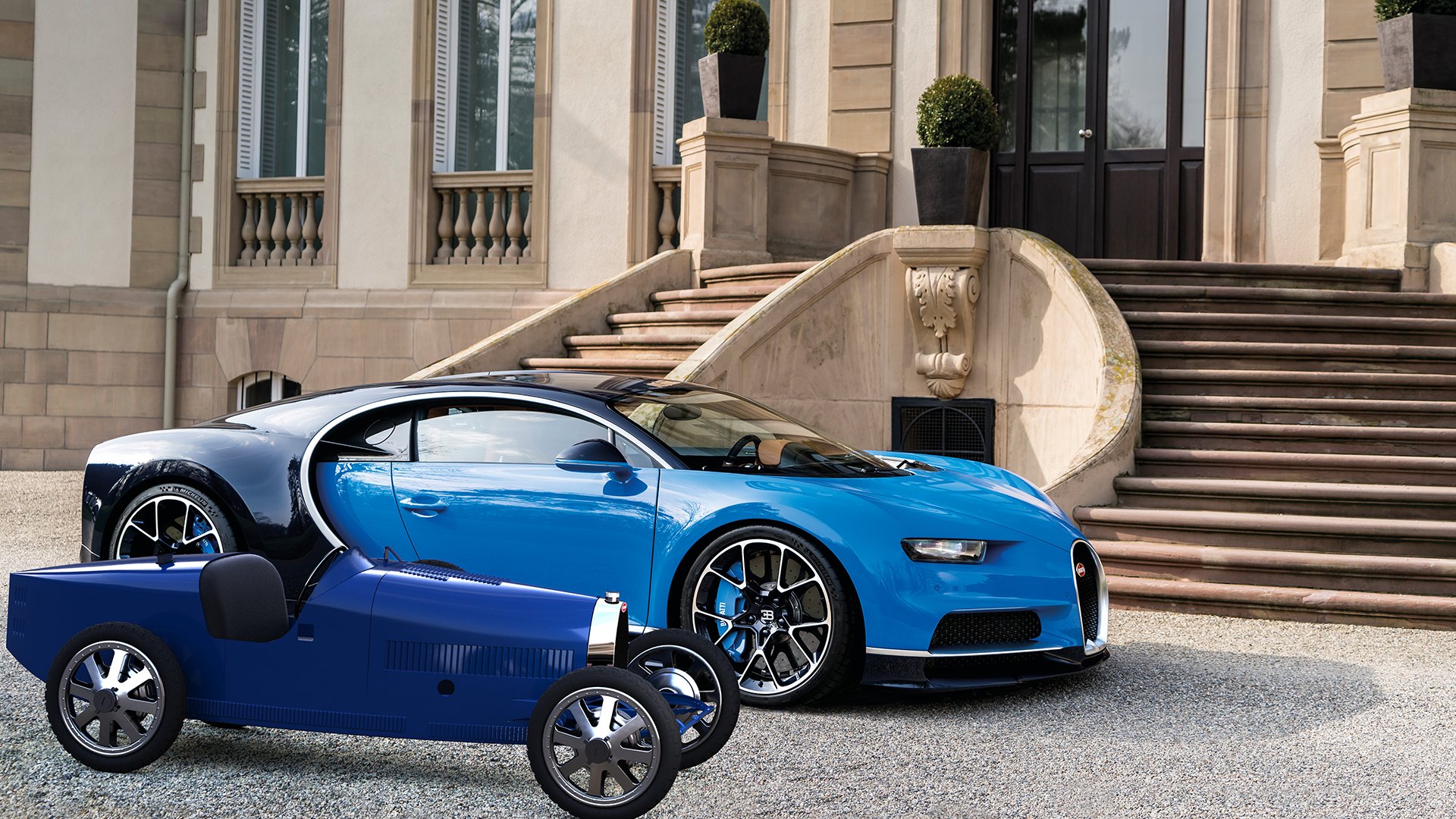
    After months of anticipations, the Bugatti Divo was unveiled last year at the Pebble Beach Concours. It is a rather beautiful car and only 40 units of it will be made. Bugatti wants to make sure that the Divo endures all weather conditions and is conducting a thorough test. In a Facebook post it shared pictures of the Divo undergoing summer testing in the scorching desert where the temperatures were beyond 40 degree Celsius and the Bugatti Divo was tested at 250 kmph.

    Now that may not be something that Divo owners are looking forward to, but it’s a customary thing for Bugatti and it wants to make sure that the Divo can sustain such high temperatures and the engine delivers the same performance. Under its fancy skin, the Divo is technically a Chiron. It is powered by the same 8.0-litre quad-turbo W16 engine which churns out a mental 1479 bhp which can propel it to triple digit speed in just 2.4 seconds.

    What adds to its mightiness is the advanced aerodynamics which complements the handling to tackle the manic speed it can take. It gets a massive 1.8-metre hydraulic wing, a sharp and wide chin spoiler up front and a huge diffuser. Altogether, the Bugatti Divo makes 456 kg of downforce at its top speed which is a good 90 kg more than the Chiron. However, the aerodynamics put a lot of downforce which at 380 kmph make it a bit slower when compared to the Chiron and even the Veyron.

    The Bugatti Divo is a product of the Nardo test track which makes it more track-focused. It’s quicker, lighter and even sharper at corners. It’s been named after the legendary French racing driver, Alberto Divo who was a two time winner of the Targa Florio race back in the 1920s.

  • ICBC Singapore Issues Bank’s First Green Bond

    ICBC Singapore Issues Bank’s First Green Bond

    State-owned bank offers green Silk Road bond in three currencies one week after a similar exercise by rival Bank of China. Acting through its Singapore branch, the Industrial and Commercial Bank of China (ICBC), the world’s biggest bank by assets, has issued its first green bond offering in three currencies totalling $2.2 billion equivalent, Reuters reported on Wednesday.

    The U.S. dollar-denominated tranche includes $900 million three-year floating rate notes priced at three-month Libor plus 72 basis points and $600 million five-year floating rate notes priced at three-month Libor plus 83 basis points. They received over $2.4 billion and $1.5 billion in orders respectively, with Asia buying 92 percent of the deal and the rest coming from EMEA in both cases, according to Reuters.

    The 1 billion yuan ($149 million) three-year tranche was priced at 3.3 percent. The 500 million euro tranche received over 1.8 billion euros in orders.

    DBS Bank was the only Singapore bank among the issue’s joint global coordinators, which also include ICBC, Credit Agricole, HSBC and Standard Chartered Bank. DBS was also the joint book runner and joint lead manager of the issue. There were 22 underwriters for the bond issue, which intends to support green projects under China’s Belt and Road Initiative.

    According to Clifford Lee, DBS Bank head of fixed income, said that ICBC Singapore’s successful issuance of its first green bond is underpinned by its commitment to financing sustainable development along the Belt and Road, «The Business Times» reported.

    A week before, Bank of China raised $3.8 billion equivalent across five currencies and eight tranches from its fifth Silk Road bond offering.

  • Avaloq Launches Disruptive Collaborative Platform

    Avaloq Launches Disruptive Collaborative Platform

    Fintech firm Avaloq announces the launch of a new collaborative platform to help the financial services industry work more effectively with fintechs. Avaloq’s new platform avaloq avaloq.one aims to seamlessly connect leading fintechs and their solutions to its global financial clients, the company said in a statement on Tuesday. The platform is designed to promote and showcase true fintech innovation and place Avaloq, its fintech partners, and its clients at the forefront of the digital revolution underpinning the next generation of financial services.

    «We are excited and proud of our new platform and are actively looking to partner with fintechs around the world to grow our marketplace. Our aim is simple: to make avaloq.one the world’s leading ecosystem of banks, wealth managers, fintechs and developers,» said Martin Greweldinger, Group Chief Product Officer at Avaloq in a media statement.

    avaloq.one is meant to speed up and streamline implementation for all parties through standardized Open Application Program Interfaces (APIs), with fintechs benefiting from a partnership with the ability to self-onboard to the platform, self-integrate with Open APIs, journeys and the avaloq.one sandbox capabilities. In addition, participating fintechs only need to integrate their solution to the Avaloq Banking Suite once to engage with Avaloq’s clients.

    For banks and wealth managers, avaloq.one allows access to greater innovation, and they will remain competitive by choosing from a selection of fintech applications pre-integrated to Avaloq’s Banking Suite in one place. Avaloq will continuously screen the market and validate fintech solutions and the company behind it as it looks to build an ecosystem of the world’s «fintech finest» that institutions can trust.

    «Being part of the avaloq.one ecosystem is a significant development for our firm. The platform gives us access to some of the world’s leading financial institutions and is an excellent opportunity to better connect with financial institutions and drive innovation across the industry. We have integrated once and can now reach over 150 financial institutions and millions of their clients worldwide,» said Oliver Berchtold, Co-Founder of YUKKA Lab.

    avaloq.one will be launched at Fintech Tuesday in Zurich on Tuesday night, a new event format where banks, fintechs and the Avaloq team meet. Avaloq reported full-year revenues of 579 million Swiss francs for FY2018, up 6 percent on an underlying basis.

  • Triumph Speed Twin Launched In India

    Triumph Speed Twin Launched In India

    Triumph Motorcycle India has launched the much-anticipated Speed Twin, priced at ₹ 9.46 lakh (ex-showroom, India). The 2019 Triumph Speed Twin is the newest addition to the British motorcycle marque’s much-loved Bonneville range, and the bike made its global debut last year, in December 2018. The new Triumph Speed Twin sits right between the Bonneville T 120 and the Thruxton R, as a contemporary modern classic offering both performance and handling, in addition to a more upright and easy-to-live-with ergonomics. This makes the motorcycle very appealing to someone looking for an accessible motorcycle like the Street Twin but with Thruxton R-level performance.

    The new Triumph Speed Twin is powered by the Thruxton R-sourced 1200 cc ‘high power’ parallel-twin engine, which comes with some revisions like – a low inertia crank, a high compression head, magnesium cam cover, and a revised clutch assembly. These updates have made the engine 2.5 kg lighter than the Thruxton R motor. In terms of power output, the engine is now tuned to churn out 96 bhp at 6,750 rpm and develop a peak torque of 112 Nm at 4,950 rpm, while being mated to a 6-speed gearbox.

    The Triumph Speed Twin remains true to its Bonneville legacy with is modern classic design and styling. The bike has this overall dark undertone thanks to blacked out engine, front forks, headlamp, wheels, exhaust among others, while the contrast is added by the fuel tank which comes in three colour options – Red, Black and Grey. The bike also comes with bar-end mirrors, a flat single piece seat, and twin-pod instrument console with two small digital LCD screens offering a host of information, including selected riding mode, clock, trip meters and odometer. Furthermore, the Speed Twin comes with LED daytime running lamp along with LED rear lamp and LED indicators and there is also a USB charging socket.

    The new Speed Twin comes with ride-by-wire system, torque assist clutch, USB power socket, three riding modes – Road, Rain and Sport, and traction control can be switched off completely, for riders looking to get even more adventurous with the Speed Twin’s performance. Suspension duties are handled by a pair of 41 mm KYB cartridge forks at the front, and the twin pre-load adjustable KYB shocks at the rear. Braking is handled by dual 305 mm discs gripped by Brembo four-piston four-pad axial calipers up front, and a single 220 mm disc on the rear wheel with a two-piston caliper from Nissin. The bike also comes with 17-inch, seven-spoke cast Aluminium wheels, shod with Pirelli Rosso Corsa III tyres.

  • Homewares Influenced by SPA and Wellness Concepts

    Homewares Influenced by SPA and Wellness Concepts

    The concept of wellness will increasingly be incorporated into houseware and home designs, predicts consumer market analytics firm WGSN. Speaking at the 34th HKTDC Hong Kong Houseware Fair and the 10th HKTDC Hong Kong International Home Textiles and Furnishings Fair, WGSN Mindset trends specialist Charlie Clark looked at the design concepts, colours and macro directions that will define homeware collections for spring/summer 2020.

    She explained how “sensorial wellness” – the concept of wellness embracing living as well as mental and physical health – is increasingly at the forefront of consumers’ minds and will become a theme in upcoming houseware designs.

    According to Clark, there will be a greater emphasis on the way textures and colours are used to affect our mood, and how the arrangements of spaces and products can make us feel energised or calm.

    Clark highlighted four design trends that have emerged out of this wellness theme, with corresponding zones set up at the Houseware Fair so that visitors could experience how these concepts can be applied to product designs.

    The trends include “Primitive Future”, a tendency toward sensorial simplicity in a blend of high-tech and organic lifestyles; “Hyper Room”, underscoring a mysterious and sometimes moody sense of the future; “Playful Plush”, blending culture with global influences; and “Harmony Lab”, emphasising wellness in the relationship between humans and technology.

    The fairs ran from April 20 to 23 at the Hong Kong Convention and Exhibition Centre. Some 2500 exhibitors from 28 countries and regions were featured at the fairs to showcase the latest houseware and home textiles collections to global buyers. The two four-day fairs welcomed close to 47,000 buyers from 121 countries and regions.

  • Turning data into Useful Insights in the age of IoT

    Turning data into Useful Insights in the age of IoT

    If you think about what your home was like even just a few years ago, life was very different. Think about what grocery shopping was like. You’d open your fridge door to check out what’s missing, scribble down on a notebook a shopping list of what you need, turn off the aircon and switch on the alarm before you left the house and leave.

    Now, your smart fridge automatically knows when you’re running low on milk and will order the specific brand and size that you prefer and have it delivered to your front door. Left home and forgot to switch the aircon or alarm on or off? Simply view the app on your smartphone and tap your appliances on or off.

    Known as the Internet of Things (IoT), people are consuming information from more connected devices and as a result, marketing practices are rapidly changing. Retailers need to learn how to speak to customers through more channels than before.

    As IRI’s product solution director Adam Fisher explains, while more devices are creating more communication, marketers are getting blocked where they weren’t before. What happens when your fridge starts ordering groceries for you? Where a marketer could previously capture customers at the shelf in a grocery store, they now need to work out how to get your attention when the fridge automatically orders milk to your doorstep.

    “From a marketer’s standpoint, there are so many devices vying for people’s attention — How do you get the right person’s attention at the right time?” Fisher asks.

    According to Fisher, one of the biggest challenges for retailers is knowing how to turn all the data into actionable information.

    “It’s knowing how do I bring [the information] in, how do I make sense of it, but on top of that, how do I know when I need to do something when it’s signalling something?” he asks.

    Creating cut-through

    Marketing automation can give brands more insights and data into how people are responding to these different channels and how they should be approached, suggests Fisher. It’s one of the biggest trends in retail today and can help businesses engage with their customers by programmatically finding the optimal marketing and promotional activities for defined customer segments.

    A major benefit of IoT is the fact that based on all this new information from devices, brands and retailers are able to bring products to market faster, allowing them to keep up with the ever-changing retail landscape.

    However, it is vital that businesses have the right infrastructure in place in order to deliver real business growth.

    Fisher says: “It is important that they have the technology and the right partner in place. In order to do this, brands and retailers will have to combine mobile and cloud technology infrastructure and go entirely digital to build a new business model by connecting people, things, processes, and data to keep up with technological innovation. That is the essence of what we do at IRI, is connecting the dots to help make faster and stronger business decisions.”

  • Huawei taps Infosys to help its build cloud ecosystem

    Huawei taps Infosys to help its build cloud ecosystem

    Huawei’s continued quest to be one of the world’s largest cloud players took a small step forward with the announcement of a new partnership with Infosys.

    Huawei Cloud has signed a memorandum of understanding (MOU) with India-based IT firm Infosys in order to help enterprises transition to the digital cloud. As part of the MOU, Infosys will join the Huawei Cloud Partner Network (HCPN) in order to better blend Infosys’ products with Huawei Cloud’s offerings.

    “Combining Huawei Cloud’s product innovation and Infosys’ strengths in next-generation digital services, we will help our clients accelerate their transition to the cloud,” said Infosys President Ravi Kumar, in a prepared statement. “As part of this engagement, we will provide a suite of technologies hosted on Huawei Cloud, such as workload migration solutions including SAP and other enterprise workloads.”

    Over the past several years, Huawei has made a determined effort to become one of the world’s largest cloud providers, but it faces stiff competition from Amazon Web Services, Microsoft Azure, and Google Cloud. Closer to home, Huawei also competes with China-based Alibaba. Alibaba has been making a concerted effort to expand its cloud business into Europe.

    According to a February report by Synergy Research Group, Amazon Web Services increased its market share at the end of last year to the point where it is equivalent in size to the next four competitors combined. In order, Microsoft, Google, IBM and Alibaba held the top spots after AWS, according to Synergy Research Group.

    While Huawei wasn’t mentioned among the top cloud providers in the report, it has been trying to build a cloud ecosystem since at least 2016 when it first launched its “All Cloud” strategy for ICT infrastructure. A year later, Huawei announced it was seeking cloud computing partners to become the world’s fifth largest cloud provider behind AWS, Azure, Google and Alibaba.

    Given its size, Huawei Cloud may be able to muscle its way into cloud markets that are currently underserved by the top four companies, but there are also a host of medium and regional cloud companies.

    In this week’s first quarter earnings report, which was the company’s first, Huawei touted the artificial intelligence capabilities that are in Huawei Cloud.

    “Huawei CLOUD remains committed to innovation. It aims to build the best possible hybrid cloud, provide full-stack AI solutions for intelligent industries, and make inclusive AI a reality,” the company said in its earnings report. “More than one million enterprise users and developers have chosen to work with Huawei Cloud. In Q1, Huawei Cloud services were launched in Singapore, and Huawei Cloud released its AI model market.”

    In yesterday’s press release, Huawei said the number of HCPN partners had exceeded 6,000. Working with those partners, Huawei Cloud has added 2,800 applications that are available in 23 regions around the world.