Tag: asia

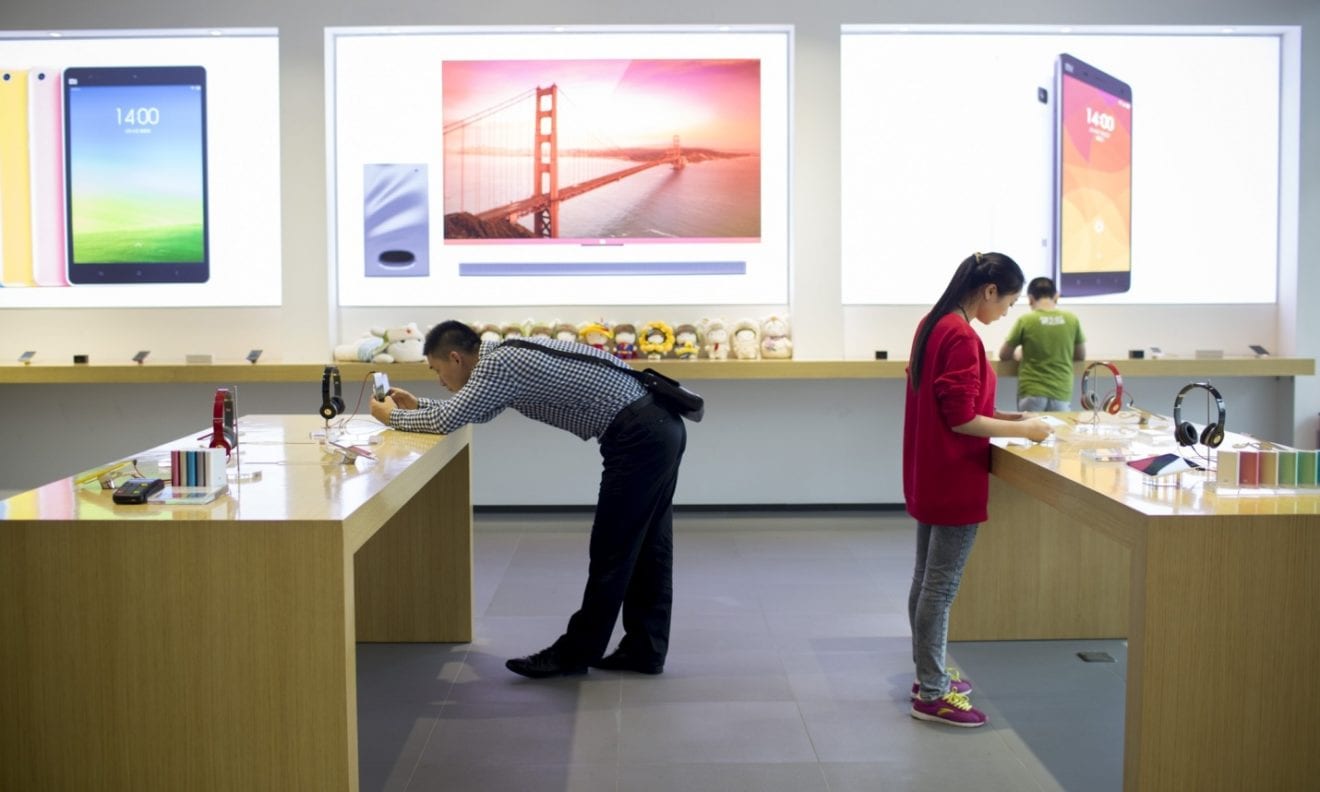
  • Xiaomi India plans 10,000 New Stores

    Xiaomi India plans 10,000 New Stores

    Xiaomi India will open 10,000 outlets in a bid to lock down its dominance over Samsung in the territory.

    The Chinese-headquartered company also announced last week that it expects 50 per cent of its business to be generated by trading offline by the end of this year.

    “About two years ago, we realised that while we had a 50 per cent share in online sales, our offline presence was negligible,” said Xiaomi VP and MD Manu Jain. “That’s when we started our offline expansion.”

    The firm opened in India as an online-only brand about five years ago. Its new “Mi Studio” retail format will join Xiaomi’s more than 6000 existing outlets in other categories, including Mi Homes, Mi Preferred Partners and Mi Stores.

    The firm opened 500 outlets in one day in India last October.

    Xiaomi is already ahead of Samsung in smartphone sales, with a 28.9 per cent share as of December last year, compared with Samsung’s 18.7 per cent.

    “Mi Studios aim to offer premium brand experience in 50 top cities,” said Jain. “This format is an optimised version of Mi Homes replicating the same design and displaying modern, minimalist interiors.”

    Two of the new 400–600sqft Mi Studios outlets have already been set up in Bengaluru and Mumbai.

    Xiaomi has also recently entered the Romanian market with a new flagship Mi Store in Bucharest. The Mega Mall Bucharest outlet sells the full range of Xiaomi products, including smartphones, headsets, electric scooters, and home appliances.


  • Google Earth Timelapse Finally arrives on Mobile

    Google Earth Timelapse Finally arrives on Mobile

    The zoomable time-lapse video feature that allows Google Earth users to see how the planet’s surface has changed in the last 35 years, Google Earth Timelapse is now available on mobile. The Mountain View company has just announced it has released a new update that adds two additional years of imagery, as well as mobile support and visual improvements to make exploring more user-friendly.

    Besides being able to see how various parts of the Earth have changed in the last 35 years, Google Earth Timelapse allows more in-dept geospatial analysis since it includes more than 15 million satellite images coming from the US Geological Suvey/NASA Landsat and European Sentinel programs.

    Naturally, Google Earth Timelapse is available tablets as well, not just on smartphones. Apparently, mobile browsers would disable the ability to autoplay videos, which is absolutely mandatory for Timelapse. However, Chrome and Firefox have reinstated support for autoplay (sound muted), which is why Google was able to add mobile support with the latest update.

    Along with support for mobile, Google also added the new Material Design to Timelapse, which features simple, clean lines and clear focal ares to make is easier for usersd to navigate Google Earth Timelapse’s huge imagery database. Also, a new “Maps Mode” toggle is now available for mobile users to enable them to navigate the map using Google Maps.

  • Forever 21 China Closes Down Online Stores

    Forever 21 China Closes Down Online Stores

    Fashion retailer Forever 21 will close its Chinese e-commerce website amist indications of possible physical store closures to come.

    While an April 25 notice on the brand’s home page confirms the e-commerce shutdown, the retailer has declined to issue any official comments, despite the confirmed shuttering of one physical outlet and major discount sales reportedly underway in other stores. It has been operating in the territory since 2011.

    Tmall and JD have released statements indicating that the fashion retailer will cease trading on their platforms from today onward.

    The brand’s last remaining store in Taiwan closed last month, while stores in other markets have reportedly been closing down as well, including France. Forever 21’s multi-storey flagship in Hong Kong closed in 2016, with the space being taken over by Victoria’s Secret. It opened a smaller store on Mong Kok in its place.

    A report in Retail Dive suggested that the possible withdrawal accords with a slowing retail environment within China for international goods, pointing to the withdrawal of Amazon from the territory after investing in the market for 15 years.

    “Overall this is a big and tough market to compete for non-Chinese brands, given strong domestic competition and unique consumer demands,” said China practice lead at global public policy consultancy Access Partnership Xiaomeng Lu. “Domestic e-commerce giants such as Alibaba, JD.com, and Pinduoduo compete fiercely against each other as well as edge out smaller brands.

    “Chinese customers are used to shopping on apps, expect low-cost same-day shipping, and tend to have little brand loyalty.”

    The report also quotes Euromonitor International analyst Arianna Zhai as commenting “Alibaba and JD alone have taken about 70 per cent market share. The strong presence and different strategic positions of both e-commerce retailers leave limited room for others.”

    “The reasons for the shutdown of operations are unclear, but it is likely that Forever 21 has struggled to cut through in what is an increasingly competitive market,” said GlobalData Retail MD Neil Saunders. “Although the Chinese retail market is still growing strongly and offers enormous potential, the proliferation of Western and indigenous brands means it can be hard to stand out from the crowd. There are also concerns that activity is slowing down, although growth remains well above that available in Western markets.”

  • Google launches its health-tracking app For Iphones

    Google launches its health-tracking app For Iphones

    Google Fit, the health-tracking app that made its debut on Android four years ago, has now been released on iOS. The app has gone through multiple overhauls since its launch back in 2014, but the last major update released last year made it extremely simply to use.

    Starting today, iOS users will be able to track their Heart Points and Move Minutes, the best way to build smarter, healthier habits throughout the day. Google Fit awards users so-called Move Minutes and Heart Points the more they move and the more intensely they move. Based on the scores, you’ll be closer to reach the recommended amount of weekly physical activity and reap the health benefits.

    It’s purely motivational, but very helpful if you’re trying to exercise but don’t find the courage to do it regularly. More importantly, Google Fit allows users to track their progress throughout the day using various apps.

    For example, app connected to Apple Health, such as Sleep Cycle, Nike Run Club and Headspace, can be synced with Google Fit to offer a more holistic view of your health. You’ll also be able to see how many Heart Points and Move Minutes you earn through other activities.

    Moreover, if own an Apple Watch as well, Google Fit will keep track of all your workout sessions too. Just don’t forget to check the app’s journal to see what you need to do to sleep better and get more active. You can download Google Fit for iOS right now via the App Store.

  • Microsoft does something Unexpected

    Microsoft does something Unexpected

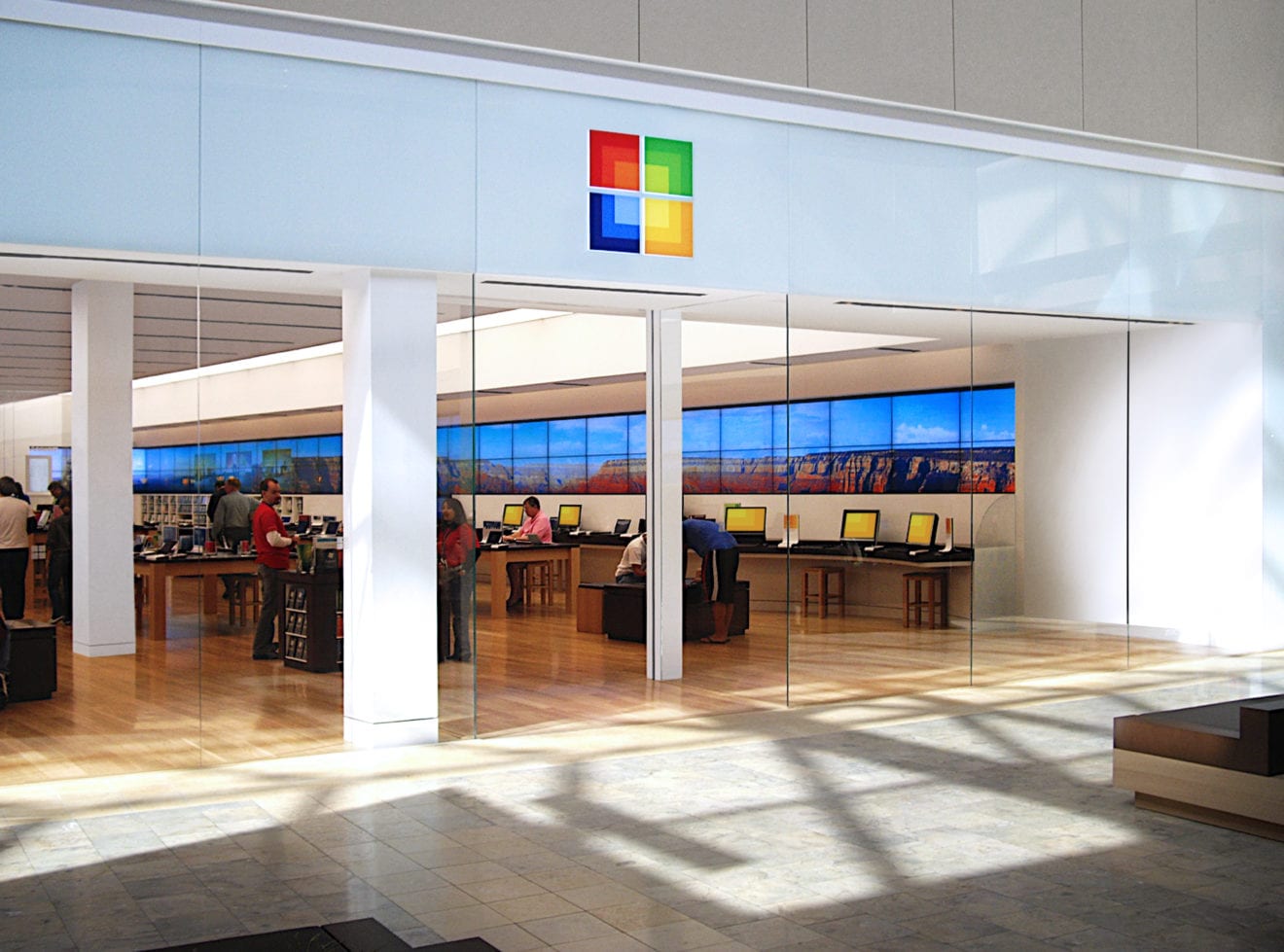
    You didn’t have to be a techie, a fan boy or wealthy investor to enjoy the two-horse race last year between Apple and Amazon. Both companies were neck and neck in a race to be the first publicly traded U.S. firm to reach a trillion dollar valuation. Last August 2nd, Apple hit the milestone first, followed by Amazon almost exactly one month later. And that’s why it was such a surprise when Microsoft finished 2018 as the most valuable public company in the U.S.

    Even though Microsoft finished on top as last year ended, it was the beneficiary of a sharp market correction that took Apple and Amazon down 32% and 27% from their 2018 highs, respectively. But the software giant had never actually joined Apple and Amazon in the trillion dollar club; that is, until today. A positive earnings report released by the gang in Redmond after the market closed last night has propelled the stock sharply higher. This morning, Microsoft’s shares reached a high of $131.37 and at that point, the company was worth $1.007 trillion dollars.

    Microsoft investors have taken some profits, allowing the stock to drift back to $129.64 as we write this. That takes the company under the $1 trillion mark but doesn’t remove the accomplishment from the history books. Meanwhile, Apple and Amazon’s shares have recovered enough from last winter’s drubbing to make another run at a $1 trillion valuation. Apple, which reports earnings next week, is currently worth close to $975 billion. Amazon reports earnings later today and is currently worth $944 billion.

    While some might say that Microsoft has failed miserably in the mobile industry with Windows Mobile and Windows Phone, others might point out the success it has had with the Surface Pro high-end tablets. And more importantly for Microsoft, it owns a slew of Android-related patents that bring in a huge sum of money every year.

  • First 5G Apple iPad Pro won’t arrive Soon

    First 5G Apple iPad Pro won’t arrive Soon

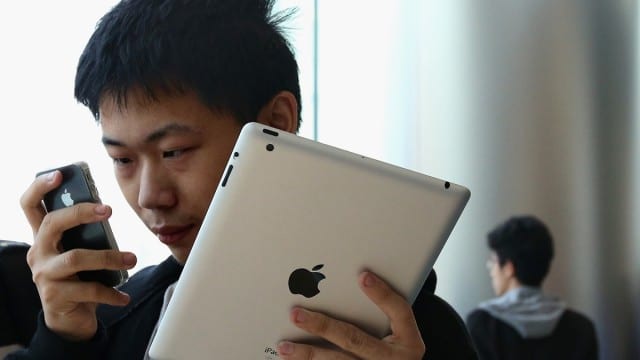
    Most of the talk about Apple and 5G revolves around the iPhone. Now that the settlement with Qualcomm has apparently resulted in a multi-year deal that supplies Apple with 5G modem chips (neither side has discussed this officially), we can expect Apple to launch a 5G iPhone by next year. But what about the Apple iPad? After all, the Wi-Fi + Cellular version of the iOS-powered tablet can connect to a wireless carrier’s 4G LTE network.

    The answer to that question comes from TF International’s reliable Apple analyst Ming-Chi Kuo as cited by the Economic Daily News. According to his report, Kuo expects to see the first 5G iPad shipped no earlier than 2021. Meanwhile, the analyst says that two new iPad Pro models will be in mass production during the fourth quarter of this year to the first quarter of 2020. The units will have the same 11-inch and 12.9-inch screen sizes that the current model’s sport, but will not offer support for 5G connectivity.

    Besides adding 5G modem chips to the iPad Pro in 2021 or later, Kuo expects Apple to employ an LCP (liquid crystal polymer) soft board at the same time. This will reduce signal loss and improve networking performance. Kuo says that because the iPad Pro is used as a business productivity tool and for entertainment, the slate needs to offer better connectivity than the iPhone. The new soft board will allow Apple to attach the iPad Pro’s antennas to the motherboard, improving the user experience of the device. The report adds that Murata will be one of the companies supplying Apple with the LCP soft board. The firm already supplies soft boards to Apple for the iPhone.

    The most recent versions of the iPad Pro, launched late last year, featured a big change in the design of the tablet. Gone was the home button and Touch ID, replaced with a TrueDepth Camera and Face ID (which works regardless of how the tablet is being held). The bezels are thinner resulting in an edge-to-edge Liquid Retina (LCD) display. Using magnets, the second generation Apple Pencil can stick to the side of the tablet and charge up at the same time. Measuring only 5.9mm high, the latest iPad Pro models are sleek and thin.

    As we passed along to you the other day, there are rumors that Apple will add mouse and trackpad support for the iPad Pro with iOS 13. This could help some see the iPad Pro as a legitimate laptop replacement (Apple notes that the iPad Pro is faster than 92% of “portable PCs”). Apple’s high-end tablet line competes with Microsoft’s Surface Pro in the premium tablet niche, but the latter has the advantage of running on Windows 10 and supporting the wireless Surface Mobile Mouse that connects via Bluetooth.

    It is interesting that in the discussions about 5G, the tablet market has been overlooked. The next generation of wireless connectivity will bring data speeds as fast as 10 times that achieved on 4G LTE networks. With the faster speeds, movies that take minutes to download now will load in seconds. It also will bring about new innovations, services, and businesses that we can’t even imagine right now. For example, when 4G LTE service became widespread, it led to the creation of the ride-sharing industry and the two multi-billion dollar companies that are leaders in the industry (Uber and Lyft). 5G networks will also help cars drive by themselves as the Internet of Things becomes the Internet of Many More Things.

  • FamilyMart Japan investing in New Labour Technology

    FamilyMart Japan investing in New Labour Technology

    Japanese convenience store FamilyMart Holdings is preparing to invest ¥25 billion (US$223 million) on labour-saving technologies.

    The firm will partner with tech firm Panasonic to introduce self check-out, digital displays and other similar devices which automate procedures traditionally undertaken by staff.

    The investment is intended to serve the brand’s franchisees who have been burdened with high labour costs in order to keep stores open around the clock.

    Both FamilyMart and its larger competitor 7-Eleven have felt pressured to let go of their 24-hour store policies in the face of a tightening labour market.

    They are also looking at other ways to ease the financial burden on franchisees.

  • LG Acquires Avon

    LG Acquires Avon

    LG Household & Health Care has acquired Avon North America in a US$125 million deal with an affiliate of Cerberus Capital Management.

    LG H&H holds a strong market position in South Korea’s consumer goods industry, one of the world’s largest beauty markets, with more than $13.1 billion in sales last year. It currently distributes a number of its brands in the US, including Belif and The History of Whoo.

    The addition of Avon’s brand, products, employee base and network of 250,000 sales representatives throughout North America is expected to support LG H&H’s international growth strategies.

    “We recognise Avon North America’s strong brand, leading market position in the region, and talented employees and representatives,” said LG Household & Health Care CEO Suk Cha. “Avon North America’s innovative social selling model builds deep connections with customers and we are excited to leverage this as we continue to expand. We look forward to building on Avon North America’s success to drive customer engagement and long-term growth in this market.”

    “LG H&H respects and admires our strong community of representatives, and supports our mission to empower women through economic opportunity,” said Avon North America CEO Laurie Ann Goldman.

    The transaction is expected to close on September 30 and is subject to certain customary closing conditions, including regulatory approvals in the US.

  • C-star Shanghai sets records for Exhibitors

    C-star Shanghai sets records for Exhibitors

    C-star – the China spin-off of the world’s largest retail show, the triennial EuroShop in Germany – is underway in Shanghai this week. This year’s event, the fifth, features a record 138 exhibitors at the Shanghai New International Expo Centre in Pudong, with exhibits including shopfitting and store furnishings, retail technology, store design and visual merchandising, lighting, and catering and refrigeration.

    A parallel retail forum features an international line-up of speakers covering trends, technology and design, among other topics.

    C-star was the first international spinoff of EuroShop and while still a shadow of the German event, which boasted 2400 exhibitors from 60 countries and 113,000 visitors the last time it was held in 2017, the Shanghai event is growing in stature each edition. The number of exhibitors this year is up 30 per cent. After the success of C-star, organiser Messe Dusseldorf has since launched another event focused on technology, EuroCIS, and its latest new venture, In-store Asia in Mumbai, India.

    Elke Moebius, global head of retail & retail technology with Messe Dusseldorf, and director of EuroShop, EuroCIS, C-star and In-store Asia, says the company wants C-star to become “the most influential retail event in China”.

    “Our decision to come to China was absolutely the right one,” she told the opening ceremony yesterday.

    “We have succeeded in distinguishing C-star from other events.”

    Messe Dusseldorf (Shanghai) GM Marius Berlemann says with mobile and ‘smart’ retail solutions developing quickly the internationalisation of the retail industry is following suit.

    “This presents even more opportunities for global investors and corporations to flourish in China’s retail industry, and our goal as the organiser is to build the bridge and bring the world of retail together.”

    A key feature of this year’s C-star event is the ReTailor Hub where creative solutions are shown in a real-life environment. Exhibitors include apparel-store Elf Sack, cosmetics-brand Fox Fairy, food-and-beverage brand Rio (which has a robot on site mixing and serving cocktails) and unmanned store concept 24 Jian. These exhibits are complemented by retail technology and equipment suppliers showcasing instore solutions including customer-flow analytics, interactive smart displays and virtual fitting systems.

    C-star’s Brand Zone offers a premium stage for exhibitors to present their newest and most promising products and solutions to a global audience.

    This year, exhibitors include design house Malherbe Paris, Storymaker, Hideki Azuma, Onewedesign, MPlus and Koscar sharing new store concepts and smart retail solutions.

    C-star 2019 continues today and tomorrow in Shanghai.

  • Starbucks sales surge despite China Growth

    Starbucks sales surge despite China Growth

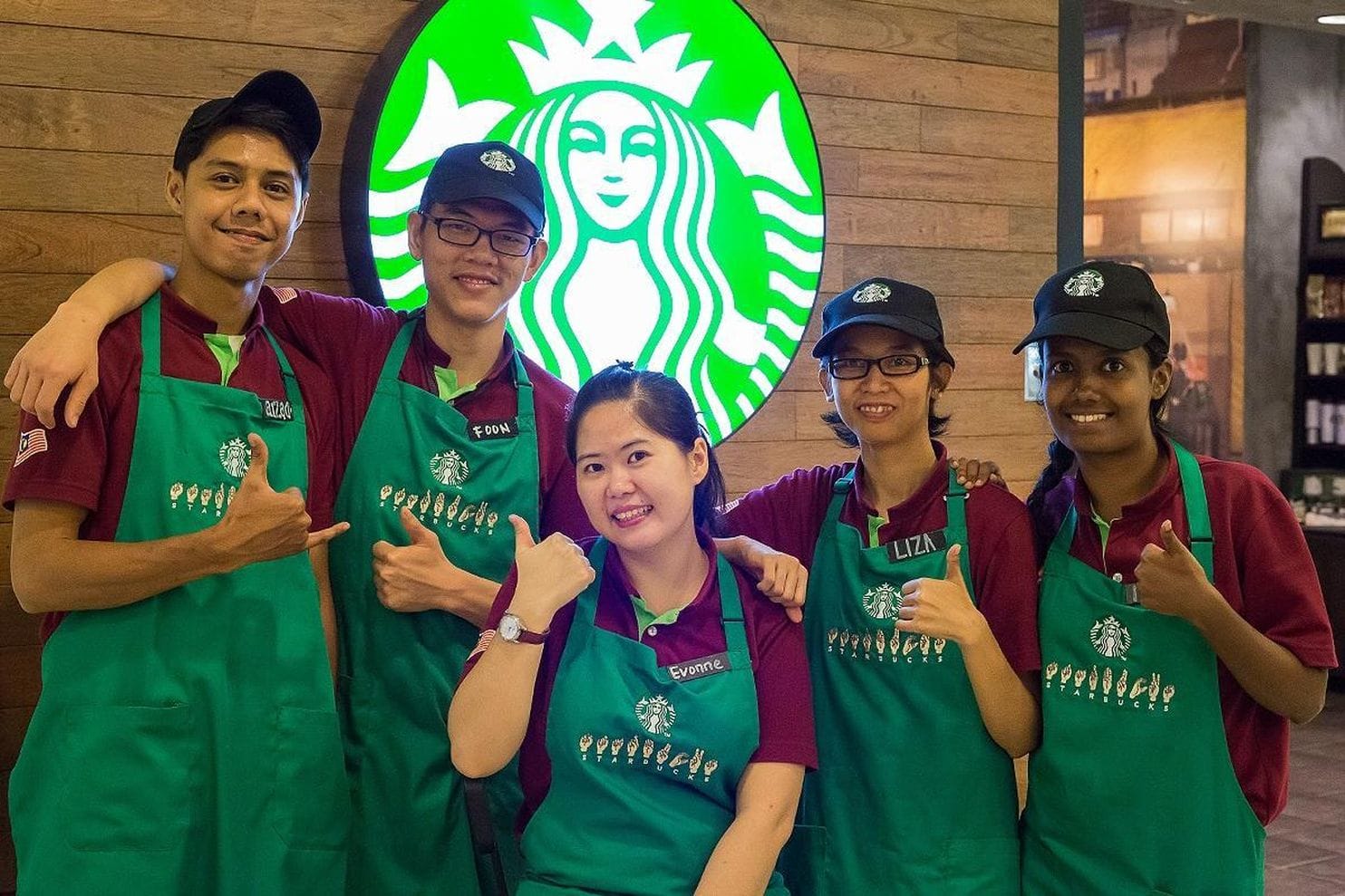
    Starbucks sales growth has surpassed expectations with a glowing earnings report released yesterday that revealed strong performance in cafes across the US and China.

    “We are especially pleased with our comparable-store sales growth in our two lead markets, the US and China,” said Starbucks CEO Kevin Johnson, “where we are also continuing to drive strong new store development with industry-leading returns.”

    The firm reported a second-quarter net income of US$663.2 million, up from $660.1 million for the same period last year.

    “While much of the beverage comp-sales growth was driven by ticket, close to half of the ticket growth was from beverage mix and match,” said company CFO Pat Grismer, “demonstrating that our higher margin premium offerings resonated with customers and customers bought more beverages per transaction.”

    The release of Starbucks’ Cloud Macchiato last month, with promotional support from singer Ariana Grande, contributed to the results with “the second-most viral Starbucks campaign ever” according to Johnson. The success accords with the firm’s strategy to build on the cold-drinks business while focussing less on limited-time offerings and Frappucinos.

    The popularity of the chain’s cold drinks, along with improvements in store, saw US sales grow 4 per cent in stores opened for at least one year.

    Same store year-on-year sales grew 3 per cent in China, where the firm is facing a serious challenge from motivated competitor Luckin Coffee. “This performance is especially noteworthy when you consider the intensity of competition from discounting in China, as well as our aggressive pace of new store development,” said Johnson.

    Transactions have decreased by 1 per cent in China, most likely as a result of increased competition, which has recently forced Starbucks to introduce a fast-delivery service in partnership with Alibaba. The firm has also seen significant growth in its loyalty program, Starbucks Rewards.

    Starbucks surpassed 30,000 outlets worldwide in the second quarter, with 94 per cent of new openings occurring outside the US. A further 2100 new stores are planned for launch before the end of the current fiscal year, nearly 600 of those in China.

  • Shandong Ruyi seeks $500m

    Shandong Ruyi seeks $500m

    Chinese textile and retail investment company Shandong Ruyi will list an IPO for its recently acquired The Lycra Co in the hopes of raising around US$500 million.

    The group is currently exploring a listing in the US as it works with Goldman Sachs, according to those familiar with the prospective deal.

    Progress has been slow for Shandong Ruyi since regulatory delays held up its $2 billion purchase of Lycra for more than a year, which it finally completed in January. Plans for the IPO are now at early stages and are subject to significant changes before listing, which is scheduled for sometime within the next three years.

    Shandong Ruyi has previously been reported as having ambitions to become “the LVMH of China” and has acquired numerous overseas fashion brands. It is now focusing on consolidating its holdings rather than pursuing new deals.

    Shandong Ruyi Investment Holding is the largest textile and apparel company in China, and ranks among the Top 100 Chinese multinational enterprises. It is headquartered in Jining, Shandong and operates 13 domestic industrial parks.

  • Australian dollar up Again

    Australian dollar up Again

    The Australian dollar has risen Monday, buying 70.42 US cents from 70.25 US cents on Friday.

    Last Friday, the local currency tumbled to a six-week low and three-year bonds rallied to record highs after surprisingly weak inflation data boosted calls for Reserve Bank rate cuts.

    The Australian dollar slid as low as 70.31 US cents on Wednesday, a level not seen since March 11, after first-quarter inflation slowed to the lowest in three years to 0 per cent when analysts were looking for a 0.2 per cent increase.

    Key measures of underlying inflation favoured by the Reserve Bank of Australia (RBA) averaged 1.4 per cent for the year, marking 13 quarters below the central bank’s target range of 2 to 3 per cent.

    In 2016, the last time inflation was this tepid, the RBA reacted with two rate cuts to the current record low of 1.50 per cent. It has since sat on the fence on policy, awaiting a pick-up in prices and a drop in the unemployment rate.

    Wednesday’s data fuelled more calls for a rate cut, with ING Bank, JP Morgan and Citi becoming the latest to predict an easing as early as next month.

    “Australian inflation shows no signs of coming anywhere near the central point of the RBA’s 2-3 per cent range, and we are biting the bullet and changing our ‘on-hold’ call for the RBA to a cut, possibly as early as the 7 May meeting,” ING economists said in a note.

    “We can’t now see how the RBA can ignore such a bad inflation miss, even with last week’s strong employment gains.”

    Wednesday’s weak inflation report set government bond futures on fire, with the three-year bond contract surging to a record high of 98.750 sending yields below the cash rate to 1.25 per cent.

    Interest rate futures sharply narrowed the odds on an easing. The probability of a May 7 cut doubled to 44 per cent and a quarter-point move was fully priced for July, compared to an October timing earlier this week.

    Across the Tasman Sea, the New Zealand dollar was 0.5 per cent down at $0.6627, languishing near its lowest since early January. The kiwi has fallen or stayed almost flat in nine of the last 10 sessions.

    The currency has been in a downward trend since late March after the country’s central bank abandoned its long-standing neutral bias to say its next move in interest rates was likely down.

    That followed underwhelming inflation data that further boosted the probability of a rate cut in New Zealand.

    New Zealand government bonds were slightly higher with yields down about 5 basis points at the long end of the curve.

  • The new golden rule for retailers to be Succesful

    The new golden rule for retailers to be Succesful

    The retail climate in Australia has long been a concern, but could there be a secret sauce to help brands reclaim valuable real estate in the minds of their consumers?

    Let’s face it — which brand doesn’t want to be like Nike? Its mass market, appeal and unique ability to stay relevant throughout its 50-year history have made it one of the most valuable brands amongst sports organisations. If Nike hadn’t already cemented its position as one of the biggest culture catalysts in the world, Colin Kaepernick has definitely made sure it has now.

    Commentators have waxed lyrical about the Kaepernick campaign and marketers have taken to it big time. But retail businesses too can take a leaf out of this book. You can’t fault the way Nike engaged with consumers on the basis of what motivates them, summed up by the campaign’s tagline: “Believe in something. Even if it means sacrificing everything.”

    This is the crux of value-based engagement: engaging consumers on the basis of what they want to do, not necessarily what they want to buy. Australian retailers need to think beyond the product, and instead provide experiences and solutions that support and enable fundamental consumer needs, desires and aspirations.

    Between the brand and consumer, the latter now has more influence over the other. The growth of online shopping means the challenge for retailers to surprise and delight is getting harder, and thanks to technology, consumers are more informed and more in control at every stage of the purchase process. They are more aware of what they want and don’t want, and their attention span depends on how well you can teach, entertain or guide them at every given moment they interact with your brand.

    Consumer loyalty and advocacy is won and lost through the quality of experiences that retailers can provide. Whether your consumer comes to you to be inspired, be motivated to do good, alleviate frustrations, fulfil desires or solve a problem, retailers now need to create and invest in experiences to retain their customers.

    There are four main types of in-store experiences:

    • Convenient: These involve removing unwanted friction and inconvenience in the shopping journey. Amazon set a new standard for frictionless retail with Amazon Go, where consumers can walk in, shop and leave without ever going through a checkout line. With time as the new currency, the retailer that removes the most painful features of the shopping journey and increases overall convenience can go a long way towards building consumer loyalty and trust.
    • Communal: Turn the store into a destination for loyal customers to gather, who orient themselves to particular causes, affinities or cultural distinctions. In Tokyo, Adidas’ RunBase concept stores work extremely well as a local runners’ hub on which customers can test new gear and receive customised training ahead of purchase.
    • Curated: The future of retail will not be about having a proliferation of choices as it has been in the past; rather, it will involve winning consumers over with thoughtful curation of products and experiences. With OPSM reminding you to order more contact lenses for the next three months, would you consider moving to another optometrist? No!
    • Immersive: While this type of experience is still in infancy, it’s a safe bet that more retailers are going to invest heavily in this space as the need for experience-based differentiation becomes paramount to survival and future growth. To promote Deadpool 2, 7-Eleven launched its first augmented reality (AR) in-store experience, which consisted of different points of engagement and encouraged customers to spend more time in-store. Deadpool could be seen through the app as guiding users around the store, and a selfie filter was available, plus scannable codes that unlocked in-store activities and loyalty points.

    The next frontier of retail will have shopper demands and desires be foreseen, processed and fulfilled before they are articulated or even consciously realised. The creation of unique experiences represents a chance for retailers to achieve true, meaningful engagement with their consumers. And by committing to helping them achieve what they want to achieve, retailers will ensure their relevance over a greater period of time.

  • Vicinity Centres Selects new Board

    Vicinity Centres Selects new Board

    Shopping centre operator Vicinity Centres has revealed that non-executive director Peter Kahan will replace Peter Hay as chair when he retires in August.

    Hay, who has served as chairman since Vicinity was formed in a 2015 merger of Federation Centres and Novion, will retire from the board after the company’s annual results are released in August.

    “It has been a privilege to work with such an exceptional board and management team to navigate through the merger and Vicinity’s formation, to see it become the unified and stronger organisation it is today,” Hay said in a statement.

    Hay said he is delighted Kahan will be taking over as chairman.

    “Peter is a highly experienced and thoughtful director who has made an outstanding contribution to Vicinity’s board during my tenure,” Hay said.

    “His extensive and successful property funds management, financial and business background, complemented by his highly strategic approach and vision, position him to be an excellent chairman through Vicinity’s next chapter.”

    Kahan, who has been a non-executive director of Vicinity since June 2015, also served as chairman of Vicinity’s Remuneration and Human Resources Committee and is a member of Vicinity’s Audit Committee.

    Kahan’s prior roles include The Gandel Group’s executive deputy chair, CEO and finance director.

    “It is an honour to be asked to succeed Peter Hay as chairman of Vicinity,” he said. “I am looking forward to working with the board and management team to continue our relentless focus and commitment to long-term value creation for Vicinity’s security holders.”

  • Tigers is strategic logistics partner for K&N Filters in China

    Tigers is strategic logistics partner for K&N Filters in China

    Tigers is working with K&N Filters, a high-performance automotive air filter and air filtration manufacturer, which is expanding operations in China, the world’s largest automotive market.

    Hong Kong-based Tigers is providing logistical support through its Chinese network of offices and facilities to USA-based K&N Filters as they grow their presence in the region.

    “Working closely with international brands like K&N Filters as a strategic logistics partner is always a pleasure for Tigers as we are specialized in global logistics and supply chain solutions,” said Laura Crow, Managing Director – China, Tigers.

    “China is a very strong market for Tigers and we are working with K&N Filters by fulfilling both its B2B and B2C orders in the region, providing marketing and trading services, as well as offering our specialist local knowledge.”

    As part of K&N Filters expansion plans in China, the manufacturer recently launched the ‘Revolution. Powering the Future’ strategy conference in Chengdu, China, to showcase the brand and product solutions to the Chinese market.

    “K&N Filters is committed to providing Chinese car owners with high-quality product performance and is continuously developing a localized product series that is more suitable for the Chinese market,” said William Wu, General Manager – China, K&N Filters.

    “Working with Tigers is the perfect match for expanding our operations in China due to Tigers’ extensive knowledge of the Chinese market and their modern approach to global logistics.”

    K&N Filters supplies air filters and air filtration systems to championship-winning teams in most forms of motorsports around the world, including NASCAR and Supercross to achieve more horsepower and brake performance limits.