Tag: asia

  • Softbank To Buy Wirecard Shares

    Softbank To Buy Wirecard Shares

    Japan’s Softbank Group will purchase a 5.6 percent stake in German payments company Wirecard by acquiring convertible bonds worth about 900 million euros ($1 billion), Wirecard said in a statement on Wednesday.

    «As global innovators, we focus heavily on expanding our networks and creating opportunities for companies with groundbreaking ideas. In SoftBank, we have found a partner that shares both our passion for new technologies and drive to spearhead the latest innovations, all on a global scale,» said Markus Braun, CEO at Wirecard.

    The two companies said they had also signed a memorandum of understanding for a strategic tie-up in providing digital solutions. SoftBank will help Wirecard expand into Japan and South Korea, and provide collaboration opportunities in digital payments, data-analytics/AI and innovative digital financial services within the Japanese firm’s portfolio companies

    As part of the deal, Wirecard said it shall issue convertible bonds with a term of five years exclusively to an affiliate of SoftBank, convertible to 6,923,076 million ordinary shares at 130 euros per Wirecard share. The issuance of the convertible bonds is subject to shareholders’ approval at its annual general meeting on June 18, Wirecard said.

    The investment comes amidst the payment firm’s ongoing defense against Financial Times newspaper reports this year saying staff at its Asian operations had inflated reported revenue.

    Last month, Wirecard said an outside law firm investigating the matter found the local staff at its Singapore office may have committed crimes, but these were not material to the German payment company’s financial position.

    Credit Suisse is serving as financial adviser to SoftBank and Sullivan & Cromwell LLP as legal adviser. Noerr LLP and Gibson, Dunn & Crutcher LLP are serving as legal advisers to Wirecard.

  • Standard Chartered Provides Instant Loans

    Standard Chartered Provides Instant Loans

    Our clients are highly engaged digitally. We have seen a 33 percent quarter-on-quarter growth in new mobile active clients, as our clients look to do most of their banking activities digitally, from application to activation to service requests and payments,» said Natalia Goh, Head of Credit Cards and Personal Loans, Standard Chartered Bank Singapore, in a press release on Tuesday.

    Since last year, the bank has seen twice the number of digital service requests from clients, such as card activation, replacement, and renewal requests, as well as reporting of lost cards.

    In addition, we see that our clients are increasingly comfortable with digital payments, with the number of mobile wallet transactions growing more than 80 percent in the past year. With this shift towards an increasingly digital lifestyle, we believe that our instant digital credit card and loan disbursement capabilities will greatly enhance the overall client experience,» Goh added.

    The new capability is powered by the bank’s real-time onboarding platform, which leverages on MyInfo, Singapore’s national database, to help new clients save a significant amount of time usually needed on lengthy form-filling. For clients who do not currently have a credit card or bank account with the Bank, MyInfo will help to pre-populate most of the information in the application form. Clients who hold existing credit card(s) with the bank will have a simpler and shorter form to complete.

  • Docomo, Itochu Logistics test IoT for delivery-fleet management in US

    Docomo, Itochu Logistics test IoT for delivery-fleet management in US

    Japan’s NTT Docomo and Itochu Logistics are planning to trial an IoT solution for delivery fleet management in the US.

    The solution uses devices compatible with low-power, wide-area LTE-M technology to track the status of outsourced trucks in their fleets.

    The trial will begin in the United States on May 1, 2019.

    According to the companies, the solution involves placing hand-held, battery- or solar-powered devices in trucks to collect data, such as truck locations and frequency of sudden braking, which will be sent through an LTE network to a dedicated website.

    The solution can also provide temperature, humidity, brightness, etc. data depending on delivery needs, as well as notify customers via email when the trucks approach their destinations.Itochu Logistics USA expects to save time using the solution compared to the conventional method of manually phoning drivers to confirm their locations and estimated delivery times.

    The solution will be tested for its effectiveness in supporting the management and safety of truck fleets at Itochu Logistics USA’s delivery-trick network and logistics system.

    “While most delivery trucks are equipped with GPS devices, the location data typically is available to the owner but not to logistics/transport companies that retain the trucks on an outsourced basis,” the companies said.

    “The solution’s easily deployed LTE-M devices, however, will give logistics/transport companies dedicated access to location and other useful information about trucks operating temporarily in their fleets.”

    The trial is part of the Globiot global-IoT initiative that Docomo launched on July 2, 2018.

    The Japanese mobile giant said it expects the solution will be marketed widely throughout US, Japan, and Asia.

  • Harley-Davidson 2019 First Quarter Sales Down

    Harley-Davidson 2019 First Quarter Sales Down

    Harley-Davidson has released its first-quarter results of 2019, and worldwide sales of motorcycles seem to have taken a hit, with the Bar & Shield brand reporting a 3.8 per cent decrease in global sales. While Harley says international sales were down 3.3 per cent, domestic US sales were down 4.2 per cent. According to Harley, these decreases were driven by “continued weak industry sales that were down 4.7 per cent.” Net income in the first quarter declined by 26.8 per cent as a result of declining worldwide sales. The company’s first quarter net income was reported as $ 127.9 million, down from $ 174.8 million in the same period of 2018, while the consolidated revenue was $ 1.38 billion in the first quarter of this year, compared to $ 1.54 billion in the first quarter of 2018.

    Struggling with falling sales and demand for motorcycles, Harley-Davidson has launched a campaign to build the next generation of riders with its “More Roads to Harley-Davidson” accelerated growth plan. The company’s strategic objectives through 2027 are to build as many as 2 million new riders in the US alone, grow international business to 50 per cent of annual volume, launch 100 new high impact motorcycles, and do so profitably and sustainably.

    “We are acting with agility and discipline to take full advantage of rapidly evolving global markets,” said Matt Levatich, president and chief executive officer, Harley-Davidson, Inc. “Harley-Davidson’s U.S. market share growth and retail sales performance in the first quarter are further evidence of the effects we are having as we continue to implement and dial-in our More Roads efforts.

    “We are driven by our un-paralleled rider focus and deep analytics that are guiding our efforts today and into the future. We, along with our dealers, are determined to lead and stimulate global industry growth.”

    Harley-Davidson said it has made some progress on the More Roads plan and appointed its first-ever brand president, to fully engage the power of the brand as a catalyst to achieve its strategy and long-term objectives. Harley has also expanded its electric portfolio with the acquisition of StaCyc, a maker of electric two-wheelers for children. There are also continued preparations to launch the LiveWire, Harley-Davidson’s first electric motorcycle later this year.

    For the second quarter of 2019, Harley-Davidson expects to ship approximately 65,000 to 70,500 motorcycles, with overall motorcycle shipments in 2019 estimated to be in the region of 2,17,000 to 2,22,000 motorcycles

  • Rent growth boosts CapitaLand Retail China

    Rent growth boosts CapitaLand Retail China

    Stronger rental growth and lower operating expenses boosted CapitaLand Retail China Trust’s income by 10.7 per cent in the first quarter. According to CapitaLand Retail China Trust Management Limited (CRCTML), the manager of  CRCT, net property income reached RMB198.9 million for the three months to March 31, up from RMB179.6 million in the same period a year earlier.

    “China’s economy expanded at an encouraging pace of 6.4 per cent during the quarter, with consumer demand showing signs of improvement,” said Tan Tze Wooi, CRCTML’s CEO. “The fiscal stimulus rolled out by the Chinese government, which include business and individual tax cuts, is expected to boost consumer sentiments. These developments bode well for CRCT, which has sustained its growth momentum into the new year through proactive asset management and value enhancement initiatives.

    During the quarter sales by CRCT’s tenants increased 9.8 per cent year on year, while shopper traffic grew 14 per cent. Portfolio occupancy remained high, at 97.4 per cent at the end of the period.

    “This strong foundation will anchor CRCT’s performance as we forge ahead with our tenant remix strategy to draw more popular concepts,” he said.

    Core income available for distribution to unitholders was S$24.9 million, 4.9 per cent higher than the first quarter of last year and 8.2 per cent higher than the fourth quarter of last year, with distributable income from joint ventures increasing 115.9 per cent year-on-year. The total distributable amount to unitholders was S$25.9 million.

  • Indonesian Fintech Launches First Debt Services in Malaysia

    Indonesian Fintech Launches First Debt Services in Malaysia

    A fintech specialized in solving debt problems of consumers and business owners has launched its services in Malaysia, a country whose total overdue consumer loans is second highest in Southeast Asia.

    Indonesian Fintech amalan International announced on Wednesday that it has started operations in Malaysia, expanding its footprints in Indonesia and Singapore. In Malaysia, the total balance of overdue or almost overdue consumer loans is estimated to be $15 billion, the second highest in Southeast Asia.

    «In many cases, amalan is able to reduce the outstanding balance and/or the monthly installments by 50 to 90 percent in Indonesia – this would be also our target for our Malaysian clients. We want to offer a fresh start to our clients so that they can build a better financial future,» says amalan’s founder and CEO, Arne Hartmann in a statement to the media.

    amalan says that its key differentiator lies in working for borrowers to find the best solution with their lenders. As a social enterprise, amalan does not ask for upfront fees and instead uses a success fee model where the borrower only needs to pay after a restructuring plan has been agreed. The amount of the success fee is based on the savings generated through the restructuring.

    So far, the fintech said it has restructured more than 1,000 loans with all major banks in Indonesia and saved its clients more than $800,000 in the process.

    For each borrower, a restructuring plan is generated that takes into account all of the borrower’s loans to then reduce the debt balance and the monthly installments to an affordable level. These debt management programs use proprietary data and technology to get the borrowers out of debt faster, paying less.

    amlan Indonesia was selected as one of the 30 best start-ups in MaGIC (Malaysian Global Innovation & Creativity Center), a business accelerator program of the Malaysian government.

  • Calvin Klein opening First Multi Brand Fashion Store

    Calvin Klein opening First Multi Brand Fashion Store

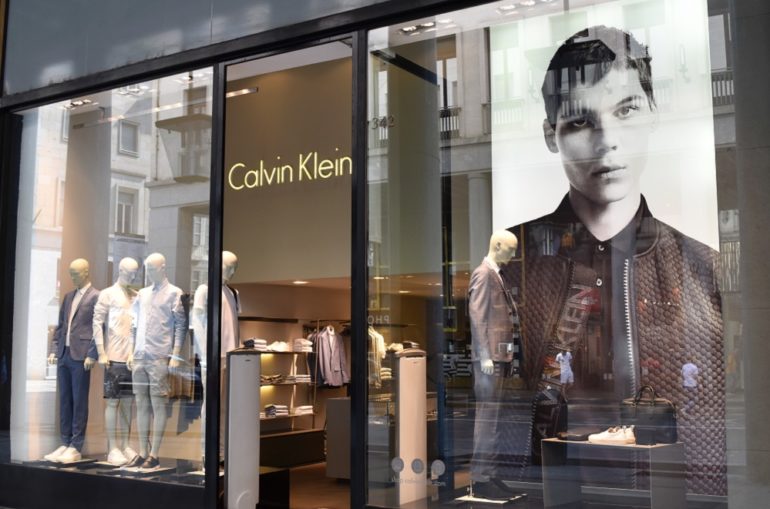
    The first store bringing together the entire Calvin Klein offering in Australia opened over the Easter long weekend at Queensland’s Sunshine Plaza. Spanning over 310sqm and offering a full range of men’s and women’s underwear, jeans, performance, accessories, as well as kid’s underwear, the store is the Calvin Klein’s 32nd in Australia, and reflects the brand’s minimal, modern aesthetic.

    Sunshine Plaza recently finalised a $440 million redevelopment, boasting over 345 retail stores to become the first ‘super regional’ shopping centre North of Brisbane.

    Calvin Klein’s presence in Australian and New Zealand had previously been run by Gazal Corporation, but the brand’s US-based owner, PVH Corporation, recently outlined plans to purchase Gazal.

    The deal, which also impacts the Tommy Hilfiger brand and is expected to be finalised in the second quarter of 2019, will give PVH a more direct hand in the brand’s Australasian operations.

    “I’m pleased that we have agreed to acquire Gazal. PVH currently – and for many years – has had a successful business relationship with our Australian partners and would be pleased to bring them into the larger PVH family,” Emanuel Chirico, PVH Corporation’s chairman and CEO said.

    “Gazal has enhanced the market position of our brands in Australia and New Zealand and we believe the region continues to offer significant growth over the next five years and aligns with our strategic priority to expand our direct control of businesses operated under the Calvin Klein and Tommy Hilfiger brands worldwide.”

  • Pomelo launches first Beauty Line

    Pomelo launches first Beauty Line

    O2O fashion brand Pomelo has launched its first cosmetics line, Beet, solidifying its identity as a one-stop lifestyle brand.

    Created with women on-the-go in mind, Beet comprises 17 products across four categories – Liquid Blush, Liquid Lipstick, Lip Gloss and Liquid Shimmer.

    All products are priced at S$10 per item and feature paraben-free and cruelty-free formulations.

    “For consumers today, beauty is integral to style,” said David Jou, Pomelo CEO, signalling the company is taking “a step in the right direction”.

    “As a fashion brand that wants to offer women everywhere their best look to become their best selves, we cannot ignore that.”

    With Beet, Pomelo provides another touchpoint for a seamless customer experience that prioritises modern consumers’ demand for convenience.

    Last month, Pomelo launched its second sustainable collection, Purpose.

  • Ramadan an opportunity for E-Commerce Retailers

    Ramadan an opportunity for E-Commerce Retailers

    Online sales in Malaysia and Indonesia are set to boom in the lead up to – and during – Ramadan, according to an analysis by advertising platform Criteo. Based on data from last year’s festival – which ran from May 15 to June 14, consumer activity typically slowed at the start and end of the period.

    However, while this could be a result of consumers focusing more on the actual festivities during those times, online retail sales surged 10 days into Ramadan and lasted through the two weeks before Eid al-Fitr on 15 June.

    A 57 per cent uplift in online retail sales was observed on June 4, Criteo revealed.

    By comparison, shoppers in the Middle East typically shop early into the season and slow down closer to Eid al-Fitr to focus on celebrations. Online retail sales surged early, reaching a 106 per cent uplift on May 26. The shopping behaviour during Ramadan in Turkey mirrored that in Malaysia and Indonesia, with online retail sales reaching a peak at 50 per cent uplift a week before Eid al-Fitr.

    “Ramadan represents a notable cultural shift in consumer behaviour, with the Middle East and Southeast Asia being key regions,” said Criteo SEA-Pacific MD said Alban Villani. “Moreover, the global Islamic economy is also growing year-on-year, estimated to reach US$3 trillion by 2023.

    “Given the growth potential of the halal industry, retailers should leverage Ramadan to engage Muslim shoppers,” continued Villani. “They should start reaching out to shoppers early with the relevant messaging two weeks earlier, especially when shoppers are thinking of buying gifts for family and friends. As some shoppers might purchase later into the festive season, retailers should continue engaging them with special offers and personalised content throughout Ramadan to optimise their campaign efforts. By doing so, it is easier for retailers to stay top-of-mind when shoppers are ready to buy gifts to share the festive joy.”

  • South Korean E-Commerce Under Pressure

    South Korean E-Commerce Under Pressure

    Mounting losses in the South Korean e-commerce industry are calling local business models into question. Competitive pricing and fast delivery capacities have made the industry an ascendant phenomenon in the territory, with the purchase of a whole spectrum of consumables now possible via mobile phone. The industry hit a record high of KRW111.8 trillion (US$98.4 billion) in transactions last year, putting the economy among the top five e-commerce markets worldwide.

    But gigantic operational losses have emerged out of stiff competition on price and logistics set-up costs. Korea’s top e-commerce firm Coupang shattered its own records with KRW4.42 trillion ($3.8 billion) in sales last year, but made a staggering KRW1.1 trillion ($950 million) operational loss.

    While Coupang’s deficits have been widening for nine years, CEO Kim Beom-seok stubbornly insists the losses are planned and says investment will continue.

    “We have pushed for massive investment to impress our customers,” said Kim, “and will continue to aggressively invest in technology and infrastructure.”

    The firm has single-handedly changed the outlook for South Korean retail and put brick-and-mortar operators on red alert – but has yet to prove profitable.

    Rival operator Tmon faces a similar issue, with its KRW492 billion ($425 million) sales last year sad-tromboned by KRW125.5 billion (108.4 million) in operating losses that have been accumulating since the year 2000, now standing at KRW770 billion (665.5 million) in total. The firm’s latest nose dive was attributed to “investment in core technologies”.

    “Customers frequently visited our app on expectations for new products and promotions changing every hour, which raised their royalty and created a virtuous cycle,” said Tmon CEO Lee Jae-hu. “We will continue efforts to strengthen the market position and seek ways to improve profitability this year.”

  • Asians show greater propensity amongst global consumers in new technology adoption

    Asians show greater propensity amongst global consumers in new technology adoption

    Asians have emerged as the most enthusiastic adopters of new and innovative technology products globally. The latest findings released by GfK from the first of its kind study—the New Tech Adoption Index (NTAI)1, highlights Asia’s prominence in driving global new technology advancement; with the region’s high demand fueling growth of overall product category in majority of the region’s market by at least 35 percent in both volume and value terms in the past year.

    GfK unveiled detailed findings of their first ever study conducted around the New Tech Adoption Index, which provides a relative measure of the inclination by Asian consumers towards adopting technology and consumer products with advanced features or technology.

    The NTAI leverages GfK’s proprietary point-of-sales data to specifically analyze new consumer technology take-up across over 250,000 products in the consumer durables and technology industry across nine Asian and six key European markets. New consumer technology products categorized into four main baskets2 —Fun, Comfort, Freedomand Essential are analyzed accordingly, including hardware items and those with software-led features such as Ultra HD/4K and Gaming (Fun), Smart Appliances (Comfort), True Wireless, Wearables and AI Speaker (Freedom) and Screen sized larger than 5.5” for Smart + Mobile Phones (Essential)

    “To be competitive, more and more brands are introducing products with innovative features or functionality. In order to succeed in their innovation efforts, it is important for brands to understand where they can find their greatest potential of early adopters, who can then create a network effect for their products,” said Vishal Bali, Managing Director for Client Solutions and Innovation, APAC. “The New Tech Adoption Index can help brands identify these markets, and even pinpoint the specific cities and regions within each market.”

    New Technology Adoption: Different Shades of Asia

    GfK reported a wide ranging spectrum of NTAI between 46 and 146 for the nine Asian markets, highlighting the vast differing levels of new technology adoption in the region.While showcasing the rise of key markets in new tech adoption, it also reveals the fact that the region is home to some of the laggards in this area. The top three markets with the highest overall NTAIs are China (146), Singapore (134) and South Korea (128), while India (46) and Indonesia (67) took their positions at the opposite end of the scale.

    “The New Tech Adoption Index indicates a market’s propensity in new technology adoption based on how much higher or lower their calculated index is positioned from the baseline of 100. We see an obvious trend of market clustering among the developed and developing markets, whereby NTAIs are higher for the more mature markets, and lower for emerging ones,” observed Bali.

    A deeper dive into the Asia’s NTAI reveals that 24 of the total 70 cities evaluated in the study showed above average readings, with the 8 top cities all hailing from China (NTAI range:161-196) —led by Beijing (196) and Shanghai (193). Eight of Korea key cities followed next (NTAI range: 147-156) with Seoul (156), Chungcheong (156) and Inchon (153) showing the highest new tech adoption propensity within this market. Most diverse market within Asia is Indonesia ranging from 33 to 118 with Botabek being the city which sees the highest level of new tech adoption.

    Composition of the index analyzed by the four baskets reveals significant variations from country to country. Asia is clearly a “mobile first” region, which is why the Essentialcategory is the main driver of NTAI across the region. Unique market traits take center stage when it comes to adoption of new tech products for the other categories. For instance, NTAI for the Freedom category is led by Vietnam where the local populations are generally younger, while the mature markets of Korea, China and Singapore exhibit higher NTAIs for the Fun category due to their greater spending power. It is interesting to note that new technology adoption in Comfort category is only significant within Developed Asia.

    New Technology Adoption Index: Asia versus Europe

    GfK also did a comparison of new technology adoption trends between East (Asia) and West (Europe). Amongst the six European markets, the four which have indices reflecting higher propensity in new tech adoption are Great Britain, Spain, Italy and Germany, although their ranking still lag behind four of Asia’s markets. In addition, the gap between the highest and lowest NTAIs is much narrower, in comparison, for European countries—ranging from 80 to 111.

    Another notable difference between the two regions is the higher share of Fun, Freedom and Essential categories existing in the European region, whereas Comfort is practically a nonexistent category here.

    Bali added, “The wide variation of new tech adoption in Asia as compared to Europe continues to lend credence to the notion that there is no one Asia, but it is in fact a complex fabric of distinct countries. And the complexity deepens when we consider sub-national characteristics.”

    Implication for Brands in Asia

    GfK’s NTAI study also highlighted the distinct traits of Asian consumers that set them apart from the rest of the world. For instance, evidence from various GfK reports reveal that Asian shoppers tend to be less loyal, more experimental, and are growing in sophistication when it comes to making purchase decisions thereby making the markets in Asia an ideal haven for new product test marketing.

    GfK Asia’s NTAI offers a view on the market’s receptivity to new consumer technology products and help businesses make crucial decisions pertaining not just to market selections to launch innovative new products, but also provide valuable market intelligence that can help brands in their product conceptualization process to ensure that the new tech product features will go down well with their target market.”

    According to findings from another GfK study, nearly two in every three (64%) respondents surveyed in Asia said that they are less loyal to any one brand—a seven percentage point jump from two years ago. In comparison, the proportion of respondents in US and Europe who shared the same sentiments were significantly lower.

    “However, a one-size-fits-all strategy will not work for Asia’s highly diversified and fragmented marketplace,” emphasized Bali. “Instead, focusing on pivotal factors such as perfecting their distribution and pricing strategies across different cities and channels, and gaining a good grasp of their different consumers’ needs and adoption behaviors, will significantly up the success rate of new technology brands in the consumer tech and durable space.”


  • Singapore Airlines Partners With Payments Platform

    Singapore Airlines Partners With Payments Platform

    Singapore Airlines has partnered with an Amsterdam-listed payments provider to optimize its payment processes. Payments platform Adyen will improve the experience of booking tickets online or in-app for Singapore Airlines’ customers. The payment platform also helps its customers improve authorization rates, provide flexibility on fraud risk management and richer data insights.

    «For Singapore Airlines, best-in-class customer service begins with the booking,» said Warren Hayashi, President of Adyen, Asia-Pacific. «At Adyen, we have seen that payments data can be the jet fuel that powers global expansion for airlines.  Payments data remains a valuable resource for companies who seek to understand their customers better and improve revenue,» Hayashi added.

    The partnership will center on Adyen’s solutions to optimize Singapore Airlines’ payments process. This includes the use of Adyen’s direct credit card acquiring capabilities which eliminates the need to run payments across multiple third-party platforms, increasing the airline’s payment authorization rate by leveraging on their solutions.

    Amsterdam-listed Adyen provides a modern end-to-end infrastructure connecting directly to Visa, Mastercard, and consumers’ globally preferred payment methods. It has offices across the world, serving customers such as Facebook, Uber, Spotify, Cathay Pacific, Grab, Klook, Lorna Jane, Freelancer.com, Kogan.com and Showpo.

  • CapitaLand divests StorHub self-storage business for S$185 million

    CapitaLand divests StorHub self-storage business for S$185 million

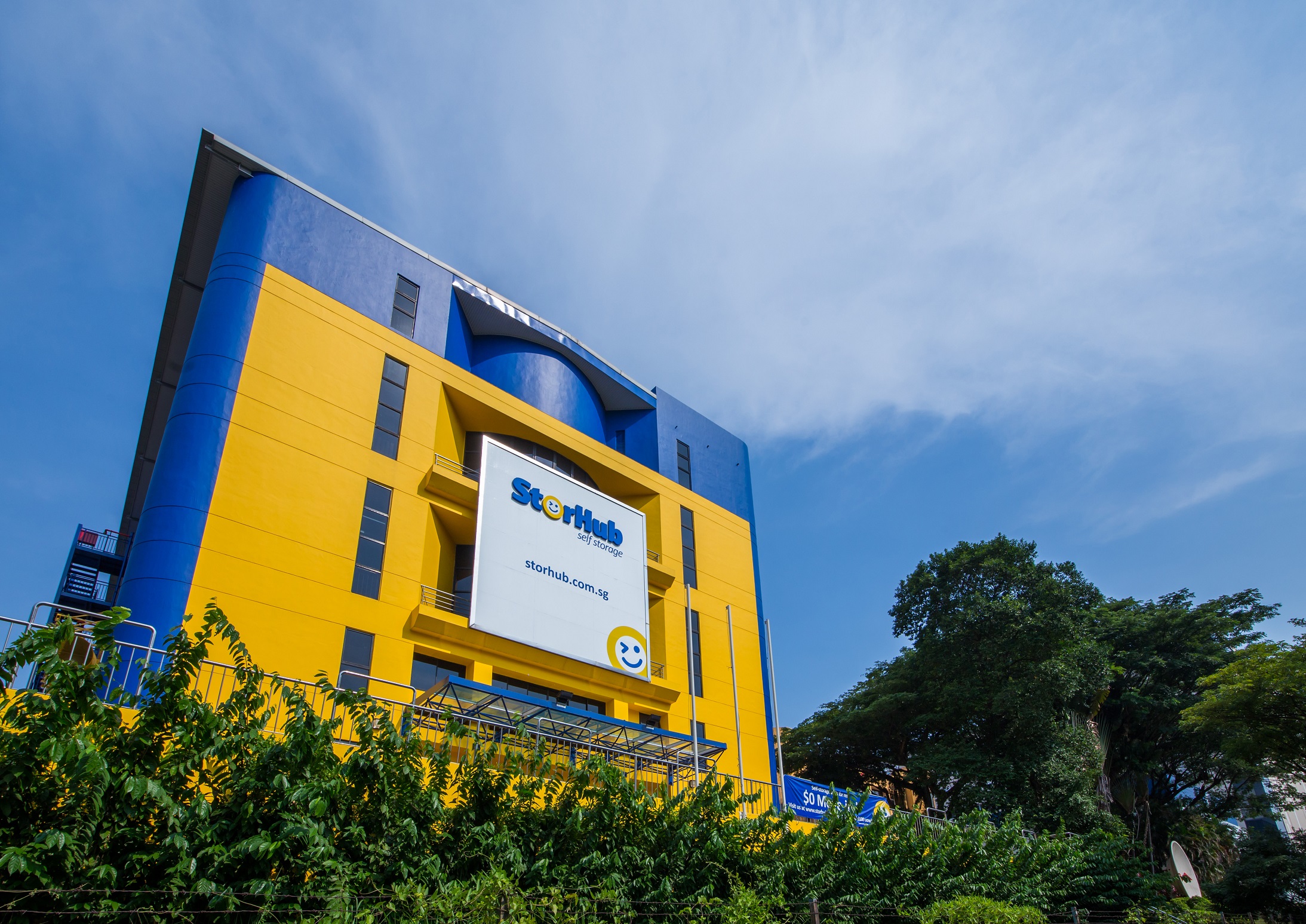
    CapitaLand announced today that it has divested its interests in a group of companies that own and manage the Group’s self-storage business StorHub to an unrelated third party.  The transaction is based on an agreed value of S$185 million for StorHub’s portfolio of properties.

    StorHub is one of Singapore’s largest self-storage networks, with a presence in China.  Its portfolio comprises 12 storage facilities – 11 in Singapore and one in Shanghai – with a total lettable area of approximately 800,000 square feet.

    Mr Jason Leow, President & Chief Executive Officer of Singapore & International, CapitaLand Group, said: “The divestment of StorHub is in line with CapitaLand’s disciplined approach towards capital recycling.  Our portfolio optimisation allows us to prioritise our capital allocation to our core markets and sectors.  In 2018, CapitaLand divested S$4 billion worth of assets and deployed S$6.11 billion into new investments.  We will stay disciplined in recycling our assets for reinvestment and capital redeployment, with an annual divestment target of at least S$3 billion.”

  • Tesla Reports $702 Million Loss In The Last Quarter

    Tesla Reports $702 Million Loss In The Last Quarter

    Tesla said on Wednesday it would return to profit in the third quarter of 2019 after racking up two consecutive losses in the first half of the year, as it struggled to deliver cars to customers and launched a cheaper version of its Model 3 sedan. The company, which Wall Street suspects may soon have to raise more cash, said it ended the quarter with just $2.2 billion in cash, after paying off a $920 million convertible bond obligation in March.

    Tesla affirmed its outlook of delivering 360,000 to 400,000 vehicles in 2019 and said it may produce as many as 500,000 vehicles in the year if its Gigafactory in Shanghai reaches volume production in the fourth quarter. Tesla reported net loss attributable to common shareholders of $702.1 million, or $4.10 per share, in the first quarter ended March 31, compared with $709.6 million, or $4.19 per share, a year earlier.

    “As the impact of higher deliveries and cost reduction take full effect, we expect to return to profitability in Q3 and significantly reduce our loss in Q2,” Chief Executive Officer Elon Musk said in a letter to investors.

    The Silicon Valley company has weathered a challenging few months, marked by a sharp drop in the number of vehicles delivered to global customers during the quarter and a public spat between Musk and financial regulators.

  • 500 million users have joined Alipay Ant Forest initiative, planting 100 million trees

    500 million users have joined Alipay Ant Forest initiative, planting 100 million trees

    Alipay Ant Forest, an initiative that has inspired hundreds of millions in China to adopt a greener lifestyle and contribute to the environment.

    Since its launch in August 2016, Alipay Ant Forest has:

    • Attracted 500 million users to engage in low carbon emission activities on the platform and grow their virtual trees in the Alipay app.
    • The virtual trees, nourished by “green energy” originating from users’ green activities, have been turned into 100 million real trees planted in China’s most arid areas.
    • The trees planted cover a total area of 1.4 million mu (933 square kilometers), equivalent to 130,000 soccer pitches.

    Eric Jing, Chairman and CEO of Ant Financial said: “I am very proud of the popularity of Alipay Ant Forest, which embodies our belief that technology should be used for social good. We are grateful to our many users and partners who have helped plant 100 million trees and advance a shared vision of sustainable and inclusive development.”

    “Alipay Ant Forest is an open platform, where all of our stakeholders, including consumers, philanthropic institutions, and eco-system partners, can collectively explore and implement ways to harness technology for a sustainable future,” he said.

    A mini-program on the Alipay app, Alipay Ant Forest promotes a greener lifestyle and encourages users to engage in low-carbon activities, such as paying utility bills online and commuting by walking or cycling instead of driving.

    This behavior is counted and converted into virtual “green energy” that can then be used to grow virtual trees in Alipay Ant Forest within the Alipay app. With enough energy points, a virtual tree can be converted into a real tree and planted by Alipay Ant Forest and its philanthropic partners in areas suffering from desertification. In turn, this tree-planting initiative inspires users to further adopt low-carbon and environmentally-friendly lifestyles, forming a virtuous cycle.

    Here’s a video explaining how this works.