Tag: asia

  • Twitter is growing at an impressive Pace

    Twitter is growing at an impressive Pace

    Twitter is not the world’s most popular social networking service, but one number considered essential for the prosperity of the San Francisco-based company continues to grow at a healthy pace, which should keep investors relatively happy for the foreseeable future.

    Interestingly, the metric Twitter is focusing on as the “best way to measure” its success counts so-called monetizable daily active users rather than the MAU (monthly active usage) number generally employed by rivals to flaunt their progress. These monetizable daily active users (mDAUs), which are defined as Twitter users who logged in or were otherwise authenticated and accessed the platform on any given day through its website or apps that are able to show ads, have surged a solid 11 percent year-on-year, to 134 million in the January – March 2019 timeframe.

    The same number is up 6 percent from 126 million reported for the final quarter of 2018, which suggests a pretty great trend for Twitter in terms of user engagement and monetization opportunities. That’s especially notable as multiple recent market reports have claimed Facebook’s usage figures are on the decline, possibly due to the many controversies and scandals surrounding the social media giant’s data harvesting policies and privacy protecting strategies (or lack thereof).

    Then again, there might be another reason why Twitter is choosing to shift its focus away from average MAUs. While that number has also grown from 321 million people in Q4 2018 to 330 million during Q1 2019, there were actually more monthly active users on the platform this time last year. Namely, 336 million people, so although Twitter seems to have gotten better at making money, its efforts to snatch users from Facebook, Instagram, or Snapchat aren’t exactly working.

    Instead of trying new things to pull that off like finally adding the ability to edit tweets, Twitter plans to no longer share its MAUs with the public starting next quarter. That’s certainly an interesting, albeit not entirely original tactic, as Facebook has recently began focusing on the combined usage numbers of all its products.

    As far as money goes, Twitter is doing pretty well, generating total Q1 revenues of $787 million (up 18 percent year-on-year), as well as an operating income (aka profit) score of $94 million, compared to $75 million in the first three months of 2018.
  • The Huawei Mate X won’t be Delayed

    The Huawei Mate X won’t be Delayed

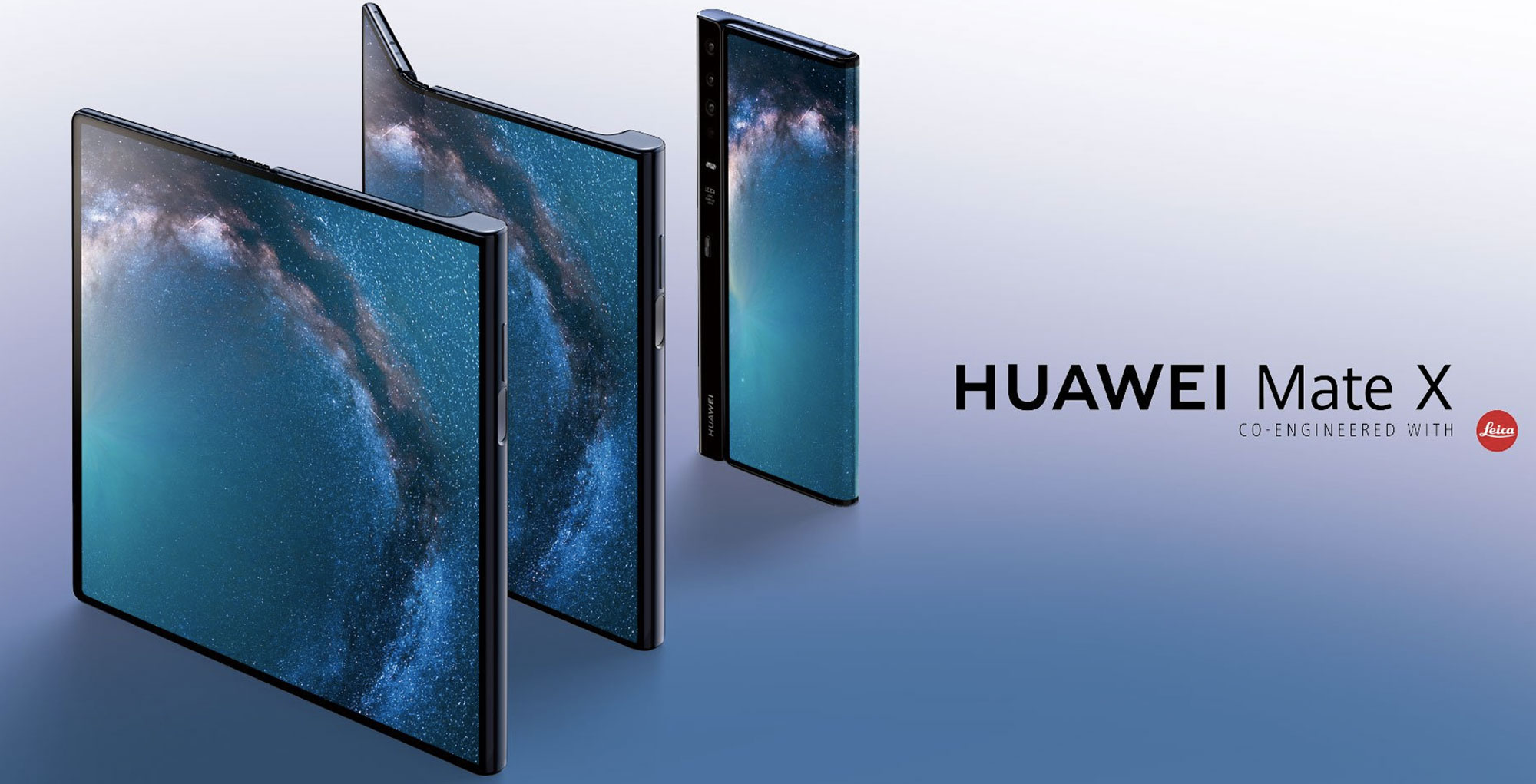
    The Samsung Galaxy Fold has been delayed indefinitely following a number of display issues, but it seems as though the Huawei Mate X is still on track for a release in June.

    Following Samsung’s announcement yesterday, rumors began floating around about a potential Huawei Mate X delay until September in order to iron out any issues and ensure a high level of durability, but today sources within the Chinese company have confirmed to Phoenix Technology that reports suggesting this are false and simply rumors. They went on to state that the company’s foldable flagship will be made available to purchase in June, as previously announced.

    The Huawei Mate X’s design did raise some durability questions when first unveiled. After all, it leaves the flexible OLED panel exposed at all times, thus making the plastic coating on top more prone to scratching. Nevertheless, Huawei seems confident in its design and apparently sees no reason for a delay.

    Samsung’s Galaxy Fold, on the other hand, seemingly presented a much sleeker and studier design from the get-go. However, the South Korean giant’s initial findings suggest the “impact on the top and bottom exposed areas of the hinge” could be the cause of the display issues. In one instance, “substances found inside the device” also affected the performance of the display.

  • Qualcomm support China Unicom’s 5G announcement

    Qualcomm support China Unicom’s 5G announcement

    U.S. based chip designer Qualcomm announced on Monday that it supports the introduction of  China Unicom’s 5G services in the largest smartphone market in the world. Qualcomm’s latest and greatest Snapdragon 855 Mobile Platform and Snapdragon X50 5G modem chip were used on 5G phones from manufacturers like (in alphabetical order) nubia, OnePlus, Oppo, Vivo, Xiaomi and ZTE. Devices from these companies were part of Monday’s event. China Unicom said that it is the first Chinese carrier to announce that it will offer 5G wireless service to consumers in the country.

    Starting tomorrow and running through April 25th, Qualcomm, China Unicom and the aforementioned phone manufacturers plan on showing live demonstrations of 5G at the 2019 China Unicom Partner Conference in Shanghai. These demonstrations will show OTA connections made using China Unicom’s 5G network and devices powered by Qualcomm’s 5G solutions. Consumers in China hope that 5G phones and service will be made available later this year. Those attending the conference will get to see HD video streaming, cloud gaming, web browsing and realtime sharing of data between devices and the cloud all over a 5G network.

    “For the past decades, our technology has been a foundation for the wireless evolution. It takes many years of R&D, specification, prototyping, testing, trials and product development to bring a new generation of mobile technology to China and the world. Like previous generations, 5G is the result of more than a decade of collaborative efforts by Qualcomm Technologies and our ecosystem partners, with the mission of preparing the mobile industry for 5G rollout starting this year. We’re excited for Chinese consumers to experience 5G’s truly transformative wireless experience in 2019.”-,” said Frank Meng, Chairman, Qualcomm China.

    5G data speeds run up to 10 times faster than 4G LTE speeds. The next generation of wireless connectivity is expected to lead to the launch of new services and businesses world wide in the same way that 4G LTE networks gave rise to new businesses. For example, the ride sharing industry was born thanks to the replacement of 3G data with faster 4G LTE service. The creation of this industry helped birth multi-billion dollar companies like Uber and Lyft.

  • US retailer removes Apple Pay support after two years

    US retailer removes Apple Pay support after two years

    JCPenney has finally released an official statement. This offers a technical explanation for the retailer’s decision to “suspend all contactless payment options until a later date.” While that suggests there’s a good chance Apple Pay support will be reactivated at some point in the future, JCPenney is also hinting at modest popularity for the digital wallet app in its stores, claiming the “vast majority” of shoppers continue to rely largely on “inserting or swiping their physical credit cards at point-of-sale terminals” to complete their transactions. Original article follows.

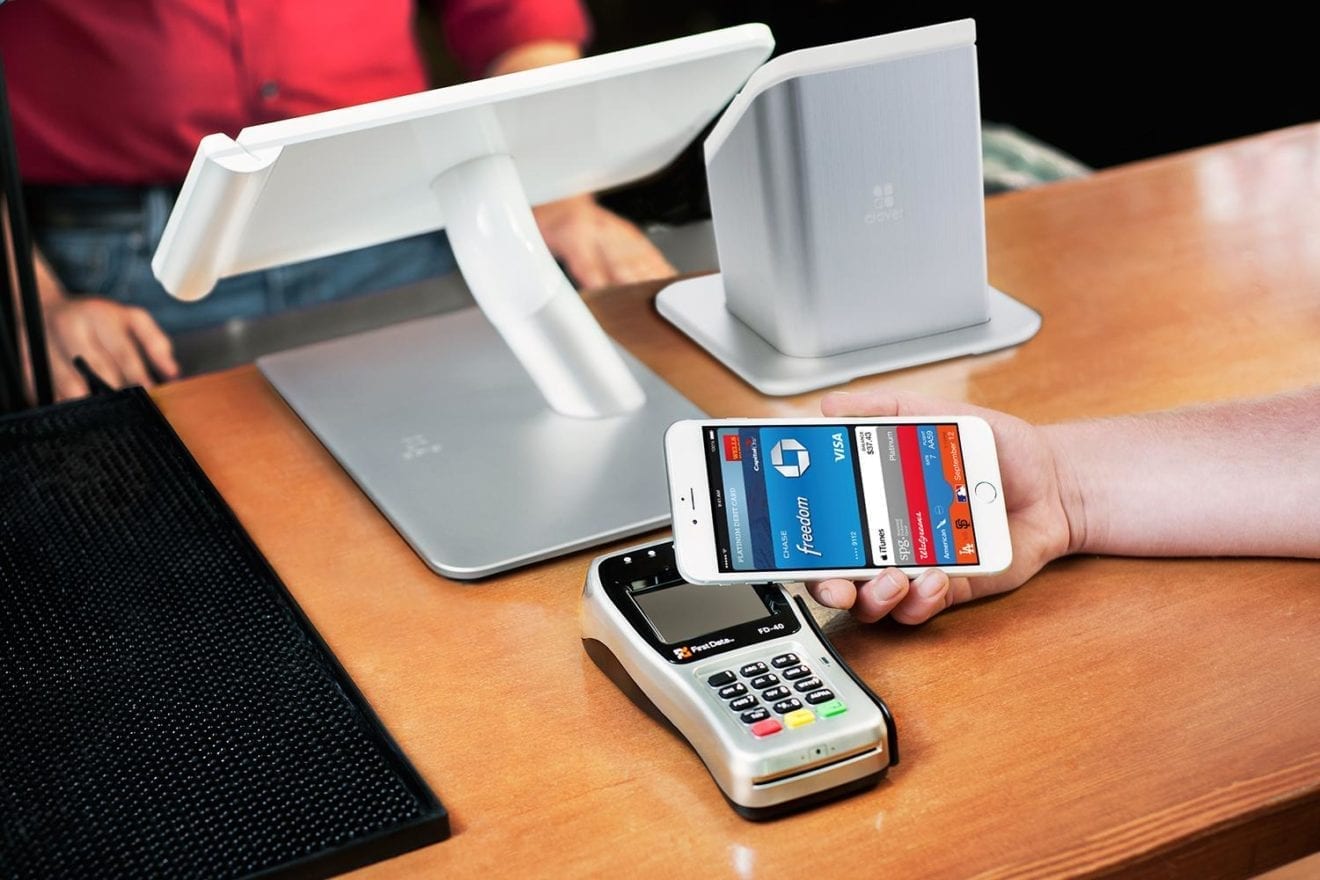
    While Apple is still selling plenty of iPhones, iPads, and smartwatches around the world, the tech giant’s “services” and software are suddenly growing at an unrivaled pace, generating revenues of nearly $11 billion between October and December 2018, up from $9.1 billion during the final three months of the previous year. Apple Pay, Apple Music, and the iOS App Store are by far the most successful and lucrative such services, at least until the Apple Arcade and TV+ platforms actually become available for end users.

    Released less than five years ago, Apple Pay powered a mind-blowing 1.8 billion transactions in the last 90 calendar days of 2018, continuing its aggressive expansion stateside and worldwide with a long overdue debut in Germany, as well as major new partnerships with the likes of CVS, Target, and Taco Bell.

    Curiously enough, another big US retailer confirmed on Twitter over the weekend its “decision to remove Apple Pay for our stores.” JCPenney’s move is certainly unusual (if not unprecedented), as there are still a few holdouts in Apple’s race to US ubiquity, but we can’t really remember anyone that supported the digital wallet platform for a couple of years to then reconsider without offering any sort of justification.

    While not the earliest supporter of the increasingly popular app, JCPenney did embrace the service back in 2017, helping it reach 74 of the top 100 US retailers by revenue as of January 2019. That included Target and Taco Bell, so we’re guessing the count is now down to 73. That’s still an impressive number, as is the 70 percent touted by Tim Cook as the platform’s target for later this year as far as all US retailers are concerned.

    Hopefully, we’ll get an explanation from JCPenney soon as to what made the department store chain pull the plug on Apple Pay support in both its retail locations and iOS app.

  • Mercedes-AMG Cars Will Be Electrified From 2021

    Mercedes-AMG Cars Will Be Electrified From 2021

    Electric performance car is not an alien concept anymore. In fact, prominent carmakers like Automobili Pininfarina and Rimac are into the business of making only electric supercars. Electric Mobility is also believed to be the future of automobiles and this stands true even when we talk about performance cars. Mercedes is also thinking in this direction and has said that all its AMG cars will be electrified 2021 onwards.

    According to news reports, Tobias Moers, Head – Mercedes-AMG said that Mercedes-AMG models will be using an electrified V8 drivetrain in the future. The 4.0-litre V8 engine which powers a range of Mercedes-AMG cars will be coupled with a 48-volt electric motor which has been developed indigenously by the team. Initially, Mercedes was planning to use the new powertrain in the 63 engine only in the GLE and GLS SUVs. However, it will play a major role in the future as from 2021 all AMG cars will be launched with an electrified powertrain. Mercedes also believes that the share of electrified powertrains will be higher in the performance segments in 2025.

    We already know that AMG is also working on a high-performance hybrid system for its upcoming hypercar. The Mercedes-AMG One hypercar will use an electric motor driving its front wheels just like the AMG GT four-door concept. Moers also said that the setup will be offered in the 65 series AMG models and will replace the 6.0-litre V12 engine. However, the 2.0-litre, four-cylinder, turbocharged AMG engine won’t be converted into a hybrid system.

  • Cha Tra Mue Ready for Hong Kong debut

    Cha Tra Mue Ready for Hong Kong debut

    The bubble-tea craze is showing no sign of letting up with yet another overseas entrant about to make its debut on the streets of Hong Kong.

    The latest brand comes not from Taiwan, but from Thailand. Cha Tra Mue, described by Time Out as “one of Thailand’s most popular and beloved tea brands,” will open its first store in Hong Kong this Saturday (April 27), in Causeway Bay.

    Cha Tra Mue (which translates to Number One Brand) was launched more than 70 years ago as a packaged consumer goods brand and in recent years expanded into fresh tea shops. It is known for its sweet, smooth Thai-style milk tea and green-tea drinks. It has already expanded into Malaysia, South Korea, Mainland China (Beijing) and Singapore.

    The Hong Kong outlet, at 49 Jardine’s Bazaar, will use only tea leaves, coffee beans, lime and honey imported fresh from Thailand. It will also offer a pandan-flavoured bubble tea.

    Besides serving fresh beverages, the Cha Tra Mue cafe will sell packaged tea including family-sized packs of tea bags, and most likely soft-serve tea-flavoured ice cream.

  • Apple’s 5G iPhone Using Samsung Modems to be released in 2020

    Apple’s 5G iPhone Using Samsung Modems to be released in 2020

    In one fell swoop, Apple cut the Gordian knot of 5G modem supply and it is smooth sailing from here, as it paid Qualcomm undisclosed amount to settle the patent litigation and secure a multi-year contract for 5G iPhones.

    “It’s personal. I don’t see anybody who can bridge this gap,” tipped the WSJ recently about Apple and Qualcomm CEOs relationship but the big boys ironed out their differences quickly. Apple could have tried Intel, Samsung or Huawei, but each of those choices comes with drawbacks.

    Intel threw in the towel on 5G modem development when it learned that Qualcomm resolved its patent issues with Apple, while America’s homeland security institutions would balk at Huawei’s involvement due to geopolitical considerations. Despite all rumors, Huawei company reps said during its Analyst Summit 2019 yesterday that they have “no communication with Apple on 5G modems.”

    Samsung, on the other hand, simply can’t make enough of its own 5G modems to exclusively supply huge customer like Apple. It recently declined Apple’s advances for its Exynos 5100 5G modem. Not only does the company need its production for the Galaxy S10 5G that is now shipping, but it could very well need it for the Note 10 Pro, too, and others down the line.  According to one “electronics industry official” there:

    Apple inquired about the supply of 5G modem chip from Samsung Electronics System LSI division. However, we know that Samsung Electronics System LSI answered that the supply volume of its smartphone 5G modem chip is insufficient.

    Well, the most renowned Apple supply chain analyst, Ming-Chi Kuo of TF International Securities, has spoken, and Apple will seemingly hedge its Qualcomm bets with Samsung as a side dish. If you are wondering why, Apple is most likely planning to use the more advanced Qualcomm modems in placed where mmWave spectrum 5G networks are being established, while Samsung’s likely cheaper solution will remain for the sub-6 GHz crowd.

    Apart from all these juicy dual supplier predictions, Ming-Chi Kuo is advocating for a fall 2020 release date of the future 5G iPhones. That’s the same timeframe as before but this time around, Apple is in a position to use the best that the 5G market can offer without triggering the NSA, CIA and other three-letter agencies’ wrath.

    South Korea just launched its nationwide 5G network, with the Galaxy S10 5G being its poster child. Upon the phone’s release there, Korea will have all of its largest networks offering 5G plans. In fact, Korea Telecom announced three 5G price tiers. Among those, there is a “Super Plan” that offers truly unlimited 5G data without speed caps, and this one will go for the equivalent of $70, a pretty good price no matter how you slice it. In fact, the Super 5G Plan is somewhat cheaper than the current unlimited 4G LTE plans in Korea, so the 5G future seems bright, and we are expecting more and more 5G handsets to enter the fray this year, especially towards the tail end of 2019.

    A true nationwide shift to 5G networks is not happening this year in the US anyway, so iPhone users won’t be missing all that much until then. Next year, however, most of the flagship phones of the spring season will probably have some sort of 5G connectivity support, be it with a Qualcomm, Samsung or Huawei modem, and Apple could feel the pinch in that regard.

    Had Apple gone alone in developing a 5G modem, either by acquiring Intel’s wireless modem assets, or starting from scratch, it would have taken it years to reach a sufficiently good unit that is worthy to put in millions of iPhones. Wireless connectivity modems are perhaps the most complex of chips in a phone, and 5G ones require so much filters and software control to avoid interference and still be backwards compatible that this option would have meant either a lot of extra expenses for Apple in order to deliver a 5G iPhone in 2020, or falling behind the competition by launching one that is a cycle or two behind.

    “Apple knows our phone number, we are still in San Diego,” tipped Qualcomm recently, giving a glimmer of 5G hope, and patching thing up with Qualcomm turned to be the smartest solution, just as we expected. There you have it – Apple resolves the bad blood between the companies, Qualcomm is likely to assist it with the 5G push, and Samsung will be its sidekick. The 5G future is so bright, we have to wear shades. According to Kuo, the launch of the 5G iPhone is expected to unleash a big upgrade cycle for Apple, and he upped his forecast for iPhones sold in 2020 to the whopping 200 million, from the current 190 million prognosis.

  • Qualcomm’s next Snapdragon processor could take 5G mainstream Easily

    Qualcomm’s next Snapdragon processor could take 5G mainstream Easily

    Support for 5G networks is currently limited to a handful of flagship devices such as the Galaxy S10 5G, LG V50 ThinQ 5G, and Huawei Mate 20 X 5G. This situation is unlikely to change anytime soon, but in order to boost the adoption rate, Qualcomm is apparently developing a 5G-ready chip that’ll make its way into future mid-range smartphones.

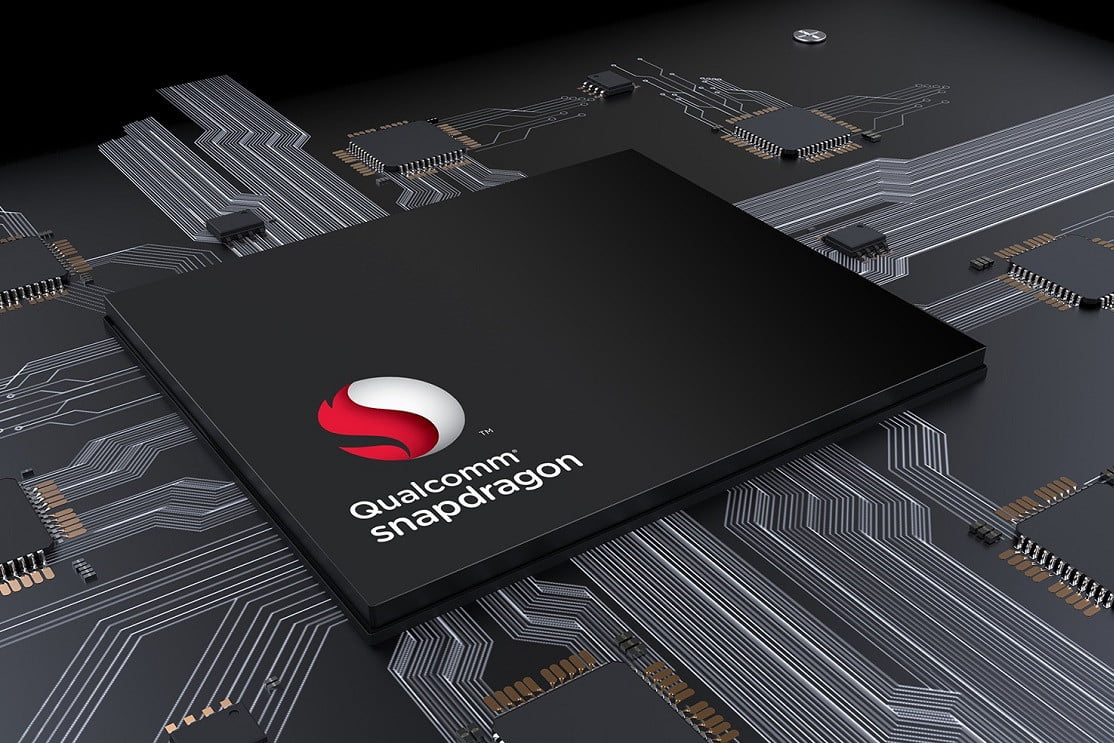
    Dubbed the Snapdragon 735, the upcoming chip is expected to succeed the recently-announced Snapdragon 730. Like Qualcomm’s flagship processors, this new one will reportedly be manufactured on the 7-nanometer manufacturing process. Concrete details about this are yet to be revealed, but compared to the older Snapdragon 710 it should result in a performance boost of up to 20% and an increase of 50% in terms of efficiency. Additionally, efficiency gains of up to 20% are to be expected over the Snapdragon 730.

    As mentioned above, the Snapdragon 735 will introduce support for 5G networks. But rather than utilizing the separate Snapdragon X50 modem found inside the Galaxy S10 5G, the Snapdragon 735 will apparently use an integrated 5G modem. This should result in thinner and lighter 5G smartphones. It should also reduce the overall cost associated with the technology.

    Moving on to some of the more technical details, the included CPU will boast an octa-core 1+1+6 setup. This will include six efficiency cores clocked at 1.6GHz, a slightly faster one at 2.4GHz, and a high-performance core clocked at 2.9GHz. There will also be an upgraded GPU in the form of the Adreno 620.

    Lastly, the Snapdragon 735 should allow manufacturers to build mid-range smartphones with as much as 12GB of RAM. Additionally, the chip will support 21:9 displays with 3360x1440p resolutions, 4K video recording at 60FPS, and a dedicated NPU that’ll help with AI features.

    The Qualcomm Snapdragon 735 is expected to arrive during the final quarter of this year, perhaps alongside the flagship Snapdragon 865. In terms of a release, the first Snapdragon 735-powered devices should arrive during the first half of 2020.

  • Huawei continues to close in on Samsung with impressive Sales Results

    Huawei continues to close in on Samsung with impressive Sales Results

    2018 has been something of a roller coaster for Huawei, the highly controversial telecommunications equipment vendor that also somehow managed to beat Apple for second place in global smartphone shipments for two consecutive quarters. Ultimately, the China-based tech giant ranked third overall in the mobile device market last year, selling however a colossal 206 million units or so around the world, up from “only” 153 million in 2017.

    While market research firms like Strategy Analytics and the International Data Corporation (IDC) are not yet ready to release their full Q1 2019 reports, Huawei has just confirmed another impressive new set of numbers that puts the company on track to substantially narrowing the gap to Samsung by the end of the year and possibly reaching its most ambitious goal yet in 2020.

    No less than 59 million Huawei smartphones were shipped between January and March 2019 worldwide, up a staggering 50 percent or so from the 39 million third-party estimate of Q1 2018. That should be enough to open a big gap between the Chinese company and Apple, since only around 52 million iPhones were sold globally during Q1 2018, a number most analysts expect to take a bit of a plunge when 2019’s first-quarter reports start rolling in.

    It will then be pretty much impossible for Apple to catch up to the market’s silver medalist, as iPhone shipments may need a couple more quarters to start recovering, while Huawei’s figures are expected to continue growing. In total, Huawei could sell anywhere between 250 and 260 million units in 2019, which probably won’t be enough to secure the company first place over Samsung, but it might hint at a new leader next year.

    Until then, we should point out Huawei’s substantial boost in Q1 smartphone volumes crucially contributed to overall revenues of close to $27 billion, representing a 39 percent year-on-year jump. Incredibly enough, the company reported massive growth for its carrier and enterprise business departments, as well as the consumer electronics group, expecting all three divisions to post double digit increases in revenue throughout 2019. That means both smartphone and 5G equipment sales are going well, despite strong opposition from the US government.

  • Apple had a Plan to end Qualcomm’s licensing policies

    Apple had a Plan to end Qualcomm’s licensing policies

    When Apple agreed to use only Qualcomm’s modem chips for the iPhone, it worked out an annual $1 billion “incentive fee” that it would receive from the chip maker. But there was an important condition. If Apple decided to use a second modem chip supplier, it would have to pay Qualcomm back the “incentive fees” it received. Apple then attended a hearing held by the South Korea Fair Trade Commission and spoke out against Qualcomm’s chip licensing practices. As a result, the $1 billion checks stopped. At the same time, Qualcomm learned that Apple was planning on using Qualcomm and Intel modem chips for the iPhone 7.

    In January 2017, Apple sued Qualcomm over the $1 billion checks it was no longer receiving, setting off a chain reaction of lawsuits filed by both sides against each other. But that is all water under the bridge following the settlement that both companies agreed to last week. All lawsuits are dropped, and Apple will pay Qualcomm an undisclosed amount. Apple now has a six-year licensing agreement with Qualcomm and a multi-year pact that will guarantee it modem chips from the San Diego based chip maker. According to one analyst, Apple could be paying Qualcomm as much as $9 per iPhone for the component.

    During the two years before the settlement, Apple publicly derided the quality of Qualcomm’s modem chips while in private it called them “the best.” These complementary comments were made by Apple executives in memos that also praised Qualcomm’s “unique patent share” and “significant (intellectual property) holdings.” The memos were obtained by Qualcomm during the discovery process. That is when both parties in a lawsuit hand over evidence to each other before a trial starts.

    Apple called Qualcomm’s chips worthless in arguments it made to lawmakers, regulators, judges, and juries while privately raving about the company’s components. This has many wondering how deeply Apple believed what it was saying when it tried to get courts to change the methods that Qualcomm uses to sell its chips. Apple’s true feelings about Qualcomm might explain why it might be paying Qualcomm as much as $9 per iPhone for its chips.

    Previously, Apple derided Qualcomm’s royalty deals that force phone manufacturers to pay a percentage of the retail price of each phone sold. In fact, just before the settlement was announced, Apple and Qualcomm were squaring off in a San Diego courtroom with billions of dollars in play. On Tuesday, during his opening statements, Apple’s attorney (Ruffin Cordell from Fish & Richardson) was trying to prove that the iPhone didn’t rely on Qualcomm’s component. He did this by pointing out that an iPhone can function using a Wi-Fi connection. And Apple has wondered in the past why Qualcomm should receive royalties for parts of a phone that it has nothing to do with.

    Apple’s attorney also pointed out Tuesday that licensing deals Apple made with Ericsson and Huawei were for twice the number of patents that Apple licensed from Qualcomm, but for a small percentage of what Apple was paying the chip supplier. However, an internal Apple document later obtained by Qualcomm showed that Apple licensed less expensive patents on purpose in order to create evidence that showed how much more Qualcomm was seeking to license its patents.-

    “While it’s very common for companies who are engaged in legal disputes to play hardball, the disclosure of these documents is very unsettling. It potentially reveals that Apple was engaging in a bad faith argument both in front of antitrust enforcers as well as the legal courts about the actual value and nature of Qualcomm’s patented innovation.”-Adam Mossoff, law professor at George Mason University, director of the Center for the Protection of Intellectual Property

    Documents received by Qualcomm during discovery revealed that Apple had planned on suing Qualcomm as far back as 2014; the tech giant decided to wait so it could continue to collect the billion-dollar payments from the chip maker. One document, produced by Apple six months before it lobbed the first salvo in their court battles, revealed Apple’s game plan to reduce the amount of the royalties it was paying to Qualcomm. Apple would “hurt Qualcomm financially,” and “put Qualcomm’s licensing model at risk.”

    Qualcomm’s licensing model is at risk, but not necessarily because of Apple. Earlier this year the Federal Trade Commission and Qualcomm squared off in a non-jury trial held before Judge Lucy Koh. Apple did have some executives testify against Qualcomm’s licensing practices, but other phone manufacturers did so as well. If Judge Koh, who presided over the Apple v. Samsung patent trial, rules in favor of the FTC, Qualcomm might have to change the way it sells its chips.

  • Facebook is building a Voice Assistant

    Facebook is building a Voice Assistant

    Sometimes it feels like Facebook has no awareness of its public perception at all. There are already proven stories about how Facebook has been gathering more data than they claim and using that data in ways you might not expect. There are conspiracy theories that Facebook is spying on users and listening to conversations.

    Even so, Facebook built the Portal – a camera that follows you around your room for video chats – and now there are reports that Facebook is building its own voice assistant to compete with Google, Alexa, Siri, and Cortana (and Bixby, if you want to be a completionist about it). The Facebook Portal actually uses Alexa for voice commands, but it seems Facebook has been working on its own voice assistant. Ex-employees from Facebook told that a team in Facebook’s augmented reality and virtual reality group has been quietly working on the project since early 2018.

    There’s no indication of how Facebook would position the assistant, whether in the Facebook app itself or more as a replacement for Alexa in Portal hardware (assuming that hardware line continues.) It’s also unclear how far along Facebook is in building the assistant or even where it’s getting the voice data it would need to build the voice recognition piece.

    Also unclear is whether or not anyone actually wants a Facebook voice assistant. The Portal cameras have been failures by all accounts. Facebook’s last attempt to make a human-powered assistant (M) failed as well. Add to that the general erosion of trust in Facebook, it’s hard to imagine how the company could sell a product that actually does listen to you at all times.

  • AirAsia India Offers Up To 70% Discount On Flight Tickets

    AirAsia India Offers Up To 70% Discount On Flight Tickets

    AirAsia India is offering up to 70 per cent discount on flights tickets, according to the airline’s official website – airasia.com. Bookings under the sale – valid for travel between October 1 and June 2 – can be made till April 28, 2019.
    AirAsia India’s latest offer is applicable on all destinations, the carrier said on its website. The discount is available on selected fare classes and non-peak periods only. In order to avail AirAsia’s offer on flight tickets, customers need to book flight tickets in advance, according to the airline. How to avail AirAsia’s discount on flight tickets:

    1. Pick the preferred AirAsia flight for departure and arrival.

    2. Select the dates stated in the promo travel period.

    3. Choose the preferred flight.

    4. You would get up to 70 per cent off on base fare or 20 per cent discount on premium flatbed category.

    Value pack and premium flex bundled category, DJ carrier code flights and QZ carried code domestic flights are not included in the offer, the airline noted.

    Meanwhile, rival GoAir is offering domestic flight tickets at a starting all-inclusive price of Rs. 1,375 in a limited-period sale, according to the airline’s official website – goair.in. Bookings under the sale – valid for travel till August 31, 2019 – can be made till April 25, 2019.

    IndiGo, on the other hand, has announced six additional daily direct flights from Delhi. The new flights by IndiGo will be operated to and from Allahabad, Bhopal and Patna, with effect from May 25.

    SpiceJet has also announced the introduction of 24 new flights on its domestic network. The daily direct flights introduced by the airline will be operated to connect Mumbai and Delhi with other cities.

  • JD takes major stake in Five Star Appliances

    JD takes major stake in Five Star Appliances

    Chinese online retailer JD is to buy nearly half the shares in electrical goods retailer Jiangsu Five Star Appliance, for US$189 million. Jiayuan Chuangsheng currently holds 93 per cent of the Five Star business and after divesting a 46 per cent stake to JD will remain its largest shareholder with 47 per cent.

    Analysts say the investment will allow JD to boost its online profile and provide consumers with a network of about 300 Five Star Appliance storefronts, in much the same way as archrival Alibaba is building physical retail networks in Mainland China, blurring the boundaries between online and offline retailing.

    With stores primarily located in central and southern China, Five Star Appliances has annual sales of about US$2.7 billion.

    Last year, JD accounted for nearly 40 per cent of China’s home appliance sales, making it the largest retail in the space. Partnering with a brick-and-mortar retail network is likely to boost sales for both parties and protect JD from fast-growing Suniung.com which now accounts for 30 per cent of the market. Tmall is also building a share of the appliance sector, its sales now nudging 25 per cent.

  • TPG-led Group to buy stake in APM Monaco

    TPG-led Group to buy stake in APM Monaco

    American private equity business TPG Capital Management is heading an investment collective to acquire 30 per cent of Hong Kong jeweller APM Monaco.

    While financial details have not been revealed, a person with knowledge of the transaction suggested that the firm’s valuation stands at about US$800 million.

    TPG’s investment will be channelled through a private equity fund it has previously established to focus on Asian investments, which controlled more than $4.6 billion in committed capital as of last February.

    APM Monaco operates around 200 outlets in 26 countries, the majority located in Europe.

  • Google gives more options for Call Blocking

    Google gives more options for Call Blocking

    Google has had the automatic spam call warnings available for a while now, to the point where many we know have simply begun ignoring calls when the Red Screen of Spam pops up on their phone. But, there have also been some missing options in terms of call blocking on Android. Google allowed for blocking specific numbers, but now there are even more options to let users block calls.

    Previously, the only option for blocking calls was to add numbers to a call block list from the Phone app’s Recent calls page, but now there are four new options for blocking calls. If you want, you can block all calls from numbers that aren’t in your contacts list, block calls from private or unknown numbers, or even block calls made from pay phones. That last one is a bit surprising because as mobile phones have taken over and become commonplace, pay phones have slowly been removed from public spaces. There are likely still places around the world with pay phones, but it’s been quite a long time since we’ve seen any in the U.S.

    Oddly enough though, the new options won’t be found in the Phone app. Instead, Google put the new options in the Contacts app all the way at the bottom of the Settings page, under the Manage contacts header. That will give you toggles for the new call block features as well as a list of numbers you’ve already blocked.