Tag: asia

  • Shiseido and AS Watson co-create skincare Beauty Line

    Shiseido and AS Watson co-create skincare Beauty Line

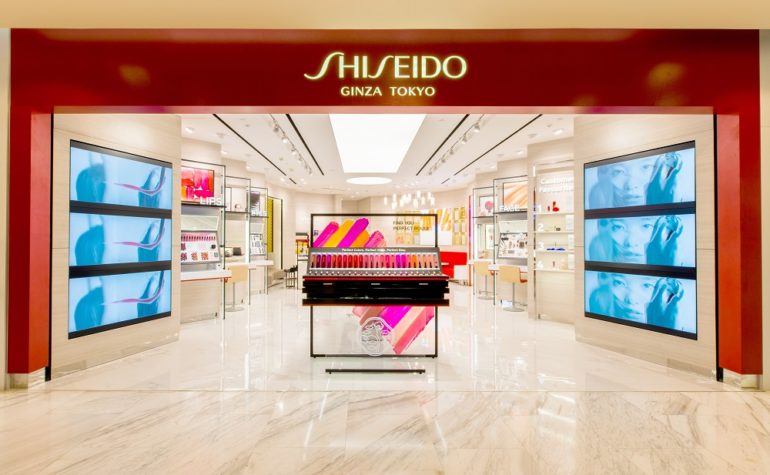
    Global cosmetics company Shiseido and AS Watson, the health & beauty retailer, have collaborated to co-create an exclusive derma skincare range under the “D Program” brand.

    The new Urban Damage Care range has been successfully launched in Thailand and Taiwan and will soon be launched in other Asian markets with Watsons stores.

    The collaboration is in response to a 24-per-cent growth in the derma skincare category in Asia since 2014. As more women are looking for effective derma skincare products, the online search for related topics grew by 117 per cent compared to last year.

    “AS Watson is the largest health and beauty retailer in the world that acts with speed, innovation and vision making them the perfect retailer to bring Urban Damage Care to the high street,” said Shiseido president and CEO Masahiko Uotani.

    “With AS Watson’s extensive distribution network and customer insight of the derma cosmetics category and Shiseido’s expertise in R&D and innovation, this has enabled us to co-create a range that supports our core values of putting the customers’ needs first while ensuring that it is accessible to customers.”

    The project kicked off with customer survey on a selected panel of Watsons members after Watson’s COO Malina Ngai visited Shiseido headquarters in Tokyo 18 months ago.

    “Combined with Shiseido’s 40 years of sensitive skin research and product development technology, we collaborated to develop the range that we believe will be best suitable for modern Asian females to improve their skin to defend against urban pollution,” she said.

    Following positive feedback from customers, “D Program” will be launched in China on 11 April.

  • ShopBack Secures Fresh New Funding

    ShopBack Secures Fresh New Funding

    Rewards program ShopBack has secured a further US$45 million in its latest funding round.

    Joining the shareholders’ register are newcomers including Japanese e-commerce giant Rakuten, EV Growth, and EDBI, a Singapore government-linked strategic investor.

    Amit Patel, CEO of Rakuten subsidiary Ebates and Willson Cuaca, managing partner at EV Growth, will join ShopBack’s board of directors. The new funding round takes the total investment in Shopback to $83 million.

    ShopBack has recently been expanding its core services beyond its original cashback service for online shoppers. Among them, Shopback Go, in partnership with Visa and Mastercard, which enables users to dine out and earn rewards.

    Last year, ShopBack experienced 250 per cent year-on-year growth in both orders and sales. The company powered more than 2.5 million monthly transactions for more than 7 million users in seven Asia-Pacific markets, and delivering close to $1 billion sales for more than 2000 merchant partners, both online and offline.

    ShopBack also entered Australia last year, its first market outside Asia, and opened research and development hubs in Vietnam and Taiwan.

    The company says the fresh funding will be invested in “simplifying shopping experiences, expanding data capabilities to fuel personalisation and business insights, as well as accelerating growth in key markets”.

  • Tokyu Hands Singapore to open at Jewel Changi

    Tokyu Hands Singapore to open at Jewel Changi

    Tokyu Hands Singapore will open its fourth store – at Jewel Changi – next week.

    Set to open on the 17th, the Japanese homewares retailer’s newest store in the city will feature new corners offering a selection of products based upon the trading patterns of Tokyu Hands Singapore’s existing stores.

    Each corner will feature a mix of Japanese designs considered “cool” in Singapore.

    A new section Straight up Health will feature pelvis-correction products, with actual devices available for customers to try on.

    “Travel’s Best” is a new corner which provides a collection of products aimed at travellers, along with outdoor accessories. The area offers products designed to make travelling more enjoyable.

    The Tokyu Hands Singapore store opening will feature a Japanese calligraphy performance and workshop by Malik Bin Mazlan, and a Kokuyo Exhibition, introducing Kokuyo products for a limited time.

    The retailer’s already popular Love Writing corner is being expanded with a collection of writing instruments, notebooks with superior-quality paper, and a curated range of other stationery items.

    The Tokyu Hands Singapore Jewel Changi store’s design focuses on the Japanese concept of Kodawaru, which the company says is used to “express careful pursuit, cultivation, approaches, and sensitivity to things one likes”.

    Tokyu Hands Singapore has three other stores: in Jurong East, on Orchard Road and at Suntec City.

  • Vietnamese supermarkets go back to leave packaging

    Vietnamese supermarkets go back to leave packaging

    Shoppers at Lotte Mart in Ho Chi Minh City’s District 7 were recently surprised to see scallions, okra and other vegetables produce wrapped in banana leaves.

    A representative of the supermarket chain said that the company is experimenting with using leaves to wrap veggies in one outlet, and plans to expand this later to the entire chain in the country.

    This is part of a plan to increase the use of environment-friendly products, not just for vegetables but also for fresh meat, the representative added.

    Local shoppers expressed support for the move. “When I see vegetables wrapped in these beautiful banana leaves I’m more willing to buy in larger quantities. I think this initiative will help locals be more aware of protecting the environment,” said Hoa, a District 7 resident.

    The Big C supermarket chain in Hanoi has also started using banana leaves to wrap veggies since Monday, and plans to do so in its central and southern supermarkets in the next few days. The trial is set to last a month.Saigon Co.op is also using banana leaves to wrap vegetables to replace their biodegradable wraps in some of its outlets in HCMC and other southern localities of Phan Thiet, Tay Ninh, Quy Nhon and Tam Ky.

    The supermarket chains are also providing customers with other environmental-friendly products. Lotte Mart said it is selling paper straws and food boxes made with sugarcane waste. Eggs are wrapped in paper packages instead of plastic boxes.

    Big C is offering shoppers bags made with corn powder which is completely biodegradable.

    These moves come after report highlights the large amount of plastic waste generated by Vietnamese people. The country disposes about 2,500 tons of plastic waste a day, according to official figures.

    Vietnam ranks fourth globally in the amount of plastic waste dumped into the ocean, according to the United Nations Environment Programme (UNEP).

    Some local cafes and restaurants have also been encouraging the reduction of plastic use by offering straws made with recyclable or biodegradable materials.

  • H&M tries its luck in billion dollar 2nd Hand Clothing Market

    H&M tries its luck in billion dollar 2nd Hand Clothing Market

    Fast-fashion brand H&M is testing its fortunes in the fast-growing used-clothing market.

    The Swedish brand has commenced sales of second-hand clothing in response to consumer concerns about the environmental impact of the fashion industry.

    H&M’s head of sustainability Anna Gedda says the program is being piloted in Sweden with a view to a more substantial rollout in future.

    “It comes back to the whole circular vision,” she said. “It just makes great sense to look into this business. We see this as a growing part of the industry, with great opportunities both for consumers and not least for the environmental impact, and how we can drastically reduce that by extending the life of the products.”

    The used-clothing market is expected to reach US$51 billion, double its current size, within the next five years.
    Last year, a BBC documentary portrayed fashion as one of the world’s most polluting industries.

  • Vietnam cracks down on drugstores selling without prescriptions

    Vietnam cracks down on drugstores selling without prescriptions

    The Ministry of Health has ordered that all drugstores should be connected to the national medicine database via the Internet by Monday, a move aimed at preventing the sales of drugs without prescription.

    But in Ho Chi Minh City, which has the highest number of pharmacies in the country at over 6,000, only 61 percent have linked up, according to the city Department of Health. In Hanoi, 90 percent of its over 4,600 drugstores have done so.

    Many pharmacy owners said they do not have a computer or Internet. Tran Thi Nhi Ha, deputy director of the Hanoi Department of Health, said the regulation requires pharmacies to invest in infrastructure and this takes time.

    Tang Chi Thuong, her HCMC counterpart, said inspectors would soon carry out checks to ensure compliance. “Licenses will be taken away from pharmacies that continue to disobey.”

    Most pharmacies in Vietnam sell drugs without prescriptions. In fact, around 88 percent of all antibiotics sold in urban areas are without prescriptions while the rate is 91 percent in the countryside, the health ministry said.

    The World Health Organization has listed Vietnam among the list of countries with the highest rate of antibiotic-resistant infections, with 33 percent of all patients suffering from them.

  • Aeon China to launch self-serve store

    Aeon China to launch self-serve store

    Aeon China is set to launch a self-service store network equipped with technology to anticipate what a customer will buy upon entry.

    The facial-recognition technology will activate recommendations and coupons displayed on the customer’s phone, based on individual purchase habits and digital payment history. It will be installed in 80 of the group’s roughly 480 locations in the territory.

    The Japanese-headquartered retailer’s strategy is intended to reduce staffing costs, allow automatic product ordering and draw in customers. Management needs for the new stores will be addressed by a new centre to be established in Chinese Hangzhou.

    Aeon China also plans to launch an online supermarket and a cross-border e-commerce platform in China this year, in part to accumulate data to support the self-service store network. The firm expects that its development in China will prime the technology for rollout in Japan and Southeast Asia.

  • Dropbox and Google team up

    Dropbox and Google team up

    Dropbox has just announced it has teamed up with Google Cloud to integrate Docs, Sheets, and Slides into its system. The highly-anticipated new feature will be available as a beta for Dropbox Business users starting April 9 and is meant to allow users to create, edit, and store Google Docs, Sheets, and Slides in Dropbox.

    If you’re a Dropbox Business users, you must sign in to both your Google and Dropbox accounts so that you can create and store Docs, Sheets, and Slides files in any Dropbox folder. But the new feature doesn’t stop here, as you’ll be able to share individual files, manage access to your files and get feedback at the same time.

    Of course, sharing and co-editing is done in real-time, while adding Docs, Sheets, or Slides files to a shared Dropbox folder will automatically grant member access, which means you won’t have to leave Dropbox.

    Keep in mind that since the new feature is still in beta, you’ll have to opt-in by visiting Dropbox’s sign-up page. Once you activate it, you will be able to create Google Docs, Sheets, and Slides files, as well as browse, move, copy and delete them from the iOS and Android apps.

  • Three new Snapdragon chips unveiled today

    Three new Snapdragon chips unveiled today

    Qualcomm unveiled today the Snapdragon 730, 730G and 665 Mobile Platforms. The chip maker says that the new chips are designed to offer customers “exciting experiences” in gaming, AI and performance. The first new devices to be powered by these chipsets will hit the market in the middle of 2019.

    The Snapdragon 730 is the first 7 series SoC from Qualcomm that brings certain features previously found only on the flagship 8 series chips. Replacing the Snapdragon 710, the new SoC comes with on-device AI to provide “intuitive image capture, exceptional gaming, and optimized performance.” The Snapdragon 730 is equipped with Qualcomm’s fourth generation multi-core Qualcomm AI Engine, twice as powerful as the previous generation’s AI Engine. It also includes the Qualcomm Spectra 350 image signal processor (ISP), found for the first time ever in a 7 series chip. The ISP provides four times the power savings as its predecessor and can support a triple-camera setup made up of telephoto, ultra-wide and portrait lenses. It will record 4K HDR video in Portrait mode.

    Made using the 8nm process, the Snapdragon 730 includes the Adreno 618 graphics processing unit (GPU) and a state-of-the-art graphics library that uses 20% less power than Open GL ES. This means that the chip will provide gamers with improved graphics and longer battery life. And with Qualcomm aptX Adaptive audio and Qualcomm Aqstic audio technology, gamers will be able to experience surround sound while playing mobile games.

    The new chip is Wi-Fi 6 ready, and with the Kryo 470 CPU on board, each core brings as much as a 35% improvement in performance. The Snapdragon X15 LTE Modem handles LTE download speeds as fast as 800Mbps.

    “With the introduction of the Snapdragon 730, 730G and 665 Mobile Platforms, we are bringing features such as sophisticated AI, exceptional gaming and advanced camera capabilities to a broad spectrum of devices at exceptional performance. Each iteration of Snapdragon drives immense innovation that will surpass customer expectations.”-Kedar Kondap, vice president, product management, Qualcomm Technologies, Inc.

    The Snapdragon 730G Mobile Platform is made for gaming phones, thus the “G” tacked on to the name of the chip. With an enhanced Adreno 618 GPU, graphics are rendered up to 15% faster than seen with the Snapdragon 730. Qualcomm met with some of the top mobile game developers to optimize the Snapdragon 730G. There is a Jank Reducer feature that removes up to 90% of janks with games running at 30fps. The chip also makes sure that players aren’t cheating, and the Wi-Fi latency manager keeps gameplay running smoothly. With over 1 billion different shades of color, games won’t only play better, they will look more realistic too.

    While the Snapdragon 730 and 730G will be used in handsets that are just not quite flagship material, the new Snapdragon 665 Mobile Platform is earmarked for pure mid-range models. But that doesn’t mean you won’t find some interesting features on the chip, like the third generation Qualcomm AI Engine. This provides twice the performance as the second generation AI engine. Speaking of AI, the Spectra 165 ISP found in the chipset includes AI capabilities. It also supports a triple camera setup made up of telephoto, wide-angle, and ultra-wide lenses. It also can handle images taken with today’s 48MP sensors.

    For gamers, the Snapdragon 665 SoC comes with the Adreno 610 GPU for “improved and longlasting gameplay.” The chip itself features four performance cores to handle the heavy-duty tasks, and four efficiency cores to take care of the light housekeeping. The Snapdragon 665 employs the Kryo 260 CPU and the Snapdragon X12 LTE Modem. The latter handles 4G LTE download speeds up to 600Mbps.

  • China’s 5G investments may be slowing

    China’s 5G investments may be slowing

    While China is certain to be one of the world’s largest 5G markets and has been spending heavily to gain an early lead in 5G adoption, there are signs that 5G momentum is slowing down in the market.

    This was one of the conclusions of a new report from IDTechEx Research on the 5G technology market forecast for the next 10 years.

    The report found that China’s big three operators China Mobile, China Telecom and China Unicom have all announced 5G capex budgets that are lower than expected.

    China Unicom plans to spend between 6 billion yuan ($893.3 million) and 8 billion yuan on 5G in 2019, while China Telecom has allocated 9 billion yuan. While market leader China Mobile has not disclosed its projected 5G spending, the report forecasts that its spending will be in the region of 17 billion yuan.

    The total 5G capex budget allocated in China (34 billion yuan) for 2019 is therefore significantly lower than the projected 50 billion to 100 billion yuan.

    Factors behind the lower than expected spending include greater activity to upgrade 3G networks to 4G, falling per-subscriber revenue and the uncertainty over whether 5G investments will generate returns, the company said.

    Based on slower than expected 5G deployment schedules, the total contribution of 5G for the telecoms sector could be reduced from the projected $200 billion by 2029 to $160 billion.

    But operators are projected to invest around $200 billion to $350 billion for 5G development from 2020 to 2030.


  • Spark New Zealand names Grant McBeath customer director

    Spark New Zealand names Grant McBeath customer director

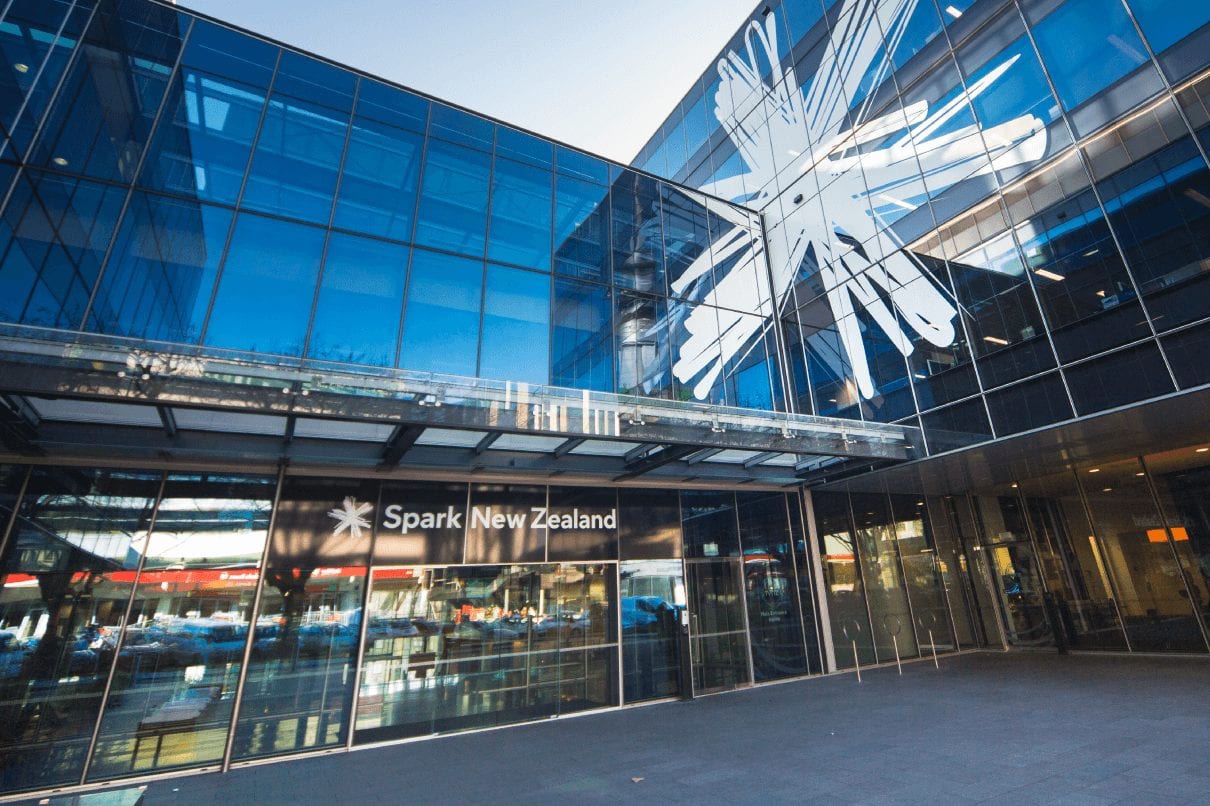
    Spark New Zealand has appointed Grant McBeath (pictured) as its new customer director on the company’s leadership “squad”, effective July 1.

    McBeath will replace current customer director Jolie Hodson, who will become Spark’s chief executive from that date.

    Commenting on McBeath’s appointment, Hodson said “he has a strong track record of building high performing teams and delivering for customers not only at Spark, but in his time in global executive roles in companies like Nokia.”

    McBeath joined Spark in 2013 as general manager of sales for the consumer and SMB business, alongside acting for six months as CEO for Spark Home, Mobile and Business operations before becoming Channel Leader, Consumer and SMB when Spark adopted an “agile” restructuring program.

    From July 1, Spark’s leadership “squad” will have eight members: Jolie Hodson (chief executive), Grant McBeath (customer director), David Chalmers (finance director/CFO),  Melissa Anastasiou (general counsel), Joe McCollum (HR director), Matt Bain (marketing director), Tessa Tierney (product director), and Mark Beder (technology director).

    NTT appoints Kazuhiro Gomi CEO for new research unit

    NTT Corp has appointed Kazuhiro Gomi as president and CEO of NTT Research Inc, a new unit the Japanese telco created on April 1.

    Kazuhiro Gomi, who assumed the new roles on the same date, will continue to serve on the board of directors for NTT Communications and retain his current role as president and CEO of NTT America.

    He joined NTT Corp in 1985 and took up several management positions across the group, including global business VP at NTT Communications and COO of NTT America before being promoted to president and CEO of NTT America in 2010.

    According to NTT, the new research arm will focus on advanced R&D to further develop and accelerate research activities originating from NTT Laboratories in Japan.

    NTT will launch laboratories-Quantum Science & Computing Laboratories, Cryptography & Information Security Laboratories, and Medical & Health Informatics Laboratories- in July, which will become the core of NTT Research.

  • Verizon launches collaboration service in 80 markets

    Verizon launches collaboration service in 80 markets

    US-based telecommunications operator Verizon has launched a new collaboration service which will enable the company’s network customers to integrate their voice infrastructure to a Microsoft Teams environment across 80 markets.

    The new service will take advantage of Direct Routing and Verizon’s SIP Trunk connectivity to give users access to Microsoft Teams’ collaboration features, which include the ability to call to and from traditional phones, VoIP or mobile phone lines using the platform.

    Verizon is using its Session Border Control as a Service (SBCaaS) solution to deliver the virtualized, cloud-based service.

    Other capabilities within the Microsoft Teams unified communications platform include persistent workplace chat, video meetings, file storage and collaboration, and application integration.

    Teams is built on the Office 365 Groups subscription-based office productivity suite, and is now in use by 500,000 organizations worldwide.

    “Enterprises are always looking for tools and solutions for better productivity and collaboration,” Verizon SVP of business products Shawn Hakl said.

    “By integrating Verizon’s SIP Trunking into Microsoft Teams, users get the best of both worlds. They are able to have reliable communication services from Verizon, seamlessly integrated into their Microsoft Teams collaboration software.”

  • Economy Vietnam Q1 inflation lowest in 3 years

    Economy Vietnam Q1 inflation lowest in 3 years

    March prices fell 0.21 percent over February, according to the General Statistics Office (GSO). There was a fall in the prices of seven of 11 items in the basket of consumer goods and services that make up the index.

    According to Do Thi Ngoc, director of the GSO, the reasons for the low inflation rate were the African swine fever outbreak and lower petrol and gas prices during the period. A 1.42 percent fall in the prices of essential foods, including eating out, was the biggest drag on the CPI.

    The African swine fever epidemic has meant that in some places pork prices have fallen by 40 percent since the beginning of February.

    Other notable decreases were of the prices of clothing and telecommunications, which were down by 0.17 percent and 0.07 percent.

    At a recent meeting of the Steering Committee on Price Management Thursday, Deputy Prime Minister Vuong Dinh Hue said in the current scenario the target of keeping this year’s inflation at 3.3-3.9 percent is within reach.

    CPI in 2018 increased by 3.54 percent, well below the 4 percent target set by the National Assembly.

  • Vietnamese agriculture giant enjoys fruitful year

    Vietnamese agriculture giant enjoys fruitful year

    The fruit sales of VND2.9 trillion ($125.05 million) accounted for 54 percent of the corporation’s revenue, according to Hoang Anh Gia Lai JSC’s (stock code: HAG) consolidated financial statements for 2018.

    Other agricultural products like chilli and pepper also contributed VND550 billion ($23.71 million) in revenues.

    Meanwhile, revenues from cattle raising fell 83 percent to VND126 billion ($5.43 million); and that from rubber plantations fell 24 percent to VND345 billion ($14.87 million).

    The corporation recorded VND5.4 trillion ($232.83 million) in total sales last year, an increase of 11 percent over the previous year.

    Last year, HAG’s subsidiary Hoang Anh Gia Lai Agriculture JSC (HAGL Agrico) invested VND976 billion ($42 million) in 5,300 hectares of land in Cambodia to grow bananas for export to China in response to rapidly rising demand.

    HAGL used to be a leading property developer in Vietnam, but restructured itself in 2010 to focus on agriculture, rubber and livestock farming.

  • Hong Kong fitness centres named and shamed

    Hong Kong fitness centres named and shamed

    Expressing deep concern for “unscrupulous sales practices” of some Hong Kong fitness centres, the Consumer Council has named and shamed four operators it says targets young consumers with high-pressure sales tactics.

    “After careful consideration, the council today publicly names four fitness centres and strongly reprimands them for their undesirable sales practices targeting inexperienced young consumers,” the council said in a statement. “The complaint cases levelled against the four centres involved some $40,000 on average and in the most extreme case it stunningly reached the sum of $1.75 million.”

    The council said the centres’ behaviour is “detrimental to consumer rights and interests”.

    The four centres shamed are:

    • SML Studio/TIA Studio, CMB Wing Lung Bank Centre, Nathan Road, Mong Kok.
    • Fitness Express, Mongkok Metro, Nathan Road, Mong Kok and Grand Place, Nathan Road, Mong Kok.
    • Legend Fight & Fitness, Russell Street, Causeway Bay.
    • A Plus Fitness, Argyle Street, Mong Kok.

    More than 90 per cent of the complaints the council has received relating to the Hong Kong fitness centres, related to customers aged 25 or younger, and some of the victims were even mentally incapacitated.

    “High-pressure tactics were deployed throughout the course of the sales process. Young consumers, under threat of personal safety, succumbed to the unrelenting pressure to sign the contracts so as to swiftly escape from the uncomfortable situation. Some traders also resorted to unconventional payment methods, including taking the complainants to major chain stores to buy gift vouchers to pay for fitness centre memberships, or requiring bank transfers or electronic payments and in some cases the funds were transferred to the personal accounts of the salesperson.

    “Consumers were generally given only a copy of the signed contract but not an official payment receipt.  Recent complaints have indicated that they were not even given a copy of the service agreement.”

    The council said most complainants were allegedly forced to have a photo or video taken, or were made to declare and sign a statement that they had signed the contract of their own free will, and that they would not make any claims against the company in the future.

    “Since the payments are made indirectly to the fitness centres, and there are no official receipts, it is incredibly difficult for consumers to seek legal redress in the face of such blatant disregard of consumer rights.”

    Targeting the young

    According to the council there has been a growing emergence of small independent Hong Kong fitness centres in areas frequented by young people, such as Mongkok and Causeway Bay, in recent years.

    “Unscrupulous traders have seized the opportunity to set up fitness centres in small premises with limited gym facilities, so it’s hard to believe they have ever had a long-term development plan to provide quality service to consumers.

    “In general, the modus operandi of these centres involves staff first appealing to the sympathy of complainants to help filling out a questionnaire, and then luring them to a nearby fitness centre. Once inside the premises, another sales team take over and use warm and friendly persuasion to lower the targets’ alertness as much as possible. On the pretext of validating the questionnaire, they then coax the targets to hand over their credit cards and identity cards with the actual intention of drawing up a contract and transferring funds.”

    It was further alleged that any attempts to leave the premises were often met with oral and even physical threats of the staff.

    In the past year, the council received 160 complaints against the four fitness centres, involving $6.78 million.  In the case of the highest amount from A Plus Fitness, within just four months, the complainant was persuaded to buy a 15-year membership and 1050 private coaching sessions, totalling more than $1.75 million.  Hundreds of thousands of this amount was borrowed from a moneylender. After explaining that the fitness centre could not open a credit-card account, its staff asked the complainant to make electronic transfers to pay for the membership and coaching sessions through 20 transfers of some $1 million in total.

    Complaints against Legend Fight & Fitness revealed an even more unusual means of payment method. The complainants were taken to nearby electronic goods and personal care chain stores to buy gift vouchers worth tens of thousands of dollars as payment for the fitness expenses.  As the complainants paid for the fitness centre membership with gift vouchers purchased from a third party and the fitness centre kept the receipts for the gift vouchers without giving a copy to the complainants, this will make it difficult for complainants to seek legal remedy in the future.

    Despite repeated enquiries by the council about how the fitness centre converted the gift vouchers to cash and deposited the cash into the company’s bank account, the centre staff refused to respond.

    Of the 237 complaint cases levelled against the four Hong Kong fitness centres between January last year and last February, the council referred 16 complaints to the Customs and Excise Department (CED) for follow-up whereas 51 complainants approached the CED direct to report their cases. Two other cases are currently receiving assistance from the Consumer Legal Action Fund (CLAF).

    Complaints escalate

    The council says that while the number of complaints about sales malpractices have been declining in recent years, after removing complaints relating to fitness centres closing down, those relating to the fitness sector have shown no signs of declining, running at 500 to 700 cases a year.  Complaints about sales malpractices have continued to rise unabated, jumping 88 per cent last year to 415 cases.

    The council advised consumers who felt coerced into signing a contract for an unreasonable amount to discuss the problem with their family immediately and if necessary, contact the Consumer Council or report the business to the Customs and Excise Department or the police.