Tag: asia

  • Chloe’s brand new flagship opens in Seoul

    Chloe’s brand new flagship opens in Seoul

    French fashion house Chloe has opened a new flagship in Seoul.

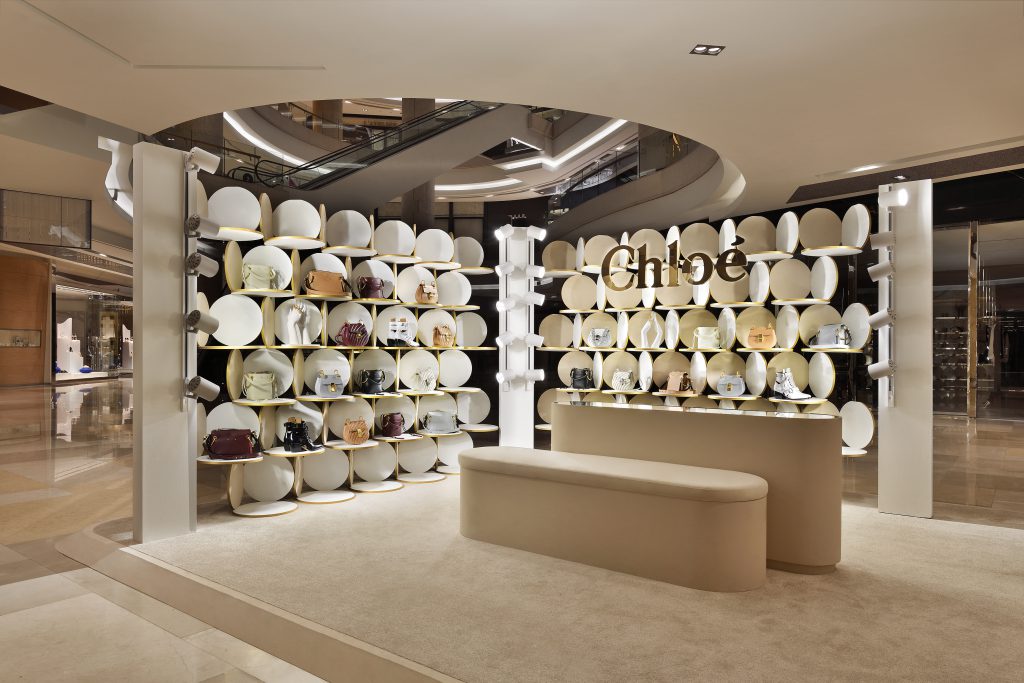
    The new 386sqm two-story boutique in the luxury shopping district of Cheongdam features an eye-catching facade consisting of beige marble stones and the maison’s logo in brass.

    Chloe flagship - Seoul 1

    The first floor entrance ushers clients into the accessories and small leather goods section, while on the second floor the full collection is hung up on brass rails, sitting alongside footwear.

    Chloe flagship - Seoul 2

    Furnishings and decor are used to express the brand’s vocabulary, mirroring the maison’s flagship boutique on avenue Montaigne which contrasts a light femininity with robust architectural details and raw mineral materials.

    Chloe flagship - Seoul 3


    Chloe flagship - Seoul 4

    Tender curvilinear forms on the ceiling, floor and furniture echo the roundness of the letters in the Chloe logo, while a palette of white and powdery beige rose warmed by mustard and polished natural brass illuminate the space.

    Vintage designer furniture is found on the second floor, which includes a private VIP space.

  • NTC extends migration date to eight-digit landline numbers

    NTC extends migration date to eight-digit landline numbers

    The Philippines’ National Telecommunications Commission has extended the migration to eight digit landline numbers in the Greater Metro Manila area by six months, at the request of the banking industry.

    The Bankers Association of the Philippines (BAP) and the Credit Card Association of the Philippines (CCAP) have requested more time to prepare for the introduction of eight digit landline numbers by implementing the necessary changes to their operations and systems.

    As a result, the NTC has ordered local operators to extend the migration date to October 6 from March 18.

    Both Globe Telecom and PLDT have announced they will comply with the demand and informed customers of the delay.

    Globe Telecom has stated that until January 5, customers still incorrectly dialing an old 7-digit number will hear a special announcement stating that the format has been changed to 8 digits.

    The company has also pledged to continue remaining customers of the upcoming migration over all available channels – including SMS, email and social media – up to the deadline.

    “We will make the necessary adjustments when it comes to our internal systems and communication efforts to ensure smooth service continuity for all of our affected customers,” Globe general counsel Froilan Castelo said.

    “Our teams are continuously working closely with the NTC and other telcos to assist affected customers before, during, and after the migration.”

  • Singtel to invest a further $536m in Bharti Airtel

    Singtel to invest a further $536m in Bharti Airtel

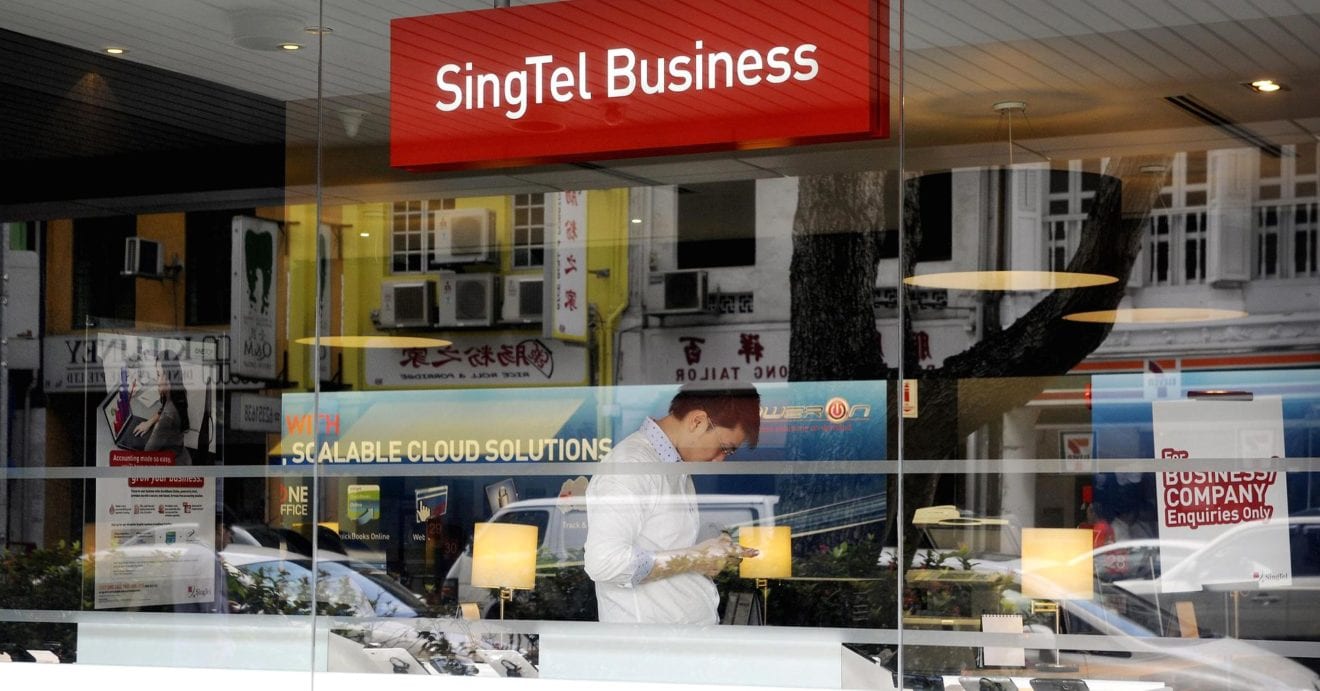
    Singtel Group has revealed plans to subscribe to Bharti Airtel’s 250 billion rupee ($3.57 billion) right issue, taking up its full entitlement for its direct stake of 15%.

    Airtel will take up 170 million new shares at an issue price of 220 rupees per share for a total of 37.5 billion rupees ($535.7 million).

    Airtel major shareholder Bharti Group has also committed to taking its full entitlement under the issue, while fellow major shareholder Bharti Telecom has renounced part of its entitlement in favor of Singapore sovereign investment fund GIC Singapore, which will invest around 50 billion rupees.

    The major shareholders and GIC have together committed a total of 67% of the rights issue. The renunciation to GIC will take Singtel’s effective interest in Airtel to 35.2%, with the operator maintaining its position as Airtel’s largest shareholder.

    “Our participation in this rights offering with our partners and a leading investor such as GIC reflects our long-standing commitment to Airtel and the confidence in the future of the Indian market,” Singtel International CEO Arthur Lang said.

    “Airtel has performed well despite business headwinds and is consolidating its position in a more sustainable market. Our partnership with Airtel spans some two decades and we continue to take a long-term view of India, having recently invested in Bharti Telecom and Airtel Africa.”

  • India has world’s cheapest mobile data

    India has world’s cheapest mobile data

    India is the cheapest country in the world for mobile data, while 10 of the top 20 cheapest countries are in continental Asia, according to analysis from broadband price comparison site cable.co.uk.

    Analysis of mobile data plans in the 230 countries with mobile broadband availability found that Indian operators offer an average price per 1GB of data of $0.26 – well below the global average of $8.53.

    The analysis also shows that Asian countries made up half of the top 20 cheapest markets in the world, with the average price of 1GB of data being well over $1 in Sri Lanka, Mongolia, Myanmar and Bangladesh.

    Malaysia ($1.18 per 1GB), Indonesia ($1.21), Bhutan ($1.25), Iran ($1.28) and Vietnam ($1.31) also made the top 20 list, and only three Asian countries are more expensive than the global average – Taiwan ($9.49), China ($9.89), and South Korea ($15.12).

    The analysis did not include countries in the Oceania/Pacific region. Australia is by far the cheapest country in the region with average prices of $2.47 per 1GB. The most expensive market in the region is Samoa at $30.09.

    “Many of the cheapest countries in which to buy mobile data fall roughly into one of two categories,” Cable.co.uk consumer telecoms analyst Dan Howdle said.

    “Some have excellent mobile and fixed broadband infrastructure and so providers are able to offer large amounts of data, which brings down the price per gigabyte. Others with less advanced broadband networks are heavily reliant on mobile data and the economy dictates that prices must be low, as that’s what people can afford.”

  • Australians love their pets

    Australians love their pets

    Venture to the local shops and you’ll probably see dogs outside on the footpath waiting for their owners. Perhaps the store has provided a hook for dog leads and a bowl of water for thirsty canines. But travel further from home, into the city centre for example, and you are unlikely to see many dogs, or other pets. The same applies to most parks and beaches, and certainly to cafés, bars, restaurants, department stores, and public transport.

    Although Australia is a nation of pet owners and pet lovers, our non-human companions are not welcome in most public spaces in our towns and cities.

    Pets outnumber people

    Some 62% of Australian households have a pet. While these rates are similar to those in the United States (65%), they are much higher than the United Kingdom (40%) and continental Europe (around 40%), where pets are much more visible and tolerated in public places.

    There are 4.8 million pet dogs, 4.2 million pet birds and 3.9 million pet cats in Australia. Of those of us who don’t have a pet, 59% report we would like one in the future. The ratio of pets to people in Australia is 101:100 – there are more animal companions than Homo sapiens.

    In fact, more of us live in a house with a cat and/or a dog than with a child. For many people, especially those without children, pets are increasingly being anthropomorphised and replacing human family members.

    Pet ownership rates are not rising significantly in Australia, but our spending on pet-related goods and services is increasing substantially. In 2016 we spent A$12.2 billion on pets and pet-related goods and services.

    Businesses are responding to the growth of the pet supplies sector by developing and marketing everything from vegetarian pet food to sophisticated smartphone surveillance apps. The market for pet insurance, pet day care, pet taxis, grooming and funeral services is robust, providing many opportunities for entrepreneurs and start-ups to tap into consumer demand for pampered pets.

    High-density housing and shrinking yards

    At the same time as spending on pets is increasing, our backyards are shrinking, with many of us choosing high-density apartment living. In addition, new housing developments feature larger houses and garages, which dominate the block at the expense of front and back yards. This means there is much less room for our pets at home than ever before.

    Historically, the Australian dream was a house on a quarter-acre block with plenty of outside space for pets, but blocks and yard space are shrinking in new housing developments.

    With outdoor living space disappearing, pets and their owners must increasingly turn to public spaces for social activity and interaction.

    Pets in public places

    The problem is that pets are not welcome in many public places. In most local council areas, the presence of domesticated animals is heavily restricted and governed by myriad council by-laws.

    Local parks and beaches are mostly off-limits. The fines for non-compliance are hefty.

    If you want to take your dog to a local café, you’ll have to sit outside. Even if you go to a “human-friendly” dog or cat café you won’t be served food because most pet cafés aren’t permitted to make or serve human food.

    In most cities, pets are not allowed to travel on trains, trams, buses or ferries; travelling with pets is either outlawed altogether or managed with strict guidelines for restraining pets and restricted travelling times.

    Research confirms the many benefits of pet ownership. In terms of general health and well-being, they improve our mental health and often provide the impetus to exercise. These are important issues for our time-poor, fast-paced and stressed-out society.

    Pet ownership also allows for interaction with others in social settings and in local communities. The importance of pets in fostering social interaction has been established in a study that found owning a pet is incredibly important for well-being and increasing social connectedness in neighbourhoods. In fact, 60% of participants in the study who owned a dog knew their neighbours better than those without a dog. Even 25% with a different type of pet reported the same.

    City planning for pets

    There is clearly a need to provide more public places for animals and humans to interact, particularly in settings that allow for greater social interplay. As city planners work towards cities that are “smart”, “green” and “walkable”, the focus should also be on making our towns and cities much more pet-friendly by providing outdoor spaces that encourage and foster interaction between animals and humans.

    We need an approach that recognises the benefits of human-animal connection and makes provisions for “animal-friendly” cities by opening up more areas for pets and their owners.

    Given Australia’s passion for pets, we should be able to interact with them in public. This will help us strengthen social ties, build local communities, improve our health and reduce social isolation.

  • Improved penalty rates and conditions for Priceline workers

    Improved penalty rates and conditions for Priceline workers

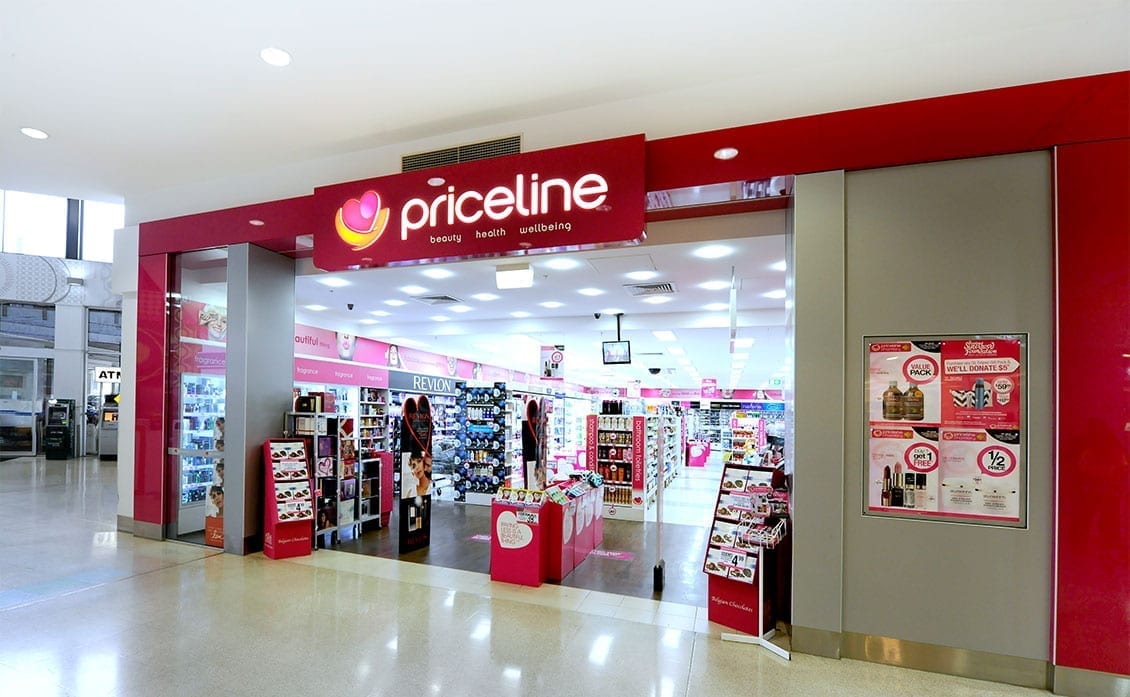
    Retail workers’ union SDA has secured a new agreement for Priceline Pharmacy workers that improves penalty rates and leave conditions for staff.

    The new agreement, which came into effect on Friday March 8, will see annual pay increases backdated from July last year, through to July 2020.

    “Wage growth for Australian workers is at an all time low and we’re proud we’ve been able to lock in strong annual pay increases for Priceline workers for the next three years,” SDA national secretary Gerard Dwyer said.

    “Priceline workers will receive an immediate 3.5 per cent pay increase backdated from 1 July 2018, and 3 per cent pay increases from 1 July 2019 and 1 July 2020. This means the permanent hourly rate for Priceline workers will increase to A$21.81 and the casual hourly rate will increase to A$27.26 per hour. With the rate of inflation at 1.8 per cent these pay increases will make it a little easier for Priceline workers and their families to make ends meet.”

    The new agreement also includes five days paid and five days unpaid Family and Domestic Violence Leave for all employees per year.

    “Unions, employers and government must all take responsibility for addressing family and domestic violence and we’re pleased we’ve taken the first steps in this agreement,” said Dwyer.

    Workers will also be paid superannuation on all paid leave, including paid parental leave. The SDA said this will help address the gender pay gap, as previously superannuation was not paid when parental leave was taken.

  • Dubai now as important as Singapore for DHL

    Dubai now as important as Singapore for DHL

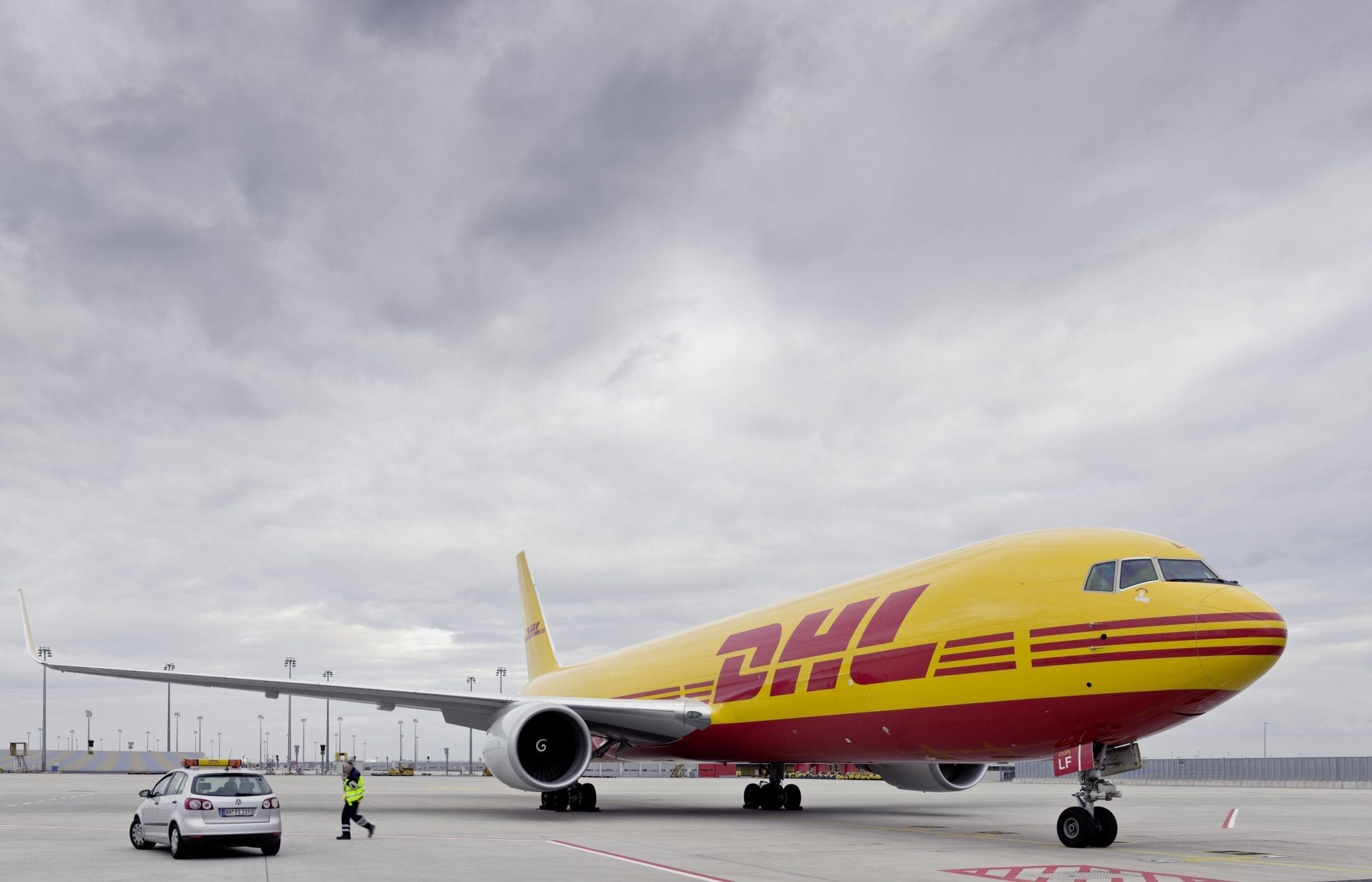
    Brexit, trade wars, an economic slowdown in China and humanitarian crises on the regional doorstep – despite these headwinds, Amadou Diallo, DHL Global Forwarding CEO for the Middle East & Africa, isn’t worried. The outlook for the logistics sector in the UAE for 2019 is upbeat, DHL’s recent Global Connectedness Index put the country at number five among the most connected countries in the world in terms of logistics, and Emirates NBD’s Dubai Economy Tracker Index shows that the wholesale and retail sectors (major drivers of demand for 3PL services) are at their strongest outlook since the post-2008 years.

    There is light on the horizon, then. But, despite this, the major players in the market are worried. At the World Government Summit in Dubai, DP World chairman and CEO Sultan Ahmed Bin Sulayem hit out at the UK government over its handling of the Brexit process.

    “Our problem is the indecisiveness of the government,” he said. “We don’t care as businessmen whether they have Brexit, or Brexit with an agreement, or Brexit with a good agreement, or Brexit with a bad agreement,” he said. “Once they decide, as businessmen, we are capable of running our business once all this basically indecisive environment disappears.”

    The statement was unprecedented from one of the most mild-mannered (and most powerful) figures in the Middle East logistics industry. But, he was venting a frustration expressed privately by many executives this magazine has interviewed during the last year. The world’s sixth-largest economy is at risk of crashing out of the world’s largest trading bloc without a contingency plan in place for trade and logistics.

    As the award-winning journalist James Ball wrote in a recent CNN piece, “The world needs to start panicking about Brexit”. The UK’s crisis was therefore a natural starting point for our wide-ranging interview with Amadou Diallo, DHL Global Forwarding CEO for the Middle East & Africa – but unlike many industry commentators, he insisted there was no need for concern in this region.

    Brexit is one of a handful of challenges we’re currently facingBrexit is one of a handful of challenges we’re currently facing,” he says. “DHL’s Logistics Trends Radar has highlighted Brexit as a potential headwind, among evolving trade tensions between the US and China, and China’s own domestic economic slowdown, that will likely impact trade volumes transhipping through the Arabian Gulf.”

    “This is an evolving and dynamic market. It’s always changing.”

    According to Diallo, DHL’s history and sheer size (DHL Group is the largest courier in the world), gives it the stability and resources to mitigate these challenges. “DHL has been around for more than 24 years and we’ve seen our fair share of market shifts,” he says. “Because we’re present in more than 220 countries around the world, we’re sustainable and dynamic enough to find new solutions and opportunities amid these global dynamics.”

    For this reason, he doesn’t see DHL Global Forwarding’s regional operations being unduly hampered by Brexit, whether it be hard or soft. In fact, he suggested the process might have a positive effect on the Middle East and African markets.

    “The UK trades with many markets, our region covers anything that goes to or from Afghanistan, Turkey, the Middle East and Africa, and many countries in this region have a solid trading relationship with the United Kingdom,” he says. “So, any enterprises and people in the UK who find themselves suffering due to Brexit may look to their existing trade relationships in other parts of the world to find some measure of mitigation and stimulate these trade flows. If people are inward-oriented, trade flows are the first thing to suffer.”

    For DHL Global Forwarding itself, the uncertainty and shifting nature of supply chains will likely drive demand for its services, he added. “DHL Global Forwarding is a sizeable organisation in the United Kingdom and we’re market leaders worldwide when it comes to logistics. We do supply chain services, customs brokerage, and other services that are going to be in high demand from UK companies if a hard Brexit occurs,” he says.

    And while Brexit remains a question mark looming large over the industry, what Diallo feels is a certainty of support to the market is the EXPO 2020 Dubai, which the government is spending US $9-billion to host, as part of a wider series of infrastructure investments amounting to US $3.2-billion in 2019 alone for the UAE Vision 2021 and Vision 2030 initiatives to diversify the economy.

    Dubai EXPO 2020 is definitely an opportunity for us, for growthDubai EXPO 2020 is definitely an opportunity for us, for growth,” he says. For a company like DHL Global Forwarding, providing air and ocean freight forwarding services and major logistics projects under the brand name DHL Industrial Projects, the opportunity is two-fold. “We had this experience in Milan and in China and we shouldered the burden of getting all the goods into the country for the expo itself for countries wanting to come and promote their cultures and countries, but also for the immense infrastructure development that comes with events of this kind,” says Diallo.

    “And then once the EXPO is over, there’s a lot of material that needs to be shipped by air or sea back to the point of origin, or donated, which is often the case, to other countries,” he says. “These are operations that need to be completely flawless and it’s something that we have become very good at.”

    DHL Global Forwarding is working closely with key partners in the run-up to the event, such as Emirates SkyCargo. “Emirates SkyCargo is helping us ensure that we provide a seamless service to foreign and domestic clients ahead of EXPO 2020. They’re a key provider of air freight solutions for DHL Global Forwarding,” he said. “We operate in all the same markets as the airline and work very closely with Nabil Sultan, the head of cargo for Emirates.”

    Emirates SkyCargo, like Emirates itself and DP World’s Jebel Ali Port, has turned Dubai into a major global logistics hub, and because of this DHL is significantly expanding its operations in the city. The DHL Group at the beginning of February established its first Global Competence Centre for Humanitarian Logistics in Dubai.

    “The centre is a cross-business unit involving the entire DHL Group to help logistics companies and NGOs respond to the various disasters and humanitarian crises occurring in the region,” says Diallo.

    “The competence centre will support the work of the International Humanitarian City. We see that many NGOs and aid organisation have offices and DCs here, and so this is the ideal city to use as a logistics hub for humanitarian relief.”

    Dubai is one of three global humanitarian logistics hubs for DHL’s disaster relief teams, and this, along with the Competence Centre, underscores the city’s significance within the wider DHL network.

    “This is the largest hub we have in the Middle East and Africa region,” says Diallo. “It’s up there with Singapore, Shenzhen, Germany and the United States.”

    DHL Global Forwarding has around 300,000sqm of warehousing space in the Middle East, with 260,000sqm of that located in Dubai. It’s also in Dubai that it has the AOG competence centre for all the airlines carrying air cargo into and out of the region, and a dedicated team of 75 people working in Dubai on its infrastructure logistics solutions through DHL Industrial Projects. “With a lot of energy plants and oil & gas projects in the region, and immense infrastructure developments in Saudi Arabia and other GCC countries and in Africa, and Dubai’s global connectedness, it makes sense to concentrate a lot of these tools here in Dubai,” says Diallo.

    When it comes to infrastructure and development projects in Saudi Arabia, as part of the massive Saudi Vision 2030 plan, Diallo says this represents another major logistics opportunity. When asked whether initiatives such as the development of King Abdullah Port and King Abdullah Economic City could challenge the UAE’s logistics dominance via Jebel Ali Port, he’s more hesitant.

    “There is a long lag time between deciding on a goal and achieving it,” he says. And while the ultimate impact for the UAE may be so way away, he also doesn’t feel that the redevelopment of Saudi Arabia’s logistics industry is intended to challenge the UAE’s dominance.

    “We are actively participating in, and working on, the Logistics 2030 strategy of Saudi Arabia, which is part of the Vision 2030 initiative. I’m part of the advisory board in that effort, so we know the ambitions and goals that are being worked on,” he says.

    “The UAE has been a major driver of logistics development in Saudi Arabia organically, so many of its imports and exports still transit through Dubai and I don’t think that will change any time soon. And when it does, it won’t be a zero-sum game,” he adds.

    According to Diallo, it’s not dissimilar to the rise of Singapore and China as major economic and logistics powerhouses. “Singapore was the first major logistics hub in the region, before China was the economic giant it is now,” he explains. “China is a logistics leader now, but that doesn’t mean that Singapore has suffered or been displaced as a regional and global logistics hub. I think the same will apply here in the region.”

    In Saudi Arabia, the investments being made are aimed at supporting the domestic economy, and the Kingdom’s ability to diversify and grow. “These changes are related firstly to growing the economy to satisfy the needs of a growing population. Saudi Arabia is the largest economy in the GCC and there’s liberalisation, industrialisation, and diversification taking place,” he says.

    These changes require an evolution in the country’s supply chains and logistics networks. “It’s logistically more economically feasible to have cars assembled in Saudi Arabia than shipped via roro in a turn-key state from Japan, South Korea, and Mexico. The same goes for other consumer goods. This creates more job opportunities, and therefore more personal wealth, and therefore more demand for goods.”

    The goal then is to enable the economy to be more diverse, more self-sustaining and more stable. The changes taking place in Saudi Arabia’s logistics sector are going to boost the country’s ability to meet these targets, to become a larger, more diversified economy, says Diallo. “But it won’t take traffic or logistics capabilities away from Dubai.”
  • SilkAir boosts Phuket-Singapore flights

    SilkAir boosts Phuket-Singapore flights

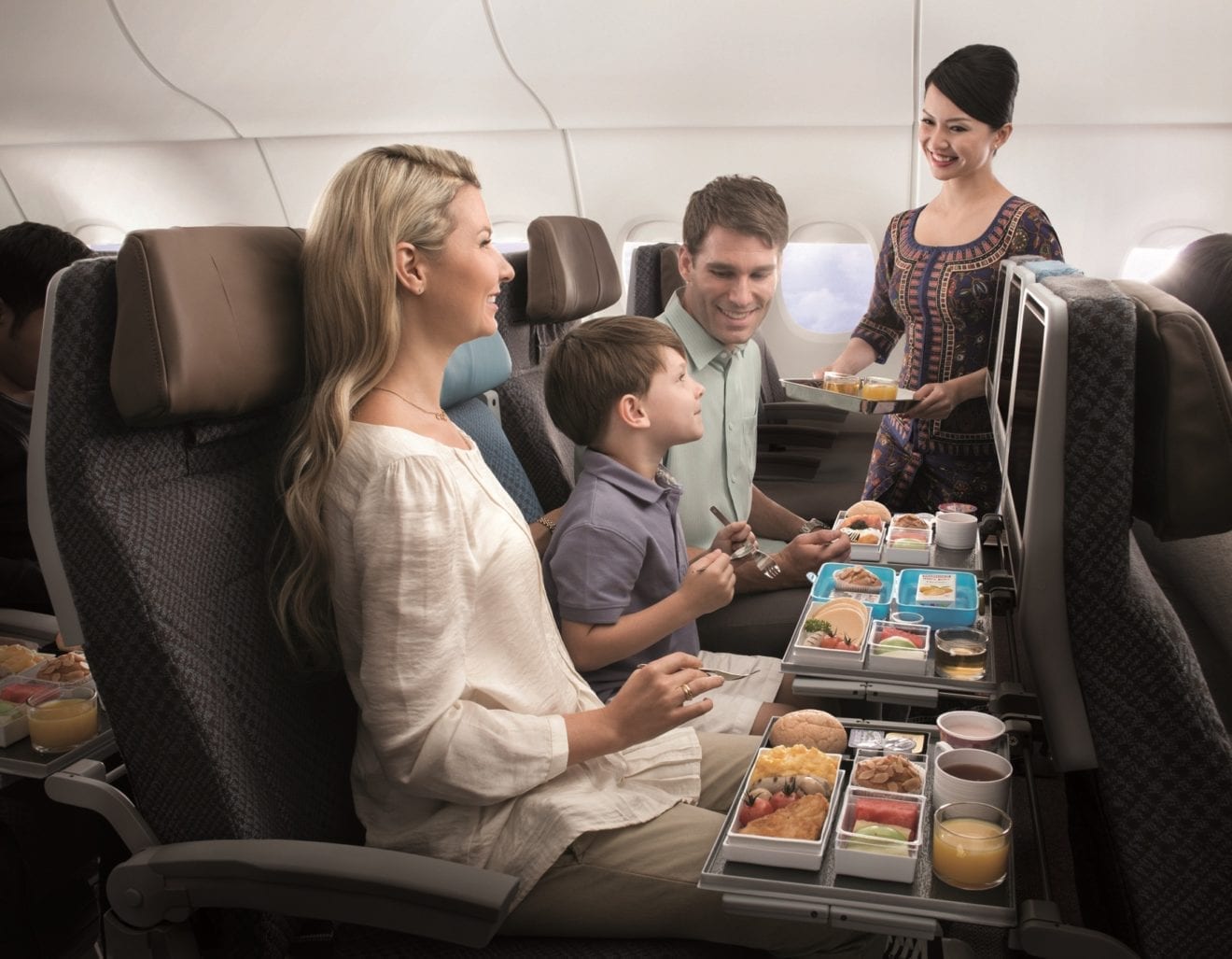
    SilkAir, the regional wing of Singapore Airlines, will add a sixth daily service between Phuket and Singapore from May to meet growing demand for travel between Singapore and Thailand. SilkAir currently operates five flights per day on the popular Singapore-Phuket route, and a sixth will be introduced with effect from May 24, noted a release announcing the new flights.

    “The new service will be operated by Boeing 737 aircraft, which feature both Business and Economy Class cabins. Customers can look forward to a full-service experience, including in-flight meals, wireless in-flight entertainment on SilkAir Studio, complimentary baggage allowance as well as through check-in if they are connecting to or from another SilkAir or Singapore Airlines point via Singapore,” the release noted.

    The additional service, MI760, will depart Singapore at 9:50am (Singapore Time) and arrive at Phuket at 10:45am (Phuket Time).

    The return flight will operate as MI759, departing Phuket at 11:35am (Phuket Time) and arriving in Singapore at 2:20pm (Singapore Time). (See schedule below.)

    As the regional wing of Singapore Airlines, SilkAir extends the SIA Group’s network by seeding and developing new destinations in the Asia-Pacific, noted the release.

    The airline took to the skies in February 1989 as Tradewinds the Airline, before evolving into SilkAir in 1992. In its early days, it catered to passengers holidaying in exotic destinations in the region, including Phuket and Tioman. As the carrier developed, regional business destinations such as Phnom Penh, Yangon and Kuala Lumpur were added.

    Today, the full-service airline operates about 400 weekly flights to 49 destinations in 16 countries.

  • Dune London about to open in Singapore

    Dune London about to open in Singapore

    Footwear brand Dune London is planning to expand into Singapore and Bangkok this year.

    The brand says expansion into new international markets is one of its core strategies for this year.

    In the UK, the brand will expand its standalone store network by opening a new location in Newcastle Eldon Square and opening outlet stores in Cheshire Oaks, Icon O2 and Kildare Village.

    South America is another focus area, and Dune plans to roll out eight new concessions with its existing partner in Chile. It will also debut in Romania.

    “This is a very exciting time for Dune London, as international expansion is a focal part of our overall growth strategy,” said James Cox, CEO.

    “We will focus our efforts on specific markets with best-in-class support strategies and tactical initiatives that are regionally appropriate and perfectly aligned with our product and marketing investments.”

    Dune has opened 10 new concessions in department stores in Mainland China, two in Macau and one in Hong Kong, as well as new standalone stores in Kuala Lumpur; Ho Chi Minh City and Hanoi in Vietnam; and Manila in the Philippines.

    In the Middle East, it trades in more than 50 locations.

  • RFG totters making its way

    RFG totters making its way

    Retail Food Group remains in danger of collapse as it tests the nerve of its financiers. The multi-brand franchisor has racked up losses of more than half a billion dollars in the past 18 months; its market capitalisation has fallen below $50 million, with its share price dropping to 25¢ last week on the Australian Securities Exchange.

    Directors have been attempting to sell assets in a bid to reduce debt to satisfy bankers and ensure the company can continue to trade.

    The problem is that most of the assets have little value in real terms and, in some instances, carry significant liabilities in respect of store lease commitments, exit costs on unprofitable and unfranchised stores and prospective legal action by disgruntled franchisees.

    The results for the first half of the 2019 financial year would indicate that the entire company is struggling to survive and is facing imminent administration if it cannot quickly conclude a significant asset sale.

    Debt covenants tested

    A waiver of debt covenants by lenders NAB and Westpac expired on December 31 – and are due to be tested by March 31. Without clear indications of the viability of the company on an ongoing basis, lenders are unlikely to hold their nerve.

    Directors of the company have been unable to conclude a deal on any asset sales despite the company reporting the Donut King and QSR Division as discontinued operations in its FY19 first-half results released last week.

    Directors advised investors that negotiations were ongoing but no formal binding agreement had been achieved with a proposed buyer.

  • Reebonz teams up with Japan’s Komehyo

    Reebonz teams up with Japan’s Komehyo

    Singapore’s e-commerce platform Reebonz has partnered with Japanese offline pre-owned luxury product boutique Komehyo.

    Reebonz is expected to make Komehyo’s products available to an estimated 5.5 million members on its platform, supporting both companies’ missions to bring authentic pre-owned luxury to consumers around the world.

    “The next step for us is to continuously support their growth in sales across Asia Pacific,” commented Nupur Sadiwala, Reebonz CFO.

    “Furthermore, with the growing demand for authentic pre-owned luxury complemented by growing demand for new luxury products, we believe that this partnership will allow us to further deepen our ecosystem strategy of offering the broadest selection of quality new and pre-owned luxury products.”

    “In addition to the opportunity for us to amplify our brand awareness, we believe that by working with Reebonz, we will be able to further improve our consistency in delivering authentic high quality products to aspiring consumers across the region,” added Shinji Kai, Komehyo’s IT department assistant GM.

    Established in 1979, Komehyo currently has 40 retail stores across Japan and an online platform, selling bags, jewellery, leather goods and accessories, to watches, shoes and apparel.

  • Muji Singapore to offer home renovation products

    Muji Singapore to offer home renovation products

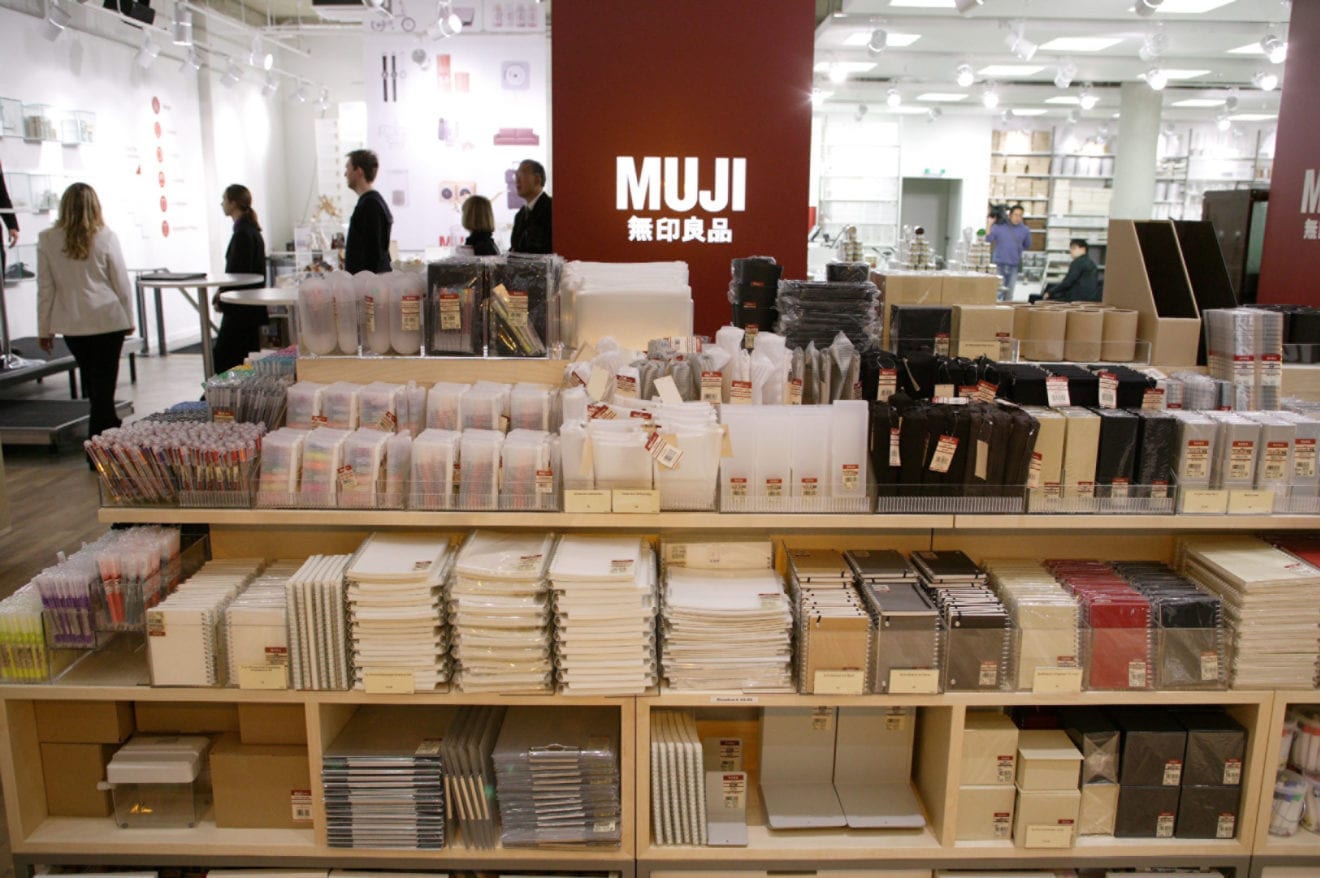
    Muji Singapore is set to expand its offer to include the new Muji Renovation concept. By 2025, Muji Singapore customers might be able to go to the Japanese retailer for a complete home transformation, said Satoru Matsuzaki, president and representative director of Muji owner Ryohin Keikaku.

    “I always want to bring new formats to Singapore first, develop it here, then [take] it out to the region,” Matsuzaki added.

    “Coming soon for Singapore shoppers is the expansion of the Muji Walker active wear range, launched in the 2018 Spring/Summer season and meant for light exercise.

    “This is really a good match for Singapore,” said Matsuzaki, pointing to the island’s year-long warm weather and ageing, health-conscious population.

    It also aims to expand its product range, narrowing the gap between the 7000 items sold in Japan and the 4000 here.

    Store sizes will expand as well, from an average of 6000sqft to some 18,000sqft.

    Strong sales have fuelled the brand’s confidence and the plans to expand store footprints. Despite the local retail sector supposedly being on the downtrend, Muji Singapore’s sales are rising steadily each year.

    Meanwhile, Muji is seeking a court order for Singapore retailer Iuiga to stop its use of the Muji mark and the retailer is launching first store in Vietnam next year.

    Muji Singapore opened first store in 2003, and now has 11 local outlets.

  • Consumers are in control and searching for Experiences

    Consumers are in control and searching for Experiences

    Retailers must recognise consumers are in control and they are looking for experiences above all else, according to US trend expert Tom Mirabile.

    Speaking at the International Housewares Association’s annual show in Chicago, Mirabile said housewares suppliers and retailers need to focus all their efforts on what the consumer wants, how the consumer sees themselves, and how the industry can help create solutions for them.

    “We need to stop looking at objects and start looking at what those objects deliver,” he said. “People aren’t buying objects, they’re buying experiences.”

    Mirabile began his presentation with an overview of generational distinctions and key “need-to-knows” about each generation right now. Generation Z is on track to be the most well-educated generation (according to Pew Research), with a liberal set of attitudes and openness to emerging social trends. They also may be the first generation where cooking is truly no longer a gendered task, viewing “cooking as a craft or a skill,” according to Mirabile. This generation skews more toward traditional life cycles, with many saying they want to start a family and own a home.

    A much less traditional generation, millennials prefer staying home over going out. But they’re less likely to eat around the kitchen table; many eat in their bedrooms and even bathrooms. They also report replacing one meal a day with snacks.

    Another way of bucking the norms: “Millennials don’t see a brand as religion,” said Mirabile. “Loyalty does exist, but you have to constantly earn it.”

    Generation X is smaller in numbers but is entering its prime earning years. Thirty-one percent of discretionary spending in the US right now is coming from this generation, Mirabile said.

    Gen X is very self-sufficient and does more product research than any other generation. They’re also a true shopping hybrid; they still enjoy a trip in-store but have fully embraced online shopping.

    Many Baby Boomers are retiring, moving or remodeling their homes, which means they will be buying more items for their homes. Many are also in a period of personal reinvention. “Boomers are still looking to Millennials and Generation Z to see what they want to be,” Mirabile said.

    As for seniors, many are still economically active but much of their consumption has shifted to experiences and healthcare. By 2035, one in three US households (versus today’s one in five) will be headed by someone over 65 years old.

    Next up, Mirabile shared some key tenets that are important for housewares suppliers and retailers as they adjust to the quickly-changing marketplace where consumers hold all the control. He tied them to the acronym ‘FASTR’:

    F – Be flexible, be fun, be fearless. Change is constant, but even the most established brands can reinvent themselves. Mirabile cited Ikea and KitchenAid as examples. He also cited recent amusing commercials from Skittles, Wayfair and Geico, “(Brands) who can have fun and make fun of themselves send a message of self-confidence,” Mirabile said. And be fearless – don’t be afraid to take a stand or do something different from the norm. It helps make your brand feel authentic and helps you stand out from the crowd.

    A – Be addictive, be aware, be aspirational. American adults spend more than 11 hours per day listening to, watching, reading or generally interacting with media, according to the Nielsen Total Audience Report. The challenge is in hooking them in. Be aware: there’s a tremendous amount of information out there, but “you’ve got to be self-educated, you’ve got to be a culture vulture,” said Mirabile, and keep up with what consumers want. Be aspirational: “Today’s consumer doesn’t dream of owning, but of becoming,” said Mirabile. “Stop telling the customer who you are and start telling them you know who they are.”

    S – Be surprising, be shareable, be simple. The subscription e-commerce market has grown by more than 100 per cent a year over the past five years, said Mirabile. A reason? They deliver boxes of surprising items a consumer may never had found on their own (or without a lot of time and effort). Be shareable: these days, this doesn’t simply mean sharing an image, though that still does have value. It’s more about inspiring people to physically share something, such as the opportunity for a family to cook and eat a meal together. And be simple: “Instead of big claims, sometimes it’s about the little obsessions,” was a finding shared from PHD Worldwide.

    T – Be true, be transparent, be trustworthy. Consumer trust levels are at an all-time low, whether it comes to government institutions, businesses or media. Be transparent: This is important whether you’re talking about ingredients, labor usage, or product materials. Significant numbers of people across all generations will pay more money for eco-friendly materials, said Mirabile. Be true: this often starts within your own company culture and then rises through the ranks of everything you do.

    R – Be real world, be responsible, be reactive. “To me, this is all about looking at real-world problems people are having, and how you’re going to solve them for them,” said Mirabile. Be responsible: a large part of this has to do with sustainability, a key issue for many generations of consumers these days. Be reactive: getting negative reviews? You must be quick to react, explain and make things right online. eMarketer data finds that roughly two-thirds of US internet users reference product reviews at least often before making a purchase.

  • Pomelo Fashion Beefs Up Management Team with Key Hires from Across SEA

    Pomelo Fashion Beefs Up Management Team with Key Hires from Across SEA

    Pomelo, a leading omnichannel fashion company headquartered in Bangkok, announced the appointment of Jim Boland, former CFO of RedMart, to Pomelo’s core team as its new CFO. As part of Pomelo’s strategic approach to recent key hires, Boland’s appointment will see him
    building up Pomelo’s financial infrastructure to drive profitability while enabling rapid growth across the region. Boland has successfully led finance organisations in fast-growing ecommerce businesses for over 19 years in leadership roles at Amazon, Dell and Alibaba-owned RedMart.
    ”I am delighted to join this innovative company which has designed a business model strategically suited to grow fast and profitably.

    As a digitally native, vertically integrated omnichannel brand, Pomelo presents an exciting opportunity to leverage my past experience with vertical integration, retail, and ecommerce, especially during the critical scaling up phase.” said Boland. With Boland’s new role as CFO, Pomelo’s Co-founder and former CFO, Casey Liang transitions to enhance Pomelo’s growth team which encompasses the performance marketing and business intelligence teams. This cross-functional team will work closely with the engineering, design, and product teams to accelerate customer acquisition and retention.

    “As we continue in this period of rapid expansion, I am excited to foster more coordination between our creative and technical teams to further accelerate our growth rate and help more customers to experience Pomelo’s unique value proposition“ said Liang. Commenting on Pomelo’s spate of new hires, David Jou, CEO of Pomelo says “We’re excited to have Jim on-board as we continue on the path of building the first global fast fashion brand out of Asia.” Jim Boland’s appointment reinforces Pomelo’s commitment to investing in key talent across Southeast Asia.

    In Q4 2018, Pomelo also welcomed aboard Cathriona Nolan as its AVP of Creative Operations, and Vorada Hiransomboon as its AVP of Buying. Previously from Burberry, Nolan brings extensive creative experience in brand development and marketing to the table to strengthen Pomelo’s creative direction, while Hiransomboon, most recently former Head of Buying at Inditex, leads the buying and merchandising team with her keen knowledge of market trends and efficient supply chain management.

  • Grab now has more rivals than ever before in Vietnam

    Grab now has more rivals than ever before in Vietnam

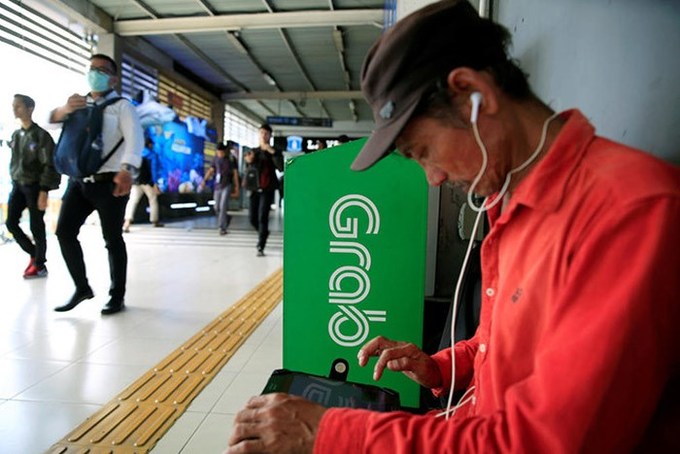
    From an e-hailing app, Grab has made great steps forward, providing many different services. Most recently, it started the payment service GrabPay and lending service Grab Financial.

    The consumer lending market in South East Asia is very large. As estimated by the World Bank, about 2 billion people in the world cannot access bank services, and most of them are in Asia Pacific.

    The non-cash payment market, according to Grab, is worth $500 billion in South East Asia.

    An analyst commented that Grab is wise taking a ‘roundabout’ approach to consumer lending (it conquered the transport market first before aiming for the consumer credit market).

    Consumer lending is a fertile business field for Chinese e-commerce firms. The firms offer online payment apps to users to ‘learn’ about their financial capability.

    Grab, as an app, quickly attracted users, especially investors. Just within six years, Grab became an unicorn company, i.e. an unlisted technology firm with valuation of $1 billion and higher, in South East Asia. Analysts estimate that Grab is valued at $6 billion.

    The total number of Grab downloads has reached 95 million all over South East Asia. This could serve as the launch pad for it to conquer the consumer lending market.

    The challenges 

    “GrabPay e-wallet will be used for both transport and food delivery services, two of the most used services in South East Asia,” said Jerry Lim, director of Grab Vietnam.

    However, the analyst said, by expanding its business, Grab would have to compete with more rivals who are ‘powers’ in their fields. In online payment, for example, it will have to compete not only with AirPay (Sea) and Alipay (Alibaba Group), but also with local firms such as ZaloPay (VNG) and MoMo.

    In Indonesia, Grab bought an e-commerce platform, Kudo, in April 2017. Grab believes that this is the factor which can help expand GrabPay. However, in Vietnam, Grab’s two big rivals – Sea and Alibaba — both have strong support from two popular e-commerce floors – Shopee Vietnam and Lazada Vietnam.

    Similarly, GrabFood has rivals in the food delivery sector, where Sea’s Now, which inherited the large custom from Foody, is the leader.