Tag: asia

  • Celcom Axiata enters partnership with ZEE5

    Celcom Axiata enters partnership with ZEE5

    Malaysia’s Celcom Axiata has formed a partnership with Indian video content provider ZEE5 and telco API ecosystem provider Apigate to offer access to the ZEE5 content portfolio to its subscribers.

    Under the three-way agreement, Celcom will use Apigate’s Direct Carrier Billing API to provide customers with a secure payment mode to subscribe to ZEE5’s portfolio.

    ZEE5, a subsidiary of Zee Entertainment Enterprises, offers around 100,000 hours of Indian movies, TV shows, news and original content across 11 Indian languages and English.

    ZEE International CEO Amit Goenka said securing partnerships like the one with Celcom is a key component of the company’s aggressive global rollout plan for the next fiscal year.

    “Malaysia is a high focus market for us, given its huge affinity for Indian and South Asian content and growing appetite for online video content,” he said.

    “We will soon be launching content in international languages too including Malay, and we are extremely glad to partner with a key local operator like Celcom to jointly grow the opportunity in this market.”

  • Vietjet Prepares for Take-off with Super Promotional Tickets  in Conjunction with International Women’s Day

    Vietjet Prepares for Take-off with Super Promotional Tickets in Conjunction with International Women’s Day

    Jetsetters certainly have something exciting to look forward to. With just a few days left till International Women’s Day, Vietjet is offering a whopping 2.4 million super-saving tickets priced from MYR0. Tickets can be purchased at https://www.vietjetair.com/ from 6 to 8 March, 2019.

    The promotional tickets are applicable during golden hours from 1.00pm – 3.00pm on all of Vietjet and Thai Vietjet’s domestic routes, as well as international routes connecting Vietnam to Malaysia (Kuala Lumpur), South Korea (Busan and Daegu), Taiwan (Kaohsiung, Taipei, Taichung and Tainan), Singapore, Thailand (Bangkok, Phuket and Chiang Mai), Myanmar (Yangon) and Cambodia (Siem Reap).

    To top it off, for flights linking Hanoi / Ho Chi Minh City – Osaka (Japan); Hanoi – Tokyo; and Ho Chi Minh City / Phu Quoc – Hong Kong (China), the special promotional tickets will be available at all times during the three golden day sale period. The flight period is from 7 May – 31 December 2019 (**).

    With a network comprising 39 domestic routes and 66 international routes, Vietjet operates safe flights with a technical reliability rate of 99.64% — the highest rate in the Asia Pacific region. As a fully-fledged member of International Air Transport Association (IATA), Vietjet has obtained the IATA Operational Safety Audit (IOSA) certificate and has been awarded a 7-star ranking, the world’s highest rate for safety, by AirlineRatings.

  • Mulberry Launches on Alibaba Group’s Tmall Luxury Pavilion

    Mulberry Launches on Alibaba Group’s Tmall Luxury Pavilion

    British luxury brand Mulberry is excited to announce the launch of its brand f lagship on Tmall’s Luxury Pavilion – Alibaba Group’s dedicated platform for premium brands. This launch is an important step in Mulberry’s strategy to develop the brand presence in China, providing access to a substantial local customer base through the world’s second largest online retailer.

    Following the creation of new owned subsidiaries in China, Hong Kong, Taiwan, Japan and Korea during the last two years, Mulberry is now focusing on developing its omni-channel and digital distribution in the region.

    Launched in 2017, the Tmall Luxury Pavilion creates a new type of e-commerce which looks to replicate the same feeling of brand exclusivity and personalised shopping experience that luxury consumers have become accustomed to having when shopping in physical stores.

    The Mulberry Tmall f lagship store features a wide selection of the brand’s iconic leather goods, luggage, soft accessories, footwear and jewellery.

    The official launch week coincided with Lunar New Year and saw Mulberry offer an exclusive Year of the Pig capsule collection through the Tmall Luxury Pavilion. The range featured some of the brand’s most popular bag silhouettes rendered in Scarlet Croc Print leather and accessorised with a bespoke bag scarf designed by Chinese artist Li Rui.

    “Launching the Mulberry flagship on Tmall’s Luxury Pavilion is an important step in growing our Chinese customer base and further developing the brand in key international markets.”- Thierry Andretta, Mulberry CEO.

    We are really excited to have an iconic British brand like Mulberry joining the Luxury Pavilion stable,” said Jessica Liu, president of Tmall Fashion and Luxury. “Since its launch in 2017, Luxury Pavilion has been committed to provide consumers in China with the finest and curated selection of premium products from the best luxury brands in the world, designing at the same time a unique

    and immersive shopping experience for them. Our partnership with Mulberry represents an important enrichment of our offering and we look forward to working with them while they expand in China”.

  • Grand Opening of Centara West Bay Residences & Suites Doha

    Grand Opening of Centara West Bay Residences & Suites Doha

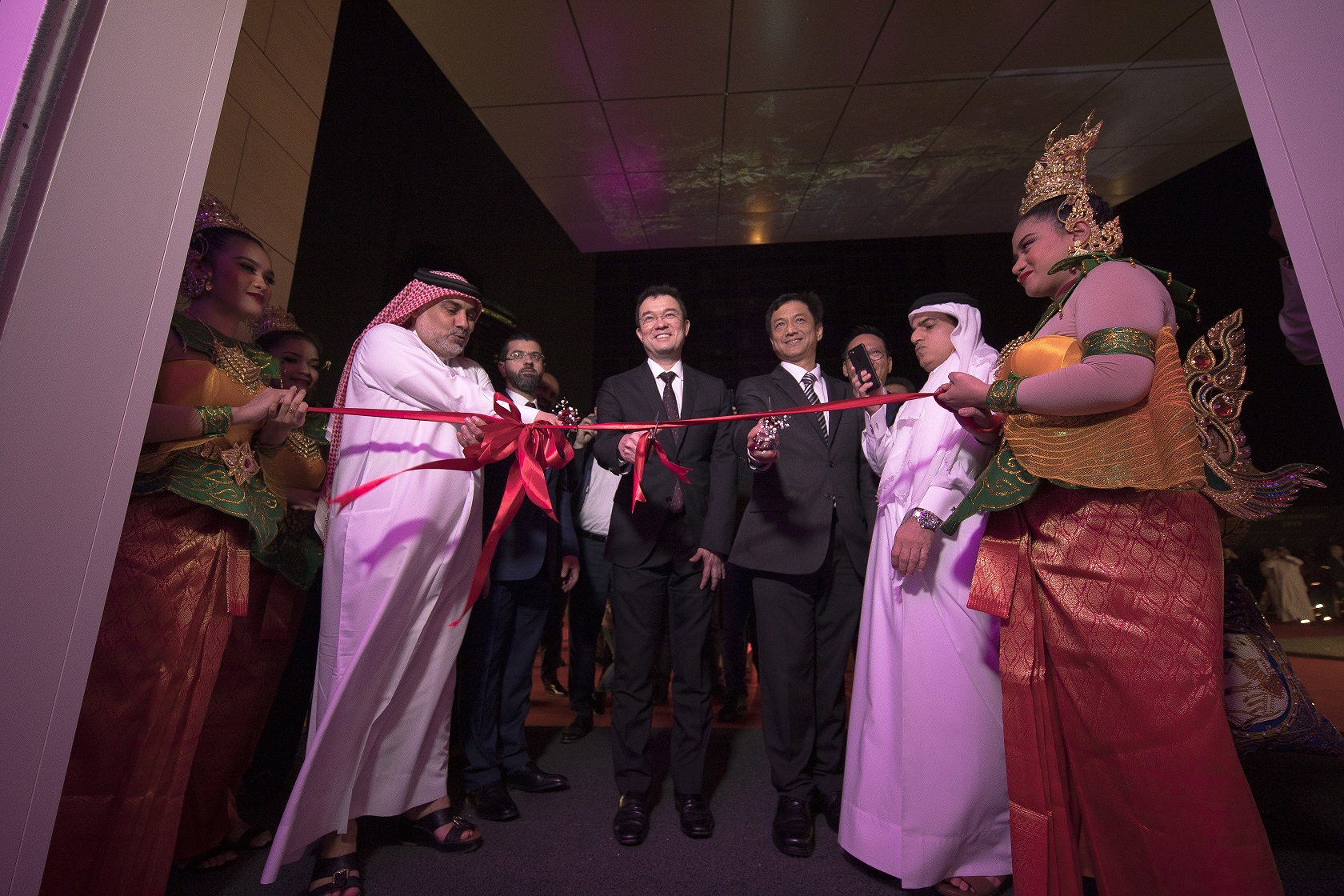
    Centara Hotels & Resorts, Thailand’s leading hotel operator, has celebrated the grand opening of its dramatic new waterfront hotel in Doha, introducing the company’s elegant Thai hospitality to the State of Qatar for the first time.

    The 265-key Centara West Bay Residences & Suites Doha is a striking new hotel located in the city’s West Bay district, which is home to many of downtown Doha’s most stunning skyscrapers. Overlooking the Arabian Gulf, the hotel is just moments away from the lively Doha Corniche and 25-minutes’ drive from Qatar’s Hamad International Airport.

    The launch of this new landmark marks a major milestone for Centara, as the company continues to expand its international footprint. One of the Middle East’s most eagerly-anticipated new hotels, Centara West Bay Residences & Suites Doha harmoniously blends luxurious interiors and facilities with the timeless charm of Thai hospitality, while also showcasing authentic Qatari culture.

    The grand opening event featured traditional Thai and Qatari performances, including a falconry show, plus executive speeches, a ribbon-cutting ceremony and VIP dinner created by Michelin starred chef, Alfred Prasad.

    “Doha is one of the most dynamic destinations in the world today, and we are delighted to enter this important market with such a spectacular new hotel. Centara West Bay Residences & Suites Doha is an iconic addition to the city’s skyline. With spacious accommodation, luxurious facilities and gracious Thai service, this hotel will cater for all types of guest, from leisure visitors and large family groups to long-stay business travellers. We look forward to welcoming all guests to Doha in the future, as the city embarks on an exciting new era of international prominence and prosperity,” commented Thirayuth Chirathivat, Chief Executive Office, Centara Hotels and Resorts.

    Guests have a choice of stylish and spacious accommodation, comprising studios, suites, one- to three-bedroom apartments and four-bedroom penthouses, all featuring floor-to-ceiling windows with breath-taking views of the Gulf. Residences range in size from a generous 45 square metres to an opulent 365 square metres and come fully equipped with comfortable bedrooms, separate living and dining areas, kitchens, and cutting-edge technology, including Smart TVs.

    Centara West Bay Residences & Suites Doha features a collection of contemporary F&B outlets, including Caprice, a café-inspired restaurant showcasing exquisite Thai cuisine and international fare; Dalchini, which promises progressive Indian from creative Chef Alfred Prasad cuisine; plus a chic Lobby Lounge and a refreshing Pool Bar. In-room dining is also available and residences have their own cooking and dining facilities.

    There are many opportunities for relaxation, including an indoor pool with panoramic views of the Gulf, a spacious fitness centre and aerobics studio. There is also a kids’ club and children’s pool for younger guests, plus a gift shop, prayer room and two flexible meeting rooms.

    A key cultural and economic hub for the entire Middle East region, Doha is home to a wealth of cultural attractions including the historic Souq Waqif market, Museum of Islamic Art and State Grand Mosque, plus major shopping malls and soft sandy beaches. It is also rapidly emerging as a global sporting destination, hosting the annual season-opening Qatar Open tennis tournament, the 2019 IAAF World Athletics Championships and of course, the 2022 FIFA World Cup.

    The Middle East is a key strategic part of Centara’s five-year development plan, which aims to double the company’s global portfolio of hotels and resorts by 2022. Centara Muscat Hotel opened in 2017, and following this week’s grand opening of Centara West Bay Residences & Suites Doha, the group further plans to launch Centara Grand Hotel Doha in the first half of 2020.


  • AEON gives hefty prizes for the lucky winners of the “AEON Happy Pay” campaign

    AEON gives hefty prizes for the lucky winners of the “AEON Happy Pay” campaign

    Recently, Ms. Saranya Pipoppinyo (5th from left), Vice President Marketing of AEON Thana Sinsap (Thailand) Public Company Limited awarded prizes to the lucky winners of the “AEON Happy Pay” campaign. The grand giveaway comprises of three prizes of gold bars, worth 100,000 baht each, the second is 20 prizes of 50 satang gold necklaces and the third is 100 vouchers with a combined value of 586,500 baht.  Eligible participants include AEON Your Cash customers that make an installment payment at participating department stores and shops from 30 August – 30 November, 2018.


  • Sogo department stores see strong sales growth

    Sogo department stores see strong sales growth

    Sogo department stores parent Lifestyle International has reported a 50 per cent drop in net profit for last year, despite increased sales.

    While turnover rose 16 per cent to HK$4.36 billion (US$555 million), net profit fell to $1.69 billion ($215 million).

    However, the company explained the fall was largely due to comparison with 2017 when the company received a one-off gain from the sale of a majority stake in its subsidiary, netting $420.8 million. On a trading basis, the department stores it operates posted solid results.

    Sales at its Sogo Causeway Bay flagship store rose by 10.5 per cent last year, and mainland tourists underpinned a 30.3 per cent increase in sales at the Sogo Tsim Sha Tsui store.

    CFO Terry Poon Fuk-chuen said the improved turnover was due to the company enhancing the shopping experience at its stores.

    Lifestyle International executive director Kam Shim Lau predicts this year will be challenging for retail as declining wage growth and weakening asset values may dent consumer sentiment.

    “Looking ahead, the group predicts a single digit growth in the first half of 2019 and adopts a cautious approach for 2019,” he said.

  • DesignSingapore to take local brands global

    DesignSingapore to take local brands global

    DesignSingapore Council (DSG)’s new Business of Design (BOD) program has launched to help local furniture and lifestyle brands expand globally.

    As a part of Singapore Design Week 2019, which runs until March 17, the program will select up to six brands the council believes have the potential to expand internationally, to receive mentorship from industry experts.

    During the first two years, the BOD program will focus on the furniture and lifestyle product sector, and it will be expanded to include designers from other industries later.

    “With increasing industry demand for design, the role of designers will expand,” said Chee Hong Tat, senior minister of state for trade and Industry. “Hence, our design education and talent development programme must adapt to help our designers tackle more complex challenges in the future.

    A themed collective showcase will be held in 2020 at an international location before travelling to other events including Milan Design Week. Displays will also be created at retail pop ups in cities including Shanghai.

    Established in 2003, DSG aims to help local companies expand beyond Singapore.

  • Most Japanese firms want to expand Vietnam operations

    Most Japanese firms want to expand Vietnam operations

    Higher revenues have motivated almost 70 percent of Japanese firms in Vietnam to consider expanding their business here. Higher revenue was cited as the reason for expansion plans by 65 percent of Japanese businesses. Another 43 percent saw greater potential and high growth as encouraging factors. The majority of respondents also said that Vietnam has advantages in market scale and high growth, political-social stability and low labor costs.

    65.3 percent of Japanese companies in Vietnam reported profit last year, up 0.2 percentage points from 2017. The ratio of businesses reporting loss went down 2.8 percentage points to 12.7 percent last year. Japanese businesses in Vietnam seem to be most confident in their prospects this year among the Asia countries JETRO surveyed. 58.7 percent of businesses in Vietnam expect their profit to increase this year, while this figure is only 47 percent in Thailand, 44.7 percent in Malaysia and 39.5 percent in China.

    However, the ratio of businesses reporting profit last year is lower than other countries in Asia, including Indonesia at 65.5 percent, Thailand 67.2 percent, and Malaysia 68.9 percent. Japanese businesses also said that the top risks in the country were increasing labor costs, an incomplete legal system, lack of transparency in law enforcement and complicated tax and administrative procedures.

    They said that Vietnam has a high rate of employee turnover, with 36.2 percent of respondents mentioning this as a problem, higher than in Thailand at 33.2 percent and India at 32.5 percent.

    Labor costs account for 20 percent of total costs in Vietnam, higher than the Philippines at 16.8 percent and Indonesia at 16.5 percent.

    The localization rate in Vietnam remains low, the Japanese respondents said. Only 14.4 percent of Japanese businesses said they bought material and parts from local businesses last year, lower than in Indonesia at 19.5 percent, Malaysia 20.4 percent, and China 41.6 percent.

    This is the 32nd year that JETRO has surveyed business conditions of Japanese firms in Asia and Oceania.

    The survey polled 787 Japanese businesses operating in Vietnam in October and November last year.

    Japan was the largest foreign direct investor in Vietnam last year, with a total registered investment of $8.59 billion, accounting for 24.2 percent of the total, according to the Ministry of Planning and Investment.

  • New stores boost sales for Sheng Siong Group

    New stores boost sales for Sheng Siong Group

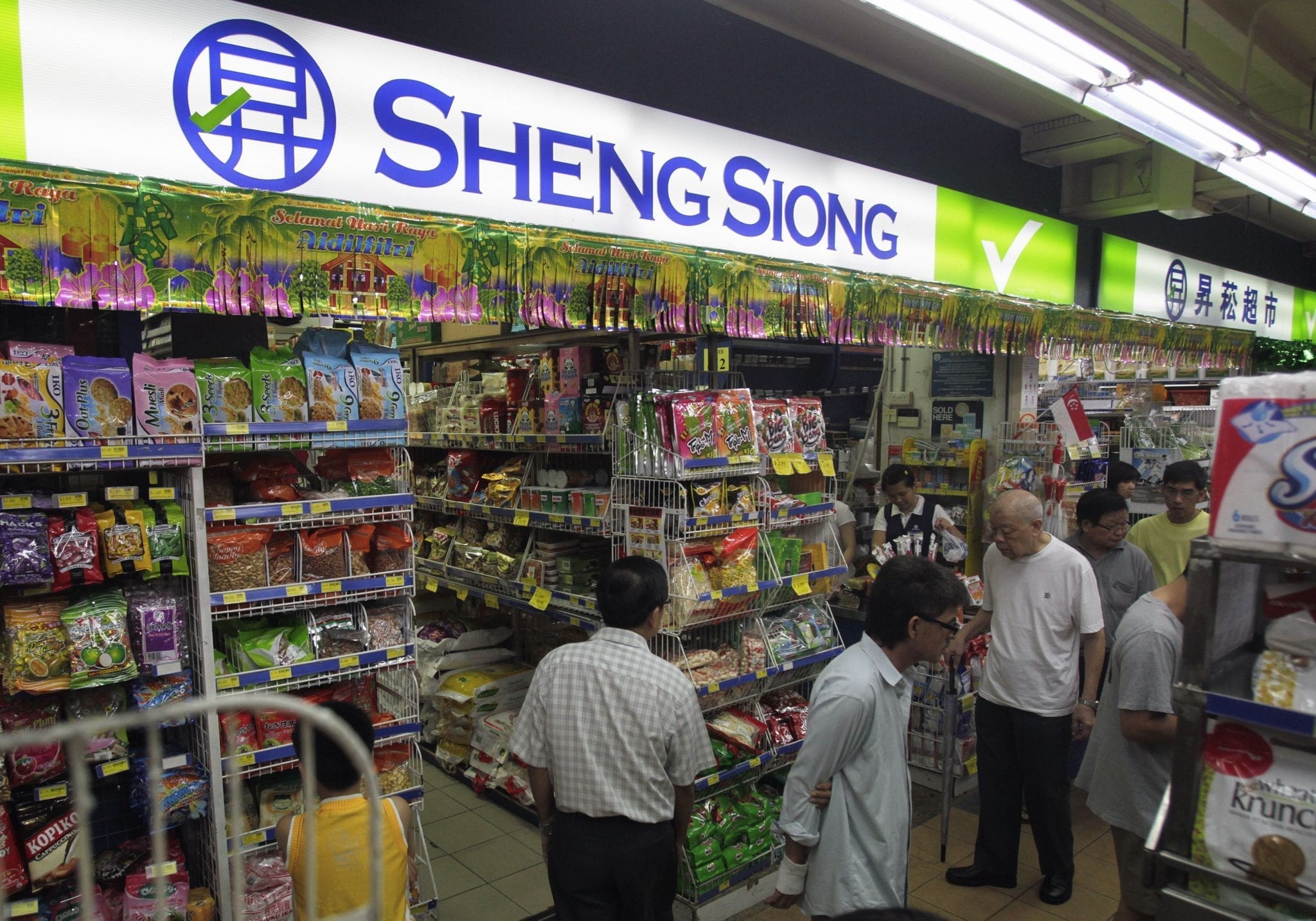
    Singapore supermarket chain Sheng Siong Group has reported a 1.4 per cent year-on-year rise in net profit to S$70.5 million for 2018. Revenue, gross profit and gross margin all improved in both the final quarter and full year, but they were offset by a reduction in other income and higher operating expenses. Government statistics show sales in supermarkets across the city state shrank during the year, but Sheng Siong Group said it was able to mitigate that with new stores, its revenue rising 7.4 per cent for the year.

    The company’s gross margin increased to 26.8 per cent, from 26.2 per cent, mainly because of better buying prices, higher rebates from suppliers for special promotions and volume discounts, improvement in efficiency in the central distribution centre and higher mix of fresh versus non-fresh offerings.

    In a statement, Sheng Siong Group said it expects competition in Singapore’s supermarket industry to remain keen, “exacerbated by the proliferation of new supermarkets in HDB residential areas, as well as the push by new and existing e-commerce players for market share”.

    The group will continue to look for new retail spaces in new and existing HDB housing estates, particularly in estates where there is no presence. It has delayed a planned expansion of its central warehouse, which is now likely to be completed about mid year.

    The company’s store in Kunming, China, which opened in November 2017, recorded a loss of $700,000 last year.  It has has leased a site for a second supermarket in the city and hopes this will commence trading in the third quarter

    “Our store expansion plans have been well on track where we have opened 10 new stores during the year, bringing our total store count to 54 and expanding our total retail area to 496,200sqft,” said CEO Lim Hock Chee.

    “Going ahead, we remain on the lookout for new retail opportunities, especially in areas where we do not have a presence. Besides nurturing the growth of our new stores in Singapore and China, we will continue with our efforts in enhancing the gross margin via more efficiency gains in the supply chain and higher sales mix of fresh produce. We will remain vigilant on costs.”

  • Diesel files for bankruptcy

    Diesel files for bankruptcy

    Famed denim streetwear brand Diesel USA has collapsed, filing for bankruptcy protection in Delaware.

    According to papers filed with the court, the company has up to $100 million in assets and as much as $50 million in debts. The company filed for bankruptcy after unsuccessfully lobbying landlords for rent reductions.

    However under a three-year proposed restructuring program, Diesel says it does not plan to reduce its store network, rather to find more affordable locations.

    Diesel USA has 28 retail stores across the country and about 380 employees. It also wholesales through department stores and specialty retailers

    In the 1990s and early 2000s, Diesel USA, the North American unit of Italian-headquartered Diesel SpA, was at its peak, “dominating pop culture”. As a result it was commanding a high premium for its clothes and could justify seeking high-profile – and thus high-rent – locations in major cities across the US.

    Now those leases are no longer affordable and landlords seem reluctant to reduce rents to maintain a tenant no longer at its peak of popularity. The company has managed to get a reduction on only a single store despite a year of negotiations.

    Bloomberg reports the company had also been affected by several instances of cyber fraud and theft, costing it about $1.2 million.

  • Indian mall supply industry booming

    Indian mall supply industry booming

    A three-fold jump in Indian mall supply from 3.2 million sqft last year to nearly 10 million sqft this year has been reported in India, following supply rollover from the previous year.

    The figures were outlined in the research report Customer Experience (CX) – The Epicentre of Retailing by property consultant firm Anarock, released at the Retail Leadership Summit 2019 in Mumbai this week. The report finds that customer experience and ‘built environment’ are completely metamorphosing the retail business in the country, and that these trends have already started influencing and impacting both the online and the offline retail segments.

    “With the new e-commerce policy in effect from early this month, online retail giants are realigning their business strategies and focussing to expand their offline presence,” said Anarock chairman Anuj Puri.

    “Brick-and-mortar retailers who were earlier under threat from e-commerce can now look forward to a more level playing field and tap into the rapidly growing Indian consumer market with renewed confidence and business prospects. The new e-commerce policy will bring parity between the online and offline retailers and address the concern of data colonisation as well. Even as online players may lose many of their competitive advantages – such as high price discounts on their private labels – brick-and-mortar stores will focus on offering superior customer experience to enhance customer loyalty.

    “The new e-commerce policy will cause online retail entities to invest seriously in offline stores,” he continued. “They will consider tie-ups with offline retailers or buy stakes in them. However, as competition stiffens, customer experience will be the key differentiator to the success and sustenance of any new retail venture.”

    Kumar Rajagopalan, Retailers Association of India CEO, added: “A combination of essential and value-added services, along with sound marketing strategy, is now the key to customer attraction and therefore successful mall performance. F&B and entertainment are critical ingredients for attracting footfalls into retail developments. Simultaneously, style, variety, and overall quality of malls also play crucial roles in ensuring customer satisfaction.”

    Historically dominated by unorganised mom-and-pop stores, the Indian retail sector’s dynamics are rapidly changing post liberalisation and subsequent e-commerce boom across the country. The rise in internet subscribers and active social media users, changing lifestyles and increasing disposable incomes have transformed the rural and urban consumer bases alike. This dynamic resulted in the increasing prominence of e-commerce across the country, leading to India’s emergence as a key global retail market.

    Nearly $1.42 billion FDI has already been infused in the Indian markets between April 2000 to June 2018 – and global investments into Indian retail are all set to increase further, states the report. The Indian retail sector is expected to reach $1.750 trillion by 2026, due to changing demographics and increasing consumer expenditure, which is expected to rise to $3.6 trillion by 2020.

  • Abysmal start Zero Pay pilot in South Korean

    Abysmal start Zero Pay pilot in South Korean

    The Seoul city government’s smartphone-based payment-program pilot posted an abysmal track record in its first full month of service, data showed Wednesday.

    In a bid to help relieve small merchants of burdensome credit card fees, the municipality began the trial run of the “Zero Pay” service in late December, enabling users to pay for purchases card-free and receive tax benefits.

    About 8600 purchases totalling 199 million won (US$177,000) were settled via the Zero Pay system in January, according to the data provided to Rep. Kim Jong-seok of the main opposition Liberty Korea Party by the Financial Supervisory Service.

    The number of settlements came to a mere 0.0006 per cent of the 1.56 billion purchases made using credit, debit and prepaid cards, with the value reaching only 0.0003 per cent of the total 58.1 trillion won.

    As of the end of January, slightly over 46,600 small shops and businesses were taking part in the pilot payment service.

    Watchers attributed Zero Pay’s poor record to the small number of participating merchants and customers’ unwillingness to change their payment habits.

    Eleven commercial banks, including all major lenders, joined the test service, which the Seoul city government plans to formally launch after this month.

    Nine more banks are slated to take part in the Zero Pay system, and the municipality will recruit convenience stores and other franchise stores to join.

    Under the system, money is transferred from a consumer account to that of a merchant when the consumer scans the merchant’s QR code with a smartphone using the existing apps of commercial banks or online payment platforms.

    Following its formal launch, the central government plans to gradually expand the service to other parts of the country by offering tax breaks and eliminating related regulations.

  • HKT Payment adds marketplace to mobile wallet

    HKT Payment adds marketplace to mobile wallet

    HKT Payment has launched a new virtual store within its Tap & Go mobile wallet to allow customers to purchase online game virtual gift cards.

    The new Tap & Go Marketplace will offer a wide range of gift cards including Google Pay Gift Codes, PlayStation Network, Xbox and hvmod cards.

    Once payment is complete, a PIN will be instantly installed within the Tap & Go marketplace that can be easily redeemed on the respective online marketplace.

    “We are excited to launch the Tap & Go Marketplace and extend the service to better meet the needs of the game-savvy segment,” HKT Financial Services head Monita Leung said.

    “Not only does online purchase via Tap & Go Marketplace give customers full control over their spending and peace of mind with secure payments, but it also offers gamers greater convenience and a seamless experience.”

    The launch follows the introduction of the Faster Payment System in September that allows customers to instantly top up their mobile wallet.

    Leung said HKT Payment plans to continuously expand the gift card categories available over Marketplace to cover music, videos and software.

    HKT Payment secured Hong Kong’s second ever stored value facilities license in 2016.

  • Hyperlocal Start-up, Mapprr Brings Innovation & Ease To The Customers

    Hyperlocal Start-up, Mapprr Brings Innovation & Ease To The Customers

    To provide comfort to the customers, Mapprr – a pioneer in Hyperlocal delivery concept has launched live availability of the products on-board for the first time in India along with quick 60 minutes delivery. With this, Mapprr has taken a step forward towards enhancing the quality of customer experience.  Moreover, on one hand, users experience difficulties in finding products one may need, and on the other hand roaming store to store is a big disadvantage! So, with Mapprr, users can get real time product availability updates along with quick delivery service. Moreover, users can either order from Web or Mobile Application from Mapprr!

    In the words of Aruna Subhakar, Founder & CEO – Mapprr, “Innovation in Hyperlocal market along with specialized services is making all the right noises. It works towards empowering small and local retailers to think smart and tie up their business to serve customers in their locality smartly adhering to the technological advancements. 

    He further added that the people are embracing this new dynamic marketplace, as it provides them a perfect amalgamation of the traditional and modern shopping experience.

    Mapprr has stationed out 10+ number of delivery champions in every area summing up to 100 champions. These delivery champions would receive the orders within certain distance from the store assigned to them. The company has tied up with stores like Apollo, Medplus, Ratnadeep, The Body Shop, Nykaa, HealthKart, NewU, Sangeeta Mobiles, Big C & LOT Mobiles, etc. who readily pack the products once the order is received. The delivery champions go and pick up the orders and deliver at the doorsteps. The fastest delivery in a busy city like Hyderabad is 17 Minutes!

    Currently available in Hyderabad, Mapprr delivers Groceries, Medicines, Electronics, Beauty care, Fitness Supplements, Pet Supplies, and plans to introduce Flowers, Watches, Gifting items, Mouth Sweetener like Paan, etc. This year, the company plans to hire 2,000 delivery fleet and 200 employees across Hyderabad and Bangalore. This year, Mapprr plans to expand to Pune and Gurugram.

  • Card-not-present fraud will cost retailers US$130 billion

    Card-not-present fraud will cost retailers US$130 billion

    Increasingly complex card-not-present fraud will cost retailers US$130 billion globally in digital sales over the next five years. A Juniper Research study predicts that retailers’ slow pace in keeping up with new fraud prevention requirements will allow cybercriminal practices to become more widespread as more and more consumers shop online. It observes that established point-of-sale vendors will need to move towards mobile POS technology in order to expand their reach into fresh markets and reduce their exposure to card-not-present fraud.

    “A layered fraud detection and prevention (FDP) solution naturally helps directly preventing fraud, but it also offers major gains in terms of recovering potentially lost revenue through false positives,” said the report’s author Steffen Sorrell. “This is something about which retailers remain undereducated, and has allowed fraudsters to capitalise on relatively low FDP spend”.

    An implication of the Juniper research is that a low understanding of FDP investment return is causing the low uptake of the technology. the report anticipates digital payment players will be spending $9.6 billion annually on FDP solutions by 2023.