Tag: asia

  • Mixed results for Giordano International

    Mixed results for Giordano International

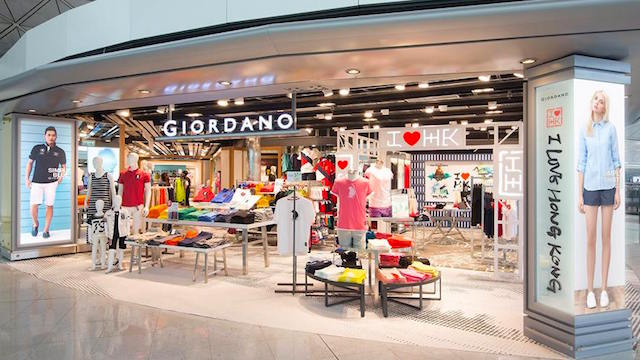
    Hong Kong casual-apparel brand Giordano International has reported a small increase in sales for last year – and a dip in profit. Group-wide sales reached HK$5.509 billion last year, up 1.8 per cent, with same-store sales down a marginal 0.1 per cent. Profit attributable to shareholders fell 4 per cent to $480 million.

    In a stock exchange filing, Giordano International said sales from physical stores achieved a 1.7 per cent growth rate, while online sales – through its own sites and third-party platforms, grew by 1.3 per cent. Wholesale sales to its franchisees grew by 2.6 per cent.

    By category, its best-performing sectors were childrenswear and womenswear, where sales for both rose by 6.9 per cent.

    By geographical market, Giordano International delivered a mixture of results:

    Mainland China: Business was affected by the Sino-US trade dispute and stock-market volatility, which negatively impacted on domestic retail sales. Comp-store sales slipped by 0.9 per cent.

    Hong Kong and Macau: “Well-executed marketing programs, smart promotional activities and stringent cost control all helped achieve double-digit growth amidst complex macroeconomic conditions,” the company reported. “This market experienced a difficult retail landscape caused by an economic slowdown since the third quarter of the year. Severe typhoons and an abnormally warm winter also adversely affected its sales.”

    Taiwan: Sales here rebounded to allow an operating profit increase of 34.9 per cent in the first half of last year, however the full-year change was a mere 2 per cent, due to the uncertainty created by the Sino-US trade dispute.

    Vietnam: Giordano bought out its third-party retail operation in Vietnam and after improved sales and cost controls turned the business around. The market has grown to account for 5.6 per cent of Giordano international’s regional sales and operating profit rose.

    Thailand: Operating profit from Thailand grew by 11.1 per cent, thanks to stable sales growth and an improvement in gross-profit margin.

    Indonesia: In Southeast Asia, Indonesia stood out with a comp-store sales growth of 7 per cent for both Giordano and non-Giordano brands, and operating profit increased by 16 per cent.

    Singapore: Operating profit decreased by 6 per cent as the business was adversely affected by an overall stagnant economy and lower tourist traffic.

    Middle East: With consumers adapting to the newly introduced Value-Added Tax and changes in economic policies, comp-store sales fell by 7.3 per cent in the first quarter of last year. However, in the early weeks of this year, the company saw growth in comp-store sales of 4 per cent, prompting management to conclude that consumers have now adjusted to the tax changes and the retail industry there has stabilised.

    South Korea:  Net profit here increased by 6.7 per cent, attributable to better cost control, closure of non-performing stores and enhanced gross margin. Wholesale sales to South Korea increased by 10.5 per cent.
  • AirAsia scores with Malaysian Football League partnership

    AirAsia scores with Malaysian Football League partnership

    AirAsia has scored an agreement with the Malaysian Football League (MFL) to become the exclusive official airline for the 2019-2020 league season. As part of the partnership, AirAsia will support MFL teams playing in the Piala Malaysia, Liga Super, Liga Premier and Piala FA tournaments with discounted fares for them to fly with the airline to games across Malaysia and the region.

    AirAsia will also have the rights to sell match tickets either as standalone or packaged with flights and/or hotel deals through airasiaredtix.com.

    According to AirAsia’s group CEO Tony Fernandes, the MFL deal is an “incredible opportunity” for the airline to continue supporting Malaysian football. “We are proud to be able to play a part in inspiring a new generation of dreamers and making dreams come true for the players, the teams, and ultimately, the fans. We look forward to welcoming our heroes and their fans on board,” Fernandes added.

    MFL CEO Kevin Ramalingam said: “It’s not often that you see a Malaysian company make it big, and I think we can all be proud of what Fernandes and his team have achieved. We hope that with this partnership, the local football scene will grow to even greater heights as we strive towards putting Malaysia on the footballing map again.”

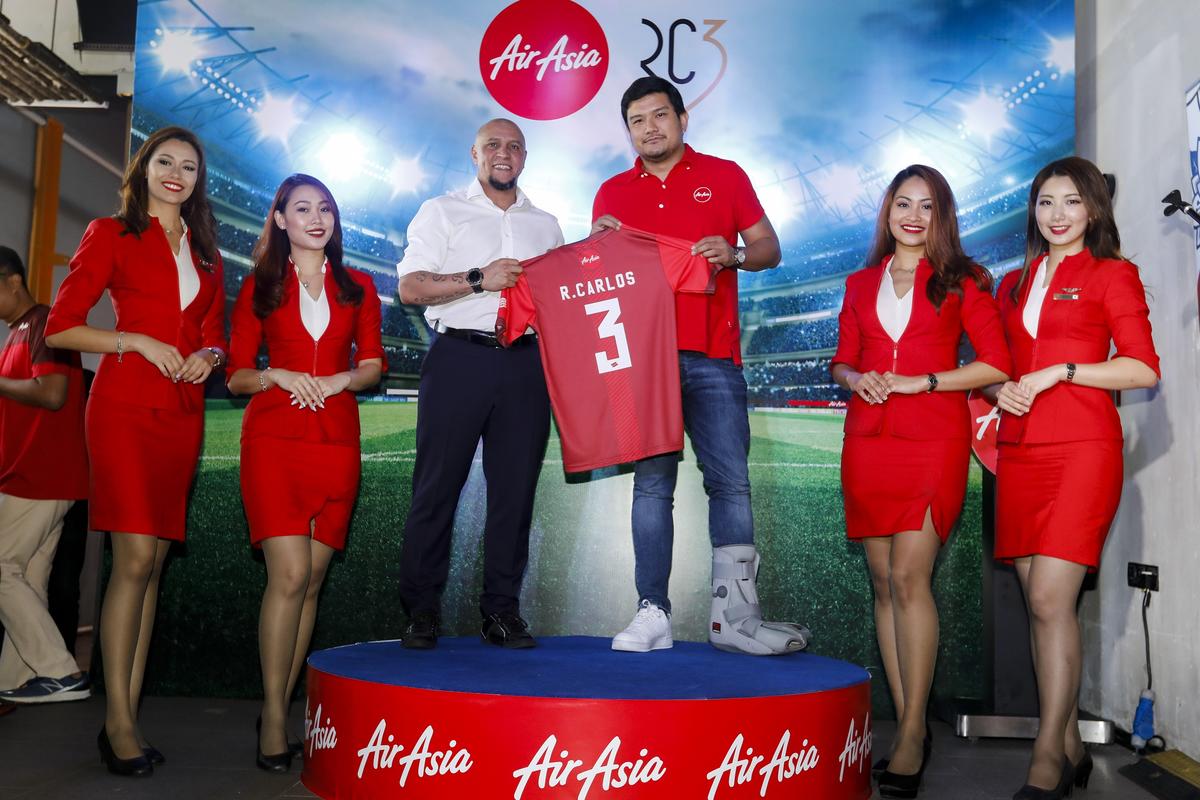
    The airline has been active in the football scene. Last year, it tied up with AFF Suzuki Cup 2018 as the official supporter for the first time, to drive greater fan engagement and offer players with more exposure in their home countries. It also picked Brazilian footballer Roberto Carlos as its global brand ambassador for two years.

  • Huawei takes US government to court

    Huawei takes US government to court

    Huawei lost its trade mark reticence when it announced yesterday that it is suing the US government for banning federal agencies from buying its products.

    The complaint filed in a U.S. federal court challenges the constitutionality of Section 889 of the 2019 National Defense Authorization Act (NDAA). Through this action, Huawei seeks a declaratory judgment that the restrictions targeting Huawei are unconstitutional, and a permanent injunction against these restrictions.

    From Huawei’s perspective, the NDAA restrictions prevent the company from providing more advanced 5G technologies to U.S. consumers, which will delay the commercial application of 5G, in turn, impeding efforts to improve the performance of 5G networks in the U.S.

    “The U.S. Congress has repeatedly failed to produce any evidence to support its restrictions on Huawei products. We are compelled to take this legal action as a proper and last resort,” Guo Ping, Huawei rotating chairman said in a press conference held yesterday at company’s Shenzhen campus.

    “This ban not only is unlawful, but also restricts Huawei from engaging in fair competition, ultimately harming U.S. consumers,” he said.

    The lawsuit was filed in a U.S. District Court in Plano, Texas. According to the complaint, Section 889 of the 2019 NDAA not only bars all U.S. Government agencies from buying Huawei equipment and services, but also bars them from contracting with or awarding grants or loans to third parties who buy Huawei equipment or services, without any executive or judicial process.

    The Chinese telecoms and IT equipment vender claims this violates the Bill of Attainder Clause and the Due Process Clause. The Huawei lawsuit also claims the violation of the Separation-of-Powers principles enshrined in the U.S. Constitution, because Congress is both making the law, and attempting to adjudicate and execute it.

    “Section 889 is based on numerous false, unproven, and untested propositions,’ said Song Liuping, Huawei’s chief legal officer.” Contrary to the statute’s premise, Huawei is not owned, controlled, or influenced by the Chinese government.”

    He added: “Moreover, Huawei has an excellent security record and program. No contrary evidence has been offered.”

    Citing industry sources, Huawei claims that allowing them to compete would reduce the cost of wireless infrastructure by between 15% and 40%. This would save North America at least US$20 billion over the next four years.

    “If this law is set aside, as it should be, Huawei can bring more advanced technologies to the United States and help it build the best 5G networks,” Guo Ping said. “Huawei is willing to address the U.S. Government’s security concerns. Lifting the NDAA ban will give the U.S. Government the flexibility it needs to work with Huawei and solve real security issues.”

  • Entrepreneur looks to replace corporate travel agents

    Entrepreneur looks to replace corporate travel agents

    Auckland-based entrepreneur Hiten Parbhu has launched an online corporate travel booking app that makes finding and booking flights easier for small business owners, personal assistants and admin staff.

    The online app Rogue Travel, which launched today after a few months of beta testing, will “take the pain out of corporate travel booking”, Parbhu said.

    “The big travel amalgamators like Skyscanner make finding flights easy, but that’s about it. They give you lots of options, but then leave you on your own when it comes to the really tedious thing: entering passenger details.”

    “Plus, they send you all over the web to various providers instead of keeping all your bookings in one central place.”

    Rogue Travel, Parbhu said, does that and more.

    The web app keeps an organisation’s passenger details, like names, date of birth, passport numbers, frequent flyer memberships and so on, on the one platform.

    Users will simply search, just as they would on other travel websites, to find the cheapest and most convenient flights and hotels.

    They then select on the who’s travelling tab and all passenger details are automatically added.

    Parbhu said this would save hours of chasing individual people up for updated passport numbers and so on.

    Payment is made directly through the site and all trip details are kept through the one platform.

    “We’ve built a tool which effectively removes the need for a corporate travel agent.”

  • Philippine Seven chief wins retail award

    Philippine Seven chief wins retail award

    Jose Victor Paterno, president and CEO of Philippine Seven Corp, has been named the NACS Asian Convenience Retail Leader of the Year.

    The award, endowed by PepsiCo, recognises and honours “the most successful and influential convenience industry leader of 2019” in the region.

    It was presented before an international audience of convenience retailers and suppliers at the NACS Convenience Summit Asia this week in Shanghai, China. Paterno joins last year’s winner Richard Yeung, CEO of Circle K Convenience Stores Hong Kong, and Tomoyasu “Tommy” Marutani, president of Secoma, which operates Seicomart in Northern Japan, the year before.

    Paterno was recognised for navigating Philippine Seven through the implementation of one of the most complicated supply-chain networks in Asia. The company operates 13 warehouses nationwide and overcomes the country’s geography to deliver daily to 2600 stores across the Philippines, which comprises more than 7000 islands. The warehouses carry 3000 items. His company uses the network to offer store pick-up points for items ordered online through their CLiQQ Shop and Rewards Program, making the Philippines convenience chain a true online-to-offline retailer.

    “Not only is the dynamism of Philippines Seven’s drive to redefine convenience impressive (eg, the CLiQQ Shop), but Victor’s personal commitment to and support of our global convenience-retail industry is widely respected,” said Henry Armour, president and CEO of NACS.

    A one-time technology entrepreneur, Paterno believes in the potential for technology to transform small-format retail. He is an engineer by education who fell into retailing when he joined the company at his father’s invitation as construction and maintenance manager in 1993. Although the position was supposed to be temporary, Paterno was intrigued by the complexities of retailing and stayed on longer than planned. He was appointed president and CEO in 2005 by majority shareholders President Chain Store of Taiwan.

  • Executives blind to disruptive nature of 5G

    Executives blind to disruptive nature of 5G

    Accenture says business and technology executives underestimate the disruptive potential of 5G technology. Fifty-three percent of respondents in a global survey of 1,800 executives in 10 countries believe there are “very few” things that 5G will enable them to do that they cannot already do with 4G networks. Only 37% expect 5G to bring a “revolutionary” shift in speed and capacity.

    Competitive advantage

    5G is believed to have important competitive implications. Up to 60% of surveyed executives believe 5G will cover nearly all the population by the year 2022, and 70% believe that 5G applications will give them a competitive edge with customers. Speed will be a key advantage according to 46% of respondents while 42% cite its capacity.

    “The reality is that 5G will bring a major wave of connectivity that opens new dimensions for innovation and commercial and economic development,” said George Nazi, Accenture’s Network practice global lead. “Breakthroughs in three-dimensional video, immersive television, autonomous cars, and smart-city infrastructure will unleash opportunities that are difficult to imagine today but will soon be transformative. Telecommunications companies will play a pivotal role in bringing these prospects to light.”

    Role of carriers

    Up to 72% of executives said they need help to imagine future possibilities and use cases of 5G. These see telcos as just the right partner on their 5G journeys, cited by 40% of respondents. Hampering this partnership is the recognition by 60% of respondents who cite telcos’ lack of industry knowledge as a key challenge.

    Other barriers include the need for upfront investment (36%), security (32%) and employee buy-in (29%). While 78% of executives believe that using 5G in the workplace will make their business more secure, 32% have concerns about the security of the new connectivity standard.

    Anders Lindblad, Accenture’s Communications & Media industry lead for Europe, said, “Despite the knowledge gap, there is excitement among business leaders about the value that 5G can bring to enterprises. This value is currently trapped within the perceived risks and uncertainty around 5G, which can be unlocked by organizations that understand customer needs, can overcome barriers to adoption and can drive collaboration among service providers.”

  • KFC poised to expand after strong full year sales

    KFC poised to expand after strong full year sales

    Restaurant Brands is planning to expand the number of KFC restaurants it operates across Australia and New Zealand off the back of strong sales over the 12 months to February 2019, which contributed to the group’s overall 7.2 per cent increase in full-year sales of $764.6 million (NZ$794 million).

    In Australia, KFC’s sales grew 27.8 per cent to $178.3 million, thanks to new store acquisitions in the period. Same-store-sales grew 4.7 per cent.

    Starbucks saw a 4 per cent increase in sales to $15.4 million, and was sold to Tahua Capital on 23 October 2018.

    Carl’s Jr., however, saw an 8.8 per cent decline in total sales to $30.7 million. Same-store-sales also fell 3.3 per cent over the year.

    The group’s performance in New Zealand was more varied.

    KFC’s New Zealand operations improved 5.3 per cent over the period to $324 million (NZ$336.5 million), and 4.3 per cent on a same-store basis, while Pizza Hut faltered – seeing a 14 per cent decrease in sales over the year to $34 million (NZ$35.4 million), down 6.1 per cent on a same-store basis.

    The group is currently in the midst of a partial takeover, with investor Finaccess Capital having proposed to acquire up to 75 per cent of the group’s shares for a premium of NZ$9.45 ($8.68) cash per share.

    Restaurant Brands shares currently sit at $7.33 on the ASX, and $NZ8.62 on the NZX. Currently, Finaccess has secured 33.71 per cent, or just over 42 million, shares.

    The board of Restaurant Brands “unanimously” recommends shareholders accept the partial takeover offer, which closes on 12 March 2019, based on the absence of a superior proposal.

  • Trade Me valued below bid offer

    Trade Me valued below bid offer

    Online marketplace Trade Me has seen its shares independently valued at between $5.93 to $6.39 per share, below the standing offer of $6.45 per share made by Titan to acquire the business in December 2018. Titan, which is owned by private equity fund Apax Partners, proposed to acquire 100 per cent of Trade Me shares by way of a scheme of arrangement. With the valuation, the offer will potentially pay shareholders a premium.

    The independent valuation was carried out by adviser Grant Samuel & Associates Limited, which was appointed by Trade Me to assess the merits of the offer by Titan.

    Shareholders are expected to vote on the matter on 3 April 2019, online or in-person in Wellington, with Trade Me recommending that shareholders vote in favour of the scheme.

    Though at least 75 per cent of shareholders need to vote in favour of the scheme, it must also be approved by the High Court of New Zealand, as well as the Overseas Investment Office.

    Should the vote go through, and all necessary conditions are satisfied, the scheme is expected to be implemented on or around the 8 May 2019.

    The marketplace turned 20 earlier this week, with chief executive John Macdonald noting he is “humbled that [1.8 million] Kiwis still visit us everyday.”

    “This is a big moment for us… our platform has given thousands of Kiwi entrepreneurs an opportunity to make their own business and reach an audience they’d never have found without us,” Macdonald said.

    “Many a garage across the country was converted into a new online business and a number of those have grown into substantial stores which still sell with us today.”

    Macdonald had initially intended to step down after 15 years at the business in December 2018, though agreed he would stay on until past the end of 2018 in order to help facilitate the takeover.

  • AirAsia buys Irish leasing units; Citilink Indonesia bid rejected

    AirAsia buys Irish leasing units; Citilink Indonesia bid rejected

    Asia Aviation Capital Ltd (AACL), the aircraft leasing unit of AirAsia Group Bhd, has acquired four newly incorporated companies in Ireland. AirAsia said in a stock exchange filing that AACL — its indirect wholly-owned subsidiary — had acquired the entire issued and paid-up share capital of Merah Aviation Asset Holding Two Ltd, Merah Aviation Asset Holding Three Ltd, Merah Aviation Asset Holding Four Ltd, and Merah Aviation Asset Holding Five Ltd.

    AirAsia said the four Merah Aviation companies were incorporated under the laws of Ireland on Wednesday for the purpose of owning, leasing and/or financing of aircraft. Each of Merah Aviation has issued and paid-up share capital of US$1 (RM4.09).

    In a separate matter, the Jakarta Post reported yesterday that AirAsia Indonesia’s proposal to acquire low-cost carrier (LCC) Citilink Indonesia had been rejected by Garuda Indonesia, quoting Garuda president director Ari Askhara.

    Citilink is a subsidiary of Garuda, according to the Jakarta Post report that is based on a report.  Ari was quoted as claiming that “Citilink is doing better than AirAsia, even under Garuda’s new management”.

    He said there are no internal talks within Garuda and no order from shareholders to sell Citilink. He also said Garuda has not received an official proposal from AirAsia Indonesia to buy Citilink.

    Though he conceded that talks had taken place between Garuda and AirAsia, he gave assurance that they were about possible cooperation, not acquisition.

    The report came after AirAsia Indonesia president director Dendy Kurniawan said on Monday the company was interested in acquiring Citilink because of the similarities between the two LCCs.

    “Both are LCCs. We are strong in international routes, while they (Citilink) are strong domestically. We have also a similar rating of pilots and cabin crew members.

    “We are interested. If Citilink’s shareholders welcome our offer, we will thank God. But if not, it is no problem,” Dendy said, adding that both LCCs operate Airbus aircraft.

  • LVMH plans London hotel-retail project

    LVMH plans London hotel-retail project

    Luxury retailer LVMH is harbouring plans to develop a corner of London’s Grafton Street, according to a report on Business of Fashion.

    The development, made in partnership with privately owned property developer O&H, will reportedly include a Cheval Blanc hotel, a restaurant, a spa and a rumoured flagship Celine boutique. The projects are expected to be complete by the third quarter of 2022.

    The news follows the group’s acquisition of luxury hospitality group Belmont at the end of last year, at which time the company said it saw growth potential in the luxury sector coming not only from goods, but also high-end experiences.

    LVMH already operates a number of locations in the Grafton Street vicinity, including stores by Louis Vuitton, Loro Piana, Christian Dior and Rimowa nearby.

  • Best Mart 360 launches loyalty app for customers

    Best Mart 360 launches loyalty app for customers

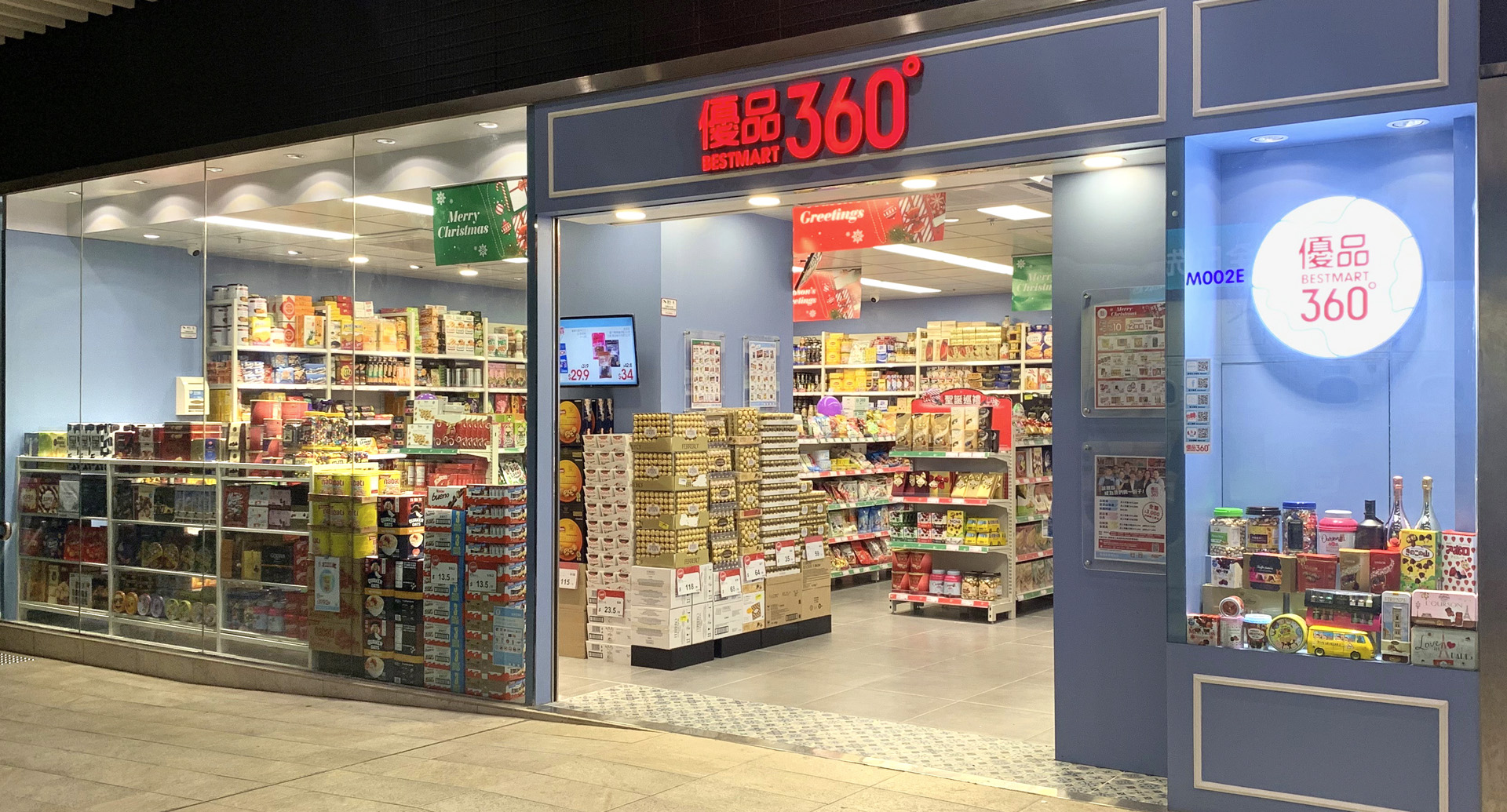
    “Leisure-food retailer” Best Mart 360 Holdings has launched a member mobile app.

    The new app is offering a range of promotions, member privileges and a reward points scheme, and enables members to view the group’s latest product information anytime and anywhere.

    The group, which operates 88 retail stores in 18 districts in Hong Kong, established its membership scheme in April 2015 in order to promote consumer loyalty, stimulate sales at retail stores and further expand its customer base. As of December, the group had more than 1 million members.

    “We intend to further expand our member base by offering additional member benefits and enhance our communication channels with our members,” said Best Mart 360’s CEO Hui Chi Kwan.

    “We believe that by expanding our member’s coverage, we are in a favorable position to secure recurring business and maintain sustainable growth of our business. Our membership scheme also allows us to collect purchasing information and data of our frequent customers for surveying and analysing customers’ purchasing preferences, needs and habits that are significant for enriching our product portfolio, determining our pricing strategy for individual products and providing better customer services.”

    The new app aims to enhance members’ consumer experience by providing information on latest promotional offers, selective products, the retail shop network, member privileges and reward points record, as well as accumulating e-coupons for future purchases.

  • Muji sues Singaporean retailer Luiga

    Muji sues Singaporean retailer Luiga

    Muji parent Ryohin Keikaku has filed a lawsuit against Singaporean retailer Iuiga alleging trademark infringement. During an interview Muji president Satoru Matsuzaki said the lawsuit was filed against Iuiga in Singapore courts in late January for “trademark infringement and passing-off under Singapore law”.

    The Japanese retail giant is seeking a court order to stop the use of the Muji trademark in Iuiga’s statements, as well as compensation for damages and losses.

    According to the report, the Singapore firm has used statements such as “Muji same manufacturer” and “direct from Muji manufacturer” on its e-commerce website and in its physical store.

    “We requested Iuiga to disclose information on their manufacturing factories to verify their statements. However, we did not receive any response,” a Muji spokesperson said.

    The Japanese firm added that its manufacturing contractors have denied manufacturing or supplying products to Iuiga.

    Iuiga’s chief growth officer Jaslyn Chan said the company has “done nothing wrong”, adding that the information on its website is factually accurate and its “manufacturing processes are legal”.

    She added that Iuiga works with “original design manufacturers”, and that there “is no direct ownership of the product by any single brand entity, allowing the original design manufacturers to produce for more than one brand”.

  • Promising signs of change at Myer

    Promising signs of change at Myer

    Myer’s move to reduce discounting and cut operating costs, while focusing on online sales and exclusive brands, had a positive impact on earnings in the first half of FY19, driving a 3.1 per cent increase in NPAT and 99bps improvement in gross margin. But some remain sceptical that these changes will be enough to drive long-term growth.

    “Despite a better-than-expected result [in the half], the long-term outlook for Myer remains challenging,” Bryan Raymond, Citi analyst for retail and gaming, said in a report released to investors on Wednesday evening.

    Further cuts to the cost of doing business – which Myer achieved primarily through ‘rostering efficiencies’, essentially fewer staff hours, in the first half – could negatively impact like-for-like sales going forward, Raymond said.

    The reduction in discounting could also hamper like-for-like sales growth, especially as the timing of state and federal elections this year is expected to dampen consumer sentiment.

    In a call to investors on Wednesday, Myer CEO John King said the retailer had removed four weeks of discounting from its calendar during the first half and plans to do the same in the second half, which he acknowledged would result in a “lumpy” topline for the year. But he said this was necessary to return the business to profitable growth.

    While the reduction in discounting has led to an improvement of 99bps in Myer’s gross profit margin for the half, Raymond warned the uptick could ease, if Myer’s rival David Jones starts discounting to clear excess stock. Worryingly, Raymond noted that David Jones’ inventory per sqm has increased 26 per cent over the past two years.

    At the same time, however, many of the ‘Customer First’ changes King outlined on Wednesday were implemented just five months ago, and their full impact won’t be measured or felt for some time.

    For instance, King said the company is in the process of moving online order fulfilment from back-of-house in department stores to a centralised distribution centre, which he said would allow the retailer to increase the range of items it sells online, improve order fulfilment speed and increase its selling area in stores. This project is not expected to be completed until next year.

    Another significant change that is still in progress is the reduction of physical floor space across the network. This will see Myer hand back entire floors in some stores to landlords, and shrink certain categories and expand others. King on Wednesday said the shape of the business will change as it reduces its physical selling area and rapidly expands a central online business.

    King expects to have more information about which stores will be downsized or rationalised in September.

  • MarketingPulse draws the world’s best marketers to Hong Kong

    MarketingPulse draws the world’s best marketers to Hong Kong

    Some of the world’s most inspiring marketing professionals will gather in Hong Kong later this month. MarketingPulse is an integrated branding and marketing conference for global marketers, brands, advertising agencies, media, enterprises and innovation professionals to gather and share the latest marketing trends, exchange best marketing practices and explore new collaborations in Asia.

    From defining new marketing strategies to reviewing events that connect and catalyse, MarketingPulse is not only a conference, but an inspiring annual rendezvous to explore new frontiers in marketing.
    The event will kickstart with a session journeying into a new era of branding, where leading chief marketing officers share tricks and tips on how they keep ahead of the pack with innovative campaigns embracing global trends, and reveal how future marketers should story tell and enhance brand experiences.

    Jonathan Mildenhall, one of the speakers in this session, previously held roles as chief marketing officer at Airbnb and VP of global advertising strategy and creative excellence at the Coca-Cola Company. Mildenhall joined Airbnb in June 2014 and made it his mission to help Airbnb transform the industry, converting a disruptive property-rental platform into a global superbrand.

    Just as he did at Airbnb, through TwentyFirstCenturyBrand, Mildenhall is partnering with some of Silicon Valley’s most influential founders and CEOs in order to drive transformational growth through purpose-driven marketing and world-class excellence in global brand stewardship.

    Michelle Cordeiro Grant, another speaker in the session, is the Founder and CEO of Lively. She has spent her career creating brands and products for some of the world’s largest retailers including Federated, VF Corporation, Limited Brands/ Victoria’s Secret and Thrillist Media Group.

    Grant is passionate about the entire process of creating and developing amazing brands and products – from concept to customer. Working with Victoria’s Secret inspired her to create a completely new experience for the lingerie category— a concept she calls Leisuree — and so Lively was born. Grant believes that “customer conversations should be the heart of your market and help you build a cohesive brand and community”.

    MarketingPulse will be held on March 20 at the Hong Kong Convention and Exhibition Centre.

  • Indosat Ooredoo picks Nokia for IP/MPLS upgrade

    Indosat Ooredoo picks Nokia for IP/MPLS upgrade

    Indosat Ooredoo has contracted Nokia to upgrade the Indonesian operator’s IP/MPLS network to meet fast-growing demand for fixed and mobile broadband services.

    Indosat Ooredoo is deploying a 100GbE IP/MPLS network as part of a three-year network transformation program.

    Nokia will provide a solution that includes its Nokia IP Anyhaul for Indosat’s mobile transport network, paving the way for its upgrade to 5G. The network will also carry services including metro Ethernet for consumer broadband and enterprise data services.

    The first year of the network upgrade project will concentrate on Jakarta, Jabodetabek and the rest of Java.

    “Indosat Ooredoo started an ambitious three-year program to transform our network to achieve the best customer experience, which will provide video-grade 4G coverage to more than 90% of Indonesia’s population,” Indosat Ooredoo CTIO Dejan Kastelic said.

    “The IP/MPLS network upgrade that we are undertaking with Nokia is aimed at providing a solid foundation for the network transformation, particularly in the most densely populated area of the country.”

    He said upgrading the company’s existing IP/MPLS network with a new Nokia network processor will help the operator both meet the growth in subscriber demand, while keeping capex costs down by extending the life of existing assets.