Tag: asia

  • Domestic rice prices reach new peak

    Domestic rice prices reach new peak

    Vietnam’s domestic rice prices have surged to a new record amid rising export demand while authorities ensure there is no supply shortage for consumers.

    Rice seller Thanh in Ho Chi Minh City’s Tan Binh District said that he has recently sourced price the popular Dai Thom rice from manufacturers at VND21,000 ($0.85) per kilogram, up 5% from last month and 16% year-on-year to a new record.

    Other types rose 7% from a month ago, he added.

    In Go Vap District, rice shop owner Hoa said prices had risen 12% from last month for certain brands.

    “Manufacturers say that prices will continue to rise as they have already placed orders at farmers who demanded higher prices,” he said.

    Supermarkets are also selling at prices 5-10% higher year-on-year.

    WinMart has raised prices on most of its rice, while Central Retail said that it has yet to adjust retail prices, to support consumers, even though suppliers have raised prices by 10%. Saigon Co.op is considering raising prices.

    Businesses that use a lot of rice are feeling the heat. Hoang Oanh, owner of a rice noodles manufacturer in HCMC, said that she had to reduce production to minimize risks of losses as rice prices have surged recently.

    Dinh Ngoc Tam, deputy CEO of rice exporter Co May, attributed the price rise to surging global demand.

    As India’s ban on some rice variety exports remains, the world is seeing a 40% drop in supply from the country, while other countries such as Indonesia, China and the Philippines still have high demands.

    Indonesian businesses are willing to buy from Vietnamese exporters at up to $650 per ton, a record high, according to data from exporters.

    There is no concern about domestic supply, but as traders are competing and paying more to ensure they can fulfil export orders, prices are rising, Tam said.

    Other industry insiders say that Chinese importers are buying more to ensure supply for their Lunar New Year holiday next year, which pushed up prices.

    Nguyen Nhu Cuong, head of the Department of Horticulture under the Ministry of Agriculture and Rural Development, said that there was no concern about a shortage in the domestic rice market.

    The rice crop area has increased by 30,000 hectares year-on-year, he added.

    In the first season of next year, yield is set to rise from 2022 to reach 20 million tons of paddy as farmers’ techniques are improved, he said.


  • Yum China posts record revenues

    Yum China posts record revenues

    Yum China, which operates the KFC and Pizza Hut chains in China, logged a 9 per cent year-on-year increase in revenues to US$2.91 billion for the third quarter ended September 30.

    The company’s system sales were up 15 per cent, with both KFC and Pizza Hut reporting increases of 15 per cent and 13 per cent, respectively. The growth was mainly attributable to the new unit contribution, same-store sales and lapping of temporary closures in the prior year.

    Operating profit increased 2 per cent to $323 million, primarily driven by sales leveraging.

    The firm opened 500 net new stores during the quarter, raising the store count to 14,102 as of September 30.

    “We delivered a record third quarter in total revenues, adjusted operating profit and net new store openings,” said Joey Wat, CEO of Yum China. “Our robust supply chain, industry-leading digital ecosystem and strong innovation capabilities have enabled us to stay agile in evolving market conditions.”

    Andy Yeung, CFO of Yum China, added the company achieved “robust results” despite macroeconomic headwinds, with same-store sales growth at approximately 90 per cent of the 2019 level.

    For the full year, the company expects capital expenditures to be in the range of approximately $700 million to $900 million.

    It aims to open 1400 to 1600 net new stores for 2023 and increase the total store count to 20,000 by 2026.

    Aside from KFC and Pizza Hut, Yum China also operates Taco Bell, Lavazza, Little Sheep and Huang Ji Huang stores in the country.

  • Gentle Monster opens its first Australian store

    Gentle Monster opens its first Australian store

    South Korean luxury eyewear brand Gentle Monster has entered the Australian domestic market with its first store opened inside David Jones’ Elizabeth Street, Sydney site.

    Gentle Monster David Jones features the brand’s signature kinetic art installation ‘Giant Head’, allowing visitors to “experience mysterious emotions through its indecipherable facial expressions which seem to penetrate the essence of the viewer”. Overseeing all Gentle Monster’s operations in Australia, Bluebell Group plans to open a flagship store next July.

    “This first opening in Sydney’s domestic market is a significant milestone for both the brand and Bluebell,” said Nelly Ngadiman, MD of Bluebell Southeast Asia & Australia. “It is a recognition of a close, successful partnership.

    “The brand’s uniqueness and disruptive nature in the fashion eyewear category enhances our teams’ commitment to retail excellence even further.”

    The launch is in partnership with retail brand operator Bluebell Group, following last year’s opening of Gentle Monster’s first travel retail airside space in the Southern Hemisphere at Sydney airport.

    Gentle Monster has recently expanded in Asia Pacific to further capitalize on the region’s growing luxury market. The eyewear brand opened its first store in the Philippines last month at Shangri-La The Fort in Bonifacio Global City, after entering Thailand with the first store opened in Bangkok’s EmQuartier earlier this year. The first Gentle Monster store in Malaysia is set to open at Kuala Lumpur’s luxury premise The Exchange TRX.

  • Hong Kong retail surges

    Hong Kong retail surges

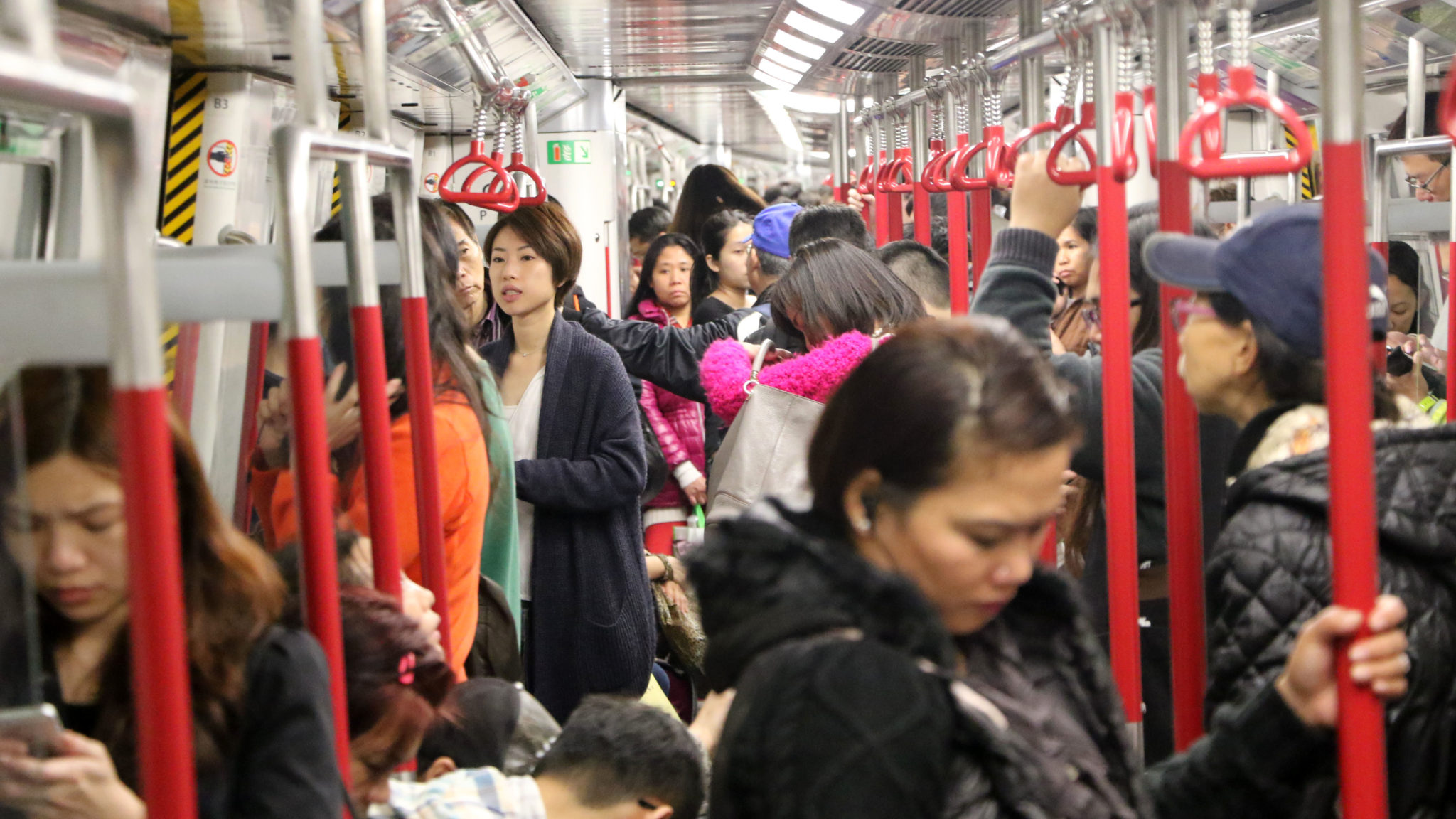
    Continued revival of inbound tourism and private consumption helped Hong Kong’s retail sales notch a 10th consecutive month of growth in September, though it was slower than in previous months, official data showed on Wednesday.

    Sales increased 13 percent year-on-year to $4.06 billion in September, the city government said, but the growth was the slowest pace since January, when it was at 6.9 percent.

    Retail sales rose by 13.7 percent in August and 16.7 percent in July.

    “Continued improvement in household income and the government’s various support initiatives, including the Night Vibes Hong Kong Campaign, should also provide support,” a government spokesman said, adding further recovery of visitor arrivals should benefit the retail sector.

    In volume terms, September retail sales increased 10.1 percent year-on-year. That compared with an 11 percent growth in August and a 14.2 percent rise in July.

    For the first nine months, retail sales value rose 18.6 percent year-on-year while volume grew 16.5 percent.

    Hong Kong’s economy grew 4.1 percent from a year earlier in the third quarter, data showed on Tuesday, accelerating from the 1.5 percent expansion in the second quarter and the 2.9 percent in the first, but missing the 5.2 percent median forecast of economists polled by Reuters.

    In August, the government revised up its economic growth forecast for 2023 to between 4.0 percent and 5.0 percent.

    Visitor arrivals for September were 2.77 million, bringing the total for the first nine months of 2023 to 23.32 million, according to Hong Kong Tourism Board preliminary data. That compared with last year’s 66,037 and 249,699, respectively, when China was still in the grip of Covid restrictions.

    The number of mainland Chinese visitors decreased to 2.16 million in September from 3.43 million in August, the data showed. That compared with 51,282 in September 2022.

    Sales of jewellery, watches, clocks and valuable gifts, which before the pandemic were mostly bought by mainland tourists, rose 27.3 percent year-on-year in September after a 57.2 percent
    jump in August, data showed.

    Sales of clothing, footwear and accessories grew 36.4 percent on the year in September after a 37.4 percent increase in August.

  • Sportswear label Anta opens outlet in Thailand

    Sportswear label Anta opens outlet in Thailand

    Chinese sportswear brands Anta has launched its first brick-and-mortar store in Thailand as part of its expansion plan in the Southeast Asia market.

    Located in Bangkok’s CentralWorld, the store covers an area 230sqm, embraces the Thai culture, and features designs in collaboration with local artists.

    Anta’s entry into Thailand marks the brand’s fourth expansion in the Southeast Asia market following the Philippines, Malaysia and Singapore.

    “You will also see that this is the first store in Anta where we devised a social space for customers to try on shoes, and while doing so able to engage in a bit of co-creation on the sticker bomb on the floor – we have additional stickers also for you to be a part of the co-creation process, to add onto the sticker bomb,” the brand wrote on its official statement.

    With more than 30 years of operation, Anta has a portfolio of brands including Fila, Descente, Kolon Sport, Arc’teryx, Salomon, Wilson, Peak Performance, and Atomic.

    The company is reportedly planning to launch its brand Fila in Thailand before the end of this year, and Salomon, Wilson and Descente by next year.

  • Google Search can now help you ace that math or science homework

    Google Search can now help you ace that math or science homework

    Google Search is launching some new features to help you with math and science problems. These features include the ability to search for math and physics problems by typing them into the search bar or taking a picture of them using Google Lens.
    You can now add this to my list of things I wish were a thing when I was going to school: Google is now making Search and Lens even more helpful when it comes to solving word, geometry, and physics problems. Additionally you will be able to explore interactive 3D diagrams of biology, chemistry, physics, and astronomy topics.
    By just typing in your math problem into Search, you can now take advantage of Google’s new advanced math solver. Don’t know how you can even type in that intricate equation? No problem, because you can opt to instead use Lens to take a picture of it from your textbook or worksheet using Lens. Not only with Google solve it for you, but will actually teach you how to do it with step-by-step instructions.
    Another new feature is the ability to get help with word problems and geometry problems by using Google’s language models. Word problems can be particularly difficult for students, but Google Search can now solve them and throw in interactive diagrams and animations in the process.
    Finally, Google Search is now launching interactive 3D diagrams of biology, chemistry, physics, and astronomy topics. These diagrams allow users to explore complex scientific concepts in a more interactive and engaging way. For example, users can rotate and zoom in on 3D diagrams of molecules, cells, and planets.

    These new features are a significant step forward for Google Search, as they make it easier for people to find the information they need about math and science. Additionally, they are designed to help students get some extra help getting some assignments done more interactively and engagingly.

  • TBH Skincare rolls out in 857 Coles stores

    TBH Skincare rolls out in 857 Coles stores

    TBH Skincare has partnered with Coles Supermarkets and will be stocked in 857 stores across Australia.

    The move follows the brand’s recent merger with fellow beauty company Boost Lab under the new umbrella, York Street Brands. Earning more than $6 million in annual turnover just three years after launch, TBH Skincare expects to bring in an estimated $20 million in combined revenue annually.

    “We have been in discussions with Coles for several months, and we couldn’t be more excited,” said Rachael Wilde, co-founder of TBH Skincare.

    “Seeing over 115,000 units leave our warehouse just for the first order and thinking of how many people that will reach is a dream come true.”

    TBH Skincare began as an e-commerce channel in 2020, launching with its Acne Hack Spot Treatment product. Since then, the brand has expanded its product range and stockists, with more than 1200 stores now carrying its products.

    “My mission has been to give consumers ease in access so they feel empowered, and now I feel like, as a brand, we can say that confidently,” said Wilde.

  • Coca-Cola raises outlook amid revenue growth

    Coca-Cola raises outlook amid revenue growth

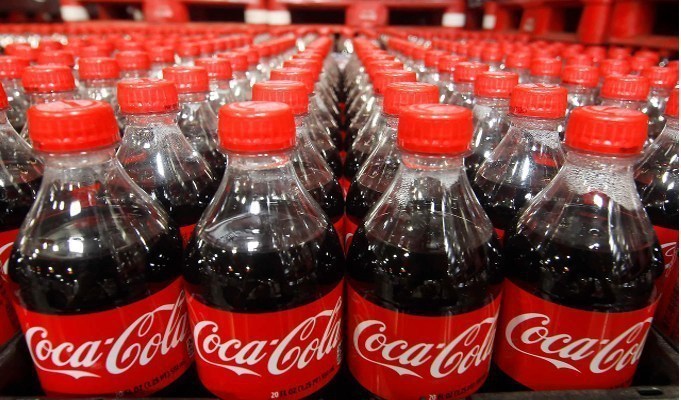
    The US-headquartered company saw net revenues increase in most of its markets, including Europe, Middle East & Africa (10 percent), Latin America (24 percent), and North America (6 percent). Meanwhile, revenues in Asia Pacific declined 2 percent.

    Revenues of global ventures and bottling investments were up 15 percent and 4 percent, respectively.

    Global unit case rose 2 percent and operating income grew 6 percent, with earnings per share up 9 percent to $0.71.

    “We delivered an overall solid quarter and are raising our full-year topline and bottom-line guidance in light of our year-to-date performance,” said James Quincey, chairman and CEO of The Coca-Cola Company.

    “Our leading portfolio of brands, coupled with an aligned and motivated system, positions us to win in the marketplace today while also laying the groundwork for the long term.”

    The company expects to deliver organic revenue growth of 10-11 percent. For comparable net revenues, it anticipates a 4 percent currency headwind based on the current rates and including the impact of hedged positions.

  • Google Maps update brings Immersive View for routes to select cities

    Google Maps update brings Immersive View for routes to select cities

    Google continues to upgrade key features of its app with the help of the AI. Previously announced at Google I/O this year, the AI-powered feature called “Immersive View for routes” is now available in select cities on both Android and iOS devices.

    With Immersive View for routes, Google Maps users will be able to see every segment of a route before they start driving, walking or cycling. Google’s new feature uses AI “to fuse billions of Street View and aerial images together to create a rich, digital model of the world.”

    Instead of seeing a flat route on your screen, you’re now immersed in a multidimensional experience that not only allows you to visualize every segment of a route, but also bike lanes, sidewalks, intersections, as well as parking.

    Starting today, Immersive View routes is available in the following cities around the world: Amsterdam, Berlin, Dublin, Florence, Las Vegas, London, Los Angeles, New York, Miami, Paris, Seattle, San Francisco, San Jose, Tokyo, and Venice.

    In addition to bringing Immersive View for routes to select cities, Google announced deeper Lens integration for more accurate navigation. Maps users can now tap the Lens icon in the search bar and lift their phone to find information about nearby ATMs, transit station, restaurants, coffee shops and stores.

    Starting this week, deeper Lens integration is coming to more than 50 new cities including Austin, Las Vegas, Rome, Sao Paolo and Taipei.

    Last but not least, EV drivers on Android and iOS will now see more helpful charging station information starting this week. That includes whether a charger is compatible with their vehicle and whether available chargers are fast, medium, or slow. This feature will start rolling out globally on Android and iOS this week wherever EV charging station info is available.

  • Samsung rolls out free cloud backups for Galaxy flagships, but there is a catch

    Samsung rolls out free cloud backups for Galaxy flagships, but there is a catch

    Samsung is simplifying the challenge of finding sufficient storage for smartphone backups with its new free solution. Named Temporary Cloud Backup, this service is designed for Galaxy smartphone and tablet users, providing them with access to as much temporary storage as needed.

    Samsung’s Temporary Cloud Backup provides users with complimentary file storage in the cloud for 30 days. There is a file size restriction of 100 GB each; however, users can store an unlimited number of files through their Samsung device running One UI 6.0 or higher, which is another stipulation.

    “This upgraded switching experience based on Samsung Cloud aims to provide peace of mind to Samsung Galaxy users that precious data will not be lost, thanks to the connected power of Galaxy’s ecosystem,” said Chiyoung Seo, VP & Head of Cloud Team, Mobile eXperience Business at Samsung Electronics.

    Temporary Cloud Backup would be particularly useful for scenarios where users may fear data loss, such as when getting a smartphone repaired. Samsung has integrated Temporary Cloud Backup into Maintenance Mode, ensuring the secure backup of personal data, including files within the Secure Folder, for recovery after repairs.

    Samsung released Maintenance Mode a year ago to give its users more security. Maintenance Mode creates a separate user account for repairs, keeping your private stuff safe. To use it, just go to Battery and device-care in Settings, hit Maintenance Mode, and reboot. Your personal info, like photos and messages, stays off-limits after the restart.
    When using Temporary Cloud Backup, users should note that a notification will be sent when the 30-day storage period concludes, and files stored for the full period will be automatically deleted. The 30-day limit applies to each file individually, and the countdown starts upon file upload.

    Initially, this feature is rolling out to Galaxy S models running One UI 6.0 or higher for users in South Korea. Global availability is expected to expand gradually from this fall.

  • Apple Arcade, Apple News+, and Apple TV+ get more expensive

    Apple Arcade, Apple News+, and Apple TV+ get more expensive

    In an unsurprising move, Apple confirmed this week that it has increased the prices of three of its subscription-based services: Apple Arcade, Apple News+, and Apple TV+.

    Apple didn’t really offer any reason for the price hikes, but it’s probably related to global inflation. Not to mention that just about every streaming service in the United States announced price increases in the last couple of months.

    That being said, if you’re living in the United States, here is how much you’ll have to pay for either of the three services mentioned above:

    • Apple TV+: $9.99 per month (was $6.99)
    • Apple Arcade: $6.99 per month (was $4.99)
    • Apple News+: $12.99 per month (was $9.99)

    It’s also worth mentioning that customers who’d rather subscribe to Apple TV+ on an annual basis will now have to pay $99 per year instead of just $69.

    Customers who are paying for all three services via the Apple One bundle are not excluded from the price increases. All Apple One bundles are now more expensive as you can see below:

    • Individual: $19.95 per month (was $16.95)
    • Family: $25.95 per month (was $22.95)
    • Premier: $37.95 per month (was $32.95)

    If you’re living in Europe, MacGeneration has all the new prices for Apple Arcade, Apple News+, and Apple TV+. The price changes should take effect immediately for new customers, while current subscribers will have 30 more days to decide whether or not they wish to continue to pay for any of Apple’s services.

  • Apple releases watchOS 10.1 to fix the Weather app

    Apple releases watchOS 10.1 to fix the Weather app

    If you’re one of those people who have multiple weather apps installed on your phone and smartwatch and love to tell others when a warming trend is on the way (“It’s going to be 78 tomorrow. 78! In late October! Can you believe it!!!”), then you might be my twin. Seriously though, Apple Watch owners who use their timepieces to check on the weather were having an issue in watchOS 10 that came out of nowhere like a mid-afternoon rain shower.

    The issue prevented a complication (which is any function on a watch that does something other than tell you the time) from showing you any weather-related data when the app is set to your current location instead of a specific city. For example, let’s say you live in Kalamazoo, Michigan and you set your Apple Watch to show you the weather in whatever city you’re currently at. With watchOS 10, the bug will prevent you from seeing any weather data from the current location setting. But if you set the weather app to give you the weather specifically in Kalamazoo, it works perfectly.

    We can understand setting the weather for the current location because it would normally show you the weather conditions for any place you might travel to without having to add a location to the settings. Even if you drive a few miles to the next city over, the weather could be different and with that setting enabled, the Apple Watch will automatically adjust. Or at least it will once you exterminate the bug by installing watchOS 10.1 which was disseminated by Apple yesterday.

    To install the app, connect your watch to Wi-Fi and the charger. From the watch go to Settings > General > Software Update. If the update is available, make sure your watch is charged to at least 50% and tap on Install.

    Apple says that if the update does not solve the issue, from your phone go to Settings > Weather and disable Location Access and then enable it. again. And if that doesn’t work, you will need to reset all location data by going from your phone to Settings > General > Transfer or Reset iPhone. Tap on Reset and then Reset Location & Privacy. Enter your passcode and reset. Hopefully, one of these steps will take care of the problem.

    The update also adds support for the double tap gesture on the Apple Watch Series 9 and the Apple Watch Ultra 2. Tapping your index finger with your thumb twice will answer a call, play and pause streaming music, stop a timer and more.

    NameDrop is now available to the Apple Watch with the update. Bring your Apple Watch near an iPhone running iOS 17 or an Apple Watch SE 2, Apple Watch Series 7 or later, or an Apple Watch Ultra, and you’ll exchange contact information with someone new. My Card is a complication on the Apple Watch that will give users quick access to NameDrop.

  • Pomelo exports soar as New Zealand, US start buying

    Pomelo exports soar as New Zealand, US start buying

    Pomelo exports have surged this year after shipments to the U.S. and New Zealand began, with the figure for the first eight months standing at US$29.6 million. It represented a 144% year-on-year increase.

    Dang Phuc Nguyen, general secretary of the Fruit and Vegetable Association, said pomelos, previously exported only to the EU and the Middle East, have been shipped to the U.S. and New Zealand since the end of 2022.

    With the quality of Vietnam’s green-skin pomelo improving rapidly, it is becoming popular in many countries, he said.

    Nguyen Dinh Tung, general director of Vina T&T Export Import Service Trading Company, which accounts for 60% of all fruits and vegetables exported to the U.S., said Vietnamese pomelos face competition from China and Mexico, but are gaining a stronger foothold in the market.

    In the U.S. market, Vietnamese pomelo is sold at $9 per kilogram and Chinese varieties at only $2, but the former has won over more and more consumers due to its quality, he said.

    “This is the first year my company exports pomelos to the U.S., but volumes have increased sharply each quarter. In the first three months of this year we exported four 40-foot containers a month, now we export 16.”

    Fresh pomelo is the seventh fruit after mango, longan, lychee, dragon fruit, rambutan, and star apple that Vietnam exports to the U.S.

    The Plant Protection Department said pomelo is exported to 12 countries and territories.

    Vietnam has 105,400 hectares under the fruit and an annual output of 905,000 tons.

    Most of the green-skin pomelo is grown in the Mekong Delta.

  • Durian export rises 14 time

    Durian export rises 14 time

    Vietnam’s durian export reached $1.63 billion in the first nine months, 14 times higher than the figure of same period last year, according to statistic of the General Department of Customs.

    In the reviewed period, fruit and vegetable exports totaled $4.21 billion, a surge of 72.5% equivalent to $1.77 billion year on year.

    Durian has surpassed jackfruit, dragon fruit, watermelon, banana and lychee to become the biggest foreign currency earner in Vietnam’s fruit and vegetable industry, accounting for 38.7% of the industry’s total export value.

    China is the largest importer of Vietnam’s fruit and vegetables with a turnover hitting $2.75 billion, skyrocketing 160% compared to the same period last year.

    Currently, Vietnamese durian is exported mainly to China. Vietnam has 422 growing areas and 153 packaging facilities eligible to export the fruit to China.

    Sixty four other growing areas and 15 packaging facilities are completing procedures to have Chinese authorities to grant codes for the export. In addition, more than 600 growing area codes and 50 packaging facilities will apply for codes for the export of durian to China.

  • Marriott eyes 20 new hotels, resorts in Vietnam

    Marriott eyes 20 new hotels, resorts in Vietnam

    International Marriott wants to open 20 more hotels and resorts in Vietnam to further tap the country’s great tourism potential, said its chairman and CEO Anthony Capuano.

    The potential is due to its geographical location and unique culture, which makes many tourists want to return to the country, Anthony Capuano said at a meeting with Prime Minister Pham Minh Chinh in Hanoi on Wednesday

    The U.S.-based hospitality company, which currently manages 16 hotels and resorts under eight brands such as JW Marriott, Le Meridien and Sheraton, plans to open more of them in Hanoi, Ho Chi Minh City, Da Nang City, and Phu Quoc Island.

    Chinh said Vietnam advocates rapid and sustainable tourism development, considering it an important economic sector, and his government creates the most favorable conditions for investors.

    He said Marriott should expand its investment with large projects that are appropriate for Vietnamese conditions and attractive to international tourists, collaborate for training and developing high-quality human resources, connect Vietnamese tourism with the rest of the world, and diversify tourism products and supply chains.

    Capuano promised him that Marriott would cooperate in these areas.

    Founded in 1927, the world’s largest hotel chain has 8,000 properties with nearly 1.5 million rooms in 139 countries and territories.