Tag: asia

  • Qualcomm and Iridium end Snapdragon Satellite because of one key factor

    Introduced this past January, Qualcomm and Iridium surprised the mobile industry at the end of last week by announcing the end of Snapdragon Satellite without having one Android phone manufacturer sign on the dotted line. Snapdragon Satellite was expected to be used by Android manufacturers as a way to match the iPhone 14 and iPhone 15’s Emergency SOS via Satellite feature.
    Announced last year one day after Huawei unveiled a similar feature for its Mate 50 series, Emergency SOS via Satellite allows someone with a compatible iPhone model to report an emergency even in areas where there is no cellular connectivity. The iPhone screen helps show the user where to position the device to connect with a satellite; information about the emergency is texted to emergency services who dispatch first responders. The feature has already been credited with saving some lives.
    Snapdragon Satellite was set to work with Iridum’s satellite constellation and both Qualcomm and Iridium have announced the end of their partnership starting on December 3rd. This action effectively ends Snapdragon Satellite, at least for now. In its press release, Iridium notes that the decision to end the partnership is due to one huge factor: no business. As the satellite firm wrote, “The companies successfully developed and demonstrated the technology; however, notwithstanding this technical success, smartphone manufacturers have not included the technology in their devices.”

    Where this leaves Samsung is unclear. Last month, John Yong-In Park, head of Samsung Electronics SLSI Business Division, said during the 2023 Semiconductor Expo (SEDEX) keynote that 2024 Samsung Galaxy phones will offer satellite connectivity. He did not mention any specific models, but it was believed that the Galaxy S24 line might be Samsung’s first phones to offer emergency satellite connectivity.

    Last February, chipmaker MediaTek announced its MT6825 chipset that offers satellite connectivity for Android smartphones through Bullitt’s Satellite Connect platform. The chipset supports two-way satellite messaging, location sharing, and emergency SOS. Last year, T-Mobile announced that it would team up with Elon Musk’s Starlink to cover areas with no cellular coverage with satellite connectivity allowing users to send and receive SMS and MMS messages.
    Iridium CEO Iridium Matt Desch, talking about the end of his firm’s partnership with Qualcomm, said, “While I’m disappointed that this partnership didn’t bear immediate fruit, we believe the direction of the industry is clear toward increased satellite connectivity in consumer devices. Led by Apple today, MNOs and device manufacturers still plan, over time, to provide their customers with expanded coverage and new satellite-based features, and our global coverage and regulatory certainty make us well-suited to be a key player in this emerging market. User experience will be critical to their success, and we’ve proven that we can provide a reliable, global capability to mobile users.”
    Qualcomm also commented by stating that the lack of Snapdragon Satellite to sign a deal with any Android manufacturers “indicated a preference towards standards-based solutions” to be used to support smartphone-to-satellite connectivity. “We expect to continue to collaborate with Iridium on standards-based solutions while discontinuing efforts on the proprietary solution that was introduced earlier this year,” Qualcomm said.
    With a standards-based solution, several companies could create the technology to allow Android handsets to offer emergency satellite connectivity.
    As we noted earlier in the story, Huawei last year became the first phone manufacturer to offer satellite connectivity for emergencies and beat out Apple by one day. This year, the new Mate 60 line reportedly offers users the opportunity to make satellite calls using the new flagship phones. This could be considered an improvement over the technology used by Apple, which is limited to text-based communications.
  • Imported fruit prices plummet on burgeoning supply

    Imported fruit prices plummet on burgeoning supply

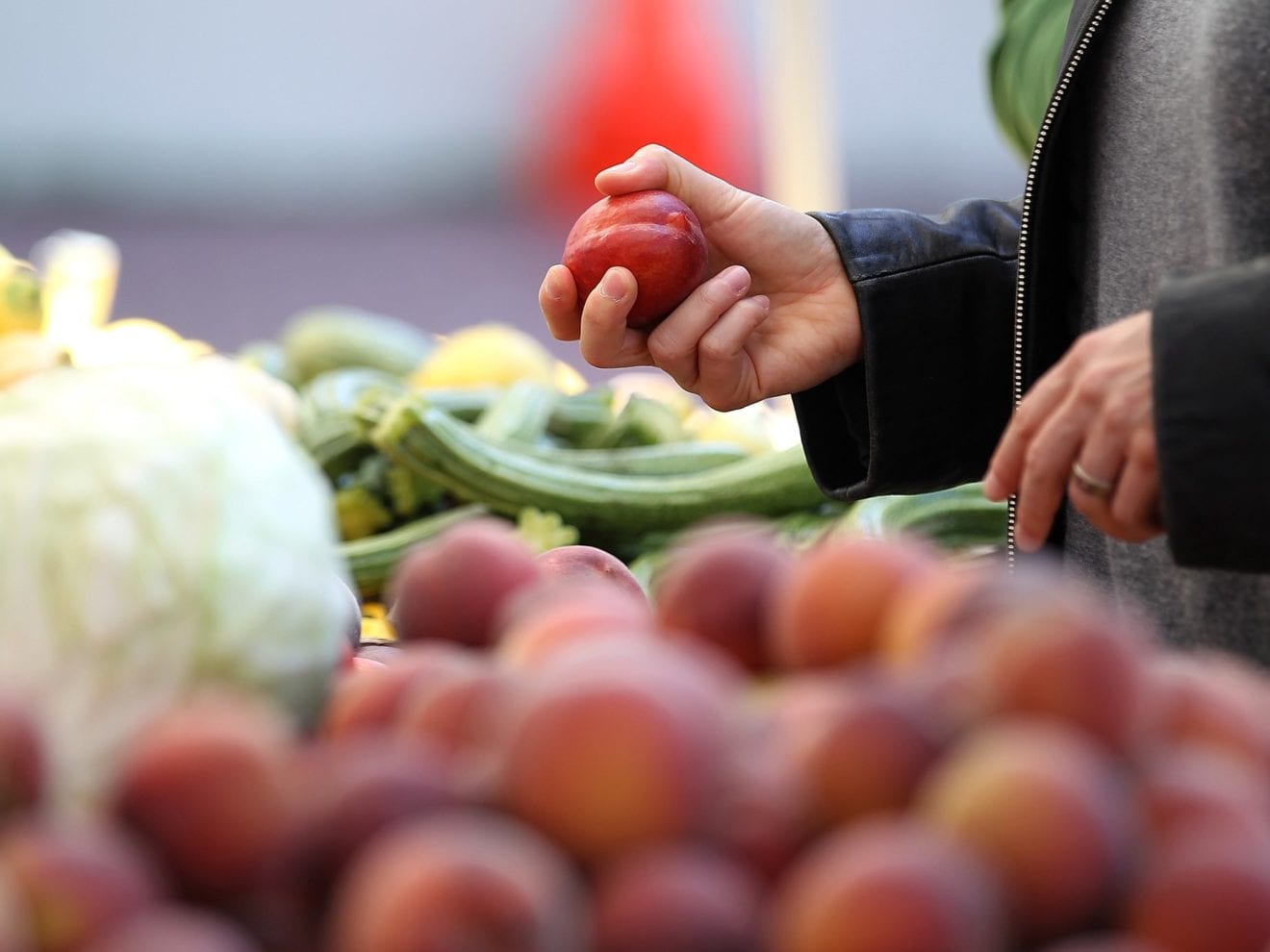
    Imported kiwis, apples, pomegranates, and pears only cost a few tens of thousands of dong (VND24,000=US$1) per kilogram, or a fifth of the prices two years ago.

    Hanh, a seller of imported fruits on Bach Dang Street in HCMC’s Binh Thanh District, said golden kiwi imported from New Zealand is selling at VND200,000 ($8.21) per box of 3.5 kilograms, or VND57,000 per kilogram.

    For those buying more than 10 boxes, the price comes down to VND160,000. “This price is down 15% from a year ago,” she said.

    Imported pomegranate and pear are also becoming cheaper, she said.

    Chinese and Tunisian pomegranates currently sell for VND60,000-70,000 and VND35,000-50,000 per kilogram.

    In 2021, imports from the North African country had cost up to VND250,000.

    First-grade pears imported from South Korea are sold for VND60,000-80,000 per kilogram, and second-grade varieties for VND30,000-40,000, the lowest prices ever.

    The prices of apples imported from New Zealand have also dropped sharply to VND40,000-60,000 per kilogram.

    Envy apples, the most expensive imports along with Japanese apples, cost VND200,000-350,000 two or three years ago, but only VND70,000-110,000 now.

    Thanh, who sells imported fruits at the Thu Duc wholesale market in HCMC, said prices have declined because supply is abundant while demand has not gone up much.

    India and New Zealand have recently sought to export more fruits to Vietnam, and so their prices are attractive, he said.

    Recent deals between Vietnam and China have helped Chinese fruits enter the Vietnamese market easier and at lower prices than before.

    Dang Phuc Nguyen, general secretary of the Vietnam Fruit and Vegetable Association, said the country’s accession to free trade agreements has brought down import taxes on fruits and vegetables virtually to zero.

    According to statistics from the General Department of Vietnam Customs, the country imported fruits and vegetables worth $1.6 billion in the first 10 months of this year.

    Imports of fruits at low prices from countries such as India, New Zealand and South Korea were up 4-62% year-on-year.

  • UBS Serves Up Crypto ETFs in Hong Kong

    UBS Serves Up Crypto ETFs in Hong Kong

    Switzerland’s largest bank is following in the tracks of HSBC by allowing wealthy clients to trade crypto exchange-traded funds in the city.

    A selection of three crypto-ETFs related to Bitcoin and Ethereum were available on a UBS trading platform for wealthy clients as of Friday.

    The funds had been approved by the Securities & Futures Commission (SFC), with the source, who requested to remain anonymous, indicating that clients could access educational material related to the funds. UBS declined to comment on the matter, the news agency showed.

    Hong Kong implemented a new digital licensing regime related to digital assets on June 1 to both promote digital asset trading while also ensuring that investors remain duly protected.

    Zug-based Seba Bank, one of two Swiss crypto-banks, was licensed by the SFC earlier this week. The step will allow it to engage in various activities and advisory services related to securities, OTC derivatives, and structured products related to underlying virtual or digital assets.

  • Google Wallet will soon allow users to digitize their workplace IDs

    Google Wallet will soon allow users to digitize their workplace IDs

    In June, Google announced a series of new features that would slowly make their way to the Google Wallet app to make it a more comprehensive digital wallet solution. Most of these features have already launched, and one in particular was quietly added in a recent Google Play Services update.

    We are referring to the ability to add your workplace ID cards to the app, effectively eliminating the need to carry a physical ID or lanyard. This means that, unless your workplace insists that physical identification needs to be shown at all times, you may finally be able to leave your ID at home and use your phone to access your workplace facilities.

    As spotted by Android Police, the addition of workplace ID card support is part of a flurry of recent additions to Google Wallet. In the past few months, Google has added support for government-issued IDs in new states, easier tap-to-pay systems for commuters, and support for sharing passes. You can also digitize all the unsupported documents and passes, like library cards and gym memberships.

    This new capability is part of the Google Play Services app update to version 23.44 that began to roll out yesterday, as detailed in the app’s changelog. However, it doesn’t seem to have reached all users yet, not even those using the app’s beta version, which is now at version 23.44.14. Once rolled out, the feature will appear alongside the current options for adding a digital ID, such as a state driver’s license.

    In its June announcement, Google never specified a rollout timeline for the workplace ID card support, except for “later this year.” Hopefully, this means that it should start reaching users soon, making it easier for them to set up digital IDs for reliable use.
  • Coconut prices fall on bumper crop

    Coconut prices fall on bumper crop

    It is the coconut harvest in the Mekong Delta, but with exports falling, prices have halved from a year ago to VND1,500-2,900 (US$0.06-0.12) for a nut, causing farmers losses.

    Phan Van Dinh, 68, of Giong Trom District in Ben Tre, Vietnam’s biggest coconut-growing province, has an orchard of 2,000 square meters.

    “At present, we only manage to sell VND1 million worth of coconuts a month, enough only to cover costs, not profit,” he said.

    Traders are buying at VND2,500-2,900 apiece, down from VND5,000-5,800 a year ago, he said.

    Le Van Trong, owner of a 6,000-sq.m orchard in Ben Tre, does not want to sell the 2,500 fruits he has harvested because traders are offering only VND1,500, saying they are too small.

    He is now drying the coconuts to sell them as seedlings for cultivation.

    Huynh Quang Duc, deputy director of the Ben Tre Department of Agriculture and Rural Development, said it is the coconut harvest season with large output, causing prices to fall.

    Ben Tre has over 74,000 hectares of orchards, or 80% of the total coconut growing area in the delta and 50% of Vietnam’s.

    Besides some exports to the U.S., coconuts are mainly exported to China via border trade.

    “We are waiting for exports to China through the official quota with a much bigger volume, so that the life of coconut growers will improve,” Duc added.

  • Intel denies new investment in Vietnam

    Intel denies new investment in Vietnam

    U.S. chip giant Intel has said that it had never announced any additional investment in Vietnam apart from the $1.5 billion investment it has already made so far.

    “After raising our investment to $1.5 billion in 2021, we have never made any official announcement of a new investment,” a representative said Wednesday.

    The U.S. chipmaker had shelved a plan to invest $1 billion more in Vietnam, citing anonymous sources. The news outlet first reported about the plan in February.

    Intel began its operation in Vietnam in 2006 with a chip manufacturing and testing factory in Ho Chi Minh City.

    The factory, Intel Products Vietnam, is one of 10 manufacturing hubs of the company globally.

    The facility, which employs 2,800 people, has shipped over 3 billion product units over 15 years of operation.
    Intel leaders committed to long-term investment in Vietnam in a meeting with Deputy Prime Minister Tran Luu Quang in October.

    Intel CEO Patrick Gelsinger told Prime Minister Pham Minh Chinh in May that the company would invest several more times in Vietnam in the future.

    The company is expanding its investment in chip packaging in Malaysia, one of Vietnam’s main competitors in attracting foreign direct investment.

  • Waze launches new safety feature for drivers

    Waze launches new safety feature for drivers

    Waze announced this week that a new safety feature is now making its way to the navigation app’s users on both iOS and Android devices. The especially important new feature will allow drivers to see a road’s crash history before they start their journey.

    Unsurprisingly, the safety feature is powered by AI (artificial intelligence), but the Waze community does have a contribution in this too. According to Waze, the crash history alerts provided by its app combine historical crash data and important information about route.

    Depending on typical traffic levels, whether it’s a highway or local road, elevation, and more, a road can be more or less prone to crashes. Thankfully, Waze’s new feature takes into consideration all these aspects and provides you with an alert in case it decides that the road you are going to drive on is dangerous.

    The new safety feature has been implemented in a way that allows drivers to keep their eye on the road all the time, even when they receive an alert from the app. In fact, Waze announced that it has limited the number of alerts drivers see, and they aren’t shown at all on roads they regularly navigate.

    Crash history alerts should now be available for all Waze users on mobile, regardless of their location.

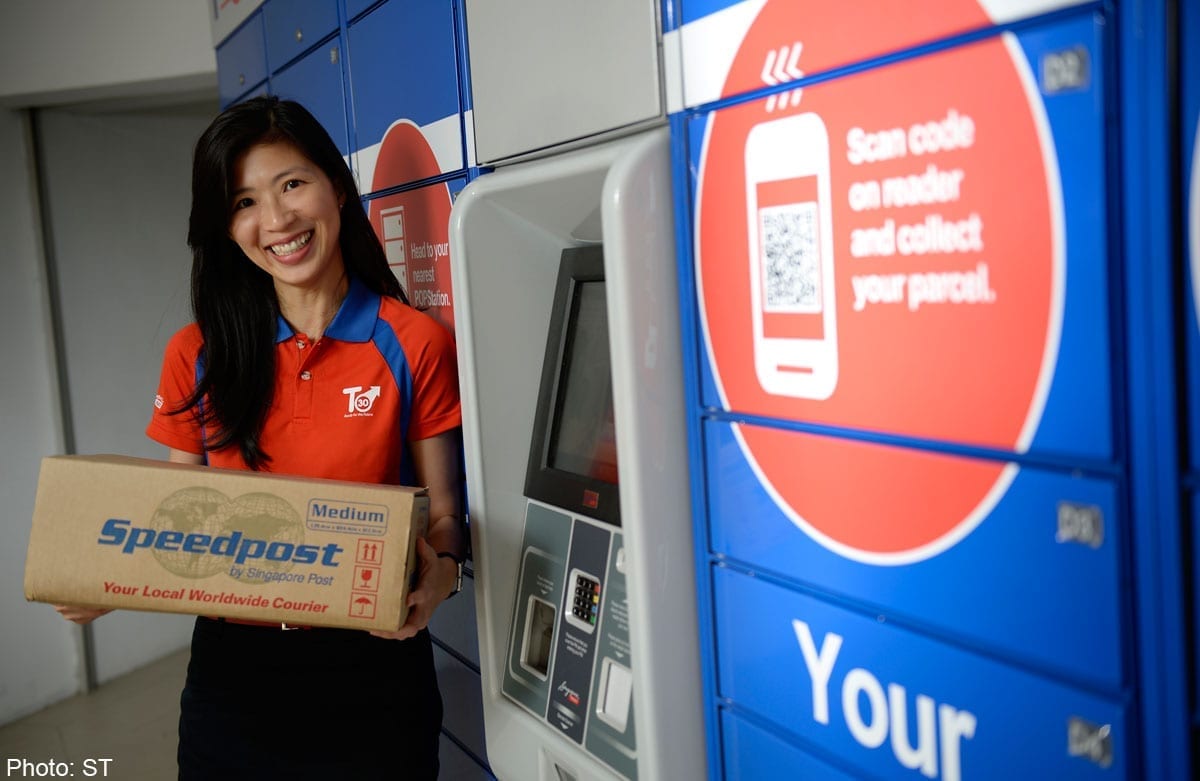
  • SingPost’s Australian unit eyes purchase of Border Express

    SingPost’s Australian unit eyes purchase of Border Express

    Freight Management Holdings or FMH, a subsidiary of Singapore Post, has entered into a conditional sale and purchase agreement with the shareholders of Border Express, for a maximum purchase consideration of A$210 million, or approximately S$183 million.

    Border Express is considered the 6th largest national transport and distribution services company in Australia with comprehensive freight connectivity, warehouses and regional centres.

    It provides end-to-end interstate logistics services with a network of 16 facilities, a fleet of over 700 vehicles, a team of 1,300 employees, and over 3,000 clients across industries, including large retail and consumer brands.

    Upon completion, Border Express will join the transportation companies held under the FMH Group umbrella, which include GKR Transport, Niche Logistics, BagTrans, Formby Logistics and Spectrum Transport.

    Over the past three years, SingPost has expanded its operations in Australia with the FMH Group and CouriersPlease, and more recently, it reached agreement with the remaining minority shareholders of FMH to take its ownership to 100 percent.

    The Australian integrated logistics market is estimated at over A$120 billion. With the acquisition of Border Express, revenues of the wider FMH Group are expected to exceed S$1 billion.

    “Upon completion, the acquisition will support FMH Group to realise the vision of a new logistics ecosystem where people and physical assets are connected through a ubiquitous technology platform, enabling true supply chain efficiency,” said Simon Slagter, Group Chief Executive Officer at FMH Group,

    The transaction is subject to relevant statutory approvals and other closing conditions.

  • Singapore Airlines to host AAPA’s 67th Assembly of Presidents

    Singapore Airlines to host AAPA’s 67th Assembly of Presidents

    Singapore Airlines (SIA) will host the 67th edition of the Association of Asia Pacific Airlines (AAPA) Assembly of Presidents on 9 and 10 November 2023.

    The AAPA, which has 14 member airlines, is the trade association for scheduled international carriers based in the Asia Pacific region1.

    More than 200 delegates, attendees, and members of the media from around the world are expected at the Assembly, which will be held at Singapore’s Mandarin Oriental Hotel.

    Delegates from member airlines, including Chief Executive Officers and senior management, will be joined by representatives from key stakeholders such as the International Air Transport Association (IATA), International Civil Aviation Organization (ICAO), Airports Council International (ACI), Singapore’s Ministry of Transport and the Civil Aviation Authority of Singapore, as well as the wider aerospace and aviation community.

    Mr Chee Hong Tat, Singapore’s Acting Minister for Transport, will be the guest of honour at the opening session on Friday, 10 November 2023.

    This year’s theme, Sustainable Air Transport Growth in the Asia Pacific, underscores the importance of international air transport and the industry’s commitment to sustainability. The Assembly provides a platform to discuss the opportunities and challenges in the airline industry, and focus on developing a strategy for sustainable growth in the region.

    The Asia Pacific airline industry has rebounded from the impact of the pandemic, with the region’s passenger capacity reaching 77% of pre-pandemic levels in August 2023. This has helped to meet the robust demand for air travel, with international passenger traffic in the Asia Pacific doubling from a year before in August 2023 and expected to reach 80% of pre-pandemic levels by the end of the year.

    Mr Goh Choon Phong, CEO of Singapore Airlines, commented: “Deeper collaboration between airlines, as well as with our partners and stakeholders in the ecosystem, is critical for sustainable growth. This will help to ensure that future generations continue to enjoy the many benefits that aviation brings. We look forward to meaningful discussions that will help to lay the groundwork for an even brighter future for the Asia Pacific’s airline industry.”

    Mr Subhas Menon, Director General of the AAPA, added: “2023 is a watershed year for Asia Pacific aviation. Air travel is again charging ahead even as the broader global economy comes off the boil. As it looks to return to growth, the industry must navigate challenging geopolitical, economic and climate realities. Against this backdrop, and with the line-up of influential speakers, no doubt that this year’sAssembly of Presidents will deliver many provoking yet inspiring conversations.”

  • EV maker VinFast to invest $1.2B in Indonesia

    EV maker VinFast to invest $1.2B in Indonesia

    Vietnam’s first electric vehicle (EV) maker VinFast plans to build a plant with an investment capital of 18.6 trillion Rp (US$1.2 billion) in Indonesia, according to Presidential Chief of Staff of Indonesia Moeldoko.

    Moeldoko told a press on Nov. 6 that the construction will begin as soon as possible. He, however, did not reveal further details of the plan.

    Vinfast is one of the largest EV manufacturers in Southeast Asia, with its cars exported to Europe and America, the official said, adding its investment in Indonesia can help form an EV ecosystem in the country.

    Indonesia’s media reported that in early September, Vinfast leaders had a meeting with Indonesian Trade Minister Zulkifli Hasan who pledged to facilitate the automaker’s operation.

    Secretary General of the Association of Indonesia Automotive Industry (Gaikindo) Kukuh Kumara said in late October that Vinfast has discussed and expressed its willingness to join the association.

    The manufacturer is completing necessary procedures with the Indonesian government before officially entering the country’s auto market, he said.

  • Shrinking Chinese exports halve dragon fruit prices

    Shrinking Chinese exports halve dragon fruit prices

    Vietnamese red-fleshed dragon fruit is selling for VND10,000-13,000 (US$0.41-0.53) per kilogram, down 50% against same period last year, due to reduced imports from China.

    Hoang, who sells fruits from a cart on Go Vap District’s Thong Nhat Road in Ho Chi Minh City, said this is the first time red-fleshed dragon fruit has been sold at stalls on roads and streets in the city.

    Thuan, another mobile fruit seller on Pham Van Dong Road in Thu Duc City, said: “Many dragon fruit growers in the Mekong Delta province of Tien Giang sell the fruit at such a low price that they barely want to harvest them anymore.”

    In the province’s Cho Gao District, traders are buying red-fleshed dragon fruit from orchards at prices of VND4,000-8,000 per kilogram.

    Huu, who grows 4,000 square meters of red-fleshed dragon fruit in the district, said he does not make a profit at current prices.

    If earnings from the fruit continue to decrease, his family may switch to other crops.

    According to the Long An Dragon Fruit Association, the province has 9,000 hectares of dragon fruit, down from the peak of 12,000 hectares some years ago.

    Fruit exporters said the prices have fallen because China has reduced imports, meanwhile, Vietnamese demand for the fruit is weak since many other tropical fruits with attractive prices are currently in season.

    Last year, Chinese authorities said the nation had grown the fruit on 67,000 hectares, producing 1.6 million tons. The figures exceeded Vietnam’s current output.

    Chinese newspaper The People’s Daily reported that farmers in Cixi, part of the eastern province of Zhejiang, worked all night to artificially pollinate dragon fruit, ensuring a bumper crop.

    Red-fleshed dragon fruit is selling for seven renminbi (nearly $1) per kilogram, while white-fleshed dragon fruit imported from Vietnam goes for around nine renminbi in Nanning, the capital of Guangxi Province.

    Vietnam’s dragon fruit exports in the first eight months declined 4.4% year-on-year to $442 million. Specifically, red-fleshed dragon fruit exports to China dropped by 36.5%.

  • Chloe opens new boutique at Changi Airport

    Chloe opens new boutique at Changi Airport

    Chloe has partnered with Heinemann Asia Pacific to launch a new boutique in Changi Airport’s Terminal 2 transit area.

    The launch, which marks Chloe’s first entry into Changi Airport and Heinemann’s return to Changi after an eight-year absence, includes a wide selection of products ranging from leather goods to shoes and accessories, as well as the Fall – Winter 23 collection.

    According to the brand, the space is devoted to both Maison’s founder, Gaby Aghion, whose home of Egypt is mirrored in the warm desert palette, and to former creative director Gabriela Hearst – through earthy textured tones that remember her early years in Uruguay, South America.

    “We are delighted to be back at Changi Airport, as the retail partner of a brand as desired and as committed to their values as Chloé,” said Heinemann Asia Pacific CEO Marvin von Plato.

    Chloe collaborated with pre-loved clothes marketplace Vestiaire Collective and digital ID provider EON earlier this year to develop the Chloe Vertical, an innovative circular economy project with sustainability at its core.

  • WhatsApp for Android brings back Muted Updates and Channel Polls

    WhatsApp for Android brings back Muted Updates and Channel Polls

    WhatsApp, one of the world’s most popular instant messaging apps, is constantly rolling out new features and updates in an effort to improve the user experience. In the past week alone, the app’s developers have released two new beta updates on Android that introduce a couple of interesting features, including the return of Muted updates and the ability to create and share polls within Channels.

    As reported by WaBetaInfo, WhatsApp brought back Muted updates in version v2.23.24.11 of the Android beta app, which had disappeared from the main Updates tab following the arrival of Channels. Previously, users could still access Muted updates by tapping the three-dot menu in the Updates tab, but this was not as convenient as having them directly displayed in the main tab.

    Shortly after, v2.23.24.12 was released, which introduces the ability to create and share polls within Channels. This feature is similar to the polls feature that is already available in one-on-one and group chats, but with a few key differences.

    In order to prevent spamming and ensure that poll results are accurate, the feature within Channels are limited to one choice per user. Additionally, in order to protect privacy, Channel polls are also anonymous — meaning that no one can see who voted for what.

    The ability to create and share polls within Channels is a useful new feature that can be used for a variety of purposes, such as gathering feedback from community members or running contests and giveaways. Similarly, the return of Muted updates is a welcome change for users who prefer to keep their status updates muted. With this feature, users can easily view all of their muted status updates in one place without having to navigate through multiple menus.

    Unfortunately, as both of these features are currently only showing up for a limited amount of users using the beta app, and the WhatsApp beta program is currently — and almost always — full to capacity, it might be a bit until we see then both show up on the stable public app.

  • Apple might be working on a custom battery

    Apple might be working on a custom battery

    Battery life on the iPhone has been gradually improving since the iPhone 13 series, despite the latest iPhone 15 series not bringing significant upgrades in the battery department, as you can see in our dedicated piece about iPhone 15 and iPhone 15 Pro Max battery life and charging speeds. However, Apple might have something in mind, as new rumors suggest.

    Apple is rumored to be working on a custom in-house battery design. The company is exploring alternative cathode materials to enhance the overall performance of the battery module, to extend the battery life of its future products released after 2025.

    The report suggests that Apple is actively considering increasing the silicon content inside the battery, moving away from the conventional use of graphite as the anode material in lithium-ion batteries. Graphite’s unique properties make it an ideal choice, efficiently storing and releasing electrical energy, ensuring reliable and long-lasting battery performance in mobile devices.

    While a silicon-based approach could potentially improve overall battery capacity and reduce charging times, there is a challenge—silicon tends to expand during the charging process. However, Apple seems to have found a solution to mitigate this issue.

    Rumors about Apple developing its own next-gen batteries date back to 2019. In fact, even before that, the company has been collaborating with suppliers to introduce innovative battery solutions, such as the space-saving, L-shaped battery in the iPhone XS.

    By bringing battery development in-house, Apple gains more control over the design and construction of its products. The company claims that it regularly audits its suppliers to ensure they are meeting its high standards.

    And what are its high standards, you may wonder? Apple has ambitious environmental goals, aiming to make every Apple product with 100% clean energy by 2030. This commitment requires all suppliers to transition to electricity generated from solar, wind, and other renewable sources. Additionally, Apple envisions creating products using only recycled and renewable materials. In a recent pledge, the company aims to use 100% recycled cobalt in all ‘Apple-designed’ batteries by 2025.

    Whether the rumored custom Apple battery will actually happen and whether the company will stick to its goals is still up in the air.

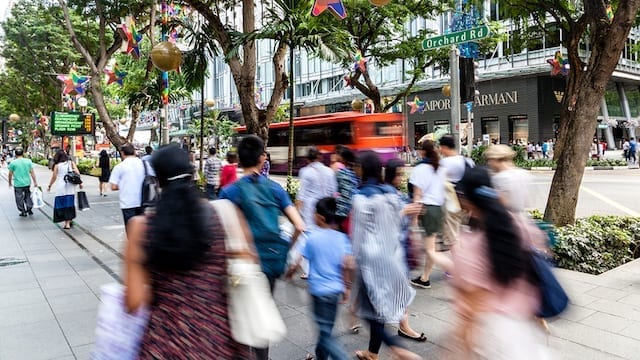
  • Singapore retail sales growth softens in September

    Singapore retail sales growth softens in September

    Singapore retail sales – excluding motor vehicles – were up only 0.5 percent year-on-year in September, a slowdown compared to the 4 per cent increase in August.

    According to the Department of Statistics Singapore, the total retail sales value was about US$2.5 billion, down 0.8 percent month over month on a seasonally adjusted basis. Online retail sales accounted for 15.2 percent of total sales value.

    By industry, sales of food & alcohol jumped 22.6 percent, followed by toiletries & medical goods (10.3 percent) and apparel & footwear (8.1 per cent).

    Retailers of computer & telecommunications equipment and furniture & household equipment recorded declines in sales of 12.7 percent and 4.8 percent, respectively.

    Sales of food & beverage services rose 6.9 percent yearly to US$726 million, following the 8.6 percent growth in August. Approximately 23 percent of this came from online sales.

    All industries within this sector posted sales growths, led by food caterers with a 24.1 percent increase.