Tag: Australia

  • Bandai Namco to Open Australia’s First Gundam Base and Tamashii Nations in Sydney

    Bandai Namco to Open Australia’s First Gundam Base and Tamashii Nations in Sydney

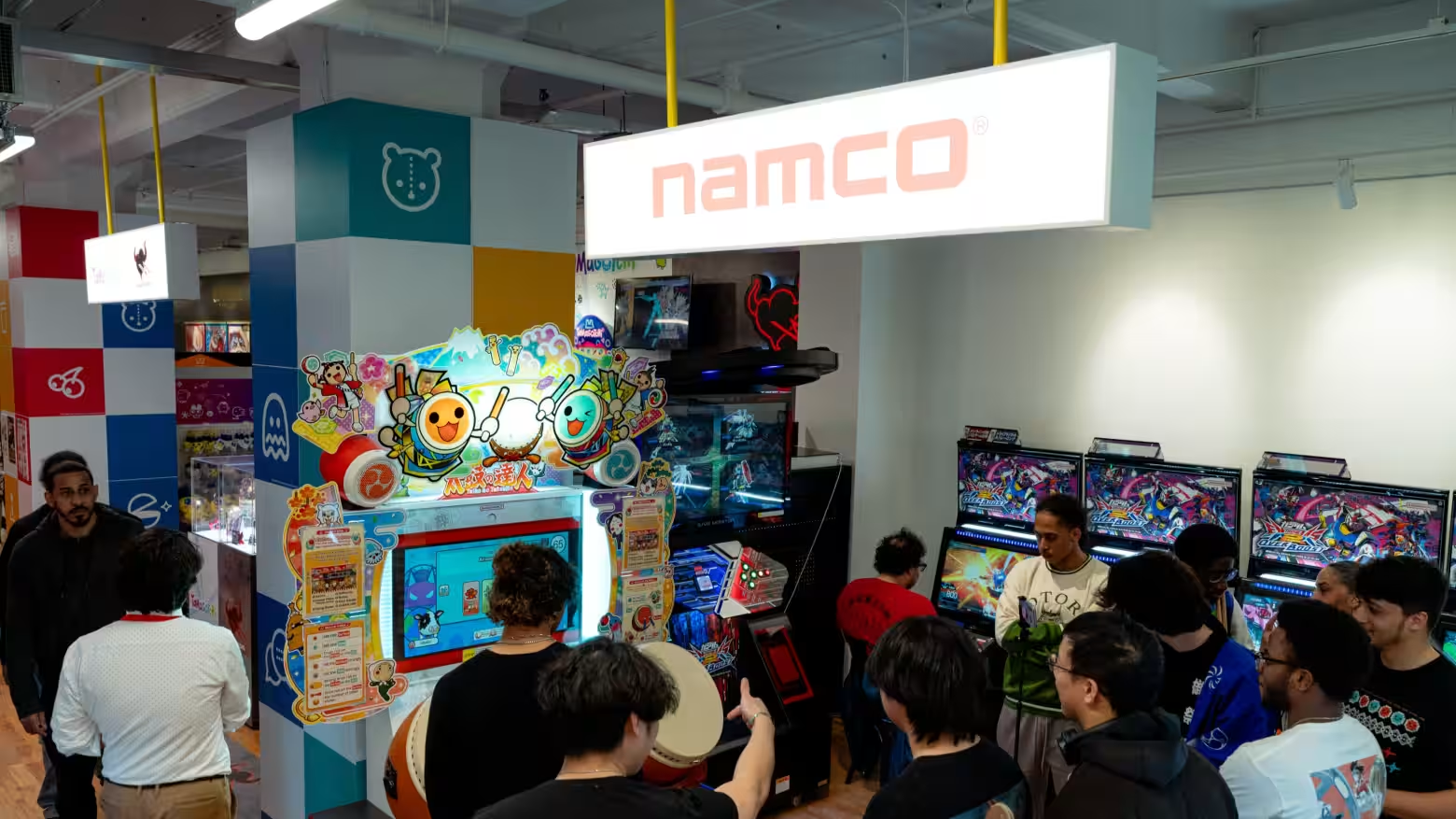
    Bandai Namco Asia will open Australia’s first The Gundam Base store at Broadway Sydney in November 2026. The location will also house one of only four Tamashii Nations flagships worldwide.

    Both permanent shops will sit on level one of the retail complex. They follow a trial pop-up tour at the Mirvac-owned centre last year.

    Expanding Japanese IP Across Asia-Pacific

    The Gundam Base serves as Bandai’s dedicated retail brand for Mobile Suit Gundam ‘Gunpla’ model kits. The Sydney site will sell kits, apparel, and exclusive releases unavailable through standard wholesale channels.

    Next door, Tamashii Nations will stock finished collector figurines. That store focuses on high-end robot models and licensed merchandise from anime franchises such as Dragon Ball, One Piece, and Demon Slayer.

    Bandai Namco Asia president Hiroyuki Fujita said the Sydney destination will run prototype shows, immersive displays, and regional fan events alongside standard retail sales.

    Building Out Physical Collector Hubs

    Japanese entertainment companies are rolling out direct-to-consumer flagships across Asia-Pacific to secure higher margins and cultivate collector communities. Bandai opened a flagship in Hong Kong in December, testing regional appetite before committing capital to Australia.

    Landlord Mirvac relies on fandom-driven concepts to pull foot traffic into Broadway Sydney. Fit-outs for both stores will finish ahead of the November 2026 launch.

  • Australian Grocers Expand Private Labels as Coles Posts $1.09B Profit

    Australian Grocers Expand Private Labels as Coles Posts $1.09B Profit

    Coles Group posted a 1.09 billion Australian dollar net profit for the financial year ending June 28, as the country’s supermarket giants add thousands of private-label lines to store shelves.

    The expansion of store brands directly targets margin defence and customer retention across Australian grocery aisles.

    Private label pressure from Aldi

    Aldi entered the Australian market through Sydney in 2001, building its network on an inventory model where 90 per cent of products were private labels sold at lower price points. At that stage, Coles and Woolworths together controlled about 71 per cent of the national grocery market.

    The German discounter captured substantial market share by 2015. That persistent push forced both incumbent chains to rethink their merchandise mix and build out multi-tier house brands to compete across basic grocery categories.

    Margin defence and shelf allocation

    Supermarket operators use own-brand ranges to secure higher gross margins and gain greater use over suppliers. For grocery retailers across the Asia-Pacific region, allocating more shelf space to proprietary labels offers direct protection against wholesale price inflation.

    Both Coles and Woolworths face continued consumer demand for cheaper basket alternatives as shoppers swap branded packaged goods for supermarket-owned items.

  • Ten Australian Fashion Designers Head to Hong Kong for Centre Stage

    Ten Australian Fashion Designers Head to Hong Kong for Centre Stage

    Ten Australian fashion designers will travel to Hong Kong this September to present their collections at the Centre Stage trade fair. The trade mission aims to connect independent labels directly with regional department store buyers, boutique owners, and commercial distributors across North and Southeast Asia.

    Organised by the Australian Fashion Council under its Global Gateways programme, the delegation includes Gary Bigeni, Buluuy Mirrii, Van Brussel, Asiyam, Briar Will, Mos the Label, Niamh Galea, Permanent Vacation, Viceta Wang, and West 14th. The show runs inside a dedicated pavilion at the event, alongside an industry reception hosted by Australia’s consul-general in Hong Kong, Gareth Williams.

    Targeting Asian Wholesale Accounts

    Canberra is funding the initiative through the Trade Diversification Network’s Accessing New Markets Initiative. The programme helps mid-tier apparel companies reduce their exposure to sluggish domestic consumer spending by establishing wholesale accounts in higher-growth Asian markets.

    Austrade trade diversification taskforce general manager Jay Meek pointed to previous cohort transitions, including designer labels securing follow-on pop-up retail spaces in Tokyo, as the benchmark for measuring commercial returns from the Hong Kong trade floor.

    The Regional Buying Circuit

    Hong Kong serves as an entry hub for global labels testing appetite across Greater China and regional luxury stockists before committing to local retail infrastructure. For Asian multibrand retailers and luxury department stores, bringing in niche Australian labels provides exclusive inventory differentiation against dominant European luxury houses.

    The 10 labels will meet buyers during the September trade show schedule, with initial Asian wholesale orders and regional delivery windows expected to begin rolling out for early 2027 collections.

  • Industry Beans Returns DC Coffee to Supermarket Shelves via Woolworths

    Industry Beans Returns DC Coffee to Supermarket Shelves via Woolworths

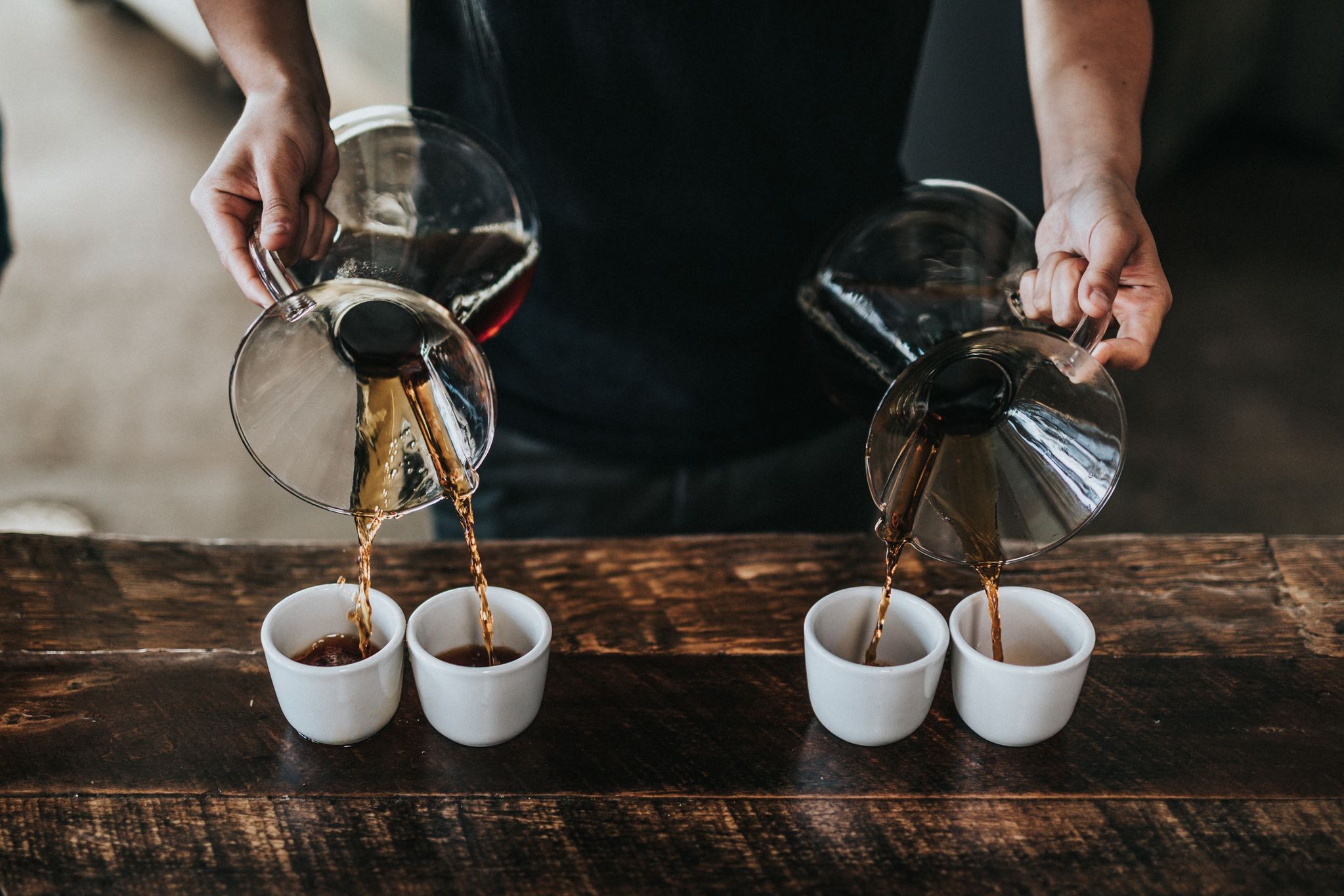
    Melbourne specialty roaster Industry Beans has returned DC Coffee to national supermarket shelves through Woolworths, targeting Australian consumers switching from cafe takeaway cups to home brewing.

    The rollout follows a total overhaul of the brand, which Industry Beans co-founder Trevor Simmons pulled from rival chain Coles after acquiring the business in 2023.

    Canstar survey data of more than 2,100 consumers shows 29 per cent of Australians have stopped buying cafe coffee to brew at home. Another 19 per cent bought a dedicated coffee machine to cut daily spending as the average takeaway cup climbed to $5.90 before plant-milk surcharges.

    Rethinking Supermarket Coffee

    Simmons bought DC Coffee from David Valmorbida after years of acting as its contract roaster. By 2023, the brand’s footprint in Coles had dropped to less than half its original SKU count because of weak sell-through and an absence of dedicated marketing support.

    Industry Beans stripped back the catalog rather than trying to salvage slow-moving specialty lines. The Woolworths range centres on larger pack formats and two high-volume blends, The Darkness and The Duchess, before introducing a third blend called The Swell and an instant coffee offering.

    DC Coffee traces its roots to Caffe Ducale under the Valmorbida family’s Conga Foods business. Former manager Rob Stewart later reshaped the label with street-art packaging, securing national distribution in Coles in 2020 as one of the earliest third-wave brands on mainstream Australian grocery shelves.

    Targeting the Home Brewer

    Specialty roasters across Asia-Pacific long protected premium positioning by keeping their best beans restricted to company-operated cafes or direct-to-consumer subscriptions. Rising living costs and sharper price scrutiny have forced a shift, prompting roasters to compete directly on supermarket shelves against commercial legacy brands.

    DC Coffee is backing the retail rollout with a national promotional push titled Fuel Your Creativity. The brand will track volume performance on the primary blends across Woolworths stores before releasing its instant coffee formats to the same network.

  • Australian Shoppers Trust AI Recommendations over In-Store Retail Staff

    Australian Shoppers Trust AI Recommendations over In-Store Retail Staff

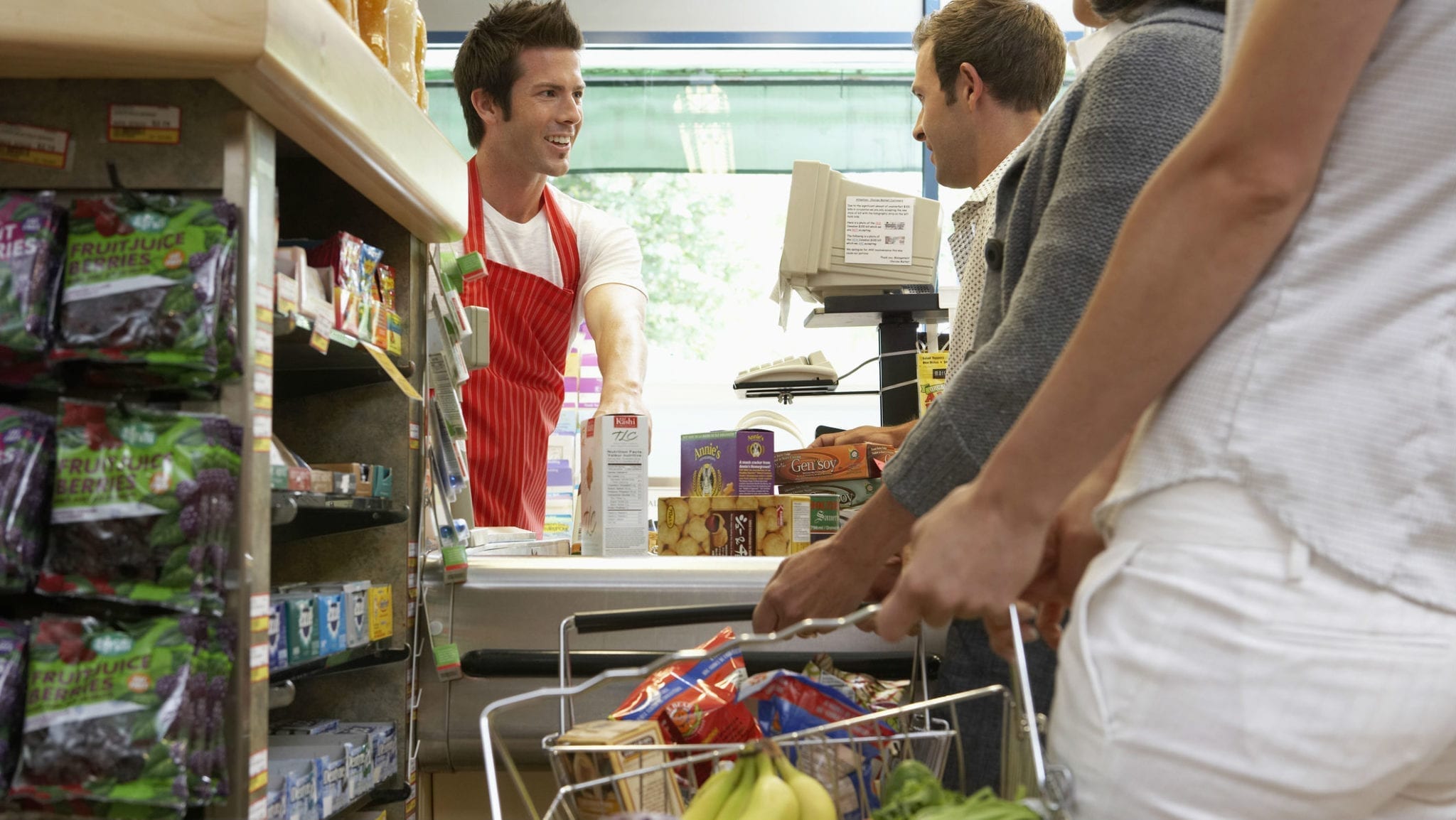
    Australian consumers now place more trust in artificial intelligence for shopping recommendations than in human retail staff, according to new industry research tracking store-floor buyer habits.

    The findings point to a decisive shift in how shoppers research products, compare prices, and finalize purchasing decisions across Australian retail channels.

    The shift away from floor staff

    Shoppers increasingly turn to automated search assistants, chatbot tools, and algorithm-driven recommendation engines before speaking to floor employees. Fast access to product specifications, unvarnished peer reviews, and real-time inventory checks gives digital tools an edge over human staff who may lack deep product knowledge.

    Retail workers face higher shopper expectations as a result. Store visitors often arrive having already researched technical details online, using physical visits primarily to confirm choices rather than seek basic sales guidance.

    What the preference change means for store networks

    Across the Asia-Pacific region, merchants in mature retail markets like Australia, Japan, and Singapore are reallocating technology budgets to support instant customer queries at the shelf edge. Retailers that integrate generative assistants into loyalty apps and in-store digital kiosks capture buyer intent earlier in the shopping cycle.

    Store operators must now decide how to retrain frontline staff to handle complex customer service issues rather than standard product lookup tasks.

  • Australian Retail Profit Lags Sales as Hidden Operating Costs Bite Margins

    Australian Retail Profit Lags Sales as Hidden Operating Costs Bite Margins

    Australian retail sales rose 2.8 per cent in the 2024-25 financial year, but operating profit before tax grew just 1.5 per cent to $38.8 billion as margin pressure intensified.

    Data from KPMG’s Retail Health Index shows that gap widening further into 2026, forcing boards to rethink conventional cost cutting.

    Retailers confronting squeezed margins often reduce store staff hours and trim marketing budgets. Advisory firm Olvera Advisors found these immediate cuts routinely fail to stop profitability leaks, which sit deeper in inventory management, returns handling and supplier contracts.

    Holding Costs and Inventory Drag

    Aged stock sitting in warehouses past 90 days creates an unmeasured drag on working capital. Benchmarking from APQC puts median inventory carrying costs at 10 per cent of value each year. A business holding $5 million in aged stock absorbs $500,000 annually in holding expenses before accounting for final clearance markdowns.

    Supplier renegotiations also remain narrowly focused on unit pricing rather than structural terms. Data from the Payment Times Reporting Regulator shows average retail payment terms at 31 days, though the 95th percentile extends to 77 days. Rebate structures frequently remain poorly tracked at the executive level, echoing findings from the Australian Competition and Consumer Commission’s supermarket inquiry.

    The Multi-Channel Fulfilment Trap

    E-commerce fulfilment and customer returns represent another growing source of unallocated operational losses. Total costs for a single product return average roughly $47 on an $80 basket, factoring in $20.78 for two-way freight, $10 in handling and an average $16 markdown. For a merchant processing one million orders annually, each single percentage point in return rate drains approximately $470,000.

    Similar accounting oversights previously hit Australia’s largest conglomerates. Woolworths paid $217.4 million for an 80 per cent stake in marketplace MyDeal in 2022 before shutting it in 2025 at a cash cost between $90 million and $100 million, alongside a $45 million impairment charge. Rival Wesfarmers similarly wound down its Catch marketplace after channel-level operating costs outpaced unit economics.

    Retail operators now face pressure from commercial lenders to present granular reporting on stock ageing past 90 days, net channel profitability and full-year return costs ahead of the next seasonal markdown cycle.

  • Australia Food Manufacturing Turnover Hits $182.6 Billion

    Australia Food Manufacturing Turnover Hits $182.6 Billion

    Australia’s food and grocery manufacturing turnover rose 5.5 per cent to $182.6 billion in the 2024-25 financial year. Steady consumer demand across supermarket aisles drove the increase.

    Total workforce numbers across processing plants and distribution hubs passed 301,000 people over the 12-month period. That headcount now represents 33 per cent of all manufacturing jobs in the country.

    Squeezed margins and factory payrolls

    The annual State of the Industry 2024-25 report from the Australian Food and Grocery Council shows steady top-line expansion across packaged goods, beverages and daily essentials. Yet the headline revenue growth conceals worsening operational headwinds inside processing facilities.

    Persistent cost pressures and compressed margins are reducing the capital available for factory upgrades, automation and long-term expansion, the council warned. While consumer spending on staples supported turnover, wholesale input prices and elevated running expenses continue to erode net profitability across supply chains.

    Regional production pressures

    Similar margin pressure affects food manufacturing hubs across the Asia-Pacific region. Processors face higher utility bills, freight volatility and stubborn ingredient costs. When consumer-facing brands cannot fully pass wholesale cost increases to supermarket buyers, capital spending plans are routinely deferred.

    Factory operators are now recalibrating capital expenditure budgets for the 2025-26 cycle. They continue to monitor wholesale input pricing ahead of supplier negotiations with national retail chains.

  • Australian Supermarkets Adapt to In-Between Shoppers Seeking Asian Groceries

    Australian Supermarkets Adapt to In-Between Shoppers Seeking Asian Groceries

    Australian mainstream grocers are restructuring their international food aisles as demand from second-generation shoppers erodes the traditional gap between independent Asian grocers and major supermarket chains.

    The shift challenges decades of split retailing, where consumers bought standard household staples at major chains and visited specialty Asian grocers for authentic ingredients.

    Breaking the Specialty Divide

    May Wong, who concluded her tenure as a category manager at Coles Group on August 31, 2026, after seven years managing an Asian grocery store, said the boundary between the two channels is disappearing. Shoppers from second-generation migrant backgrounds increasingly expect mainstream supermarkets to stock the authentic food items that match their cultural heritage.

    Specialty grocers long held a monopoly on authentic imported brands, while major supermarkets focused on westernised pantry staples. Younger shoppers now seek authentic taste profiles without making a separate trip to suburban ethnic markets.

    Shifting Demographics on Mainstream Aisles

    For supermarket operators across the Asia-Pacific region, tailoring shelf space to multicultural demographics has turned ethnic aisles into high-growth territory rather than niche perimeter displays. Major chains in markets with large diaspora populations are expanding direct sourcing relationships with Asian food exporters to meet tighter consumer standards on authenticity.

    Coles and competing Australian supermarket operators will test updated product assortments across metropolitan store networks through the coming retail quarters.

  • Humii Report Finds Flawed E-Commerce Signals Hurt Shopper Trust

    Humii Report Finds Flawed E-Commerce Signals Hurt Shopper Trust

    Almost 30 per cent of online retail refunds take more than three days to reach Australian shoppers, contradicting timeline promises made by 90 per cent of merchants. The finding comes from the 2026 Online CX Report by digital benchmark platform Humii, which tracked interface friction and post-purchase communication breakdowns across major consumer brands.

    Technical systems often report success while customer journeys falter. While automated triggers update internal order statuses instantly, shoppers face unexplained gaps between warehouse label generation, banking settlement cycles and actual parcel movement.

    Interface Habits and Misplaced Features

    Customer expectations increasingly penalise unconventional website layouts. Humii found that 91 per cent of digital shoppers expect live support chat widgets in the bottom-right corner of a desktop screen. When grocer Coles positioned its chat icon on the bottom left, users experienced higher friction locating assistance compared to rival Woolworths, which positioned its tool on the standard bottom right.

    Apparel giant Zara presents a similar design friction by requiring users to scroll product photos vertically instead of swiping horizontally. While the code operates without technical defects, the layout runs against standard touchscreen reflexes established across modern mobile operating systems.

    The Gap Between Fulfilment and Delivery

    Post-purchase messaging creates a wider credibility divide. Mystery shopping assessments revealed that apparel brands, including Ralph Lauren, generated automated dispatch notifications when carriers had merely received initial electronic documentation. Parcels remained uncollected in warehouses while buyers checked empty tracking links.

    Financial processing shows identical friction points. Retail systems mark refunds complete once an internal instruction issues to a merchant payment gateway. Because Australian interbank settlements frequently take up to five days to credit personal accounts, buyers are left contacting support desks to trace missing funds.

    Across regional e-commerce markets, engineering teams continue to optimise for system completion rather than customer receipt. Digital platforms that align notification triggers with physical carrier scans and realistic banking windows reduce inbound customer service volumes without redesigning their underlying tech stack.

  • Koala Revenue Rises 20% to $332 Million as Japan Sales Jump

    Koala Revenue Rises 20% to $332 Million as Japan Sales Jump

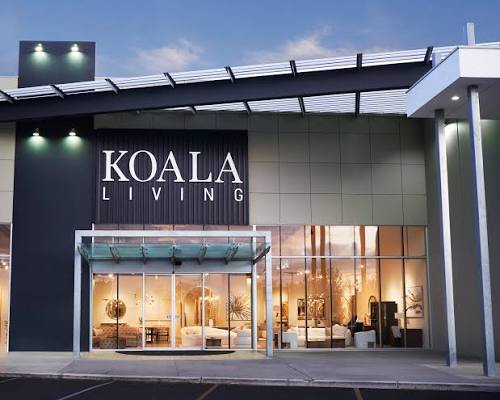
    Australian furniture retailer Koala posted a 20 per cent rise in annual revenue to $332.3 million for the fiscal year ended June 30.

    Growth in overseas markets offset tighter consumer spending at home, lifting pro forma EBITDA by 139 per cent to $27.9 million.

    Japan and American Sales Fuel Expansion

    Domestic sales in Australia rose 10.7 per cent to $166.7 million during the twelve-month period. International divisions expanded at a much sharper clip.

    In Japan, revenue climbed 23.5 per cent to $89.4 million, carried by demand for sofa beds and mattresses. The United States registered the fastest geographic growth, where sales jumped 67.6 per cent to $74.9 million. Koala also entered the United Kingdom during the fiscal year.

    Direct-to-consumer furniture makers across the Asia-Pacific region have spent two years navigating softer home goods demand and volatile shipping rates. Koala’s performance in Tokyo shows that flat-pack formats tailored for compact urban living continue to find traction outside Australia even when consumer sentiment cools.

    Bottom Line and Public Markets

    Operating margins improved across core product lines, supported by new releases in sitting furniture. Constant-currency revenue grew 24 per cent across the group.

    “FY26 was a defining year for Koala,” chief executive and co-founder Dany Milham said, noting the completion of the company’s listing on the Australian Securities Exchange.

    Market attention now shifts to initial sales figures from the United Kingdom and customer uptake of the expanded seating lines in the first quarter of fiscal 2027.

  • Bubs Australia Revenue Reaches $111.9 Million as US Distribution Expands

    Bubs Australia Revenue Reaches $111.9 Million as US Distribution Expands

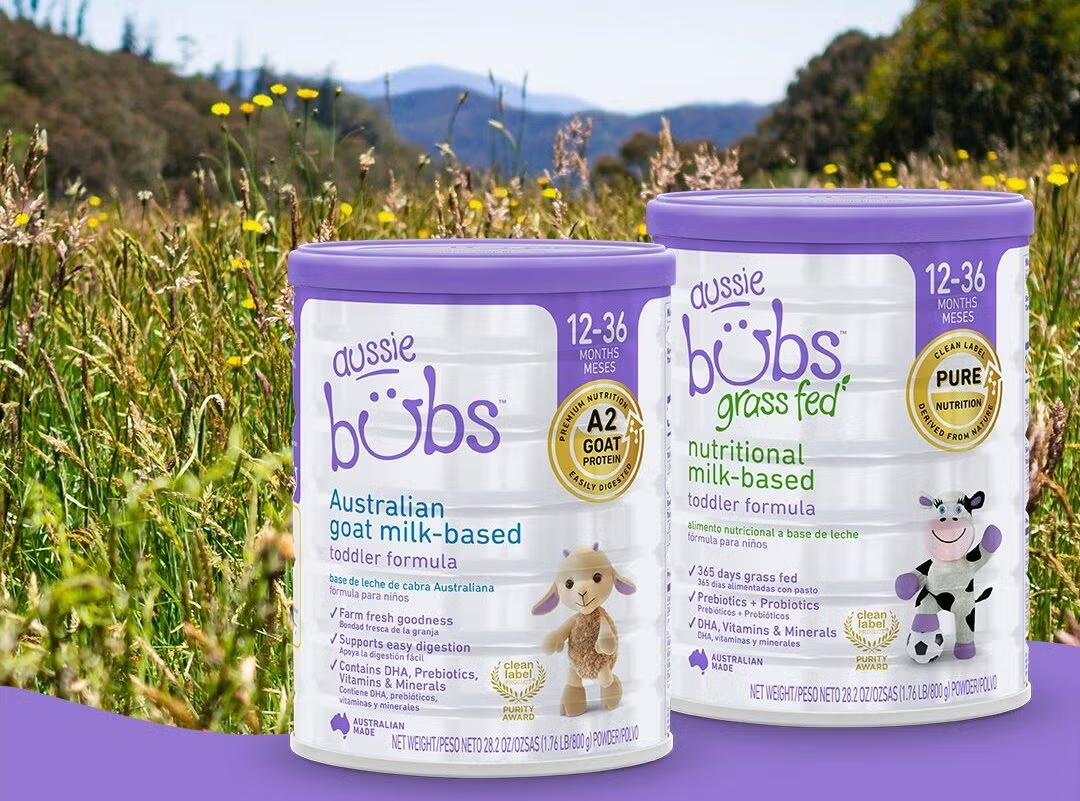
    Bubs Australia lifted group revenue 9.2 per cent to $111.9 million for the twelve months ended June 30, driven by rapid retail expansion in North America.

    Underlying earnings before interest, tax, depreciation and amortisation climbed 338 per cent to $5.3 million. The top-line gain masked tightening margins at the Australian infant formula maker, where gross profit dropped 9 per cent over the period.

    Expansion in the American market

    Sales growth centered on the United States, where revenue rose 24 per cent across the fiscal year. The company widened its physical retail presence to more than 10,000 American stores, turning the market into its primary growth engine outside Australasia.

    Higher distribution scale helped absorb overheads, but rising costs and shifting regional demand checked profitability across secondary territories.

    Margin pressures and regional divergence

    Results across regional markets outside the United States delivered mixed performances. While volume moved through larger overseas retail networks, gross margins contracted under higher cost pressures across the supply chain.

    For dairy and infant nutrition exporters across the Asia-Pacific region, rapid volume growth in Western supermarket aisles continues to balance uneven purchasing patterns across legacy Asian cross-border channels. Maintaining profitability now depends on turning trial into repeat shelf velocity.

    Attention turns to whether the brand can defend shelf space across its expanded 10,000-store US footprint while repairing gross margins in the next reporting cycle.

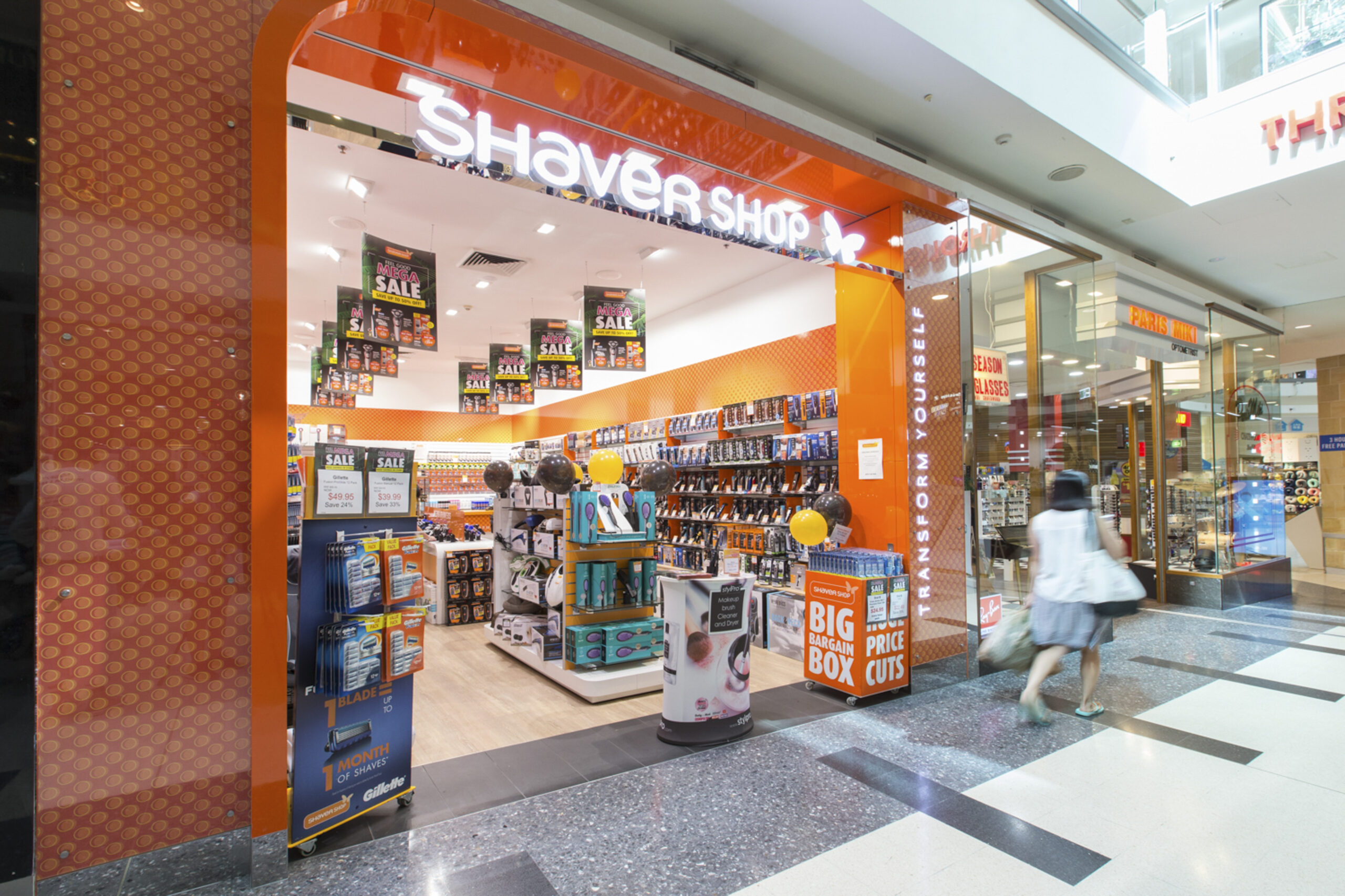
  • Shaver Shop Posts Record FY26 Sales of AU$225.1M Before Early FY27 Slump

    Shaver Shop Posts Record FY26 Sales of AU$225.1M Before Early FY27 Slump

    Shaver Shop generated record sales of AU$225.1 million in the year ended June 30, lifting annual revenue by 3 per cent.

    Gross profit climbed 4.7 per cent to a record AU$104.2 million as the personal grooming specialist leaned on higher-margin private labels to counter inflation.

    Private brand Transform-U drove much of the margin gains, accounting for about 8 per cent of total sales compared with 3.4 per cent in the prior year. Managing director and chief executive Cameron Fox noted that strong operating execution helped offset macroeconomic headwinds that intensified during the second half.

    Store expansion and the early FY27 drop

    The retailer altered its store footprint across the twelve months by opening three new sites and shuttering one underperforming location. That brought the store network to 126 shops at the end of June, followed by a new store opening in Brighton in late July.

    Trading conditions deteriorated immediately after the financial year closed. Sales between July 1 and August 22 dropped 3.2 per cent compared to the prior corresponding period, while like-for-like sales fell 4.3 per cent.

    Management blamed the slow start on heavy promotional discounting pulled forward into June, paired with stock shortages and transport disruptions across supplier networks.

    Margin defence through private labels

    Specialty personal care and electronics chains across the region face tighter household budgets, forcing operators to rely on exclusive brand ranges rather than top-line volume growth. Shaver Shop’s strategy mirrors broader retail trends where house labels provide a vital buffer against freight costs and supplier price hikes.

    Gross margins through the first eight weeks of the new financial year tracked slightly above last year despite the top-line decline. Attention turns to whether supplier shipments stabilise before peak holiday inventory build-up begins in October.

  • It’s Olio Reaches Seven Figures and Targets $2 Million in Online Sales

    It’s Olio Reaches Seven Figures and Targets $2 Million in Online Sales

    South Australian olive oil brand It’s Olio has reached seven figures in revenue three years after launching on an initial budget of $10,000. The direct-to-consumer label now targets more than $2 million in online sales before the end of 2026.

    Founder Alec Randall conceived the business after travelling through Sicily in 2022 and attending local cooking classes. He started commercial operations the following year, focusing on premium olive oil marketing and digital direct sales.

    Cross-border digital distribution

    The business built its initial customer base in Australia before adding distribution across New Zealand and the United States. Online sales provide the core revenue engine, allowing the producer to handle fulfilment and marketing across three separate national markets.

    Self-funded pantry startups across the region increasingly bypass traditional supermarket contracts early in their lifecycles. High grocery shelf fees in major retail chains make pure-play e-commerce a leaner route to prove export demand before pursuing physical wholesale distribution.

    Targets for the current financial year

    Direct export logistics remain the main testing ground for boutique Australian food labels selling into North America and Australasia. Controlling fulfilment costs across multiple shipping zones will decide whether the brand maintains gross margins as volume scales.

    The company is now working to convert its offshore digital traffic into recurring subscriptions, with management targeting the $2 million online sales threshold before the close of the calendar year.

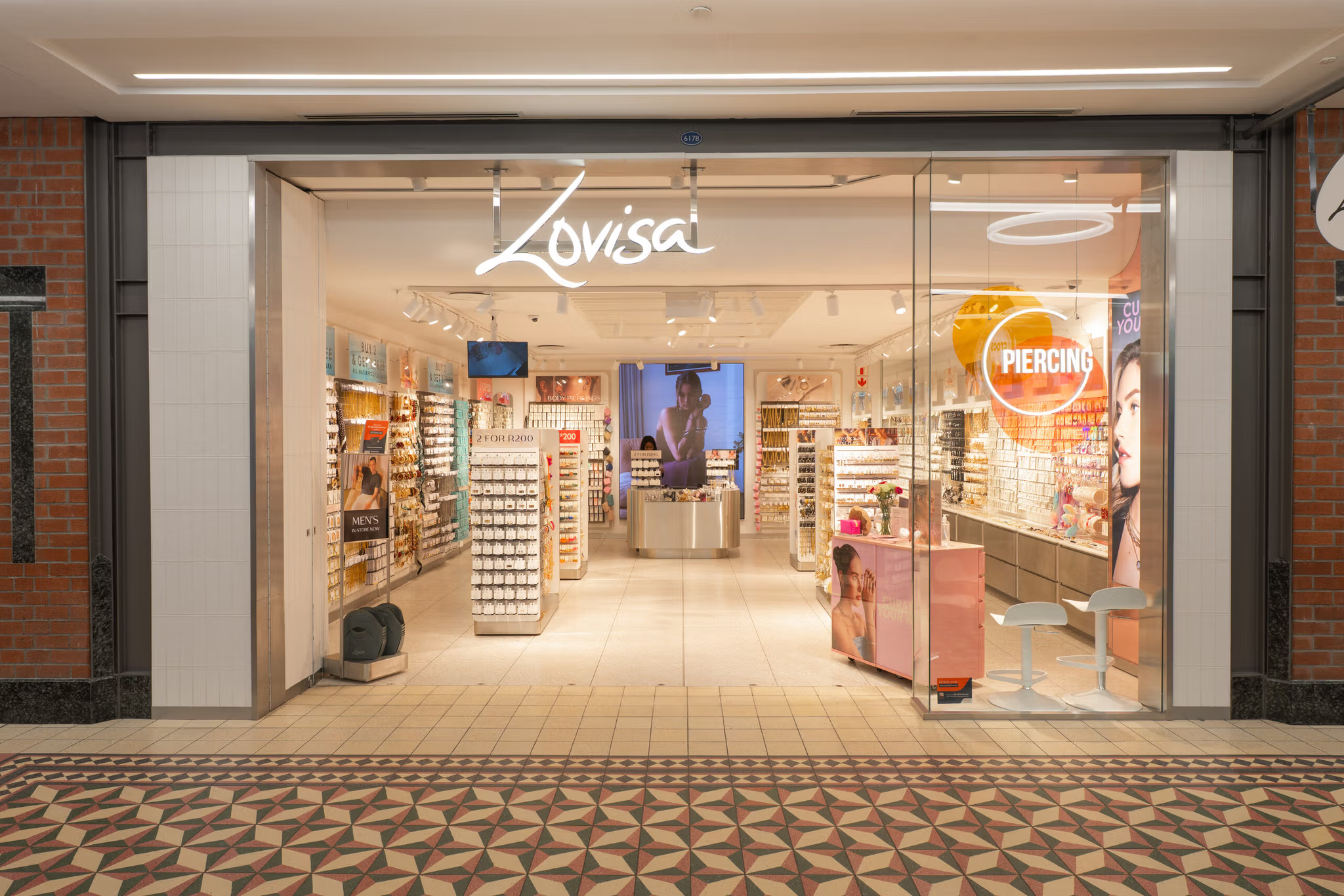
  • Lovisa Hits $938.8 Million in FY26 Sales on Fast Jewellery Demand

    Lovisa Hits $938.8 Million in FY26 Sales on Fast Jewellery Demand

    Lovisa posted double-digit revenue and profit growth for fiscal 2026, generating $938.8 million in total sales across its global store network. The result shows budget-conscious shoppers continued buying affordable accessories despite persistent cost-of-living pressure in Australia and key overseas markets.

    Tightened household budgets did little to slow store turnover. Fast-fashion jewellery continues to capture discretionary spending from consumers who pull back on higher-priced apparel and luxury goods, giving mass-market operators sustained foot traffic across shopping centres.

    Demand across budget accessories

    Lovisa relied on its high-turnover model to drive revenue across its retail footprint. Low price points allowed the brand to maintain transaction volume even as inflation squeezed general consumer spending.

    The performance reflects a broader split in retail spending across the Asia-Pacific region. While big-ticket discretionary categories face softer demand, impulse-driven accessory purchases continue to clear inventory rapidly.

    Market rivals and category pressure

    Competition in the affordable jewellery segment is intensifying across major retail hubs. New challenger brands, including ventures launched by former Lovisa executives, are expanding store networks and targeting the same demographic with rapid product drops.

    Sustaining double-digit expansion will depend on how effectively the chain defends mall real estate and controls store operating costs. Market watchers will track upcoming store rollout milestones and regional trading updates in the next financial reporting cycle.

  • Suntory Oceania Expands Maximus Lineup with Pink Lemonade Sports Drink

    Suntory Oceania Expands Maximus Lineup with Pink Lemonade Sports Drink

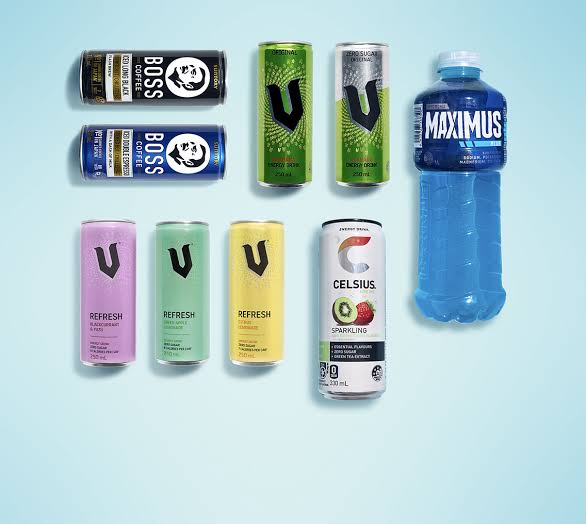
    Suntory Oceania launched a Pink Lemonade variant for its Maximus sports drink brand across Australia. The standard 1-litre bottle carries an RRP of $3.15.

    This addition expands the core beverage lineup. It follows reported incremental volume growth across the regional sports hydration category.

    Category Expansion and Flavor Lineup

    Shipments join existing Maximus varieties on retail shelves, including Blue, Mango Passionfruit, Grape, Red, and Lemonade Ice Block. Retailers are stocking the 1-litre single-serve bottle to capture commuter and athlete demand for high-volume functional drinks.

    Brand teams aimed the release at consumer demand for familiar citrus profiles in hydration. Maximus leans on its value-per-volume pitch against traditional 600ml rivals in convenience stores and supermarkets.

    Oceania Hydration Strategy

    Japanese parent firm Suntory Holdings consolidated its Australia and New Zealand commercial operations to speed up distribution across soft drinks, ready-to-drink options, and functional beverages. Maximus acts as the group’s primary volume driver against global incumbents in the regional isotonic category.

    Across Asia-Pacific, beverage makers face tighter shelf space as retailers cut underperforming SKUs for high-turnover line extensions. Suntory Oceania is pushing mainstream flavor profiles to secure fridge door share in independent petrol and grocery channels.

    Rollouts continue across major Australian retail chains and convenience networks this month. Sales velocity and inventory levels over the spring trading period will determine whether the flavor secures a permanent core ranking.