Tag: Australia

  • Moondarra Expands Dairy Line with Cranberry Vanilla Cream Cheese at Woolworths

    Moondarra Expands Dairy Line with Cranberry Vanilla Cream Cheese at Woolworths

    Australian dairy brand Moondarra Cheese has rolled out a cranberry and vanilla soft cheese across selected Woolworths supermarkets nationwide, priced at $4.20 for a 120-gram tub.

    The product uses the manufacturer’s triple cream cheese base blended with cranberries and vanilla. Alongside the new SKU, Moondarra refreshed the packaging design across its broader line of marinated cheeses to improve shelf visibility in the specialty deli and dairy aisles.

    Supermarket Dairy Competition

    Sweet and savoury combination cheeses have gained shelf space in Australian grocers as producers target entertaining platters and snacking occasions. Woolworths and rival Coles have both reshuffled their specialty cheese sets over the past two years, replacing slower-moving European imports with local flavoured cheeses that offer higher margins and shorter supply chains.

    For Moondarra, the rollout secures valuable facings in Australia’s largest supermarket network. Supermarket dairy aisles remain tightly contested as private-label options squeeze mid-tier branded producers on everyday staples, pushing commercial cheese makers toward higher-value sweet and marinated segments.

    Distribution and Retail Presence

    The new cheese formulation is now available in selected Woolworths stores across the country. Moondarra will monitor sales performance across the network ahead of the key summer entertaining season.


  • New Zealand Children Food Brand Odi Launches Direct Sales in Australia

    New Zealand Children Food Brand Odi Launches Direct Sales in Australia

    New Zealand children’s food maker Odi entered Australia on August 28, 2026. The launch brings direct-to-consumer sales in the brand’s first international expansion outside its home market.

    Domestic retail distribution across New Zealand came first. Now, the company is targeting Australian shoppers through an online-first model.

    Direct Sales Before Supermarket Shelves

    Odi sells directly to households through its website during this initial launch. Later, it plans to secure distribution agreements with nationwide Australian grocery and food retailers.

    This export push tests whether New Zealand brand momentum translates across the Tasman without immediate supermarket placement. Direct shipping builds customer demand data first. That gives the brand use before it negotiates wholesale terms with major supermarket chains.

    Scrutiny on Infant Food Formulations

    Regulators in Australia are paying closer attention to packaged children’s food formulations. Government research found commercial infant and toddler products are major sources of dietary sugar. That finding puts pressure on established FMCG manufacturers to reformulate ranges.

    Retail buyers have responded by reviewing children’s food ranges, opening shelf space for newer independent labels. Direct sales offer New Zealand brands a fast entry point while buyers evaluate these category shifts.

    Odi will run direct fulfillment in Australia while it finalizes retail supply partnerships for a planned nationwide physical store rollout.

  • Shippit Targets Grocery Fleets with NowGo Dispatch Software

    Shippit Targets Grocery Fleets with NowGo Dispatch Software

    Shippit rolled out its NowGo fleet software to fast-moving consumer goods suppliers in Australia, aiming to automate dynamic re-routing across supermarket delivery networks. The Sydney-based logistics provider claims the system lifted vehicle utilisation by 15 per cent and expanded completed drops by 12 per cent.

    Built on historical Australian and New Zealand transport data, the platform manages temperature-controlled loads, fixed dock booking windows, and delivery-in-full, on-time performance targets. The software combines owned vehicle fleets and third-party transport operators into a single dispatch dashboard. Dispatchers reassign delivery stops and adjust routes instantly when vehicles break down or store receiving slots shift, replacing manual spreadsheet adjustments.

    Dynamic Dispatch and FMCG Time Slots

    Supermarket supply chains across Australia enforce strict delivery windows and immediate penalties for missed dock bookings. When a chilled vehicle fails or a store moves a delivery window forward, manual rescheduling across legacy software often forces suppliers to dispatch costly emergency backup vehicles.

    NowGo allows operators to adjust live runs without pulling drivers off the road, according to Helen Studley, Senior Product Manager at NowGo. The platform also includes scenario-modelling tools designed to test fleet capacity ahead of seasonal volume spikes.

    Fleet Pressures Across Regional Supply Chains

    Across Asia-Pacific grocery networks, suppliers face continuous margin pressure from elevated fuel prices, driver shortages, and tighter supermarket service agreements. While regional logistics giants have historically built bespoke tracking tools or relied on fragmented transport management systems, software providers are pushing modular dispatch algorithms to mid-tier suppliers.

    Fleet operators now face the challenge of integrating real-time routing data across mixed subcontractor networks ahead of peak end-of-year trading volumes.

  • Chris Hemsworth Buys Stake in Archie Rose Distilling Co

    Chris Hemsworth Buys Stake in Archie Rose Distilling Co

    Australian actor Chris Hemsworth has acquired an equity stake in Archie Rose Distilling Co, partnering with founder Will Edwards to finance an international retail rollout.

    The Sydney-based spirits producer plans to use the capital injection to enter the United States later this year while introducing three new whiskies across Asia and New Zealand.

    Global push from Sydney

    Hemsworth will work directly on product development at the distillery alongside his co-ownership role. The collaboration focuses on blending three distinct whiskies tailored for regional export markets.

    Archie Rose has built its business on botanical gins, single malts, and rye whiskies in Australia. Securing high-profile backing reflects a broader push by independent Australian craft distillers to secure distribution shelf space in high-margin Asian retail channels and premium hospitality venues.

    Whisky demand in Asia

    Regional consumers across Southeast Asia and East Asia continue to trade up into premium and craft brown spirits. Independent distillers often struggle against established global liquor conglomerates for retail distribution in major commercial hubs without significant marketing support.

    The company plans to complete its initial US market entry before rolling out the three Hemsworth-backed whisky releases to Asian retail partners in the coming months.

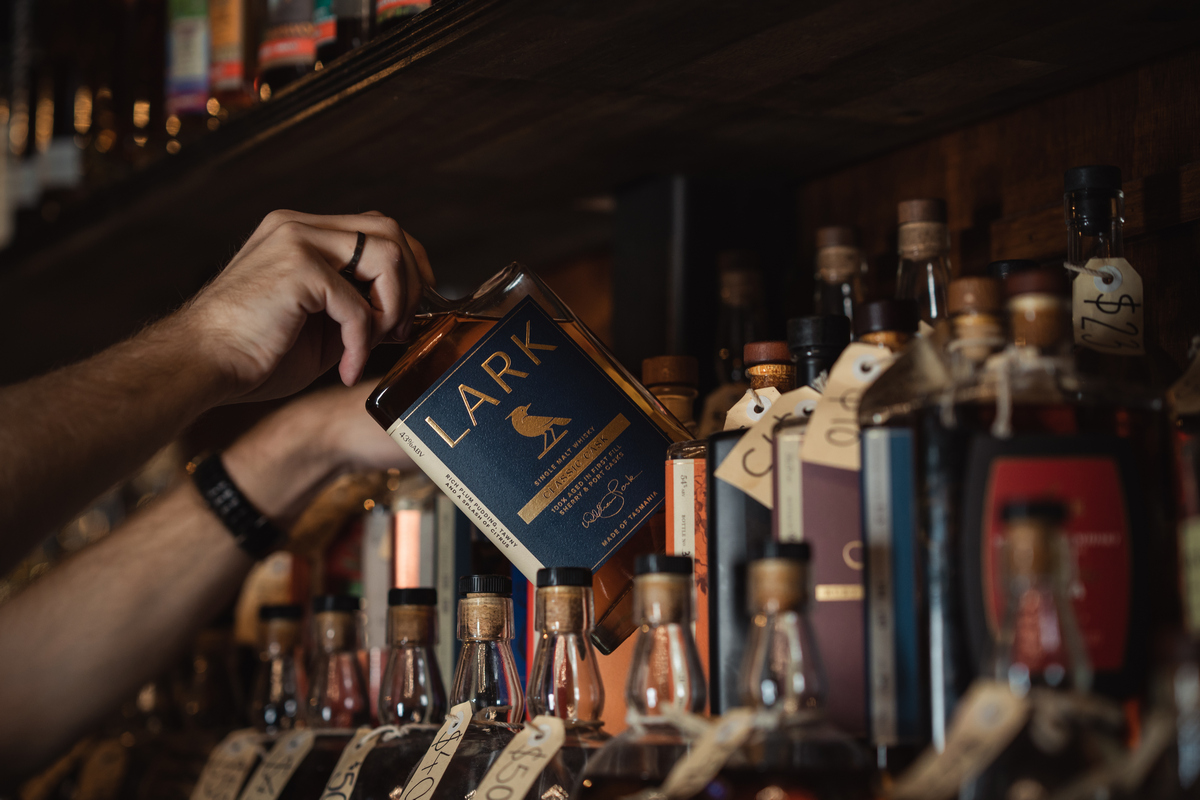
  • Lark Distilling Sales Rise 15% to $18 Million on Asia and Travel Retail Push

    Lark Distilling Sales Rise 15% to $18 Million on Asia and Travel Retail Push

    Tasmanian single malt whisky maker Lark Distilling Co lifted annual net sales 15.1 per cent to $18 million for the year ended June 30.

    Export expansion and global travel retail channels drove the performance, offsetting softer broader consumer spending in mature domestic bottle shops.

    Export Demand Drives Gains

    International sales jumped 69 per cent to $1.8 million during the 12-month period. Global travel retail delivered $2.2 million in sales, representing an increase of 43 per cent over the prior year.

    Lark now distributes its spirits across 10 Asian markets. Regional airport duty-free counters and specialty spirits retailers served as the primary entry points for the Tasmanian brand as it built overseas distribution volume.

    Regional Premium Spirits Shift

    Australian craft distillers are increasingly targeting Asia-Pacific travel corridors to find higher margin buyers for aged stock. Demand for premium brown spirits across North and Southeast Asia has created an opening for niche single malts outside traditional Scottish and Japanese categories.

    Distributors will track whether Lark can sustain double-digit overseas momentum as additional export inventory arrives across its newer Asian accounts in the coming quarters.

  • Flight Centre Posts Record $25.7 Billion Transaction Value as Leisure Slips in Q4

    Flight Centre Posts Record $25.7 Billion Transaction Value as Leisure Slips in Q4

    Flight Centre Travel Group booked a record $25.7 billion in total transaction value for FY26, but fourth-quarter flight disruptions cut underlying pre-tax profit by 4 per cent to $278 million.

    Group revenue rose 2.5 per cent to $2.9 billion for the twelve months ended June 30. Statutory earnings before interest, tax, depreciation, and amortisation increased 8 per cent to $430.6 million, while underlying EBITDA climbed 3.9 per cent to $466 million.

    Middle East Flight Reductions Hit Leisure Bookings

    A $60 million earnings decline in the fourth quarter derailed what had been nine months of steady profit expansion. Managing director Graham Turner said the leisure business was tracking toward $200 million in pre-tax profit before conflict in the Middle East prompted airlines to trim flight schedules.

    Full-year leisure transaction value still rose 7.4 per cent to $12.6 billion, generating $1.4 billion in revenue. Early trading showed signs of recovery, with July transaction values setting a monthly record as seat capacity normalised on key routes connecting the Asia-Pacific region to Europe.

    Corporate Bookings Provide Buffer

    Corporate travel accounts insulated the broader business from sharper consumer pullbacks. Corporate transaction value rose 2.9 per cent to $12.7 billion and revenue gained 3.3 per cent to $1.2 billion, pushing the division’s underlying EBITDA up 24.4 per cent to $275 million.

    Small and medium business unit Corporate Traveller exceeded $5 billion in transaction value for the first time, while the group’s US operations turned in more than US$2 billion. Management is counting on its proprietary booking platforms and cost programmes to protect margins as capacity stabilises across the first half of FY27.

  • Ella Baché Deploys AI Across Retail Operations and Supply Chain

    Ella Baché Deploys AI Across Retail Operations and Supply Chain

    Australian skincare brand and salon operator Ella Baché is rolling out artificial intelligence across its buying, inventory forecasting, and customer management systems. The rollout follows a network-wide shift to omnichannel retail.

    Tracing its origins to 1936, the Sydney-headquartered company operates roughly 150 Australian salon locations alongside its digital retail channels.

    Supply Chain and Digital Pivot

    Chief executive Pippa Hallas said the deployment focuses on practical operational tasks. Automated tools now handle routine data analysis in order planning and customer service. That rollout builds on an operational reset that began when pandemic lockdowns forced the temporary closure of the entire 150-store salon network.

    To survive that disruption, the group built 150 digital storefronts for its therapists and franchise partners. That shift converted the legacy salon chain into a blended digital operator. A dedicated research, manufacturing, and distribution facility in Sydney supports the network.

    Local Manufacturing and Category Pressure

    Local manufacturing relies on domestic ingredients to meet consumer demand for traceable Australian skincare. This integrated setup gives the business direct control over formulations and packaging lines without relying on offshore contract packagers.

    Across the Asia-Pacific personal care sector, heritage skincare brands face competition from fast-turnaround cosmetics labels and expanding invasive aesthetic clinics. Newer rivals chase viral social media trends and quick procedures. Ella Baché is instead leaning into proprietary formulation and non-invasive salon treatments to protect its margin profile.

    Work is now underway to integrate these artificial intelligence tools into internal staff training modules and product development workflows ahead of scheduled product releases.

  • Sigma Healthcare Profit Jumps 22 per Cent as Annual Sales Top $10.8 Billion

    Sigma Healthcare Profit Jumps 22 per Cent as Annual Sales Top $10.8 Billion

    Sigma Healthcare posted a 22.3 per cent rise in annual net profit to $732.3 million for the year ended June 30, lifted by pharmacy additions and GLP-1 prescription volumes.

    Group revenue advanced 15.5 per cent to $10.8 billion, while normalised earnings before interest and taxes climbed 20.6 per cent to breach $1 billion.

    The results reflect the first full operating cycle since Sigma combined operations with discount chain Chemist Warehouse. Chief Executive Officer Vikesh Ramsunder told investors the business now oversees nearly 1,000 pharmacies worldwide, supported by supply-chain integration across wholesale and retail divisions.

    Chemist Warehouse Drives Domestic Momentum

    Australia generated the bulk of earnings, lifting revenue 14.9 per cent to $10.4 billion and normalised operating profit by 18.3 per cent. Chemist Warehouse added 24 domestic sites to reach 561 stores, generating network sales growth of 15.9 per cent and same-store sales gains of 13.4 per cent.

    Sales of GLP-1 weight-loss medications contributed heavily to turnover across the network. While the high-cost treatments carry lower percentage returns, Sigma maintained its Australian gross margin at 17.6 per cent by expanding front-of-store retail lines, introducing more than 470 private-label products during the financial year.

    For retail pharmacy chains across the Asia-Pacific region, Sigma’s post-merger run shows how high-volume discount models can protect margins even as prescription product mixes shift toward expensive, low-margin therapies. It also demonstrates how domestic retail density provides cash flow stability after walking away from risky international takeovers, including Sigma’s abandoned $14 billion tilt at Britain’s Boots chain.

    Synergies and Franchise Pipeline

    Sigma captured $32.6 million in operational savings during the year as it works toward an annual cost-reduction target of $100 million by the 2029 financial year.

    Wholesale franchise networks Amcal and Discount Drug Stores are also rebuilding footprint after years of store rationalisation. Management has assembled an opening pipeline of 82 stores, scheduled to return both banner groups to net store count growth during the 2027 financial year.

  • Australian Certified Organic Sales Hit AU$1.02 Billion

    Australian Certified Organic Sales Hit AU$1.02 Billion

    Australia certified organic sector generated AU$1.02 billion in annual sales during the 2024-25 financial year. The total represents the first time the market cleared the billion-dollar threshold, driven largely by supermarket shelves and household pantry purchases.

    Retail sales for take-home consumption reached AU$657.6 million, climbing 11.9 per cent year on year, according to the Australian Organic Market Report 2026 released by Australian Organic Limited. The growth in household buying outpaced broader packaged grocery volume across major Australian supermarket chains.

    Supermarket Aisles Drive Revenue Gains

    Packaged food and fresh produce accounted for the bulk of retail spend, with shoppers prioritizing chemical-free certifications despite broader inflationary pressures on household food budgets. Certified supply chains kept up with the volume demand, helping standardise shelf placements across national grocery operators.

    The AU$1.02 billion total spans domestic agriculture, food manufacturing and retail channels across the country. Commercial operations continued converting conventional acreage to certified standards to capture premium wholesale margins.

    Wholesale Margins and Export Volumes

    Across the Asia-Pacific region, premium food producers face tight price sensitivity, yet certified organic goods continue to hold distinct price premiums in tier-one retail channels. Australian producers are positioning their certified output against competing high-end food exports from New Zealand and Europe.

    Industry bodies will monitor whether retail volume growth holds through the 2025-26 period as supply contracts renew and private-label organic ranges expand in major supermarket chains.

  • Real Pet Food Expands Fussy Cat Range with Dental Dry Food

    Real Pet Food Expands Fussy Cat Range with Dental Dry Food

    Real Pet Food Company expanded its Australian cat care line with the release of Fussy Cat Dental Defence Ocean Fish, a grain-free dry formula targeting dental health.

    The product uses an engineered kibble shape designed to prompt chewing and reduce tartar accumulation on teeth. Australian-sourced ocean fish forms the core protein base alongside added calcium for bone and tooth maintenance.

    Oral Care in Pet Grocery

    Specialised pet nutrition remains one of the steadiest sub-sectors in Australasian grocery aisles. Supermarket operators continue giving shelf space to functional lines that address specific conditions such as joint health, digestion, and dental hygiene. Fussy Cat competes directly against established premium dry pet food lines across supermarket networks in the region.

    Sourcing and Format Strategy

    Domestic ingredient sourcing gives local pet manufacturers a clear marketing point against imported dry kibble brands. Real Pet Food Company relies on local fish supply to back its grain-free recipe specifications across Australian grocery distribution.

    Retailers will track sell-through rates as the new dental stock hits Australian pet food fixtures over the coming retail quarter.

  • Domino’s Cuts Discounts to Lift FY26 EBIT to $200.1 Million as Asian Earnings Jump

    Domino’s Cuts Discounts to Lift FY26 EBIT to $200.1 Million as Asian Earnings Jump

    Domino’s Pizza Enterprises lifted full-year underlying operating profit 1 per cent to $200.1 million in FY26, curbing heavy discounting and pruning underperforming stores across Asia.

    Total network sales fell 6.8 per cent to $3.87 billion, while group same-store sales dropped 4.1 per cent as the franchisor traded transaction volume for franchisee margin relief.

    Average franchise partner profitability rose 11.3 per cent across the network, pushing free cash flow to $164.1 million. The Brisbane-headquartered company captured $35.3 million in realized savings during the fiscal year toward an annualised target of $67 million, while global corporate overhead fell 5.8 per cent through stricter discretionary spending controls.

    Asia store closures lift regional margins

    Asia delivered the sharpest regional earnings rebound. Underlying earnings before interest and taxes across the Asian business climbed 19.7 per cent despite a 6.7 per cent drop in same-store sales, helped by tighter cost controls and the closure of unprofitable locations, particularly in Japan.

    Performance across Western markets was more mixed. Underlying operating profit in Australia and New Zealand slipped 5.9 per cent alongside a 4.7 per cent drop in same-store sales as the chain reduced promotional price cuts. European earnings rose 2.6 per cent against a 2.2 per cent same-store sales decline, with steady trading in the Benelux markets outweighing sluggish demand in France and Germany.

    Pricing discipline replaces mass vouchers

    The margin turnaround reflects a broad retreat from the low-price delivery wars that eroded quick-service restaurant returns across the Asia-Pacific region over the past three years. Fast-food operators in Japan and Australasia have faced stubborn ingredient costs and high delivery wages, forcing franchise systems to protect store-level solvency rather than chasing top-line market share.

    Executive chairman Jack Cowin said the company deliberately sacrificed short-term order counts to stabilize partner balance sheets. Group chief executive Andrew Gregory will now test whether the chain can rebuild customer order frequency in FY27 through menu execution and clearer base pricing without returning to blanket discount vouchers.

  • Retail Food Group EBITDA Drops 31% as Network Trims 29 Stores

    Retail Food Group EBITDA Drops 31% as Network Trims 29 Stores

    Retail Food Group posted a 31.4 per cent drop in underlying EBITDA to $20.3 million for FY26 as weak consumer spending dragged down domestic sales.

    Domestic network sales across its franchise brands dropped 3.1 per cent to $489.5 million, while same-store sales slipped 0.7 per cent over the twelve-month period.

    The company, which owns Gloria Jean’s, Donut King, Crust, Brumby’s and Beefy’s, closed 35 underperforming stores and opened six new locations during the financial year. That left the group with a net reduction of 29 outlets across Australia as management trimmed non-core real estate.

    Rolling Out Firehouse Subs

    To reverse the sales slide, the franchisor is leaning into regional expansion and imported quick-service formats. It launched the US sandwich chain Firehouse Subs in Australia during the year, opening the debut site at Mt Gravatt in Queensland. The location produced the highest opening-day sales of any international Firehouse Subs restaurant to date, the company said.

    Retail Food Group plans to have four Firehouse Subs locations trading by December. Management aims to expand that footprint to 15 stores by the end of next year.

    Cost Targets and Franchise Margins

    Multi-brand franchise operators across Asia-Pacific face squeezed household discretionary budgets and rising labor costs, pushing holding groups to prune marginal mall sites in favor of higher-volume fast-food models. The group spent recent years re-engineering legacy bakery and coffee networks to stabilize store-level profitability following earlier portfolio contractions.

    Executive chairman Peter George said trading conditions remained difficult throughout FY26, with macroeconomic pressures hitting the second half. The company is now pursuing between $5 million and $7 million in cost savings in FY27, with capital focused on franchise partner economics, cash generation and the planned December store openings.

  • Australian Retailers Face Margin Squeeze as 59% of Shoppers Shun Full Price

    Australian Retailers Face Margin Squeeze as 59% of Shoppers Shun Full Price

    Australian retailers must overhaul operational discipline as 59 per cent of shoppers now refuse to pay full price, according to Grant Thornton Australia’s 2026 Retail Dealtracker analysis.

    Data from Australia Post’s FY26 fourth-quarter e-commerce update shows 46 per cent of consumers will switch stores for a discount, while 32 per cent report increased price sensitivity.

    The advisory firm identified five interconnected capabilities required to protect margins: customer proposition, earnings quality, operating model, technology, and organizational capability. Mounting pressure on household budgets means customer retention, repeat visits, full-price sales ratios, and customer lifetime value now carry far more commercial weight than raw top-line revenue growth.

    Protecting Margins Beyond Top-Line Sales

    Converting sales into profit requires tighter control over inventory, customer acquisition costs, returns, and shrinkage. Tam Goldin, financial advisory partner at Grant Thornton Australia, noted that many merchants need to strengthen fundamental disciplines, including clearer pricing and operating models that scale without adding unnecessary overhead.

    Shrinkage remains a critical operational drain for large physical store networks, while changing wage settings require closer management of store labor deployment. Retailers must track where value is lost across working capital rather than relying solely on headline profit and loss statements.

    Restructuring Operations and Supply Chains

    Scaling businesses frequently outgrow founder-led workflows, creating operational bottlenecks across supply chains and merchandising. Kirsten Ridgway, management consulting partner and head of retail at Grant Thornton Australia, pointed out that the largest opportunities emerge when companies simplify decision-making and align capital spending with actual customer demand.

    Supply chain models require flexible sourcing and inventory visibility to handle fluctuating lead times and freight expenses. Technology investments must resolve specific operational problems, starting with foundational systems such as point-of-sale platforms, integrated inventory tracking, and clean customer data before deploying artificial intelligence for demand forecasting and pricing.

    Across Asia-Pacific markets, rising labor costs and deal-seeking consumer behavior have forced merchants to pivot away from rapid floor-space expansion toward customer lifetime value and strict loss prevention. Retailers now face the next reporting cycle with shrinkage rates, full-price sales percentages, and inventory turns serving as the decisive operational numbers to track.

  • Global FMCG Brands Reshape Experiential Deals Across Asia-Pacific

    Global FMCG Brands Reshape Experiential Deals Across Asia-Pacific

    Global consumer goods manufacturers are restructuring major event partnerships across Asia-Pacific, shifting capital into high-traffic sports and cultural fixtures that drive direct product trial.

    Treasury Wine Estates flagship label Penfolds took an event supporter role at the Formula 1 Australian Grand Prix at Albert Park in March 2026. The four-day motorsport contract replaced its five-year tenure at the Melbourne Cup carnival, aligning the label with international broadcast reach during the 75th anniversary of its Grange vintage.

    On-Ground Services and Market Reach

    Consumer goods conglomerate Procter & Gamble expanded its multi-market Olympic platform to integrate retail campaigns directly with athlete usage. During the Milano Cortina 2026 Olympic Winter Games, the company ran its Champions Clubhouse across the Milano and Cortina villages, servicing more than 3,500 athletes with grooming, hair care and recovery facilities.

    The group distributed product kits across 25 corporate labels, including SK-II, Head & Shoulders, Oral-B and Gillette Venus. That athlete-facing footprint converts into localized supermarket campaigns across the region, including an ongoing partnership with eight-time Olympic gold medallist Lisa Carrington in New Zealand.

    Community Anchors and High Volume

    Pernod Ricard brand Absolut continues to direct festival marketing toward high-throughput consumption formats. The spirits maker pairs rapid-service cocktail menus with cultural events, including its long-running alignment with the Sydney Gay and Lesbian Mardi Gras in Australia and massive activations at Coachella in North America.

    Alcohol and personal care groups across Asia-Pacific are increasingly moving away from passive perimeter signage. Instead, brand owners want dedicated on-premise pours and physical service lounges that put physical inventory straight into shoppers’ hands.

    Brand teams now face the next test of this experiential spending when race organizers release spectator attendance and paddock hospitality figures for the upcoming grand prix calendar.

  • Cettire Net Loss Widens to $8.5 Million as US Tariffs Hit Sales

    Cettire Net Loss Widens to $8.5 Million as US Tariffs Hit Sales

    Australian luxury platform Cettire posted an annual net loss of $8.5 million for the year ended June 30, more than trebling its deficit from a year earlier.

    The loss widened from $2.6 million in the previous financial year as sales revenue dropped 3.2 per cent to $718.4 million. Gross revenue fell 2 per cent, though it posted a small gain when measured on a constant currency basis.

    Tariff Friction and Middle East Disruption

    Active customer numbers fell 8 per cent to 605,000 during the twelve-month period. Management attributed the decline to weaker demand in the United States and a deliberate cut in paid marketing expenditure.

    The platform ran into direct regulatory friction in its largest market after US authorities removed the de minimis import duty exemption. In the second half of the financial year, consumer sentiment in high-growth Middle Eastern markets also weakened as regional conflict disrupted cross-border trade.

    During the period, US tariff changes, including the impact from the removal of the de minimis exemption, contributed to ongoing challenges in our largest market.

    Dean Mintz, founder and chief executive of Cettire, said US tariff refunds helped ease pressure late in the financial year.

    Momentum Outside North America

    Business outside the United States delivered better results, with sales revenue rising 14 per cent across the rest of the company’s geographic footprint. The expansion beyond North America cushioned the top-line decline and delivered market share gains across secondary regions.

    Pure-play luxury aggregators in Asia-Pacific have spent the past two years wrestling with excess inventory and fading post-pandemic demand. Cettire’s reliance on cross-border drop-shipping makes it unusually sensitive to customs thresholds, putting operational execution under scrutiny as border rules tighten.

    Attention now turns to trading updates in early fiscal 2027 to see whether the 14 per cent growth rate outside the US can offset lingering drag in North America.