Tag: Australia

  • SunRice launches cook-in flavour rice sachets

    SunRice launches cook-in flavour rice sachets

    Australian rice company SunRice has launched Flavour Your Rice, the brand’s first range of cook-in flavor rice sachets.

    The easy-to-use paste sachet adds flavor to ordinary rice by using it as a base during the cooking process, making an easy side dish or a meal on its own, said SunRice.

    Flavor Your Rice is available in three different flavors – Indian Spice, Thai Coconut, and Lemon, Chicken, and Herb.

    “Aussie consumers are increasingly looking for products that offer taste and convenience, without compromising on quality,” said Andrew Jeffrey, Head of Marketing, SunRice.

    “Flavour Your Rice is a quick and easy flavor solution bringing authentic Indian and Thai flavors to Aussie tables,”

    There are three sachets per pack and the product is sold in Woolworths and independent grocers nationwide.

  • Kraft Heinz gives away bulk ketchup to Melbourne small businesses

    Kraft Heinz gives away bulk ketchup to Melbourne small businesses

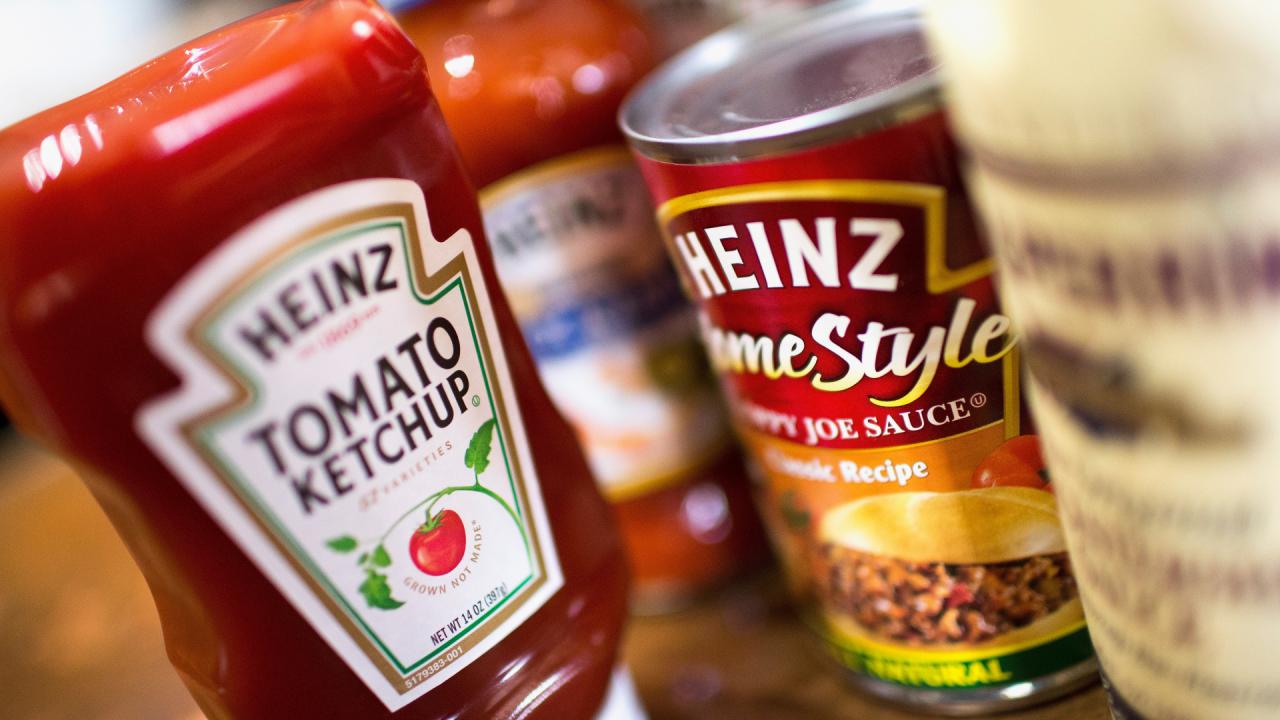
    Food and beverage company Kraft-Heinz is giving away 12-liter cartons of Heinz Tomato Ketchup to small business owners in Melbourne, including burger restaurants and other quick-service restaurants.

    As restrictions ease across Victoria, the company says it wants to help business owners affected by Covid-19 lockdowns get back on their feet with complimentary product deliveries. 

    “We know that the Melbourne restaurant industry has been hit hard by the latest lockdowns, with small, independent businesses particularly impacted,” said Marisa Jones, head of marketing foodservice ANZ at Kraft Heinz.

    “Whether you’re a burger bar, cafe owner or run another quick-service restaurant, we want to provide our foodservice community with an offer of assistance,” she said. 

    Eligible businesses are those located in the Melbourne metropolitan area, of 30 employees or less, privately owned and not part of a franchise group. The offer will be limited to one carton per business, who do not have to be an existing customer of Kraft Heinz.

    Business owners can apply for this offer from Kraft Heinz here until June 30 or until supplies last. Each delivery will consist of a carton of Heinz Tomato Ketchup containing three 4-litre bottles. 

  • Aldi named top supermarket by customers

    Aldi named top supermarket by customers

    Aldi has been deemed 2020’s supermarket of the year in Roy Morgan’s latest customer satisfaction awards.

    Roy Morgan CEO Michele Levine said supermarkets become some of the most trusted brands in the country last year due to the integral role they played during the first national lockdown, keeping Australia’s communities safe and fed.

    “Many businesses, and particularly those in retail and hospitality, faced a major threat to their way of doing business in 2020 as a nationwide closure early in the year forced many to close – at least temporarily,” said Levine.

    “The good news for the businesses hit hardest with the lockdowns was that they proved effective with most of Australia spending the remainder of 2020 in relative normality compared to the rest of the world.”

    The survey is calculated from an annual survey of 50,000 Australians and previously led Aldi to win the best supermarket in 2016, 2014, and 2012.

    “We are hugely excited to be recognized as Australia’s Best Supermarket by Roy Morgan. We are continuously striving to deliver the highest quality products at the lowest prices possible, and it’s clear this commitment is resonating with customers year in and year out,” said Aldi Australia group director Simon Padovani-Ginies.

    “We are proud to receive this award and aim to continue to live up to shoppers’ expectations that ALDI is Australia’s best supermarket by delivering exceptional value every time they shop.”

    Aldi was also named ‘mobile phone service provider of the year’ for 2020, beating out traditional telcos.

  • Beyond Meat and Coles launch plant-based meatballs

    Beyond Meat and Coles launch plant-based meatballs

    Beyond Meat has partnered with Coles to bring its plant-based meatballs into Australia.

    Beyond Meatballs will be sold across more than 300 Coles outlets with an RRP of $15. The launch comes at a time when the country is experiencing a rising demand for plant-based products.

    “We’ve seen demand for plant-based meat continue to grow as consumers look for new ways to incorporate plant-based meat options into their diets,” said Ihab Leheta, VP international business development at Beyond Meat.

    “The launch of Beyond Meatballs in Australia marks a new milestone towards our goal in making great-tasting, nutritious and sustainable plant-based meat more accessible to everyone,” said Leheta.

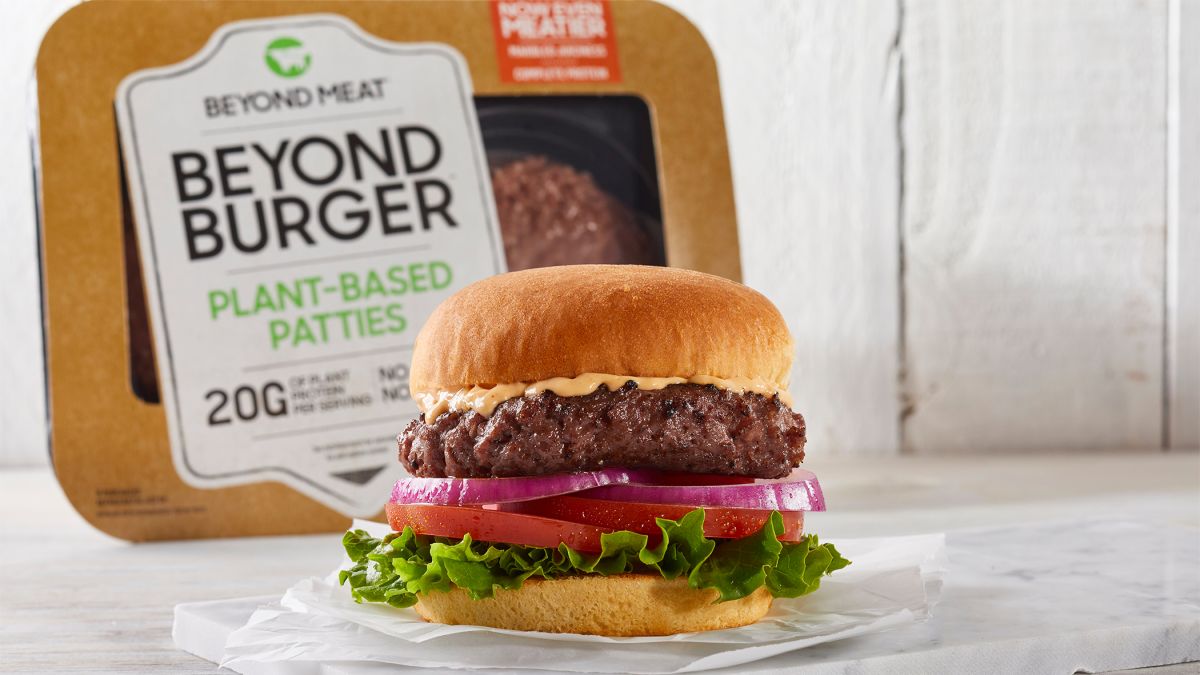
    Beyond Meatballs will join the brand’s existing plant-based products sold in Australia, Beyond Burger and Beyond Mince. Beyond Meat first launched its products in the country in 2018 in partnership with Coles.

  • Coles trialling BYO container scheme in Melbourne this week

    Coles trialling BYO container scheme in Melbourne this week

    This week Coles Group is looking to trial a bring-your-own container scheme at its supermarket in Fitzroy, Melbourne, which will allow customers to fill up on shampoo, coffee, and soaps in a more environmentally sound way.

    The announcement, which will see customers able to use their own containers for select ‘scoop and weigh’ products, came ahead of June 4th’s World Environment Day.

    “To achieve our goal of being Australia’s most trusted retailer and creating long-term shareholder value, you can’t do that if you’re not going to be sustainable,” Coles’ chief sustainability, property and export officer Thinnus Keeve said.

    “We’re under no illusions we’ll need to work together to achieve some of these targets, we cannot do it ourselves.”

    And, according to Keeve, the trial is part of its larger push to reduce the number of plastics it uses company-wide – which saw the company sign on as a founding member of Australia, New Zealand and Pacific Islands Plastic Pact, and investigating the benefits of a local plastics recycling facility in Victoria.

    The facility could recycle old soft plastics into oils that can be used to produce new soft plastics.

    “We are committed to innovating when it comes to packaging so that where we can’t eliminate packaging and plastic, we are ensuring it’s contributing to the circular economy by being produced with recycled content where possible, as well as being recyclable,” Keeve said.

  • Subscription service Beer Cartel to sell shares to public

    Subscription service Beer Cartel to sell shares to public

    Craft beer retailer, Beer Cartel, is gearing up for an initial public offering in Australia, allowing customers to own a stake in the business.

    The alcohol delivery business aims to raise $1.5 million through equity crowdfunding with Birchal to fund its growth and improve its logistics, website and offer.

    Founded in 2009 by Geoff Huens and Richard Kelsey, Beer Cartel currently offers over 1000 craft beers from breweries worldwide. With 20-30 new beers being added weekly, many exclusive to its website and Sydney store.

    “While buying shares in Beer Cartel will probably give you bragging rights to your mates, our 100,000 loyal customers and 12 years of successful online retailing prove we mean business,” said Kelsey.

    “As a part-owner of the country’s biggest craft beer bottle shop, not only will you be able to share in our success – you’ll also be given excellent perks. Imagine having personal access to an Aladdin’s Cave of craft beers from all over the world, at special ‘investor prices’,” he added.

    The business is expecting a huge interest after it recorded a 75 percent increase in revenue over the past year during Covid. Sales were not just limited to its range of craft beers; it also saw an increase in its mixed craft beer packs and monthly beer subscription.

    Huens said that while Covid put pressure on the company last year, the uptick in sales allowed it to employ hospitality workers who lost their jobs because of the pandemic.

    “It was also very satisfying to support craft breweries that were taking a massive financial hit because so many hospitality venues were closed or had severe capacity limits put in place. Our success had a flow-on effect to many families and small businesses around Australia,” he added.

  • Vietnamese restaurant chain Roll’d launches FMCG range through Coles

    Vietnamese restaurant chain Roll’d launches FMCG range through Coles

    Vietnamese restaurant chain Roll’d, has rolled out a range of pantry staples at Coles, allowing customers to recreate restaurant favoritesnoo at home.

    Starting this month, shoppers can now purchase the same ingredients and condiments used at the restaurant, including a range of four sauces – Sticky Hoisin, Spicy Hoisin, Nước Mắm, and Chili Mayo (at RRP $6) – rice papers ($4), vermicelli noodles ($3.50) and rolling trays ($10).

    According to Roll’d, the products are simple to use, free of preservatives, additives or gluten and suitable for vegetarians and vegans.

    In addition, customers can scan the QR code at the back of any Roll’d product to access tutorials and recipe ideas designed to suit different skill levels.

    “Teaching Australians to roll their very own Roll’d Vietnamese Soldiers through this new Coles grocery partnership is a natural extension for us beyond the traditional QSR arena,” said Bao Hoang, Founder and CEO, Roll’d.

    “We’re excited to be sharing our authentic Vietnamese eats and recipes to the wider community, going into homes, lunchboxes and onto dinner tables with fresh, family eats options that are healthy and guilt-free.”

  • Tesla To Buy More Than $1 Billion Of Australian Battery Minerals A Year

    Tesla To Buy More Than $1 Billion Of Australian Battery Minerals A Year

    Tesla said it expects to spend more than $1 billion a year on battery raw materials from Australia given the country’s reliable mining industry and responsible production practices. Robyn Denholm, chair of the U.S. carmaker, said on Wednesday that Australia, which is rich in minerals used for batteries like lithium and nickel, is poised to benefit as developing supply chains for electric vehicle batteries and the green energy age focus on environmental, social and governance (ESG).

    “We expect our spend on Australian minerals to increase to more than $1 billion per annum for the next few years,” Denholm, an Australian, told a Minerals Council of Australia event.

    Tesla already sources three-quarters of its lithium feedstock from Australia and over a third of its nickel, Denham said, without specifying a dollar figure.

    “Australian mining companies do have a good reputation, great expertise, professionalism and are preferred by manufacturers increasingly concerned about meeting both today’s and the future’s ESG requirements,” she said in Canberra.

    The comments are in line with a new policy underway by U.S. President Joe Biden’s Administration to rely on allies to supply of the bulk of the metals needed to build electric vehicles.

    The U.S. will then focus on processing those metals domestically into battery parts, part of a strategy designed to placate environmentalists, two administration officials with direct knowledge told Reuters last month.

    Australia, alongside Canada and Brazil, are among the countries expected to benefit.

    Australia’s exports of hard rock lithium known as spodumene are expected to hit A$1 billion ($773 million) this year while its nickel exports are expected to be valued at A$4 billion, government figures show.

    Tesla also supplies batteries to Australia to store energy captured from rooftop solar panels which shore up reliability in its energy network. Australia has the world’s highest per-capita density of rooftop solar panels.

  • Tyson Foods to launch plant-based foods in Australia

    Tyson Foods to launch plant-based foods in Australia

    Tyson Foods, the largest meat processor in the US, says it plans to launch plant-based products in Asia Pacific, including Australia.

    A range of three products will go on sale in Malaysia imminently under the First Pride brand – frozen Bites, Nuggets and Strips made with regionally sourced ingredients including bamboo fibre, soy protein and wheat protein. They will be halal certified.

    Tyson Foods said in a statement it would expand the range into other selected markets across the Apac region through retailers and online during the coming months.

    This is the first time the company has introduced plant-based products in Asia-Pacific. The company will go head to head against Impossible Foods, Nestle and Beyond Meat, along with  Omni-branded products from Hong Kong-based plant-based startup Green Monday.

    Demand for plant-based foods is surging across Asia Pacific, with manufacturers seeing a leap in sales during the Covid-19 pandemic.

    Data from Euromonitor cited by Tyson Foods predicts alternative proteins could account for 11 percent of the global protein market by 2035. APAC retail sales of meat substitutes reached US$16.3 billion last year and are expected to exceed $20 billion by 2025.

    Tan Sun, president at Tyson Foods APAC, said the company was targeting consumers embracing flexitarian diets.

    “Our plant-based launch will complement our existing assets across Thailand, Malaysia and Australia where we offer a range of products from poultry to beef.”

    He said the Asian market is a natural fit for this category with traditional plant-based products like tofu already entrenched in the culture. “The key to meeting consumer preferences with new plant-based protein is through innovation and making locally relevant products that taste great, which is our expertise,” he said.

    “Our new product expansion delivers on taste and quality, giving consumers a modern take on familiar tastes, local flavors and texture.”

    Tyson Foods says the flavors of products and package sizes will vary from country to country but would be “priced competitively”. The initial range sold in Malaysia will be sold in 420g bags priced at RM19.90 (US$4.81). They will be launched initially in retail stores, but a foodservice range will be developed later in the year.

    David Ervin, VP of alternative protein at Tyson Foods said the company’s global culinary network and scalability positions it well to replicate the success it has had in the US with plant-based foods in Asia Pacific.

  • Nokia and Optus deploys Australia’s first integrated antenna

    Nokia and Optus deploys Australia’s first integrated antenna

    Nokia announced the deployment of Australia’s first Interleaved Passive Active Antenna (IPAA) in collaboration with Optus. Together, Nokia and Optus deployed the first IPAA in Yeerongpilly, Brisbane. The solution helps ease site-related challenges which accelerate the introduction of 5G services across the country.

    As operators look to rollout 5G, finding space on existing towers and rooftops for new massive MIMO active antenna equipment poses a significant deployment challenge for operators. Long delays in acquiring permission for site upgrades; the potential strengthening of the supporting structures and potentially higher rental payments to landlords, can in combination seriously delay operators, such as Optus, in getting 5G services to their customers.

    Nokia’s IPAA solution was developed in collaboration with CommScope. It will allow Optus and other operators to upgrade existing sites to 5G by simply replacing their existing antennas with a similar-sized unit that supports all legacy technologies as well as 5G massive MIMO active antenna, all in a single compact solution. By utilizing this solution, Optus can overcome many deployment challenges that can typically hinder the introduction of 5G.

    Lambo Kanagaratnam, Managing Director of Networks at Optus, said: “We’re committed to keeping our customers connected and at the forefront of 5G. By partnering with global technology leaders like Nokia, we continue to bring the best global innovations to our customers. The introduction of the IPAA into our network infrastructure will help us speed up the deployment of our 5G network by addressing space and structural capacity constraints.”

    Rob Joyce, Chief Technology Officer of Australia and New Zealand at Nokia, said: “We’re delighted to be partnering with Optus to bring our unique IPAA solution into play in the Australian market. The IPAA is an advanced technical solution to tackle the problems of finding space on towers and rooftops for 5G upgrades. Operators can now simply replace an existing antenna with Nokia’s IPAA solution to upgrade the site and at the same time, introduce 5G; it couldn’t be simpler.”

  • Beef prices rise as global supply gets ‘very tight’

    Beef prices rise as global supply gets ‘very tight’

    Beef prices are reaching record levels in some international markets with localized disruptions – including droughts and increased consumer demand in some countries – exerting a “dramatic impact” on global trade, according to Rabobank.

    In its Q2 Beef Quarterly research, the bank says a fundamental shift is underway in international beef market dynamics creating a “very tight” global market for beef cattle.

    The report’s co-author, Rabobank senior animal proteins analyst Angus Gidley-Baird, says local factors include the post-drought herd rebuilding in Australia which has reduced the number available for slaughter, and soaring demand in the US as restaurants reopen after Covid-related trading restrictions. Meanwhile, Chinese consumers are eating more beef.

    “Given the growth in demand (for beef) and global trade, pressures created in the system now mean that what may once have been considered slightly abnormal seasonal conditions (for example) are now causing major shifts to markets,” the report says.

    In the US, wholesales prices in April were running 18.5 percent higher than those of April 2019 and retail prices were up by 11.5 percent.

    “This is the result of a number of factors, including renewed competition between foodservice and retail triggered by the reopening US economy, combined with grilling season, high consumer incomes, and strong exports,” he said.

    In Australia, successive years of drought have forced farmers to liquidate stock resulting in the country’s smallest beef cattle herd in 30 years. East Coast cattle slaughter was down 30 percent in April, for example. These factors underpinned a 30-per-cent year-on-year surge in young cattle prices in February last year and a further 20 percent last February.

    But it is not all bad news for local farmers, said Gidley-Baird.

    “While lower volumes and higher prices make competing in the global market more difficult, the tight market situation is working in Australia’s favor and creating less resistance to our high prices,” he said.

    “We believe that current cattle prices in Australia will ease as cattle numbers increase and producer demand dissipates. However, as the supply chain overcomes the disruption here and consumers adjust their price expectations, we believe the market will adjust and a new baseline will be established.”

    In China, efforts to increase local beef production are failing to match increasing demand from consumers, forcing the country to rely on imported beef which is in short supply and commanding a higher price. Many Chinese consumers have switched from pork to beef after an outbreak of African swine fever.

    “While part of the beef consumed as a substitute for pork and will shift back when pork production recovers, we expect strong Chinese beef demand to remain as new markets have been established,” said Gidley-Baird.  “This will continue to drive Chinese beef imports from the global market.”

    Australia’s beef exports were down 22 percent in April and are running 11 percent below the five-year average. China accounted for just 17 percent of that, down from 24 percent in 2019.
  • Yum! Brands buys Australian tech startup Dragontail

    Yum! Brands buys Australian tech startup Dragontail

    Fast food corporation Yum! Brands, the US parent of KFC, Pizza Hut, and Taco Bell, has purchased Australian tech startup Dragontail for US$93.5 million.

    Yum! Brands’ acquisition of Dragontail will take the startup’s emerging technologies in-house in addition to its kitchen order management and delivery software.

    According to CFO Chris Turner, the move would allow the US company to scale Dragontail’s artificial intelligence (AI) technology globally across its operations.

    “With Dragontail, we expect to tap into the power of AI to accelerate and further enhance our delivery technology capabilities, especially at Pizza Hut, and optimize the end-to-end food preparation process,” said Turner.

    Dragontail’s AI-based solution automates the kitchen workflow and incorporates it with the process of dispatching drivers, it also allows customers to track their orders. In addition, this technology can also operate with external food-delivery vendors.

    “Yum! Brands and Dragontail have been working in a fruitful collaboration for years,” said Ido Levanon, MD of Dragontail.

    “Dragontail’s board fully supports this transaction, which it considers to be an attractive opportunity for its shareholders. It will also provide Yum! Brands with innovative technology.”

  • Australia’s Zip looks to drive deeper in Asia, may consider US listing

    Australia’s Zip looks to drive deeper in Asia, may consider US listing

    Australia’s second-biggest buy now, pay later (BNPL) firm Zip Co Ltd is exploring a bigger push into Asia and a potential U.S. listing, the company told Reuters on Tuesday.

    After gaining a toehold in Southeast Asia last month through a stake in Philippine firm TendoPay, Zip Chief Executive Larry Diamond said the company is now “actively looking at Singapore, Malaysia, Thailand, Philippines and India”.

    Zip’s big focus remains the United States, the biggest market in BNPL space where its unit Quadpay is driving the growth.

    As their home turf matures and race heats up in a sector where customers pay in installments without any interest for their online purchases, Zip and its Australia-listed rivals Afterpay and Sezzle are rushing to tap new growth markets and add investors.

    “The consideration to list on the Nasdaq or have some form of dual listing makes sense and ticks quite a few boxes,” a Zip spokesperson said. However, the idea is “only at a very early stage” and there are “no hard or firm plans”.

    Rivals Afterpay and Sezzle too have been keen on a U.S. debut. Swedish rival and Europe’s most valuable startup Klarna, which has also expanded beyond the continent, is also rumored to be eyeing the US equity market.

    The rapid growth of these loss-making companies in a largely unregulated market has also attracted traditional financial firms, with PayPal Holdings launching its BNPL service last year and Australia’s largest bank set to enter this summer.

    While the business is an attractive alternative to credit cards, concerns have been raised by consumer protection groups and some investors over the lack of regulation with many BNPLs opting for “soft” credit checks.

    BNPLs in Australia, where adoption is high, are not bound by consumer lending laws since they do not charge interest in most cases. Britain is currently forming a framework around BNPL.

    Zip’s plan to expand in Asia follows its decision on Monday to take full ownership of a BNPL firm each in Europe and the Middle East.

  • Sydney startup wins seed funding to expand ‘bagged’ cocktail range

    Sydney startup wins seed funding to expand ‘bagged’ cocktail range

    Ready-to-drink cocktail startup Sophisticated Cocktail Co has successfully completed another seed funding round.

    According to the company, the funds will be used to drive a greater retail presence nationwide and in three international markets by the end of this year.

    The startup has also recorded strong growth in its first six months via its online e-commerce platform as well as a number of independent liquor stores across NSW, the company reports.

    Launched late last year, the cocktails are packaged in sustainable stand-up pouches with a range of premium Cosmopolitans, Margaritas, Espresso Martinis, and Pina Coladas.

    Online alcohol sales spiked last year, and with an increase in people who prefer to drink their cocktails at home, founder and CEO of Sophisticated Cocktail Co, Vicky Lyon, said she identified a gap in the market for large-scale premium batched cocktails that could be served anytime and anywhere.

    “Everyone loves a cocktail, but not everyone has the know-how or means to make one,” said Lyon.

    “We have noticed that our customers tend to serve our cocktails at events such as dinner parties, picnics, boats, camping, or on weekend trips away. At $7.50