Tag: Australia

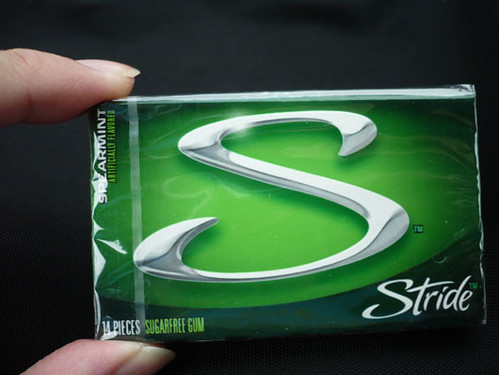
  • Stride launches four new chewing gum flavours in Australia

    Stride launches four new chewing gum flavours in Australia

    Sugar-free chewing gum brand Stride is to add four new flavors to its range in Australia this month.

    The four new options are Mango Peach, Lim Passionfruit, Lemonade, and Cool Peppermint. Stride’s new range will be available exclusively at Coles and Coles Express stores from tomorrow (May 10) at RRP $3 per bottle.

    “We’re eager to unleash Stride chewing gum in Australia, delivering an enjoyable chewing experience via four delicious long-lasting flavors,” said Paul Chatfield, senior marketing director at Mondelez International ANZ.

    Launched in 2007, Stride was created by Mondelez International-owned Cadbury. The chewing gum range now consists of 20 flavors, including its Stride 2.0 line.

  • Vodka-based drinks lead 40 per cent surge in RTD sales

    Vodka-based drinks lead 40 per cent surge in RTD sales

    Ready-to-drink sales have recorded double-digit growth over the past year, primarily driven by vodka-based drinks, according to Liquor Marketing Group (LMG).

    In a 12-month period starting from March 2020, the RTD category achieved 40.2 percent growth in dollar sales across the group’s stores, which include Bottlemart, SipnSave, Harry Brown, and Thirsty Camel. RTD sales in this year’s first quarter across the stores surged 39.3 percent compared to the previous quarter.

    Meanwhile, the vodka subcategory saw the strongest demand with a 72.3-per-cent increase, followed by bourbon and seltzer.

    “LMG’s dollar sales growth for the category has continued to be higher than the total market average,” said Scot Hayman, national merchandise manager for beer, spirits, and RTDs at LMG.

    “This trend has been consistent in each state and for all RTD segments.”

    The strong performance of RTDs sales was recorded in WA, with more than 50-per-cent growth, followed by NSW with 44.7 percent.

    According to Hayman, the strong performance of RTDs sales can be attributed to the increasing demand for healthier options.

    “RTDs with low and zero sugar, light RTDs – particularly in vodka and gin, and Seltzer align with this trend and have given shoppers a reason to rediscover and re-engage with RTDs, while simultaneously attracting new buyers across different demographics and life stages,” said Hayman.

  • Accenture acquires Australia Electro 80 to expand digital OT footprint

    Accenture acquires Australia Electro 80 to expand digital OT footprint

    Accenture has acquired Electro 80, a leading provider of operational technology (OT) for resource clients in Australia, including mining, energy, engineering, construction, and utility companies. The acquisition expands Accenture’s local digital OT capabilities, which help asset-intensive companies make manufacturing and production operations safer and more efficient. The acquisition also strengthens Accenture’s local capabilities for Industry X, which helps clients digitize their manufacturing, operations, and engineering.

    The acquisition comes at a time when Australia’s resources industries are looking to undertake significant transformation following the operational disruption caused by the pandemic.

    Founded in 1987, and headquartered in Perth, with offices in Brisbane and Melbourne, Electro 80 provides automation, electrical, instrumentation, safety, networking, and industrial IT services, as well as turnkey solutions encompassing the design and support of equipment, installation, and commissioning, through to operations support and client training. Electro 80 brings more than 100 employees with longstanding OT experience to Accenture.

    “Resources and asset-intensive companies are increasingly looking for ways to deliver more with less and, at the same time, in a more sustainable way,” said Tara Brady, market unit lead for Accenture in Australia and New Zealand. “Digital and automation technologies will be fundamental in delivering these outcomes and we are delighted to have Electro 80 on board.”

    Sergej Divkovi, Electro 80’s managing director said, “Combining our team’s deep digital and OT expertise with Accenture’s end-to-end capabilities presents immense opportunities for our employees and clients. As part of Accenture, we will bring integrated solutions at scale that transform the way capital projects are planned, managed and executed. These can help new and existing clients drive new revenue and growth.”

    “We are thrilled to welcome the Electro 80 team into our resources practice, which helps clients digitize and optimize their operations at scale,” said Glenn Heppell, Accenture’s resources lead for Australia and New Zealand. “Electro 80 brings to Accenture a strong industry footprint with clients in priority industries. By working together with Electro 80, we can ensure our resource clients can better detect and address quality issues, more accurately prevent machine failure in their operations, and most importantly, innovate for the future.”

    Accenture’s acquisition of Electro 80 follows other investments across Australia and New Zealand in the past 18 months, including supply chain and logistics consulting firm GRA, cloud-native solutions provider Olikka, SAP and cloud solutions technology firm Zag, data analytics and supply chain management company Icon Integration, business strategy and econometrics firm AlphaBeta and specialist government consultancy Apis Group.

  • Aldi Australia targets food in drive to eliminate waste to landfill

    Aldi Australia targets food in drive to eliminate waste to landfill

    Aldi Australia has taken another step toward more sustainable local operations, announcing it is committing to zero waste to landfill by 2025.

    The plan, according to Aldi, is to first focus on reducing food waste to landfill by 2023 by expanding segregated waste collection at stores and doubling food donations across its business, while executing on closed-loop recycling opportunities within Aldi’s supply chain.

    The commitment follows Aldi’s plan to power its operations entirely with renewable energy, and trials of instore recycling services to help consumers to reduce their waste footprint for items such as coffee capsules and soft plastics, as well as harder to recycle items such as batteries.

    “Every present and future action is taken to achieve our zero-waste commitment has been carefully considered to ensure the solution is both viable and impactful,” said Aldi Australia corporate responsibility director Daniel Baker.

    “Our commitment will see the business reduce the amount of waste created and reuse or recycle materials to cease unnecessary waste from being sent to landfill. It is our intention that, collectively, these actions will make a difference.”

    Minister for the Environment Sussan Ley said she is hopeful Aldi’s commitment will have a flow-on effect across its supply chain and through to consumers.

  • Wine marketplace Vivino launches in Australia

    Wine marketplace Vivino launches in Australia

    Wine marketplace Vivino has launched commercial operations in Australia, offering 50 percent reduction on commissions to local wineries for the remainder of this year.

    The online marketplace operation will be based in Sydney, NSW, and led by James Fildes, GM of Vivino Australia.

    Vivino now has more than 800,000 users in Australia and more than 51 million users globally. Australian users of the app will now be able to buy local wines as well as continue to share ratings and recommendations of wines they try.

    “It’s been a tough couple of years for winemakers and merchants in this market, but we’ve seen remarkable resilience in the domestic economy,” said Fildes.

    “This industry deserves a break, and Vivino can help Aussie winemakers by showing our users more of their wine, based on each individual’s unique taste and price preferences. Our data is unmatched.”

    Besides the discounts, Vivino also provides local producers data via its Merchant Dashboard illustrating how consumers interact with their brands. The insights will help winemakers and brands to identify their customers and prospects and drive sales.

    Fildes said the platform had proven its model internationally and could quickly provide new revenue streams for local wine producers.

    Vivino is now the world’s largest online wine marketplace and the most downloaded wine app. The concept allows wine enthusiasts to rate and share views on wine, which allows the app to use community data to make personalized wine recommendations, helping consumers discover new brands and blends.

  • Youfoodz begins selling groceries online

    Youfoodz begins selling groceries online

    Ready meals business Youfoodz has begun selling groceries essentials for home delivery, alongside Seasonal Fruit & Veg Boxes, amid high demand for online groceries during COVID-19.

    Youfoodz’s Grocery Essentials, includes a selection of grocery items, from proteins such as chicken breast, mince, Porterhouse steak, and Tasmanian salmon, all of which are under $12, to eggs, milk, and vegetables.

    The convenience meals business said the range is “premium yet affordable” and will allow customers “to purchase all their fresh food from one place”.

    “In this time of unprecedented uncertainty and disruption many Aussies are doing it tough and as a business Youfoodz have a duty of care to play a small part in supporting the local community, customers, partners, and suppliers to ensure they come out the other end ok – if not better,” the convenience meals business said in a statement.

    “That’s why Youfoodz have boosted production capability, are continuing to develop and introduce new products, as well as taking an active role in supporting great initiatives.”

    The decision to pivot into online groceries is likely in response to changing shopping behavior prompted by COVID-19.

    Last week at Coles Q3 results, CEO Steven Cain noted that consumers are doing more home cooking and baking during the lockdown, and convenience meals are taking a hit.

    Cain said that Coles, which is a stockist of Youfoodz ready meals, has seen people shopping fewer times per week, and buying more when they shop.

    “With fewer trips, you get fewer impulse items being purchased,” Cain said.

    “Home cooking is a more economic way to feed the family than buying convenience meals or impulse items.”

    Cain noted that consumers are eating more fresh food, with veg sales at the highest penetration they have ever been.

    Youfoodz is also taking advantage of increased demand for fresh produce, with a selection of Fruit & Veg boxes available, ranging in price from $44.95 to $69.95.

    Chief executive Lance Giles said the concept for Fruit & Veg Boxes came about when a local supplier felt the hit when restaurants and cafes slowed trading due to Coronavirus.

    “I received a call from Michael, one of our key suppliers, and the director of V One. He explained how his business had been significantly affected by COVID-19 and that he was days away from having to lay off the majority of his workforce,” Giles said.

    “After helping each other grow our businesses for many years, I felt there must be a way to help. That’s how fruit and veg boxes was created.”

    Youfoodz grocery items and fresh produce are sold online alongside the ready meals range, as individual items are as part of The Ultimate Grocery Box, but are packed separately for delivery. Discounts are offered if ready meals are bought alongside the grocery box.

  • Asahi takes on $1bn coffee market with AllPress acquisition

    Asahi takes on $1bn coffee market with AllPress acquisition

    Asahi Beverages is cementing itself as a local leader in the beverages market with the announcement of its foray into the $1 billion fresh coffee market.

    The business has snapped up Allpress Espresso, a global coffee brand that has operations in Australia, New Zealand, the UK, Japan, and Singapore.

    Established by Michael Allpress in Auckland over 30 years ago, the brand first came to Australia in 2000 and is now recognized around the globe, selling more than 1500 tonnes of coffee beans worldwide each year.

    Asahi Beverages Group CEO Robert Iervasi (pictured above) is confident that the acquisition puts Asahi Beverages in a powerful position in the local market at a time when Coca-Cola Amatil is moving under European ownership.

    “We’re the multi beverage supplier of choice in Australia … and we believe we can bring a better product and better service to consumers,” Iervasi told Inside FMCG.

    AllPress will continue to run as a standalone business with Asahi supporting the brand’s growth through its extensive customer relationships and expertise in the consumer goods space.

    Currently, the bulk of AllPress’ business is the supply of roasted coffee beans to boutique cafes and restaurants, but Asahi has big plans to grow the brand’s presence, including thorough expansion into licensed venues and grocery stores.

    AllPress has already produced a canned cold coffee range and sells ready-to-pour coffee shots in bottle and bag form. While its portfolio features around 10 proprietary blends, its flagship Allpress Espresso Blend and A.R.T Espresso Roast comprise over 80 percent of sales.

    The business also has a strong direct-to-consumer offer online and through more than a dozen Allpress cafes, including in Melbourne and Sydney.

    Allpress CEO Vaughan Magnusson told Inside FMCG that the two companies share the same values and expectations on quality and that Asahi is the perfect partner to support the growth of the business.

    “They are the right organization to take Allpress to the next level,” he said.

    Under Asahi ownership, AllPress will also continue to expand the DTC business.

    Iervasi told Inside FMCG that Asahi has confidence in the brand because of its ability to deliver a premium coffee experience and superior customer service.

    “AllPress has a commitment to flavor, quality customer service, and a strong track record of growth,” he said.

    While no financial details of the deal were disclosed, Iervasi confirmed that the 240+ full-time staff at AllPress will remain, with management untouched and Michael AllPress remaining as an ambassador, and the day-to-day operations will not be affected.

    “No one’s losing their jobs,” Iervasi said.

    After welcoming CUB to the fold last year, Iervasi said Asahi is committed to supporting and creating jobs in Australia and New Zealand and expanding beverage offerings.

  • Australia wine exports to China almost wiped out

    Australia wine exports to China almost wiped out

    Australian winemakers shipped just A$12 million ($9 million) of wines to China in the four months from December to March, from A$325 million a year earlier, industry figures showed, confirming that hefty new tariffs have all but wiped out their biggest export market.

    The figures from industry body Wine Australia on Thursday show the swift impact of measures taken by China’s commerce ministry and the country’s anti-dumping probe into imports of Australian wines last year.

    The figures also put a dollar value on a broader geopolitical dispute between Australia and its biggest trade partner which has spread to the sugar, lobster, barley, and coal and copper ore industries.

    From December to March, the period after China said it was investigating the Australians on suspicion of exporting wine at a loss to gain market share, or “dumping”, Australian wine shipments collapsed to almost nothing and stayed there at the start of 2021, the figures showed.

    That marked the end of a years-long run of double-digit growth in Australia-China wine exports, by dollar value, which lasted into October before crashing the following month, according to the figures.

    For the year to March, sales to mainland China, which takes nearly a third of Australian wine exports, fell 24 percent to A$869 million. The next biggest export market was the United Kingdom, up by a third to $461 million as winemakers redirected exports there.

    “They were out to play political games, they wanted Australia to get on its knees, unfortunately, we said no,” said Bruce Tyrrell, managing director of Tyrrell’s Wines, in the Hunter Valley north of Sydney, which previously sent up to a quarter of overseas sales to China.

    “We’ve got countries like U.S., UK, Canada, the traditional markets. We’ve now got to increase our distribution in the counties we deal with,” he told Reuters by phone.

    The value of wine exports to the United States rose 4 percent to A$432 million in the year to March, the Wine Australia figures showed.

  • Coles embraces AI for fresh produce management

    Coles embraces AI for fresh produce management

    Coles has partnered up with Finnish tech provider RELEX, to replace manual ordering systems for fresh fruit and veg with AI-enabled, cloud-based tech designed to improve efficiency and reduce waste.

    The technology will be rolled out in all 850 Coles stores throughout the country, and in seven fresh produce distribution centers.

    The RELEX platform will integrate with Coles’ existing in-house analytics system, which has already been rolled out to provide forecasting for other non-fresh categories, chief information officer Roger Sniezek said in a statement.

    “This will enable an improved customer offer by not only taking into account past purchases but also factoring weather and local community events into the forecasting algorithms,” he said.

    This move from Coles is just the latest example of Australia’s grocery behemoths embracing a new, tech-enabled future of retail.

    Last week, Woolworths announced it has paid $223 million to increase its stake in data analytics business Quantium from 47% to 75%, while also ramping up its use of the technology to help shape its strategy and interact with customers.

    Woolies has also recently made a multimillion-dollar investment into Melbourne startup Marketplacer, through its venture capital firm W23. And, Marketplacer is set to build its new online empire.

    This is all part of a broader shift in the sector, exacerbated by the COVID-19 pandemic. Speaking to SmartCompany last week, Marketplacer co-founder and chief Jason Wyatt said the pandemic was a “catastrophic event that forced behaviors to change overnight”.

    For retailers, that meant perfecting — or even creating from scratch — their e-commerce offerings overnight. And, as the economic impact continues, it’s never been more important to know your customer and remain competitive.

    However, Kevin Gunn, Coles’ executive general manager for central operations and transformation, said centralizing the supermarket chain’s replenishment model has been on the cards for more than a decade.

    Fresh produce is one of Coles’ “most complex supply chains”, he explained in a statement, with short shelf life, seasonality, price elasticity, and diverse growing seasons presenting a suite of unique challenges.

    Using AI technology is intended to help the grocery giant expand the range and availability of produce, and simplify processes for both internal teams and suppliers.

    But, Gunn also pointed to the environmental benefits. Centralised ordering should reduce waste on existing products, and minimize waste on new ranges, “which is important to us as Coles aims to become Australia’s most sustainable supermarket.”

  • Construction starts on Amazon Australia HQ in downtown Melbourne

    Construction starts on Amazon Australia HQ in downtown Melbourne

    Property company Charter Hall Group has begun the construction of the $1.5 billion 555 Collins Street precinct which will house online retailing giant Amazon’s new headquarters in Melbourne.

    Stage 1 of construction, scheduled for completion by early 2023, is worth $750 million and comprises a 48,000sqm premium office tower. A second office tower of 32,000sqm will include premium food and beverage retailers as well as a health and wellbeing hub.

    The company held the groundbreaking ceremony yesterday, attended by Victorian treasurer Tim Pallas, lord mayor Sally Capp, Amazon Web Services MD, ANZ, Adam Beavis, Charter Hall MD and group CEO David Harrison, Charter Hall Office CEO Carmel Hourigan and construction partner Lendlease GM Victoria Bill Alexandrakis.

    “Melbourne has a rich community of innovators, and we are looking forward to bringing Amazon’s growing local workforce to 555 Collins Street so we can continue to invent and innovate on behalf of customers across our Amazon and AWS businesses in Australia,” said Beavis.

    “555 Collins comes with a 6 Star Green rating and is constructed under a carbon neutral framework, which will contribute to helping us reach our goal of net zero carbon emissions by 2040.”

    Lord mayor Capp said the construction will provide 1500 jobs for Victorians. The city’s economy is recovering and the new project “will be a catalyst for further investment” in the CBD.

    “This is significant for Melbourne and incredible news for jobs and our highly skilled workforce – this investment will contribute billions of dollars to the Victorian tech economy in the next 10 years and cement our position as the home of innovation in the nation,” said Pallas.

    Charter Hall worked with architectural company COX Architecture and Gensler.

  • Australia More Telecom acquires Powercom Pacific

    Australia More Telecom acquires Powercom Pacific

    More Telecom announced its acquisition of national internet and phone provider, Powercom Pacific, substantially increasing the company’s SME customer base. More Telecom is one of Australia’s most successful and longest-running NBN providers with a sister retail business, Tangerine Telecom.

    Powercom Pacific owns several brands including Powercom, Montimedia and QTelecom and all customers will be migrating to More Telecom.

    All Powercor Pacific staff will be moving with the business and maintain ongoing employment with More.

    More Telecom General Manager, Andrew Branson, said the acquisition strengthens the More business which is expanding in both customer numbers and product offers.

    “The More business consistently seeks exciting expansion opportunities and with Powercom, we identified a business with complementary cultural and business models.

    “The Powercom customer base consists of long term, loyal, small business owners who want excellent service and we are confident we can deliver on this front,” said Branson.

    More Telecom has also expanded its SME reach via the launch of other business services such as More Payments and More Bookkeeping.

    More Telecom has also invested in building a strong business offering a full white label solution to other telcos and IT firms and has become Australia’s top white label NBN provider.

    The More Telecom and Tangerine Telecom business model works on a B2B/B2C business model delivering more efficiency and faster speeds due to the balanced bandwidth loading between the business peak hours during the day and the consumer peak hours during the evening.

  • Subway Australia launches 24-seven trading

    Subway Australia launches 24-seven trading

    Fast-food chain Subway Australia has unveiled a 24 hours express pick-up service in Bald Hills, Brisbane, ahead of a broader national rollout.

    Customers can order their foods via the app or using a third-party provider and collect their purchases at an express pick-up window.

    “Over the past year, through Covid we have seen a change in the way people are eating Subway,” said Subway country director Geoff Cockerill.

    “More people are ordering through third-party delivery providers than ever before – and more people are choosing to place express-pick-up orders. With shift workers, more remote working, and added delivery options, Subway is proving a popular choice for late night and early morning orders.”

    After testing it at the Bald Hills store, Subway will roll out more 24-hour pick-up windows across Australia.

  • James Reyne sings praises of new Coopers Australian IPA

    James Reyne sings praises of new Coopers Australian IPA

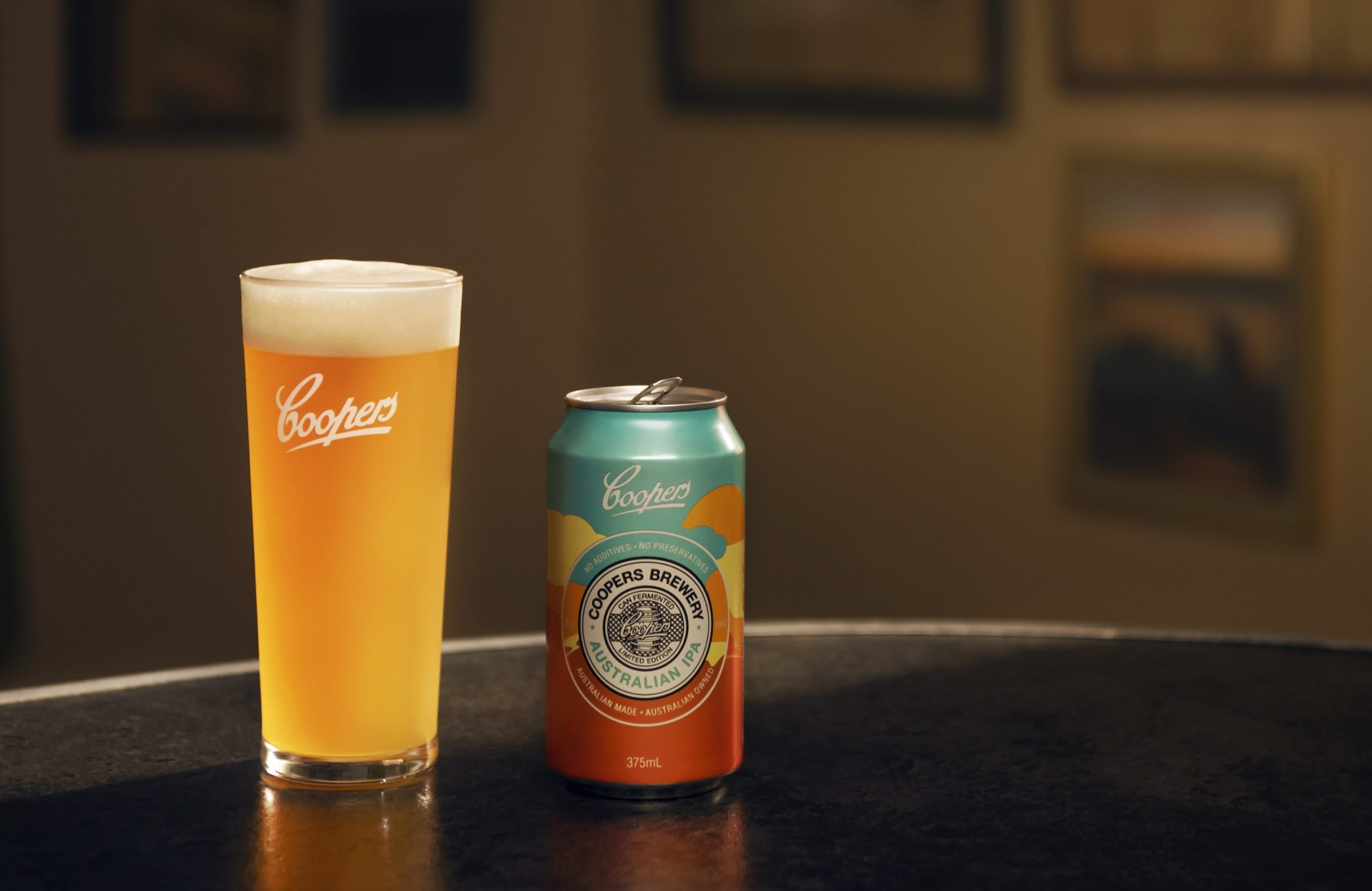
    Brewer Coopers has rolled out a limited release Australian IPA in kegs and 375ml can format, backed by a marketing campaign fronted by legendary Australian singer James Reyne.

    Coopers Australian IPA is made with local hops with citrus notes such as mandarin and orange as well as piney and passionfruit characteristics, according to the brewer. It has an ABV of 6.5 percent and a bitterness level of 40 IBU.

    “We’ve come up with a great-tasting Australian IPA that will suit any occasion,” said Coopers MD and chief brewer, Dr Tim Cooper. “We’re very mindful about when to bring out a new beer and an enormous amount of time goes into getting it right.”

    The campaign featuring Reyne was filmed at the Silverton Hotel in Broken Hill. The singer will also perform at several trade events in April.

    Reyne previously participated in the Coopers Live, Loud and Local series which was launched last year to support pubs and musicians recovering from the Covid-19 shutdowns.

    Coopers Australian IPA will be sold at bottle shops from late April.

  • Covid-led baking craze inspires new flours from McKenzie’s Foods

    Covid-led baking craze inspires new flours from McKenzie’s Foods

    Australian food maker McKenzie’s has met the demand of consumers after seeing more Aussies baking and cooking at home since the Covid-19 pandemic arrived. The company has expanded its single alternative flour range and unveiled a new special purpose flour range.

    “We’re proud to be able to offer such a large variety of flours to our consumers and inspire them to experiment in the kitchen and unlock the power of alternative flours,” said McKenzie’s marketing manager, Bianca Piscopo.

    The alternative blended flour range includes Bread & Pizza Flour, Cake Flour, Cookie Flour, and Pancake Flour. The Bread & Pizza Flour has plain, oat and wholemeal spelt flour for bread and pizzas. The Cake Flour blend is made with low-protein plain flour and cornflour for cakes, cupcakes, and biscuits. The Cookie Flour contains chickpea, plain and oat flour for cookies. Pancake Flour is made with plain, oat, and rice flour.

    While McKenzie’s single-source alternative flour range now has Almond Flour, Brown Rice Flour, and Yellow Pea Flour. The Yellow Pea and Almond versions are a good source of fiber and protein while the Brown Rice Flour contains whole grains.

    The Almond Flour and Brown Rice Flour are gluten-free which can be used for cakes, biscuits, and bread. The Yellow Pea Flour has an earthy flavor and is ideal for baking. They are made from Australian ingredients.

    McKenzie’s alternative and special purpose flours are sold at Woolworths.

  • CBD spending recovery underway, says CommBank

    CBD spending recovery underway, says CommBank

    Consumer spending across Australia’s central business districts has grown 22.4 percent in the last six months, with workers slowly returning to workplaces following the easing of Covid-19 restrictions.

    According to data from Commonwealth Bank, Gen X and older millennials aged between 35-49 led this spending increase across most CBDs, though Sydney and Melbourne saw spending growth mainly from younger millennials.

    This spending, recorded between September 2020 and February 2021, is compared to March to August 2020 – a period when most CBDs were effectively ghost towns due to the stay-at-home orders issued across the country.

    “We’re encouraged to see spending in our CBDs on the up, and we hope to see this trend continue as more people start coming back into city centers more regularly,” said Commonwealth Bank executive general manager of small business Claire Roberts.

    “Small businesses in CBD areas have had it really tough over the past year but we’re seeing encouraging signs of recovery.”

    The growth wasn’t even across the country’s cities, however. Perth led the way, with spending up 33.7 percent, while Sydney sat in the middle of the pack at 21.5 percent. Melbourne, still yet to recover from the longest lockdown period across the country, recorded just 2.36 percent growth.

    And while this growth is likely to welcome, the fact it is rising off an effective nil base means CBD retailers are not exactly out of the woods.

    “Our CBDs are not the thriving places they once were pre-Covid, and we need innovative ways to get people back supporting these hard-hit businesses,” said ARA chief executive Paul Zahra last month, when welcoming the City of Sydney’s hotel voucher scheme.

    “The office occupancy rate in the Sydney CBD is less than 50 percent. It means there aren’t as many people doing the things they would be normally, like grabbing a coffee from a nearby cafe, shopping during their lunch break, or having dinner and drinks in the city after work.”