Tag: Auto

  • Toyota Reveal New Safety System To Avoid Accelerator-Brake Mix-Up

    Toyota Reveal New Safety System To Avoid Accelerator-Brake Mix-Up

    Toyota Motor Corp unveiled an emergency safety system on Monday that uses big data to ignore the accelerator if it determines the driver steps on the pedal unintentionally. Japan’s biggest carmaker will roll out what it calls an “accelerator suppression function” in new cars from this summer, beginning in Japan. The system is a response to an increasingly common cause of traffic accidents in aging Japan where the driver, often elderly, mistakes the accelerator for the brake.

    Some 15% of fatal accidents on Japanese roads in 2018 were caused by drivers who were 75 years or older, showed a report from the government, which actively encourages elderly drivers to give up their licenses. Toyota’s announcement comes as automakers globally invest heavily in so-called active safety features as they work to develop fully autonomous cars. It also comes in the same year Toyota will act as an exclusive mobility sponsor for the Tokyo Olympics, where it will showcase its fully self-driving e-Palette transportation pods carrying athletes around the Olympic village at low speeds. Among competitors, Honda Motor Co Ltd plans to launch a car this year capable of full autonomy in highway traffic jam situations.

    Nissan Motor Co Ltd released the second generation of its ProPilot driver-assist system last spring, offering hands-free operation for single-lane highway driving. Toyota rolled out its first-generation Safety Sense package in 2015, which included automated emergency braking and a lane departure alert.

    The second generation became available in 2018, adding assisted single-lane highway driving and making the car capable of recognizing pedestrians at nighttime and bicycles. Its new feature was developed using data collected from the internet-connected cars it has on the road.

    Unlike the car maker’s existing safety options, the new system does not require the presence of an obstacle to function.
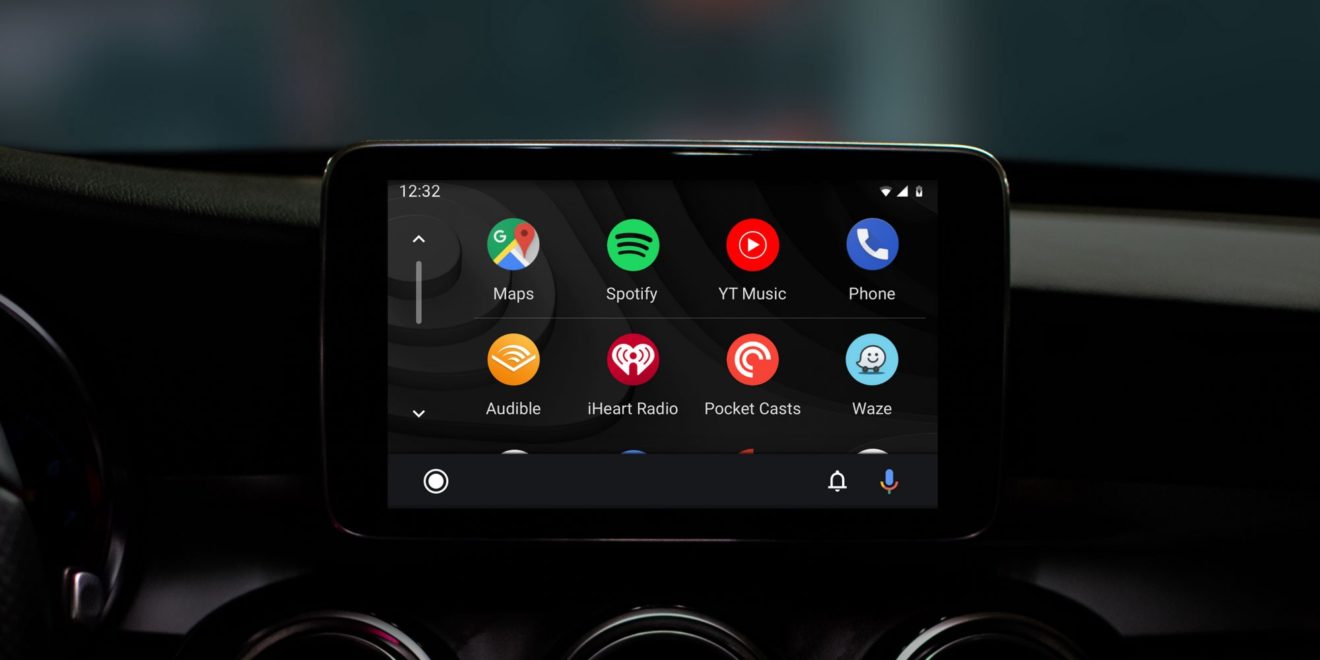
  • Android Auto update adds option to disable notification sounds

    Android Auto update adds option to disable notification sounds

    Google has been trying to fix and improve Android Auto for years, but there’s still a lot of features missing or not working as intended. The latest Android Auto app update doesn’t fix anything but adds a new feature that should have been there a long time ago.

    A new option added after the latest update lets Android Auto users disable notification sounds while they’re driving. Spotted by a Reddit user, the option to disable notification sound is not really new, as Google added and removed the feature a few times before.

    This time, however, Google opted for a toggle, so it’s now much easier to completely disable sounds from notifications whenever you want to focus on driving. The problem is this option does exactly what it says, it disables the sounds, so you will still get notifications on the screen. Not only that, but some users report that notifications will remain on the screen until you manually dismiss them.

    Although the update was released last week, it appears that a wider rollout is happening right now, so everyone should see the new app in the Google Play Store in the next couple of days.

  • Maruti Suzuki Announces Price Hike On Select Models

    Maruti Suzuki Announces Price Hike On Select Models

    Maruti Suzuki cars have become costlier from today owing to an increase in prices of select models. The company has increased ex-showroom prices by up to 4.7 percent and new prices come into effect from today. The company had earlier announced that it will increase prices in December 2019 which was supposed to come into effect from January 1, 2020. However, the company had postponed the price hike to a later date. The increase is a part of cyclical price revision due to an increase in input costs which has now become a norm in the industry.

    Earlier in December, the company had said in a BSE filing, “The cost of the company’s vehicles has been impacted adversely due to an increase in various input costs. Hence, it has become imperative for the company to pass on some impact of the above additional cost to customers through a price increase across various models in January 2020. This price increase shall vary for different models”

    The company has not disclosed the models that have undergone price revision, but we expect the majority of its models have witnessed a price hike.

    Maruti Suzuki cars have become costlier from today owing to an increase in prices of select models. The company has increased ex-showroom prices by up to 4.7 percent and new prices come into effect from today. The company had earlier announced that it will increase prices in December 2019 which was supposed to come into effect from January 1, 2020. However, the company had postponed the price hike to a later date. The increase is a part of cyclical price revision due to an increase in input costs which has now become a norm in the industry.

    Earlier in December, the company had said in a BSE filing, “The cost of the company’s vehicles has been impacted adversely due to an increase in various input costs. Hence, it has become imperative for the company to pass on some impact of the above additional cost to customers through a price increase across various models in January 2020. This price increase shall vary for different models”

    The company has not disclosed the models that have undergone price revision, but we expect the majority of its models have witnessed a price hike.

  • U.S. Senator Slams Tesla’s ‘Misleading’ Name For Autopilot Driver Assistance System

    U.S. Senator Slams Tesla’s ‘Misleading’ Name For Autopilot Driver Assistance System

    A U.S. senator on Friday urged Tesla Inc (TSLA.O) to rebrand its driver-assistance system Autopilot, saying it has “an inherently misleading name” and is subject to potentially dangerous misuse.

    But Tesla said in a letter that it had taken steps to ensure driver engagement with the system and enhance its safety features.

    The electric automaker introduced new warnings for red lights and stop signs last year “to minimize the potential risk of red light- or stop sign-running as a result of temporary driver inattention,” Tesla said in the letter.

    Senator Edward Markey said he believed the potential dangers of Autopilot can be overcome. But he called for “rebranding and remarketing the system to reduce misuse, as well as building back up driver monitoring tools that will make sure no one falls asleep at the wheel.”

    Markey’s comments came in a press release, with a copy of a Dec. 20 from Tesla addressing some of the Democratic senator’s concerns attached.

    Autopilot has been engaged in at least three Tesla vehicles involved in fatal U.S. crashes since 2016.

    Crashes involving Autopilot have raised questions about the driver-assistance system’s ability to detect hazards, especially stationary objects.

    There are mounting safety concerns globally about systems that can perform driving tasks for extended stretches of time with little or no human intervention, but which cannot completely replace human drivers.

    Markey cited videos of Tesla drivers who appeared to fall asleep behind the wheel while using Autopilot and others in which drivers said they could defeat safeguards by sticking a banana or water bottle in the steering wheel to make it appear they were in control of the vehicle.

    Tesla, in its letter, said its revisions to steering wheel monitoring meant that in most situations “a limp hand on the wheel from a sleepy driver will not work, nor will the coarse hand pressure of a person with impaired motor controls, such as a drunk driver.”

    It added that devices “marketed to trick Autopilot, may be able to trick the system for a short time, but generally not for an entire trip before Autopilot disengages.”

    Tesla also wrote that while videos like those cited by Markey showed “a few bad actors who are grossly abusing Autopilot” they represented only “a very small percentage of our customer base.”

    Earlier this month, the U.S. National Highway Traffic Safety Administration (NHTSA) said it was launching an investigation into a 14th crash involving Tesla in which it suspects Autopilot or other advanced driver assistance system was in use.

    NHTSA is probing a Dec. 29 fatal crash of a Model S Tesla in Gardena, California. In that incident, the vehicle exited the 91 Freeway, ran a red light and struck a 2006 Honda Civic, killing its two occupants.

    The National Transportation Safety Board will hold a Feb. 25 hearing to determine the probable cause of a 2018 fatal Tesla Autopilot crash in Mountain View, California.

  • Suzuki Motor Will Respond To Dutch Emissions Probe By Mid-February

    Suzuki Motor Will Respond To Dutch Emissions Probe By Mid-February

    Japan’s Suzuki Moto is co-operating with the Dutch authorities over their findings its diesel vehicles had broken the country’s emissions rules, and it is required to respond to the investigation by mid-February, it said on Friday.

    The Dutch road authority ruled on Thursday that Suzuki’s Vitara and Fiat Chrysler’s Jeep Grand Cherokee diesel models broke emissions rules and must be fixed or face a ban on sales across Europe.

    In a statement, Suzuki said diesel versions of its Vitara and S-Cross vehicles used engines and emissions software supplied by Fiat Chrysler.

    The Dutch authorities said the vehicles in question, which are no longer in production, showed emissions levels higher than allowed following a software update in 2017, Suzuki said.

    Earlier this week, the German authorities said they were investigating Mitsubishi Motors Corp for suspected use of illegal, emissions defeat devices installed in its diesel engines.

    Regulators across the world have been clamping down on emissions devices used in diesel models since Volkswagen admitted in 2015 that it used illegal software to cheat U.S. emissions tests.

  • Peugeot To Repatriate Staff From China’s Wuhan Area After Coronavirus Outbreak

    Peugeot To Repatriate Staff From China’s Wuhan Area After Coronavirus Outbreak

    French automotive group PSA, maker of the Peugeot and Citroen brands, said in a statement it will repatriate expat staff and their families from the Wuhan area in China, which is at the center of an outbreak of coronavirus.

    It said that 38 people would be evacuated and that the initiative will be executed in full collaboration with the Chinese authorities and the French general consulate.

    PSA said the evacuees will remain in quarantine in Changsha before traveling back to their home countries.

  • Skoda Vision IN Concept Teased In New Video

    Skoda Vision IN Concept Teased In New Video

    Skoda India has rolled out a new video teasing its upcoming Vision IN concept SUV. Slated to make its global debut at the upcoming Auto Expo 2020, the new Vison IN concept is built on the new MQB-A0 IN platform and will preview the company upcoming SUV that is set to be based on the localized version of the MQB architecture. The video teaser gives us a glimpse of the new butterfly grille featuring the signature vertical slats outlined in crystal, which is illuminated along with the Skoda logo on the hood. The video also gives us a clean look at the new split LED headlamps which come with the lettering “Vision IN” etched on them.

    Based on the exterior sketches which were revealed earlier, the concept SUV will also come with a clamshell-style bonnet with sculpted lines, alone with a muscular front bumper with beefy claddings and large air intakes. The video and the older sketches both confirm that the SUV will come with a set of roof rails, side and wheel arch claddings and larger alloy wheels. While we do not get to see the rear section of the concept here, the sketch reveals a pair of wraparound LED taillights with the 3D effect, and aluminum diffuser extended to the rear bumper. The SUV also gets a horizontal light strips connecting the reflectors on the tailgate and the bold Skoda lettering that is placed in the center.

    The teaser video also highlights some of the features of the cabin, which will also make heavy use of crystalline elements. For instance, the gear selector button in the center console, under the virtual cockpit, and a decorative crystal piece positioned on the dashboard. The seat covers come with contrast stitching, and the multifunction leather-wrapped steering wheel features the knurl wheels in line with Skoda’s new operating concept. We also get a glimpse of an illuminated SOS button, which indicates, the car could get connected car technology.

    Developed specifically for the Indian market, the new MQB-A0 IN is part of Skoda’s India 2.0 project, and the platform will underpin subcompact models from Skoda and Volkswagen, including the localized version of the Kamiq and the T-Cross. We will get more details about the concept and the company’s upcoming models on February 5, at the Auto Expo 2020.

  • Hyundai India Postpones Investment Plans In New Plant

    Hyundai India Postpones Investment Plans In New Plant

    The slowdown in the Indian auto market has also dented long term plans of automakers in India. Hyundai which was gearing up to set up a new plant in India has now postponed its plans by two or three years. Hyundai Motor India Managing Director (MD) & CEO, S.S. Kim told Times Of India in an interview that the company has sufficient production capacity to meet its domestic and global demand.

    Kim also added that buyer sentiments in India are not very positive at present and it may take around three years to restore the volumes and meet the sales performance targets like 2018. For the time being, the Korean carmaker will continue to focus on new launches that have already started with the launch of the Grand i10 Nios and Aura subcompact sedan.

    Hyundai Motor India has registered 37,953 units in the domestic market in December 2019, as compared to 42,093 units which is a de-growth of 9.8 percent. It’s domestic sales in the calendar year 2019 declined by 7.2 percent at 510,260 units as compared to 550,002 units which were sold in the calendar year 2018.

  • Jaguar Land Rover To Cut 10 Per Cent Of Workforce At UK Halewood Factory

    Jaguar Land Rover To Cut 10 Per Cent Of Workforce At UK Halewood Factory

    British carmaker Jaguar Land Rover (JLR) said on Wednesday it will cut around 10% of the workforce at its northern English Halewood factory as it changes shift patterns to boost efficiency at the site. The Unite Union said the cuts were linked to slower than forecast growth of the Range Rover Evoque and Land Rover Discovery Sport vehicles, which are made at the plant. The company said the decision was not related to the loss of volumes.

    JLR posted a 6% decline in 2019 sales, hit by the weakening Chinese autos market and falling demand for diesel vehicles in Europe. But it has bounced back in China in recent months and overall company sales rose by 1.3% in December.

    “Jaguar Land Rover is taking action to optimize performance, enable sustainable growth and safeguard the long-term success of our business,” the company said in a statement.

    “Central to the Halewood manufacturing strategy, we are moving from a three-shift to a “two-plus” shift pattern from April 2020.”

    Around 4,5000 people work at the Halewood factory, one of three of JLR’s car factories in Britain, with roughly 500 jobs affected by Wednesday’s announcement.

    JLR, like much of the car industry, has also faced the challenge of stepping up investment in zero and low-emissions vehicles as regulations tighten while simultaneously dealing with a drop in demand for some conventionally-powered models.

  • Mercedes-Benz India Announces Its Line-Up For 2020 Auto Expo

    Mercedes-Benz India Announces Its Line-Up For 2020 Auto Expo

    Mercedes-Benz India has announced its line-up for the 2020 Auto Expo, for which the company has planned a range of products, services, and future technology. Among the product line-up at the pavilion, the Stuttgart-based carmaker will also have some of the upcoming models set to be launched in India this year. That includes the Mercedes-Benz A-Class Sedan, the AMG GT 63 S 4 door coupe, and the new-gen GLA, among other models. The company will also showcase its first electric SUV for India, the Mercedes-Benz EQC 400 4MATIC Edition 1886, which is slated to be launched in April 2020.

    The new A-Class sedan will be one of the key products to be introduced in India in 2020 and will mark the entry of the new-gen A-Class range in India. The Mercedes-AMG GT 63 S 4MATIC 4 door Coupe, on the other hand, is also an important product for India, and we were the first ones to drive it. In fact, the car is the world’s fastest series production four-seater and will rival the Porsche Panamera. The new-gen Mercedes-Benz GLA only makes its global debut in December 2019 and is also set to be launched later this year. The EQC 1886, on the other hand, is the forerunner of Mercedes-Benz’s new product brand ‘EQ’ for electric mobility globally.

    Talking about the company’s Martin Schwenk, Managing Director & CEO, Mercedes-Benz India commented, “As leaders in the luxury car industry, our investments at the Auto Expo firmly reiterate Mercedes-Benz’s confidence in the long-term prospect of the luxury car market and the bullishness of its customers; it also underlines our responsibility to drive the industry and provide a positive stimulus to the market. Inspired by our mantra of “Restless for Tomorrow”, the Mercedes-Benz pavilion will be a perfect embodiment of modern luxury, future technology, and progressiveness, all of which are synonymous with the Three-Pointed Star”.

    The Mercedes-Benz pavilion at the Auto Expo 2020 will also have sedans like the new E-Class, MB Certified C-Class, and something from Mercedes-Maybach on display. In addition to the GLA, the company will also showcase the new-gen GLE and GLS, along with a bunch of AMG models like – AMG G 63, AMG A 35 Sedan and AMG C 43 Coupe. Mercedes-Benz will also showcase its flying car concept, the Volocopter, at the auto show. The carmaker will also showcase a bunch of digital innovations like – an e-commerce marketplace for sale of MB cars, collections, MBUX interactive exhibition, what3words and more.

  • Tesla Moves A Step Closer To Opening First European Factory With German Property deal

    Tesla Moves A Step Closer To Opening First European Factory With German Property deal

    U.S. electric car pioneer Tesla has agreed to buy a property on the outskirts of Berlin, bringing it a step closer to opening its first European factory, local authorities said on Sunday. The U.S. carmaker last November announced plans to build a giant factory in Gruenheide, in the eastern German state of Brandenburg, giving it the coveted “Made in Germany” label just as local rivals prepare to launch competing models.

    Tesla’s board of directors approved a purchase agreement with the state of Brandenburg on Saturday to acquire a 300-hectare property, Brandenburg government spokesman Florian Engels said in a statement. The state parliament’s finance committee had already approved the sale on January 9.

    A Tesla spokeswoman confirmed the deal. The agreement states a preliminary property price of 40.91 million euros ($45.36 million) which can be amended if an external review provides a different value, Engels said.

    The property is in a designated industrial area and is being checked for weapons from World War II as there are most likely unexploded U.S. bombs still in the ground, he added.

    Politicians, unions and industry groups have welcomed Tesla’s move which is expected to create up to 7,000 jobs in Brandenburg.

    But some 250 locals took to the streets to protest on Saturday, fearing the factory could endanger the water supply and wildlife in the surrounding forest.

  • New Generation Hyundai i10 Commences Production For EU

    New Generation Hyundai i10 Commences Production For EU

    The new generation Hyundai Grand i10 Nios was launched last year in India and now its European sibling, the 2020 Hyundai i10 is all set to be made available in the continent. Hyundai has commenced series production of the new i10 for Europe with sales to begin by early February 2020. The popular hatchback is produced at the Hyundai Assan Otomotiv Sanayi (HAOS) plant located in Izmit, Turkey. The plant has been operational since 1997 as the company’s oldest-running overseas facility and has a production capacity of 230,000 nits per annum.

    The new generation Hyundai i10 for Europe is identical to the India-spec model but gets a host of changes. This includes a more smartly styled front grille with circular LED daytime running lights in place of the boomerang-shaped ones on the Indian model. The fog lamp housing is different as well and the overall design looks sharper for a sporty look. Other changes include 15-inch alloys with optional 16-inch units; dual-tone paint scheme with a contrast roof and a new tail lamp design that looks sharp.

    The Euro-spec 2020 Hyundai i10 also gets smaller proportions and is about 135 mm smaller, 160 mm shorter with a 25 mm shorter wheelbase. The cabin is loaded with features including the 8-inch touchscreen infotainment system with Apple CarPlay and Android Auto, wireless charging, and BlueLink technology for connected tech. The European version also gets collision avoidance assist, high beam assist, lane-keeping assist, driver attention warning and speed limit warning as standard.

    The new i10 will be sold in over 45 markets across Europe with the Turkey plant catering to the demand. The Hyundai Assan plant employs around 2500 personnel and will also be producing the third generation i20 that is expected to be revealed at the upcoming Auto Expo 2020 in New Delhi. The new i20 will go on sale in India first, followed by other markets later in the year.

  • Audi To Launch Only New Models In India

    Audi To Launch Only New Models In India

    Audi India kept Indian customers waiting for new models for quite some time. That said, the German carmaker now has a new plan in place and is gearing up to bring only new models or new generation models to our shores, and it has already started with the Audi Q8. The company also shared that Audi will be focusing on petrol, plug-in hybrid and electric models in the Indian market and its future launches will adhere to the plan.

    Balbir Singh Dhillon, Head- Audi India said, “We will only launch all-new models like the Q8 or new generation models in India going forward and we have quite a few products in the pipeline. On the onset of the BS6 norms, our focus will be on petrol models followed by plug-in hybrids and electric vehicles. Around 30-35 percent of our sales come from petrol models and that ratio should go up.”

    The Audi Q8 was launched in India on January 15 and will be sold as a completely built unit (CBU). Audi had also launched the new-generation A6 in India last year in October and is gearing up to launch the new-generation A8 next month. We have already seen spy images of a slew of Audi cars undergoing testing like the next-generation A7 Sportback, next-generation Audi Q7 and RS6 and all new models are headed to our market as well after their global launch. Audi India has also chalked out a long term plan for the Indian market which is internally called ‘Strategy 2025’. The foundation of the Strategy 2025 primarily relies on four pillars- Customer Connectivity, New Products, Network Expansion and Digitalisation.

    Dhillon also mentioned about setting up more dealerships across India to expand its reach in the market and digitalization will play a key role in connecting to its customers. However, the company has not disclosed any target as yet. Moreover, upcoming Audi cars will also feature connected car tech which apart from being trendy, will also keep customers connected to the services on the go. As we have already reported earlier, the German carmaker is also gearing up to foray into the electric space in our market this year with the launch of the e-Tron electric SUV.

  • Maruti Suzuki Sells Over 29,000 Units Of The Ciaz In 2019

    Maruti Suzuki Sells Over 29,000 Units Of The Ciaz In 2019

    Maruti Suzuki India today announced selling over 29,000 units of the Ciaz sedan in India, between January and December 2019. Despite the company seeing repeated de-growth in the car’s monthly sales last year, the Maruti Suzuki Ciaz managed to maintain its no.1 position in the segment, with its total sales accounting for 29,706 units. In comparison, rivals Honda City and Hyundai Verna were right behind at 28,696 units and 28,190 units, respectively, for the same Jan to Dec 2019 period. The Ciaz currently holds 28 percent market share in its segment, however, last April it was 30 percent.

    As for some of the other models in this segment, the Skoda Rapid had a decent year at 9,751 units, while its sister brand Volkswagen Vento’s total sales for the year accounted for 5,696 units. On the other hand, Toyota Yaris, the sole petrol-only car in this space, registered a total sale of 2,943 units between the January and December 2019 period.

    The Maruti Suzuki Ciaz currently holds a market share of 28 percent in its segment

    The Maruti Suzuki Ciaz was first launched in late 2014, and since then the carmaker has sold over 2.76 lakh units of the car. The company says that the top-end variant of the compact sedan Ciaz contributes to more than 50 percent to its total sales, whereas the automatic variants make up 17 percent of the car’s total sales.

    Currently, the Maruti Suzuki Ciaz is sold via the company’s Nexa chain of dealerships and is offered in three engine options – BS6 compliant 1.5-liter K15 petrol, 1.5-litre DDIS 225 diesel engine and the 1.3-liter DDIS 200 with SHVS (Smart Hybrid from Suzuki) technology. While the company is phasing out the 1.3-liter units, however, we are yet to get a confirmation on whether the 1.5-liter diesel engine will continue to be offered or not.

  • VW CEO Says Carmaker Faces Same Fate As Nokia Without Urgent Reforms

    VW CEO Says Carmaker Faces Same Fate As Nokia Without Urgent Reforms

    Volkswagen Chief Executive Herbert Diess said the German carmaker needs to accelerate its transformation to avoid becoming another Nokia, which lost its dominance in the handset market to Apple.

    “The big questions is: Are we fast enough?,” Diess told VW’s senior managers following a global board meeting on Thursday. “If we continue at our current speed, it is going to be very tough.”

    Volkswagen needs to shift from being a manufacturer of vehicles toward a maker of mobile devices, he said.

    “The era of the classic carmakers is over,” Diess added.

    Volkswagen needs to get a grip on software and vehicle electronics as well as producing a raft of electric vehicles and batteries so it can comply with stringent anti-pollution rules.

    “In summary this is probably the most difficult challenge Volkswagen has ever faced,” Diess said, adding that in 2020 the carmaker should seek to maintain profit margins.

    Volkswagen will seek to cut down on complexity, hike productivity and slash costs, particularly in Germany, Diess said.

    VW will cut resources devoted to fuel cells, since they will not be as competitive as electric vehicles for at least another decade. VW will also cut the resources devoted to its MOIA mobility services unit.

    “We need to reduce our engagement and stretch it, until the prerequisites for better profitability are given,” Diess said.