Tag: bank

  • StanChart Beats Forecasts with Improved Impairments

    StanChart Beats Forecasts with Improved Impairments

    Credit impairments fell sharply at Standard Chartered, enabling the growth market-focused lender to beat analyst estimates and deliver profitability in the first quarter.

    Standard Chartered posted pre-tax profits of $1.4 billion, according to its latest results, marking an 18 percent increase compared with $1.2 billion last year.

    It also beat compiled analyst forecasts of $1.08 billion.

    Amongst the most notable improvements was from credit impairment charges which fell sharply from $354 million in the previous quarter to just $20 million.

    The bank also registered strong performance from its wealth management businesses which saw a record quarter with a 21 percent increase in income from strong sales of foreign exchange and equity-related products.

    In Asia, it boosted its pre-tax profits by 21 percent to $1.23 billion.

    In line with its continued pursuit to cut office space – in Singapore and Hong Kong, for example – and permanently adopt flexible working conditions, the bank will also significantly reduce its branch network.

    Standard Chartered will cut the number of branches by half to around 400 after having as many as 1,200 worldwide in 2014.
  • HSBC AM Names Asia Head of Credit Research

    HSBC AM Names Asia Head of Credit Research

    HSBC’s asset management arm appoints a new head of credit research in Asia amid an ongoing expansion across its product range and distribution capabilities in the region.

    HSBC Asset Management appoints Seok Poh Yeoh as head of credit research for Asia, according to a statement, effective immediately.

    In her Hong Kong-based role, Yeoh reports locally to head of Asian fixed income Elizabeth Allen as well as Paris-based global head of credit research Tina Radovic.

    Yeoh has 16 years of industry experience and was most recently a financial and corporate credit research analyst at Credit Suisse. She rejoins HSBC Asset Management after first joining in 2012 as a financial analyst.

    The latest hire follows announced ambitions by HSBC Asset Management to enhance its platform in mainland China, India, and Southeast Asia, most notably for the high net worth product range across alternatives, sustainability, and thematic equities.

    According to the bank, HSBC Asset Management has Asian fixed income assets under management totaling nearly $73 billion as of March 31 this year.

  • OCBC to Review Office Space Needs

    OCBC to Review Office Space Needs

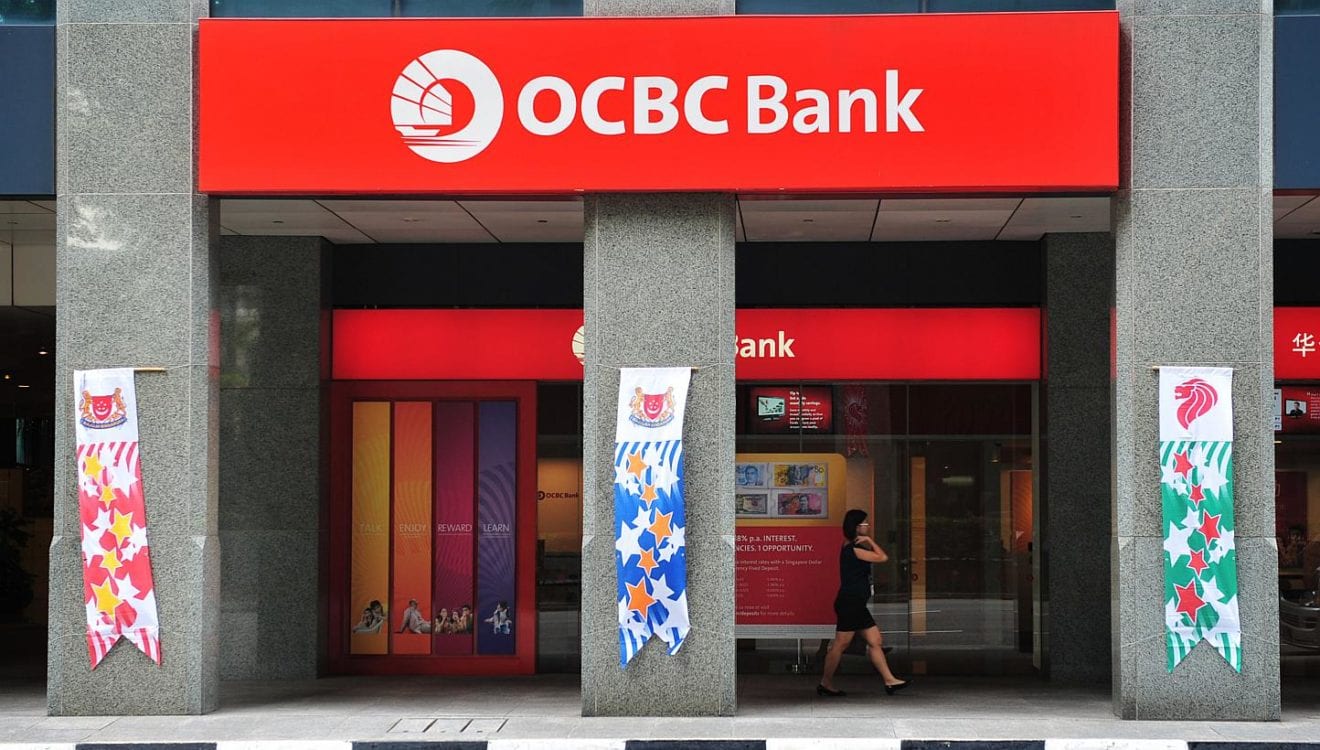
    The bank is considering reducing the number of branches and office space as it moves towards a hybrid work model.

    We may not need so many branches servicing our customers, so certainly I think there will be a review in terms of our office requirements as we move forward,» chairman Ooi Sang Kuang said at the bank’s virtual annual shareholder meeting on Thursday.

    Last year, former OCBC chairman Samuel Tsien said the bank expects fewer physical branches and offices being open in the future, as a surge in the adoption of digital banking services prompted OCBC to rethink its branch network strategy, and Covid-19 prompted a shift towards hybrid working from home and the office.

    Other banks that have permanently reduced their physical footprint in Singapore include DBS, which will give up 75,000 square feet of space – about two and a half floors out of the more than a dozen floors it occupies at Tower 3 of the Marina Bay Financial Centre; Citi, which is offloading three floors; and Mizuho, which is cutting less than one floor of office space.

    During the meeting, Helen Wong, OCBC’s new chief executive, said the bank would focus on deepening its reach into Asean markets and to capitalize on the growing Asean-Greater China flows, expanding its wealth management franchise, accelerating digitalization and building a regional sustainable bank.

  • Deutsche Bank Sidesteps Archegos Hit

    Deutsche Bank Sidesteps Archegos Hit

    The German bank pulled off what Swiss rivals failed to: avoid major losses from the collapse of the family office-hedge fund.

    Frankfurt-based Deutsche Bank swung to a net profit of 908 million euros ($1.1 billion) in the first quarter, from a loss of 43 million euros year-ago, it said in a statement on Wednesday. The result was powered by its investment bank, which is still feeding its business with revenue.

    In doing so, the German bank largely avoided what is now more than $10 billion in losses from Archegos, which hit Credit Suisse the worst but didn’t leave UBS unscathed either. CEO Christian Sewing is now in his fourth year of reviving Deutsche Bank, following years of outsize risk-taking.

    The bank had quickly offloaded roughly $4 billion in collateral against Archegos’ business before others. On Tuesday, Deutsche reported investment banking revenue surged by nearly one-third in the last three months, illustrating that Deutsche is still heavily reliant on Wall Street.

    By contrast, revenue in its wealth management arm overseen by Claudio de Sanctis edged two percent lower. The unit won 7 billion euros of fresh money into investments products and lent 2 billion euros more to clients in the quarter.

    Deutsche’s international private bank hiked overall assets to 267 billion euros, from 252 billion euros at year-end. The bank’s quarter overall represents its healthiest in seven years.

    It comes against the backdrop of Credit Suisse sliding deeper into crisis: the Swiss bank took the biggest Archegos hit on Wall Street – 4.4 billion Swiss francs ($4.7 billion) – or nearly half the total which has surfaced publicly so far. UBS took a $774 million one, it reported on Tuesday, as well as another $87 million in the coming quarter.

  • TPBank posts 41 percent surge in profits

    TPBank posts 41 percent surge in profits

    The bank said a surge in net interest income and a cut in operational expenses has boosted its Q1 performance.

    Its net interest income grew 30 percent in the period, while operational expenses dropped 10 percent, according to the bank’s financial statement.

    It said that its pre-tax profit growth was average compared to other lenders’ growth rates of 50 percent or even over 100 percent during the same period.

    For example, the increase in Q1 pre-tax profit was 135 and 110 percent respectively for the state-owned VietinBank and Military Commercial Bank (MBBank). Private lender ACB, meanwhile, saw a 61 percent increase in its Q1 pre-tax profit.

    TPBank’s Q1 revenue was up 15.2 percent year-on-year to VND2.78 trillion.

    By March end, both its outstanding loans and capital mobilization increased 4 percent to VND124.3 trillion and VND120 trillion, respectively. Non-performing loans were at 1.19 percent.

    The bank has set a target of VND5.5 trillion in pre-tax profit for 2021, a year-on-year increase of 25 percent.

  • Citi Elevates Senior Hong Kong Investment Banker

    Citi Elevates Senior Hong Kong Investment Banker

    Citi has expanded the role of its regional head of corporate finance with greater responsibilities for the Hong Kong investment banking business.

    Alex Schrantz has been named head of banking, capital markets and advisory (BCMA) for Hong Kong, according to a statement, effective immediately. Schrantz reports to APAC head of BCMA Jan Metzger alongside Hong Kong and Macau chief executive Angel Ng.

    Schrantz will retain his existing role as APAC head of corporate finance.

    Schrantz has nearly 30 years of global banking experience of which over two decades were based in Hong Kong. He first joined Citi in 2012 and has been responsible for overseeing capital amerces execution in Asia Pacific. Previously, he was also a member of the listing committee for the local stock exchange from 2006 to 2010.

  • Natixis Expands Global Markets Unit in APAC

    Natixis Expands Global Markets Unit in APAC

    Natixis has made a series of hires for its global markets team in Asia Pacific with a focus on bolstering its capabilities in China and Japan.

    The French investment bank made six new appointments to its APAC global markets unit, according to a statement, as part of its ongoing growth ambitions in the region.

    China and Japan are key geographies for our global markets business and these new appointments to bolster our sales teams will allow us to deepen our client dialogue and enhance our focused development of new activities and products, said APAC head of global markets Viet Linh Ha Thuc.

    Eddison An joins the Hong Kong office as global market sales for China reporting to Greater China head of global markets sales Kirk Liu. An has 19 years of global market sales experience and was most recently the China head of credit sales at Deutsche Bank.

    Marcus Teng joins the Shanghai office as China head of corporate sales for the global markets unit, reporting to Liu and locally to Greater China senior country manager Hong Liu. Teng has 14 years of experience, most recently with ANZ Bank as a director in global markets.

    Beijing-based Jason Lee was named corporate sales for China reporting to Teng and locally to Beijing branch manager Simon Qin. Lee has 20 years of financial advisory and acquisition finance experience most recently also with ANZ Bank.

    Michael Man joins the Hong Kong office as global market sales reporting to APAC head of sales and financial engineering Eric Elbaz. Man has over ten years of experience in prime services and securities finance, most recently with BNP Paribas.

    Hiroshi Hara was named Tokyo-based regional fixed income sales reporting to head of regional financial institutions sales Kazuoki Shirase. Hara has 24 years of banking experience most recently with Nattiest Markets Securities Japan where he was its head of solutions sales for the country.

    Satoshi Harada joins in Tokyo as flow product sales reporting to Hirofumi Satoi, global markets sales, Japan. Harada has 8 years of banking and financial experience, most recently with Société Générale Securities Japan.

  • Global Banks Vie for Citi’s Asia Consumer Business

    Global Banks Vie for Citi’s Asia Consumer Business

    Two of Singapore’s «big three» lenders are said to be interested in acquiring parts of Citi’s consumer business, which is downsizing worldwide.

    DBS Group, OCBC, Mitsubishi UFJ Financial Group (MUFG) and Standard Chartered intend to bid parts of the bank’s consumer banking portfolios and brances in Asia, citing sources with direct knowledge of the matter.

    The sale process will start within a couple of weeks, the sources said. The businesses Citi is exiting had $82 billion in total assets and were allocated $7 billion in tangible common equity last year, Citi said.

    Last week, Citi announced its intention to exit its consumer banking business in 13 markets, 10 of which are in Asia: Australia, China, India, Indonesia, Korea, Malaysia, the Philippines, Taiwan, Thailand, and Vietnam.

    The bank said it intends to «double down on wealth» as it focuses its consumer banking franchise in Asia and EMEA solely through its four wealth centers: Singapore, Hong Kong, UAE, and London.

    DBS, which operates a fully owned subsidiary in India, is said to be interested in Citi’s business there, which includes retail deposits, mortgages and credit cards. Standard Chartered and local lenders Kotak Mahindra Bank and Axis Bank are also said to be interested, which SBI Cards and Payment Services is eyeing Citi’s credit card portfolio there.

    DBS has always been open to exploring sensible bolt-on opportunities in markets where we have a consumer banking franchise (China, India, Indonesia and Taiwan), a bank spokesperson said.

  • StanChart Expands Hiring Efforts in Hong Kong

    StanChart Expands Hiring Efforts in Hong Kong

    Standard Chartered plans to hire about 400 staff in Hong Kong this year as part of the ongoing expansion of its retail baking and wealth management business.

    The Asia-focused lender’s hiring plans are part of its strategy to tap demand from affluent customers for wealth planning, according to a report citing Hong Kong head of consumer, private, and business banking Lay Choo Ong.

    In addition to hiring, Standard Chartered is also planning to invest $26 million over the next three years to revamp its branches in the city.

    The bank will look to add, relocate and close various branches with the aim of maintaining 70 in the city, according to a previous announcement by Hong Kong CEO Mary Huen.

    Although branch visits at Standard Chartered fell 25 percent during the pandemic, the bank believes that demand remains for customers seeking to discuss more complex financial needs.

    It is planning to open its second «Priority Private Center» in the city this year as well as three green branches for paperless services, likely in the third or fourth quarter, as part of a pilot project.

    According to Ong, assets under management in Hong Kong-registered double-digit growth in the first quarter while wealth management fund flows doubled the annual average in 2020.

  • DBS Targets Zero Thermal Coal Exposure

    DBS Targets Zero Thermal Coal Exposure

    As part of its efforts to support the transition to a low-carbon future, the bank has set a target of 2039 to cut its thermal coal exposure to zero.

    DBS, Southeast Asia’s largest bank, has announced plans to reach its goal of zero thermal coal exposure by 2039, and will focus instead on the development of renewables, according to a statement on Friday.

    The bank will stop onboarding new customers that derive more than 25 percent of their revenue from thermal coal with immediate effect, and stop financing customers that derive more than half their revenue from thermal coal from January 2026. These thresholds will also be lowered over time, DBS said.

    DBS will use its sustainable and transition finance framework to help sectors reliant on thermal coal to transition.

    Every year counts in the journey towards a low-carbon future and we recognize the increasing need for transition financing to help industries gradually navigate away from brown to green, Tan Su Shan, DBS group head of institutional banking, said.

    Tan said the bank hopes to help energy players in the region scale the reach and supply of renewable energy in the near future.

    In 2020, DBS grew its exposure to renewable energy projects to S$4.2 billion ($3.15 billion), up from S$2.85 billion the year before.

  • Ex-UBS Chief Sergio Ermotti Shifts from Banker to Statesman

    Ex-UBS Chief Sergio Ermotti Shifts from Banker to Statesman

    Less than six months after leaving UBS, ex-CEO Sergio Ermotti is now chairman of the world’s largest reinsurer. He signaled he will use the job as a platform to lobby for Switzerland as a business center.

    The former CEO of UBS, Sergio Ermotti, had promised a blackout after leaving the Swiss wealth manager at the end of October. He resurfaced publicly on Friday, when 96.4 percent of Swiss Re investors backed him as the reinsurer’s next chairman, after a year of understudying with long-standing overseer Walter Kielholz.

    In my new role, I look forward to advocating for Switzerland as an attractive location for the insurance industry,» the 60-year-old Ticino native told shareholders in an annual meeting held online. Insurance represents as much of Swiss gross domestic product as Switzerland’s heavyweight banking sector, and also a more consistent one.

    Nearly every eleventh Swiss franc in Switzerland is generated by the wider financial industry, according to data compiled by research institute BAK Economics. Insurance alone generates 30.5 billion Swiss francs ($33 billion) annually, according to BAK.

    Switzerland is the world’s third-largest location for reinsurance, Ermotti said – and he plans to use his new job to help make sure it stays that way. «That is why Swiss Re is actively engaged in ensuring that the Swiss financial center remains attractive and internationally competitive» in terms of framework conditions, the banker-turned-overseer said.

    He’s earning far less than at UBS, where he regularly topped league tables as Europe’s highest-paid banker and left on a 13.3 million franc payday high. He earned just 151,000 francs for 2020 after his election last April; by comparison, Kielholz took home 3.8 million francs.

    Ermotti remains a big UBS investor, with more than 4 million shares to his name (it translates to less than 0.3 percent of voting rights over the Swiss giant) – likely not including a big personal bet. His extracurricular activities include chairing the family’s Lugano-based Fondazione Ermotti and serving on the Swiss-American chamber of commerce’s board.

    While at UBS, he was widely viewed as sincere in his concern for Switzerland and its financial center when commenting on Swiss political matters of economic and business relevance, like immigration. Ermotti, who began his career in finance as an apprentice at Cornèr Bank in Lugano in 1975, is also on the board of the Global Apprenticeship Network – and a SPAC backer.

    The banking veteran spent the bulk of his career abroad including in London as an investment banker at Merrill Lynch. The Swiss Re move represents the culmination of what Ermotti reportedly couldn’t clinch at UBS: the chairman’s seat. At the Swiss bank, long-standing chairman Axel Weber looks set to extend his tenure, instead of exiting next April.

  • Citi Names Wealth Co-Heads for Asia Pacific

    Citi Names Wealth Co-Heads for Asia Pacific

    Citi made a raft of new appointments to its wealth management unit including the promotion of its Asia head of private banking.

    Citi named Steven Lo co-head of the wealth unit in the region alongside APAC head of retail banking Fabio Fontainha, according to an internal memo.

    Lo was named Asia head of the private bank in 2017, succeeding ex-head Bassam Salem.

    The bank also appointed Ida Liu – most recently head of the private bank in North America – as the global head of private banking, overseeing the bank’s private capital group, global trust, and private bank global marketing operations.

    Other notable appointments for the wealth business include chief operating officer Eduardo A. Martinez Campos and chief of staff Running Du.

    Chief investment officer and global head of investments David Bailin will form a group that combines investment teams from the private bank and consumer bank globally.

    Head of investment finance for the private bank Giuliano Malacarne will expand his remit and coordinate the delivery of banking and lending products to wealthy clients.

    The appointments coincide with the bank’s reorganization of its wealth business to encompass the full spectrum from emerging affluent to high net worth clients.

    Our clients are looking for more — whether it’s access to investment opportunities and advice, tools and analytics, a focus on environmental, social and governance concerns or more engaging digital experiences, said Jim O’Donnell, Citi’s head of global wealth in the memo.

  • StanChart Wealth Planning App Debuts in Singapore

    StanChart Wealth Planning App Debuts in Singapore

    The bank joins other players in providing digital wealth advisory with its new SC Goals Planner app, now available on SC Online Banking and SC Mobile.

    Standard Chartered has launched a free, do-it-yourself online financial planning solution developed in collaboration with Singapore-based fintech BetterTradeOff, which advanced leverages data analytics for clients to make data-led decisions when it comes to wealth planning, the bank announced in Wednesday.

    The SC Goals Planner app allows customers will be able to independently plan and track their financial goals through real-life simulations and insights specific to their life stages and financial status. Users will also be able to educate themselves on the planning process and financial fundamentals, the announcement said.

    Banks have been quick to capitalize on the heightened interest in wealth planning – Julius Baer also launched its digital advisory platform in Asia this week, while DBS rolled out personal digital advisory to its financial planner last week.

    Standard Chartered said there has been more interest in better financial planning as a result of the pandemic. Through the platform, Standard Chartered hopes to close the financial literacy gap and empower clients to play a more active role in their financial planning.

    This is one of the many steps we are taking to strengthen the client-bank wealth and financial planning dialogue, Eugene Puar, head of wealth management, Singapore, ASEAN and South Asia said.

    Singapore-based BetterTradeOff (BTO) was founded in 2015 and offers a software-as-a-service (SaaS) life planning tool to clients through a white-label enterprise solution. It currently operates in Hong Kong, Singapore, Philippines, UAE, and Switzerland.

  • HSBC Swims Against Crypto Tide

    HSBC Swims Against Crypto Tide

    The bank banned customers of its online trading platform InvestDirect from adding MicroStrategy stock to their portfolios, calling them a «virtual currency product.

    HSBC has no appetite for direct exposure to virtual currencies [VCs] and limited appetite to facilitate products or securities that derive their value from VCs,» a HSBC spokesperson said in a statement.

    Last week, a message from the bank to InvestDirect customers dated March 29 surfaced on social media, saying that it will only allow the holding, sale and outgoing transfer of MicroStrategy shares, and will ban new purchases or incoming transfers.

    MicroStrategy, a business intelligence and cloud-based software company founded in 1989 by bitcoin evangelist Michael Saylor, currently holds about $5.5 billion in bitcoin, or about 80 percent of its $6.8 billion market capitalization.

    The company adopted a policy last year to primarily hold bitcoin instead of cash, and has been purchasing the cryptocurrency with its extra cash and paying its directors in BTC.

    HSBC said the ban on MicroStrategy follows its policy on cryptocurrencies, which has been in place since 2018. Its move comes against the growing number of financial firms and companies that are embracing cryptocurrencies.

    Other companies that also have large holdings of bitcoin on their balance sheets include carmaker Tesla and payments processor Square, though it is not clear if a similar ban would apply to their shares.

    Goldman Sachs has said it would offer investments in bitcoin and other digital assets to its wealth clients, while Morgan Stanley will roll out a bitcoin offering to wealth management clients.

    Outside of the U.S., notable global banks that have also launched crypto offerings include Standard Chartered and DBS.

    MicroStrategy shares soared on Tuesday, up about 18 percent to $848.5, as the price of bitcoin reached a new high of $63,000, 7 percent higher than the day before.

    The surge in investor interest comes ahead of a hotly anticipated direct listing of CoinBase, the U.S.’ largest cryptocurrency exchange, on Nasdaq on Wednesday.

  • Chinese Banks Accelerate Branch Cuts

    Chinese Banks Accelerate Branch Cuts

    Chinese lenders are increasingly closing down branches as online and mobile banking penetration continues to rise.

    Mainland lenders have closed 430 branches in the first three months of 2021, according to data from the China Banking and Insurance Regulatory Commission’s (CBIRC) annual report.

    This marks an accelerated reduction after the industry closed 1,300 branches in 2020.

    As a major leader by digital penetration of its population, China saw strong growth for transactions not executed via physical bank locations – or «off-counter rates.

    Such transactions, which include online and mobile banking, rose 12 percent to 2,308 trillion yuan ($352.5 trillion), according to the CBIRC report.

    Mobile banking transactions alone soar 31 percent to 439.2 trillion yuan – nearly one-fifth of total off-counter transactions.

    In addition to growing digital adoption, the branch cuts are part of a broader industry move to reduce costs especially after a year of concessions where borrowers were offered cheap loans, deferred payment options, and top Beijing officials even called for a 1.5 trillion yuan sacrifice of profits.

    Mainland lenders are also rebalancing the mix of their remaining branch network with a focus on maintaining brick-and-mortar locations in counties or rural areas as part of Beijing’s goal to promote financial inclusion.