Tag: bank

  • HSBC Reopens Hong Kong Headquarters

    HSBC Reopens Hong Kong Headquarters

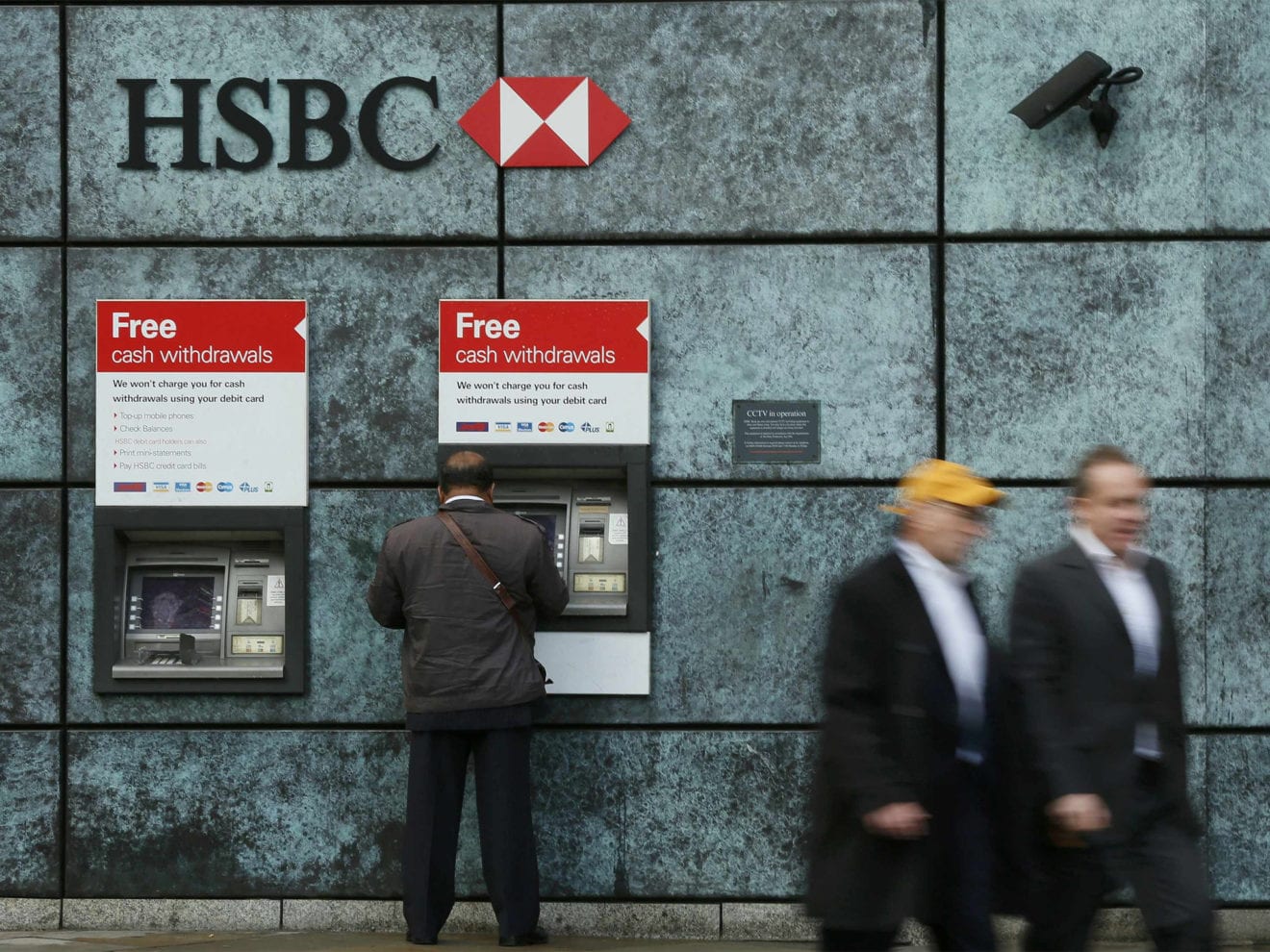
    HSBC has reopened its main Hong Kong office but is only advising critical staff to come in for work, according to an internal memo.

    Precautionary measures – such as wearing masks, pre-entry temperature screening, hand sanitizers, spaced queuing and portable acrylic screens at open banking counters – will continue to be in place, according to a statement from the bank, adding that it conducted deep cleaning and disinfection last week.

    The bank closed the office last week following a recent outbreak in a local gym popularly frequented by expatriates. Visitors who stayed within the building for over two hours between March 3 and 16 were required to undergo coronavirus tests.

    The gym-linked cluster has resulted in nearly 150 cases and has prompted other financial firms, including Goldman Sachs and UBS, to encourage more work-from-home measures.

  • UBS Loses China Private Banker

    UBS Loses China Private Banker

    A private banker covering the China market has left UBS Global Wealth Management.

    Payling Lee, market team head for China international, has left UBS Global Wealth Management.

    When contacted, a spokesperson for the bank declined to comment.

    Lee rejoined UBS in 2017 after serving a four-year stint between 2003 and 2007 in its investment banking arm where she was focused on the fixed income and derivative sales business in Taiwan. Previously, she also spent a decade with Barclays.

  • Stocks, cryptocurrencies the new darlings as other assets remain in deep slump

    Stocks, cryptocurrencies the new darlings as other assets remain in deep slump

    With most traditional asset classes taking a beating from the economic downturn caused by Covid-19, investors are flocking to the stock and cryptocurrency markets.

    At lunchtime on a regular working day, a smartly dressed young woman was sitting in a corner in a downtown HCMC cafeteria, staring at a laptop in front of her. She was going back and forth between charts and messaging apps to check what her broker was sending.

    She was a newbie on the stock market, having begun just two weeks earlier.

    Thanh Dang, 26, a full-time administrative assistant, explained her decision: “These days no one in my office does any work except text or talk to each other about stocks, forex and cryptocurrencies.

    “Most investors I know follow others’ advice and learn things on the fly. Some of them initially made profits and became even keener. So I decided to give it a try and started modestly.”

    Doan Duong, 37, a Hanoi architect, quit the forex derivatives market after making a huge loss but shows no signs of being discouraged. When the stock market surged in 2020 and everyone seemed to make a lot of profits, he decided to jump in.

    When talking about a 20 percent profit he made in four months, he smiles confidently and asks rhetorically, “If you want to get rich then you need to take risks, right?”

    Doan and Thanh are just two of the millions of people who have begun to trade stocks and cryptocurrencies in the past few months.

    According to the Vietnam Securities Depository (VSD), they opened 393,659 securities trading accounts last year, a 20-year high in a market that is less than 21 years old.

    In February, they opened another 57,000 accounts, tripling that of the same period last year.

    The vast majority of domestic accounts, 2.73 million, belongs to individual investors.

    In the last six or seven months, retail investors have been piling into the market, helping it shrug off the effects of a sell-off by foreign investors. In fact, the Vietnamese stock market was one of the five biggest gainers in the world, according to StockQ.org.

    In the first quarter of this year retail investors kept the market up while trading value was consistently at VND18-19 trillion ($778.12-821.3 million) per session.

    German data company Statista said following a recent survey of 1,000-4,000 respondents each in 74 countries that Vietnam ranks second globally in terms of ownership of Bitcoin and other cryptocurrencies.

    Nhan Trong Nguyen, a financial consultant, skims through hundreds of messages daily from stock traders, brokers and cryptocurrency sellers, almost all asking him to represent consultancies or trading platforms for cryptocurrencies, derivatives and binary options.

    His blog on finance and banking has more than 50,000 followers.

    Nhan says: “If you look closely, Vietnamese are consistently in the top three list of most frequent traders at global BitCoin exchanges such as Poloniex and Bittrex.”

    In recent conversations with his followers he learned that Vietnamese are frantically switching from Bitcoin to other newer cryptocurrencies because it has become increasingly challenging to mine.

    PI is the most popular of the alternatives, supposedly mineable on smartphones.

    There are hundreds of groups calling on people on social media and online forums to join Pi mining networks.

    Dominic Scriven, chairman of HCMC asset management company Dragon Capital, explains: “This is a logical choice to cope with the changes in monetary policy worldwide and in Vietnam to protect their money.”

    Since the onset of Covid-19 in early 2020, the State Bank of Vietnam has cut its policy rates four times to keep the economy afloat, driving banks’ deposit interest rates to all-time lows in February 2021 before they recovered slightly this month.

    The real estate and gold markets too are stagnant and are also beset with difficulties.

    A note by the HCM City Real Estate Association said the number of property transactions plummeted between March and August 2020 before making a marginal recovery since September.

    All this meant that since the start of the pandemic only a tiny portion of investments have been flowing into traditional asset classes as investors sought profitable alternatives like stocks and cryptocurrencies.

    Many stocks gained sharply, making newcomers even more impatient and afraid of missing out, further increasing the number of accounts and causing a cycle in the market.

    In the beginning Vietnamese used the likes of Bitcoin, Ethereum, Litecoin, and Ripple to receive money from abroad since it meant no more bank hassles and exorbitant fees. But it is no longer the main reason for investing in them.

    Lawyer Truong Thanh Duc says: “The State Bank of Vietnam has warned that owning, trading and using cryptocurrencies are risky and not protected by the law, but that does not seem to deter investors.”

    A large number of people are investing now in cryptocurrencies because they want to get rich fast despite a sluggish economy.

    This is also true of stock investors, many of whom seem to believe they can somehow predict market movements and make big profits from short-term trading.

    Though it might be too early to hark back to the stock market bubble of 2007-08 the relentless rise in the market is definitely cause for wariness, according to some economists.

    “It is never a good idea to try to guess the market’s movements, and investors should have a long-term view instead,” Nhan warns.

    Cryptocurrencies are not protected by law, and so all trading in them need to be done with great caution and, most preferable, expertise.

    Decisions driven by rumors and greed might see inexperienced investors burn their fingers.

    The enthusiasm retail investors have had for stocks and cryptocurrencies since 2020 continues to draw in more newbies.

    But one piece of good news for those who fear they have missed out on the action is the prediction by Finland’s PYN Elite Fund that the market will continue to grow, with the VN-Index possibly reaching 1,800 points.

    Nevertheless, new entrants need to move their goalpost from “get rich quickly” to increasing the value of their assets over the long term and hedging inflation.

    Another sensible piece of advice from experts is to diversify one’s investment portfolio.

    Nhan says: “The ideal return from shares should be around twice the bond interest rate. Any broker who promises you way more than that could be scamming you.

    “VN30 stocks and companies with an excellent reputation are always a good choice for beginners.”
  • Time to Unlock the Payments Pocessing Conundrum

    Time to Unlock the Payments Pocessing Conundrum

    To say the industry has been through some seismic changes over the past decade is an understatement, to put it mildly. From ever-increasing defaults and regulatory changes to clearing and collateral, not to mention the continued use of technology and automation.

    Global financial markets have been exposed to a series of changes in what is an incredibly vast and complex landscape. However, if there is one thing that has remained constant is processing and lots of it.

    Processing, the plumbing that underpins the entire financial system, is vital to ensuring the health and stability of markets. It needs to be done in a timely fashion, and the data needs to be correct and in-line with any regulatory obligations. Some parts of the post-trade lifecycle are well-oiled, mainly due to regulatory pressures on specific focus points as well as the central network effect and interoperability between both asset-classes and process types. Others, though, simply are not.

    The evolution of derivatives has in other areas resulted in continued layered manual processing. Not only does it still rely heavily on email and excel spreadsheets, but also offers relatively low levels of control. If this was not enough, ever-rising volumes and the fragmented nature of these processes have led to costly and unscalable workloads. We all know volumes can be erratic.

    Too many factors to list constitute an impact on volumes, but decisions are often made that result in ‘quick and dirty’ layered manual processes that become really challenging to manage over time. Factor in the current global pandemic that has now surpassed a year in the making and the challenge only gets harder.

    The payments and settlements space is not only huge but also fundamental to all other parts of the trade-lifecycle. Ultimately, trades need to settle, yet a lot of inefficiencies exist. Traiana’s research from 2019 showed that $500 million a year is spent supporting certain inefficient payment and settlement processes for the top 450 financial firms (50 global investment banks/400 Global Investment management firms) and could be higher with continued challenges.

    The bulk of this is centered around the messaging and matching of cashflows. There are several key challenges and inefficiencies when it comes to the messaging and matching of these cash flows, including:

    • Different cashflows: these can be handled by different internal systems, which can use various data types. Typically, inefficiencies exist in uncleared products.
    • Margin management: inefficiencies exist in uncleared products. Depending on the asset class and the regulated domicile of the entities there may be some level of margin management occurring, but these are large exposures, often running uncovered and into the tens of millions of dollars that can remain unsettled past the expected settlement date due to the manual nature of the confirmation/affirmation process.
    • Settlement errors: with an increase in regulatory focus for late or incorrect settlement fines, inefficiencies can soon cost more than just the cost to manage.
    • Uncleared headaches: the OTC world, while under tighter controls from the phased-in uncleared margin rules (UMR), remains fairly antiquated in part. Many banks and buy-side firms are still using email and excel based processes to agree to, and then often instruct cashflow movements across all asset classes, including in OTC where products could be cleared but aren’t. These flows are often mismatched, unmatched, or sent to the wrong place entirely to agree and confirm.

    Large banks and buy-side firms are still using email and excel based processes to agree to, and then often instruct cashflow movements across all asset classes, including in OTC where products could be cleared but aren’t. These flows are often mismatched, unmatched, or sent to the wrong place entirely to agree and confirm.

  • Citi Private Bank Loses China Heavyweight

    Citi Private Bank Loses China Heavyweight

    Citi Private Bank loses several within its mainland China coverage team, including a veteran relationship manager.

    Citi Private Bank’s global market manager for southern mainland China, Kevin King, has resigned from the bank, sources said. In addition, another four have also left the China team at the private bank.

    A spokesperson for the bank declined to comment.

    King spent a decade with Citi Private Bank covering the China market after kicking off his private wealth career with UBS and J. Safra Sarasin. Prior to joining the industry, he worked at the Hong Kong Trade Development Council where he focused on developing relations with the Greater China business community.

    The departures occurred in the midst of a new organizational structure for Citi’s private banking arm.

    Previously a standalone business, the American lender will now run all its wealth management businesses under a single unit, merging teams that cover the full range of clients from retail to ultra-high net worth individuals. The new unit will be led by ex-global head of investor sales and relationship management Jim O’Donnell.

    Last year, Citi’s merged wealth management businesses in Asia Pacific posted record-high net new money of $20 billion, a 10 percent year-on-year increase, according to the bank. This led assets under management to grow to $238 billion with a client base that includes approximately one-third of all billionaires in the region.

  • Hong Kong Cross-Border Wealth Scheme Delayed by Pandemic

    Hong Kong Cross-Border Wealth Scheme Delayed by Pandemic

    Banks looking to capitalize on wealth management opportunities from the Greater Bay Area will have to wait until travel bans are lifted, according to the Hong Kong Monetary Authority.

    HKMA chief executive Eddie Yue said that the existing travel bans make it difficult to launch the ‘Wealth Management Connect’ scheme – a cross-border channel that will allow mainland residents of the 11-city cluster to invest in Hong Kong and Macau-based wealth management products.

    Under the current rules, investors seeking such products must physically open an investment account in person for the financial firm to share relevant information and risks.

    The overall scheme allows an individual investor quota of 1 million yuan ($150,000) each and an aggregate quota of 300 billion yuan (US$45 billion) for north and southbound fund movements.

    While it remains to be seen when travel restrictions will be removed – Hong Kong recently recorded another wave of coronavirus cases that led multiple banks to advise employees to work from home – HKMA is actively working with Beijing to simply the process for cross-border account opening.

    According to Yue, a simpler process could be introduced which would require only one-time cross-border travel, compared to the current practice which requires a plethora of documents and often multiple visits.

    Other cross-border initiatives that the HKMA is focused on include the southbound segment of the bond connect scheme which is planned for a launch in the second half of 2020 after the northbound segment was introduced in 2017. Unlike the wealth management connect scheme, cross-border trading does not require physical travel.

  • HSBC Scales Up Structured Product Capabilities

    HSBC Scales Up Structured Product Capabilities

    Luxury as an investment theme is poised to benefit from strong economic recovery led by Asian economies in the post-COVID-19 world. Against this background, HSBC has rolled out a new structured product linked to a customized index.

    In an effort to further the bank’s ambition of becoming Asia’s leading wealth management bank, HSBC scales up its structured product capabilities in Hong Kong and Malaysia. In addition to a wide array of products linked to standard and thematic market indices, the bank has rolled out a new structured product linked to a customized index, providing an investment opportunity for wealthy clients to capitalize on the growing luxury consumption in Asia, HSBC announced in a statement on Monday.

    Luxury spending from Asia, and in particular mainland China, already accounts for a significant portion of global luxury consumption. Luxury as an investment theme is poised to benefit from strong economic recovery led by Asian economies in the post-COVID-19 world.

    The growth of the wealth management market is unparalleled in Asia, underpinned by the expansion in high net worth population and the increase in their sophistication. Therefore, we are working closely with our Global Markets colleagues to bring innovative structured products to our customers. This index-linked structured product exemplifies our commitment to meet customers’ diverse wealth management needs aligned to prevalent investment themes, Maggie Ng, Head of Wealth and Personal Banking, Hong Kong, HSBC, said,

    HSBC’s new luxury index provides investors dynamic exposure to a list of global stocks that have high exposures to the luxury sector.

    To accelerate the growth of the wealth business in Asia, Global Markets continues to invest in our product manufacturing capabilities leveraging our market expertise, and deliver bespoke solutions for wealth clients, said Justin Chan, Head of Greater China, Global Markets, Asia-Pacific, HSBC.

    HSBC Global Research estimates that the luxury goods market in mainland China will likely achieve 48 percent growth in 2020, doubling its overall share of the global luxury market in 2020, with further growth expected through to 2025. We are also bullish on the sector due to the likely consolidation seen in the industry and the use of more affordable online sales channels», he added.

  • World Bank okays $86 mln for energy efficiency in Vietnam

    World Bank okays $86 mln for energy efficiency in Vietnam

    The World Bank will provide Vietnam with $86.3 million to support the development of a commercial financing market for investing in industrial energy efficiency.

    The provision includes a $8.3 million grant used to build private sector capacity to execute energy efficiency projects, the bank said in a statement.

    It will also provide technical assistance to the Ministry of Industry and Trade and relevant authorities to strengthen policy frameworks on energy efficiency.

    The remaining amount will be used to establish a risk-sharing facility to provide credit guarantees to support local banks in providing loans for energy efficiency projects.

    By reducing lending risks, the facility is expected to mobilize around $250 million of commercial financing to be provided to industrial enterprises and energy service companies at competitive terms and with low collateral requirements.

    “Scaling up energy efficiency is the single best and lowest cost option to achieve multiple goals at once: meeting energy demand, preventing pollution and reducing greenhouses emission while also increasing industry competitiveness,” said World Bank country director for Vietnam, Carolyn Turk.

    The World Bank estimates that Vietnam could save up to 11 gigawatts of new generation capacity by 2030 if comprehensive demand-side energy efficiency investments are carried out.

    The energy efficiency investment need for key industries in Vietnam has been estimated at around $3.6 billion.

  • DBS Cuts CEO Payout

    DBS Cuts CEO Payout

    DBS group chief executive Piyush Gupta’s total pay slid nearly a quarter after the Singapore lender saw profits fall in a similar fashion last year.

    Piyush Gupta’s compensation totaled S$9.18 million ($6.82 million) in 2020, according to the bank’s annual report, down 24 percent from 2019’s S$12.13 million.

    Gupta’s compensation included an unchanged base salary of S$1.2 million, S$4.51 million in shares and a cash bonus of S$3.41 million. The report noted that the bonus drop was attributed to the difficult operating environment which saw profits slide 26 percent and provisions quadruple.

    Last year, Gupta secured the title of Asia’s highest-paid banker after celebrating his tenth anniversary with DBS which granted him a one-time reward of 80,000 shares to recognize his «outstanding contributions» over the past decade of his leadership which saw major growth in income, profit and market capitalization.

    According to Gupta, 2020 was an «inflection point» from three key perspectives that will have future implications for the bank: accelerated digital adoption, work transformation and sustainability.

    On digitalization, Gupta highlighted opportunities from its crypto exchange launched last year. And on work transformation, he underlined the unforeseen risk of concentrating employees in a single location due to the varying lockdown rules in different markets and the bank’s location review of engineering resources.

    And despite the difficult low rate environment, he believes DBS will be able to offset the headwinds with fee

  • LINE BK Tops 2 Million Users in First Four Months

    LINE BK Tops 2 Million Users in First Four Months

    LINE Corporation today announced that LINE BK, Thailand’s first social banking service, surpassed 2 million users as of February 23, just four months after starting operations.

    Since launching in October 2020, LINE BK has exceeded expectations in terms of transaction volume, loan applications, and the number of new users. As many as 50,000 new savings accounts are opened on a single day, and the total amount of financial transactions on the platform over the first four months has surpassed 21 billion baht (about US$700 million).

    As of late February, LINE BK had issued personal loans with an outstanding balance of over 5 billion baht (about US$165 million), and during peak periods, LINE BK saw more than 40,000 loan applications on a single day — and 30% of those approved had never received a loan before. Those numbers clearly demonstrate how Thailand has a strong need for an all-in-one, fully digital financial services app.

    LINE BK offers a wide range of integrated financial solutions—including special rate accounts with interest rates of up to 1.5% annually and debit cards—all within the LINE app so users do not have to switch between apps or memorize bank account numbers. Through LINE BK Credit Line, our personal loan service, customers can easily apply for personal loans anywhere, at any time, and get approved instantly, at which point the funds become immediately available.

    “We are very pleased to see how quickly LINE BK has been accepted by the Thai people,” said Young Eun Kim, Chief Operating Officer of LINE Financial Asia and Chairman of the Board of Directors of KASIKORN LINE. “We opened LINE BK on the principle of ‘Banking in Your Hand’, offering people greater convenience and accessibility for their main banking services. Moreover, additional benefits like cashback deals and low interest rates on loans have also helped users embrace LINE BK.”

    Moving forward, LINE BK will offer more financial solutions, expanding its portfolio to cover insurance and financial investment products.

    LINE BK is a collaboration between KASIKORNBANK (or KBank), through its subsidiary KASIKORN Vision Company Limited (or KVision), and LINE Corporation, through its subsidiary LINE Financial Asia, with the objective of creating synergy between KBank’s digital banking leadership in Thailand and LINE’s 47 million digital users. As the first comprehensive “social banking” platform in Thailand, LINE BK aims to be accessible for everyone and ensure a better financial experience for people’s daily lives.

    LINE is currently developing plans to expand banking services into other countries, including Japan, Taiwan, and Indonesia.

  • UBS Lifts Ex-CEO Sergio Ermotti’s Pay in Final Year

    UBS Lifts Ex-CEO Sergio Ermotti’s Pay in Final Year

    Swiss bank UBS lifted pay for outgoing CEO Sergio Ermotti by nearly 14 percent and granted its new CEO Ralph Hamers a $3.3 million bonus for four months of work.

    Zurich-based UBS paid Sergio Ermotti 14.2 million Swiss francs ($15.4 million) last year, according to its annual report disclosed on Friday, from 12.5 million francs last year. The Swiss banker ran the bank from 2011 until October 31.

    The board of directors recognizes that Sergio Ermotti successfully led UBS through a very challenging year marked by the Covid-19 pandemic,» UBS said in an excerpt of his performance assessment included in the report.

    Ralph Hamers, who took over as CEO of the Swiss wealth manager four months ago, was paid 4.5 million francs, according to the report. At ING, Hamers earned 2.6 million euros ($3.1 million) in 2019, his last full year running the Dutch bank.

    It is common knowledge that Switzerland pays better than wider Europe: Even after a big cut in 2019, Ermotti’s payday made him the top-earning CEO of a listed European bank. Hamers’ UBS bonus last year – 3 million francs – alone is larger than his entire 2019 salary from ING.

    Ralph Hamers has launched a number of strategic initiatives, all with the aim of ensuring the continued long-term success of UBS,» the bank said.

    The unexpected reopening of a criminal investigation into Hamers in the Netherlands puts the Swiss bank on the back foot: it desperately needs its new CEO’s know-how to revitalize, but not with those plans effectively captive to the Dutch legal process, nor at the cost to its reputation.

    UBS had to pay a modest 164,000 francs to «make whole» Hamers – or to compensate him for ING instruments and awards he abandoned to join the Swiss bank. By contrast, it paid Iqbal Khan 8.1 million francs to replace Credit Suisse awards when UBS poached him as private bank co-head in 2019.

  • DBS Loan to Spur Green Solutions in Maritime Industry

    DBS Loan to Spur Green Solutions in Maritime Industry

    The bank has issued a sustainability-linked loan to Sembcorp Marine, which references the Singapore Overnight Rate Average.

    The $500 million sustainability-linked financing facility, believed to be the industry’s first, will help steep the maritime giant to cleaner, greener and renewable energy solutions, the two sides announced in a joint statement on Thursday.

    The loan’s interest rate comprises a compounded daily SORA rate calculated in arrears and an applicable margin. The loan features interest rate discounts linked to pre-determined Environmental, Social and Governance (ESG) targets, which are aligned with Sembcorp Marine’s performance targets set out in the group’s sustainability report.

    The inclusion of green financing dovetails with our strategic transformation and pivot since 2015 to provide innovative engineering solutions to the global offshore & marine and energy industries, William Goh, Sembcorp Marine’s group finance director, said.

    In 2019, some S$530 million of Sembcorp Marine’s projects were related to green solutions. The company has also introduced more green features in its operations, such as the use of solar energy to reduce emissions.

    As a purpose-driven bank, we believe financial institutions have a strategic and pivotal role to play in proactively supporting industries’ work towards a lower-carbon future, Dorian Delteil, DBS head of oil and gas, said.

    DBS recently raised its commitment to finance S$50 billion in renewable, clean energy and green projects by 2024, up from S$20 billion previously.

  • StanChart Revamps Hong Kong Branches

    StanChart Revamps Hong Kong Branches

    Standard Chartered continues making transformations to its physical presence in Hong Kong, including plans to revamp its branches in the city.

    Standard Chartered will revamp its Hong Kong branches with plans to create paperless services with more digitalization, according to its chief executive for the market Mary Huen during a post-results briefing. More private rooms will also be built for in-person meetings between clients and their wealth managers.

    Branch visits fell 25 percent during the pandemic, Huen said, with more demand for financial services through digital channels.

    The bank will look to add, relocate or close some branches with the aim of maintaining 70 in the city.

    Elsewhere in the city, where the bank employs around 6,000 workers, Standard Chartered is already making changes to its physical presence.

    It is shedding multiple floors from its Hong Kong main office and renting out space from another office located in an industrial district in the eastern part of the city.

    In November last year, the bank said it would roll out flexible working options for around half of its 85,000 staff worldwide by early 2021. Standard Chartered employees in Hong Kong reportedly started using co-working spaces last month operated by IWG as part of a 12-month trial for access to 3,500 offices globally.

  • State-owned banks lag behind in lending growth

    State-owned banks lag behind in lending growth

    State-owned lenders have been achieving slower credit growth than the industry average for the last five years while private banks are on the fast lane.

    Of the ‘Big Four’ state-owned banks, BIDV, Agribank and VietinBank recorded growth rates that were less than the industry average of 14.6 percent a year in 2016-20 period, according to a note by Rong Viet Securities.

    Vietcombank was the only one to buck the trend with growth of 16.2 percent.

    “Most of the increase in the credit market share in recent years went to private lenders, while the state-owned lenders’ share dwindled,” the report said.

    The latter lost a combined 1.42 percentage point of the market share, it said.

    Part of the reason has been state-owned lenders’ inability to increase capital and to dilute state ownership, it said.

    Meanwhile, private lenders like Techcombank, Military Bank and VPBank posted average growth of over 20 percent in the period, while Saigon Hanoi Bank achieve 18.8 percent and ACB, 17.4 percent.

    Some like TPBank and VIB even achieved growth rates of over 30 percent and 25 percent though their share of credit remained small at 1.4 percent and 1.9 percent.

    Rong Viet Securities analysts said since credit would continue to play an important role in helping the economy achieve GDP growth of 6-8 percent, lending growth is expected to remain in double digits.

  • StanChart Profits Plunge and Miss Estimates

    StanChart Profits Plunge and Miss Estimates

    Profits at Standard Chartered more than halved in 2020 and miss analyst estimates, according to its latest annual results.

    Standard Chartered posted $1.61 billion in pre-tax profits for 2020, a 57 percent plunge compared to 2019’s $3.71 billion.

    It also missed the average forecast of $1.85 billion, according to analyst estimates compiled by the bank.

    Credit impairments increased from $1.4 billion to $2.3 billion.

    According to the bank, the impact of global interest rates will cause income levels in 2021 to be similar to 2020, though credit impairments are expected to decrease.

    The bank also forecasts annual income growth of 5-7 percent to return in 2022.

    Returns in 2020 were clearly impacted by higher provisions, reduced economic activity and low-interest rates, in each case the result of COVID-19,» said Bill Winters, Standard Chartered group chief executive.