Tag: Banking

  • Sygnum vs. Amina: The Thrilling Showdown in the Crypto Banking Landscape!

    Sygnum vs. Amina: The Thrilling Showdown in the Crypto Banking Landscape!

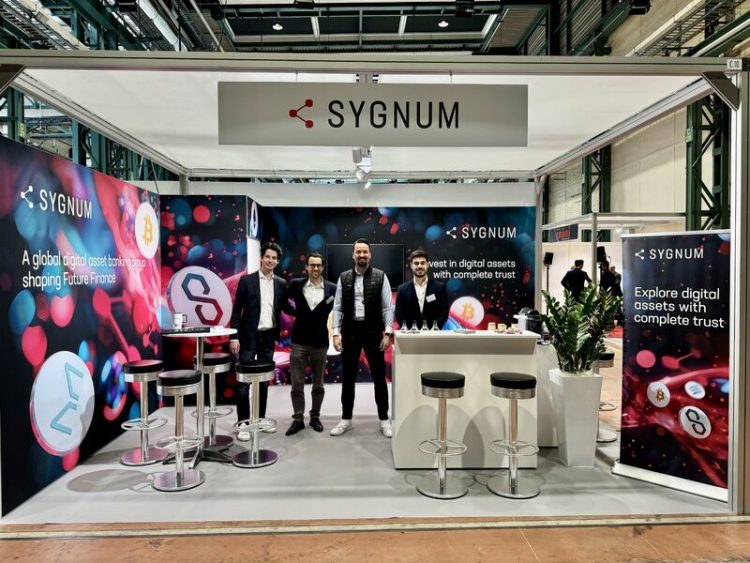
    Back in August 2019, Switzerland made history by granting the world’s first banking licenses to two crypto banks: Sygnum and Amina Bank, which was then known as Seba. With a stellar lineup of investors and advisors backing them from the start, these two players set out to revolutionize the banking landscape.

    Key Players and Their Backing

    Sygnum boasts a roster of influential figures, including former Swiss National Bank Chairman Philipp Hildebrand and ex-UBS CEO Peter Wuffli. Meanwhile, Amina, under the leadership of Guido Bühler, who served as CEO from 2018 to 2022, also received substantial support from seasoned banking veterans like Andreas Amschwand. Today, Julius Bär Group continues to hold a significant 30 percent stake in Amina, with former SNB General Counsel Hans Kuhn on its board since 2019.

    Current Standings

    Fast forward five years, and both Sygnum and Amina have made notable strides but are marching to the beat of their own drums. Sygnum currently employs over double the staff of Amina, reflecting a more extensive operational framework. Ownership dynamics also differ: Sygnum remains largely founder-driven, while Amina is heavily bolstered by institutional support, especially from Julius Baer and Guy Schwarzenbach of Black River Asset Management.

    Performance Metrics

    In the latest results, both banks have seen revenue growth. Amina’s income surged by an impressive 74 percent, while Sygnum’s rose by 37 percent. Interestingly, almost half of Sygnum’s revenue derives from commissions and services offered through its B2B banking platform, which caters to over 20 partner banks, including Swiss state bank Postfinance. In contrast, Amina’s trading income mainly stems from proprietary trading of popular digital assets.

    Cost Management and Financial Health

    While Amina touts progress in cost reduction since its strategic overhaul in 2022, both banks remain well-capitalized. Sygnum reports a CET1 ratio of 17.48 percent, while Amina’s stands at an impressive 34.04 percent, demonstrating robust financial health. However, Sygnum’s advanced technology-centric model sets it apart, achieving EBITDA-positive status and edging closer to breakeven on net income.

    Future Outlook

    Looking ahead, these two pioneering banks are clearly on diverging paths. Sygnum’s investment in proprietary technology has forged a stronghold in the B2B space that Amina may find challenging to penetrate in the near future. While Amina is making strides with private banking clients and crypto-backed loans, its reliance on trading income may pose risks. Management seems conscious of this, turning its gaze toward international expansion and stable income channels.

    As we peer into the future, the stories of Sygnum and Amina continue to unfold. With Sygnum cruising ahead, Amina has its work cut out, navigating a rockier road ahead filled with both challenges and opportunities.

    Questions & Answers

    What significant milestone did Sygnum and Amina achieve in August 2019?
    In August 2019, Sygnum and Amina became the world’s first banks to receive banking licenses for cryptocurrency operations.

    How does Sygnum’s revenue model compare to Amina’s?
    Sygnum’s revenue predominantly comes from commissions and services offered through its B2B banking platform, while Amina mainly generates income through trading digital assets like Bitcoin and Ethereum.

    What key strategy is Amina pursuing to expand its operations?
    Amina is focusing on private banking clients and plans to expand internationally, particularly by leveraging MiCA passporting access to the EEA from Austria.

  • UBS Announces Ambitious Expansion Plans in the Gulf Region

    UBS Announces Ambitious Expansion Plans in the Gulf Region

    UBS is doubling down on the Gulf region and plans to open a new branch in Abu Dhabi.

    Written by Gérard Al-Fil, Dubai

    Switzerland’s largest bank is set to elevate its footprint in the United Arab Emirates (UAE) with an exciting new branch in Abu Dhabi, building on its established presence in the Dubai International Financial Centre (DIFC). According to Bloomberg, this strategic expansion reflects a growing confidence in the region’s potential.

    Beatriz Martin Jimenez, UBS’s President for Europe, the Middle East, and Africa, stated, “The Middle East is definitely a winner for individuals who have moved away from high-tax systems and other countries such as the UK.” This sentiment resonates particularly with affluent Britons, many of whom are flocking to the UAE following the Labour government’s election victory under Prime Minister Keir Starmer in July 2024, which promises increased taxation for the wealthy.

    Beyond the Emirates, UBS has a significant presence in Saudi Arabia, Qatar, and Bahrain, ensuring it remains close to its high-net-worth clients across the Gulf region. This network of branches not only enhances UBS’s ability to cater to the unique needs of affluent clientele but also underscores the bank’s commitment to the aspirations of the region.

    As UBS charts its course in the ever-evolving landscape of wealth management, one has to wonder if Abu Dhabi could soon become the playground for Europe’s elite, offering more than just beautiful beaches and luxurious shopping: a playground for wealth with a side of sunshine!

    Questions & Answers

    Why is UBS opening a new branch in Abu Dhabi?
    The expansion aims to enhance UBS’s presence in the UAE, catering to a growing number of affluent clients relocating from higher-tax countries.

    What factors are contributing to this influx of wealthy clients to the UAE?
    The recent election of the Labour government in the UK, which has proposed higher taxes for the affluent, is driving many individuals to seek more favorable tax conditions in the UAE.

    Which other Gulf countries does UBS operate in?
    UBS also maintains a presence in Saudi Arabia, Qatar, and Bahrain, strategically positioning itself to serve high-net-worth clients throughout the region.

  • UBS Revitalizes Global Wealth Management Division with Strategic Reshuffle

    UBS Revitalizes Global Wealth Management Division with Strategic Reshuffle

    Swiss banking giant UBS is set to unveil a transformative change within its wealth management division, entrusting a former Credit Suisse executive with leading a newly established unit. This exciting development was revealed through an internal memo shared on Tuesday, jointly issued by the co-heads of Global Wealth Management (GWM), Iqbal Khan and Rob Karofsky. A spokesperson for the bank confirmed the organizational shift.

    Introducing Global Connectivity

    Beginning July 1, 2025, Benjamin Cavalli, who currently oversees Strategic Clients, will take charge of the newly formed unit titled “Strategic Clients and Global Connectivity.” This move not only positions Cavalli as a pivotal player in strengthening client relations but also ensures he continues to report directly to Khan and Karofsky as a key member of the GWM Management Team. Additionally, he will maintain oversight over the GWM Executive Chairs and the Global Financial Sponsors Team.

    His mandate is clear: to elevate global connectivity for every client, fostering collaboration across various business areas and functions—a mission that echoes the bank’s commitment to client-centric services.

    A Familiar Face from APAC

    Prior to the merger of Credit Suisse with UBS, Cavalli held the prestigious role of Asia-Pacific head of private banking at his former employer. His extensive experience from this vantage point is anticipated to drive growth and innovation in UBS’s offerings.

    Strengthening Client Services

    In conjunction with these changes, the UHNW Solutions Group, which now resides under Strategic Clients, will transition to GWM Solutions. Notably, the Strategic Client Coverage and Next Generation Solutions teams will be incorporated into Cavalli’s new unit, integrating their expertise to enhance service delivery.

    With this reshuffle, UBS aims to bolster its ultra-high-net-worth offerings and promote improved regional collaboration, ultimately benefiting its clientele. More specifics on the transition are expected to be announced soon, leaving many optimistic about what’s to come.

    Questions & Answers

    What is the primary focus of the newly formed unit at UBS?
    The new unit, “Strategic Clients and Global Connectivity,” will focus on enhancing global connectivity for clients and improving collaboration across various business areas within UBS.

    Who will lead the new unit at UBS?
    Benjamin Cavalli, currently the Head of Strategic Clients, will take the lead on July 1, 2025.

    What changes will occur to the UHNW Solutions Group?
    The UHNW Solutions Group will be relocated to GWM Solutions, although the Strategic Client Coverage and Next Generation Solutions teams will join Cavalli’s new unit instead.

  • Dollar Rises Against Dong, Signaling Shifts in Currency Markets

    Dollar Rises Against Dong, Signaling Shifts in Currency Markets

    The U.S. dollar experienced a slight uptick against the Vietnamese dong on Monday morning, even as it lost ground against several other major currencies. At Vietcombank, the dollar was set at VND26,130, marking a modest 0.08% increase from the previous weekend. Meanwhile, in the black market, the exchange rate dipped slightly to VND26,420, reflecting a 0.04% decrease.

    In a bid to adjust to changing economic conditions, the State Bank of Vietnam raised its reference rate by 0.04%, bringing it to VND24,970.

    On the global stage, the dollar’s four-week winning streak stumbled during early Asian trading, as markets reacted to the unexpected downgrade of the U.S. government’s credit rating and the persistent undercurrents of trade tensions. A report from Reuters indicated that while the greenback rose by 0.6% against major currencies last week—a brief respite sparked by a temporary trade truce between the U.S. and China—the overall economic landscape revealed rising import prices and deteriorating consumer confidence.

    This shift came after Moody’s downgraded the U.S. sovereign credit rating by one notch last Friday, becoming the last of the major rating agencies to take this step. The organization cited concerns over the nation’s ballooning $36 trillion debt load.

    On the other hand, the dollar fell by 0.3% to 145.22 yen and dropped 0.2% against the Swiss franc, both safe-haven assets. The euro rose to $1.1185, gaining 0.2%, while the British pound saw a slight increase, trading at $1.3299, up by 0.1%.

    In the world of currency fluctuations, you never know when a dollar might do a little dance!

    Questions & Answers

    What caused the recent rise of the U.S. dollar against the Vietnamese dong?
    The dollar’s slight rise was mainly influenced by its performance against several other currencies and adjustments in Vietnam’s reference rate.

    How did the international market react to the U.S. government’s credit rating downgrade?
    The downgrade led to a trimming of the dollar’s four-week gains as markets grew cautious, reflecting concerns about economic conditions and rising debt.

    What are the implications of Moody’s downgrade on the U.S. dollar?
    The downgrade raises concerns over fiscal health and can influence investor sentiment, potentially leading to increased volatility in the dollar’s value against other currencies.

  • HSBC Names Desk Head for International Clients

    HSBC Names Desk Head for International Clients

    HSBC Global Private Banking (GPB) has recently announced the appointment of Kapil Khanna as the new desk head for Australia, Japan, and International, effective July 14. Working from the financial hub of Singapore, Khanna will report to Abhishek Mehrotra, who currently serves as the Market Head for Southeast Asia International.

    Impressive Career Record

    Khanna brings with him a wealth of experience in managing relationships with ultra-high net worth clients. His journey began in the Australian wealth management market, where he honed his skills before expanding his horizons to include institutional client coverage across Asia-Pacific and Europe, Middle East, and Africa (EMEA).

    Over the years, Khanna has held a variety of leadership roles at a renowned British private bank. His most recent position was Head of International Investment Counseling, where he had the opportunity to influence the bank’s strategic direction and growth.

    Expert Leadership

    Tommy Leung, Head of GPB South Asia, expressed his enthusiasm for the new appointment. He spoke highly of Khanna’s vast experience in both institutional and private banking, emphasizing his in-depth understanding of the Australian market.

    Leung is confident that Khanna is the perfect candidate to lead the company’s efforts to deepen client relationships and strengthen their presence in these developed economies.

    Driving Growth and Success

    Leung further added that Khanna’s strong leadership is expected to bolster HSBC GPB’s position as a leading global private bank. This strategic appointment aims to support the wealth needs of clients, especially founders and family businesses, who are creating and preserving wealth across generations.

    Questions & Answers

    What is Kapil Khanna’s new role at HSBC GPB?
    Kapil Khanna has been appointed as the Desk Head for Australia, Japan & International.

    What experience does Khanna bring to his new role?
    Khanna brings substantial experience in managing relationships with ultra-high net worth clients from both institutional and private banking sectors. He also has extensive knowledge of the Australian market.

    Who will Khanna be reporting to in his new role?
    Khanna will be reporting to Abhishek Mehrotra, the Market Head for Southeast Asia International.

  • VN-Index Hits New Heights with Third Consecutive Day of Gains

    Vietnam’s stock market is buzzing, with the VN-Index soaring by 1.26% to an impressive 1,309.73 points on Wednesday, marking the third consecutive session of growth. This robust performance follows a modest dip of 16.3 points, coming off a gain of 10 points the previous day. Interestingly, the index has experienced a surge in seven out of the eight trading days this month alone—quite the streak!

    Trading Activity Hits New Highs

    On the Ho Chi Minh Stock Exchange, trading volume witnessed a 10% increase, reaching VND 27.33 trillion (approximately US$1.05 billion), the highest level seen in three weeks. The VN-30 basket, which tracks the 30 largest listed companies, showcased a strong showing with 22 of its members recording gains. Among the standout performers, VPB, affiliated with private lender VPBank, remarkably hit its ceiling price.

    Tech giant FPT Corporation also made waves, with its stock climbing by 5.69%. The state-owned lender BIDV wasn’t far behind, rising by 4.61%. Yet, not all was rosy, as seven blue-chip stocks faced a decline. Vincom Retail’s VRE dropped by 2.76%, while property heavyweight Vinhomes, represented by VHM, ended 2.58% lower.

    Foreign Investment Takes Center Stage

    In a stroke of positivity, foreign investors emerged as net buyers, purchasing a net amount of VND 2.26 trillion, predominantly focusing on FPT and VPB stocks. Over on the Hanoi Stock Exchange, the HNX-Index, which features mid and small-cap stocks, edged up by 0.23%. Additionally, the UPCoM-Index for unlisted public companies increased by 0.24%.

    As the market continues to make significant gains, one can’t help but wonder: is it dancing with joy or just warming up for a more exhilarating performance?

    Questions & Answers

    What influenced the VN-Index growth recently?
    An increase in trading volume, particularly in large-cap stocks like VPBank and FPT, has significantly boosted the VN-Index.

    How have foreign investors impacted the market?
    Foreign investors have turned net buyers, acquiring a significant amount of shares, especially in top-performing companies like FPT and VPB.

    What trends are emerging in Vietnam’s stock market?
    The trend shows a strong recovery with consistent gains, indicating positive sentiment and increasing investor confidence in the market.

  • Credit Suisse Veteran Boosts Private Bank with Strategic Expertise

    Credit Suisse Veteran Boosts Private Bank with Strategic Expertise

    After an impressive tenure spanning over 27 years at Credit Suisse, a seasoned leader has embarked on an exciting new journey at Indosuez Wealth Management, a prominent player in the global wealth management arena. This strategic move signals a commitment to strengthen and expand the brand’s presence within the Swiss market.

    Indosuez Wealth Management: A Key Player in Global Finance

    Indosuez Wealth Management, part of the French banking giant Crédit Agricole, is well-positioned as a formidable global wealth manager. With Switzerland being a focal point for its operations, the brand is set to leverage its extensive expertise to meet the evolving needs of its clientele.

    A Bold Vision for Swiss Expansion

    The recent appointment underscores Indosuez’s ambitions in Switzerland, particularly in the rapidly growing region of Ticino. “This strategic move reaffirms our dedication to expanding our footprint in the Swiss home market,” stated Jacob-Nebout, highlighting the brand’s focus on meeting rising consumer demand for luxury wealth management solutions.

    The Retail Sector Impact

    This strategic personnel change comes at a time when consumer trends are shifting towards personalized wealth management services. As brands like Indosuez expand their capabilities, they are better equipped to cater to the unique needs of high-net-worth individuals, which could significantly alter the landscape of the retail financial services sector.

    Questions & Answers

    What significant change has occurred at Indosuez Wealth Management? A veteran from Credit Suisse, with nearly three decades of experience, has been appointed to a leadership role at Indosuez Wealth Management, focusing on growth in the Swiss market.

    What market is Indosuez particularly targeting with this new leadership? Indosuez is looking to enhance its presence in Switzerland, specifically aiming to capture opportunities in the Ticino region.

    How does this leadership change align with broader retail trends? The appointment reflects a strategic shift in wealth management, targeting the increasing demand for personalized services among high-net-worth individuals, which may reshape the retail financial landscape.

  • UBS Launches Exciting New Partnership in Private Credit Sector

    UBS Launches Exciting New Partnership in Private Credit Sector

    On Tuesday, UBS announced a dynamic new partnership with US-based General Atlantic, aimed at transforming the private credit landscape. This strategic collaboration is set to provide clients with enhanced access to direct financing and innovative funding solutions, marking a significant step in building a robust private credit offering for both institutions.

    Strengthening a Collaborative Foundation

    This new agreement formalizes and expands upon an existing relationship, uniting two financial powerhouses to create a compelling market presence in the private credit space. Coupling UBS’s renowned advisory and investment banking capabilities with General Atlantic’s extensive network and established expertise as a private lender sets the stage for a market-leading proposition in private credit services.

    Pioneering a Market-Leading Private-Credit Platform

    The partnership is strategically positioned to develop a top-tier private credit platform, leveraging unique growth opportunities for clients. The collaboration will bolster General Atlantic’s Credit platform, enhancing its issuance capabilities while simultaneously opening new avenues for UBS’s Global Banking capital-markets franchise.

    With a focus on expanding services, the GA Credit team will oversee investment initiatives and guide a specialized private-credit division. This team will incorporate seasoned professionals from UBS Asset Management’s Credit Investments Group (CIG), emphasizing secured direct loans to enterprises operating in North America and Western Europe.

    Anticipating Consumer and Market Impacts

    As this collaboration unfolds, it has the potential to reshape the retail sector by providing companies with improved access to necessary funding, thereby fostering innovation and growth. The enhanced private credit options could lead to increased investment in projects that drive consumer engagement and satisfaction.

    Questions & Answers

    1. What is the purpose of the UBS and General Atlantic partnership? The partnership aims to enhance access to direct financing and innovative funding solutions, creating a strong private credit offering for clients.
    2. How will the collaboration benefit clients? Clients can expect improved access to secured direct loans and innovative financing options from a market-leading private credit platform.
    3. Which regions will the new private credit focus on? The private credit services will primarily target companies in North America and Western Europe. This strategic alliance not only strengthens the foundations of private credit services but also signals an encouraging shift for investment opportunities within the retail sector, indicating a robust response to evolving consumer trends.

  • Wolfsberg Group’s Ambitious Quest for Integrity in Banking

    Wolfsberg Group’s Ambitious Quest for Integrity in Banking

    The Wolfsberg estate, a pivotal site in the history of Swiss banking, stands as a testament to a visionary approach towards merging education with the elevated standards of banking excellence. Established amidst social upheaval in the 1970s, this historical estate has evolved into a sophisticated center for financial education and dialogue.

    A Storied History

    From Farm to Financial Institution

    Originally constructed in 1576 as a farm by Wolf Walter von Gryffenberg, the Wolfsberg estate has undergone a series of transformations over the centuries. In 1732, the estate was remodeled into a summer residence by Johannes Zollikofer von Altenklingen and later served as the first guesthouse in Thurgau, adding layers of cultural significance to its legacy.

    By the mid-20th century, the estate fell into disrepair before Swiss banking giant SBG, now UBS, acquired it in 1970, thanks in large part to Robert Holzach, a visionary at SBG who saw the potential for greatness in the estate.

    Pioneering the Banker’s Philosophy

    Under Holzach’s direction, Wolfsberg was envisioned as more than just a training facility; it became a crucible for developing a new breed of banker—one imbued with nobility of mind and spirit. Holzach’s belief in the necessity of a refined banking culture sought to instill high standards in a rapidly evolving financial landscape.

    Transformative Education and Training

    A Banker’s Monastery

    Widely referred to as a “banker’s monastery,” Wolfsberg was meticulously designed to foster rigorous training for emerging banking leaders. The estate was thoughtfully renovated to include classrooms, an auditorium, and living quarters, highlighting a commitment to discipline and excellence.

    The official opening in 1975 set the stage for what would become an elite training ground for those seeking a prominent place in the banking world, emphasizing both specialist skills and comprehensive education in economics, politics, and culture.

    Shaping Future Leaders

    Wolfsberg not only hosted lectures by top-tier global leaders like Mikhail Gorbachev and Helmut Schmidt but also integrated unique training methods, including simulations and role-play, to prepare participants for real-world challenges. The emphasis on pressure-based learning ensured that future executives could effectively navigate the complexities of modern finance.

    Modernization and Global Outreach

    An Evolving Mission

    As the global economic landscape shifted in the 1990s, SBG adapted the Wolfsberg model to align with the new realities of globalization and the Americanization of finance. Significant renovations were implemented between 2005 and 2008, enhancing the facilities while shifting focus from insular training to a broader, international approach.

    Today, the Wolfsberg estate serves as the UBS Center for Education and Dialogue, hosting a variety of events that facilitate networking and thought leadership among clients and organizations. With roughly 30 annual events under the Wolfsberg Dialogue Program, the center emphasizes themes of economics, politics, and passion, providing exclusive opportunities for idea exchange.

    Conclusion: The Broader Implication for Retail and Banking

    As Wolfsberg adapts to the changing tides of the banking industry, its legacy continues to influence how financial institutions approach training, leadership, and innovation. This evolution highlights a pivotal moment for brands striving to maintain relevance in an increasingly dynamic market.

    Questions & Answers:

    1. What is the historical significance of Wolfsberg? Wolfsberg has evolved from a 16th-century farm into an essential training center for bankers, reflecting the changing landscape of the financial industry.

    2. How did Robert Holzach influence the creation of Wolfsberg? Holzach spearheaded the acquisition and transformation of Wolfsberg into a training ground aimed at fostering a new standard of excellence in banking through rigorous education.

    3. What is the current focus of the UBS Center for Education and Dialogue? The center primarily hosts dialogues and events that cater to global clients, shifting from in-house training to a more inclusive platform for networking and idea exchange in economics and politics.

    In this dynamic era of retail and finance, Wolfsberg serves as a poignant reminder of the importance of continuous evolution and the cultivation of elite standards to thrive amidst consumer trends and market demands.

  • UBS Settles Credit Suisse U.S. Tax Case for $511 Million

    UBS Settles Credit Suisse U.S. Tax Case for $511 Million

    UBS Resolves Credit Suisse Tax Investigation with $510 Million Settlement

    The U.S. Department of Justice has concluded its protracted investigation into Credit Suisse’s tax practices, resulting in a settlement considerably lower than initial projections.

    In a significant development within the retail banking sector, Credit Suisse Services—now a subsidiary of UBS Group—will pay over $510 million to resolve two major U.S. tax inquiries. The settlement, announced by the Department of Justice (DOJ), addresses serious misconduct involving American clients.

    Major Allegations and Settlement Details

    The guilty plea from Credit Suisse reveals its role in aiding U.S. taxpayers to conceal assets totaling more than $6 billion across offshore accounts. This included over $4 billion hidden in at least 475 undeclared accounts in Switzerland and an additional $2 billion linked to U.S. assets in Singapore. These actions occurred despite Credit Suisse’s previous admissions of guilt in a 2014 agreement aimed at achieving full compliance with U.S. tax laws.

    A Settlement Lower Than Expected

    Speculation surrounded the potential settlement amount, with earlier reports suggesting a figure much higher than the final tally of $511 million. This sum is broken down into $371.9 million related to Swiss misconduct and $138.7 million for issues tied to Singapore. Two critical factors may have influenced the lower resolution: changes in the administration’s enforcement priorities and the decline in interest in prosecuting past Credit Suisse executives following UBS’s acquisition.

    Continued Misconduct Up to 2021

    The DOJ’s findings confirm that Credit Suisse continued to assist American clients in tax evasion well beyond its 2014 commitment to compliance. Bankers engaged in activities such as crafting fraudulent donation documents and misrepresenting account holders as recently as 2021.

    Connections to Singapore and Ongoing Litigation

    The investigation’s ties to Singapore include claims of undisclosed funds associated with Georgian billionaire Bidzina Ivanishvili, who is currently pursuing legal action against Credit Suisse for alleged fraud. UBS has emphasized its non-involvement in misconduct, reiterating its stringent “zero tolerance” policy toward tax evasion.

    Looking Ahead: Financial Impact Still Unclear

    The ramifications of this settlement for UBS are still being assessed. While UBS anticipates a credit this quarter resulting from a contingent liability adjustment following its acquisition of Credit Suisse, a related charge will also be recorded.

    As this case culminates, it brings to light ongoing challenges within the retail banking sphere, particularly regarding compliance with tax regulations. The implications of this case could resonate through the sector, prompting a reassessment of regulatory practices and consumer trust in financial institutions.

  • Revolut Drives Retail Growth Amid Rising Consumer Demand

    Revolut Drives Retail Growth Amid Rising Consumer Demand

    Neobank Revolut is on the rise, showcasing impressive advances in customer acquisition and transaction volume while expanding its presence in Switzerland.

    British fintech giant Revolut continues its upward trajectory, demonstrating strong performance with a 72% revenue increase, now totaling £3.1 billion (approximately 3.41 billion francs), as stated in their latest annual report published Thursday. This impressive growth reflects their ability to scale effectively across nearly 30 countries, attracting a burgeoning global customer base.

    Soaring Profits and Customer Base

    In 2024, Revolut’s pre-tax profit soared by 149% to £1.09 billion, while net profit surged by 130% to £790 million. As of year-end, Revolut boasted 52.5 million customers worldwide—a 38% increase—outpacing established banking institutions. For context, HSBC, the UK’s largest bank, currently serves 41 million customers.

    The innovative neobank processed an astonishing £1 trillion in total transaction volume, with a peak of 940 million transactions occurring in December alone.

    Expanding Service Offerings

    CEO and co-founder Nik Storonsky emphasized the company’s multifaceted growth, stating, “We not only accelerated our customer growth and added almost 15 million new users globally, but also achieved deeper customer engagement through a wider range of our services in both retail and Revolut Business.” This expansion strategy aligns with their ambitious aim of reaching 100 million active customers in 100 countries.

    Strategic Expansion Plans

    Revolut is set to launch its banking services in Mexico and has recently secured a license for prepaid payment instruments (PPI) from the Reserve Bank of India. Additionally, the company has ten more license applications pending, reflecting its aggressive expansion strategy. Growth has been particularly robust in Southern Europe and the Nordic region, with plans to further penetrate the Asia-Pacific and Middle Eastern markets.

    Navigating Rising Costs and Workforce Growth

    As Revolut accelerates its growth, operational costs have risen by 50% to £1.4 billion, largely attributed to a 60% increase in personnel expenses, totaling £794 million. The workforce expanded significantly, reaching 10,133 employees at the end of the year, up from 8,152.

    Focus on Switzerland

    Revolut’s growth in Switzerland has been particularly noteworthy, with a 29% increase in private customers and a 41% rise among business clients. Swiss users recorded nearly 70 million card and ATM transactions—a remarkable 30% growth from the previous year—while domestic transactions rose by 29%. The company has also launched services in Switzerland, facilitating QR code payments through a “virtual” Swiss IBAN.

    In the UK, Revolut operates with a restricted banking license and utilizes a full license in Lithuania for its EU operations. This strategic positioning enables the fintech leader to leverage its offerings in various markets.


    The ongoing success of Revolut not only enhances its standing in the fintech landscape but also signifies broader trends in consumer behavior and technological advancement. As digital banking evolves, consumers can anticipate more innovative solutions and increased competition among financial service providers, ultimately reshaping the retail sector.

  • Sygnum Bank Achieves Unicorn Status, Boosting Brand Growth in Fintech

    Sygnum Bank Achieves Unicorn Status, Boosting Brand Growth in Fintech

    Sygnum Bank has emerged as a beacon of resilience in the Swiss financial landscape, successfully securing $58 million in an oversubscribed funding round, and achieving a valuation exceeding $1 billion. This milestone reflects the bank’s determination to expand its foothold in the competitive digital asset arena.

    Funding Round Fuels Expansion Plans

    The successful funding round, which welcomed prominent investor Fulgur Ventures, aims to propel Sygnum’s growth initiatives and market presence. The bank plans to leverage the new capital to broaden its reach within the European Economic Area (EEA) and Hong Kong, enhance its product offerings, and strengthen its operational infrastructure. With over $5 billion in client assets, Sygnum solidifies its position as a significant player in the global digital asset ecosystem.

    In a recent press release, CEO Mathias Imbach underscored the importance of sustained innovation within Switzerland’s financial sector. “As Switzerland loses its competitive edge as a digital asset hub, it’s crucial to attract talent and capital to remain relevant,” he stated.

    Strategic Growth in Target Markets

    While Sygnum celebrates its achievements, challenges persist for Switzerland as other countries, such as the U.S., continue to embrace digital assets. Currently, Sygnum does not operate in the U.S., focusing instead on high-growth markets like Singapore, the United Arab Emirates, and soon, Hong Kong. The bank is also pursuing a MiCAR license in Liechtenstein to enhance access to European markets.

    Partnership with Fulgur Ventures

    Fulgur Ventures, a U.S.-based venture capital firm specializing in Bitcoin technologies, played a crucial role in Sygnum’s latest funding round. Partner Oleg Mikhalsky stated, “Sygnum’s established infrastructure and dedicated team make them an ideal partner for developing innovative Bitcoin-related financial products.” This partnership highlights the growing intersection of Bitcoin technologies with institutional finance, an area where Sygnum is particularly well-positioned.

    Leadership Driving Vision and Innovation

    Sygnum’s success is supported by a robust institutional infrastructure and commitment to regulatory compliance. Co-founder and Group CEO Imbach remarked, “Achieving unicorn status validates our business model and strategy. It’s a proud moment for us, but it won’t change our core values of integrity and humility.”

    Meanwhile, Co-founder Gerald Goh, CEO of Sygnum APAC, emphasized that offering trusted services for digital assets will remain central to the bank’s growth strategy.

    Navigating Future Opportunities

    Sygnum boasts over 2,000 institutional clients across 70 countries, with regulated operations in Switzerland, Singapore, and Abu Dhabi, positioning it well to navigate the changing digital asset landscape. Recent product initiatives, such as the Sygnum Connect instant settlement network and Sygnum Protect, which allows clients to trade on major crypto exchanges while securely holding assets with Sygnum, exemplify the bank’s commitment to innovation.

    A Path Forward for Switzerland

    Sygnum Bank’s remarkable growth offers a glimmer of hope for the Swiss financial sector, yet the pressure to innovate and adapt never subsides. As more jurisdictions adopt crypto-friendly regulations, Switzerland’s financial industry must prioritize modernization and talent acquisition to stay competitive.

    Sygnum’s journey encapsulates the potential for transformation within the digital finance realm. As Switzerland seeks to maintain its status as a financial hub, the message is clear: adapt strategically or risk being left behind in a rapidly evolving global financial landscape.

  • Italian Asset Manager Appoints New Sales Leader for Switzerland

    Italian Asset Manager Appoints New Sales Leader for Switzerland

    Eurizon Asset Management appoints Alain Barthel as Head of Sales Switzerland to enhance its market presence.

    In a significant move to solidify its footprint in the competitive Swiss financial landscape, Eurizon Asset Management has welcomed Alain Barthel as the new Head of Sales for Switzerland, effective April 1st. Operating from Zurich, Barthel brings a wealth of experience and expertise to this critical role.

    A Seasoned Professional Joins Eurizon

    Alain Barthel arrives at Eurizon with over 25 years of robust experience in sales and business development within the asset management and financial sectors. His previous roles include Senior Consultant at Anglo-Swiss Advisors and Head of Continental Europe at Brandywine Global Investment Management, a part of Franklin Templeton Group.

    Barthel’s impressive track record also features stints at leading asset management firms like UBS Asset Management, Goldman Sachs Asset Management, and Morgan Stanley Investment Management, where he held key sales positions and catered to a diverse array of client segments.

    Strengthening Client Partnerships

    Commenting on Barthel’s appointment, Gabriele Miodini, Head of International Business Development at Eurizon Capital SGR, stated, “With Alain, we are gaining an experienced industry expert for the very important Swiss market. His in-depth market knowledge, strategic thinking, and partnership approach with clients will play a key role in further strengthening our local presence.”

    Expanding European Reach

    Eurizon, an Italian asset manager, operates extensively across continental Europe. With offices in countries like Germany, Spain, and France, and subsidiaries in Luxembourg, the UK, Eastern Europe, and Asia, the company is focused on enhancing its investment capabilities and client services across the region.

    Impact on the Retail Sector

    With consumer demand for robust asset management solutions on the rise, Barthel’s leadership may significantly influence Eurizon’s growth strategy in Switzerland. As the firm expands its presence and fosters deeper client relationships, this appointment could reshape the retail investment landscape, bringing forward innovative solutions that align with evolving consumer trends.

  • Bergos Managing Director Transitions from Banking to Train Driving Career

    Bergos Managing Director Transitions from Banking to Train Driving Career

    In a surprising career shift, Christian Basler, the former managing director of the private bank Bergos, has left his executive role to pursue a new path as a train driver with SBB. After more than three decades in the financial sector, Basler is embracing the challenges of rail transport in Switzerland.

    A Notable Career in Finance

    Basler’s extensive background includes prominent positions where he excelled in serving international clients. At Bergos, he focused on supporting shipping customers, leveraging the firm’s longstanding ties to the maritime industry. Bergos, which became independent from the German bank Berenberg in 2018, retains a strong clientele in the shipping sector, particularly benefiting from its Hamburg roots.

    Experience with Leading Financial Institutions

    Prior to his tenure at Bergos, Basler spent three impactful years with Credit Suisse, where he led a team focused on markets in Greece and Cyprus from their Zurich office. This followed an impressive eleven-year stint at UBS, where he rose through the ranks with roles including relationship manager, executive director, and head of active advisory for emerging markets.

    A Fresh Start in the Rail Sector

    Basler’s decision to leave the finance industry reflects a growing trend of professionals seeking meaningful pursuits outside their original career paths. As he trains to become a train driver, Basler joins a wave of individuals re-evaluating their career trajectories in response to shifting consumer trends and work-life balances.

    The move to the rail industry not only marks a personal transformation for Basler but also highlights the broader trend of diversification seen across various sectors, including retail and consumer services.

    As Basler embarks on this journey, his story resonates in today’s evolving job market, where adaptability and a willingness to embrace change are essential. The potential ripple effect of such transitions can inspire others in the retail sector and beyond to explore new opportunities, ultimately reshaping consumer experiences.

  • UBS Adds Global Crisis as Possible Downside Scenario

    UBS Adds Global Crisis as Possible Downside Scenario

    Wary of the potential for the escalating trade war to materially destabilize the macro environment, UBS has revised its assessment of possible downside scenarios, including the risk of a global crisis.

    In the first quarter earnings report of UBS, the Swiss banking giant revised its list of expected credit loss (ECL) models, economic scenarios that could play out as well as their weightings. This was due to prevailing economic and political conditions, most notably from the rapid escalation of the trade war under US President Donald Trump.

    As of 31 March 2025, there was a high degree of geopolitical and macroeconomic uncertainty, including uncertainty relating to tariffs that could be introduced by the US government after that date and the economic consequences thereof, the bank said.

    The actual announcing of the tariffs in April 2025 was subsequent to the reporting date. UBS has assessed the situation based on the uncertainties that existed on the reporting date and has exercised judgment.

    Adjusted Predictions

    As a result, UBS has adjusted its forecasts with the replacement of the stagflationary geopolitical crisis scenario with a «global crisis scenario» (15 percent chance) which targets risks such as sovereign defaults, low interest rates and significant emerging market stress. The «mild debt crisis scenario» has also been replaced with a mild stagflation crisis scenario (30 percent chance) with assumptions of rising rates alongside declines in GDP and equities.

    It applies a 50 percent chance to its baseline scenario of relatively stable economic conditions, down from 60 percent at the end of 2024.

    UBS is closely monitoring the current market situation, and it will carefully assess developments, potentially revisiting the narratives and weightings in the second quarter of 2025, the bank added.