Tag: Banking

  • HSBC Scores Above other Banks

    HSBC Scores Above other Banks

    The British-Asian bank HSBC, which is also active in Switzerland, delivered a good operating result in the first quarter. Investment banking, asset management and International Wealth and Premier Banking performed particularly well. However, net profit was lower following the Group’s reorganization.

    In the first quarter of 2025, HSBC increased pre-tax profit adjusted for one-off effects such as divestments and currency effects by 11 percent to 9.8 billion dollars. Adjusted revenues increased by seven percent to 17.7 billion dollars, as was reported in a press release on Tuesday.

    The bank points to growth in the wealth management business in the IWPB and Hong Kong business segments. This was supported by higher client activity in the foreign exchange, bond and equity market business due to high market volatility.

    On balance, however, the London-based bank earned less. Following extraordinary income of 3.7 billion dollars from divestments in Canada and Argentina last year, net profit fell by 3.2 billion or 32 percent to 6.93 billion dollars.

    New Share Buyback Program

    The announcement of a new share buyback program with a volume of USD 3 billion should please shareholders. A 2 billion program was completed last year.

    Our strong results this quarter demonstrate the momentum of our earnings, the discipline in executing our strategy and the confidence in our ability to achieve our goals, sayd CEO Georges Elhedery.

    Elhedery took over the management of the bank last September and undertook a far-reaching restructuring. HSBC has merged its commercial and investment banking activities and intends to concentrate on its strengths such as the private client business in the UK and Hong Kong. This also includes cost savings of 1.8 billion dollars over the next two years.

    HSBC generates the majority of its income in Asia and, as one of the world’s largest commercial banks, would be exposed to major risks in the event of a trade dispute between the USA and China. The management asserts that a conservative approach to credit risk means it is well-positioned to overcome the challenges ahead. In a scenario with significantly higher tariffs, the bank expects a direct impact on earnings in the low single-digit percentage range and credit losses of around 500 million dollars.

  • Revolut Continues Its Unstoppable Growth

    Revolut Continues Its Unstoppable Growth

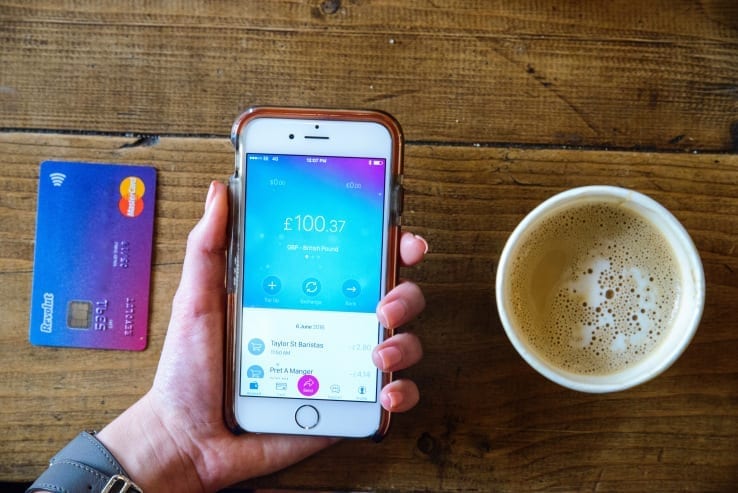
    The British fintech company, now active in around 30 countries, continued its rapid growth last year. Revenue rose by 72 percent to £3,1 billion, according to the annual report published on Thursday. That equates to approximately 3,41 billion francs.

    Pre-tax profit increased by an impressive 149 percent to £1,09 billion, while net profit rose by 130 percent to £790 million.

    By the end of 2024, Revolut’s global customer base had grown by 38 percent to 52,5 million. In comparison, HSBC, the UK’s largest bank, recently reported 41 million customers.

    The total transaction volume amounted to approximately £1 trillion, with 940 million transactions processed in December alone.

    Broader Range of Services

    We not only accelerated our customer growth and added almost 15 million new users globally, but also achieved deeper customer engagement, as our clients increasingly used a broader range of our services—both in the retail space and through Revolut Business, said CEO and co-founder Nik Storonsky.

    The company had already presented ambitious growth plans for the current year. We are making great progress towards our goal of 100 million daily active customers in 100 countries, Storonsky said.

    Expansion into Mexico, License for India

    In the coming months, Revolut will launch its Mexican bank, and it recently received its license for prepaid payment instruments (PPI) from the Reserve Bank of India. Ten additional license applications are currently pending worldwide.

    Usage of Revolut has grown not only in the UK and Ireland but across Europe, including Southern Europe and the Nordic countries. The company also plans to expand in the Asia-Pacific region and the Middle East.

    Costs Rise, Workforce Expands

    Costs rose by 50 percent in 2024 to £1,4 billion, with personnel expenses increasing by 60 percent to £794 million. The number of employees reached 10,133 by year-end, up from 8,152 previously.

    Swiss Ambitions

    In Switzerland, Revolut’s growth reached 29 percent among private customers and 41 percent among business clients last year. Swiss customers made nearly 70 million card and ATM transactions, a 30 percent increase from 2023. Domestic transactions rose by 29 percent.

    In early April, Switzerland head Julian Biegmann said that since March, Revolut has served over 1 million private customers in Switzerland. The neobank is represented in Zurich and Geneva with a total of 10 employees.

    In the UK, the privately held company, which claims a valuation of $45 billion, operates with a restricted banking license. Its EU operations are based on a full license in Lithuania. In Switzerland, Revolut recently enabled services such as QR code payments via a «virtual» Swiss IBAN.

  • How the Banking Industry Drives Switzerland’s Economic Power

    How the Banking Industry Drives Switzerland’s Economic Power

    The banking association Swiss Banking has presented a study that underscores the importance of the financial industry for the Swiss economy. To ensure this remains the case, prudent strategic decisions and smart, focused regulation are needed.

    The study, commissioned by Swiss Banking (Swiss Bankers Association, SBA) and conducted by the consulting firm Oliver Wyman, concludes that the banking industry plays a key role in supporting economic growth and strengthening Switzerland’s capacity for innovation.

    In 2024, the Swiss financial sector contributed CHF 74 billion to the national economy, which corresponds to 9 percent of GDP. Of this contribution, 57 percent came from banking services (5 percent of GDP), and 43 percent from insurance and other financial service providers.

    Around 160’000 highly qualified professionals work in the banking sector. For each job in the industry, there is an additional job in another sector that depends on it. Annual tax contributions amount to CHF 7 billion, making banks one of the most important sectors in the Swiss economy. Every eighth tax franc comes from the financial industry, emphasized Swiss Banking President Marcel Rohner during the presentation of the study on Friday in Zurich.

    The Swiss financial center is considered one of the most important worldwide and is a key pillar for prosperity, innovation, and international connectivity in Switzerland. This has led to more favorable financing conditions and a lower interest rate level in Switzerland than abroad for many years, Rohner added. This represents an important competitive advantage for companies and also has positive effects for consumers.

    Another factor is the success in international wealth management,» said association CEO Roman Studer. Some of these assets also contribute to financing volumes.

    The industry provides efficient access to capital for both private and corporate clients – nationally and internationally. Especially for small and medium-sized enterprises (SMEs), a stable supply of credit is essential. There is a close symbiosis between the banking sector and the broader economy.

    The financial sector is growing, and much has emerged in recent years, said Rohner. He cited examples such as the relatively young financial service providers Swissquote and Partners Group, which are successful global publicly listed companies, as well as fully licensed digital asset banks like Amina and Sygnum. In 2024, there were 484 fintech firms.

    As a result, the financial ecosystem is deepening, and fintechs and banks are increasingly benefiting from one another. New markets are emerging with digital assets, such as crypto ETPs, ESG investments, or impact investments.

    To ensure that Switzerland’s financial center remains successful in the future, prudent strategic decisions are needed. Economic openness, smart and focused regulation, and a solid reputation, especially about money laundering or terrorism financing, are key to the financial center’s competitiveness.

    Regulation must be internationally aligned. This also includes robust and broad-based liquidity safeguards as well as solid and competitive capital requirements. We must and want to learn the right lessons from the Credit Suisse case, emphasized Studer. This includes liquidity safeguards and resolution capabilities. That must also apply to UBS.

    The only remaining major Swiss bank plays a crucial role in the ecosystem, from which smaller banks also benefit. «UBS is important on the corporate client side, and we need a global bank that can offer products and services others cannot, Rohner said.

    The position of the Swiss banking sector should not be taken for granted and must be protected,» he added. «We want to take good care of our financial center and shape it with ambition, in line with our tradition of excellence, trust, integrity, and stability. That’s how we stay globally relevant and future-ready. That is our responsibility – and our opportunity.

    When it comes to regulation and capital requirements for UBS, a middle ground will be found – I’m confident there’s no insurmountable divide.

    The fact that the political process is dragging on has both advantages and disadvantages. The extended timeline creates uncertainty, but also ensures that questions are addressed holistically rather than in isolation.

  • UBS Secures Key Regulatory Win in China

    UBS Secures Key Regulatory Win in China

    Swiss bank UBS is strengthening its presence in China after receiving regulatory approval to acquire a local securities firm fully.

    UBS will acquire an additional 33 percent stake in UBS Securities from Beijing State-owned Assets Management Co., Ltd (BSAM), thereby taking full control of UBS Securities in China. The big bank announced this on Friday, having received the corresponding approval from the China Securities Regulatory Commission.

    UBS Securities was the first foreign-invested, fully licensed securities joint venture in China in 2007. In 2018, UBS became the first foreign bank to take majority control of a Chinese securities firm – initially with a 51 percent stake, which was increased to 67 percent in 2022.

    UBS Securities is active in global banking, global markets, research and wealth management.

    UBS is proud of its long history in China and of serving clients in one of the most important and fastest-growing markets in the world. We will continue to invest in China as a central pillar of our growth ambition, further strengthening our leadership position in the region, said Group CEO Sergio Ermotti.

    The move to full ownership of UBS Securities is an important milestone for our integrated strategy in the region. It enables us to further expand our investment banking and wealth management offering in China. Not only will we be able to capitalize on the tremendous business opportunities as China’s financial sector opens up, but we will also gain better access to the unique wealth creation that we can support with our products, services and advice,» Iqbal Khan, President Asia Pacific and Co-President Global Wealth Management at UBS, said.

  • Globe, GoTyme Bank Partner to Strengthen Anti-Scam Measures

    Globe, GoTyme Bank Partner to Strengthen Anti-Scam Measures

    This collaboration will comply with the Data Privacy Act and streamline the process of investigating suspected scammers by eliminating the need for warrants or subpoenas to access their information.

    Globe’s Chief Privacy Officer, Irish Salandanan-Almeida, emphasized, “This partnership reflects our ongoing commitment to championing cybersecurity and protecting our customers from the growing threats in the digital world. Through collaborations, we can combine our expertise and resources to better safeguard the financial sector and our customers from cybercrime.”

    In the first half of last year, Globe blocked 2.7 million bank-related spam and scam messages, investing around USD 20 million in scam detection and prevention systems to protect consumers from deceptive messages. A study by Kaspersky revealed that Filipinos encountered 14.1 million web threats last year, a decrease from 26.6 million in 2023.

    Yeo Siang Tiong, Kaspersky’s General Manager for Southeast Asia, suggested that this decline in cyber threats could be due to improved detection and prevention methods. However, Tiong cautioned that hackers might be targeting specific high-value individuals rather than launching widespread cyberattacks.

  • Vietcombank Remittance named best remittance company in Vietnam

    Vietcombank Remittance named best remittance company in Vietnam

    Vietcombank Remittance was honored as “Remittance Company of the Year – Vietnam” for the third consecutive time by Asian Banking & Finance on Dec. 24.

    This achievement affirms the quality of services and the growth of Vietcombank Remittance, recognizing the company’s efforts and demonstrating its position in both the domestic and international remittance markets.

    Vietcombank Remittance is the only remittance company in Vietnam to organize the Client Conference for three consecutive years successfully. This year’s event featured participation from strategic partners in Taiwan, South Korea, the United States, and several other countries, highlighting the company’s role in fostering international cooperation and collaboration.

    The company consistently supports government agencies in developing policies to enhance remittance resources. Vietcombank Remittance actively participates in programs organized by the Overseas Vietnamese Committee of Ho Chi Minh City to promote collaboration among stakeholders and increase the efficiency of remittance flows. The company has also significantly contributed to Ho Chi Minh City People’s Committee’s project on “Optimizing the Effectiveness of Remittance Resources.”

    Vietcombank Remittance is committed to collaborating with the Ho Chi Minh City People’s Committee to implement specific initiatives such as supporting the improvement of policy mechanisms and facilitating convenient conditions for overseas Vietnamese to send money home. It collaborates closely with regulatory agencies to create clear legal frameworks and facilitate the use of technology in remittance operations.

    The company is leading initial efforts to establish the Vietnam Remittance Association to elevate the industry’s position on the international stage. This association is expected to serve as a bridge between the government, businesses, and the overseas Vietnamese community, ensuring policies are geared toward sustainable development.

  • UBS Sees Uninterrupted Client Momentum

    UBS Sees Uninterrupted Client Momentum

    Switzerland’s largest bank reports strong transactional activity in its core business and expects to achieve its objective of $100 billion in net new assets by the end of the year.

    UBS is turning the upheavals and drama of 2023, and its fraught government-prompted takeover of Credit Suisse, into a dim national memory receding in the rearview mirror of Swiss business history.

    In its third-quarter ad hoc announcement released on Wednesday, the bank reported an underlying pre-tax profit of $2.4 billion, which it said was an ample indication of the strength of its client franchises.

    Overall, group revenues were up 5 percent year-on-year but gained 9 percent on an underlying basis, with the aforementioned transactional activity recurring fee income more than offsetting the expected headwinds impacting net interest income after key central banks started cutting interest rates in the quarter.

    Invested assets were up 15 percent at $6.2 trillion as it experienced «continued client momentum» with $25 billion in net new assets in its core global wealth management business, putting it on «on track» to deliver its ambition of bringing in $100 billion in net new assets for the whole of 2024.

    Overall, the market environment remained constructive in the third quarter but also showed «signs of dislocation and volatility».

    UBS generated $15 billion in net new fee-generating assets and saw strong discretionary mandate sales in all regions despite continued pricing discipline.

    It also recorded strong transactional activity in global wealth management and the investment bank, with the former’s revenues up almost a fifth (19 percent) with the latter gaining by practically a third (31 percent).

    The high levels of transactional activity came from both private and institutional clients, with global wealth management seeing strong momentum in all regions led by the Americans and the Asia Pacific (APAC).

    In its investment bank, the global markets business saw gains also coming from all regions, but «particularly» in the Americas. The global banking business experienced strong M&A performances in Asia and the US. In UBS’s Swiss home market, it granted or renewed around 35 billion francs in loans.

    Beyond that, it indicated that many facets of its integration with Credit Suisse, the country’s erstwhile second-largest bank, remained on track. It completed the first wave of client migrations in Luxembourg and Hong Kong this month. Singapore and Japan are expected to be finalized by the end of the year, with Switzerland up in 2025.

    It is on target to reach the expected $7.5 billion in cost cuts this year after it managed to realize an additional $800 million in savings in the third quarter, with a further $5 billion in risk-weighted asset reductions in non-core and legacy ahead of plans.

    As a result, it expects to be in a position to save about $13 billion (gross) by the end of 2026.

    It also maintained that it would complete $1 billion in share repurchases in the fourth quarter and it intends to keep making them in 2025 although that will depend on the country’s review of its capital regime requirements.

    It also announced several AI initiatives to benefit clients and employees, including a new proprietary AI assistant for 20,000 employees in Switzerland, Hong Kong, and Singapore with «easy» access to product information and investment research.

    In the investment bank, it is piloting a proprietary AI algorithm that researches and compiles M&A buy-side targets.

    UBS indicated that it expects a continuation of the current market trends in the fourth quarter given expectations for a soft landing in the US economy despite macroeconomic conditions remaining clouded elsewhere in the world.

    In the fourth quarter, we anticipate a mid-single digit decline in net interest income in Global Wealth Management and a low single-digit decline in Personal & Corporate Banking. Non-core and legacy is expected to generate a quarterly pre-tax loss in line with our earlier guidance, the bank indicated.

  • Saxo Bank Partners with Zurich Fintech Leonteq

    Saxo Bank is enhancing its structured investment product offerings through a strategic collaboration with Leonteq.

    Leonteq and Saxo Bank have initiated a partnership focused on the development and distribution of structured products, as announced by both companies on Tuesday. Under this agreement, Saxo Bank will take on the role of a sponsor within a standardized white-label issuance model developed by Leonteq while also managing the distribution of these financial products.

    Moreover, Leonteq has secured an international distribution mandate from Saxo Bank, granting the firm access to Saxo’s global distribution network. The first structured products, backed by Saxo Bank, are expected to be available on the Leonteq platform by 2025, subject to regulatory approval.

    Focus on the Swiss market

    Leonteq also intends to feature Saxo Bank-backed structured products on its digital investment platform.

    «The partnership with Leonteq marks a significant step for Saxo Bank in expanding our structured investment product offerings, particularly for our rapidly growing Swiss client base. This collaboration represents a genuine win-win situation,» stated Kim Fournais, CEO of Saxo Bank.

  • UBS Gets Business Back on Track

    UBS Gets Business Back on Track

    Switzerland’s largest bank indicated that profitability in the second quarter returned to the levels it saw before being forced to rescue Credit Suisse.

    UBS indicated that profit before taxes in the second quarter was $1.5 billion, a media release sent by the group on Tuesday (year-earlier figures are not directly comparable given the first-time integration of Credit Suisse).

    The bank nevertheless said it experienced continued client momentum, with its core wealth management business seeing net new assets of $27 billion.

    Of the net new assets, UBS said $16 billion were fee-generating assets. In the first half, net new assets totaled $54 billion, it indicated.

    Beyond that, UBS’s investment bank saw strong transactional activity, with the Global Markets business, where revenues were up 18 percent, experiencing its best second-quarter performance since 2013.

    Overall, the bank maintained that it had returned to the levels of profitability it had before being forced to rescue its former peer and competitor, Credit Suisse.

    We are now entering the next phase of our integration, which will be critical to realize further substantial cost, capital, funding and tax benefits, the media release stated.

    It realized additional cost savings of $0.9 billion in the second quarter, which corresponds to 45 percent of the cuts it is targeting by the end of 2026.

    By the end of this year, it expects to be in a position to realize 55 percent, or more than half, of its final target.

    The bank also managed to reduce risk-weighted assets in its non-core and legacy business by 42 percent year-on-year while its CET1 capital ratio was at 14.9 percent and its CET leverage ratio at 4.9 percent.

    It also restarted its share buyback program with the total amount of shares bought back at $467 million as of 9 August.

    The outlook for the remainder of the year continues to be «clouded by ongoing conflicts, other geopolitical tensions and the upcoming US elections.

    Entering the third quarter, we are seeing positive investor sentiment and continued momentum in client and transactional activity,» the bank maintained.

  • Techcombank named Vietnam’s Best Bank again

    Techcombank named Vietnam’s Best Bank again

    Techcombank has been named Vietnam’s Best Bank as well as Best Bank for Corporates at this year’s Euromoney Awards for Excellence.

    Techcombank has been named Best Bank in Vietnam 2024 by three international finance publications: Euromoney, Finance Asia, and Global Finance, becoming the only Vietnamese bank to ever win all three prestigious awards in the same year.

    In June, the bank was also named Number 1 Bank in Vietnam in the World’s Best Banks 2024 rankings by Forbes Magazine, based on an extensive survey of customer opinion.

    Jens Lottner, CEO of Techcombank, said that this is an unprecedented achievement.

    “These awards are testament to the success of the bank’s customer-centric strategy, the quality of its advanced data capabilities and digital infrastructure, and the unwavering commitment to excellence throughout the organization,” Lottner said. “Together, these pillars have firmly established Techcombank as one of the strongest banking platforms in Asia.”

    The Euromoney Awards for Excellence are widely considered to be one of the most prestigious accreditations in the banking industry and a strong and independent endorsement of excellence and achievement.

    Banks from over 100 countries entered the Awards for Excellence in 2024, and the best banks in each market were carefully selected by Euromoney’s independent team of editors and analysts.

    Techcombank has now won the Euromoney award for Vietnam’s Best Bank for an unprecedented fifth time, more than any other lender in Vietnam.

    This year’s award recognized Techcombank for its strong financial performance and profitability in 2023, achieved despite economic headwinds and proving the resilience of Techcombank’s business model.

    “Techcombank further solidified its leadership in Vietnam’s banking sector in 2023,” acknowledged Lousie Bowman, Euromoney Editor.

    Techcombank’s sustained profitability, robust asset quality, and balance sheet strength have enabled it to pay a cash dividend of VND1,500 per share to its shareholders in Q2 2024, one of the highest cash dividends in the industry.

    The award also acknowledged the bank’s focus on customer-centricity and its role as an industry pioneer through the launch of innovative digital and data-led solutions for individual, business, and corporate customers.

    For example, its new auto-earning solution enables individual customers to generate profit from their idle cash; Techcombank Merchant is a holistic solution designed to empower Vietnam’s many merchants to run and grow their businesses; and the new C-Cash solution helps Vietnam’s largest corporations uplift their treasury management to a world-class level.

    The quality of Techcombank’s suite of payments and collections, cash and treasury management, and FX solutions for SME and corporate customers was given special recognition with the Best Bank for Corporates honor in 2024.

    Techcombank has broadly applied data analysis and AI across the bank, and most major systems have been transitioned to the cloud.

    This was acknowledged by the Euromoney Best Bank in Vietnam award to put Techcombank years ahead of its competitors in Vietnam and to enable the bank to leverage its best-in-market digital platforms and data and AI capabilities to create more meaningful and more personalized experiences for customers than ever.

    “The bank’s key differentiator is its digital capability. Techcombank’s apps have received the market’s highest customer rating,” said Bowman of Euromoney.

    This rating is due to the smooth and personalized experiences that customers can enjoy when using the Techcombank Mobile app.

    For example, the bank is helping customers improve their financial awareness by providing personalized financial management advice and insights via the app, which enable them to enjoy their money and save for the future.

    Techcombank has already delivered over 52 million personalized pieces of financial advice to more than 4 million customers since the experience was launched.

    Another example is Techcombank’s new loyalty ecosystem, available through the app, and offering rewards and experiences tailored to individual customer preferences and lifestyles.

    It is already one of the largest and most diverse loyalty programs in the Vietnamese banking industry, encompassing over 19,000 points of sale with over 300 brands, where customers can earn reward points.

    The bank’s commitment to ESG excellence and to making a positive social and environmental contribution to Vietnam was also noted by Euromoney.

    In 2023, it provided more green credit to sustainability projects in Vietnam than ever before, while also supporting social initiatives with donations reaching VND148 billion (US$5.84 million) and promoting healthy living and physical fitness through support for the Hanoi and HCMC Techcombank marathons.

    “We are proud and humble to have been named Best Bank in Vietnam by Euromoney for a record fifth time,” Lottner said.

    “But this achievement is just the beginning of a new period of growth. We are now ready to accelerate and to leverage our digital platforms and data and AI capabilities to create more meaningful experiences for our customers and grow our business faster and more profitably than any other bank in Vietnam.”
  • Dollar weakens on black market

    Dollar weakens on black market

    The U.S. dollar fell against the Vietnamese dong on the black market Tuesday morning. Unofficial exchange points sold the greenback at VND25,690, down 0.35% from Wednesday.

    Vietcombank kept its rate unchanged at VND25,457. The State Bank of Vietnam’s reference rate was stable at VND24,245.

    The dollar has risen over the dong by 4.16% since the beginning of the year.

    Globally, the dollar hung around five-week lows on Tuesday as comments from Federal Reserve Chair Jerome Powell bolstered the case for a rate cut in September, while cryptocurrencies gained on rising odds of former President Donald Trump getting reelected.

    Powell said on Monday that the three U.S. inflation readings over the second quarter of this year “add somewhat to confidence” that the pace of price increases is returning to the Fed’s target sustainably.

    The euro was a shade lower at $1.0893, while sterling last fetched $1.2967. The dollar index, which measures the U.S. unit versus six peers, was at 104.3, not far from the one month low of 104 it touched on Monday.

  • Citizens’ deposits at banks reach new record high

    Citizens’ deposits at banks reach new record high

    Citizens’ deposits reached a new historic peak of VND6.676 quadrillion (US$262.2 billion) as of the end of March, according to the State Bank of Vietnam.

    This marked a 2.2% growth from the end of 2023.

    Meanwhile, corporate deposits fell 3.1% to VND6.6 quadrillion in the same period .

    After a period of declining interest rates that began last March, many banks have started to raise deposit interest rates since May.

    Analysts expect a rise in deposit interest rates by 0.5 to 1 percentage point, reaching around 7% per year in the year’s second half.

    However, the rates are unlikely to return to the high levels seen at the end of 2022, following a bank-run incident that resulted in a private lender being placed under central bank control.

    Credit growth has only reached 2.4% this year, failing to meet the targets of 5% for the first half and 15% for the entire year, which analysts attribute to a sluggish real estate market.

    The local real estate sector has experienced a significant downturn, leading to major developers facing challenges in repaying debt, including bond interest and principal, due to liquidity constraints and decreasing property values.

    The situation escalated at the end of 2022, following the arrest of Truong My Lan, Chairwoman of Van Thinh Phat group, who is on death row for multiple financial frauds.

    The arrest was part of Vietnam’s anti-corruption campaign, which intensified in late 2021.

  • UBS Asia Job Cuts Show What Switzerland Faces

    UBS Asia Job Cuts Show What Switzerland Faces

    It is a year since the government and regulators forced UBS to rescue Credit Suisse. The recent news of job cuts in Asia makes it very clear what could be just around the corner for the domestic financial hubs.

    UBS is cutting about 70 jobs in Asia, according to various media reports on Thursday. Most of the redundancies are taking place in Singapore and Hong Kong.

    The step also ostensibly affects the bank’s core Global Wealth Management (GWM) business even though the number of employees has been growing steadily in that region since 2022. But as UBS reported in February, the Asia Pacific made significantly less money in the fourth quarter of last year. Pre-tax profit fell by 46 percent to $97 million compared to the same period a year earlier. At the same time, the cost-income ratio rose to 87.7 percent.

    That is in itself remarkable. Besides the US, Asia is a strategic growth market for the bank. Both regions are integral to its future financial success and key to its investment growth story with UBS making large investments in both markets in recent years. The results are there for everyone to see, particularly after integrating Credit Suisse’s business. There is no other bank in Asia that has such a large wealth management business with such high levels of invested assets.

    At the end of 2022, before the forced takeover of Credit Suisse, about 16,500 individuals worked at UBS in Asia Pacific. At the time, that was 22 percent of the group’s entire workforce.

    The current job cuts are likely due to plain economics. But they also have to be seen in the context of a wider restructuring. This has now started just about a year after the government and regulators forced UBS to take over its former rival and Switzerland’s second-largest bank. That is also exactly what the bank announced in February.

    Singapore, Hong Kong, and Luxembourg come first, followed by Switzerland afterward, an order of events that is expected to hold up over the next few years.

    We got a taste of that this year. In April, the bank will start consolidating its branch network with that of Credit Suisse’s domestic business. About 85 branches belonging to both will be impacted by the consolidation. What is currently happening in Singapore and Hong Kong shows what can be expected in Switzerland very soon.

    Moreover, when following the UBS schedule step-by-step, it is clear that the domestic market is to see very significant disruption.

    The integration of the franchises of the country’s two largest banks will change the financial hub sustainably and substantively. And it will be on a scale that we can’t yet really imagine. With that, the fact that UBS’s management is not wasting any time should be welcomed. The sooner the process is completed, the sooner the bank can concentrate on its actual job. Focusing on doing business with clients.

    As part of that, it will be this exact core business experiencing the current round of cuts that will determine the success of its efforts to become a wealth management powerhouse – both in Asia and Switzerland.

  • Digital Banking Specialist Adnovum Secures AI Expertise

    Digital Banking Specialist Adnovum Secures AI Expertise

    IT consulting firm Adnovum has joined forces with a Swiss artificial intelligence specialist. The partners want to use the technology of the future to transform the financial sector.

    Adnovum and Squirro have embarked upon a strategic partnership, as we learned in a press release on Wednesday. The aim of this cooperation? To use Squirro’s artificial intelligence (AI), natural language processing, and retrieval augmented generation technologies to enhance the digital solutions offered by Adnovum.

    Together, the two companies want to launch new offers which will transform the banking and insurance sectors, as they promoted in the press release.

    The cooperation will focus on the Swiss and Singapore markets. There, the new AI solutions are intended to go beyond the conventional digital transformation and complement human intelligence. Processes in service management and client engagement are particular focus points.

    In recent years, Adnovum has made a name for itself in digitizing the Swiss financial center, and also has a presence in Asia. Squirro was founded in 2012 and is a fast-growing company with teams in Switzerland, the United States, the U.K., and Singapore. Clients of the AI specialist include the European Central Bank and the Bank of England.

  • Dollar steps up over dong

    Dollar steps up over dong

    The U.S. dollar rose against the Vietnamese dong Wednesday morning.

    Vietcombank sold the dollar at VND24,570, up 0.16% from Tuesday.

    It fell 0.40% to VND24,850 on the black market.

    The greenback has increased by 0.61% against the dong since the beginning of the year.

    Globally the dollar remained under pressure on Wednesday after retreating from a nearly three-month high against the euro in the previous session with a decline in U.S. bond yields adding to the drag.

    Analysts pointed to technical factors for the dollar’s pullback, following a two-day rally of as much as 1.4% against the euro after unexpectedly strong U.S. jobs data and more hawkish rhetoric from Federal Reserve Chair Jerome Powell scuppered bets for an early interest rate cut.

    The U.S. dollar index – which measures the currency against six major peers, including the euro – was flat at 104.14 after Tuesday’s 0.29% slide. On Monday, it had reached its highest since Nov. 14 at 104.60.