Tag: Banking

  • UBS It’s Major Shareholders Pull in Opposite Directions

    UBS It’s Major Shareholders Pull in Opposite Directions

    UBS can’t grow fast enough for newly onboarded financial investor Cevian. Meanwhile, two other major shareholders are now expressing concerns about the size of the new megabank in Switzerland.

    The program for integrating Credit Suisse is in place, and UBS will start acquiring the clients and legal units of the crisis-hit bank over the next few months. But the company’s major shareholders are now flexing their muscles.

    Shareholder representative Ethos Foundation expressed its concerns. The even larger banking behemoth could influence regulation in the country and undermine Switzerland’s ability to rein in banks’ risk-taking, the Western Switzerland-based organization says. Ethos advises investors who own up to 5 percent of all UBS shares.

    That is not all. Another investor, apparently one of the bank’s top ten shareholders, also voiced unease on condition of anonymity.

    According to the report, the professional investor fears a conflict may arise between UBS and the Swiss authorities and lawmakers over the bank’s size. Such a dispute could hamper the smooth running of the institution.

    In fact, an evaluation commissioned by the Federal Council on the «new» UBS and expected to be published in April is already causing nervousness. Finance Minister Karin Keller-Sutter recently said that the primary goal of bank regulation was to protect the state and taxpayers.

    While Ethos and Co. may be expressing concerns in this regard, the big bank cannot grow quickly enough for Cevian. The Swedish financial investor acquired UBS shares worth around 1.2 billion euros last December and expressed high hopes when it stepped onboard. Cevian thinks the major bank could double its stock price to 50 Swiss francs within a reasonable period.

    Among major shareholders, this has produced a tug-of-war between these parties – another focal point that the bank management, already busy with the Credit Suisse integration, has to grapple with.

    UBS has already commented on the report. The bank believes the focus on its balance sheet is misleading. About 20 percent of total assets are highly liquid, while 15 percent are mortgages for retail clients and wealthy private clients, which would only pose very low risks.
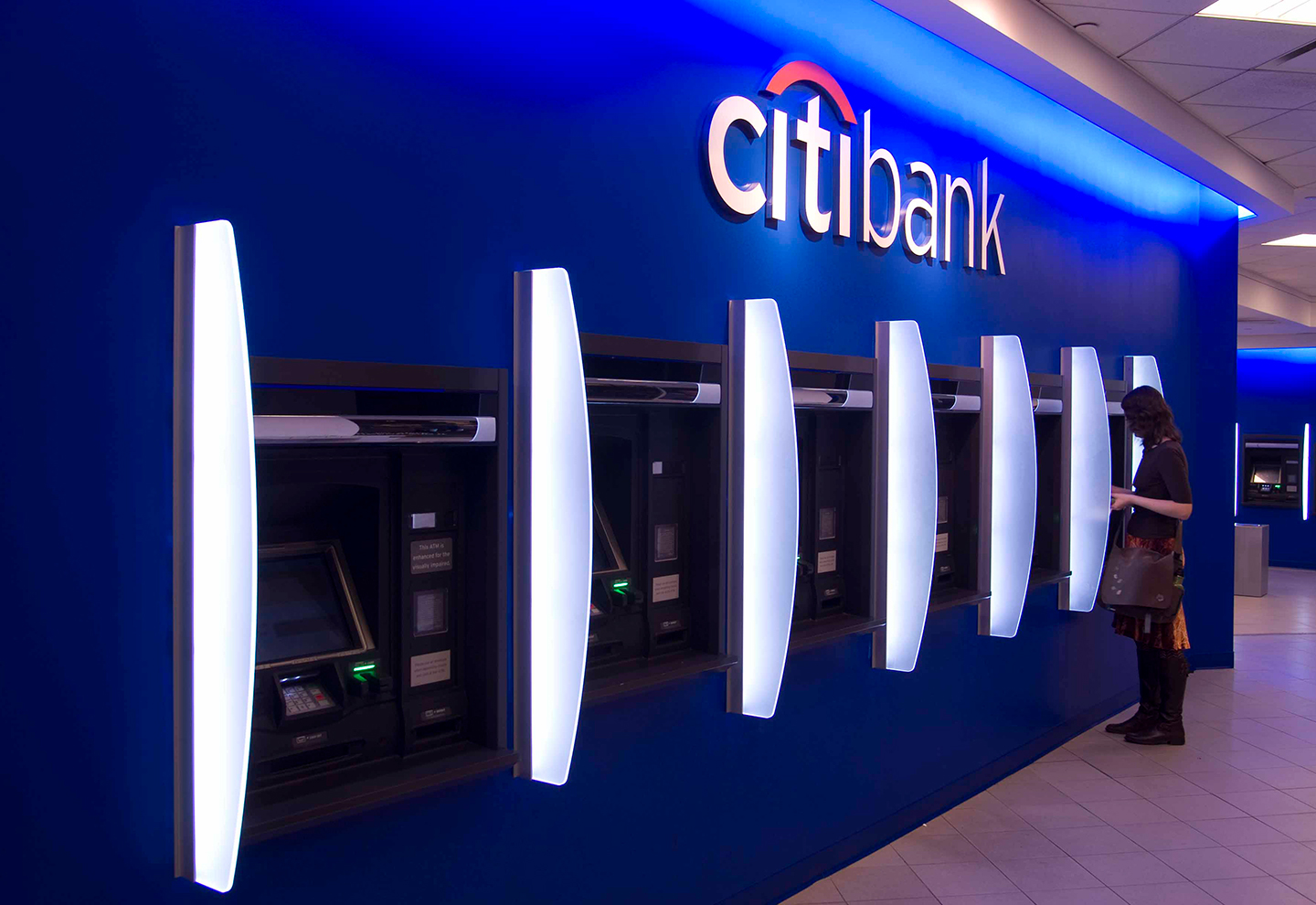
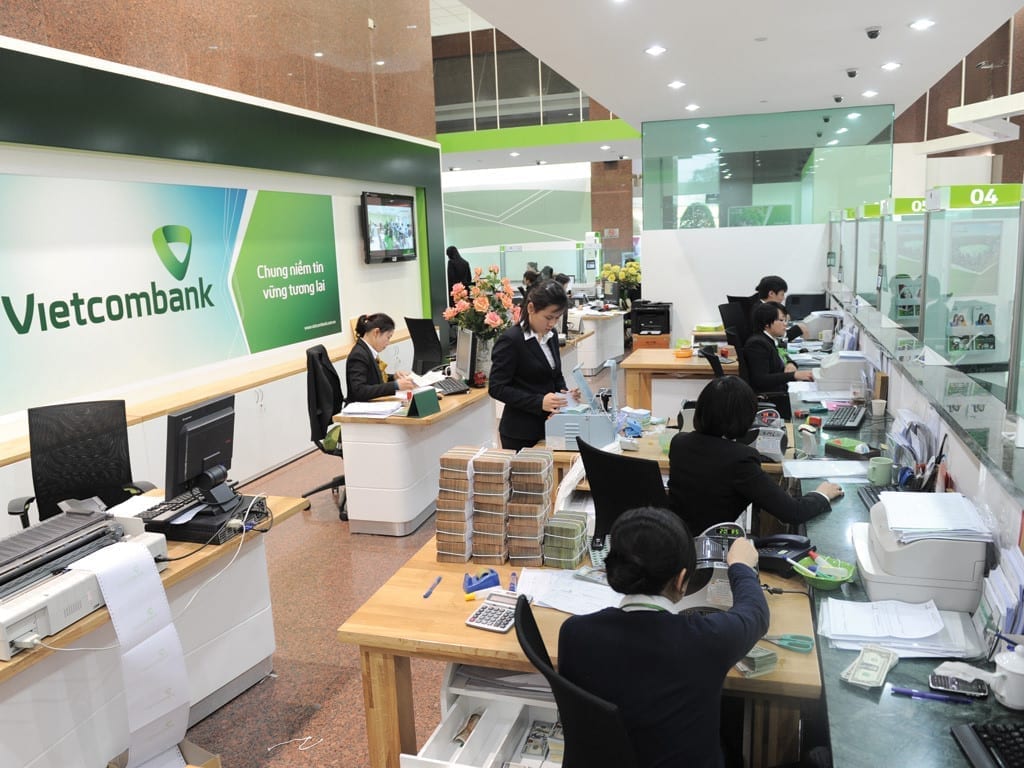
  • Citi organizes Vietnam Digital Leaders Summit 2023

    Citi organizes Vietnam Digital Leaders Summit 2023

    Citi brought together about 100 leaders in the Vietnam technology landscape, including founders, management teams, and investors, to discuss how the new economy is shaping the future of Vietnam.

    The Vietnam Digital Leaders Summit 2023, hosted by Citi Commercial Bank (CCB) and Citi’s Investment Bank, featured keynote speeches and lively panel discussions covering various topics, from scale-up journeys and macroeconomic challenges to fundraising strategies.

    Speakers and panels also touched on investor perspectives on opportunities in Vietnam and stories on the strategic shift in focus from exponential growth to sustainable profitability. Many speakers addressed the opportunities and pitfalls of harnessing AI throughout the day.

    Shervone Saw, CCB’s Asia Digital Head, highlighted that Citi established its technology industry vertical eight years ago to support the startup ecosystem. The unit supports technology startups from infancy to maturity, offering customized solutions for every step of the journey.

    Citi’s global network powers companies as they expand into new geographies. Citi is a pioneer in the technology industry in Vietnam, witnessing the rapid rise of companies to the unicorn stage.

    At the event, James Perry, APAC Co-Head of TMT Investment Banking, showed that in 2023, private investment into technology companies in Southeast Asia is on track to surpass pre-Covid levels, despite substantial declines from the peak levels in 2021.

    “We understand the importance of having a structured and dedicated approach to support the demands of fast-growing tech firms, particularly in a low-growth and volatile macro-environment. Our goal is to work with clients to form a winning strategy, to achieve new milestones, and to help them deliver their strategic objectives,” said Lin Hsiu-Yi, ASEAN & Singapore Head of Citi Commercial Bank.

    In Vietnam, Citi has supported and served clients for nearly three decades, helping them navigate the opportunities and challenges of rapid growth and international expansion by enabling them to scale faster.

    This flagship event served as a platform for engagement, connection, and exploration of new growth opportunities for clients, investors, industry veterans, and the Citi team.

    “Whether clients are considering expansion, exploring partnerships, or seeking strategic financing, our dedicated team is ready to support their needs and enable their businesses to get into the next phase of growth,” said Ramachandran A.S., Vietnam Citi Country Officer.

  • Vietcombank makes biggest profit among lenders in Q3

    Vietcombank makes biggest profit among lenders in Q3

    Vietcombank remained the biggest profit earner among lenders in the third quarter, a period in which half of all listed banks saw smaller profits following a race to lure deposits.

    Vietcombank made a profit of VND9 trillion (US$375 million) in the third quarter, up 20% year-on-year, followed by MB with VND7.3 trillion, and BIDV with VND5.9 trillion.

    Meanwhile, Techcombank reported a profit of nearly VND5.9 trillion, down 12%.

    Twenty-seven listed banks have just released their financial statements for the first nine months. Instead of reporting huge profits like they all did over last three years, 14 banks reported smaller profits.

    BVBank’s profit dropped by 85% year-on-year to VND60 billion (US$2.5 million), and ABBank’s profit fell from VND1.75 trillion in the first nine months of last year to VND700 billion.

    These are the smallest Q3 profits the two banks have earned in five years, mainly due to capital costs increasing more than credit income. ABBank also faced pressure on credit risk provision costs.

    VPBank and Eximbank profits were halved, while earnings at VietABank, LPBank, BacABank, VietBank and SeABank dropped by 20% or more.

    Less than half of the listed banks enjoyed bigger profits, including Vietcombank (up 18%), BIDV (12%), VietinBank (10%), MB (10%), ACB (11%), HDBank (8%), VIB (7%), Sacombank (54%), MSB (8%), OCB (48%), NamABank (10%) and KienlongBank (25%).

    Among the 10 banks with the largest profits, Techcombank, VPBank and SHB saw smaller profits compared with the same period last year.

    VPBank ranked 10th with a profit of VND8.3 trillion, compared to third place last Q3 with earnings of VND19.8 trillion. The bank had difficulties with consumer lending and there were no longer any unusual revenues from the re-signing insurance contracts.

    Techcombank lost its second ranking, standing in the fifth position after its profit decreased by 18% to VND17 trillion.

    SHB’s profit dropped by 8% to VND8.5 trillion.

    Vietcombank maintained its first ranking, followed by MB, BIDV and VietinBank.

    Banks’ business performance deteriorated a mostly successful race to mobilize capital, which started at end of last year.

    SCB’s crisis in October last year, along with the collapse of some U.S. banks, caused increasingly strained liquidity in the banking system.

    Last October, the State Bank put SCB under special control after people withdrew money in droves at many SCB branches and transaction offices.

    Late last year, banks were concerned with defense and liquidity reserves. This led to a charge to mobilize capital, pushing deposit interest rates up to 11-12% a year at times.

    Interest rates quickly cooled down from the second quarter of this year, but the amount of deposits banks mobilized at high interest rates have not yet matured, pushing capital costs up sharply.

    Current account savings accounts (CASA), a source of cheap capital for banks, have continuously decreased since the end of last year due to cash flows trending into the savings channel.

    The falling stock market, and the dormant real estate and bond markets, also caused people to reduce spending and investment.

    In addition, a series of companies withdrew money to serve capital needs and pay financial obligations, including the buying back corporate bonds before maturity.

    This series of factors caused the CASA ratio to decline throughout the banking industry.

    These factors caused capital costs in the banking industry to skyrocket, with some banks even having to double the expense over the same period last year.

    Meanwhile, many banks found it difficult to lend when production and business as a whole slowed down, and the bond and real estate markets froze.

    The banking industry’s credit growth by the end of September had only increased 6.92%, figure as low as Covid period nadirs.

    Credit balance at many banks also grew at the lowest rate in many years. At BVBank, credit growth by the end of September had reached a mere 4.2%.

    This caused credit revenues to not increase at pace with expenses, and income from credit also barely increased or declined.

    Securities companies predicted that profit growth of the banking industry would end the year at 10% this year, a meagre showing compared to last year’s growth rate of 30%.

  • UBS Faces Pressure on Costs

    UBS Faces Pressure on Costs

    The dust has settled since Switzerland’s largest bank announced it would completely integrate all of Credit Suisse. The third quarter is likely to slip by far more quietly even though it still faces stiff challenges.

    The usual UBS earnings figures are expected to be in the spotlight on November 7. Revenues, inflows of new money, costs, and net profit will be the metrics by which many measure how the integration with Credit Suisse is going.

    The number of significant extraordinary items booked in the first half has also led many to assume that much has since been cleared out of the way. All in all, it was likely the usual kitchen sinking exercise to set a clean slate before really getting down to work.

    What is almost certain to be a matter of sharper focus are the inflows of net new money in September. The figures are not expected to be that surprising given that UBS previously communicated the trends it was seeing in the first two months of the quarter at the end of August. At the time, it had recorded about $8 billion in inflows in the new, combined Global Wealth Management (GWM) business.

    Iqbal Khan, as the head of the business, has a clear recipe for growth. In meeting employees working in various regions around the world, he reduced everything to three words: NNM, or Net New Money.

    According to Jefferies analyst Flora Bocahut, the bank needs to report a positive attributable net profit result together with declining risk-weighted asset (RWA) levels in order to achieve its targeted return on common equity Tier 1 levels. In the second quarter, RWAs fell by about $9 billion.

    Michael Klien is also focusing on attributable net profit, saying it will be an important figure. UBS is expected to break even in the quarter while seeing a return to profitability in the second half. According to him, the analyst consensus is currently too low.

    UBS can curry favor if it manages to cut risk-weighted assets quickly. The focus here will be on non-core and legacy businesses, mainly in Credit Suisse, headed by Beatriz Martin Jimenez. By 2026, the level of capital consumption in that business is expected to fall significantly.

    The investment bank is not expected to have a stellar quarter, particularly given the performance seen at the major US institutions. The Swiss business, however, could turn out to be a bright spot.

    Many will pay intense attention to costs. The numbers in the second half didn’t much impress investors. It is expected that job cuts and integration costs, particularly at Credit Suisse’s investment bank, will have an impact.

    That should also be reflected in headcount numbers globally. At the end of August, they were down by about 8,000, a number that includes both voluntary and involuntary departures.

    UBS is in the middle of an arduous integration process and job cuts, costs and further risk mitigation measures are likely to remain overarching themes in the next few quarters.

    The integration of Credit Suisse resulted in its business performance disclosures being consolidated and simplified, making it extremely difficult to make comparisons with previous quarters and years. However, starting in the third quarter they are expected to be included in the UBS divisional numbers (GWM, Personal & Corporate Banking (the Swiss business), Asset Management, and Investment Bank. Credit Suisse’s so-called bad bank will be reported in the abovementioned non-core and legacy business.

    It is questionable right now whether the quarterly numbers will help lift the bank’s share price. They have risen as high as  23.80 francs recently and currently, trade in the region of 21.70 francs.

  • Gold prices decline slightly

    Gold prices decline slightly

    SJC gold price dropped 0.07% to VND69.75 million (US$2,864.12) per tael on Tuesday morning.

    Gold ring price downed 0.08% to VND57.3 million per tael. A tael equals 37.5 grams or 1.2 ounces.

    Globally, gold prices held near their highest levels in more than a week on Wednesday as comments from U.S. Federal Reserve officials suggested that a recent surge in Treasury yields might reduce the need for more rate hikes, sending the dollar lower.

    Spot gold was up 0.1% at $1,860.97 per ounce by 0136 GMT, having hit its highest level since Sept. 29 on Tuesday. U.S. gold futures held their ground at $1,874.50.

    Bloomberg said Wednesday that a slump in gold prices to a seven-month low in India may stimulate demand in the current festive season, when people traditionally buy more coins and ornaments.

    Strong purchases during the October-December festival period, considered an auspicious time to own and wear gold, may underpin the global market.

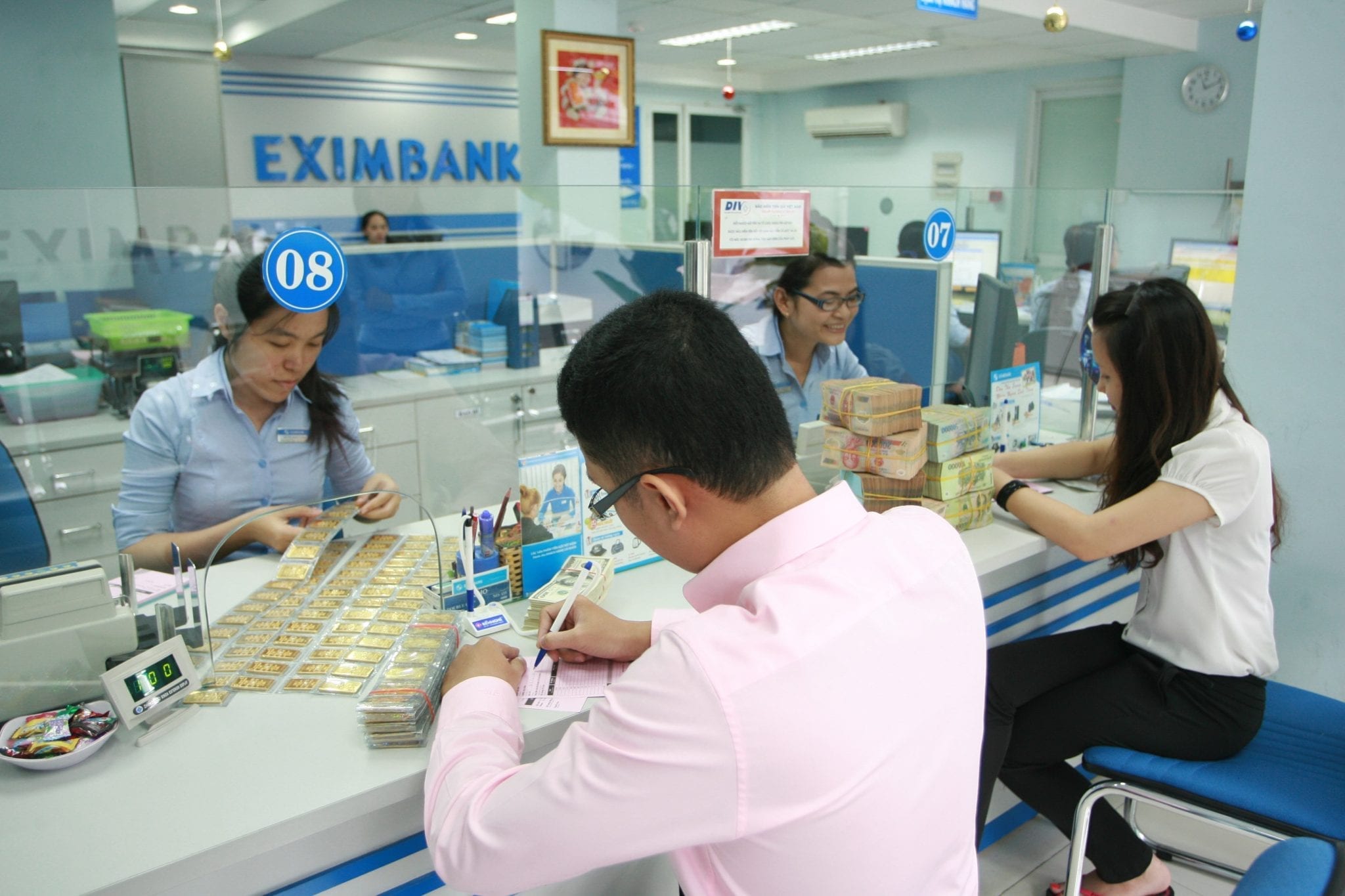
  • Eximbank names new acting CEO

    Eximbank names new acting CEO

    Lender Eximbank has appointed Nguyen Hoang Hai as acting CEO for a year to replace Tran Tan Loc who resigned Monday.

    Hai, 45, who has worked for ABBank and EVN Finance, had become deputy CEO of Eximbank in early August.

    Loc remains a director.

    Also on Tuesday the bank dismissed another deputy CEO, Pham Quang Dung.

    Last month it had appointed Nguyen Canh Anh as a director. He too has worked for EVN Finance in the past.

    It has been a game of musical chairs for the Eximbank leadership in recent years.

    Do Ha Phuong became its chairwoman in June in place of Luong Thi Cam Tu, who had only taken over in February 2022.

  • UBS Helps European Banks Leave US Peers in the Dust

    UBS Helps European Banks Leave US Peers in the Dust

    European banks are more profitable than American ones for the first time in ten years. A study points to UBS being a key reason for that.

    The elite of Wall Street usually have their nose well ahead of the game in the perpetual battle between European and US finance industry giants. Or at least they did until the first half of this year. But now the winds have shifted, with a new EY analysis (German only) showing that profits for the main European banks have grown much faster than their American-based counterparts.

    Much of this was, of course, driven by UBS’s forced takeover of Credit Suisse, which returned the bank to the top of the heap on the continent. But beyond that, most of the banks on this side of the pond benefited handsomely from the European Central Bank’s move to sharply increase rates, which has helped fatten up interest rate margins.

    The cumulated net profit of the ten largest banks (going by balance sheet size) rose by 80 percent to 75 billion euros, according to EY. By contrast, US-based institutions saw profits rise by only 7 percent to about 82 billion euros. In Europe, UBS reported the most first-half profit at 27.4 billion euros ($29 billion in the second quarter alone, mainly related to negative goodwill from Credit Suisse) while in the US, JP Morgan led the pack with 24.8 billion euros in the first six months of the year (reported as $27.1 billion).

    There was also a significant change in general levels of profitability, with the rates of return on equity for European banks being at 15.5 percent at the end of June, corresponding to a 5.9 percentage point increase from the same period a year earlier. It was also by far the highest level of the last ten years. In fact, it was the first time in a decade that US banks posted lower RoE of 12.6 percent than their top ten European counterparts.

    Much of this was also due to UBS, which by itself would have recorded a more modest profit of 2 billion francs (same in euros) without the impact of having to rescue Switzerland’s second-largest bank.

    These positive trends are also having an impact on market capitalization levels. Since the beginning of the year, the value of European banks was up 14 percent at the end of August to sit at a heady 522.5 billion euros. In contrast, the cumulative market of the largest American banks fell by 6 percent to 1.15 trillion euros.

    On the SIX Swiss Exchange (SIX) the same was true. Since the start of July, UBS’s shares have only known one direction – up. Over the past three months, the shares have risen by almost 30 percent.

  • Citi Launches Institutional Token Services

    Citi Launches Institutional Token Services

    Citi aims to offer token services in the form of digital coins, to improve its cash management and trade finance operations.

    According to an emailed statement, Citi Treasury and Trade Solutions (TTS) has launched the creation and pilot of Citi Token Services. The US lender will offer tokenized deposits – effectively transferable digital coins that act as claims against the bank – to support institutional clients’ cash management and trade finance needs.

    The development of Citi Token Services is part of our journey to deliver real-time, always-on, next-generation transaction banking services to our institutional clients, said global head of services Shahmir Khaliq.

    Previously, Citi partnered with shipping giant Maersk and an unnamed canal authority to digitize a solution that serves the same purpose as bank guarantees and letters of credit in the trade finance ecosystem.

    We are pleased to have collaborated with Citi in the successful test pilots for the guarantee solution using digitized tokens and smart contracts. The innovative solution has promising applications for trade finance, said Marie-Laure Martin, regional treasury manager for the Americas at Maersk.

  • Techcombank chairman’s daughter buys 82 mln TCB shares

    Techcombank chairman’s daughter buys 82 mln TCB shares

    Ho Thuy Anh, daughter of Techcombank (TCB) chairman Ho Hung Anh, has bought 82 million TCB shares worth at least US$110.1 million.
    The transaction, completed between Sept. 5-8, will increase her stakes in Vietnam’s largest private bank from 0.64% to 2.97%.

    As of the end of June, the chairman Hung Anh held 39.3 million TCB shares, or 1.1% stake in the lender. His family currently holds 621 million TCB shares, a 17.7% stake.

    In the four-day period Sep5-8, a total of 83.3 million TCB shares changed hands in put-through transactions at two trading sessions on Sept. 5 and Sept. 8.

    Specifically, the Sept. 5 session saw 37.5 million TCB shares worth VND1.2 trillion (US$50.8 million) traded, and the Sept. 8 session saw 45.8 million shares change hands worth a total VND1.53 trillion.

    Currently, the market price of TCB shares has been fluctuating around VND35,000 per share, 27% higher than the beginning of this year.

    The bank’s profit was VND11.3 trillion in the first half of this year, a year-on-year decline of 20%, mainly due to difficulties accessing corporate bonds and real projects’ struggles attaining credit.

    After being the second-biggest profit maker among commercial banks in Vietnam for years, Techcombank fell to fifth place in profit rankings in the first six months of this year.

  • Lender Sacombank eyes Bamboo Airways investment

    Lender Sacombank eyes Bamboo Airways investment

    Sacombank, a major creditor of Bamboo Airways, is seeking approval from economic regulators to invest in the local carrier.< Phan Dinh Tue, a Bamboo Airways board member, said at an unusual meeting on Friday that acombank is a credit institution supporting Bamboo Airways with capital. Hence, Sacombank is genuinely interested in the restructuring process of the airline and is expecting it to grow. Tue said Sacombank had expressed interest in providing more capital for Bamboo Airways. But being a credit institution, Sacombank’s move considered an outside-industry investment. That is why the bank is speeding up the processes to have regulators’ consent before the investment is possible. Bamboo Airways approved items related to the board’s new structure and changes to the company’s charter and the board’s operating regulations. The company also issued management regulations and directions to select strategic shareholders. Bamboo Airways’ general meeting of shareholders also agreed with Board Chairman Le Thai Sam’s recommendation on helping the board organize and review the company’s capital holdings, raise-reduced charter capital to serve the airline’s restructuring goal and mobilize capital from strategic shareholders. The goal is to expand the company’s flight network, and the quality of services. Bamboo Airways’ board now has five members: Le Thai Sam, Le Ba Nguyen, Nguyen Ngoc Trong, Phan Dinh Tue and Le Thi Truc Quynh. After dismissing three members, Bamboo Airways' supervisory board also elected three new people: Nguyen Thi Hong Cam, Pham Van Phung and Nguyen Dang Khoa. The number of company’s legal representatives was also reduced from three to two, including the board’s chairman and the director.

  • UBS Job Cuts Hit US Investment Bankers

    UBS Job Cuts Hit US Investment Bankers

    The reorganization of UBS investment banking is proceeding. It’s eliminated some duplicate US staffing, but the big cutback is looming.

    According to a Bloomberg report, UBS has eliminated about a dozen investment banking jobs in the US in connection with the integration of Credit Suisse. The bank declined to comment to the news outlet on the matter.

    According to the sources who asked not to be named, many of the affected positions are in overlapping areas. No names were given.

    If the report is true, the reorganization of traditional investment banking with corporate advisory and capital market transactions is proceeding. UBS is trying to combine the best of both banking worlds, but when it comes to Credit Suisse trading, UBS will show little mercy and will wind up the unit.

    At the same time, numerous UBS investment bankers in New York are about to move, with the entire team decamping to the former Credit Suisse offices at 11 Madison Avenue.

  • Raiffeisen Aims Big by Thinking Small

    Raiffeisen Aims Big by Thinking Small

    After the takeover of Credit Suisse, cooperative banks reluctantly found themselves thrust into Swiss banking’s number two role. In a business dominated by major banks, Raiffeisen has ambitions.

    In a recent interview, Heinz Huber said the Raiffeisen Group has no interest in becoming an international player like UBS and Credit Suisse. We don’t want to be a big bank, said the CEO of Raiffeisen Switzerland, the country’s largest mortgage bank.

    Even so, the group’s moving into the number two slot in Swiss banking after the demise of Credit Suisse is grudgingly acknowledged, which isn’t to say that Huber’s not aiming high in some areas.

    The group made up of 219 individual institutions, is preparing to make its mark in asset management, an area dominated by UBS and Credit Suisse.

    Raiffeisen Group attracted 1.8 billion Swiss francs of new custody assets in the year’s first half. With client assets under management of 246.6 billion francs, it’s equivalent to the portfolio of a medium-sized Swiss private bank. Driven by asset management, net income from commission and service fees rose to 310.9 million francs.

    There’s more to come. In the first half of the year, we passed the mark of half a million custody accounts. With 3.65 million customers, I still see some potential, Huber said at a conference.

    Compared to UBS, which netted $15.3 billion of client assets in Switzerland in the past second quarter alone, Raiffeisen’s volumes look tiny. The Group reoriented its wealth business following a strategic turnaround when it sold its private banking subsidiary, Notenstein La Roche, and relaunched its mandate offerings four years ago.

    Two aspects of Raiffeisen’s new money should give the market leader pause. One is the dynamism the investment and pension business is showing, as 16,600 accounts were opened in the first six months of the year, while asset management mandates saw 15.6 percent growth.

    Then there’s the money’s source. Mandates are available from Raiffeisen for as little as 50,000 francs; in the case of the Rio digital asset management service, the minimum investment is 5,000 francs targeted at affluents.

    Raiffeisen wealth management’s results suggest cooperative members succeeded in cracking a notoriously difficult market.

    Other banks have been trying to accomplish that for years. If consulting firms like Oliver Wyman are to be believed, the potential in private banking for the masses is enormous, By 2026, the market is expected to generate revenue streams of $45 billion globally, and in four years, two-thirds of all private banking revenue could come from the affluents.

    Challenges remain, however, because it’s quite difficult for large asset managers with expensive structures to gain a profitable foothold. Raiffeisen’s advantage lies in being able to approach the affluent market from the bottom. With its enormous retail banking reach, it knows its customers long before they’re wealthy. Clients are already in the door when assets come into play upon retirement, inheritance, or the sale of a house or company.

    Still, it’s not quite that simple. We’ve invested a lot in consulting, says Huber. We want to ensure a basic understanding of issues among customers so decisions are made together.

    Rapid investments were made in products and services. The Group launched Rio digital asset management in 2020, and a digital pillar 3a pension offering was integrated into e-banking the following year. Last year, the product range was expanded with sustainable index-tracking funds, with around 95 percent of Raiffeisen’s fund volume invested sustainably.

    Huber attributes the rapid growth in recent months to this groundwork. We focus on investment solutions that are easy to understand and geared to the needs of our customers, which are already available for small assets.

  • UBS to Cut Asian Wealth Jobs

    Swiss bank UBS is cutting wealth jobs in Asia following muted client activities and the slowing economy in China.

    Over the past months, UBS has reduced some overlapping roles in the wealth business in Asia, after the completion of Credit Suisse’s takeover. The roles include relationship managers in Hong Kong and Singapore, mostly from Credit Suisse’s team.

    The bank is also expected to have further cuts through November 2023, but the number of cuts has not been finalized.

    The lender plans to keep the majority of private bankers in Australia and India for now, according to a report. Since June 2023, UBS has outlined major targets for the integration of its former rival, including 3,000 domestic job cuts and more than $10 billion in cost savings.

    Pre-tax profit at the bank’s wealth management unit in the region fell by 8 percent year-on-year in the second quarter of 2023.

  • Your PayPal credit and debit cards will now support Apple Pay

    Your PayPal credit and debit cards will now support Apple Pay

    If you have a PayPal debit or credit card, starting today you can add them to your Apple Wallet app where they can be selected for use with the Apple Pay mobile payment service. There are two ways that you can accomplish this. Number one, you can open the iOS PayPal app and find the banner on the app’s homepage that screams, “Pay with your iPhone.” Tapping this will take you to the Apple Wallet app from where you can add your PayPal debit or credit cards.

    The second way to add your PayPal cards to your Apple Wallet is to open the app and press the plus icon in the upper right corner of the display. Follow the directions to add your PayPal credit card, debit card, or both to your Wallet app. Once listed in the app, you can choose either one to handle the transactions that you pay using Apple Pay. Once again, we would like to inform you that Apple keeps .15% of the value of each transaction which means that the tech giant keeps 15 cents out of every $100 rung up using Apple Pay.

    Venmo, which PayPal owns, is also supposed to add Apple Pay support to its Venmo credit and debit cards although this has yet to occur. All of this is taking place as Apple recently started a promotion for its Apple Pay service by releasing two 30-second videos and two shorter 15-second versions of the same ads.

    According to one analyst, Apple could generate as much as $4 billion in revenue from Apple Pay this year. Last month we told you that Apple Pay is the fifth-most widely used payment method worldwide after PayPal, Visa, Mastercard, and American Express.

    PayPal’s move to support Apple Pay was belated, especially compared to all of the other banking and financial services cards that have added Apple Pay support over the years. Perhaps, as the number one method of payment globally, the company was skeptical about how its business could be improved by allowing the cards to be used with Apple Pay. It’s fair to say that with today’s announcement, whatever concern was stopping PayPal from adding Apple Pay support in the past has now been overcome.

  • The New UBS Embraces Shareholder Value

    The New UBS Embraces Shareholder Value

    The share price of Switzerland’s largest bank seems to know only one direction right now – and that is up. If nothing else, shareholders benefit from the Credit Suisse takeover while everyone else looks on.

    Sergio Ermotti doesn’t have any time for nostalgia. At least that is what he said extremely clearly at the news conference this past Thursday when announcing the full integration of Credit Suisse’s domestic business.

    UBS’s CEO has his eyes set on the road ahead, and he is focused on the next key milestones of integrating what was once Switzerland’s second-largest bank. The two legal entities are set to be merged in 2024, with the Credit Suisse brand disappearing completely a year later. By 2026, UBS expects to reap cost savings of $10 billion dollars annually on a 15 percent return on equity.

    The bank’s current focus is being applauded in one specific place. The equity market. On Thursday, UBS’s share price was up as much as 6 percent, and right now they are at 23.60 francs. Since the takeover was announced in March, the shares are up by a third, and at this level, they are trading at a price-to-book level of 0.99, or just below intrinsic value.

    That has prompted chart technicians to rather excitedly point out that the bank’s price has escaped what had been a price corridor below 20 francs, something that has not happened for years. Moreover, a majority of analysts are now recommending UBS shares as a buy.

    Kian Abouhossein is one of those analysts. The highly watched JP Morgan analyst has been a fan of the takeover from the start given that for him and others it means that UBS will be a future wealth management juggernaut. In a recent report, he indicated he expects significantly enhanced earnings strength, with the return on equity targets indicating that the future UBS sees a net profit of about $12 billion for 2026.

    It is an ambitious target from our point of view, the analyst maintains. But he is confident that UBS will be able to manage it, and he believes UBS’s share price could be at 27 francs by the end of 2024.

    All this underscores that UBS shares, which haven’t moved much for years, have again fallen in favor, at least with investors. Much of that is likely due to the fact that bank management under Ermotti has put a strong emphasis on that specific group of stakeholders.

    There is nothing all that surprising about that in an institution listed on an exchange with its shares widely held by a large variety of investors, both retail and institutional. Still, the tone has changed from the days after the takeover when Ermotti announced in June at an industry forum that the social impact of the takeover had to be factored in.

    At the time, he said that UBS wanted to satisfy Switzerland, clients, and employees.

    There was little talk of that last Thursday. Instead, much of what was on offer was cold and clinical business reasoning. UBS had closely evaluated the option of keeping Credit Suisse’s domestic business as an independent entity but concluded that it would be afflicted by marginal profitability and a lack of scale.

    The best solution is a full integration into UBS for stakeholders and the Swiss economy, Ermotti maintained.

    But it is more than reasonable to be skeptical about all that given the job cuts that are expected to come down the wire, not to mention the necessity of transferring the assets and portfolios of tens of thousands of Credit Suisse clients. At this point, redundant former Credit Suisse employees are expected to be left with the enhanced social plan while clients have to hope that the process will be implemented as smoothly as possible.

    There has been criticism about the bank’s current tack to focus its efforts on future profitability. «The only things that speak for an integration are efficiency gains and higher profit», Sandro Schmid maintained recently. Bank consultants and risk professionals believe a full and complete integration is risky and extremely expensive.

    But UBS and CEO Ermotti have chosen to focus on the needs of shareholders, something that comes much easier after the voluntary termination of the government’s federal loan guarantees. In an interview in the domestic media, Ermotti indicated that the bank and shareholders were still holding the risk when it came to the integration of both institutes. And there would only be a profit if this was completed well.

    By that token, at least when it comes to shareholder value, the priorities seem to be in the right place.