Tag: Banking

  • CIMB Restructures Singapore Business

    CIMB Restructures Singapore Business

    The Malaysian bank is letting go of three business heads in Singapore, following a review of its operations.

    Changes are afoot at CIMB Singapore, as the bank has moved to ax its consumer, commercial and corporate banking heads: Josandi Thor, Yong Jiunn Run and Lai Ven-Li, citing an internal memo viewed by the portal.

    The bank cited the poor performance brought about by the pandemic, which required it to reshape its business portfolios to drive cost efficiency across the bank. The bank said it recently adapted its Forward23 five-year growth plan, launched in 2018, in response to the pandemic.

    CIMB Singapore’s posted losses of 939 million ringgit ($229.42 million) for the first half of the year, largely due to impairments.

    However, there have been talks of restructuring since the middle of the year and the possibility of wider layoffs.

    An observer told the publication that CIMB Singapore CEO Victor Lee, who was appointed earlier this year, was looking to restructure the senior management team and bring in people he had previously worked with.

    Given the business pivots moving forward, we have carefully deliberated with group management on the optimal structure to deliver our Forward23+ strategy. This entails streamlining the leadership structure and reducing the CEO’s span of control to focus on key areas impacting the business, Lee said in the email.

  • DBS to Make Hybrid Work Arrangements Permanent

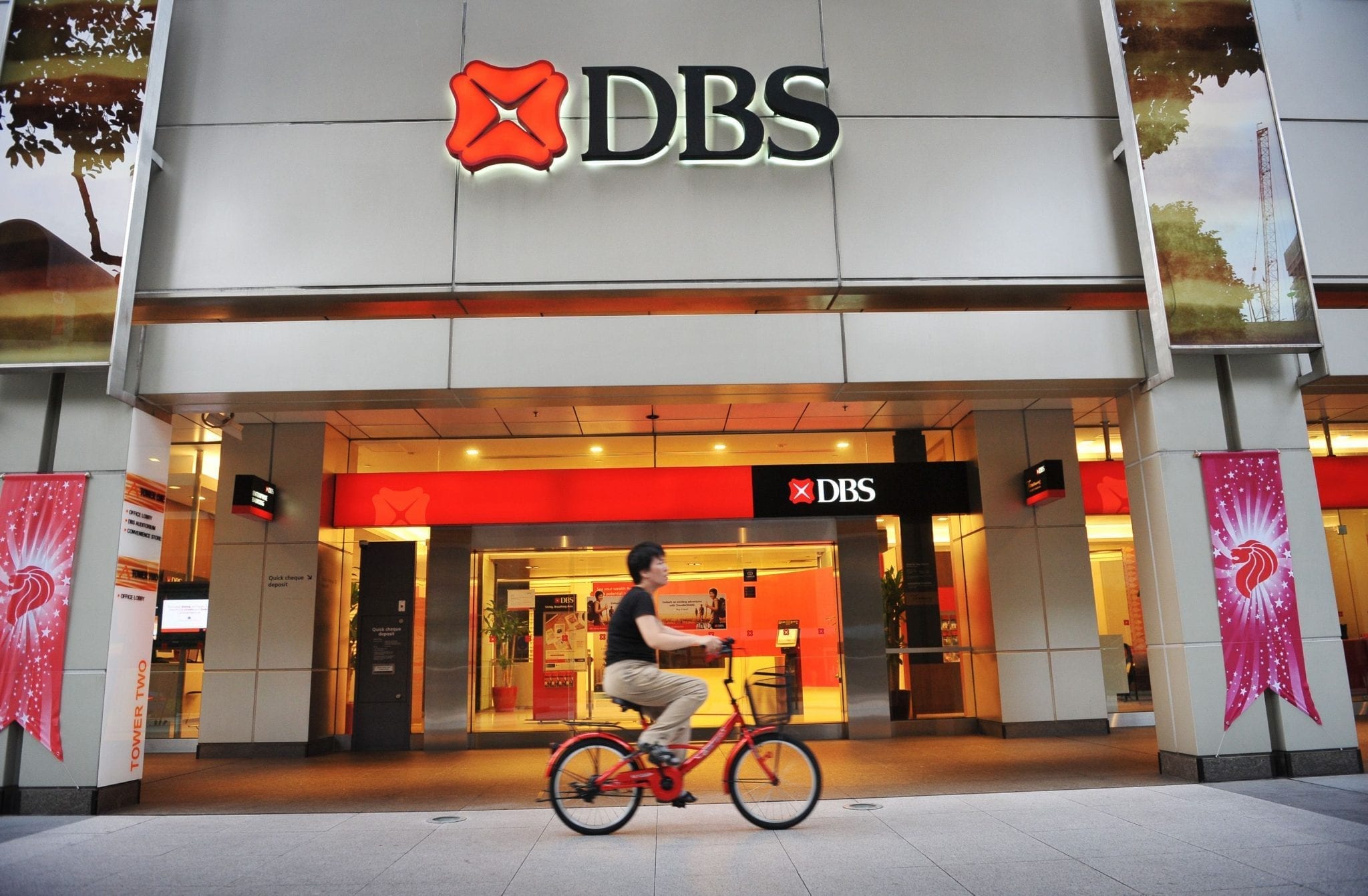
    DBS to Make Hybrid Work Arrangements Permanent

    The bank, which has a workforce of 29,000, said these measures are the result of insights gathered from research, deep-dive experiments and employee surveys conducted by a task force on the future of work, which it convened six months ago.

    DBS is transforming the way its employees will work in a post-Covid 19 world, with a number of initiatives that include implementing a permanent hybrid work model that gives employees the option to work remotely up to 40 percent of the time, flexible work arrangements, deploying more project-specific data-driven squads with members from different functions, and creating workspaces that facilitate collaboration, the bank announced on Tuesday.

    The bank will also accelerate employee upskilling, with 7,200 employees, of which 4,300 are in Singapore, to undergo training in emerging areas such as design thinking, data and analytics, artificial intelligence, machine learning and agile practices.

    The announcement follows UOB, which said last week that it would give the majority of its 26,000-strong workforce the choice to work remotely two days a week once COVID-19 restrictions are lifted. Standard Chartered is also rolling out similar measures globally.

    DBS said that over 80 percent of its employees indicated a preference for more open collaboration spaces to facilitate informal discussions and cross-team ideation, which they found difficult to do remotely. As such, the bank will transform its workspaces to enable greater collaboration and ideation, and launch a 5,000-square foot Living Lab that aims to blend the best of physical and virtual workspace configurations.

    As the way we live, bank and work continue to change dramatically, we must address the magnitude of the disruptions before us, Piyush Gupta, DBS CEO, said about the changes.

    Last week, DBS unveiled its new branch at Takashimaya, which aims to cater to customers who want quicker, socially distanced and more personalized branch services, and said it would roll out similar branches across at least one-third of its branch network over the next 12 to 18 months.

  • StanChart Streamlines Business in Global Restructuring

    StanChart Streamlines Business in Global Restructuring

    Standard Chartered announces a reorganization into fewer but larger units and also confirms the exit of its global wealth head.

    Effective January 1 next year, Standard Chartered will combine the private banking business with retail banking and wealth management in a new consumer, private and business banking (CPBB) unit, according to a statement. The current regional chief executive of ASEAN and South Asia, Judy Hsu, will lead the CPBB unit.

    This combined business will grow the group’s affluent client base, further develop innovative digital banking solutions for mass-market and small businesses, and deliver further efficiencies, the bank said in a statement.

    The bank also confirmed the exit of former private banking head Didier von Daeniken, whose role will be overseen by Hsu in the interim until a new permanent appointment has been made.

    Under on Daeniken’s leadership the private bank returned to profitability in 2019 and was the bank’s fastest-growing segment, the statement said.

    With substantially upgraded digital products and services and improved productivity, we have strong foundations and good momentum. We will bring together our private bank with our priority banking business under Hsu’s leadership, while retaining their separate brands and propositions, to accelerate growth and create an affluent client continuum to better serve our clients.

    The CPBB unit will be organized around two client groups and two regions. In addition to Hsu’s temporary role as the head of private and priority banking, Vishu Ramachandran will lead personal and business banking. Wealth Management will continue to be led by the newly appointed ex-Bank of Singapore executive Marc Van de Walle.

    Regionally, Samir Subberwal will lead CPBB for Asia while Kariuki Ngari will lead CPBB for Africa, the Middle East and Europe, in addition to his Kenya and East Africa CEO responsibilities, also until a permanent appointment has been made.

    In addition, Rosalind Ng will lead client experience and strategic business enablement.

    In Asia, the bank is also combining its three regional units – ASEAN, South Asia alongside Greater China and North Asia (GCNA) – into a single one led by Ben Hung, currently GCNA chief. The unit is made of cluster CEOs who will be joining the Asia management team alongside Samir Subberwal, GCNA retail banking head; Paul Skelton, global head, client coverage, commercial, corporate and institutional banking; and John Tan, global head, financial markets regions.

    In north Asia, cluster CEOs include Jerry Zhang for China and Japan; Mary Huen for Hong Kong, Taiwan and Macau; Park Jong Bok for Korea; and Anthony Lin for the Greater Bay Area.

    And in the south and southeast Asia region, the bank named as cluster CEOs Zarin Daruwala for India and South Asia Markets (Bangladesh, Nepal and Sri Lanka); Andrew Chia for Indonesia and ASEAN Markets (Australia, Brunei and the Philippines); and Patrick Lee for Singapore and ASEAN Markets (Malaysia, Vietnam, Thailand).

    CEO of Europe and Americas, Torry Bernsten, has also been named as chief of the former market and the U.K.

    Steve Cranwell will succeed Bernsten as CEO of the Americas and report to him.

  • Singapore to Raise Standards for Issue Managers

    Singapore to Raise Standards for Issue Managers

    The Association of Banks in Singapore has announced revised due diligence guidelines for companies planning to list on the Singapore Exchange, with immediate effect.

    Last revised in 2016, the new set of guidelines set out expectations and recommendations on due diligence work that issue managers and full sponsors carry out during the initial public offer (IPO) / reverse takeover (RTO) and listing process.

    They were developed in close collaboration with the Singapore Exchange Regulation (SGX RegCo).

    Key updates include: An increased focus on the assessment of the adequacy and effectiveness of the issuer’s internal controls to meet its business needs and challenges as a listed company; the assessment of the sustainability and viability of the issuer’s business; and targeted guidelines for due diligence on issuers operating in specialized, restricted or niche industries, and/or in higher-risk jurisdictions.

    Ong-Ang Ai Boon, director at the Association of Banks in Singapore (ABS), said the revised guidelines are necessary to ensure they are relevant to the constantly changing economic climate.

    With the increase in issuers from more nascent sectors such as technology that are seeking equity capital, it becomes especially important for issue managers, full sponsors and their professionals to adapt due diligence practices that address the particular needs of

  • UOB to Allow Partial Remote Work Post-Covid

    UOB to Allow Partial Remote Work Post-Covid

    The bank plans to give the majority of its 26,000-strong workforce the choice to work remotely two days a week once COVID-19 restrictions are lifted.

    UOB made the announcement on Friday, following a six-month review of work patterns, workspaces and workforce technology tools, which revealed that 65 percent of the bank’s roles, all of which are non-customer facing, were suited to remote work.

    The bank also cited broader community sentiment where 80 percent of people across ASEAN said they wanted some form of flexible work arrangement from their employer.

    At the same time, UOB will accelerate its infrastructure improvement plan across the region, which enables more agile team-based work and deeper collaboration across different functions.

    Two days of remote working per week ensures «the right balance between professional fulfillment of the individual and their mental well-being, as employees need to maintain a sense of connection with colleagues and the company, UOB said in the announcement.

    We believe that the future of the workplace is a hybrid one where employees choose how to manage their work commitments based on the space and place they can be most effective. Working from home during COVID-19 has been instructive due to the speed and intensity of the change but we must look beyond the present and define a future of work that is more sustainable,»  Dean Tong, UOB’s head of group human resources, said.

    Last week, we reported that Standard Chartered is planning to permanently offer flexible work options to around 90 percent of its 85,000-strong staff by 2023, as well as near-home workspaces for staff – in addition to offices, and work-from-home arrangements

  • UBS Private Equity Head Joins Fintech

    UBS Private Equity Head Joins Fintech

    The head of private equity at the wealth management of UBS is joining a Berlin-based investment platform.

    The CVs of the staff at Moonfare, a German private-equity-investment platform, include some serious heavy-weight experience: KKR, Apax Partners, J.P. Morgan, Blackrock, Amazon, Microsoft, Angellist, N26, and Google.

    Since this November, Swiss bank UBS is also part of the list of former employers of the Moonfare staff. The German startup has hired Winson Ng as its chief investment officer.

    He will work with managing director Magnus Grufman to develop the fund offering of Moonfare. The company is busy expanding the offering from private equity to new asset classes, according to a statement released on Wednesday.

    Ng will remain based in London and join the investment committee of Moonfare. He will play a key role in the positioning of the firm in digital private markets investing and growing its presence in the U.K.

    Experience From UBS and GIC

    Ng was head of the wealth management private equity team of UBS. At UBS and in senior roles at GIC, the Singapore state fund, Ng oversaw large allocations to growth, middle-market, and large-cap buyout funds as well as investments in funds focused on mezzanine capital, credit, infrastructure, and venture capital.

    A native of Hong Kong and Malaysia, Ng has an MBA from INSEAD and graduated with a medical degree from the University of London.

  • Non-performing loans surge due to pandemic

    Non-performing loans surge due to pandemic

    Most banks have seen non-performing loans rise by at least 30 percent in the first nine months as the Covid-19 pandemic hit businesses and individuals. Of 15 commercial banks that have published their third-quarter results, 14 reported a surge in non-performing loans by 30 percent or more.

    State-owned VietinBank posted the highest rise of 66 percent to VND17.95 trillion ($779.36 million), followed by TPBank at 60 percent and MB Bank, 39 percent.

    BIDV, the largest bank in Vietnam by an asset, saw non-performing loans rising 16 percent to VND22.5 trillion, the highest among all lenders.

    Bank leaders say that the rising number of low-quality debt is unavoidable amid the Covid-19 pandemic when many businesses went into financial difficulties due to social distancing measures and dwindling demand for goods and services.

    Nguyen Dinh Tung, CEO of Orient Commercial Bank (OCB), said although the value of non-performing loans has surged, the ratio of it over total debt is still under control.

    But economists say that these figures will continue to worsen next year.

    Economist Nguyen Tri Hieu said that a circular issued by the State Bank of Vietnam in March has allowed banks to lower or cut interest rates on loans to support borrowers amid the pandemic and allow them to delay their payback time.

    Although this circular has given businesses more time to recover from Covid-19 impacts, the loans they had acquired will eventually have to be paid and those unpayable will be turned into bad debts for banks, he said.

    “Banks cannot escape from losing some of their loans in the future.”

    As the global situation of Covid-19 is still intense globally, Vietnamese businesses will still have financial difficulties in this and next year, and therefore the central bank should prolong its low-interest credit program to support local companies, Hieu said.

    Banks, meanwhile, should increase their provisions for doubtful and bad debt to protect themselves from unavoidable risks in the future, he added.

  • Singapore and Indonesia Central Banks Extend Swap Arrangement

    Singapore and Indonesia Central Banks Extend Swap Arrangement

    The extension will support monetary and financial stability in both countries amid the COVID-19 pandemic, MAS said.

    Bank Indonesia (BI) and the Monetary Authority of Singapore (MAS) have agreed to extend a $10 billion bilateral financial arrangement for another year, MAS announced on Thursday.

    This is the second extension of the arrangement, which was launched in 2018 for one year. It enables the two central banks to access foreign currency liquidity from each other, if needed, to preserve monetary and financial stability.

    It comprises a local currency bilateral swap agreement that allows for the exchange of local currencies between the two central banks of up to S$9.5 billion or IDR 100 trillion ($7 billion equivalent), and an enhanced bilateral repo agreement of $3 billion that allows for repurchase transactions between the two central banks to obtain USD cash using G3 government bonds as collateral.

  • StanChart to Rollout Flexible Working Option

    StanChart to Rollout Flexible Working Option

    Standard Chartered is reportedly planning to permanently offer flexible work options to around 90 percent of its 85,000-strong staff by 2023.

    Some form of hybrid work arrangement will be made available to around half of its staff from early 2021 and the program will extend to 75,000 works in 55 markets by 2023.

    While we have been thinking through the issues around the future workplace for some time, it’s inevitable that recent events provided a catalyst,» said Standard Chartered’s human resources head Tanuj Kapilashrami, according to a «Bloomberg» report citing an internal memo.

    In addition to flexible work options, the bank will also provide «near-home» workspaces for staff – in addition to offices, and work-from-home arrangements – with an unnamed third party workspace provider.

    According to Standard Chartered, hybrid work is something that has gained widespread acceptance across the bank with about two-thirds of Singapore staff favoring the option. The figures rises with respondents in western locations including 76 percent in the U.K. and 79 percent in the U.S.

    It is anticipated most employees will fall into a hybrid pattern, ie some days in the office and some days working from home, the bank said.

  • HSBC Sues Hin Leong Owners

    HSBC Sues Hin Leong Owners

    The bank, which is owed some $600 million by embattled oil trading firm Hin Leong, is the firm’s largest creditor and first to take legal action to recover losses.

    HSBC is suing Hin Leong owner Lim Oon Kuin and his two children to recover $85.3 million (S$115.8 million) of the $111.7 million they received using fake invoices and documents, according to a report last Friday.

    The bank, which is also suing Serene Seng Hui Choo, a manager of the corporate affairs department at Hin Leong, filed the suit in the High Court on October 21, a report said.

    Some 23 banks reportedly lent a total of $3.85 billion to the troubled oil trader, with HSBC reportedly believed to have the largest exposure. The oil trader overstated the value of assets by at least $3 billion by transferring money between bank accounts to create a false impression that accounts receivables were collected when no payments was actually received, according to a report.

    In September, the firm’s judicial manager PwC took action against Lim, his son Evan Lim Chee Meng and his daughter Lim Huey Ching, who are both executive directors at the company, accusing them of fraudulent trading and breaching their fiduciary duties as directors.

    According to the suit, the outstanding amount of $3.5 billion are Hin Leong’s debts, which the Lim family are personally responsible for, without limitation of liability

  • DBS Profits Fall in Third Quarter

    DBS Profits Fall in Third Quarter

    The bank will issue an interim one-tier tax-exempt dividend of 18 cents per share, for which the scrip dividend scheme will be applicable, for the third quarter of 2020 DBS Group reported net profit of S$1.30 billion ($960 million) for third-quarter of 2020, according to financial results released on Thursday.

    This is 20 percent lower than the same period a year before (S$1.63 billion), but 4 percent up on-quarter on the back of improved business momentum. During the quarter, DBS also set aside S$554 million in allowances for potential bad loans and lower net interest income, bringing total allowances for the nine months this year to S$2.49 billion.

    The bank noted improved business momentum as fee income rebounded 17 percent to pre-Covid levels of S$798 million, led by wealth management and card fees, which softened the impact of lower interest rates as well as a decline in trading income from a high base.

    Due to the higher allowances, the bank’s net profit for the nine months declined 24 percent from the year before to S$3.71 billion.

    DBS said it expects a strong economic rebound in Asia from the current low base to support mid-single-digit loan growth and double-digit fee income growth in 2021.

    The accelerated build-up of allowances has strengthened our ability to meet the challenges of an uneven economic recovery in the coming year. In the longer term, Asia’s fundamentals remain undiminished, Piyush Gupta, chief executive, said.

  • Google Pay continues to expand in the US, nearly 90 new banks now supported

    Google Pay continues to expand in the US, nearly 90 new banks now supported

    Google Pay is pretty big in the US, and starting this week it will get even bigger. Currently, thousands of banks and financial institutions offer customers support for Google Pay, so the 89 names added this week will probably feel like a grain in the sand.

    The list of 89 banks that now support Google Pay is below, so if you didn’t find yours among the 3,000 supported banks listed on Google’s support site, you can look for it here. The list is ordered alphabetically for easier reading

    1st Trust Bank, Inc. (KY), Algonquin State Bank, Alliance Bank Central Texas (TX), Bank of Advance (MO), Bank of Herscher (IL), Bank of Newington (GA), Bank of Old Monroe (MO), Bossier Federal Credit Union (LA), Buckeye State Bank (OH), Central Valley Community Bank, Clean Energy Federal Credit Union (CO), Clearwater Credit Union, Community Partners Savings Bank (IL), Dover Federal Credit Union (DE), E-Central Credit Union, Exchange Bank of Northeast Missouri (MO), Families and Schools Together Federal Credit Union, Farmers – Merchants Bank of Illinois (IL), Farmers and Drovers Bank, Financial Horizons Credit Union, First Century Bank (TN), First Federal Savings Bank (IN), First Financial Bank, NA.

    First Nebraska Bank, FirstCapital Bank of Texas, Fort Davis State Bank Franklin Mint Federal Credit Union, Gateway Metro Federal Credit Union, Genoa Community Bank, Gowanda Area Federal Credit Union, GreenState Credit Union (IA), Greenville Heritage Federal Credit Union, Gulf Capital Bank (TX), HNB First Bank (AL), Hardin County Savings Bank (IA), Harris County Federal Credit Union (TX), Heartland Credit Union (IL), Heartland Credit Union (MI), Honolulu Fire Department FCU (HI), Hurricane Creek Federal Credit Union (AR)

    Jersey State Bank (IL), Jolt Credit Union (MI), KSW Federal Credit Union, Lakeview Federal Credit Union, Latrobe Area Hospital FCU (PA), Live Life Federal Credit Union, Magnolia Bank (KY), Martha’s Vineyard Savings Bank (MA), Millyard Bank (NH), Minnwest Bank (MN), Mountain Credit Union (NC), Mt. McKinley Bank, Needham Bank (MA), Northwest Christian Credit Union, One Community Bank (WI), One Source Federal Credit Union (TX), Partners Bank of California, Pawtucket Credit Union, People’s United Bank, National Association (CT).

    Peoples Bank & Trust Co (MO), Plains Commerce Bank Raritan Bay Federal Credit Union Rio Grande Valley Credit Union, Rollstone Bank & Trust (MA), SPE Federal Credit Union (PA), Sabine Federal Credit Union, Saco Valley Credit Union, Safra National Bank of New York (NY), San Luis Valley Federal Bank, Savings Bank of Walpole (NH), Secured Advantage, Federal Credit Union, Sentry Credit Union (WI), Southbridge Credit Union (MA).

    Springfield First Community Bank, St. Louis Bank, Susquehanna Valley Federal Credit Union, Taunton Federal Credit Union, Telcomm Credit Union (MO), Texas Regional Bank, The Bank of Salem (MO), The New Orleans Firemen’s Federal Credit Union, Treasury Department Federal Credit Union (DC), TruStar Federal Credit Union (MN), United Credit Union, Varo Bank, National Association, WESLA Federal Credit Union, WESTcoasin Credit Union (WI), Wells River Savings Bank (VT), and WestStar Bank (TX).

    Ok, 3,000 is a big number, but there’s a chance that many Google Pay users won’t find their banks on this huge list. Well, judging by the constant wave of banks and financial institutions that are getting Google Pay support each month, sooner or later we’ll be able to use the mobile payment service across all America.
  • Standard Chartered Names Regional Head of Private Banking

    Standard Chartered Names Regional Head of Private Banking

    The bank has hired a new regional head to replace its outgoing regional head, Private Banking West.

    Standard Chartered has appointed Grant Parkinson as regional head of its private banking business for Europe, Africa, and the Middle East, the bank said in a statement.

    Parkinson joins the bank from U.K. wealth manager Brewin Dolphin, where he was a chief operating officer. He was also a chief operating officer at Coutts from 2012 to 2017, and previously worked for Barclays and McKinsey. Based in London, he reports to Didier von Daeniken, global head, private banking.

    Current regional head, Private Banking West, Steve Atkinson, is stepping down from his role and will be leaving after three decades with the bank. He will work closely with Parkinson to ensure a smooth leadership transition over the next few weeks, the bank said.

    The Private Bank’s franchise in the West is an important part of its global Private Banking business, complementing its franchise in Asia to cater to the needs of a global client base,» Standard Chartered said in the statement.

    The London-headquartered private bank previously stated plans to grow its assets under management (AUM) from $65 billion currently to about $100 billion in three to five years and said it would be hiring 30-40 relationship per year over the next two to three years.

  • OCBC Earnings Drop Significantly

    OCBC Earnings Drop Significantly

    While the bank’s net interest income was impacted by lower market rates, its banking and wealth management businesses saw strong quarter-on-quarter fee-based growth, and its insurance franchise reported strong sales and new business growth.

    OCBC’s net profit for the third quarter of 2020 was S$1.03 billion ($760 million), up 41 percent from the previous quarter’s S$730 million and 12 percent lower compared to a year ago, according to financial results published by the bank on Thursday.

    The growth in profit was largely a result of a fall in allowances, OCBC said. The bank set aside S$350 million in allowances during the quarter, which included a management overlay of S$150 million, compared to S$750 million in the previous quarter.

    Net interest income declined 4 percent from last quarter’s S$1.42 billion from lower rates – an 11 percent decline from the same period in 2019. At the same time, non-interest income rose 6 percent to S$1.12 billion, led by higher trading income and insurance profit.

    The bank reported growth in wealth management fees of 24 percent on-quarter and 4 percent year-on-year to S$252 million.

    Assets under management at Bank of Singapore, OCBC’s private banking subsidiary, grew 3 percent from the previous quarter and 5 percent year-on-year to $116 billion (S$159 billion), underpinned by net new money inflows and better market valuations.

    At Great Eastern, OCBC’s insurance arm, total weighted new sales rose 51 percent quarter-on-quarter to S$433 million, supported by improved sales both in Singapore and Malaysia, while New Business Embedded Value was 47 percent higher at S$160 million, while the NBEV margin was 37 percent.

    OCBC said the full extent of the lagging economic impact of the crisis will only likely have more visibility next year. However, it said it is well-positioned for recovery and is focused on driving long-term sustainable value.

    With the outlook still uncertain, it is most important that we continue to strengthen our capital and balance sheet. This will position us well for the crisis and enable us to emerge well-prepared for new opportunities when the market recovers,» Samuel Tsien, OCBC group CEO, said in a statement.

    Singapore’s two other listed banks already reported their quarterly earnings – DBS saw its profits fall by 20 percent from the same period last year to S$1.3 billion, while UOB reported a 40 percent decline to S$668 million.

  • UOB Tie-Up to Nurture ESG Mindset Among Employees

    UOB Tie-Up to Nurture ESG Mindset Among Employees

    UOB will work with Dutch investment company Robeco to tap its expertise in environmental, social, and governance (ESG) matters and integrate sustainable thinking across its business and investment processes.

    The bank’s asset management arm is launching its Sustainability Academy in the fourth quarter of 2020, which offers development programs to deepen its employees’ understanding of sustainability principles and nurture an ESG mindset, UOB announced on Friday.

    The Robeco program comprises two modules, namely Sustainable Investing and Sustainable Development Goals (SDGs) Investing, and will cover key topics such as ESG integration, active ownership, and measuring the contribution of companies to the UN SDGs. Over 400 staff in both investment and non-investment roles across the region are expected to benefit from the training.

    The academy will launch a second training program in November 2020, to be offered by KPMG and supported by the Institute of Banking and Finance Singapore, covering topics such as sustainability reporting and regulatory expectations on ESG matters.

    The global emphasis on sustainable investing has grown tremendously in recent years, with ESG considerations now core to the investment philosophy of major asset managers around the world, Thio Boon Kiat, CEO of UOB Asset Management, said in the announcement.

    Earlier this week, UOB announced that it would integrate ESG considerations into its full suite of retail investment solutions as part of the bank’s commitment to driving growth sustainably.

    UOBAM previously worked with Robeco to launch the first bond fund focused on the UN SDGs – the United Sustainable Credit Income Fund (USCIF) – for retail investors in Singapore in March 2020. The two sides also jointly launched a