Tag: Banking

  • Kasikornbank aims high as K Plus users pass 10 million

    Kasikornbank aims high as K Plus users pass 10 million

    Thailand’s fourth-largest bank by assets – by loans and deposits it also ranks fourth – has set some eye-catching targets. Take its K-Plus mobile banking offering. Already K-Plus has 10 million customers; that in itself is an already impressive number, given that Kasikornbank has around 14 million customers in total. And it represents impressive annual growth: the bank ended 2017 with 7.3 million users, up from 4.6 million the previous year, but it is a drop in the ocean compared to the target it has set.

    The bank believes it can grow K-Plus numbers to up to 100 million by expanding it to the regional market via partnerships. It is also continuing to target low-income earners who are not currently Kasikornbank customers.

    Organic growth targets for retail loans are in the range of 9-12% for 2019, and it is using machine lending and artificial intelligence technology to initiate financial and life solutions related to customers’ lifestyles and needs.

    K Bank grabs ride-hailing deal

    And then there is the investment in Grab: in November last year, K Bank invested $50m in the ride-hailing firm, with an aim to help launch the GrabPay electronic wallet in its sixth South-East Asian market in 2019.

    The deal also enables K Bank to use Grab’s data on merchants and drivers. The goal is to craft loan products while minimising non-performing loans with optimised use of data. So the Grab app will be integrated with the K Plus app and the bank will offer loans via the apps.

    Other 2018 highlights included a local chart-topping success in the Apple App store. K Plus is Thailand’s most popular app on Apple’s iOS platform outside the gaming segment, ahead of local rival banks Siam Commercial, Krung Thai Bank and Bangkok Bank.

    But it is the use of data and its potential for monetisation that really is attention-grabbing. K Bank really is aiming high in terms of becoming what it terms a ‘data-driven bank’, and believes that project data-driven data will account for one-half of its income by 2020.

    Such ambitions do not come cheap. K Bank’s IT group has set an investment budget for tech development this year of around $160m. It is, admittedly, a modest sum by Chase or Citi standards, but in the context of the Thai market, it is a significant investment. And if K-Plus can grow user numbers to anything approaching 100 million, and get close to its data revenue targets, K Bank will certainly put itself on the map.

    Mastercard trumps Visa for Earthport

    As EPI goes to print comes news that Mastercard looks to head off rival Visa as it attempts to buy Earthport for £233m ($306m).

    Over the Christmas period, Visa made an unexpected £198m bid for the company. The offer was recommended by the Earthport’s board and put to shareholders; however, in a statement to the market on 25 January, Earthport’s board withdrew its recommendation for Visa’s offer and urged shareholders to instead take Mastercard’s deal, which is at a 10% premium to Visa’s. Earthport’s shares, which have risen four-fold since Visa first offered to buy the company, rose another 30% to £0.36.

    Earthport has been around the block a few times since it was founded in 1997. It floated on AIM in 2009, and its adjusted operating loss for 2018 rose by 33% to £8.4m (FY2017: £6.3m). Its share price stumbled around single-digit territory for much of 2018, reaching a low of £0.055 in December, having peaked at £0.48 in April 2015.

    Earthport provides cross-border payment services in the UK, Europe, North America and internationally, operating through two segments: transactional and professional services. It does this through a combination of a network of segregated bank accounts in various geographies, software that mirrors movements of funds from bank to bank, and a knowledge base embedded in the platform and organisation related to each country.

    A deal for either Mastercard or Visa makes sense from the perspective of growing revenue from international money transfers. In other words, Earthport offers a revenue stream not dependent on traditional plastic cards. At the figures being canvassed the purchase price does seem steep, but is quite a coup for the new management team that took over at Earthport last year.


  • Card-not-present fraud will cost retailers US$130 billion

    Card-not-present fraud will cost retailers US$130 billion

    Increasingly complex card-not-present fraud will cost retailers US$130 billion globally in digital sales over the next five years. A Juniper Research study predicts that retailers’ slow pace in keeping up with new fraud prevention requirements will allow cybercriminal practices to become more widespread as more and more consumers shop online. It observes that established point-of-sale vendors will need to move towards mobile POS technology in order to expand their reach into fresh markets and reduce their exposure to card-not-present fraud.

    “A layered fraud detection and prevention (FDP) solution naturally helps directly preventing fraud, but it also offers major gains in terms of recovering potentially lost revenue through false positives,” said the report’s author Steffen Sorrell. “This is something about which retailers remain undereducated, and has allowed fraudsters to capitalise on relatively low FDP spend”.

    An implication of the Juniper research is that a low understanding of FDP investment return is causing the low uptake of the technology. the report anticipates digital payment players will be spending $9.6 billion annually on FDP solutions by 2023.

  • Telstra to trial 5G in banking sector

    Telstra to trial 5G in banking sector

    Australia’s Telstra has used this week’s Mobile World Congress to announce a partnership with Commonwealth Bank of Australia And Ericsson to trial 5G edge computing technologies in the financial services sector.

    The three-way collaboration will involve testing end-to-end banking solutions over 5G technology in an effort to explore the future of banking.

    The companies will evaluate how 5G edge computing can help reduce the network infrastructure currently required at bank branches to support high-speed transactions.

    Speaking at the event, Telstra group executive for networks and IT Nikos Katinakis said 5G has the potential to transform the global financial services sector.

    “5G edge computing is all about bringing the network closer to the user or application. For financial institutions like Commonwealth Bank, it will help to enhance existing banking applications as well as deliver new use cases such as artificial intelligence, all supported by a range of software defined networking solutions,” he said.

    “Together with Ericsson, we are pleased to be working closely with Commonwealth Bank, an industry leader, to help them design and deliver the next generation of banking services, powered by Telstra’s 5G technology and using edge computing.”

    Katinakis added that the lessons learned from the collaboration will be applicable to other industry verticals beyond financial services.

  • Korea’s Woori Bank partners with Chinese banks on remittance

    Korea’s Woori Bank partners with Chinese banks on remittance

    Woori Bank launched a money-transfer service linked with Chinese banks to allow its customers to readily and easily send money to people holding Chinese bank accounts. On Monday, the bank said the service will be carried out in real time. The partnered entities include the Industrial and Commercial Bank of China, the Bank of China, the Bank of Communications and also Chinese financial services company UnionPay.

    The service will charge 10,000 won ($8.9) in fees for a transaction less than 2 million won. For remittance over 2 million won, the charge will increase to a flat rate of 20,000 won.

    The service was jointly developed by Woori Bank, Woori Card and UnionPay. Once a user sends money, the service will notify the user of the transfer result via text message.

    The sender must send Korean won and the receiver will receive Chinese Yuan.

  • Maybank achieves record earnings of RM8.11 billion for 2018

    Maybank achieves record earnings of RM8.11 billion for 2018

     Malayan Banking Bhd’s (Maybank) registered highest ever net profit of RM8.11 billion for the financial year ended December 31, 2018 (FY18) from RM7.52 billion a year ago, mainly underpinned by higher loans growth, lower overhead costs as well as lower provisioning. Its FY18 revenue also rose 3.8% to RM47.32 billion against RM45.58 billion previously.

    Net profit for the fourth quarter, meanwhile, grew 9.1% to RM2.33 billion from RM2.13 billion in the same quarter a year ago, with revenue expanding 3.8% to RM12.23 billion from RM11.79 billion.

    The bank has proposed to declare a final dividend of 32 sen per share for the quarter under review.

    Together with the 25 sen interim dividend declared earlier, the full-year dividend payout of 57 sen per share amounts to RM6.3 billion or 77.3% of net profit.

    The total dividend payout also translates into a higher dividend yield of 6% versus 5.6% in 2017.

    In 2018, Maybank’s achieved a record net operating income which rose 1.7% to RM23.63 billion, on the back of a 3.1% increase in fund based income as a result of higher contributions from all business sectors and key home markets.

    Group gross loans expanded at a faster pace of 4.8% in FY18, compared with 1.7% previously. The Malaysian operations saw loans expanding 4.8%, Singapore 4.5%, Indonesia 7.0% and 10.9% for other international markets.

    Maybank also highlighted that its net impairment losses for the year coming in 20.5% lower than the previous year, lifting operating profit by 9.3% to RM10.8 billion in 2018.

    For Q4 alone, it also saw net impairment losses coming in 58.1% lower than Q3.

    The bank continued to maintain a healthy liquidity position with its liquidity coverage ratio of 132.4% and loan-to-deposit ratio of 92.7%. Total capital ratio was 18.51% while its fully loaded common equity tier 1 ratio stood at 14.51%, both well above the regulatory requirements of 8.0% and 4.5% respectively.

    On its prospects, Maybank said it will maintain its balance sheet expansion in line with forecast economic growth of its three home markets, in tandem with the group’s risk posture, and continue building on its diversified franchise and footprint to expand income streams through cross business collaborations and focusing on diligent pricing of its assets and liabilities.

    Barring any unforeseen circumstances, the group expects its financial performance for 2019 to be satisfactory in line with the expected growth prospects of its key home markets.

    The group has set the headline key performance indicator (KPI) for return on equity (ROE) of approximately 11%.

    At 2.35pm, Maybank’s share price was trading unchanged at RM9.54 on 3,344,100 shares done.

  • CIMB Niaga posts 16.9% net profit growth in 2018

    CIMB Niaga posts 16.9% net profit growth in 2018

    CIMB Group Holdings Bhd’s 92.5%-owned T Bank CIMB Niaga Tbk reported an audited consolidated net profit of 3.5 trillion rupiah (RM1 billion) for the financial year ended Dec 1, 2018 a 16.9% growth compared with a year ago. The bank said the improved net profit came on the back of a 13.8% increase in on-interest income to 3.8 trillion rupiah and a 63 basis-point improvement in credit charges from 2.26% to 1.63% as provisions declined 25.7%.

    CIMB Niaga’s loan loss coverage remains comfortable at 105.86%.

    “We aim to maintain a targeted growth trajectory while keeping asset quality as a priority,” said CIMB Niaga president director Tigor M. Siahan.

    Total loans grew by 1.8% to 188.5 trillion rupiah mainly from growth in mortgages of 11.2% to 30 trillion rupiah, small- and medium enterprise loans of 8.5% to 29.6 trillion rupiah and credit card of 5.5% to 8.6 trillion rupiah.

    With total assets of 266.8 trillion rupiah as at Dec 31, 2018, CIMB Niaga maintained its position as Indonesia’s second largest private owned bank by assets.

    Its capital adequacy ratio stood at 19.66% as at end-December 2018, representing a 106 basis-point increase from the previous year.

    “Going forward, we will continue to focus on expanding our consumer and SME businesses, building our CASA (current account savings account) franchise and strengthening our Sharia business proposition and Sharia-compliant product offerings,” Tigor added.

  • HSBC pre-tax profit up 16% at US$19.9 bn in 2018

    HSBC pre-tax profit up 16% at US$19.9 bn in 2018

    Banking giant HSBC said on Tuesday that pre-tax profit rose 16% to US$19.9 billion last year with growth across its global businesses despite a “challenging external environment in the fourth quarter”. The results capped the first full year at the helm of the Asia-focused bank for chief executive officer John Flint, who has vowed growth while keeping a lid on costs as trade tensions between the United States and China rumble.

    However, earnings in the last three months of 2018 came in below expectations as Washington’s trade war began to bite globally and hammered the stock markets, especially in Hong Kong and China.

    Adjusted pretax profit fell one percent to US$3.39 billion in October-December, missing the US$4.4 billion consensus average by Bloomberg Newsderived from estimates compiled by the bank.

    Global markets adjusted revenue was down US$202 million to US$1.1 billion over the same period, while wealth management dropped 18%, also to US$1.1 billion.

    Overall the year saw strong growth for HSBC with net profit ballooning 30%to US$12.6 billion while adjusted pre-tax profit rose three percent to US$21.7 billion.

    The bank had to lay off tens of thousands of staff as part of a wide-ranging overhaul that also saw it sell its Brazil operations in 2015.

    But it showed a healthy doubling of profits by 2017, a year that also saw it nominate Mark Tucker as chairman, breaking a longstanding tradition of appointing insiders to the post.

    In a statement attached to Tuesday’s earnings, Tucker and Flint said the bank was prepared to weather fallout from both a possible deterioration in the trade talks between Washington and Beijing and Britain’s impending departure from the EU.

    “The fundamentals for growth in Asia remain strong in spite of a softer regional economic outlook,“ Tucker said in a statement attached to the annual report.

    “The system of global trade remains subject to political pressure, and differences between China and the US will likely continue to inform sentiment in 2019,“ he added.

    With Brexit looming, HSBC followed the other major British financial giants in ring-fencing its UK bank.

    “We continue to prepare for the UK’s departure from the EU” Flint said, adding its operations in France “gives us a major advantage in this regard”

  • Vietnam banks among 500 most valuable brands

    Vietnam banks among 500 most valuable brands

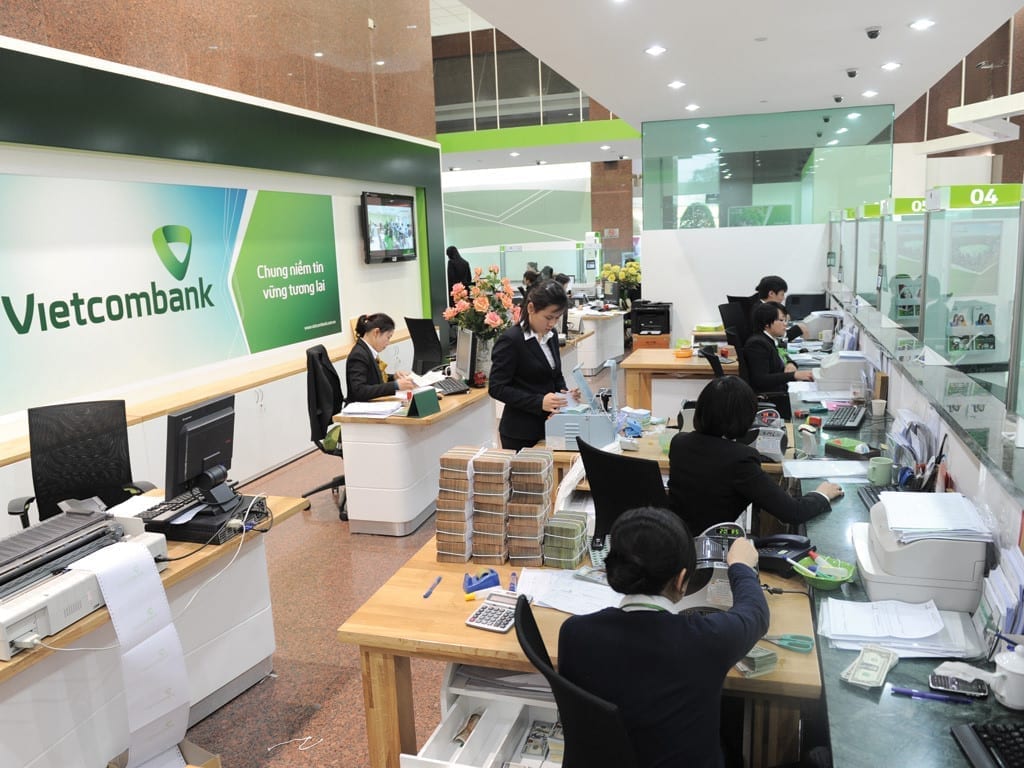
    Four Vietnamese lenders, three state-owned and one private, are among the world’s top 500 most valuable brands this year. In an annual ranking by BrandFinance, VietinBank was ranked 242, BIDV, 307, Vietcombank, 325, and VPBank, 361. Last year, VietinBank, BIDV and Vietcombank, three major Vietnamese banks, made it to this elite list, and this year is the first time that a Vietnamese private bank, VPBank, has made it to the Brand Finance Banking 500.

    In this year’s ranking, BIDV is one of top ten banks in the world in terms of brand strength, with growth of 22 percent; while VietinBank is one of top ten banks with biggest Brand Value Change 2018-2019 with a whopping 66 percent increase.

    Chinese bank Industrial and Commercial Bank of China (ICBC) continues to sit on the throne this year, followed by three others Chinese lenders in the top four.

    According to the UK-based Brand Finance, a leading independent brand valuation and strategy consultancy, Chinese banking brands have grown “at an outstanding rate despite fears of an economic slowdown and the rise of protectionism in international trade.”

    It said Chinese banks grew 28 percent on average, achieving $407 billion in total brand value, over $100 billion more than American banks.

    In August last year, Vietnam’s government approved a master plan for banking sector development until 2025 with a vision to 2030.

    The plan envisages at least 2-3 banks in Asia’s top 100 in terms of total assets and targets to have 3-5 banks listed on foreign stock exchanges by 2025.

  • Record earnings for Maybank Indonesia

    Record earnings for Maybank Indonesia

    PT Bank Maybank Indonesia Tbk’s (Maybank Indonesia) profit after tax and minority interests (patami) for the financial year ended Dec 31, 2018 surged 21.6% to a new high of Rp2.2 trillion (RM640 million) on the back of higher net interest income (NII) and continued improvement in asset quality.

    The bank’s profit before tax (PBT) jumped 20.5% to a record Rp3 trillion, its highest achievement to date, while NII grew 5.2% to Rp8.1 trillion in December 2018 compared with Rp7.7 trillion in the previous corresponding period, it said in a statement today.

    Additionally, it said continuous implementation of disciplined pricing coupled with improved operational efficiencies enabled the bank to contain pressures on interest margin, resulting in improvement in net interest margin by 7 basis points (bps) to 5.2%.

    The bank’s asset quality also improved significantly as reflected by lower non-performing loan (NPL) levels of 2.6% (gross) and 1.5% (net) as at Dec 31, 2018 compared with 2.8% (gross) and 1.7% (net) respectively in the previous year.

    Following that, Maybank Indonesia was able to reduce its loan loss provisions by 38.6% to Rp1.3 trillion as of December 2018.

    Its loans grew 6.3% to Rp133.3 trillion from Rp125.4 trillion in the previous year.

    It also maintained a strong capital position with total capital reaching Rp26.1 trillion in FY18, while capital adequacy ratio (CAR) improved to 19% from 17.5%.

    Maybank Indonesia president commissioner and Maybank group president and CEO Datuk Abdul Farid Alias said the bank’s outstanding results for FY18 testify to its commitment towards sustainable business growth, as well as its relentless pursuit in ensuring sound asset quality, improved operational efficiency and better overall productivity.

    “Although the operating environment continues to remain challenging, we believe that we are poised for further growth in the coming year,” he added.

  • India central bank makes surprise interest rate cut

    India central bank makes surprise interest rate cut

    India’s central bank unexpectedly lowered interest rates and, as anticipated, shifted its stance to “neutral” from “calibrated tightening” to boost a slowing economy after a sharp fall in the inflation rate. The monetary policy committee (MPC) of the Reserve Bank of India cut the repo rate by 25 basis points to 6.25%, as predicted by only 21 of 65 analysts polled by Reuters. Most polled respondents expected the central bank to only change the stance, to neutral.

    Four of six members of the MPC voted to cut the rates, while all six voted for a change in the stance.

    “Investment activity is recovering but supported mainly by public spending on infrastructure,” the MPC said in a statement. “The need is to strengthen private investment activity and buttress private consumption.”

    Rupa Rege Nitsure, chief economist at L&T Financial Services, called the central bank moves “the perfect policy response in the current circumstances.”

    Indian shares pared gains while 10-year bond yields slid 5 basis points after the surprise rate cut.

    The Indian rupee weakened to 71.69 to the dollar immediately after the announced but strengthened soon after to 71.42.

    The NSE index was up 0.04% at 11068.05 while the 10-year benchmark government bond yield fell to 7.51% from Wednesday’s close of 7.56%.

    India’s last rate cut, to 6.00%, was in August 2017.

    Also, in Manila, the Philippine central bank kept its benchmark interest rate steady for a second straight meeting , saying inflation risk had fallen on lower crude oil and food prices.

    The Bangko Sentral ng Pilipinas kept the rate on its overnight reverse repurchase facility The central bank paused its tightening cycle in December to allow its five straight previous rate increases, totalling 175 basis points, to work their way into the economy.

    The rate increases appear to be having their desired effect as inflation has started to cool since it hit a near-decade peak of 6.7% in September and October last year.

    The decision to stay on hold was based on the central bank’s view that lower oil costs and stabilisation in food prices would bring inflation under control and could see it back on target as early as March, when it could fall to below 4%.

  • Malaysian banks to maintain earnings potential this year

    Malaysian banks to maintain earnings potential this year

    Analysts believe that the banking sector will be able to maintain its earnings potential this year, as margin pressure is expected to ease and continued loans growth with stable asset quality. MIDF Research said while the industry’s loans growth moderated to 5.6% year-on-year (y-o-y) as at December 2018 due to moderation in business loans and loans for the purchase of residential properties, the growth was still slightly above its expectations.

    “As for CY19, we expect a moderation in loans growth to 4.7% y-o-y due to the high base effect. We also believe that deposits growth will moderate to 5.3% y-o-y due to lower growth in fixed deposits growth this year,” the research house said in a note.

    “This also means that there will be accretion in value for banks’ book value. Hence, we maintain our ‘positive’ view on the sector,” it added.

    Overall, MIDF Research said it is cautiously optimistic of the banking sector continuing its solid performance in 2019.

    Given the current market conditions, the research house said its top picks for the sector are Maybank, CIMB and Public Bank.

    In a separate note, AmBank Research said it expects that the foreign fund inflows into emerging markets would benefit the share prices of the liquid banking stocks as the US Fed rate hike is tapering off.

    Therefore, the research house said it maintained its “overweight” stance for the sector with “buy” calls on RHB Bank, Public Bank, Alliance Bank, BIMB Holdings, Maybank as well as MBSB. Its tops picks include Maybank, Public and RHB Bank.

    AmBank Research noted that Maybank’s earnings are well diversified and the bank is still recording positive JAWs (a technical term that denotes income growth exceeding that of expenses) with growth in total income outpacing expenses.

    It added that Maybank’s net interest margins could also improve further ahead with the lowering of its funding cost as the group releases the excess liquidity built-up in the first half of financial year 2018 (1HFY18).

    “Meanwhile, dividend yield for the stock continues to be attractive relative to peers with its high payout ratio while potentially offering investors higher returns with the reinvestment of their dividends into additional shares under the DRS (dividend reinvestment scheme),” it added.

  • CIMB completes Asean footprint

    CIMB completes Asean footprint

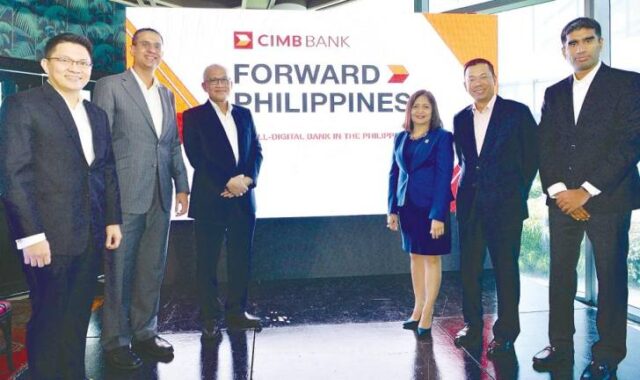
    CIMB Group Holdings Bhd is finally completing its operating footprint in Asean with the launch of its banking presence in the Philippines. It has received regulatory approval from the Securities and Exchange Commission of the Philippines for its investment banking joint-venture in the country, CIMB Bancom Capital Corporation.

    CIMB Group CEO (group ventures and partnerships) Effendy Shahul Hamid said CIMB Bancom will look to deliver value added advisory and cross-border capital market services to Philippine corporates looking to expand and grow across Asean, as well as capitalise on CIMB’s strong presence in the region to originate inbound deals to the Philippines.

    CIMB Bank Philippines Inc (CIMB Philippines) aspires to be the nation’s first all-digital and mobile-first bank, promising to make banking simpler, more convenient, and hassle-free, according to the group’s statement.

    “We look forward to bringing a differentiated and digital proposition to the market. Internet and mobile penetration in the Philippines remains one of the highest in the world, a clear sign of the progressive and modern society we hope to serve,” said Effendy.

    CIMB Philippines CEO Vijay Manoharan noted that consumers need innovative financial solutions that are relevant to their needs as well as help them get ahead and advance their financial well-being, but they do not necessarily need a physical bank.

    “By offering most of our products via the Octo app securely, we are offering the next-level any day, any time convenience for our customers by enabling them to effectively ‘carry’ our bank branch in the palm of their hands.”

    CIMB Philippines’ partners include 7-Eleven and DragonPay, with a total of 8,000 convenient customer touchpoints nationwide.

    The CIMB Bank Visa-powered Debit Card is accepted at any of the 20,000 Bancnet, Visa, and Visa Plus automatic teller machine (ATMs) nationwide and two million Visa and Visa Plus ATMs worldwide.

    To cater to those who want to really start preparing for what’s ahead and save for the future, CIMB Bank offers the UpSave Account, which allows greater savings with its high interest rate of 2% per annum (eight times higher than other banks).

  • Maybank Malaysia vaults into list of world’s top 500 brands

    Maybank Malaysia vaults into list of world’s top 500 brands

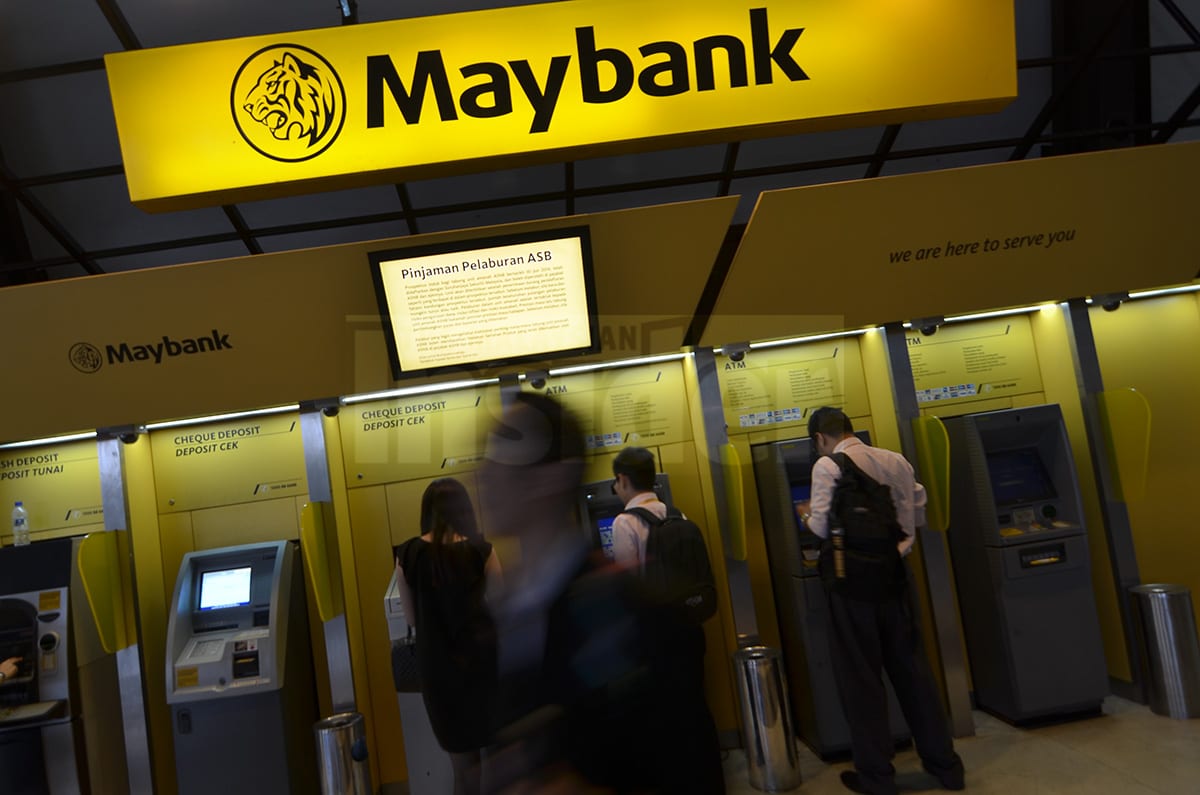
    Maybank has made it into the world’s top 500 brands for the first time, after it was named in Brand Finance’s Global 500 Brands – the only Malaysian bank and one of two Malaysian brands to be included in this prestigious listing. Maybank achieved a brand valuation of US$4.2 billion (RM17.3 billion), a 32% increase from last year’s valuation of US$3.16 billion according to its statement.

    Maybank said the group also maintained its position as the top bank brand in Malaysia for the fifth year running, improving its previous rating of “AAA-” to “AAA”.

    At the same time, it registered an increase in the Brand Strength Index (BSI) to 86/100 this year from 82/100 previously. BSI is a key driver that contributes to brand valuation and determines the strength of a brand.

    Maybank was among only eight Asean brands listed in the global ranking. It was placed 494 in the world’s top 500 most valuable brands list.

    Maybank group president and CEO Datuk Abdul Farid Alias said the recognition was a reflection of Maybank’s sustained efforts in building closer relationships with its stakeholders and focusing on delivering consistent value through all its products and services.

    “It is definitely a great honour for Maybank to be listed among the top brands in the world today. We believe it also demonstrates how a homegrown brand from Malaysia is defining new standards and raising the bar in the global stage with support from all its stakeholders.”

    Farid added that Maybank’s strategy in developing a meaningful brand experience was centred on its mission to humanise financial services, as well as its commitment to being at the heart of communities where it operates.

    “While we will continue to strengthen our brand positioning across all our engagement channels, we are also focusing on providing next-generation customer experience given that technology is rapidly influencing our lifestyles and the way people do banking today,” he said.

    Brand Finance in its annual survey, values the brands of thousands of the world’s biggest companies. The results of this analysis are then ranked with the world’s 500 most valuable brands featured in the Brand Finance Global 500 report.

  • Vietnam’s interest rate rises in the lead-up to biggest national holiday

    Vietnam’s interest rate rises in the lead-up to biggest national holiday

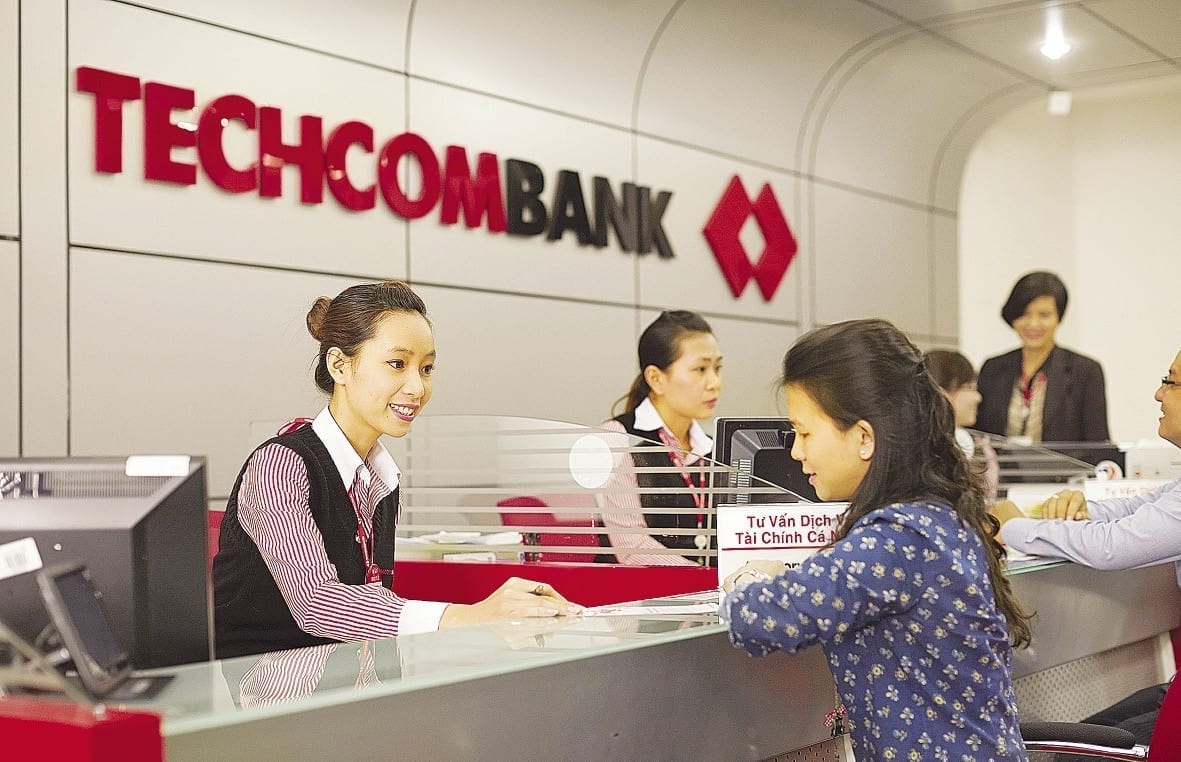
    Banks have hiked deposit interest rates by 0.1-0.5 percentage points as the country’s spending demand surges prior to Tet. Private lender Asia Commercial Bank last Friday introduced a new interest schedule with an increase of 0.2-0.3 percentage points in rates on most deposit terms. It also offers rates proportional to the amount of deposit. Techcombank, another of the larger private banks, since January 21, has hiked rates by 0.2-0.3 percentage points for terms of up to 12 months.

    Earlier, in mid-December most private banks had upped rates by 0.1-0.7 percentage points, while state-run banks increased them by up to 0.5 percentage points.

    However, there are also a few banks that choose to ‘go against the current’ by lowering deposit rates on same products. For instance, BIDV, Vietnam’s biggest lender by assets, has just lowered interest rates on its deposit rate schedule effective from January 22.

    BIDV’s 5-month savings is now 5.2 percent interest, down from its previously 5.5 percent which was its approved ceiling rate.

    Previously, at the end of December 2018, BIDV increased the 5-month term interest rate by 0.5 percentage points per year.

    On the same day, VPBank also reduced the interest rate on their 6-36 months terms by 0.1-0.5 percentage points.

    Specifically, the bank’s regular savings interest rate with 6-11-month terms is lowered by 0.2 percentage points, and is now 7 percent. The 12-month term interest rate is 7.05 percent; both 13 and 15 month terms are down 0.2 percentage points, and are now 7.2 and 7.4 percent respectively.

    However, VPBank still currently holds the highest single interest rate in the market of 8.6 percent for its 18-36 month fixed term savings.

    Experts believe that the negative adjustment of interest rates at some banks such as BIDV and VPBank may be for the purpose of restructuring to meet the banks’ individual capital needs, and does not yet accurately reflect the interest rate trend in the following months.

    In fact, the period before the Tet Lunar New Year holiday is when cash is still in high demand in the economy, as businesses need to withdraw money to pay bonuses and salaries, and people will withdraw cash to spend for Tet which will start from February 5.

    At the conference on tasks for the banking industry in 2019 on January 9, Deputy Governor of the State Bank of Vietnam (SBV) Dao Minh Tu said that banks have recorded a decline in deposits.

    According to him, this is a phenomenon that banks need to keep their eyes on, to determine where the flow of capital has gone, to real estate or production, or another channel in order to make reasonable adjustments to their plans.

    Tu said the SBV had adamantly stuck to its policy to stabilize interest rates despite very high pressure to drive rates upwards in 2018. Many small banks had raised short-term deposit rates to attract capital and improve liquidity, resulting in the central bank having to pump more money into the market or use other measures to limit and keep interest rates stable for businesses.

    The deputy governor said the SBV had to balance between the conflicting interests of banks, savers and businesses to come up with an appropriate interest rate for the whole market.

    The SBV targets credit growth of 14 percent this year, the same as last year. As a result, he noted, commercial banks will have to make better quality loans this year to avoid bad debt.

  • Vietnamese banks report plunge in profits

    Vietnamese banks report plunge in profits

    While profit across the banking sector grew by an estimated 40 percent last year, VietinBank, LienVietPostBank and SaigonBank have reported steep declines. The biggest surprise came from state-owned VietinBank, the country’s second biggest lender by assets, which reported a 25 percent fall in profits before tax to go out of the group of five most profitable banks in the country.

    Le Duc Tho, its chairman, said this was a result of having to restrict operations last quarter to begin restructuring.

    Asset growth, credit growth and capital mobilization grew by 6-10 percent, lower than targeted.

    LienVietPostBank reported a 30 percent decline in profit before tax as a result of losses related to securities investments and low marginal interest rates.

    It achieved losses of nearly VND5 billion ($215,140) from securities investments whereas in 2017 it had made a profit of VND380 billion ($16.35 million).

    SaigonBank’s profit before tax fell by more than 26 percent due to provisioning for bad debts. The bank had to increase provision for bad debts by 22 percent to an amount equivalent to 87 percent of its profit from business operations.

    Its bad debts doubled in the first half of 2018 to nearly VND900 billion ($38.72 million), but by the end of the year it brought the rate down from 6.48 percent during mid-year to 2.2 percent. It involved provisioning of VND287 billion ($12.35 million).

    HSBC Vietnam CEO Pham Hong Hai said from 2019 bad debts could reemerge as a problem for banks after the recent lending spurt and the instability of the global financial markets.

    As a result, banks’ profits would most likely see a downward trend this year, he warned.

    The State Bank of Vietnam targets credit growth of 14 percent this year, the same as last year, and keeping non-performing loans to below 2 percent.