Tag: Banking

  • OCBC: Malaysia could restore fiscal health in 3 years

    OCBC: Malaysia could restore fiscal health in 3 years

    Malaysia has a reasonable chance of restoring its fiscal health within three years if the economic growth remains stable with new revenue streams and stable expenditure, according to OCBC Bank chief economist Selena Ling. “But if you have a case where the global environment is very serious and dire and there is no deal between US and China… then it becomes a very hostile environment for any developing country to operate in,” she said last Friday.

    She noted that if the global economy remains at a status quo for the rest of the year and crude oil prices stabilise, Malaysia may miss the fiscal deficit target by 0.1-0.2 percentage points.

    Having said that, the potential slippage is not expected to be “very severe” that will derail Malaysia off its targets.

    “Rating agencies also want to see a multi-year plan. If it’s just a slippage of one year that you can attribute to a lot of external factors, probably the rating agencies will give you a pass. It’s really not a one year story they’re looking for,” she explained.

    The government has projected fiscal deficit to ease to 3.4% of gross domestic product (GDP) this year from 3.7% in 2018. It looks to further narrow the fiscal deficit to 3% and 2.8% in 2020 and 2021, respectively.

    Ling projects Malaysia to record a full-year GDP growth of 4.4% for 2019 amid slowing global growth and the ongoing external headwinds.

    Malaysia’s ringgit, on the other hand, could appreciate to RM4 against the greenback in the event of a weak dollar.

    She said the strengthening of the ringgit will have less to do with domestic factors as the slowdown in economic growth is seen as benign, coupled with an unlikely change in the Overnight Policy Rate (OPR).

    Another reason that could be supportive of strong ringgit is the risk of the US economy falling into a recession next year.

    Meanwhile, Ling expects oil prices to be subdued and could result in a shortfall in government coffers if they remain at the current level of around US$50 per barrel until year-end.

    Although Budget 2019 is based on the oil price assumption of US$70 per barrel, she does not see a need to recalibrate the budget at this juncture, but it will exert pressure on seeking new revenue sources.

    “As far as the budget revision is concerned, I suspect (it will) not be so soon because the US$70 is a medium-term price target and oil prices have been volatile in the last six months.

    “But if you look at the average price, it is relatively stable and maybe for the next budget in October 2019, they (the government) may revise the oil price assumption,” she added.

  • Indonesia’s Danamon Bank Plans Merger With BNP

    Indonesia’s Danamon Bank Plans Merger With BNP

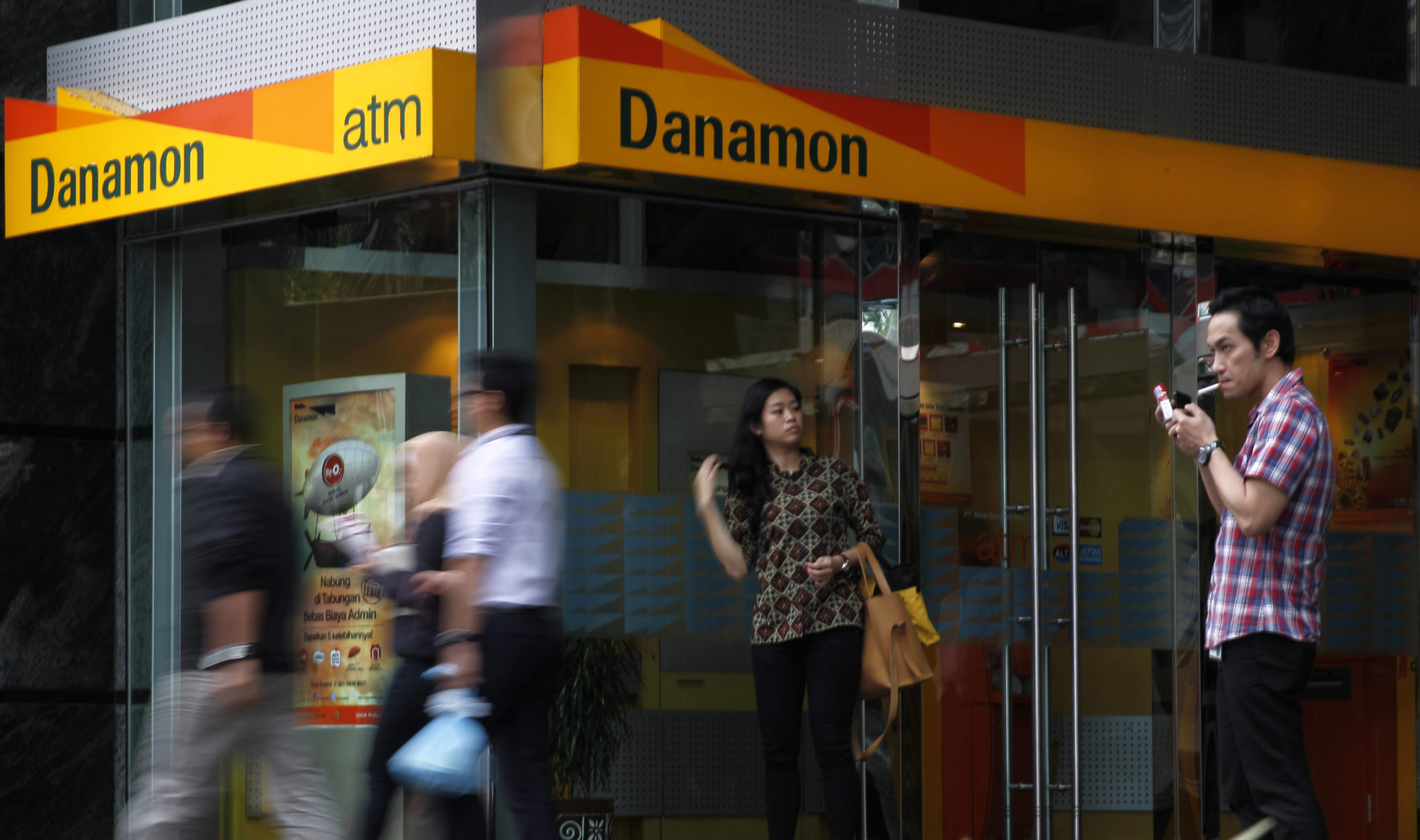
    Bank Danamon, Indonesia’s fifth-largest private lender, announced a plan on Tuesday to merge with local lender Bank Nusantara Parahyangan. “The proposed merger is subject to approval by the relevant regulatory authorities, both banks’ shareholders, and to meeting the legal formalities for such a transaction,” Bank Danamon said in a statement on Tuesday.

    This is part of a larger plan by Japan’s Bank Mitsubishi UFG (MUFG) to acquire a 73.8 percent stake in Bank Danamon.

    Bank Danamon and Bank Nusantara Parahyangan (BNP) are now able to merge after MUFG acquired 40 percent of Danamon in August last year.

    Aside from owning Bank Danamon, MUFG also holds a majority stake in BNP through its subsidiary, Acom, one of Japan’s largest loan companies.

    Bank Danamon and BNP are required to merge as Indonesia applies a single-presence policy, which ensures that one single entity does not hold a majority stake in more than one company.

    MUFG’s plan for acquiring a majority stake in Danamon has been laid out in three stages.

    In the first stage, which was completed in December 2017, MUFG acquired a 19.9 percent stake in Danamon from Singapore’s wealth fund firm Temasek for $1.17 billion.

    The Japanese lender subsequently raised its stake in Danamon to 40 percent last August with the acquisition of a further 20.1 percent. In the final stage, the Japanese lender will seek approval to acquire the remaining shares, which in total, will give it a 73.8 percent stake.

    The acquisition is the part of MUGF’s ambitious plan to expand its presence in the region.

    The deal marks the largest acquisition of an Indonesian company by a foreign entity after American multinational cigarette and tobacco manufacturer Philip Morris International bought a 60 percent stake in HM Sampoerna for $3 billion.

  • CIMB get permission for banking venture with Philippines

    CIMB get permission for banking venture with Philippines

    CIMB Group Holdings Bhd has obtained the green light to establish its investment banking business in the Philippines. In a filing with Bursa Malaysia, the group said its wholly owned subsidiary CIMB Group Sdn Bhd had on Jan 23 received the relevant approvals from the Securities and Exchange Commission of the Philippines, including the Certificate of Incorporation and Certificate of Registration for an investment house licence.

    The investment banking business in the Philippines will be operated via a 60% shareholding in CIMB Bancom Capital Corporation with the remaining 40% stake to be held by local partners Bancom II Consultants, Inc and PLP Group Holdings, Inc.

    The three parties have entered into a joint venture agreement following the receipt of the approvals.

    CIMB shares went down 1 sen or 0.2% to close at RM5.65 today on 13.4 million shares done.

  • CIMB divests insurance broking business for RM59.6m

    CIMB divests insurance broking business for RM59.6m

    CIMB Group Holdings Bhd’s wholly-owned indirect subsidiary CIG Bhd yesterday entered into a share purchase agreement with HBG Asia Holdings Ltd and HBG Malaysia Sdn Bhd (Howden) to divest its remaining 51% stake in CIMB Howden Insurance Brokers Sdn Bhd (CHIB) to Howden for RM59.6 million.

    The group said approval from Bank Negara Malaysia in relation to the proposed divestment was received by Howden on Nov 27, 2018.

    “CHIB currently operates an insurance broking business and the proposed divestment is in line with CIMB’s aspirations to further streamline and focus on its core banking businesses. As part of the proposed divestment, CHIB will cease to be an associate of CIG,“ CIMB said.

  • CIMB Thai’s FY18 net profit drops on higher tax expenses

    CIMB Thai’s FY18 net profit drops on higher tax expenses

    CIMB Thai Bank PCL’s unaudited con-solidated net profit for the year ended Dec 31, 2018 (FY18) fell 98.2% year on year to 6.9 million baht (RM883,732), dragged down mainly by higher income tax expenses. Profit before tax decreased 44.5% to 271.2 million baht year on year, mainly due to a 9.6% increase in operating expenses and lower net fee and service income and other income of 7.0% and 2.6% respectively. This was offset by a 5.3% growth in net interest income and a 2.6% decline in provisions.

    President and CEO Kittiphun Anutarasoti said CIMB Thai group’s consolidated operating income, on a year-on-year basis, increased 2.9% from 2017 to 13.54 billion baht from higher net interest income of 5.3% on the back of loan expansion and higher interest income on investments.

    Net interest margin over earning assets stood at 3.71% in 2018, compared with 3.89% in 2017 as a result of lower yield on earning asset.

    As at Dec 31, 2018, CIMB Thai’s total gross loans stood at 227.8 billion baht, making an increase of 6.9% from Dec 31, 2017.

    Deposits stood at 234.3 billion baht, an increase of 6.5% from at the end of December 2017. CIMB Thai said the modified loan-to-deposit ratio was higher at 97.2% against 96.8% as at Dec 31, 2017.

    The gross non-performing loan (NPL) stood at 9.9 billion baht, with a lower gross NPL ratio of 4.3% compared with 4.8% as at Dec 31, 2017. The lower NPL ratio was due to more efficient risk management policies, improved asset quality management and loan collection processes as well as the sale of some NPLs in 2018.

  • Vietcombank’s profit skyrockets, Vietinbank’s falls

    Vietcombank’s profit skyrockets, Vietinbank’s falls

    Two of Vietnam’s largest banks reported contrasting performances in 2018, with Vietcombank’s profits rising by 63.5 percent and Vietinbank’s falling by 27 percent. Vietcombank, the largest listed bank by market capitalization, said profit before tax was VND18.02 trillion ($772.73 million) last year, up 63.5 percent over 2017. Vietcombank earlier this month raised VND6.2 trillion ($265.86 million) from selling a 3 percent stake to foreign investors.

    Singapore sovereign fund GIC bought 2.55 percent while Japan’s Mizuho Bank bought the remaining 0.45 percent to keep its 15 percent stake unchanged. Nghiem Xuan Thanh, Vietcombank’s chairman, said at a recent conference his bank had achieved all its target last year.

    Bad debts last year accounted for 0.97 percent of total loans and the bank hopes to keep it below 1 percent this year too. Vietcombank plans to have its total asset value increased by 12 percent, and its capital mobilization up by 13 percent this year.

    Vietinbank, the fourth largest listed bank by market cap, saw profit before tax slip to VND6.7 trillion ($287.3 million) in 2018 from VND9.2 trillion ($394.5 million) in 2017. Asset growth, credit growth and capital mobilization grew by 6-10 percent, lower than targeted.

    The lender’s proposal to increase charter capital has not been approved. Its chairman Le Duc Tho said increasing capital is “vital” since it has remained unchanged for years. The State Bank of Vietnam owns 65 percent of the bank, while foreign ownership has reached the 30 percent cap.

  • Bank Negara: US$101.4b international reserves at end-2018

    Bank Negara: US$101.4b international reserves at end-2018

    Bank Negara Malaysia’s (BNM) international reserves remained unchanged at US$101.4 billion (about RM417.06 billion) as at Dec 31, 2018, from Dec 14, 2018. The central bank said in a statement that the reserves position is sufficient to finance 7.4 months of retained imports and is 1.0 time the short-term external debt.

  • Vietnam targets credit growth of 14 pct in 2019

    Vietnam targets credit growth of 14 pct in 2019

    The State Bank of Vietnam targets credit growth of 14 percent this year, the same as last year. The focus of new loans would be priority sectors such as manufacturing, agriculture and small and medium enterprises, Nguyen Thi Hong, Deputy Governor of the central bank, said. Credit growth in the Vietnamese banking sector last year was 14 percent, the lowest rate since 2014.

    The figure announced by the State Bank of Vietnam (SBV) Monday was well short of the 17 percent targeted for the year.

    According to officials from the SBV’s Department of Credit for Economic Sectors, lending grew sharply in the early months of the year before tapering off. It was primarily targeted at priority sectors such as manufacturing and processing.

    Credit to the commercial and services sectors saw the highest growth rate, 16 percent. Lending to industry and construction grew by 12.1 percent and to agriculture, by 8.8 percent.

    Overall, interest rates remained steady despite rising interest rates in global markets. In Vietnam, interest rates are commonly around 6-9 percent a year for short-term and 9-11 percent a year for medium and long-term.

    The non-performing loans ratio was down to 1.89 percent from 1.99 percent in 2017 and 2.46 percent in 2016.

  • Vietcombank to sell 3 percent stake to foreign investors

    Vietcombank to sell 3 percent stake to foreign investors

    Vietcombank, Vietnam’s largest bank by market cap, has received permission from the securities watchdog to sell a 3 percent stake to foreign investors. The green light from the State Securities Commission (SSC) will allow the lender to make a private placement of 3 percent as part of its plan to ultimately sell 10 percent. The 3 percent could fetch around $270 million based on its current stock price.

    Vietcombank last month received approval from the State Bank of Vietnam (SBV) to increase its charter capital by selling 10 percent to the Government of Singapore Investment Corporation (GIC) and existing strategic partner, Japanese bank Mizuho.

    Now GIC will buy 2.55 percent while Mizuho Bank will buy the remaining 0.45 percent to keep its current 15 percent stake unchanged.

    Last September the SBV approved Vietcombank’s proposal to increase its charter capital from VND35.98 trillion ($1.55 billion) to VND39.57 trillion ($1.7 billion). The capital has remained unchanged since 2016.

    Vietcombank is one of many Vietnamese lenders that have been seeking to increase capital to meet international capital adequacy norms.

    The country’s banks need to increase their charter capital to meet the Basel II capital adequacy ratio (CAR).

    The accords prescribe capital of 8 percent of risk-weighted assets for all financial institutions, including in Vietnam, to cover operational risks.

    State-owned BIDV, the second biggest bank by market capitalization, said last October it wanted to sell new shares to South Korea’s KEB Hana Bank, giving it a 15 percent stake in the company. The sale would be worth $735 million.

    Vietnam caps foreign ownership of banks at 30 percent. The country has nine wholly-owned foreign banks, four state-owned banks and 31 domestic joint-stock banks.

  • Outlook for local banking sector remains challenging: Kenanga Research

    Outlook for local banking sector remains challenging: Kenanga Research

    The banking sector’s outlook is challenging due to external concerns while clarity and direction on the domestic front remain murky, according to Kenanga Research, which maintained a neutral stance for the sector as no fundamental change is expected, and the sector lacks concrete catalysts. “We view the industry with caution as uncertainties and headwinds still prevail. The industry remains unexciting, dragged by moderate loan growth and soft capital markets. Prevailing negative sentiment both globally and domestically will continue to drive volatility and uncertainty in the industry. Caution will still prevail due to the soft economy outlook globally,“ the research house said in a note today.

    It said banks with healthy asset quality (hence low impairment allowances) will still be the favour due to their defensive quality.

    “As such, selective asset growth will still be the focus for the banks. Despite stable economic outlook in the domestic environment coupled with low unemployment, we opine that cautiousness and selective assets growth will still prevail in the industry,“ Kenanga Research explained.

    It said loan growth moving forward will still be moderate as uncertainties prevail with fee-based income expected to be soft as a result of the volatile capital market. However, with the stable outlook, this will support a moderate and stable credit charge for the industry.

    “We expect impairment allowances (credit costs) to be stable and consistent (as it had been generally in 2018) which will lend support to the banks’ bottom line. We do not discount another potential up-cycle of impairment allowances, especially those highly exposed to the energy sector (CIMB, Maybank and RHB Bank) as energy prices have been under pressure due to the perceived economic slowdown both domestically and globally.”

    Kenanga Research expects mild compression for net interest margin (NIM) as most of the banks’ loan-to-deposit ratio and loan-to-fund ratio are over 90% and 80%, respectively, as compression will be mitigated by soft credit demand. The deferment of NSFR (net stable funding ratio) into 2020 plus the absence of high credit demand will support the outlook for a stable to mild compression in NIM.

    “However, looking at the slowing momentum in household demand, we do not discount the likelihood of competitive lending rates in the short term as banks strive to achieve their loan growth target. This competition will ultimately lead to further downside pressure on NIM.”

    The research house has revised downwards the 2018/2019 earnings estimates by 80bps/30bps to +6.7%/+5.6% respectively.

    “For 2019, earnings are slower at +5.6% year-on-year (yoy) as we based from these assumptions of credit charge at 0.33%; and slight compression on NIM by 3bps and a higher pace from fee-based income (+6.6% yoy due to a lower base).”

    It also toned its outlook on loan growth for FY18 at +4.7% (from +4.9% previously) on account of revision of prevailing headwinds.

    Kenanga Research reiterated its outperform call for BIMB Holdings Bhd, as its financing portfolio (70% of total financing) is skewed towards household (75% first-time buyers for residential property) with focus on growing its personal financing will minimise NIM compression.

    Another preferred pick is Malaysia Building Society Bhd (MBSB), which is expected to achieve 3-4% growth driven by corporate loans/financing as another RM950 million is expected to be disbursed in Q4 18.

  • Aeon Credit posts better earnings in third quarter

    Aeon Credit posts better earnings in third quarter

    Aeon Credit Service (M) Bhd’s net profit for the third quarter ended Nov 30, increased 23.5% to RM87.14 million from RM70.55 million a year ago, attributed to lower impairment loss on financing receivables. Revenue for the period increased 11.6% to RM348.5 million from RM312.35 million.

    For the nine-month period, the group reported a 22.62% rise in net profit to RM267.01 million from RM217.75 million. Revenue was up by 8.7% to RM1.01 billion from RM925.95 million.

    Aeon Credit told Bursa Malaysia that its gross financing receivables as at Nov 30 was RM8.31 billion, representing an increase of 15.41% from RM7.2 billion a year ago. Meanwhile, net financing receivables after impairment was RM7.74 billion compared with RM7.03 billion a year ago.

    Its non-performing loan ratio stood at 2.05% as at Nov 30, 2018 versus 2.48% as at Nov 30, 2017.

    Total transaction and financing volume in the current quarter and nine months ended Nov 30 increased by 49.5% to RM1.5 billion and by 26.4% to RM3.9 billion respectively.

  • HSBC sells 49% of HSBC Amanah Takaful

    HSBC sells 49% of HSBC Amanah Takaful

    HSBC Holdings plc’s indirect wholly owned subsidiary HSBC Insurance (Asia Pacific) Holdings Ltd is selling a 49% stake in HSBC Amanah Takaful (Malaysia) Bhd to FWD Life Insurance Company (Bermuda) Ltd. The transaction has obtained approval from the Minister of Finance, via Bank Negara Malaysia, and is expected to be completed during the first half of 2019.

    “We have decided to exit the takaful manufacturing business and focus on our banking operations in Malaysia. This transaction relates only to a change in ownership for the takaful joint venture. For the HSBC Group, the transaction does not have any impact on our current businesses in Malaysia, comprising HSBC Bank Malaysia Bhd and HSBC Amanah Malaysia Bhd. Malaysia remains a key insurance distribution market for us and we will continue to support the insurance needs of our customers through our insurance partners,” said HSBC Bank Malaysia Bhd CEO Stuart Milne.

  • Malaysia’s CIMB to gain RM200m from stockbroking business transfer

    Malaysia’s CIMB to gain RM200m from stockbroking business transfer

    CIMB Group Holdings Bhd is expected to record a gain of disposal of approximately RM200 million from the process of transferring the group’s stockbroking business to its joint venture company with China Galaxy Securities Co Ltd.

    This comes after taking into account the premium on the disposal of approximately RM433 million and goodwill attributable to the business.

    CIMB said the consideration in connection with the proposed business transfer will be satisfied in cash and it was determined based on the future prospects and net asset value of the in-scope business as at Dec 31, 2015, which amounted to RM565.6 million.

    The consideration is subject to closing audit adjustments, if any.

    Jupiter Securities, the subsidiary of China Galaxy Securities Co Ltd (CGS)-CIMB Holdings Sdn Bhd, which is the Malaysian joint venture entity, will operate the stockbroking business.

    CIMB said in a stock exchange filing that its wholly owned subsidiary CIMB Group Sdn Bhd (CIMBG), China Galaxy’s wholly owned unit China Galaxy International Financial Holdings Ltd (CGI), and CGS-CIMB Holdings Sdn Bhd has inked a share subscription agreement for the subscription of new shares in CGS-CIMB Holdings Sdn Bhd.

    The proposed business transfer entails the sale of CIMB Investment Bank Bhd’s cash equities business and 100% equity interest in CIMB Futures Sdn Bhd as well as CIMB Bank Bhd’s equity financing services business and share margin financing granted in connection with the cash equities to Jupiter Securities.

    After the completion of the exercise, CIMBG and CGI will hold 50% stake each in the Malaysian JV entity.

    The exercises are expected to be completed in the first half of 2019.

  • South Korea’s Kookmin Bank licensed to open Vietnam branch

    South Korea’s Kookmin Bank licensed to open Vietnam branch

    The State Bank of Vietnam has licensed South Korea’s Kookmin Bank to open a branch in Hanoi, the government said on Tuesday. The branch has a chartered capital of $35 million and the contract runs for 99 years, the government said in a statement.

    South Korea is the largest source of foreign direct investment in Vietnam and the Southeast Asian country’s second largest trading partner.

  • Maybank sees marginally lower net profit for Q3

    Maybank sees marginally lower net profit for Q3

    Malayan Banking Bhd posted marginally lower net profit for the third quarter ended Sept 30, 2018 of RM1.96 billion, compared with RM2.03 billion in the corresponding quarter in 2017, on lower net operating income, higher allowances for impairment losses on loans, advances, financing and other debts and lower share of profits in associates and joint ventures .

    For the quarter under review, the group registered a net operating income of RM5.69 billion, compared with RM5.89 billion a year earlier, impacted by a dip in fee based income owing mainly to lower investment and trading proceeds as well as foreign exchange fluctuations. Notwithstanding this, operating profit for the third quarter ended Sept 30, 2018 was higher at RM2.61 billion from RM2.60 billion a year, as the group benefited from lower overhead expenses which declined 6.2% from a year earlier, as well as lower impairment losses which fell 5.5%.

    Maybank group said its key priorities for 2018 include maintaining pricing discipline across our products, focus on attaining cheaper funding sources to support loan growth, growing our loan portfolio within our risk appetite, while proactively managing our asset quality.

    The group has implemented MFRS 9 on Jan 1, 2018, of which the impairment assessment is based on the expected credit loss model that uses forward looking assumptions as opposed to an incurred loss model under the previous accounting standard. The group’s capital and liquidity positions remain strong notwithstanding the implementation of MFRS 9.

    Barring any unforeseen circumstances, the group expects its financial performance for 2018 to be satisfactory against the expected growth prospects of its key home markets. The group has set its Headline Key Performance Indicator for Return on Equity of 11%.

    Net profit for the nine month period ended Sept 30, 2018, was 7.39% higher at RM5.79 billion, compared with RM5.39 billion for the period in 2017.

    This was on 3.82% higher revenue of RM35.09 billion, compared with RM33.79 billion.