Tag: Banking

  • Thai Bankers Association explains mobile banking outage

    Thai Bankers Association explains mobile banking outage

    The Thai Bankers Association (TBA) has explained that an Internet banking outage between August 31 and September 1 was due to human error, and has made known that six guidelines have been set to ensure the stability of the digital system.

    President of Information Technology for the TBA, Somkid Jiranantrat indicated the outage on August 31 was the result of a command error by an agent of Kasikorn Bank. The flawed action was severe enough to eject Kasikorn Bank from the central system shared by the nation’s commercial banks while also impeding the system as a whole. On September 1, over 40,000 erroneous bank transfers were logged at an average rate of 1,000 requests per every nine minutes, again causing the system to shut down.

    In eliminate the possibility of such errors, TBA and ITMX, the central network handler, have come out with six guidelines. The first is to increase mobile accommodations two fold to reduce bottle necks during peak hours. The second is more stringent control over changes by individual banks. The third is to double ITMX’s capacity. The fourth is to establish a committee between banks and ITMX, which will set conditions for the temporary ejection of a bank from the system. The fifth is to create a more general interface in monitoring the system and the sixth is to reconsider the nation’s mobile banking structure.

    Kasikorn Bank’s mobile banking system can accommodate a maximum 6,000 requests per second with peaks at present hitting only 4,000 requests per second.

  • American ATM provider bullish on Philippine expansion

    American ATM provider bullish on Philippine expansion

    The American company which has deployed more than half of all automated teller machines in the Philippines remains bullish on its expansion in the country despite the increase in cashless transactions made possible by electronic commerce.

    Diebold Nixdorf, the market leader of self-service banking technology in the Philippines that serves more than 40 banks with 11,500 ATMs or 58 percent of the total nationwide,  believes that it is well positioned to support the industry’s expansion.

    It has a team of over 400 associates around the Philippines, while its service call center team supports over 250 field techs through a dedicated helpdesk and an in-house depot repair center in Makati. It established its presence in the country in 2003 to take advantage of the growth potential in the banking sector where 70 percent of households did not have bank accounts.

    Diebold Nixdorf Philippines president and country manager Julius Servando says the Philippines is a growing market for the company. A study by consulting firm RBR predicts that the country will see a rise in ATM deployment by 48 percent to 29,400 terminals by 2022, from the current 19,851 terminals.

    “What sets us apart from other competitors is our ability to service ATMs and use terminals outside the metros because we do have engineers in those areas 7/24,” Servando says.

    Servando says the company is also instrumental in bringing the government aid closer to the country’s less unfortunate families who benefit from the conditional cash transfer program of the Social Welfare Department.

    Diebold Nixdorf is also one of the first companies to bring in financial solution to Tacloban City after the devastating typhoon Yolanda hit the Visayas in November 2013.

    “We were the first to set up an ATM terminal in the province when the Philippine government needed the support of a financial solutions provider like us. They believed in us and we delivered,” says. Servando says that in the retail sector, the Philippines is still far from closing the gap with other countries in the Asia Pacific in terms of e-commerce sales. Data show that of $140 billion in total retail sales in 2017, e-commerce sales accounted for only $3.9 billion or 2.1 percent.

    “We have seen mobile penetration contributing to an increase in the e-commerce transaction. We can expect Philippine e-commerce to grow though not as fast as in other markets in Asia. Growth will be measured by the limits of infrastructure on hand and some issues on online security,” Servando says.

    “Given this situation and the innate fear of Filipinos to shop on the net especially cashless buying, we see the potential of physical stores still growing. They will be needing support from solution providers like us. We continue to see growth in 30 years,” he says.

    Diebold Nixdorf will soon introduce the use of QR codes and biometrics in automated transactions as well as for retail.

    A local bank plans to adopt the technology to provide better security for its clients. Deibold is celebrating 15 years in the Philippines with a host of new solutions for both the banking and retail sectors.

    Globally, Diebold Nixdorf has the presence in over 130 countries, supported by 15,000 service members and 1,900 software experts.


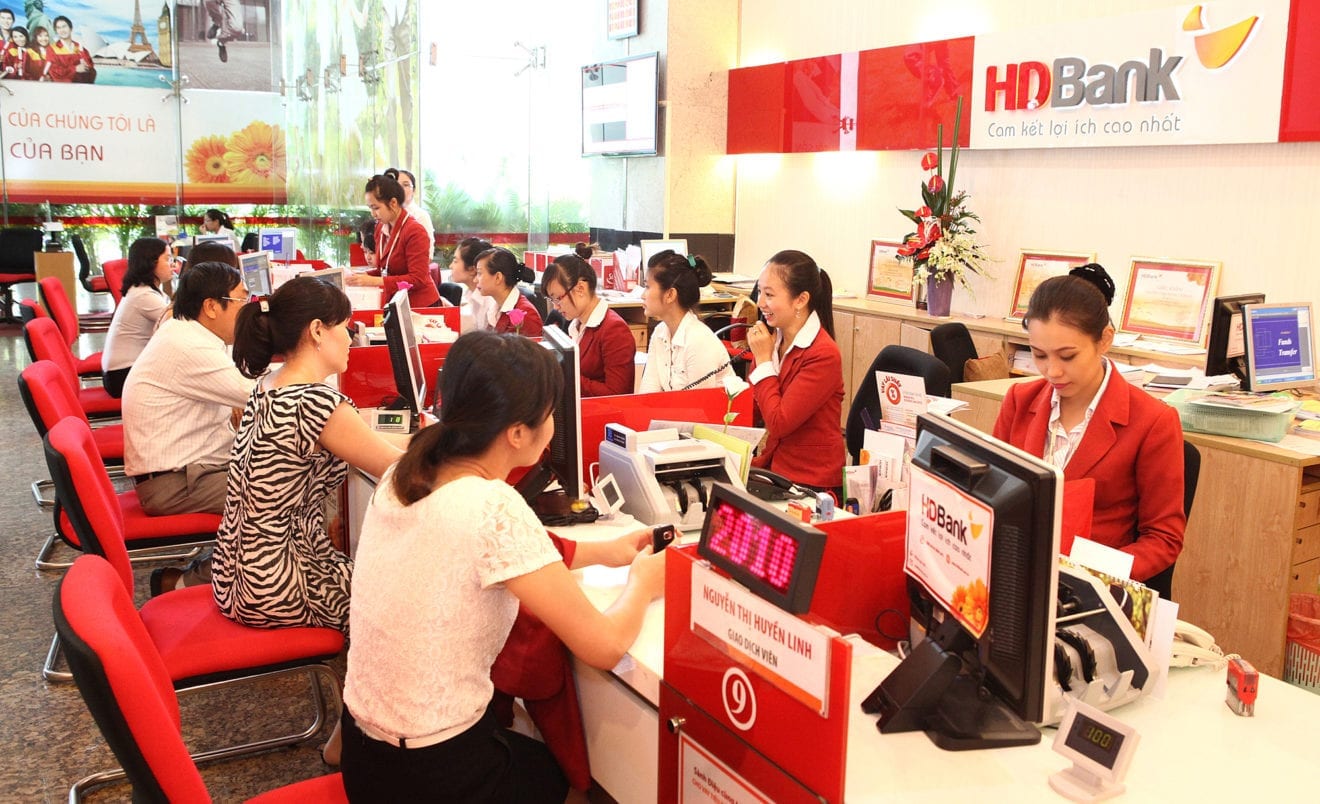
  • Vietnam’s HDBank to absorb PGBank

    Vietnam’s HDBank to absorb PGBank

    Each share of PGBank will be converted into 0.621 HDBank share. Vietnam’s Ho Chi Minh City Development Joint Stock Bank, better known as HDBank, said its shareholders approved on Saturday a plan to merge with the unlisted Petrolimex Group Commercial Joint Stock Bank as it seeks to expand operations in the country.

    The merger is scheduled to take place by August this year, the bank said in a statement.

    Each share of Petrolimex Group Commercial Joint Stock Bank, or PGBank, will be converted into 0.621 HDBank share, it said, adding that HDBank will issue 300 million new shares for the conversion.

    The merger will enable HDBank to expand its client base, including with Vietnam National Petroleum Group, which holds a 40 percent stake in PGBank and a share of around 50 percent of Vietnam’s retail-transport fuel market.

    The shareholders also approved a pretax profit target of VND3.92 trillion ($172.15 million) for this year, a 62.2 percent increase from last year.

    HDBank, a retail bank whose vice chairwoman is Nguyen Thi Phuong Thao, the billionaire founder and chairwoman of Vietjet Aviation, is targeting to grow total assets to VND242.87 trillion by the end of this year, up 28.3 percent from end-2017.

    HDBank, which listed its shares on the Ho Chi Minh Stock Exchange in January following a $300 million IPO in November, reported pretax profit of 1.045 trillion dong in the first quarter this year, up 170 percent from a year earlier. ($1 = 22,771 dong)

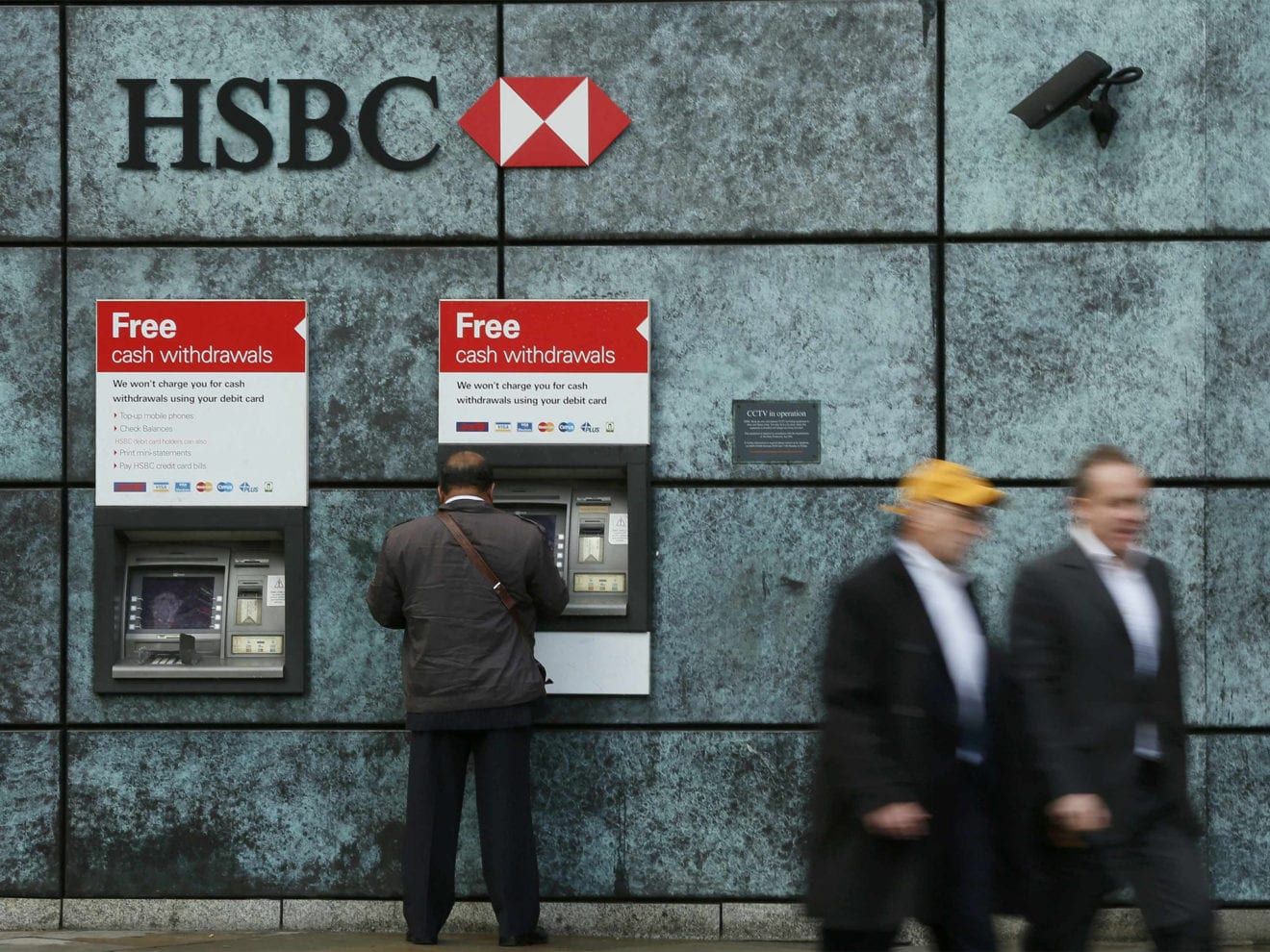
  • HSBC’s big push into Asia

    HSBC’s big push into Asia

    HSBC’s adjusted pre-tax profit of $6,033m for the first quarter is in many senses disappointing. It was down 3% from a year earlier and fell short of analysts’ estimates. From an Asian perspective, however, HSBC’s Q1 financial results highlight the scope of its expansion in the region – growth which has also contributed to its rising cost base. If you’re thinking about applying to HSBC in Asia, here’s what its latest numbers tell us about jobs at the bank.

    Asia generated $4,756m in adjusted profit before tax in Q1, up 8% from a year earlier. By contrast, Europe’s contribution to profit fell 72% to $222m over the same period, while North America’s declined 16% to $438m. Asia now accounts for 79% of HSBC’s profit. This suggests that the firm is doubling down on its pivot to Asia (and to China in particular), a strategy that seeks to redeploy $100bn or more of assets into the region. HSBC announced the plans in 2015, adding that it would hire 4,000 staff in the Pearl River Delta region in southern China, although it still faces strong competition from local banks there.

    HSBC is hiring investment bankers in China…

    HSBC Qianhai Securities, the first joint-venture securities company in mainland China to be majority owned by a foreign bank, has been hiring in the first quarter. HSBC made “made strategic hires in our securities joint venture in mainland China”, group chief executive John Flint, said in a statement within the bank’s financial report, without elaborating. Qianhai, which was launched in December, already has licences to offer equity and debt sponsoring and underwriting, equity research and brokerage of locally-listed securities, and domestic and cross-border M&A advisory. First quarter investment in Qianhai contributed to rising costs at HSBC, Flint said.

    HSBC is hiring more technologists, product managers, developers and content producers as it expands its digital-banking team in Hong Kong, its main digital development centre alongside London. This expansion appears to have continued into Q1. Flint said in his statement that the bank has “invested to enhance our digital capabilities in all our global businesses”.

    HSBC’s Asian private bankers are getting more productive

    HSBC’s Global Private Banking division makes up just 2% of its profits globally, but it is expanding in Asia, particularly in Hong Kong. Revenue in the division increased by $45m or 10%, “mainly in Hong Kong, as higher investment revenue reflected increased client activity, and deposit revenue increased as we benefited from wider spreads”. Although HSBC’s report doesn’t reveal regional revenue or profit figures for GPB (or other divisions), it does disclose client assets. First-quarter AUM in Asia rose 18% year-on-year to $131bn. But while rivals – from UBS to UBP – have been aggressively hiring in the sector, HSBC’s headcount of relationship managers in Asia stayed static at 470 last year, according to Asian Private Banker. The AUM increase suggest that HSBC’s existing RMs are becoming more productive.

    The first quarter was also a fruitful one for RMs working in wealth management in Asia. Their unit (which serves clients who aren’t rich enough to use the private bank and is part of HSBC’s wider Retail Banking and Wealth Management division) saw its global income rise 27% year on year to $1,829m. The increase “was primarily in investment distribution, reflecting higher sales of retail securities and mutual funds in Asia, following increased investor confidence”.

    Like their counterparts at rival Asia-focused banks Standard Chartered and DBS, Asian transaction bankers performed well at HSBC in Q1. Revenue within the Commercial Banking division increased by $0.3bn or 10%, notably in global liquidity and cash management, as HSBC “benefited from wider deposit spreads in Hong Kong and mainland China”. Credit and lending revenue also increased in Hong Kong.

  • Maybank Indonesia’s Q1 top line rises 3.6 pct

    Maybank Indonesia’s Q1 top line rises 3.6 pct

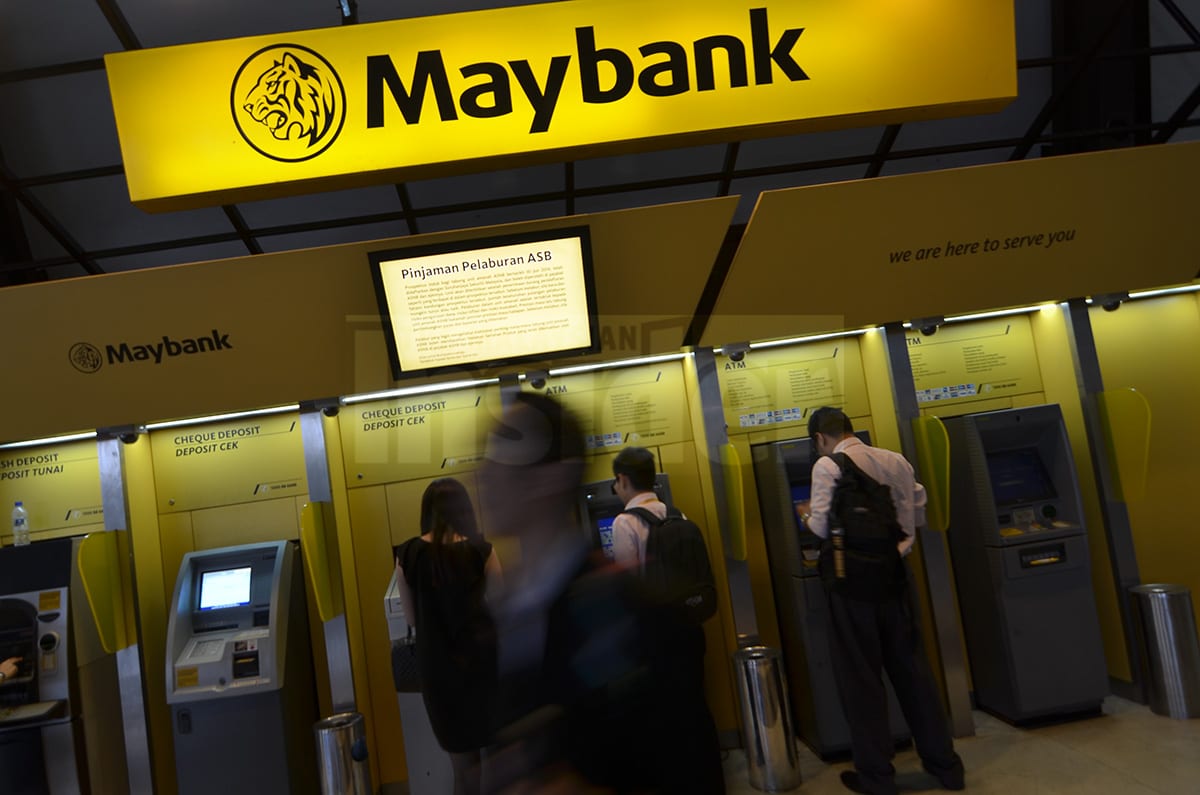
    PT Bank Maybank Indonesia Tbk (Maybank Indonesia) today reported that its operating income after provisions increased to 682 billion rupiah for the first quarter ended March 31, 2018 compared with 633.9 billion rupiah recorded in the previous corresponding period.

    In a statement, Maybank Indonesia said its profit after tax and minority Interest (PATAMI) stood at 463.1 billion rupiah for Q1, slightly lower than the 490.1 billion rupiah recorded in the same quarter a year ago.

    Gross operating income rose 3.6 per cent to 2.5 trillion rupiah for the three months.

    Maybank Indonesia said its operating income after provisions increased by 7.6 per cent and the bank’s top line grew 3.6 per cent supported by continued improvement in operational efficiency in line with its Strategic Cost Management Programme, as well as fee based income expansion, improvement in provisioning levels, growth in Sharia business and improvement in subsidiaries.

    Sharia Banking continued to record strong performance in the first three months of 2018 with total assets increasing by 25.7 per cent to 27.1 trillion rupiah, making up 15.4 per cent of the itss total assets.

    Total financing rose 41.6 per cent from 14.3 trillion rupiah as of March 2017 to 20.2 trillion rupiah as of March 2018, while its total deposits grew 44.1 per cent to 17.5 trillion rupiah from 12.1 trillion rupiah.

    It said Non Performing Financing improved significantly to 3.2 per cent as of March 2018 compared with 4.6 per cent in the previous year.

    The bank recorded a moderate loans growth of 2.2 per cent to 122.5 trillion rupiah as at March 31, 2018 from 119.9 trillion rupiah the previous year.

    Global Banking loans recorded growth of 6.2 per cent to 27.6 trillion rupiah as of March 2018 from 26 trillion rupiah as of March 2017.

    Maybank Indonesia said its customer deposits grew by 2.7 percent year-on-year with current accounts growing strongly at 27.3 per cent year-on-year, lifting the CASA (current account savings account) ratio to 39.7 per cent.

    On March 15, 2018, the bank also issued Shelf Registered Bonds II Bank Maybank Indonesia Tranche II Year 2018 amounting to 645.5 billion rupiah to support its business expansion.

    Maybank Indonesia has maintained its robust liquidity profile with its loan-to-deposit ratio remaining at a healthy level of 85.6 per cent and liquidity coverage ratio at 176.4 per cent as of March 2018, far in excess of the mandatory minimum of 90 per cent.

    Maybank Indonesia president director Taswin Zakaria said the bank will continue to grow its assets selectively to ensure sound asset quality going forward.

    “Our Global Banking continues to be the leading contributor to our assets growth.

    “The Sharia First strategy adopted by the Bank since 2014 continues to deliver impressive results.

    “However, we expect our CFS (Community Financial Services) portfolio to gradually strengthen in the coming quarters as we see opportunities in the retail and small medium enterprise segments.

    “This will be further underpinned by our recent initiative in transforming our retail business model,” he said.

    Maybank Group president and chief executive officer Datuk Abdul Farid Alias said the first quarter results demonstrate Maybank Indonesia’s resilience in growing its revenue despite the increasingly competitive market in the country.

    “The bank has firmly embedded sustainable business development strategies which cover retail transformation, digital banking enhancement, culture transformation as well as asset quality selection which will ensure continued value creation for all our stakeholders.

    “The outlook for the medium term remains challenging; but we are optimistic that we can manage the risks and ensure steady growth of our business in the coming quarters,” said Farid.

  • Security Bank focuses on digitalization

    Security Bank focuses on digitalization

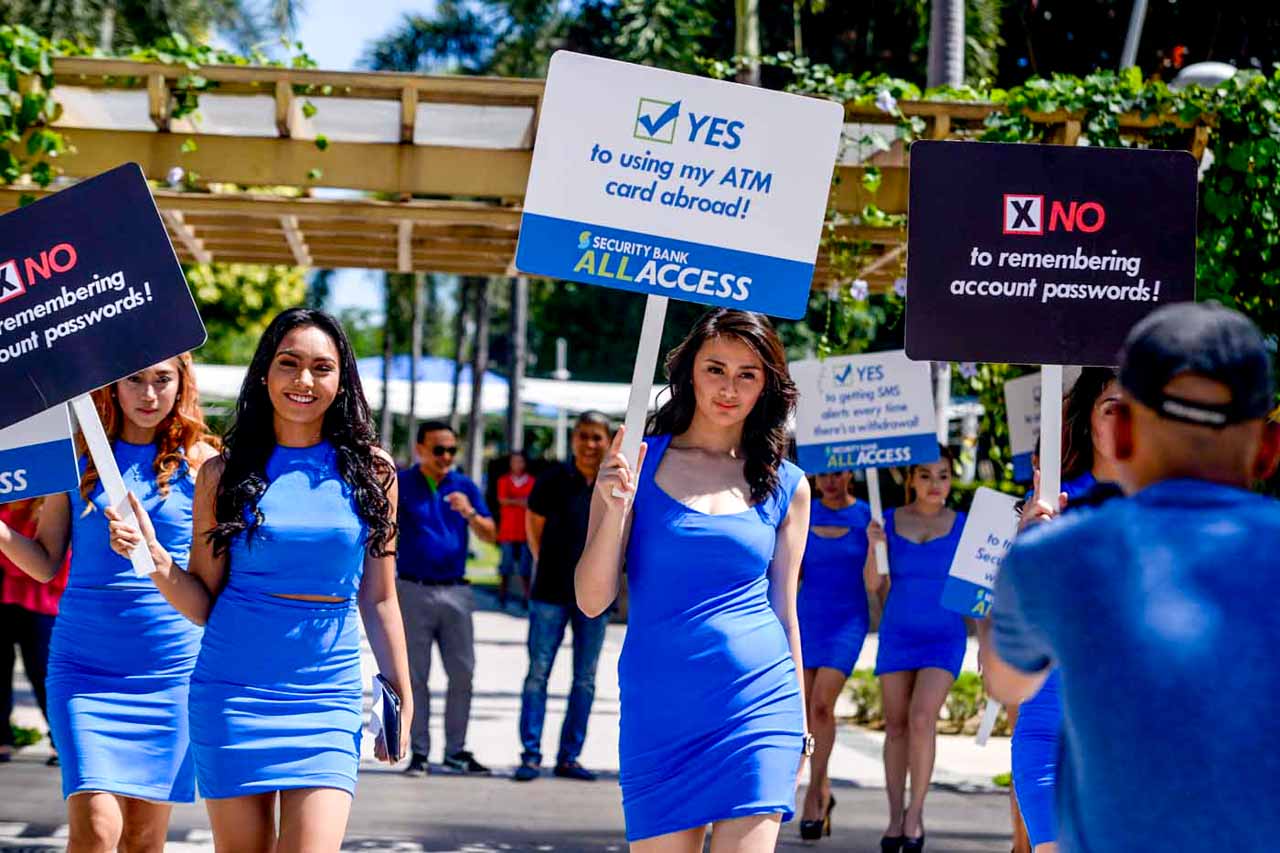
    During the annual stockholders’ meeting of Security Bank Corporation (PSE: SECB) on Tuesday, 24 April 2018, the following were elected to the Security Bank Board: incumbent directors Diana P. Aguilar, Philip T. Ang (independent), Anastasia Y. Dy, Frederick Y. Dy, Takayoshi Futae, Joseph R. Higdon (independent), James JK Hung (independent), Ramon R. Jimenez, Jr. (independent), Jikyeong Kang (independent), Napoleon L. Nazareno (independent), Takahiro Onishi, Alfonso L. Salcedo, Jr., Rafael F. Simpao, Jr. and Alberto S. Villarosa, and new director Cirilo P. Noel. During the organizational Board meeting, key appointments were for Frederick Y. Dy as Chairman Emeritus, Alberto S. Villarosa as Chairman, Anastasia Y. Dy as Vice Chairman, and Alfonso L. Salcedo, Jr. as President and Chief Executive Officer.

    In his report on 2017 operations, President and CEO Mr. Alfonso L. Salcedo, Jr. highlighted Security Bank’s 20% earnings growth that resulted in a record-high net income of Php 10.26 billion, versus industry’s 7% earnings growth. In the last five years, Security Bank’s net income grew by a compounded annual growth rate of 20% versus industry’s 3%. The Bank’s revenue growth in 2017 was 20% versus industry’s 11%. Net interest income growth was 22% versus industry’s 17%, while non-interest income growth was 15% versus industry’s 5% decrease. The Bank’s return on shareholders’ equity was 10.2% versus industry’s 9.96%. The Bank’s Core Equity Tier 1 and Total Capital Adequacy ratios of 15.5% and 17.7%, respectively, are among the highest in the industry and well above the minimum regulatory requirements. Total assets grew 9% to Php 757 billion. In the past five years, Security Bank’s total assets grew by a compounded annual growth rate of 21%, versus industry’s 11%.

    Also highlighted was Security Bank’s healthy loan portfolio growth of 28% versus industry’s 19%. The Bank’s loan growth was driven by corporate loans which increased 25%, middle market loans which grew 24%, and consumer loans which expanded 49%. In the past five years, Security Bank’s loan portfolio grew by a compounded annual growth rate of 22% versus industry’s 18%. The Bank’s three customer segments grew by compounded annual growth rates of 18% for corporate loans, 20% for middle market loans, and 63% for retail loans. Retail loans as a percent of total loans increased to 16% at year-end 2017 from 13% in 2016. Security Bank now has a full slate of consumer loan products consisting of home, auto, credit card, personal and small business loans. Asset quality remained healthy with net non-performing loan ratio at 0.02%, a decrease from 0.17% in 2016, and lower than industry’s 0.47%. NPL cover increased to 239%, versus industry’s 150%. Deposit growth was 19%, faster than industry’s 12%. In the last five years, Security Bank’s deposits grew by a compounded annual growth rate of 19% versus industry’s 12%. The Bank added 12 new branches in 2017, bringing its network to 302 branches. Its ATM network has grown from 622 to 713.

    Security Bank maintained its cost-to-income ratio at an efficient 49.8% compared to industry’s 63.3%, even as the Bank continued to invest heavily in information technology, digitalization, people and branches. Mr. Salcedo stated that these investments are designed to transform the Bank’s infrastructure and way of doing business, and ensure that the Bank stays relevant to shifting customer needs in a fast-changing banking and technology landscape. Security Bank continues to be focused on its medium-term strategic goals which are to regain industry-leading ROE, continue growth momentum to build its retail banking business as the third business pillar, and transform the Bank’s infrastructure to support its growth aspirations and deliver its BetterBanking promise. Key to this transformation is the digitalization of its customer acquisition and servicing channels and operational processes. In 2017, Security Bank increased cash dividends to Php 3.00 per share from Php 2.00 in prior years.

    Highlighted in the President’s report were the major awards that Security Bank received, most recently as The Best Retail Bank in the Philippines for 2018 by The Asian Banker and Best Bank in the Philippines by Global Finance. Mr. Salcedo stated that the execution and results of Security Bank’s retail banking strategy led to the major breakthrough award as The Best Retail Bank in the Philippines for 2018. In 2017, Security Bank was named Best Bank in the Philippines by Alpha Southeast Asia; Best Bank for SMEs in the Philippines by Asiamoney; and Best Digital Bank in the Philippines by Capital Finance International of London. The Bank also received awards for management excellence, industrial peace and harmony, corporate banking and treasury, brand marketing, product innovation, investor relations, and corporate social responsibility.

  • DBS shares shoot past S$30 on 21% surge in Q1 earnings

    DBS shares shoot past S$30 on 21% surge in Q1 earnings

    DBS shares crossed S$30 for the first time after it sparked a surge in bank stocks on Monday with sparkling Q1 results. South-east Asia’s biggest bank group announced before market hours that earnings for the first quarter rose 21 per cent to S$1.5 billion as it benefited from higher interest rates and loans growth as well as a property sale gain in Hong Kong.

    The first of the three local banks to report Q1 results, DBS exceeded expectations. Analysts polled by Bloomberg had forecast S$1.4 billion in net profit for the three months ended March 31. The stock surged 2.8 per cent to close at S$30.84.

    Chief executive Piyush Gupta, speaking at the bank’s results briefing, said he expects “a fairly strong year for DBS” as the global growth momentum is still robust and “the opportunities that we see are continuing to stay for us.”

    Loans expanded 13 per cent, or S$39 billion in constant-currency terms to S$328 billion from growth across trade, corporate and consumer loans, including S$9 billion from the consolidation of the retail and wealth management business of ANZ.

    Income and loans growth from small and medium enterprises (SME) has been strong but it was slow for the bank’s large corporate customers, he said.

    Corporate income in Q1 was flat while SME income rose 9 per cent.

    Full-year loan growth guidance maintained at 8 per cent, said Mr Gupta.

    Net interest margin (NIM) – defined as difference between interest income generated and the amount of interest paid to its lenders including depositors – rose nine basis points from a year ago to 1.83 per cent from higher Singapore dollar as well as US and Hong Kong dollar interest rates.

    DBS is on track for full year NIM of at least 1.85 per cent and may even exceed that by one to 2 basis points if there are three more US Federal Reserve rate hikes and there is pass through to local Sibor/SOR rates, said Mr Gupta. The 3-month Sibor or Singapore interbank offered rate which is the benchmark for housing loans has risen to 1.5 per cent from 1 per cent last June. Three-month SOR or swap offer rate – used to price commercial loans is even higher, at 1.6 per cent from last June’s low of 0.6 per cent.

    Mr Gupta said he wouldn’t be surprised if there are even four rate hikes by the US Fed this year.

    Net fee and commission income rose 12 per cent to S$744 million, led by higher bancassurance and unit trust sales. Card fees rose from higher credit card and debit card transactions as well as the consolidation of the retail and wealth management business acquired from ANZ.

    Consumer and wealth management income rose 17 per cent to S$1.4 billion. Wealth management income went up a strong 28 per cent while retail was up 8 per cent. Assets under management gained 22 per cent to S$208 billion, with S$22 billion from ANZ.

    Home loan market share remains at 31 per cent and SGD savings market share is 52 per cent. New home loan sales was S$2.5 billion in Q1.

    Other non-interest income swelled 25 per cent to S$488 million. There was a S$86 million gain from the sale of a Hong Kong property. Net trading income was also higher, partially offset by a fall in net income from investment securities.

    Expenses increased 12 per cent to S$1.4 billion. Excluding the consolidation of ANZ and a non-recurring item, underlying expenses were 6 per cent higher. Non performing assets (NPA) fell 4 per cent from the previous quarter while the non performing loan (NPL) rate eased to 1.6 per cent from 1.7 per cent. NPL ratio was 1.4 per cent in Q1 2017.

    Mr Gupta said asset quality is “looking very good” with new NPA formation of S$195 million at 4-year low. Return on equity (ROE) was 13.1 per cent, the highest in a decade. ROE was 11.1 per cent a year ago. Mr Gupta said he expects full year ROE to be at 12.5 per cent.

    Along with DBS, UOB, which is announcing its results on Thursday, rose S$0.70, or 2.38 per cent, to S$30.14, while OCBC went up S$0.15, or 1.1 per cent to S$13.80.

  • Mastercard expands Indian research facility

    Mastercard expands Indian research facility

    Mastercard has opened its upgraded technology center in Vadodara, India as part of the company’s support of the government’s initiative to enhance India’s digital capabilities.

    Spread across 65,000 square feet, the state-of-the art facility will serve as a collaboration center for more than 700 employees.

    Mastercard’s Vadodara Centre is part of the company’s vision to build a world beyond cash in India and beyond. Over the past few years, it has contributed to the “Make in India” and “Digital India” campaigns.

    In 2017, Mastercard collaborated with the Indian government to launch Bharat QR, an application that provides local, small and medium enterprises with a low-cost way to accept digital payments from any type of mobile phone.

    Ari Sarker, co-president, Asia Pacific, Mastercard said, “With its incredible pool of talent and opportunities for digitization, India is a strategic market and innovation hub for Mastercard. The expansion of our Technology Centre in Vadodara is an extension of our undertaking to drive the next level of growth and support the government’s agenda to shape a digital future and less-cash society in the market.”

    “Every day, our teams are working relentlessly to deliver real-world technology that breaks down barriers and makes people’s everyday lives easier, more efficient and secure,” said Ed McLaughlin, president, Operations and Technology, Mastercard. “That’s what makes this office so important.  Our Vadodara team is crucial to the next generation digital services and solutions Mastercard will implement across the world.”

  • OCBC Bank is First in Singapore to Rollout AI-Powered Voice Banking Services

    OCBC Bank is First in Singapore to Rollout AI-Powered Voice Banking Services

    OCBC Bank is the first in Singapore to launch artificial intelligence (AI) powered voice banking in collaboration with Google. With Google Home and Google Home Mini launched in Singapore today, anyone can now speak to the Google Assistant – on a smartphone or a Google Home device – to initiate a conversation about OCBC Bank’s services. These services range from planning for retirement or a new home to saving for a child’s education, getting the latest financial market updates, and more.

    At the forefront of voice-powered banking

    The proliferation of digital voice assistants is tipped to impact the consumer technology market this year. A 2018 Digital Consumer Survey by Accenture of 21,000 online consumers in 19 countries, including Singapore, indicates year-on-year growth of stand-alone digital voice assistants will increase 50 per cent in 2018, suggesting consumers are increasingly comfortable talking to digital voice assistants and smart home devices.

    The Google Assistant will provide consumers with another self-service digital channel to interact with OCBC Bank that is convenient and embedded in consumers’ lives. Consumers can pose general banking questions to the Google Assistant at any time of the day to get instant responses. This complements other self-service digital channels such as AI-powered chatbot ‘Emma’, which was launched in 2017 and specialises in answering home and renovation loan queries on the OCBC Bank website in an intelligent, human-like way.

    OCBC Bank remains the only bank in Singapore to offer voice-based banking on digital voice assistants as a medium for customer interaction and engagement. OCBC Bank has been leading the financial industry in rolling out numerous voice and conversational banking innovations for the convenience of customers. Voice-powered technology has been deployed across the bank since October 2016, when OCBC Bank was the first in Singapore to enable customers to initiate e-payments using Apple’s Siri voice assistant. In October 2017, OCBC Bank was again first in Singapore to let business banking customers check their account balances and make funds transfers using just their voice via Siri. This was extended to retail banking customers in February 2018. OCBC Bank will continue to innovate and add more banking services – payments and account balance enquiries, which require more secure access and authentication – to expand OCBC Bank’s services via digital voice assistants, in partnership with technology companies.

    Mr Aditya Gupta, Head of E-Business Singapore said: “This is the new digital – conversational, smarter and simpler access to banking. For our customers to be able to interact with OCBC services by simply speaking to AI assistants on their smartphones and smart home devices is an exciting development, and an important one as we shape the bank of the future. We are the first bank in Singapore to collaborate with Google on this game-changing service, and will continue to embed ourselves in consumers’ lives using voice-powered AI tools, which will be able to answer more questions and perform more tasks for OCBC customers over time.”

    ‘Talk to OCBC’ via the Google Assistant

    By speaking to the Google Assistant, users will be able to:

    • Calculate the mortgage loan amount they can afford
    • Plan how much to save for their children’s education
    • Ascertain how much they would need to retire comfortably
    • Get the latest updates on the financial market
    • Check unit trust prices
    • Get foreign exchange rates
    • Search for nearby OCBC Bank branches or ATMs

    For retirement planning, a user can activate OCBC Bank’s service through the Google Assistant by saying: “Ok Google, talk to OCBC about retirement planning.” The Google Assistant will then reply to the user with leading questions to eventually calculate the retirement amount required.

    The Google Assistant: “Great! It’s never too late to plan for your retirement. Let’s start with your age, how old are you?”

    User: “I’m 25 years old.”

    The Google Assistant: “Cool, you are 25 years old. At what age do you expect to retire?”

    User: “65 years old.”

    The Google Assistant: “All right – this means you have another 40 years to build your retirement portfolio. Now, imagine

    you are 65 and have just retired. How much do you expect to spend on basic expenses such as utilities, transport, entertainment and food in a month based on today’s prices?” 

    User: “$2,000.”

    The Google Assistant: “All right, $2,000 a month for basic expenses sounds good. Finally, how much do you plan to spend on vacations and overseas travels every year after retirement?”

    User: “$2,000.”

    The Google Assistant: “$2,000 per year it is. In total, it sums up to approximately $2,200 per month. Let’s compare this to the expected income you will receive after retirement. During retirement, how much do you expect to receive from investments and rental per month?

    User: “$2,000.”

    The Google Assistant: “Okay, $2,000 every month from rentals and investments. Lastly, how much do you expect to receive from CPF or other allowances per month?”

    User: “$500”

    The Google Assistant: “Okay, $500 from CPF and allowances every month it is. So, in total, you should be receiving $2,500 a month during your retirement. If you start today, you will need to save approximately $751,000 for retirement. Don’t worry, OCBC can help you achieve your retirement planning goals. Would you like to chat with an OCBC expert about your retirement plans in detail? 

    User: “Yes.” 

    The Google Assistant: “That’s great, can you please provide a contact number so I can arrange for someone to call you?”

    User: “91234567”

    An OCBC Bank customer service representative will then follow up with the user on their retirement plans.
  • RHB Bank’s five-year roadmap to strengthen presence in Malaysia

    RHB Bank’s five-year roadmap to strengthen presence in Malaysia

    RHB Bank Bhd, which registered a 16% net profit growth to RM1.95bil for the financial year ended Dec 31, 2017 (FY17), has outlined its strategies in a new five-year plan, FIT22.

    The roadmap entails the bank’s priorities to strengthen its presence in Malaysia and win in targeted segments, as well as to focus on its niche and strength in its overseas operations while exploring partnerships.

    Speaking at a media briefing held in conjunction with the bank’s FY17 results briefing, RHB group managing director Datuk Khairussaleh Ramli said digital enablement would be a core priority within FIT22, following the conclusion of the IGNITE 17 transformation programme last year.

    RHB intends to spend over RM200mil over the next three to five years on digital capabilities and technological investments. “We are now focusing on building scale through an agile way of doing things and believe that we still have room to grow in Malaysia to be able to gain market share and improve profitability,” he said, adding that RHB was now the fourth-largest bank in Malaysia in terms of assets.

    The core component of FIT22 will be the small and medium enterprise (SME) and retail segments to drive growth, as well as to build a connected ecosystem.

    Khairussaleh said that the retail and SME segments were expected to constitute an estimated 75% of RHB’s domestic loan portfolio from the current 69%, while the affluent customer segment will make up 25% of RHB’s retail business by 2022, from the current 18%.

    In addition, RHB aims to boost its return on equity to 11.5%, be the number three bank for SMEs as well as maintain a top-three position for investment banking.

    “We are already number one in the mid-cap segment, so if we can build our ecosystem around this segment, some day the mid-caps will grow to become large-caps for us.

    “That is something that we think can differentiate ourselves from the other banks as well,” Khairussaleh explained.

    Todate, RHB has established relationships with some 57% of mid-cap companies, of which one-third have a lending relationship with the bank.

    Meanwhile, RHB’s 2018 key performance indicator is to achieve an ROE of between 9% and 10%, a loan growth of 6%, as well as a cost-to-income ratio of below 50%.

    On mergers and acquisitions (M&As), Khairussaleh said the bank does not intend to look for any M&As overseas, and will instead focus on expanding its product portfolio across its overseas market.

    Noting RHB’s lacklustre performance in Singapore, Khairussaleh said the bank intends to move towards more secured lending and build a new private wealth business in the republic, targeting mid-tier customers with assets under management of S$1mil to S$2mil.

    In 2018, the Malaysian banking sector is expected to see a recovery in loan growth, primarily from stronger business loans, while capital market activities are also expected to pick up, which would help support the non-interest income of banks.

    RHB’s improved performance in FY17 was largely driven by higher net funding income, lower loan loss impairment and lower impairment losses on other assets.

    However, this was partially offset by higher overheads and lower non-fund-based income.

    The bank has announced a dividend of 10 sen per share, bringing its total dividend per share for FY17 to 15 sen, representing a 30.8% payout ratio.

  • Higher provisions push AmBank Group’s Q3 earnings down

    Higher provisions push AmBank Group’s Q3 earnings down

    AMMB Holdings Bhd’s net profit dropped 30.1 per cent in the third quarter ended December 2017 to RM218.97 million from RM313.16 million a year earlier partly due to rise in provisions toward bad loans.

    Revenue for the quarter under review grew 9.18 per cent to RM2.15 billion from RM1.97 billion in the previous year.

    For the nine-month period, net profit was down 11.1 per cent at RM878.72 million while revenue rose 3.6 per cent to RM6.36 billion.

    Group chief executive officer Datuk Sulaiman Mohd Tahir said its net interest income increased by RM149.0 million or 8.8 per cent in the nine-month period mainly from customer lending and interest on fixed income securities.

    The 5.4 per cent year-on-year growth in total income was underpinned by consistent growth momentum in net interest income.

    “Interest income from customer lending was boosted by several factors, primarily, robust growth recorded in residential mortgages as well as increased interest income from securities.

    “In addition, cost of funds was lower mainly as a result of the repayment of medium term debt and from diversifying our funding sources towards retail deposits,” he said in a statement.

    Moving forward, Sulaiman said the bank’s net interest income will continue to drive its top line growth with mortgage, small and medium enterprises, credit card loans maintaining their growth momentum.

    Non-interest income from investment banking and money market activities may still be lumpy but wealth management, corporate and commercial banking will continue to propel non-interest income growth,” he added.

    “We expect credit cost to continue to normalise for us with reduced recoveries relative to financial year 2017 as impairment allowances are expected to commensurate with our loans growth.

    “We will continue to manage our funding mix, grow current account savings account and diversify our portfolio for sustainable net interest margins. Our capital position is constantly being assessed and we continuously strive to improve its efficiency,” he said.

    Sulaiman added that a mutual separation scheme offered in January 2018 will allow them to further optimise the group’s organisational structure, which will in the long run, translate into greater savings and efficiency.

  • HSBC names new retail head

    HSBC names new retail head

    HSBC Holdings has named Charlie Nunn as chief executive of its retail banking and wealth management business to replace John Flint, who will take over as the British lender’s overall chief executive.

    Nunn joined the bank in 2011 and is already acting head of HSBC’s retail banking and wealth management business.

    In Hong Kong, Kerry Properties (0683) announced that Wong Siu Kong, 66, will relinquish his position as chief executive and will remain chairman and an executive director.

    Wong has been the chairman of the board since 2013 and chief executive since 2015.

    Ho Shut Kan, 69, who has been an executive director of the company since 1998, will be re-designated chief executive and will become a member of the remuneration committee and the nomination committee of the company. He is also a director of Kerry Holdings Limited, the controlling shareholder of the company, and a director of China World Trade Center Co.

    TV operator i-Cable Communications (1097) announced that Irene Leung Shuk-yee has been named chief operating officer with effect from tomorrow.

    The 48-year-old is an experienced senior manager in the telecommunications industry, having developed her expertise in fixed and mobile telecom services, i-Cable said in a filing to the Hong Kong stock exchange.

  • Bitcoin broke through $11,000 for the first time since January

    Bitcoin broke through $11,000 for the first time since January

    Bitcoin broke through the $11,000 mark over the weekend for the first time since the end of January as its price continues to slowly rise following a violent sell-off at the start of the month.

    The price of the cryptocurrency went as high as $11,279.18 on Sunday, its most elevated level since January 30, according to CoinDesk’s bitcoin price index, which tracks prices from four major cryptocurrency exchanges.

    Bitcoin’s price has been slowly climbing higher after a massive sell-off in early February, which was triggered by fears over tighter regulation, rumors of price manipulation in the market, and a hack on cryptocurrency exchange Coincheck that saw over $500 million stolen.

    Bitcoin is up over 80 percent since it bottomed at $5.947.40 on February 6.

    In South Korea, a key market for bitcoin, there were fears that an outright ban on cryptocurrency trading could come into effect. But as new measures were implemented, they were less strict than investors thought, and many sounded a positive note.

    Earlier this month, chairman of the Commodity Futures Trading Commission (CFTC), Christopher Giancarlo, and the chairman of the Securities and Exchange Commission (SEC), Jay Clayton, gave a testimony in front of the Senate Banking Committee on cryptocurrencies. They struck a positive tone, with Giancarlo saying that regulators should have a “thoughtful and balance response, and not a dismissive one.”

    Bullishness appears to be returning to the cryptocurrency markets, with both ripple and ethereum also off their lows seen earlier this month.

    Tom Lee, the first major Wall Street strategist to cover bitcoin, said recently that bitcoin will likely rise to $25,000 this year. Kay Van-Petersen, an analyst at Saxo Bank who correctly predicted the cryptocurrency’s rally at the start of last year told in a recent interview that bitcoin could go to $100,000.

    Still, there are a number of major organizations and figures warning about the potential for cryptocurrencies to crash. Goldman Sachs said in a note this month that most digital coins are likely to fall to zero. And Ethereum founder Vitalik Buterin also warned Sunday that cryptocurrencies are a “hyper-volatile” asset class and “could drop to near-zero at any time.”

  • Philippine capital markets need to be more inclusive

    Philippine capital markets need to be more inclusive

    The local capital markets may have had significant developments over the years but it remains relatively small compared to other emerging economies in Asia.

    In a span of five years, Philippine corporations have already raised over P1.7 trillion from five to eight initial public offerings (IPOs) and 10 to 15 corporate bond transactions a year.

    Retail investors have also stepped up, especially for local equity and fixed-income deals, and now account for 50 percent to 70 percent of the volume, compared to previous years where institutions take up around 60 percent to 70 percent.

    Although the scenario has gotten better, the number of IPOs and bond issues in the country still pale in comparison to other emerging economies in the region. And while participation from retail investors has increased, most of the investors are coming from the more affluent retail, leaving a huge untapped market, such as the overseas Filipino workers and the unbanked sector.

    The challenge, according to BDO Capital and Investment Corp. President Eduardo V. Francisco, is to make the local capital markets more inclusive, enabling the ordinary man on the street to invest in stocks and bonds.

    BDO Capital is a full service investment house wholly owned by BDO Unibank that provides securities underwriting and trading, loan syndication, financial advisory, and private placement of debt and equity among others.

    Speaking before capital market participants during the recent Euromoney Philippine Investment Forum, Francisco emphasized there is more to increasing financial literacy in the country to achieve inclusivity and make the local capital markets on a par with the developed countries.

    One of the solutions, he suggested, is not only to digitize but also to rid of too many touch points for IPO or bond subscriptions as these are roadblocks to encouraging many to invest in the capital markets.

    He added subscribing to equities and bonds in the country is too cumbersome due to the numerous documents, forms and identifications required.

    “Our Monetary Board, Securities and Exchange Commission, Philippine Stock Exchange are open to new ways to raise the number of investors and make it more available to the masses. We have seen them liberalize rules but we need to propose new products or solutions,” Francisco said.

    He added the Philippines should also look into new platforms and models from abroad that the Philippines can adopt, particularly innovative solutions that would minimize documentation.

    “Foreign players with platforms abroad are welcome to bring it here. Fintech solutions are also welcome and we can work with the regulators to get approvals,” he said.

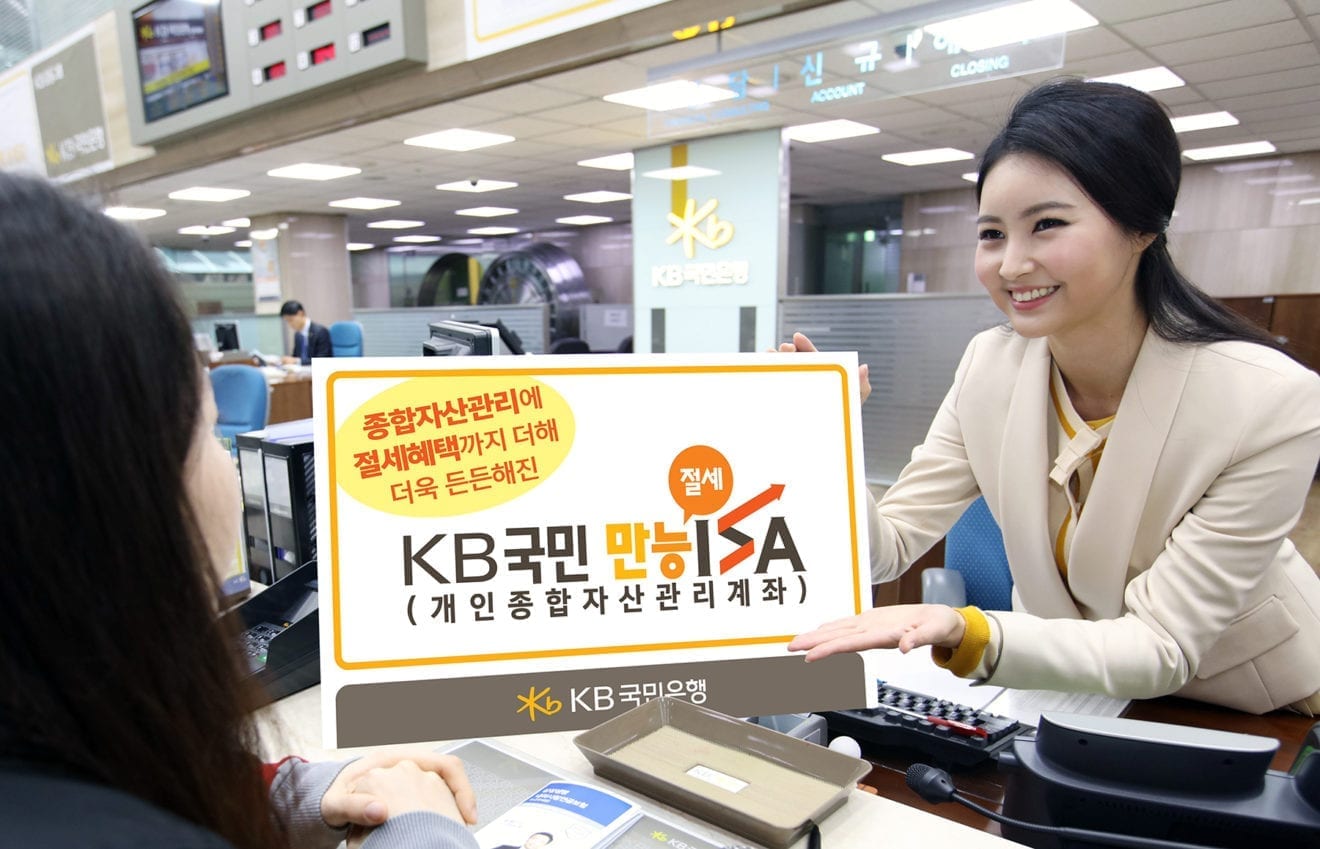
  • KB Kookmin Bank to kick off voluntary retirement program

    KB Kookmin Bank to kick off voluntary retirement program

    KB Kookmin Bank, South Korea’s largest retail lender, said Wednesday it will carry out a voluntary retirement program for workers subject to the wage peak system.

    The bank will pay the equivalent of between 27 and 36 months of salary to those who are eligible for the retirement program, the lender said. An agreement was made between the labor and the management.

    The workers subject to the wage peak system starting from next year can apply for the program. Under the system, employees are supposed to get less pay from the age of 55 to the retirement age of 60.

    Major banks in South Korea have made a series of job cuts in recent years to reduce costs and buttress their bottom lines. KB Kookmin Bank has carried out the program annually since 2015.