Tag: Banking

  • Bad loans rise at Philippines’ big banks in October

    Bad loans rise at Philippines’ big banks in October

    Bad loans on the books of the country’s biggest banks rose further in October, latest central bank data showed, amid the industry’s rising total lending portfolio.

    Data from the Bangko Sentral ng Pilipinas (BSP) showed gross non-performing loans of universal and commercial banks amounted to P107.69 billion in October this year – which was P9.27 billion higher than the P98.42 billion recorded in the same month in 2016.

    Non-performing loans are left unpaid by borrowers for at least 30 days past the due date. These are seen as risky assets due to higher risk of default.

    Amid the uptick in bad loans, BSP said the rate remains manageable across economic sectors, such as financial and insurance activities, real estate, manufacturing, wholesale and retail trade, as well as electricity, gas, steam and air-conditioning supply.

    The rise in bad loans happened as total loan portfolio of big banks grew at a faster rate of 17% to P7.36 trillion in October, from P6.29 trillion in the same month last year.

    This translated to a lower gross non-performing loan ratio of 1.46% in October, from a year-ago level of 1.56%, BSP data showed.

    The central bank said latest figures indicate the continued adherence to high credit underwriting standards of local big banks.

    Aside from trying to keep bad loan levels low, BSP said big banks continued to earmark sizeable reserves for potential credit losses, which was at P144.94 billion or 1.97% of total portfolio in October this year. This is compared to last year’s P133.05 billion or 2.11% of the total lending portfolio.

    Latest data from the BSP showed the industry’s credit growth eased to 19.9% in October, from 21.1% in September after increasing for 4 consecutive months – which some economists and credit rating agencies see as a possible sign of an overheating economy.

    Loans for production activities are up 18.7% to P6.01 trillion in October, from P5.06 trillion in the same month in 2016, accounting for 88.3% of loans given out by the banks.

    Meanwhile, credit to the real estate sector accounted for 17.2% of the total loan portfolio at P1.17 trillion, followed by credit to wholesale and retail trade and repair of motor vehicles at 13.6%, worth P924.56 billion.

    This was followed by manufacturing sector loans (12.8% of loan portfolio, worth P873.64 billion), and credit to electricity, gas, steam and airconditioning supply sector (12.1% share, P821.87 billion).

    The country’s gross domestic product gowth climbed to 6.9% in the 3rd quarter, from the revised 6.7% in the 2nd quarter of 2017. This brought the average economic growth in the 1st 9 months of 2017 to 6.7%.

    The Philippines has posted positive economic growth for 75 straight quarters since the Asian Financial Crisis.

  • Mobile now preferred channel for Citi APAC clients

    Mobile now preferred channel for Citi APAC clients

    Citi has announced that mobile banking has become the preferred channel for its consumer clients in Asia Pacific.

    The bank said that during 2017 mobile banking overtook other digital channels to become the preferred channel used by Citi’s Asia Pacific clients. Mobile use at Citi has surged by 48% in the last 12 months, making it the fastest growing digital channel at Citi.

    Digital is also growing rapidly as a source of new business at Citi. Digital acquisition in Citi’s Credit Cards and Loans business grew 57% year-on-year, and digital lending now accounts for 40% of total consumer loans fulfilled by Citi in the region.

    This growth has been underpinned by Citi’s digital investments and growth in partnerships on leading digital ecosystems.

    “At Citi our goal is to deliver remarkable banking experiences to our clients wherever they are. We have been transforming our business to be simpler, faster, scalable and digital. The growth we are seeing in mobile and digital underlines the progress we are making in being increasingly relevant where are clients need us to be,” Citi said head of global consumer banking Asia Pacific and EMEA Anand Selva said

    Citi has digital credit card partnerships with leading players in the region including Amazon, Grab, Lazada, Expedia, and Airbnb. Citi also recently partnered with Facebook to launch its first banking chatbot on the Facebook Messenger platform in Singapore. Giving customers real-time information on their accounts, transaction details and rewards points balances, Citi’s chatbot will be rolled out across the region over the next few months.

    The bank is already active in a number of leading social messaging platforms in Asia Pacific including WeChat in China and LINE in Thailand. Citi also recently reached a major milestone with three million customers having registered to use its voice biometric authentication.

    Across the region, Citi’s digital banking channels and servicing capabilities continue to see strong growth in customer engagement.

    The Asia Pacific Global Consumer Bank’s focus on transforming its business continues to yield positive results. For the third quarter of 2017, the business reported a 5% increase in revenue year-on-year to $1.87 billion, representing its fifth consecutive quarter of revenue growth in the region and making it the fastest growing consumer business for Citi globally.

    A total of 17 out of Citi’s 19 Consumer Banking markets globally are now located in the Asia Pacific and Europe, Middle East and Africa (EMEA) regions.

  • Why Has Bitcoin’s Price Gone Up So Fast ?

    Why Has Bitcoin’s Price Gone Up So Fast ?

    Bitcoin has been in a bull market like few the world has ever seen. At the beginning of the year, the price of a Bitcoin was below $1,000. It hit $5,000 in October, then doubled by late November. And on Thursday, less than two weeks later, the price of a single Bitcoin rose above $20,000 on some exchanges, according to Coinmarketcap.

    The latest price spike has been credited to signs that Wall Street companies plan on bringing their financial heft into the market.

    At the current cost, the value of all Bitcoin in circulation is about $300 billion. To get a sense of how big that is, all the shares of Goldman Sachs are worth about $90 billion.

    The gains have been driven by several other factors — perhaps the most important being the irrational mentality that can take over in speculative bubbles.

    But most people buying Bitcoin are doing so in the belief that others will want it even more in the future. The gains, though, have many people, even Bitcoin believers, anticipating a big crash.

    Currently, the average price of one Bitcoin is about $15.435, according to Blockchain.info, a news and data site.

    Bitcoin used to be all about libertarians and black-market trade. Are those still driving the price?

    The fringe communities that drove Bitcoin in its early years are playing a much less important role in the current rally.

    Many investors have said the most important factor driving the current enthusiasm is the entry of hedge funds and other institutional investors.

    The path for large investors has been smoothed by the Chicago Mercantile Exchange and Chicago Board Options Exchange, which have been racing to roll out Bitcoin futures contracts. Most banks are already signed up with these exchanges and consequently can immediately begin trading the contracts. The options exchange has said it plans to start trading on Sunday.

    It is still unclear how the arrival of Bitcoin futures will influence the demand for the digital tokens.

    With a futures contract, banks can bet on the price of Bitcoin without holding the underlying Bitcoins. This is expected to bring many new players into the market who don’t want to deal with the complications of holding Bitcoins.

    But the futures contract will also allow investors to short Bitcoin, or bet on the price’s going down, which has been hard to do until now. Some analysts think this could put downward pressure on the price. Other market participants have worried that Bitcoin futures could spread the risks of Bitcoin into the rest of the financial system.

    People still use Bitcoin and other virtual currencies to make ransom payments and buy illegal goods online, including synthetic opioids. But that activity has been on the wane since the authorities shut down some of the largest online black markets this year.

    What role are smaller investors playing in the virtual currency markets?

    Individual investors have been just as active as large investors. Nowhere has the phenomenon of ordinary people buying virtual currencies been more visible than in South Korea, where several exchanges have storefronts to help new customers. This is all the more remarkable because just a year ago, Koreans showed almost no interest in these markets.

    Small Japanese investors have also been investing in Bitcoin. They have been encouraged by laws passed this year that essentially legalized Bitcoin and allowed Bitcoin exchanges to get regulatory licenses.

    Most small-time investors have gone to the San Francisco company Coinbase, which provides a Bitcoin brokerage service, similar to Charles Schwab, as well as an exchange for larger investors. Coinbase now has more account holders than Schwab, and it has struggled to keep up with the growth.

    China used to be the most active country for Bitcoin trading and mining, but the authorities there have cracked down this year.

    What are the dangers of getting into this market?

    Many of the largest exchanges, including in South Korea, are essentially unregulated. The lack of oversight means that no one is checking that the exchanges are properly securing their customers’ money or that large players are not able to manipulate the price. One of the largest exchanges in the world, Bitfinex, has been hacked numerous times and provides little transparency about where it is keeping its money.

    Even regulated exchanges, like Coinbase in the United States, have not been battle tested like larger financial institutions, and their operations have gone down at key moments.

    Once people buy Bitcoin or other virtual currencies, they are often targeted by hackers who have become experts at penetrating Bitcoin accounts.Bitcoin “wallets” are vulnerable to new kinds of attacks that are not a problem for ordinary financial accounts.

    Most important, in contrast to money in a bank account, when a Bitcoin is gone there is essentially no way to get it back and no insurance covering its loss.

    Are more people using Bitcoin to pay for things?

    When Bitcoin was released in 2009, it was described as a new kind of electronic cash.

    Recently, though, many programmers working on Bitcoin have said the system in its current form is not a particularly good way to pay for things.They argue that it is best designed to serve as a sort of scarce commodity, like digital gold, allowing people to keep their money outside the control of governments and companies.

    Many people who want to use virtual currencies for online payments are looking to Bitcoin competitors, like Bitcoin Cash and Monero.

    What role are the other virtual currencies playing in this frenzy?

    Earlier this year, bullish sentiment was focused on Ethereum, a virtual currency network that is more adaptable than Bitcoin. The price of Ether, the virtual currency on the Ethereum network, has continued to rise in recent months, but not as fast as Bitcoin.

    Many investors were also putting their money into custom virtual currencies released by entrepreneurs in so-called initial coin offerings. These new virtual currencies have generally been designed to serve as the internal payment mechanisms on new software the entrepreneurs are building.

    This fall, though, regulators have signaled that they are planning to crack down on coin offerings.

    Where did virtual currencies come from, and how do they work?

    The Bitcoin software was released in early 2009 by a mysterious creator who went by the name of Satoshi Nakamoto. The search is still on for the true identity of Satoshi.

    The software released by Satoshi set out the basic rules for Bitcoin and the computer network on which it lives. Unlike other forms of money, which are controlled by governments and financial institutions, Bitcoin operates on a decentralized network of computers that no one institution controls.

  • CIMB Group opens first retail branch in the Philippines

    CIMB Group opens first retail branch in the Philippines

    CIMB Group is opening up its first retail brands in the Republic of the Philippines. The branch is expected to be fully operational by the fourth quarter of 2018.

    CIMB Bank is the first Malaysian banking group to be granted BSP’s approval to operate under Republic Act No. 10641, an act that allows the entry of foreign banks into the Philippines through the establishment of wholly-owned operations with full banking authority.

    Tengku Dato’ Sri Zafrul Aziz, group chief executive, CIMB Group said, “We are delighted to have received the green light from the Bangko Sentral ng Pilipinas. The awaited missing link to complete CIMB’s ASEAN-10 footprint has now materialized. This will further propel CIMB into becoming the leading ASEAN universal bank, which will further strengthen our value proposition to customers.”

    “The Philippines offers tremendous opportunity with progressive regulation, attractive demographics, relatively lower banking penetration and good talent. Our strategy will see us applying the best of our digital assets from across the region as well as working with key strategic partners locally,” added Tengku Zafrul.

  • Veritas stung over Nosh disclosure

    Veritas stung over Nosh disclosure

    Veritas Investments has been publicly censured and fined $55,000 plus costs by the NZ Markets Disciplinary Tribunal for failing to immediately disclose to the market that it had agreed to sell or close its Nosh business as a condition of continued support from its bank.

    The censure relates to an announcement in September 2016 by Veritas that ANZ Bank New Zealand had agreed to renew its banking facilities, rescheduling its debt obligations and reducing its debt repayments.

    Veritas failed to disclose that to retain ANZ’s support it had agreed either to find an unconditional buyer for Nosh or to have closed the high-end supermarket.

    Veritas eventually disclosed the undertakings “following engagement by NZX Regulation”.

    In the event, it agreed to sell Nosh to Gosh Holding for $3.98 million but ended up in dispute with Gosh over breaches of the sale agreement.

    It had taken on a $5 million funding line from ANZ to buy Nosh in 2014 but struggled to turn it into a profitable business.

    NZX said Veritas has accepted its view that it breached disclosure rules by failing to immediately disclose material information to the market. The regulator said it took into account that Veritas had taken legal advice and considered its obligations under the continuous disclosure rules before electing to withhold the undertakings.

    Veritas is still under pressure from the bank to restore its finances. In August, ANZ said it wouldn’t renew $28.5m in banking facilities which came due in October and November this year. But earlier this month, Veritas said the bank had agreed to push out the deadline for all of the debt until November 30, giving the company more time to look at asset sales or refinancing.

    The company says it is in talks with external parties “on a number of scenarios including asset sales, mergers and refinancing”.

    Veritas shares last traded at 8 cents and have dropped 92 per cent in the past five years.

  • Citi Philippines sweeps awards

    Citi Philippines sweeps awards

    Global Finance Magazine has announced its best digital banks in Asia, and Citi dominated the awards with multiple wins across the region.

    For the 11th consecutive year, Citi Philippines was awarded Best Digital Bank for the Corporate/Institutional Bank category.  For Consumer Banking, it was Citi Philippines’ 11th win as Best Digital Bank.

    Winners were chosen among entries evaluated by a world-class panel of judges at Infosys, a global leader in consulting, technology and outsourcing.

    Winning banks were selected based on the following criteria: strength of strategy for attracting and servicing digital customers, success in getting clients to use digital offerings, growth of digital customers, breadth of product offerings, evidence of tangible benefits gained from digital initiatives, and web/mobile site design and functionality.

    In the category for World’s Best Corporate/Institutional Digital Banks in Asia Pacific, Citi won five regional sub-category awards, including Most Innovative Digital Bank, Best Online Cash Management, Best Online Treasury Services, Best in Mobile Banking and Best Mobile Banking App.

    “This award is a validation of Citi’s successful digital tansformation.  In all that we do, we combine the stability of a banking tradition of more than 200 years and the agility todevelop fintech solutions that will best serve our clients’ interests in the digital age.  We aim to serve our customers in the ecosystem in which they operate,” said Citi Philippines CEO Aftab Ahmed.

    Citi also swept the country awards in the Corporate/Institutional Digital Bank category, winning in 14 other countries including Australia, Bangladesh, Hong Kong, India, Indonesia, Kazakhstan, Malaysia, New Zealand, Pakistan, Singapore, South Korea, Sri Lanka, Thailand, and Vietnam.

    In the Consumer Banking digital bank awards, Citi was also named best digital bank in Australia, Indonesia, Malaysia, South Korea and Thailand.

    Asia is responsible for 17 of the Global Consumer Bank’s 19 markets worldwide. To deliver new growth, the focus for the bank was on increasing profitable market share in key markets, and products (Retail, Cards, Wealth Management and Commercial) while digitizing our business from end-to-end to deliver a better customer experience, reduce costs and improve efficiency. In the most recent quarter Citi’s consumer bank in Asia reported its fourth consecutive quarter of growth.

  • OCBC Bank Launches Mobile Keyboard to Enable Cashless Payments

    OCBC Bank Launches Mobile Keyboard to Enable Cashless Payments

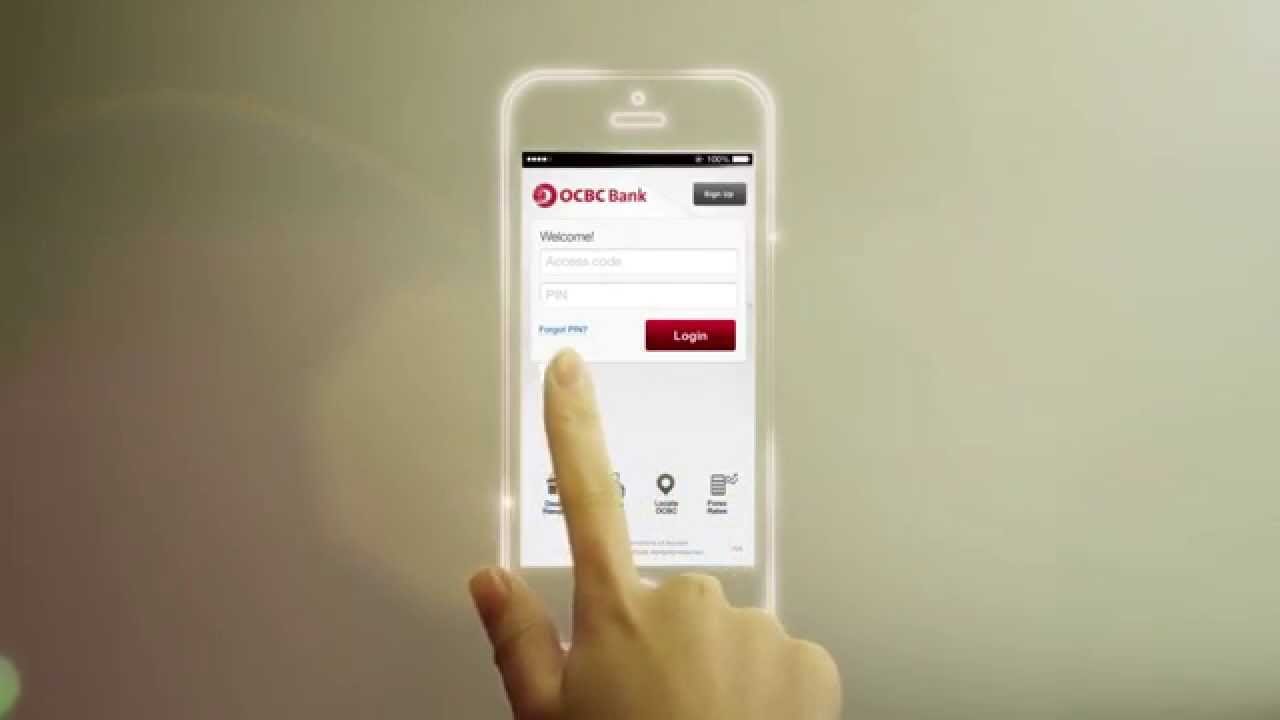
    OCBC Bank has launched a mobile keyboard that allows customers to make peer-to-peer payments without having to exit their current mobile applications. The OCBC Keyboard can be used within any mobile app or browser – for instance, within Facebook, Whatsapp, Instagram or Chrome – to send money instantly to anyone with a bank account in Singapore, including those who have not yet registered for PayNow. The payment rides on the OCBC Pay Anyone e-payment service and can be done using just the recipient’s mobile number.

    The OCBC Keyboard follows on the heels of OCBC Bank’s launch of e-payments integrated with Apple’s Siri and iMessage for iPhone users in 2016, enabling customers to make instant funds transfers with a voice command to Siri or within the iMessage app while engaged in a chat. With the OCBC Keyboard, the convenience of making an e-payment is extended to any app on Android devices running the Android 4.4 KitKat operating system or better. Payments are completely secure as they are authenticated with the sender’s mobile banking credentials.

    Making a payment via OCBC Keyboard

    Imagine being able to make an e-payment as easily as sending an “emoji” to a friend while chatting on Whatsapp, or while negotiating with a potential seller on the Carousell app. Users can automatically access the OCBC Keyboard on any app on their mobile phones once they have updated the OCBC Mobile Banking app to the latest version. They will need to perform a simple one-time set up to enable the OCBC Keyboard and make it the default keyboard on their phone.

    To send money, users simply tap on the OCBC Pay Anyone icon on the keyboard without exiting or switching from their current app activity.Once they select a recipient from their contact list – which is automatically synced with the keyboard – they will be guided to complete the transfer using OCBC Pay Anyone within the keyboard. Once payment is complete, the user can continue accessing the original app.

    Boosting cashless payments

    In alignment with Singapore’s Smart Nation agenda and its drive to go cashless, the OCBC Keyboard is the latest in a series of OCBC Pay Anyone e-payment services that OCBC Bank has introduced to encourage customers to embrace the move away from cash.

    The adoption of the recently launched PayNow service amongst OCBC Bank customers has been exceptionally strong, with over 200,000 signups to date. E-payments done via the OCBC Pay Anyone service have increased 35 per cent since the launch of PayNow, and one in every two PayNow transactions is via OCBC Pay Anyone.

    Mr Aditya Gupta, OCBC Bank’s Head of E-Business Singapore, said: “With OCBC Keyboard, we are embedding payments in our customers’ lives and making it completely frictionless for them to pay while they go about everyday tasks like chatting on Whatsapp, sending emails, buying items on Carousell or browsing the Internet. I’m confident that this added convenience will exponentially increase the adoption and usage of e-payments, including PayNow transfers. We will continue to push the boundaries on e-payments and move the needle in driving Singapore towards becoming cashless.”

    Evolution of OCBC Pay Anyone

    Launched in 2014, OCBC Pay Anyone was the first peer-to-peer mobile payment service offered by any bank in Singapore that enabled customers to make a payment directly into a recipient’s bank account using just a mobile number, email address or Facebook, without having to perform transaction signing using a security token or to add the recipient as a “payee”.

    In September 2016, the daily transfer limit on OCBC Pay Anyone was increased from $100 to $1,000, bringing greater convenience to customers and allowing payments for bigger-ticket items. In October 2016, OCBC Bank further enhanced OCBC Pay Anyone by enabling transactions using Apple’s Siri voice command feature and directly within iMessage.

    In May this year, OCBC Bank launched its first standalone mobile payments app – the OCBC Pay Anyone app – which now consolidates all OCBC Pay Anyone e-payment services into a one-stop shop for customers’ convenience: Peer-to-peer QR code payments via PayNow, QR code payments to NETS merchants, peer-to-peer e-payments and the integration of OCBC Pay Anyone with Apple iPhone’s Siri and iMessage.

    Enabling the OCBC Keyboard for e-payments

    The OCBC Keyboard is available to all OCBC Bank customers using Android 4.4 KitKat devices with the latest OCBC Mobile Banking app. The app can be downloaded from the Google Play Store.

    Customers can enable OCBC Keyboard by following these steps:

    • Tap ‘Pay now’ in the OCBC Mobile Banking app or ‘Send Money’ in the OCBC Pay Anyone app for a tutorial on setting up the keyboard
    • Users will be guided to turn on OCBC Keyboard in Settings and make OCBC Keyboard the default keyboard

    The OCBC Keyboard is now ready to be used as the primary keyboard.

    Making a payment using the OCBC Keyboard

    • Switch to the OCBC Keyboard if it is not the primary keyboard in use
    • Tap on the OCBC Pay Anyone icon on the keyboard to start payment
    • Select the contact you wish to pay to
    • Enter your online banking access code and PIN
    • Select the account to send money from. This step is automatically skipped if you have only one account.
    • Enter the amount to send
    • Create a six-digit passcode to be given to a non-PayNow registered recipient. If the recipient is PayNow-registered, no passcode is required. Confirm the recipient’s name and mobile number on the review screen to proceed.
    • Authenticate payment with a One-Time-Password

    You can then return seamlessly to what you were previously doing on your mobile device. PayNow-registered recipients will receive the payment directly into their bank accounts. If the recipient is not PayNow-registered, they will receive an SMS link. Share the passcode with them to collect the money.


  • HSBC ‘back in growth mode’ in Singapore

    HSBC ‘back in growth mode’ in Singapore

    British bank HSBC is now “back in growth mode” in Singapore after investing heavily in turning around revenue and profitability, said a top executive.

    Despite a fiercely competitive retail market, the bank has high hopes for its business here, said Mr Anurag Mathur, head of retail banking and wealth management at HSBC Bank (Singapore), who has been in the role for a year.

    He told recently: “Customers are also sophisticated (here), but that’s good as it encourages innovation and we’re often at the cutting edge in Singapore, where some of the things piloted here – and hopefully, increasingly developed here – can then be exported elsewhere in HSBC globally.”

    The bank has “spent quite a bit of time and investment in incorporating the company here”, said Mr Mathur, referring to its move last year to set up a local subsidiary for the retail and wealth business.

    “As part of that, we’ve also upgraded our core banking platforms and infrastructure, such as upgrading branches and opening new ones in the last few years, and improving our products and digital capabilities.”

    While Mr Mathur was unable to give specific numbers, recent data from the bank showed it has spent more than US$1 billion (S$1.4 billion) on its global digital investment since 2015.

    HSBC has 11 branches and about 1,000 employees under the retail banking and wealth management business here.

    Competition is particularly high here now, evident from moves by financial institutions here like DBS Bank, which acquired ANZ’s wealth management and retail banking business in five markets in Asia last October.

    Standard Chartered Bank for its part is chasing the silver dollar in Singapore with the release last month of a new offering for only those aged 55 and older, for instance.

    Customers of HSBC’s retail banking and wealth management unit are typically those with a minimum of $200,000 with the bank, be it through deposits, or investments, among other things – and that is where growth is for the bank too, said Mr Mathur.

    “In that space, we see Singapore continuing to be a growth hub. Wealth management is a key area of growth. The macro conditions are there.

    “Singaporeans obviously invest here, but people from around the world, particularly Asia, also like to invest here. According to the BCG wealth report of 2016, offshore wealth booked in Singapore is projected to grow at roughly 10 per cent annually through 2020.”

    He noted that HSBC is positioned to capture this segment because of several factors such as its international network, its “insurance and asset-management support pillars on the product side and a strong offshore base”.

    And almost a third of the mass affluent market in Singapore has an HSBC relationship – be it with a banking product or service.

    “In the last five years or so, we’ve seen our deposit balances in current and savings accounts grow at double digits, which is a strong and healthy indicator. Personal loans have grown by double digits in the last four to five years,” said Mr Mathur.

    While other bankers might say retail banking is surely a local business, HSBC looks at clients from a different point of view.

    “What our HSBC Premier customers find is that they can open accounts with us in multiple countries where they have property, investment or worked.”

    The bank has a feature dubbed “global view, global transfer” that lets clients access “all accounts on one screen”.

    Mr Mathur said this appeals to t Singapore’s expatriate population as they have banking relationships outside Singapore as well.

    He noted: “And almost all Singaporeans are international in some shape or form.

    “For instance, some reports show 95 per cent of them travel at least once a year, so they find the international offers we have on our credit cards powerful.

    “We believe Singaporeans will increasingly be international, in terms of where they study, do business, even where they invest. Our strengths are uniquely positioned to help them in that space.”

  • Consumer credit grows rapidly as retailers thrive

    Consumer credit grows rapidly as retailers thrive

    The appearance of big foreign retail chains like CircleK, Shop&Go, FamilyMart and Aeon and the strong rise of Vietnamese chains Vinamart, Co-op and The Gioi Di Dong have fostered the development of consumer credit in Vietnam, according to the State Bank of Vietnam. StoxPlus’ 2016 report on Vietnam’s consumer credit showed that the credit market has seen amazing leaps in recent years.

    The outstanding loans of Vietnam consumer finance soared from $7.3 billion in 2012 to $26.55 billion in 2016. Though it still accounts for a small proportion (9.8 percent by the end of 2016), consumer finance has been growing very quickly.

    Nguyen Tu Anh, deputy director of SBV’s Monetary Policy Department, confirmed that consumer credit has been developing strongly thanks to many favorable conditions.

    Vietnam has 92 million people with 70 percent of the population aged 15-64, while its GDP growth rate has been stable at over 6 percent in recent years.

    Anh cited research by economist Nguyen Thi Hien and her co-workers that shows the consumer credit market’s rapid development since 2011. The growth rate was 30 percent per annum in 2011-2014 and 59 percent in 2015.

    The total outstanding consumer loans granted to customers in 2015 was VND583 trillion, equivalent to 20.5 percent of the consumption value of individuals and households.

    If not counting housing loans as per international practice, consumer outstanding loans in 2015 would total VND272.241 trillion (equivalent to 6.62 percent of GDP). The figure is higher than that of China (6 percent) and Japan, but much lower than other developed countries, including the US (17 percent), Europe (14 percent), and Korea over (20 percent).

    The constant increase of consumption has led to higher demand for consumer loans. Meanwhile, the stable and high economic growth rate helps consolidate people’s belief in their income in the future, thus encouraging them to borrow money.

    Vietnam is in a so-called golden population period with a high percentage of young consumers.

    As the growth rate of lending to fund production and business has slowed down for several reasons, banks tend to increase consumer credit to offset the slowdown.

    FE Credit is leading the consumer finance market with $1.4 billion worth of loans provided in 2016, accounting for 48 percent of market share.

    Its rivals, Home Credit, HD Saison and Prudential, hold 15.7 percent, 12.2 percent and 8.1 percent, respectively, according to StoxPlus.

  • Singapore ready to exchange financial data with Indonesia

    Singapore ready to exchange financial data with Indonesia

    Indonesias finance minister Sri Mulyani said here on Thursday that Singapore was ready to provide information about the financial data of Indonesian citizens as part of the implementation of Automatic Exchange of Information (AEOI) program for tax purposes.

    “Singapore has stated that Indonesia has been considered as being eligible and included in their Multilateral Competent Authority Agreement (MCAA), meaning the AEOI agreement can automatically be carried out according to its timeline,” she said.

    Mulyani confirmed that Singapore would not only exchange information with Indonesia but also with other countries that have signed MCAA in connection with AEOI in the Netherlands in June 2017.

    In order to prepare for the information exchange, Indonesia will conduct improvement with regard to primary legislation issuance, information technology, data security, and business process renewal to match with the Common Reporting Standard.

    “We will continue to meet it and later in September, the OECD will review its aspects. If Indonesia is considered to have met the requirements set in the OECD global forum, it means we have met the requirements to implement AEOI with Singapore,” she asserted.

    On the sidelines of the Indonesia-IMF joint conference on Wednesday, Sri Mulyani met Singapores minister of law and finance, Indranee Rajah, to discuss a number of issues.

    Besides the implementation of AEOI, they also discussed revision of double taxation agreement for Singapore investors and Singapores offer as an international banking hub for Indonesias infrastructure projects.

    According to the Indonesian ministry of finances website, Singapore has confirmed its readiness to carry out AEOI with Indonesia to maintain equality in role and function and share responsibility along with other financial centers.

    Singapore has included Indonesia in the list of its partners that have participated in MCAA.

    The commitment is a form of agreement to provide standardization and efficiency scheme to facilitate for AEOI. Hence, bilateral agreement need not always be done.

    The reciprocal exchange of information will be started after the two jurisdictions introduce the regulations needed to implement CRS and to keep confidentiality and protect exchanged data.

    Confidentiality and protection of financial data being exchanged are international prerequisites set by Global Forum on Transparency and Exchange of Information for tax purposes.

  • Personal consumer credit becoming lucrative business

    Personal consumer credit becoming lucrative business

    FE Credit is leading the consumer finance market with $1.4 billion worth of loans provided in 2016, accounting for 48 percent of market share.  Its rivals, Home Credit, HD Saison and Prudential, hold 15.7 percent, 12.2 percent and 8.1 percent, respectively, according to StoxPlus. The other well-known names in the market are Mirae Asset Finance, JACCS and Toyota finance.

    The consumer finance market has become bustling thanks to high demand from borrowers and readiness by commercial banks and finance companies. Since customers are in both large cities and rural areas, it is easy for finance institutions to expand the market and disperse risks.

    Lending to fund personal consumption is lucrative, which accounts for 42.5 percent, followed by lending to fund household goods (28 percent), and transport means (19.6 percent).

    Regarding the growth rate, lending to fund transport purchases and house upgrading witnessed the highest growth rate of 42 percent each in 2016.

    Business Monitor International (BMI) predicted that the consumer finance market would perform well in 2016-2019, as personal income has growth rate of 13.2 percent per annum.

    Also according to BMI, consumer finance targets people of working age, expected to reach 56.2 million by 2020. The figure was 54.4 million in 2015.

    The consumer finance assets were reported as making up 12.4 percent of total assets in 2016.

    By the end of the year, the finance consumer value had reached VND598.5 trillion, an increase of 30 percent over 2015. This included VND453.1 trillion worth of loans provided without mortgaged asset requirement.

    Consumer finance in Vietnam in 2016 made up 9.8 percent of GDP. Meanwhile, the figure was 320 basic points higher in regional countries.

    Regarding credit types, the cash is predicted to decrease from 89 percent in 2016 to 81 percent of total outstanding loans by 2019 as the market share will fall into credit cards.

    Regarding the market structure, consumer finance is undertaken by retail banks and finance companies. Commercial banks tend to set up subsidiaries specializing in consumer finance or to take over existing companies.

    MB Bank in March 2016 took over Song Da Finance Company (SDFC) and renamed it MCredit. Later, in November 2016, after joining hands with Shinsei Financial from Japan, MCredit once again changed its name to MB Shinsei with 51 percent of capital contribution from MB Bank.

    In recent years, Vietnam has not granted licenses to companies providing only consumer finance services, which was a barrier to market admission.

  • ANZ consumers prefer computers over smartphones

    ANZ consumers prefer computers over smartphones

    Consumers from Australia and New Zealand significantly prefer making purchases via desktop, despite browsing traffic continuing to move towards smartphones, according to the latest research from Adobe.

    In its latest report, the software multinational aggregated anonymous data from approximately 100 billion visits to 3,000+ websites across the region during the 2016 calendar year and found that while ANZ consumers are among those leading the shift from desktops (52.5 per cent share of browser traffic) to smartphones (37.7 per cent share of browser traffic), desktop conversion rates (2.9 per cent) were three times that of smartphones (0.8 per cent).

    Comparing data from Australia and New Zealand, Southeast Asia, India, Japan, Hong Kong, South Korea and the United States, the report found that the top 20 per cent of websites in ANZ, are widening the gap compared with average websites, seeing a 5.8 per cent desktop conversion rate versus the average of 2.9 per cent.  Along with Japan (5.8 per cent), ANZ’s best are achieving higher desktop rates than the United States (5.4 per cent).

    Becky Tasker, activity is shifting towards smartphones, consumers in Australia and New Zealand still prefer senior manager, Adobe Digital Insights, said showed that while browsing to make their final purchase via desktop.

    “Smartphone traffic and conversion rates are rising, but ANZ’s best marketers recognise that the desktop is still likely to be the final destination, even in a cohesive multi-device experience,” said Tasker.

    Adobe also said there has been evolution in the way consumers are engaging with the technology. While tech websites maintain one of the highest visit rates, the sector has also seen the time consumers spend during these visits decreasing – the customer journey now consists of interactions that are more numerous, but shorter.

    “With the customer journey now involving an increasing number of interactions across a range of devices, we need to keep pace with changing customer expectations,” said Danielle Uskovic, head of digital & social, Lenovo Asia Pacific.

  • DBS Indonesia’s net profit surges 75% in Q1

    DBS Indonesia’s net profit surges 75% in Q1

    PT Bank DBS Indonesia, a subsidiary of Singapore-based DBS Bank, has reported a 75 percent year-on-year (yoy) increase in its net profit during the first quarter of 2017 to Rp 263 billion.

    The net profit increase was supported by a 16 percent yoy increase in revenue, which reached Rp 1 trillion in the first quarter this year. Its net interest income rose 23 percent to Rp 740 billion.

    “The positive performance reflects our strong commitment in the corporate and consumer banking segment,” Bank DBS Indonesia director of strategy and planning Rudy Tandjung said in a press statement on Saturday.

    Focusing on corporate banking and small and medium enterprises (SME) banking segments, the lender booked increases in the return on assets (ROA) ratio and the return on equity (ROE) ratio to 2.16 percent and 13.45 percent, respectively.

    Rudy said the bank was on its way to transforming itself into a digital bank this year. “We are focusing in our […] agenda on becoming a digital bank. We started the transformation from the inside, by changing the mindset and behavior of our employees and also redefining their respective roles,” he said.

    In the first quarter of this year, DBS Indonesia issued a negotiable certificate of deposit (NCD) with a 7.1 percent annual interest rate. DBS Indonesia had also released a new bancassurance product in its Wealth Management portfolio during the same period, Rudy said.

  • Bank Mandiri to expand in Malaysia as first ‘ASEAN bank’

    Bank Mandiri to expand in Malaysia as first ‘ASEAN bank’

    Bank Mandiri will expand operations in Malaysia by using its newly awarded status as a cross-regional lender, Indonesia’s largest state-owned bank said Thursday.

    Mandiri said it is the first bank in the region to be designated a qualified ASEAN bank — a concept developed by Association of Southeast Asian Nations members as part of an effort to create an open, integrated financial market providing services to companies investing and trading in the region.

    To obtain QAB status, banks must meet certain conditions, such as in capital adequacy, and pass screening under bilateral agreements between monetary authorities. Indonesia and Malaysia agreed in 2016 to grant QAB status to three banks from each other’s countries.

    Such Malaysian banks as CIMB Group Holdings and Malayan Banking already have major operations in Indonesia, while Indonesian banks have been seeking opportunities to grow outside the home market. “We highly appreciate the Malaysian banking authorities that support the presence of banks from Indonesia,” said Muliaman Hadad, chairman of Indonesia’s Financial Services Authority. “Indonesia has also treated Malaysian banks as their own. This is a step forward that can strengthen relations between Indonesia and Malaysia.”

    Malaysia will become the first overseas market for Mandiri to operate a full-fledged banking business in, the lender said. It plans to invest 300 million ringgit ($70 million) to upgrade a remittance office in Kuala Lumpur to a full branch and roll out wholesale and retail banking services.

    Mandiri is also exploring expansion into Myanmar and the Philippines, it said in a news release.

  • Indonesia, Swiss to exchange information on finance

    Indonesia, Swiss to exchange information on finance

    The governments of Indonesia and Switzerland have declared the readiness of both countries to implement the Automatic Exchange of Information (AEOI).

    The signing of the joint declaration was undertaken by Director General of Taxes, Ken Dwijugiasteadi, and Swiss Ambassador to Indonesia, Yvonne Baumann, witnessed by the Minister of Finance of the Republic of Indonesia and Members of the Board of Commissioners of the Financial Services Authority here on Tuesday.

    Finance Minister Sri Mulyani stated that it was important for Indonesia to be able to implement AEOI with Switzerland as it was one of the largest financial centers in the world.

    “Financial information obtained from Switzerland and nearly 100 other countries will be used as a tax database to test the compliance rate of taxpayers. It is expected to encourage their awareness to fulfill tax obligations voluntary, especially in reporting their earnings and financial assets abroad which have not been reported,” Sri Mulyani explained.

    Through the joint declaration, Indonesia and Switzerland agreed to exchange financial account information automatically in accordance with the Common Reporting Standard (CRS) starting from 2018, with the first exchange in 2019, protected by data security assurance according to international standards.

    Both jurisdictions also stated that they will share information on the development of CRS implementation in each countrys domestic legislation and affirm the commitment to continue strengthening cooperation in the financial sector.

    The joint declaration is required by Switzerland to enable the Multilateral Competent Authority Agreement (MCAA) to implement AEOl to obtain the Swiss Parliament approval by the end of 2017.

    On May 8, 2017, the Indonesian Government adopted a Government Regulation In lieu of Law No. 1/ 2017 on Access to Financial Information for Tax Interests.

    It regulates the authority of the Directorate General of Taxation to receive and obtain financial information from financial institutions throughout Indonesia and the authority of the Minister of Finance to execute financial information exchange with authorities for other countries or jurisdictions.