Retail News CRM

Tag: Banking

  • Myanmar opens talks with Thailand on reciprocal banking access

    Myanmar opens talks with Thailand on reciprocal banking access

    The central banks of Thailand and Myanmar agreed Sunday to start talks on granting access to designated banks in each other’s markets, marking a small step forward in the financial integration of the Association of Southeast Asian Nations.

    For Thailand, Myanmar is the third country to enter bilateral discussions on bank access, following Malaysia and Indonesia; for Myanmar it is a first.

    Under the ASEAN Banking Integration Framework, countries can enter into bilateral deals allowing banks that meet certain criteria to become “Qualified ASEAN Banks” that operate in each other’s markets on the same terms as local banks.

    “The expansion of a banking presence through QAB will enable greater efficiency and reduce costs for bankers and customers alike,” Bank of Thailand Gov. Veerathai Santiprabhob told bankers who were in Bangkok for the 21st ASEAN Banking Conference on Monday.

    With Myanmar opening up its economy after nearly 50 years of isolation and the ASEAN Economic Community kicking off last year, banks in  Thailand and Myanmar have been growing more active in each other’s markets.

    Myanmar’s largest lender, Kanbawza Bank, opened a representative office in Bangkok in August, becoming the first Myanmar bank to venture abroad.

    Last year, Thailand’s Bangkok Bank was among the first of nine banks to be granted a foreign banking license in Myanmar. Other big Thai banks were not granted licenses in the first round, but have opened representative offices in Myanmar in anticipation of the next opportunity.

    “It’s good that the Bank of Thailand signed the QAB agreement with Myanmar,” said Predee Daochai, president of Kasikornbank, which now has a representative office in Myanmar. “We would like to open a bank there,” he said.

    The time frame for the negotiations and details such as the number of banks to be designated QABs have yet to be decided.

    While trade and investment have been increasing in the region in the wake of deregulation and elimination of tariffs, “much work remains with regards to financial connectivity” in the region, Veerathai said.

  • Barclays raises less than expected from Asia wealth unit sale

    Barclays raises less than expected from Asia wealth unit sale

    Barclays has raised almost a third less than expected from the $225m sale of its wealth and investment management business in Singapore and Hong Kong to Singapore’s Oversea-Chinese Banking Corp (OCBC).

    When the deal was announced in April, Barclays had indicated it could fetch $320m from selling the business, which had $18.3bn of assets under management at the end of last year and was initially valued at about $500m.

    However, when its Asian wealth management clients were given the choice of whether to join OCBC, some of them decided to either stay at Barclays or to join another bank, reducing the overall price of the deal, which was fixed at 1.75 per cent of assets under management.

    Jes Staley, Barclays chief executive, said: “This is another example of the great progress we have made this year in Barclays non-core, as we aim to reduce risk weighted assets to £23bn in 2017 and reintegrate the remainder of the unit back into the group.”

    The bank said it remained committed to Asia, where it still has offices in Singapore, Hong Kong, China, India and Japan after cutting jobs and pulling out of several smaller markets in the region.

    Barclays said the deal would reduce its risk-weighted assets by about £800m. It follows the sale of the bank’s US wealth management business and of several retail banking and credit card operations in Spain, Portugal and Italy.

    Last month, the British bank called time on 150 years in Egypt by selling operations in the north African country in a $500m deal, and it is in the process of selling down its 50 per cent stake in its larger South African-listed operation.

    Singapore-based banks have been busy acquiring several of the Asian wealth management businesses that have been sold in recent years by foreign banks that decided to sell up having struggled to achieve sufficient scale.

    ANZ Banking Group said earlier this year it was selling its wealth management and retail business in Singapore, Hong Kong and three other Asian markets to DBS, the Singapore-based bank that also bought Société Générale’s Asian private bank in 2014.

    But some big western banks, such as UBS, Credit Suisse, HSBC and Standard Chartered, are still seeking to expand in Asian private banking and wealth management, betting on continued rapid growth in the number of millionaires and billionaires in the region.

    DBS last year became the fifth largest private bank in the Asia-Pacific region, after UBS, Citi, Credit Suisse and HSBC, according to a ranking of assets under management for rich clients published by Private Banker International. It is the first time a Singapore bank has broken into the top five in Asian wealth management.

  • Private banks lacking scale exit Singapore

    Private banks lacking scale exit Singapore

    Just like real estate is about location, location and location, private banking is about scale, scale and scale – it is what’s needed to cope with the high cost of the business, say industry players.

    Monday’s surprise move by DBS Bank to snap up most of ANZ’s wealth and retail business in Asia for a bargain-basement price of S$110 million, or 0.5 per cent of the S$23 billion of assets under management, once again hammered home the point that scale is needed to run a private bank.

    Over the past two years, eight foreign private banks (ANZ included) have exited or will soon exit Singapore. Of the eight, two were closed by the Monetary Authority of Singapore for anti-money laundering violations. ABN Amro is reportedly the eighth departure, with the Dutch lender soon to sell its Asian private bank.

    Both DBS and ANZ, Australia’s fourth largest bank, mentioned scale as the reason for the sale. It wasn’t that the business didn’t turn a profit. It did; for FY16, it turned in a cash profit of A$50 million.

    ANZ is not a small player in Asia, and this sale does not signal its retreat from the region, it said. In fact, ANZ regards Asia as core to its strategy of banking large corporate and institutional clients, driven by trade and capital flows, particularly with Australia and New Zealand.

    ANZ Institutional Asia employs 1,490 people across 15 markets in the region.

    But, as ANZ chief executive Shayne Elliott said of the sale to DBS: “In retail and wealth, although we have grown a profitable business in Asia, without greater scale, ANZ’s competitive position is not as compelling.”

    Tan Su Shan, DBS’s group head of consumer banking and wealth management, said Asia continues to clock decent growth rates, so the organic growth outlook for the wealth-management business remains intrinsically intact, despite cyclical volatility.

    She said: “For banks looking to create a sustainable wealth-management business here, there are a few things to consider. Firstly, it is the bank’s ability to build scale, be sustainable and invest for the future.

    “Secondly, banks must be able to serve the local and global needs of Asian clients.”

    DBS has been aggressively building up its private bank business, timing it nicely with Asia’s explosive wealth growth. A joint survey by PwC and UBS last month said that, in Asia last year, a new billionaire was minted every three days.

    DBS chief executive Piyush Gupta said that, with Asia growing at 6 per cent, Europe at 1 and the US, 2, “you’d all give a left arm to be in Asia under the current economic conditions”.

    As Asia is tipped to be the richest region in the near future, private banks in the region need to adapt their business models to meet the growing demand.

    Bahren Shaari, Bank of Singapore’s chief executive, said: “For instance, with the rising cost of doing business, banks need to achieve scale, so further consolidation is inevitable. In the case of Bank of Singapore, we have enough scale to aspire to be among the top three private banks in our core markets.”

    But while Asia has the right conditions to attract private banks, it has to be borne in mind that the bulk of the rich are self-made or entrepreneurial; the joint PwC-UBS survey said about 85 per cent of Asian billionaires are first-generation.

    This means banks need to offer investment-banking services and access to debt and equity markets for clients looking to expand their businesses. They should not just sell wealth-management products or throw rare-whisky parties, which have become fashionable in some quarters.

    A private banker who turned down an offer from a major distiller to host a rare-whisky party said: “My clients are too busy making money to come for the whisky.”

    Credit Suisse, the third-largest private bank in Asia, decided in a strategic review last year to combine investment banking with private banking.

    Francesco de Ferrari, the bank’s head of private banking for the Asia-Pacific, said earlier this year: “The business model that is best suited to Asian clients’ needs is the integrated bank with private banking as a core business and its DNA, but also strong investment banking and asset-management capabilities.”

    So if some foreign banks have decided to exit Singapore, it doesn’t point to foreign banks beating a retreat from Asia.

    DBS’ Ms Tan noted that the largest private banks in Asia are, in fact, Swiss or American: “While some foreign players have left the scene, there are several who are still fairly dominant here.

    “These are primarily the large Swiss and US and banks who have managed to build scale in their private-banking businesses, either through long-term organic growth or through combining their wealth management business with a retail, corporate/investment banking or asset management business.”

    UBS, Citi, Credit Suisse, HSBC and DBS are Asia’s top five private banks. Julius Baer, Morgan Stanley, JP Morgan, BNP Paribas and Deutsche Bank round up the top 10.

    Ms Tan said: “That said, there remains more scope and opportunities for dominant local or regional players like DBS to gain market share as clients here look for customised solutions with a safe and steady name who remains committed to the region and the business.”

  • HSBC Amanah Malaysia appoints new CEO

    HSBC Amanah Malaysia appoints new CEO

    Arsalaan (Oz) Ahmed has been appointed as the Chief Executive Officer for HSBC Amanah Malaysia Berhad. As the CEO of HSBC Amanah Malaysia Berhad, Oz Ahmed will be leading the Islamic banking businesses for Retail, Commercial and Wholesale Banking, and reporting to the CEO of HSBC Bank Malaysia Berhad, Mukhtar Hussain.

    Before joining HSBC Amanah, Oz was appointed as the Head of Capital Financing & Financial Institutions for Barwa Bank in Doha, Qatar, where he led the development of Islamic debt capital market and wholesale banking platform.

    With 15 years of experience, Oz has distinguished himself as a thought leader in Islamic  and ethical finance and an expert in Shariah-compliant retail, corporate and investment banking. He has held a number of senior management roles with international exposure in the United Kingdom, Middle East and Malaysia.

    Commenting on his appointment, Mukhtar Hussain, CEO of HSBC Bank Malaysia Berhad, said, “Oz brings a wealth of experience vital for the growth of our Amanah business in Malaysia. As Malaysia strengthens its role as the Islamic Finance hub of Asia, it is crucial that we aid the progress with the right leadership, innovation and world class Shariah compliant products and services.”

  • Thailand’s Bank of Ayudhya books 11% Q3 profit rise

    Thailand’s Bank of Ayudhya books 11% Q3 profit rise

    Bank of Ayudhya PCL, Thailand’s fifth-largest lender, said on Friday its quarterly net profit rose 10.6 percent from a year earlier, boosted by higher net interest income as a result of strong loan growth from retail clients.

    Bank of Ayudhya, controlled by Japan’s Mitsubishi UFJ Financial Group Inc, raised its 2016 loan target range to 8 per cent to 9 per cent, from 5 per cent to 6 per cent, after consolidating loans from Cambodia subsidiary Hattha Kaksekar, it said in a statement.

  • Cisco sees doubling in digital banking clients

    Cisco sees doubling in digital banking clients

    James Cronk, global director, Financial Services Industry, at US-based Cisco, said the banking and financial-services sectors were now “transferring their legacy environment into digital transformation to support digital payment”.

    Around 4.5 per cent of Thai banking customers currently use digital payment, a proportion that will rise significantly in the next few years, driven by the development of information-technology infrastructure and security, he said.
    Cisco’s comprehensive economic analysis estimates that digital innovation in retail banking will drive US$405 billion (Bt14.4 trillion) in value globally from 2015 to 2017.

    Last year, financial services as a whole captured just 29 per cent or $117 billion of that opportunity. Moreover, more than 90 per cent of the potential value is driven by key digital-use cases, including sales and services transformation, next-generation workers, video-based advice, mobile payment and connected ads, Cronk said.

    Cisco has six platforms and solutions to support digital transformation in financial services – customer experience, workforce experience, agile IT-fast IT, analytics and insights, cyber security and liability, and risk compliance and management – the global director said.

    Having a road map to digital value in retail banking means banks will be positioned “to enable IT agility and operational effectiveness, create differentiation in their business strategies from those of competitors, and define disruptive new digital-enabled business processes”, he explained.

    Vatsun Thirapatarapong, managing director of Cisco in Thailand and Indochina, said the ratio of digital-banking users in Thailand would increase to 10 per cent of all banking users in the next three years, due to the popularity of using e-payment among generation-Z individuals, the usage of mobile first/cloud first, as well as start-ups developing fintech (financial technology) solutions to support digital payment.
    Moreover, IDC has reported that consumers expect banks to deliver highly personalised hi-tech services coupled with the convenience of anytime, anywhere.

    This group of consumers is growing and accounted for about 4.5 per cent of banking customers in the Asia-Pacific last year, according to the global IT market-intelligence firm, which expects the segment to grow to about 15 per cent by 2020.
    Meanwhile, the Bank of Thailand has reported that there are currently around 12.9 million users of mobile banking in the Kingdom. The value of Thailand’s online retail market is expected to reach $10 billion-$15 billion by 2020, up from less than $2 billion last year, the central bank said.

    The mobile penetration rate reached almost 87 per cent of the population, with smart-phone penetration at 50 per cent, while 50 per cent of all online transactions are done via mobile devices, it added. E-payments are expected to surge from Bt68.2 billion last year to Bt143 billion in 2020.

    Moreover, Thailand is entering in the first stage of the government’s national e-payment policy and, when the e-payment system is fully operational next year, the estimated cost savings for banks and businesses will be around Bt75 billion per year, the Bank of Thailand said. The Thai Bankers’ Association’s Payment System Office has agreed on a new fee structure, which will lower the cost of digital banking.

  • UOB Indonesia Projects 5.2% Growth in 2017

    UOB Indonesia Projects 5.2% Growth in 2017

    Bank UOB Indonesia projects Indonesia’s economy to grow next year despite the global slowdown. UOB Indonesia president director Kevin Lam said Indonesia’s economy will grow steadily at around 5.2 percent in 2017, up from this year’s 5.0 percent.

    Kevin is certain that the government will maintain the country’s growth momentum through various economic policy packages aimed at boosting investments. Several infrastructure projects that are currently underway are also expected to help achieve economic equality and income growth.

    “The projects also create jobs, thus contributing to household consumption,” he said in a press conference after the UOB Indonesia Economic Outlook 2017 event in Jakarta.

    Kevin said the government’s effort to attract investors by releasing policy packages—comprised of relaxations and deregulations—is working. According to the UOB Asian Enterprise Survey 2016, nearly a quarter of the respondents, which were Asian companies, chose Indonesia as a destination for their expansions in the next three to five years.

    Last week, Finance Minister Sri Mulyani Indrawati projected that Indonesia’s economy in the fourth quarter will reach 5.0-5.1 percent, “due to fiscal expansions.”

    The minister said state institutions will have plenty of expenditures ahead of the year-end, and the state’s spending figure will reach 96 percent of the target.

  • Bank Indonesia launches financial technology office

    Bank Indonesia launches financial technology office

    Bank Indonesias governor Agus Martowardojo has launched the Financial Technology (Fintech) Office that will serve as a think-tank in developing the financial services industry.

    “Technology innovation in financial sector is now a must. Therefore, innovation must be a continuous process,” Agus said in his speech while opening the Fintech Office here on Monday.

    He explained that the Fintech Office will have four roles to play. First, it will serve as a facilitator in ideas exchange among Fintech regulators and industry players.

    Second, Fintech Technology will contribute with business intelligence that will facilitate the system and generate tools to transform raw data into new information for analysis material.

    The third role that the Fintech will play will be to provide assessments besides testing various ideas and regulations. It will also help as a coordination and collaboration platform for Fintech stakeholders.

    “We will make it a one stop service accessible to the financial players where we will explain the policies that we issue,” Agus noted.

    The Fintech Office, he added, would also act as a regulatory sandbox or a policy formulating laboratory.

    “Such a sandbox will be a restricted platform for innovation development as well as policy testing and evaluation,” Bank Indonesias Deputy Governor Ronald Waas noted.

    However, he added, not all Fintech business segments will be included in Fintech Office as it has been specified that the facility will be for the new Fintech businesses which are not regulated by Bank Indonesia as a payment system authority.

    “The businesses included in Fintech Office will be the breakthrough ones or the new ones” Ronald noted.

    Data obtained from Financial Service Authority shows that currently, 120 Fintech companies have a total asset value of Rp100 billion (about US$7.4 million), a 50 percent increase over the early 2015 figure.

  • Eastern Indonesia’s economy propelled by commodities pickup

    Eastern Indonesia’s economy propelled by commodities pickup

    Provinces in the eastern part of Indonesia are seeing robust economic growth in the third quarter thanks to higher commodity prices, but without diversification away from commodities the regions may not sustain such rapid growth, economists say.

    While the nation’s overall economic growth was 5.02 percent in the July to September period yearon-year (yoy), provinces in eastern Indonesia saw higher growth, namely Maluku and Papua with 13.72 percent, Sulawesi with 6.67 percent and Bali and Nusa Tenggara, both with 5.04 percent, according to data from the Central Statistics Agency (BPS).

    President Joko “Jokowi” Widodo said he wants to spread economic contributions from the eastern part of Indonesia to the whole archipelago and pledged to boost infrastructure development in the regions.

    However, economists said the government’s efforts to build infrastructure on the outskirts of the country had yet to bear fruit as they required more time before affecting the local economies. Instead, the rising prices of mining commodities have become the main reason for the spike in growth in eastern parts.

    “Improvements in commodity prices, such as gold in Papua, caused the jumping growth,” University of Indonesia (UI) economist Lana Soelistianingsih said on Monday following the data release.

    The BPS data also showed that the overall growth of the nation’s mining sector reversed its minus 0.72 percent yoy contraction in the second quarter to become a 0.13 percent gain in the third quarter, thanks to the higher production of some mining commodities like gold, BPS head Suhariyanto said.

    The eastern part of Indonesia still relies heavily on the mining sector so that most provinces, such as Papua, Maluku, Central Sulawesi and several areas in Kalimantan, see their economic growth spike when prices and production increase, said Center for Reform in Economics (CORE) research director Mohammad Faisal.

    “Other areas, like South Sulawesi, recorded growth because of their diversified economies,” he said. “Bali, on the other hand, is supported by its tourism sector so that when the overall economy slows down, it is still able to post growth.”

    With the projected stable increase in commodity prices going forward, economists expressed optimism that economic growth in the area can be improved, although concerns over its sustainability remain.

    “The growth will be sustainable if those provinces can transform and diversify their economies. If they’re still commodity dependent, the growth won’t sustain,” Faisal said.

    Apart from the mining sector’s reversal of fortune, the top three sectors that booked the highest growth in the third quarter include information and communications, financial services and transportation and warehousing, according to BPS data.

    In quarter-on-quarter, transportation and warehousing, agriculture, forestry and fisheries, as well as the construction sector, were at the top of the list.

    In West Nusa Tenggara and Maluku, the regions that posted the most growth in the third quarter, the marine industry is enjoying growth, especially in the shrimp and seaweed aquaculture industries, according to the Indonesian Chamber of Commerce and Industry (Kadin). Bengkulu, Lampung and Java are also seeing growth in the same sector.

  • RHB expands e-Retail solution with MPOS

    RHB expands e-Retail solution with MPOS

    Malaysia’s RHB Bank has expanded its SME e-Retail Solution with the introduction of RHB Merchant Mobile Point of Sale (MPOS), which allows SME retailers to begin operating as quickly as seven days.

    SME e-Retail Solution offers Business Current Account for transactional needs, Reflex Online Cash Management system that enables low cost internet banking, cloud-based electronic point of sale (ePOS) system and remote access to back office analytics and CRM for better management for the proprietor.

    Other features include credit and debit card terminals to enable card transactions, customised SME insurance package specifically for retailers to protect their businesses, and business credit card to help SMEs with expenses and payment plans.

    Its latest offering Merchant MPOS is a wireless device that accepts all types of cards transactions, and is Chip & Pin enabled. Users can receive e-receipts via emails or notifications to their mobile phones.

    The MPOS is integrated to the merchant ePOS system to enable fast and convenient payment collection supporting bluetooth and Wi-Fi.

    Meanwhile RHB’s partnership with SAGE software Asia Pte Ltd will see the introduction of SAGE One cloud accounting software. This cloud solution will be synced to the ePOS terminal to enable automatic updates of transactions. SMEs will then have access to the real-time financial position of their businesses.

    “We are the first financial institution in Malaysia to offer a total connectivity solution for SMEs. The SME e-Retail Solution offers SME retailers a holistic solution for seamless connectivity. SMEs are able to achieve cost reduction and increase efficiency in their businesses,” said RHB Bank director of group business and transaction banking Datin Amy Ooi.

  • Mobile financial services booming in emerging markets

    Mobile financial services booming in emerging markets

    The total transaction value of mobile financial services in emerging markets will reach $500 billion in 2021, up from $198 billion in 2016, Juniper Research estimates.

    The estimates include revenue from domestic money transfers, deposits on loans, insurance products, and savings accounts.

    The research argues that by introducing insurance offerings, operators had the opportunity to substantially reduce churn levels.

    It cited the example of Telenor Suraksha life insurance scheme in India, which has seen nearly 50% of its 45 million user base sign up since its December 2015 launch.

    “The model underpinning the Surakhsa scheme – requiring consumers to top-up airtime on a monthly basis to receive the insurance cover – should be widely replicated. It enables operators to maintain average revenue levels within low-income, low-ARPU prepaid environments and allows consumers to reap the benefits of micro-insurance cover,” said Lauren Foye, research analyst, Juniper Research.

    However, the research cautioned that a key challenge would be tailoring financial service products to the needs of individual markets. It cited the case of several early implementations of mobile financial services in markets such as India, the Philippines and Nigeria achieving limited adoption where products were often ill-suited to their target audience.

    Opportunity in New Markets

    The research also highlighted the Asia-Pacific as a region which, while currently under-served due in part to the complexity of national regulations, has strong potential for future product launches.

    Whilst restrictions have been in place previously, largely due to cultural beliefs, Juniper found that attitudes are changing in under-served regions, with Indonesia acquiring its first ever microloans product Kashmi in 2017.

    Additionally, specialized products have been launched to address religious requirements, such as Achuwat in Pakistan which provides interest free loans to meet Sharia requirements.

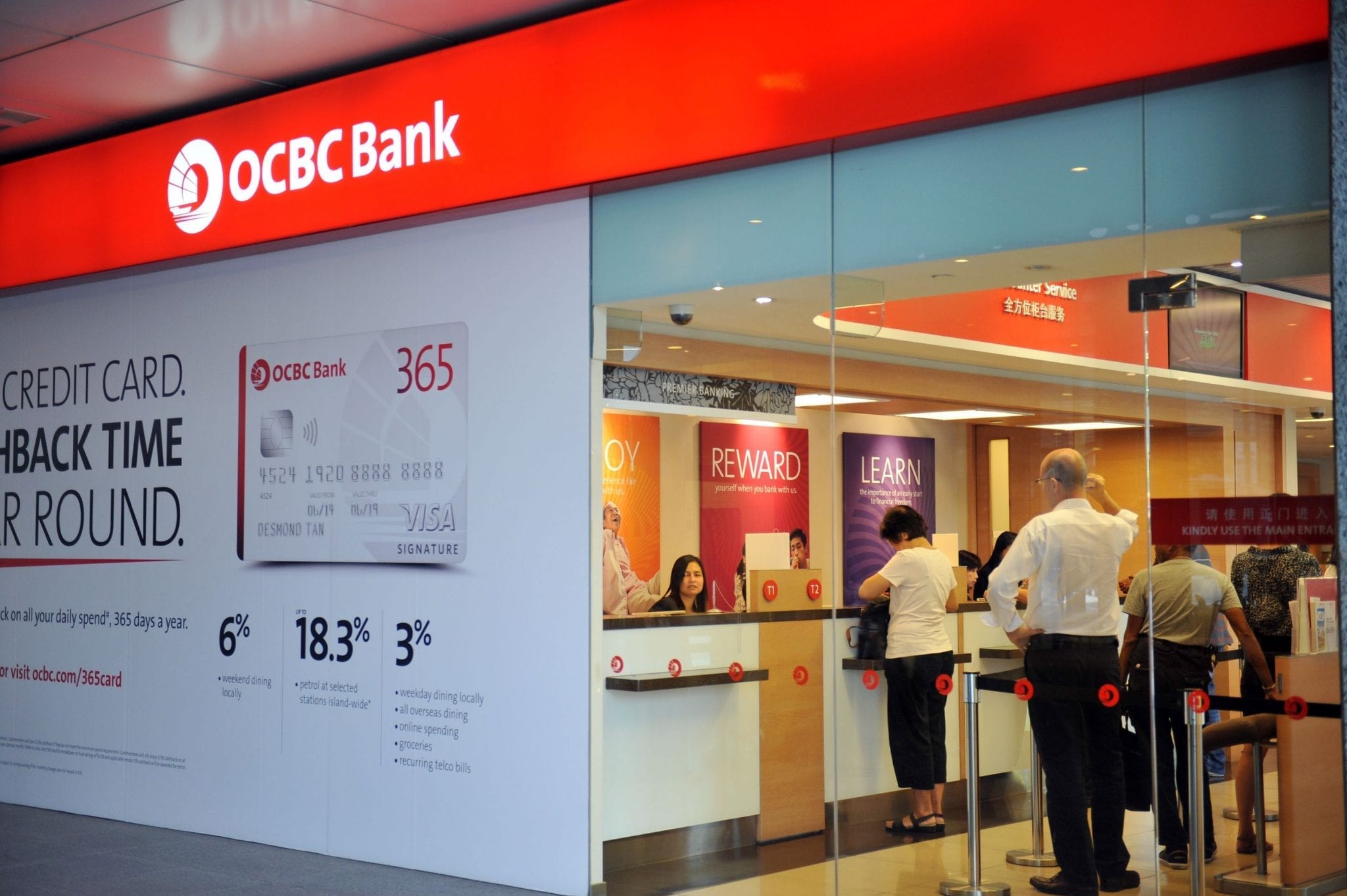
  • OCBC Bank is first local bank to win top honours

    OCBC Bank is first local bank to win top honours

    OCBC Bank marked another milestone in its journey towards ever-greater performance and business excellence by earning the World Class Award – the highest award tier – at the 2016 Global Performance Excellence Awards (GPEA), under the “Large Service” organisation classification. The GPEA is administered by the Asia Pacific Quality Organisation (APQO), an autonomous, scientific and technical organisation that brings together professional quality organisations from countries in Asia and the Pacific, including Singapore. For 16 years now, it has given out the Global Performance Excellence Awards – which are the only internationally-recognised honours for performance and business excellence.

    To be even considered for an Award, stringent criteria must be met. An organisation must start by being a winner at its own country’s national quality awards. Then, within two years, it must be recommended as a candidate for the GPEA by that country’s national quality award organising committee. OCBC Bank qualified by first being conferred the prestigious Singapore Quality Award by SPRING Singapore in 2014, following rigorous assessment of OCBC Bank’s consumer financial services business, and then by being recommended by SPRING Singapore for the GPEA.

    The organisations are reviewed by an international team of experienced examiners who assign scores and summarise the results of their assessment. The results and recommendations are then submitted to an international ‘Jury of Judges’ who make the final decision on which Award category each organisation wins.

    Mr Dennis Tan, Executive Vice President and Head of OCBC Bank’s Consumer Financial Services Singapore, said: “This award is an honour for all of us at OCBC, and is testament to our commitment to high standards of service quality. This is a key milestone in our journey towards organisational excellence. Since we embarked on our Business Excellence journey in 2001, we have tightened and enhanced our processes to deliver customer-centric, useful, fast, friendly and simple service to customers. This has earned us local recognition, with our 2014 Singapore Quality Award win, but we have not stopped there. We have continued to pursue even greater heights of business excellence – and this has culminated in our earning the Global Performance Excellence Award. While the team is very encouraged by this, achieving recognition is never a means in itself. We continue to consistently and relentlessly deliver quality products and services to meet our customers’ needs. Chasing excellence is a constant journey, never a destination.” 

    Mr Harnek Singh, President of the APQO, said: “Singapore has established itself as a leading financial centre. OCBC was amongst the first banks to win Singapore’s pinnacle award – the Singapore Quality Award – recently. This speaks volumes about the visionary leadership and well-entrenched, effective systems and processes that steer OCBC’s business excellence journey. With technology and innovation being increasingly a key competitive advantage, OCBC has successfully leveraged on technology and innovation as an enabler to offer innovative customer-centric offerings, cut costs, respond to changing customer expectations and create the agility needed to capitalise on opportunities in the market. OCBC has successfully offered a slew of award-winning, innovative products and services.” 

    OCBC Bank’s strengths in performance and business excellence are underscored by a focus on customer centricity and a competency in mining customer data through analytics to deliver intelligent customer experiences. OCBC was the first bank in Singapore to offer banking facilities at branches on Sundays, developed the ground-breaking OCBC 360 account (a deposit account that rewards customers with higher interest rates for banking more with OCBC Bank) and grew its youth segment – FRANK by OCBC – through intensive data analytics and research on how youths behave and desire to be engaged.

    OCBC Bank is also a leader in banking digitalisation. Over the past three years, it has introduced numerous first-to-market innovations in digital and mobile banking in Singapore to meet customers’ needs. Many of the bank’s customer touch points have been digitalised: Voice biometrics has replaced traditional identity verification when customers call its Contact Centre, the OCBC Open Account app now enables customers to apply for the popular OCBC 360 Account via their mobile phones or tablets without ever visiting a branch, and OCBC OneTouch uses fingerprint recognition to give customers quick and easy access through their mobile devices to their account balances and transactions. OCBC Bank has also launched a mobile application – OCBC One Wealth – that is a one-stop wealth management app providing customers with convenient access to market information, investment ideas, personalised alerts about their existing investments and even the ability to directly purchase unit trusts using their mobile devices.

    Mr Patrick Lim, Director of Business and Service Excellence at SPRING Singapore said, “OCBC Bank’s Consumer Financial Services Division was awarded the Singapore Quality Award in 2014 for having developed innovative new banking products and customised channel delivery, enabling it to be among the top banks in the highly competitive financial sector. Its recent GPEA win highlights the bank’s dedication to achieving business excellence. Recognition at GPEA proves the bank’s ability to demonstrate outstanding management capabilities while delivering superior performance and results.”

  • PayPal appoints Somwang Luangphaiboonsri as Country Lead for PayPal Thailand

    PayPal appoints Somwang Luangphaiboonsri as Country Lead for PayPal Thailand

    PayPal, a global leader in digital payments, has appointed Somwang Luangphaiboonsri as Country Lead of its Thailand subsidiary. 

    As Country Lead, Mr. Somwang will be responsible for assisting PayPal to capitalize on the explosive growth of cross-border e-commerce in the Thai market. Together with the newly-established PayPal Thailand team, Mr. Somwang will also be focused on educating Thai merchants on the growth opportunities available in the global e-commerce marketplace. 

    Rahul Shinghal, General Manager for PayPal Southeast Asia said, “I am pleased to announce Somwang’s appointment as the Country Lead for the Thailand office. Somwang has been instrumental in many of our partnership dealings with Thai merchants, including Thai Airways.  I am excited to see the growth of our offerings to customers in the market.” 

    Having spent more than 16 years in the finance and technology industries, Mr. Somwang is a veteran in the e-commerce space. Prior to joining PayPal, Mr. Somwang co-founded a domestic online payment service provider and built the company to be the platform of choice for many Thai consumers. He is well-entrenched in the Thai payments scene, and is also a secretary of the Thai E-Commerce Association and the secretary of Thailand ePayment and eMoney Association.

    “Fintech is a hot topic right now and Thai businesses will need guidance to help them navigate through the fast-changing payment innovations in order to tap on the consumer growth opportunity. I am looking forward to PayPal introducing new solutions for its Thai merchant partners for their evolving customer needs and building PayPal’s presence in Thailand,” said Mr. Somwang. 

    The appointment of Mr. Somwang is just one of the latest steps taken by the digital payments company to reinforce its position in Thailand this year. PayPal has been actively building its merchant portfolio to enable Thai businesses to have access to a seamless cross-border payment experience. In August 2016, an MoU was signed with the Department of International Trade Promotion (DITP) to promote and facilitate cross-border trade for Thailand’s small and medium sized businesses. PayPal also onboarded leading travel businesses including Centara Hotels & Resorts, Centre Point Hotels Group, and Thai Airways as merchant partners that same month, being the sole payment provider for their cross-border online payments. 

  • Ex-UBS Executive Director Joins HSBC

    Ex-UBS Executive Director Joins HSBC

    A former Executive Director, Wealth Management at UBS, Singapore, has crossed the street to take up a senior role with rival HSBC Private Bank.

    In a statement HSBC Private Bank said: «We can confirm the appointment of Shang-Wei Chow as a Market Head, Domestic (Singapore) team at HSBC Private Bank, effective 3 November 2016. His appointment underpins our continued efforts to enhance our client servicing capabilities and deepen our engagement with clients.»

    Chow is a seasoned private banker with nearly 15 years of experience managing client relationships and wealth portfolios in Southeast Asia. As a Market Head of the Domestic team he will be responsible for new business development and deepening existing client relationships in line with HSBC’s strategy. Prior to joining the bank he was Executive Director, Wealth Management at UBS, Singapore.

    A Year of Change

    HSBC has seen numerous changes to its Singaporean private bank throughout 2016 including the departures of HSBC veterans Rob Ioannou to DBS and Michael Hua to LGT Private Bank.

    HSBC Private Bank in the city-state has also appointed several new bankers including a Head of Investment Counselling together with a new Head of Ultra High Net Worth Investment Counselling.

  • AI, Gamification and Blockchain at DBS Hong Kong Accelerator

    AI, Gamification and Blockchain at DBS Hong Kong Accelerator

    Showcasing innovative fintech solutions that leverage artificial intelligence, blockchain technology, gamification and more, the founders of seven startups from Hong Kong and around the world met with hundreds of potential investors at DBS Accelerator Demo Day, the finale of the second DBS Accelerator programme in Hong Kong.

    Accelerators play a vital role in the Asian startup ecosystem and in supporting innovation. Providing vast resources, mentor support and dedicated work and office space, DBS Accelerator aims to create opportunities for innovators from across Asia and globally.

    Financial Innovation Evolving Rapidly

    The seven startups in this year’s programme are Flowcast, FOMO Pay, Hampen Technology, Mindlayer.io, NetGuardians, Playbasis and XinGuo Technology. They were selected from more than 150 applicants from around the world, including Hong Kong, Singapore, China, Thailand and the U.S.

    «We believe FinTech has the ability to go beyond mere disruption and make a tangible difference to the experiences customers have in using financial products and services,» said Lawrence Morgan, CEO of Nest.