Tag: Banking

  • Singapore banks warn of new malware targeting mobile banking users

    Singapore banks warn of new malware targeting mobile banking users

    The Association of Banks in Singapore on Tuesday (1 December) warned consumers of a new malware that has been targeting mobile banking customers using Android smartphones.

    In a press briefing, ABS director Ong-Ang Ai Boon said that since September “about 50” people have fallen victim to the malware, which poses as an Android software or WhatsApp application update and accesses users’ online banking accounts to make unauthorised purchases.

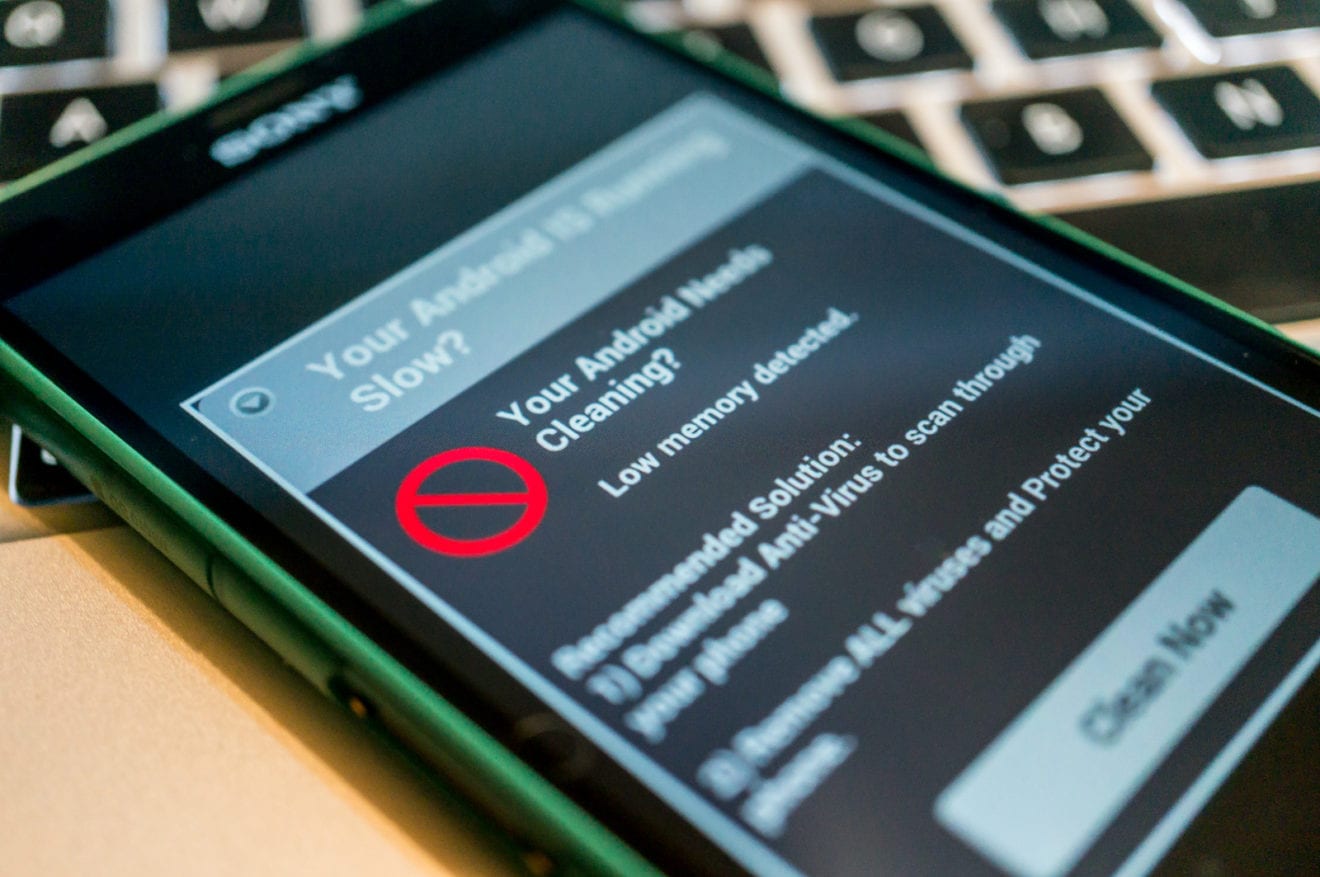
    In the latter, a pop-up ad encourages consumers to tap it and download a “new” version of the program or risk losing access to the service. After downloading the “update”, the app will prompt the customer to input confidential information such as credit card details.


     Phone screenshots of how consumers were prompted to perform application updates, which resulted in their smartphones being infected by malware. Photo: The Association of Banks in Singapore
    Phone screenshots of how consumers were prompted to perform application updates, which resulted in their smartphones …

    Current victims have lost up to a few thousand dollars from fraudulent online purchases made by cyber criminals, said Ong-Ang.

    She disclosed that many of the purchases were made to overseas websites. A fraudulent purchase of budget airline tickets was made in one case.

    Investigation into these scams is still ongoing by the banks affected and the police, she added.

    “The weakest link is the consumer, if they are not careful. You must be vigilant. Don’t download unauthorized apps, don’t go to illegitimate sites and don’t simply click on any URL which you are not aware of. Because once you do that, you compromise your handphone,” Ong-Ang noted.

    ABS advised consumers to take the following precautions: secure your smartphone with a password, install system updates to get the latest security features, install applications from trusted sources such as “Google Play”, only click on hyperllinks from messages and emails from a trusted source, and visit your bank’s website for more information.

    According to the banking association, major retail banks in Singapore have seen an increase of mobile banking customers from 1.5 million in 2013 to 2.4 million in 2015.

  • Kakao Bank, South Korea first internet-only banks

    Kakao Bank, South Korea first internet-only banks

    The country’s Financial Services Commission said Sunday it awarded a preliminary license to Kakao for a business to be named Kakao Bank.

    “An Internet bank is meant to give non-financial players, including IT firms, chances to enter the banking sector if they have feasible business plans to improve the financial market and customer rights”, the FSC said earlier’.

    Kakao Bank and K Bank will individually apply for the final approval after satisfying the human and material requirements.

    For Kakao Bank, Korea Investment Holdings Co. will take part as a major shareholder with 50 percent share, while Kakao and Kookmin Bank own 10 percent share each.

    Kakao, KT and Interpark were reported to be the three applications accepted by the FSC. It is the first time in 23 years that a new commercial bank has opened in the country’s banking industry. Once they receive the official approval form the FSC, they need to start operation within six months.

    According to the agency, Kakao’s Kakao Bank gained high scores for innovative services based on its immensely popular mobile messenger app KakaoTalk with 40 million users.

    The banks holding a stake in the two winning consortiums, on the other hand, rejoiced at the FSC approval, but are also facing financial burdens, as well as possible power struggles within the consortium.

    Currently, top-tier banks offer an annual rate of 3 percent to 5 percent, while secondary financial institutions, such as mutual savings banks or capital services, charge 15 to 34 percent.

    “Kakao’s rival, the K-Bank consortium, includes South Korea’s second-largest mobile carrier KT, Woori Bank, GS Retail and China’s Alipay, which is affiliated with e-commerce company Alibaba”.

    Nonparticipating banks geared up to expand their online banking platforms and increase their range of mid-interest rate loans to defend against the incoming Internet-only banks.

    FSC Chairman Yim Jong-yong has been a strong advocate for the web-based bank, saying he expects the online-banking industry to raise the competitiveness of the Korean banking industry as a whole. However, many difficulties are expected in order to pass the bill.

    The bank also aims to go global as it has secured ties with Tencent, China’s biggest social-networking and mobile games company, and the USA online retail giant eBay, which also owns Korea’s two leading shopping sites Gmarket and Auction.

  • UOB to help Jakarta draw investments

    UOB to help Jakarta draw investments

    United Overseas Bank (UOB) is linking up with an Indonesian government agency to encourage more foreign direct investment (FDI) into Indonesia.

    Under an agreement signed yesterday, the Investment Coordinating Board (BKPM) will allow UOB clients to apply for what is called a Principle Licence here without having to travel to Indonesia.

    A foreign company must obtain the licence as an initial step to incorporating an entity there.

    BKPM, which is under the direct supervision of President Joko Widodo, supports foreign investment into the country and helps Indonesian companies venturing overseas.

    UOB said it will support Indonesian investors looking to expand overseas through BKPM’s Indonesia Investment Promotion Centre in Singapore.

    BKPM will also help UOB clients take advantage of business opportunities in Indonesia.

    Last year, Indonesia was the second-largest recipient of foreign direct investment inflows into Asean, receiving US$28.5 billion (S$40.2 billion), UOB noted.

    China’s FDI into Indonesia has increased more than fivefold over the past three years, growing from US$141 million in 2012 to US$800 million last year, UOB said.

    Mr Sam Cheong, head of UOB Foreign Direct Investment Advisory, said opportunities in the region will be boosted by the upcoming Asean Economic Community.

    Under China’s “One Belt, One Road” initiatives, trade and investment between China and South-east Asia will likely continue growing, he added.

    BKPM chairman Franky Sibarani said in a statement: “(The agreement) will help to promote investments in Indonesia across major sectors, such as the infrastructure, maritime, import substitution, export-oriented, agriculture, downstream mining, industrial estate and tourism industries.”

  • Mobile banking consumers in Singapore warned of malware threat.

    Mobile banking consumers in Singapore warned of malware threat.

    Bank customers in Singapore have been warned of a rise in malware infections on Android phones that seek to hijack online passwords and one-time security codes.

    The warning, from the Association of Banks in Singapore (ABS), says the infections appear as a software update for Android smartphones, or as a service for updating WhatsApp.In the latter, a pop-up advertisement encourages consumers to tap it and download a “new” version of the program or risk losing access to the service. After downloading the update, the application will prompt the customer to input confidential information, such as credit card details, which could then be used to commit fraud.

    Smartphones that have been jailbroken or rooted are particularly susceptible to infection, says the ABS.

    Ong-Ang Ai Boon, director of ABS, says that major retail banks in Singapore have seen an increase of mobile banking customers from 1.5 million in 2013 to 2.4 million in 2015.

    “ABS would like to remind mobile banking customers that smartphones are as susceptible to malware as desktop computers or laptops,” she says. “Consumers are reminded to download applications only from trusted sources.”

  • Lawson Japan mulls banking foray

    Lawson Japan mulls banking foray

    Convenience store operator Lawson Japan is considering a foray into banking.

    The company says that with more than 12,000 convenience stores operating across Japan it has the physical branch network in place to accept deposits from customers.

    It also has the IT infrastructure in place which could be easily modified to allow customers to pay bills, make bank transfers and other basic banking services – all of which would draw additional customers in store, or increase the frequency of visits of existing customers.

    underlying the seriousness of the planning, Japanese bank Mitsubishi UFJ Financial Group has indicated it would take a small stake in the new bank, and contribute ATMs, IT and other services to a Lawson Bank.

    If Lawson does move into banking, it would not be Japan’s first retailer to do so. Rivel Seven & I Holdings, parent of 7-Eleven, established a bank in 2001. Aeon received a banking licence in 2007 and has since expanded its banking and financial services into other markets such as Malaysia and Thailand.

    Another c-store operator, FamilyMart last year began exploring a banking partnership with Japan Net Bank, although those discussions have not yet born a finite plan.

  • Kakao, KT to launch Korea’s first Internet banks

    Kakao, KT to launch Korea’s first Internet banks

    Two consortiums, led by South Korean Internet giant Kakao and No. 2 telecom operator KT, were approved to launch the nation’s first Internet-only banks next year, the banking authority said Sunday.

    Under the government’s pilot program, the two banks will offer financial services from deposits, lending and credit cards to foreign exchange transactions through their online platforms only — the first of their kind in Korea’s 23 years of financial history.

    Their operations are expected to start after they get financial approval in the first half of next year. The Financial Services Commission requested they come up with stricter security measures.

    Do Kyu-sang, financial services chief at the Financial Services Commission, speaks at a media meeting held at the agency`s briefing room in Seoul on Sunday. Yonhap

    According to the agency, Kakao’s Kakao Bank gained high scores for innovative services based on its immensely popular mobile messenger app KakaoTalk with 40 million users.

    KT’s K Bank was also praised for better customer access as it has teamed up with partners from diverse sectors such as telecommunications, payments and retail, it said.

    Internet banks come as the government looks to open up its financial services sector recently. Internet companies are already jumping into the bandwagon amid the rapid infiltration of online banking and mobile payments here.

    Due to stringent financial regulations, however, they are still required to partner with a licensed bank to launch their own Internet bank.

    Kakao and KT are especially pinning high hopes on “middle-interest loans” that would appeal to small borrowers.

    Currently, top-tier banks offer an annual rate of 3 percent to 5 percent, while the secondary financial institutions such as mutual savings banks or capital services firms charge whopping 15 percent to 34 percent interest rates.

    Internet banks say they can better evaluate the creditworthiness of borrowers based on the data they collect from hundreds of millions of mobile devices — including location, the use of local services and e-commerce transitions.

    Kakao Bank plans to bring Kakao’s traffic resources, big data on users and data analytics, while its bank partners KB Kookmin Bank and Korea Investment Holdings have knowledge of financial products.

    The bank also aims to go global as it has secured ties with Tencent, China’s biggest social-networking and mobile games company, and the U.S. online retail giant eBay, which also owns Korea’s two leading shopping sites Gmarket and Auction.

    “We will ramp up efforts to offer diverse and practical benefits for customers through Kakao Bank,” said Yoon Ho-young, Kakao’s senior vice president.

    K Bank also showed confidence in building a more accurate credit rating system based on KT’s own delinquency customer list and the data collected from its card and bank partners, including Woori Bank, the nation’s second-largest lender in terms of assets.

    “We will expand benefits for small borrowers and start-ups,” said Kim In-hoi, the bank task force leader. “We aim to become the No. 1 Internet bank by offering more convenient on- and off-line services.”

  • BDO firms up tie-up with Japanese banks

    BDO firms up tie-up with Japanese banks

    BDO Unibank, Inc. (BDO) and FIDEA Holdings Co., Ltd. (FIDEA Group) further strengthened their business relationship through a memorandum of understanding (MoU) that will allow BDO to provide support to FIDEA’s clients who plan to invest in the Philippines.

    FIDEA is a joint holding company between major Japanese regional banks The Shonai Bank, Ltd. (Yamagata prefecture) and The Hokuto Bank, Ltd. (Akita prefecture).

    Both banks have partnered with BDO Unibank under the Japan Bank for International Cooperation (JBIC) framework in 2013. Said framework was developed to support the banking needs of Japanese enterprises eyeing the country as a business destination.

    The partnership with the FIDEA Group will provide BDO Unibank adequate coverage in Japan’s northern region (Tohoku), specifically in Akita, Yamagata, and Miyagi prefectures where majority of the primary industries (agriculture, fishing, forestry, mining) are located.

    As a leading player in the local banking sector, BDO Unibank can provide the Japanese clients financial and non-financial advisory services, and other products and services that would be helpful to them should they decide to set up shop in the Philippines.

    Since 2007, BDO has established a fully staffed Japan Desk, with Japanese-speaking personnel, dedicated to market and service Japanese companies operating in the Philippines, and service the retail needs of Japanese customers.

  • Singapore banks must innovate

    Singapore banks must innovate

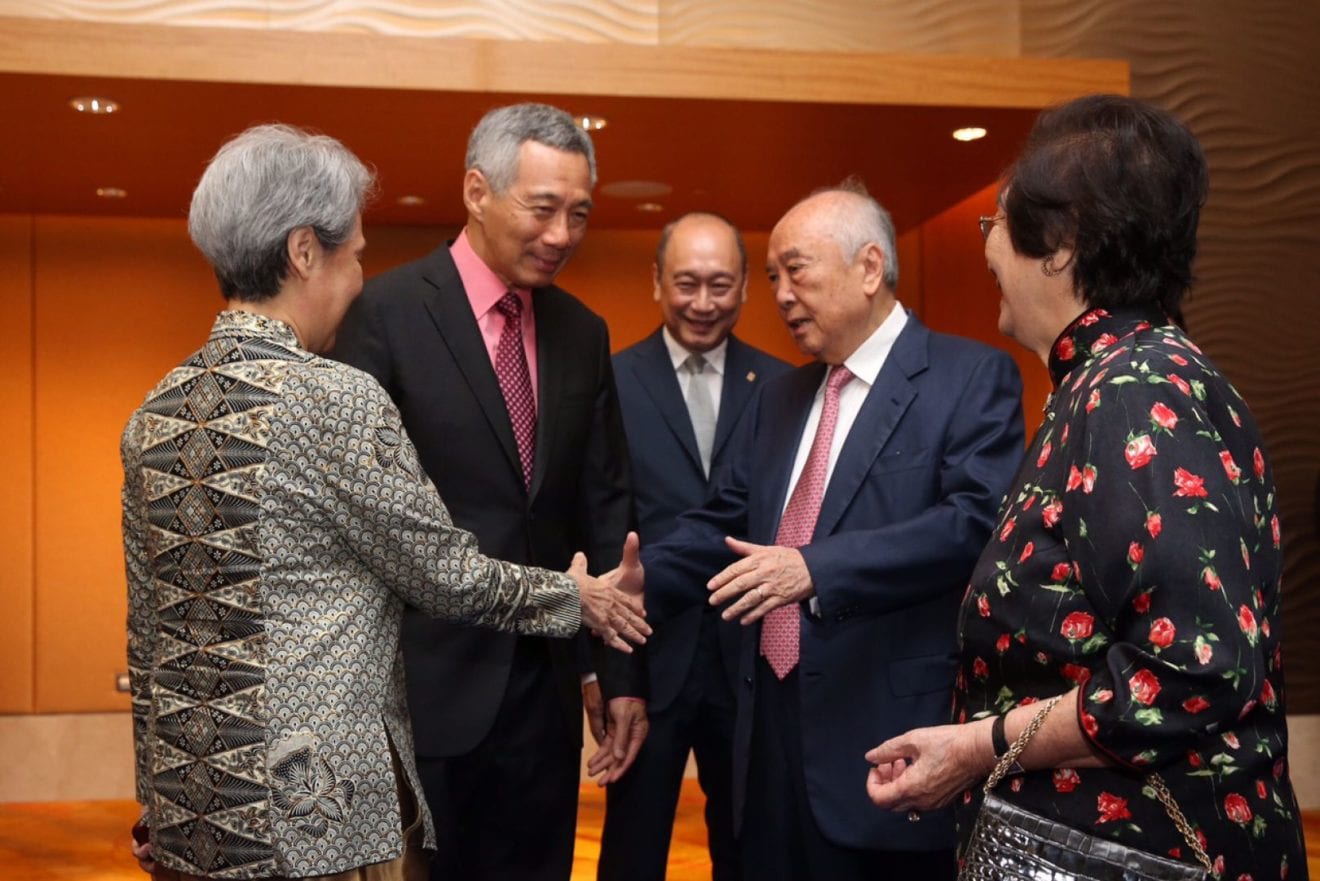
    Singapore banks must now innovate in this challenging environment where economic growth is uncertain, and disruptive forces are now at play, said Prime Minister Lee Hsien Loong on Thursday.

    “Our banks are in a strong position,” said PM Lee at UOB’s 80th anniversary dinner, noting that Singapore is at the heart of a rising Asia, and banks here have a strong balance sheet.

    “But at the same time, this is a very competitive business that continues to evolve rapidly. For while overall our banks are very good, in almost every specific area, we can find others who are better than us.”

    Looking at China’s success in mobile payments, PM Lee pointed to the Alibaba sales on Singles Day on Wednesday, where 70 per cent of the billions in sales were done through mobile purchases.

    Technologies such as blockchain, which can be used for real-time gross settlement or trade finance verification, are also emerging, he said.

    “We have to continually innovate and keep up with the latest technologies and services.”

    Singapore’s financial sector was liberalised from 1997, partly as the industry was not as efficient, innovative, and responsive to the market as it should be, said PM Lee. Foreign banks were allowed into Singapore to compete, including in domestic retail banking.

    “This more competitive environment forced our local banks to consolidate. But it also spurred them to upgrade, innovate and grow,” he said.

    “Our strategy has worked. Today, our three Singapore banks have gained a reputation for being amongst the strongest and safest financial institutions in the world. And we have a strong, vibrant financial sector that we can be proud of.”

  • BPI books P13.8-b net profit

    BPI books P13.8-b net profit

    Bank of the Philippine Islands, the third-largest bank in the country, posted an 8-percent increase in net income in the first nine months to P13.84 billion from P12.8 billion year-on-year on the strength of its core businesses.

    Total revenues increased 9 percent or P3.67 billion to P44.1 billion year-on-year as both net interest income and non-interest income grew P2.98 billion and P0.68 billion, respectively.

    Operating expenses rose 6.7 percent to P22.89 billion on year, a slower rate than revenue growth. As a result, the bank’s cost-to-income ratio improved to 51.9 percent from 53.1 percent a year ago. Return on equity decreased to 12.6 percent, from last year’s 13.3 percent.

    Both total loans and total deposits rose in double digits year-on-year. Total loans stood at P780.07 billion, an increase of 11.2 percent on year. Corporate loans accounted for 76.6 percent while retail loans stood at 23.4 percent.

    “Gross 90-day non-performing loans rose slightly to 1.9 percent from 1.8 percent of total loans, while loan loss cover remained 107 percent. Total deposits stood at P1.18 trillion, up 13.3 percent higher year-on-year. CASA ratio ended the quarter at 72.5 percent,” the bank said.

    Total assets during the period stood at P1.41 trillion, 8.8 percent or P113.78 billion higher than that of the same period last year.

    Investment securities closed at P303.28 billion, a 15.2 percent hike year-on-year. The bank’s investment securities remained mostly held-to-maturity, at P240.87 billion.

    Capital, net of cash dividends of P3.54 billion paid to shareholders on Sept. 2, 2015, ended at P150.44 billion. This represents a 9.3-percent growth in total capital versus September last year.

    Capital adequacy ratio was at 14.9 percent from 15.7 percent a year ago. CET1 stood at 14.0 percent.

    Earlier in the year, the Asian Banker named BPI as the Best Retail Bank in the Philippines for 2015. BPI also received the Best Electronic Delivery Channel award during the inaugural Bank Marketing Awards night, organized by the Bank Marketing Association of the Philippines.

    The award recognizes the bank that successfully implemented the most innovative electronic delivery systems and achieved the desired results in terms of usage and acceptance.

    BPI, the first bank in the Philippines and in Southeast Asia, is a commercial bank with an expanded banking license. BPI’s services include consumer banking and lending, asset management, insurance, securities brokerage and distribution, foreign exchange, leasing, and corporate and investment banking.

  • ING researches online banking venture in China

    ING researches online banking venture in China

    ING reported third-quarter underlying pretax profit of 1.50 billion euros ($1.64 billion), compared with 1.49 billion euros in the same period last year, beating analysts’ mean forecast.

    The figures, and an upbeat outlook, came as many leading European-based banks, including Deutsche Bank, Credit Suisse and Standard Chartered are shedding thousands of jobs and reorienting their businesses to meet stricter capital requirements.

    Morgan Stanley analysts, who have an “overweight” rating on ING shares, said the numbers were better than expected thanks to falling provisions on bad loans. They dipped to 261 million euros from 322 million euros.

    ING stock was the best performer on the Amsterdam stock exchange, rising more than 4 percent. They are up 26 percent year to date.

    CEO Ralph Hamers said the bank was considering entering the Chinese online banking market with local partner Bank of Beijing, and was in the preliminary stages of researching the option.

    Hamers said he believed the Chinese stock market had stabilized and measures taken by the government would “help economic recovery by the end of this year.”

    Chief risk officer Wilfred Nagel said Chinese loan default rates, though they had risen, were still lower than in Europe. He said the Chinese retail banking sector was an attractive opportunity.

    “China adds the size of the GDP of the Netherlands to its economy every year. This is still in absolute terms an economy that grows quite strongly,” he said.

    ING’s online banking platform is helping it add 1,000 retail customers per week in Germany.

    Nagel said the Chinese discussions were at an early stage and no decisions had yet been taken on timing or ownership.

    In the earnings report, ING said it grew its lending portfolio by 1.6 billion euros.

    Net interest margin improved slightly quarter-on-quarter to 1.46 percent from 1.45 percent.

    “In Europe, sentiment is holding up,” Hamers said. “We see a recovery in bank lending in countries like Belgium and Germany.”

  • Bank of Tokyo Mitsubishi UFJ gets ready for Myanmar’s new RTGS system

    Bank of Tokyo Mitsubishi UFJ gets ready for Myanmar’s new RTGS system

    Bank of Tokyo Mitsubishi UFJ (BTMU) is preparing its systems in Myanmar for the launch of Central Bank’s (CBM) real-time gross settlement (RTGS) system.

    Launch is set for the end of 2015 and the development forms part of Myanmar’s move to modernisation. CBM also has the backing of the Japan International Cooperation Agency and the World Bank.

    CBM is assisting local banks and foreign banks’ branch offices in preparation of the new system, which will allow the immediate settlement of large domestic interbank payments.

    In an interview with The Myanmar Times, Go Watanabe, CEO of Asian and Oceania region, BTMU, says it has seconded staff to the project development team; and it is ‘now able to provide basic financial services including foreign exchange and derivatives trading, and is preparing to launch a more comprehensive suite of trade finance solutions’.

    Watanabe says he expects CBM to ‘review regulations governing foreign exchange, which will lead to greater efficiency for cross-border transactions and international settlement’.

    The Japanese bank was the first of nine foreign banks to open its branch office in the capital Yangon in April this year, becoming the first international lender to begin operations in the country for more than 50 years.

    There will be the inevitable competition, but Watanabe expresses a desire for collaboration.

    ‘Given Myanmar’s banking industry is still in its infancy, it would make sense for the foreign banks to pull our knowledge and expertise together to develop the necessary banking and finance related infrastructure to help move it to the next level,’ he says.

    The Myanmar Times says: ‘BTMU is one of three Japanese banks permitted to offer banking services in Myanmar, and opened its Yangon branch with initial capital of $100 million. BTMU provides services including deposits, loans and foreign exchange to foreign companies and domestic banks.

    ‘Under existing regulations, foreign banks in Myanmar can only deal directly with foreign companies, local-foreign joint ventures, and Myanmar’s domestic banks. They do not yet have access to local retail or corporate clients.’

    Watanabe says, in addition to working with global corporates, BTMU plans to use its majority stake in Thailand’s Bank of Ayudhya PCL – known in Thailand as Krungsri – by ‘tapping its Thai SME segment to further attract investors into Myanmar’.

    In both Thailand and Japan, he says, many companies are looking to diversify their investments, and could potentially begin investing in Myanmar.

    The bank will also use its partnership with Co-operative Bank (CB Bank), based in Myanmar, especially in the area of transaction banking, he says. BTMU signed an agreement with CB Bank back in 2013, to act as a technical adviser.

    Watanabe says the two banks have a joint committee of senior management executives, which aims to encourage knowledge and relationship sharing.

  • ANZ grows retail footprint in Asia

    ANZ grows retail footprint in Asia

    The branch has been established to service multinational and joint venture companies with a presence in Myanmar, as well as international companies looking to enter the country from ANZ’s network countries.

    ANZ said the Myanmar branch provides comprehensive solutions covering a full range of banking products including payments and cash management, electronic banking, lending, foreign exchange, and fund-based and non-fund-based trade finance.

    The branch also offers specialist banking services for natural resources, utilities and infrastructure, telecommunication, consumer goods and other global diversified sectors that are expanding in Myanmar.

    Andrew Géczy, ANZ’s chief executive for international and institutional banking, said the licence approval is the final step in the bank’s plans to deepen its presence in the Greater Mekong, following its recent branch opening in Thailand.

    “As one of the only international banks with a presence in all five Greater Mekong countries, ANZ is uniquely placed to play a leading role for customers wanting to enter Myanmar,” he said.

  • Philippine banks lead in retail financial services

    Philippine banks lead in retail financial services

    Singapore-based publication The Asian Banker sees the Philippines leading the strong  growth in the retail financial services market in Asia Pacific on the back of increasing consumption and improved access.

    A study conducted by Asian Banker Research showed the income of commercial banks from retail financial services in Asia Pacific growing 77.5 percent to $824 billion by 2020 from the projected $464 billion this year.

    “Asia Pacific’s retail financial services market will be worth $824 billion by 2020. Increasing consumption and improved access to financial services in combination with mobile banking technologies, will be key catalysts in driving retail banking income between 2015 and 2020,” The Asian Banker said.

    Retail banking income was defined as business from retail deposits, mortgages, credit cards/unsecured lending, wealth management and, wherever possible, small and medium enterprises banking.

    “The ability to generate gross income in any given market is regarded as a key indicator of wallet share and a determinant of a bank’s bench strength in retail financial services,” said Mobasher Zein Kazmi, head of research at The Asian Banker.

    The study showed the Philippines is expected to book the highest compound annual growth rate and total income generated among emerging markets between 2015 and 2020 with 18 percent followed by Indonesia with a little over 15 percent, and Thailand with 15 percent.

    Malaysia is seen to post the slowest income growth with a growth rate of six percent for the five-year period.

    “Since 2014, the Philippines has outpaced China and Thailand and is becoming one of the key growth engines in the Asia Pacific,” The Asian Banker said.

    However, China would continue to generate higher earnings by 2020.

    “Currently, China’s retail financial services industry alone generates 48 percent to total regional income, followed by India with 12 percent and Australia with nine percent,” it added.

    The Asian Banker sees income from retail financial services of commercial banks in Asia posting a CAGR of 12 percent from 2015 to 2020.

    “There are, however, stark variances in growth rates between the mature markets of Korea, Hong Kong, Australia, Japan, Taiwan and Singapore and developing markets,” it said.

    On the other hand, income growth in mature markets is lower and expected to grow by an average of five percent this year and by the same amount in subsequent years until 2020.

    Developing markets have grown on average by 13 percent annually to 2015. However there have been dramatic changes since 2014.

    The fastest growing markets up to 2013 were Thailand and China after having grown by more than 20 percent annually.  Both markets, however, have been slowing down due to economic woes.

    The Asian Banker noted that retail banking income is shifting focus on high yield businesses but sees tightening of consumer banking regulations as a key threat.

    The greatest change in regulations is a shift away from a principle-based regulatory framework to a rule-based framework. As a result regulators have much more power to intervene.

    In particular, in emerging markets, financial authorities often want to control everything down to the product level, including loan pricing and fee income.

    Commercial banks have managed the impact of new regulations imposed on banks’ wealth management businesses in the aftermath of the global financial crisis, but a second wave of regulatory scrutiny, initiated in 2012, into interest rates and fee structures, compounded by recent macro-economic weaknesses, continues to pose ongoing threats to income expansion.

    “Regulators are increasingly worried about rising consumer debt so they have resorted to tightening unsecured lending, credit cards and home loans. In addition, consumer protection and optionality, which requires banks to seek a customer’s consent to opt in or out of services, are becoming key agenda items for financial regulators in this region,” Kazmi said.

    According to The Asian Banker, the most profitable banks in Asia include Bank of Mandiri in Indonesia, Union Bank of the Philippines, and Siam Commercial Bank in Thailand.

  • Krung Thai Bank makes profit

    Krung Thai Bank makes profit

    KTB posted 3Q15 earnings of Bt5.3bn, plunging 42% YoY and 37% QoQ. The result was 11% below our forecast but 4% below the Bloomberg consensus. This was attributable to bigger loan-loss provisioning (LLP) than was modeled. KTB set its 3Q15 LLP of Bt10.5bn against our numbers of Bt8.5bn. Pre-provision operating profit was Bt17bn, up 21% YoY but down 1% QoQ. The 9M15 earnings represent 90% of our FY15 earnings projection.

    Results highlights

    Lending was up 0.2% QoQ and 1.6% YTD—in line with our forecast. NIM for the quarter came in at 3.04%, up 3bps QoQ and 19bps, boosted by greater emphasis on the corporate and retail sectors and well managed funding cost from the previous quarter. LLP soared 270% YoY and 39% QoQ to Bt10.5bn (equaling credit cost of 2.1%). Note that the bank received a tax benefit of about Bt300m from troubled debt restructuring and extra LLP for Sahaviriya Steel Industry (SSI) in the quarter. Therefore, its corporate tax rate was down to 15% in 3Q15 from 18% in the same period last year.

    KTB’s NPL/loan ratio rose to 4.03% at end-September from 2.96% three months earlier (from SSI, and the small SME and retail sectors). Likewise, its loan-loss-coverage ratio dipped to 103% in 3Q15 from 125% last quarter. Fee income inched up 41% YoY and 12% QoQ to Bt7.3bn in 3Q15. OPEX was Bt12.2bn, an increase of 19% YoY but down 1% QoQ. KTB’s 3Q15 cost/income ratio was 44.2%, close to last quarter and down from the 45.6% reached in the same period last year.

  • ANZ expands retail footprint in China

    ANZ expands retail footprint in China

    The Qingdao branch will cover the entire Shandong Province and will offer products and services for ANZ’s corporate customers.

    Mike Smith, chief executive of ANZ, said that with a significant and growing presence in China and a network across 34 markets in the Asia Pacific, Europe, the Middle East and America, the bank is uniquely placed to support its clients looking to grow in Qingdao and the Shandong Province.

    Mr Smith said Qingdao and Shandong Province have established long-term relationships with Australia, and highlighted “major potential” for further growth in bilateral trade and investment.

    “This includes opportunities in industries such as natural resources and agriculture, and the opportunities created through the China-Australia Free Trade Agreement,” he said.

    “With our new branch, we look forward to enhancing cooperation in the Qingdao and Shandong government, and to continuing to support the development of the local financial industry.”

    Huang Xiaoguang, chief executive of ANZ China and head of greater China, said opening the new branch in Qingdao is another step in continuing to grow the bank’s Chinese footprint.

    “As the only locally incorporated Australian bank in China, we will further enhance our capability to provide comprehensive solutions and services to support local enterprises to go abroad,” he said.

    ANZ announced in July the opening of a new branch in Gurgaon, India, to better service its business customers in the country’s north.