Retail News CRM

Tag: banks

  • Banks expect Q4 interest rate hikes

    Banks expect Q4 interest rate hikes

    Most commercial banks expect deposit and lending interest rates to rise in the fourth quarter this year, a survey by the State Bank of Vietnam has found.

    The central bank’s survey, which polled 96% of all domestic and foreign lenders in Vietnam between August 25 and September 10, found that over 59% expect rates to go up by an average 0.37% points per annum in the last quarter this year.

    Over 66% of lenders anticipate that the average rate increase will be 0.56% points per annum.

    In the last four weeks, more than 30 lenders have increased their deposit interest rates by up to 1.9% points.

    Some are offering 7.45% per annum for 12-month deposits.

    The central bank survey also found that 88.3% of lenders expect positive pre-tax profit growth this year while 6.8% anticipate a decline.

    They estimate forecast capital mobilization growth for the year at 10.2%, lower than the credit growth of 14.9%.

    The State Bank of Vietnam (SBV) last week used open market operations to pump VND28.1 trillion ($1.18 billion) into the market and sold foreign currencies worth VND35 trillion.

    Tight liquidity has caused interest rates on loans to increase sharply. On Tuesday, the overnight interest rate surged to 8-9% per year. It was around 7.5% per year for other terms.

  • What Banks Can Learn From Google’s Toothbrush Test

    What Banks Can Learn From Google’s Toothbrush Test

    Sometimes seemingly mundane insights can help in the digital age, especially since most Swiss banks are «knotty colossi,» as Google Maps co-creator Samuel Widmann finds.

    Can banks learn something from the US tech giant Google? A seminar at the School of Banking (FSB) in Zurich explored this question last week with  Samuel Widmann, co-inventor of Google Maps.

    Zurich-born Widmann, and Swiss Federal Institute of Technology (ETH) graduate, brought his own company Endoxon into Google in 2006, subsequently working for the company for over ten years. During this tenure, he further developed Google Maps, thereby making a significant contribution to Zurich becoming an important location for the US company.

    So much so that those working at the firm in Zurich are dubbed Zooglers. He has since left Google and is active as an angel investor, advisor to startups, and an active board member.

    Missing Guiding Light

    Widmann says he has at least eight banking apps on his phone, none of which he finds convincing. He attributes this to the fact that many banks are «knotty colossi», lacking a North Star, in reference to the brightest star in the «Little Dipper» constellation. In the past, navigators on the high seas in the northern hemisphere oriented themselves by the North Star, Widmann explained.

    This is something that is often lacking among banks’ boards, he said: Many board members don’t know where to go, they don’t have the right mindset. Yet today, banks today are actually IT companies,» the former Google executive said.

    A Costly Bet

    There is a great desire among financial institutions to set new digital standards, especially to reach the younger «Next Gen» or Generation Z clientele. However, current offerers frequently don’t go beyond simple payment services or account inquiries.

    The cancellation of the planned takeover of US digital wealth manager Wealthfront by UBS shows how complex it is to set up and expand a comprehensive digital offering.

    Shifting Winds

    While younger clientele in particular are appearing as blips on the banks’ radar, they don’t yet have the necessary means to be sufficiently attractive as digital customers. Accordingly, any commitment by an established bank to the digital world today is a costly bet on whether enough customers can be acquired over time.

    In times of zero interest rates, such ambitions could be easily financed. But with central banks now having exited loose monetary policy stances, the winds have changed and such investments may no longer be profitable, UBS’ Wealthfront example illustrates. However, the FSB seminar also showed that the demand for digital tools or even for a super app from the banks is not necessarily given.

    Many customers do not want to completely commit themselves to a single bank. Moreover, data protection and privacy pose a high hurdle, especially in Switzerland or Germany, to offering apps that are as comprehensive as they can be, and many Swiss are still unwilling to entrust their data to a financial institution abroad. When a new generation of customers emerges who are more willing to share their data, this may come to pass. But we are still a long way from that.

    Larry Page’s Toothbrush Test

    Swiss banks can certainly learn from what Google co-founder Larry Page once called the «toothbrush test.» A product should be such that it is used as many times a day as possible, as Widmann explained.

    That requires boards of directors with the necessary know-how, and prepared to resolutely promote digital developments, but keeping in mind that the local market is limited in its dimensions. All the more, this requires a vision, just as Google had one to differentiate itself, Widmann says. Indeed, the search-engine race is illustrative.

    First Mover Outpaced

    A look back at the efforts as early as 1995 to establish search engine dominance, two companies, Altavista and Yahoo, entered the market and laid down their markers. Nevertheless, after 1999 Google succeeded in becoming today’s undisputed number one and outshone its two rivals. Altavista no longer exists, and Yahoo is now a niche player.

    In this respect, there are cards still left to be dealt out in terms of banking. With a clear view of the North Star, Larry Page’s toothbrush test, and the willingness of boards of directors to launch digital innovations in a more targeted and user-friendly manner, lessons are to be learned from Google.

    And when it is all over, someone will be smiling brightly at the end of the digital app toothbrush test.


  • Singapore Central Bank Follows the Pack

    Singapore Central Bank Follows the Pack

    The MAS indicates it will continue to tighten policy to slow inflation and ensure price stability in the medium term.

    The Monetary Authority of Singapore (MAS) indicated in a statement published on its website Thursday that it believes it is «prudent» to take another «calibrated step to tighten monetary policy».

    Along with numerous other international central banks, it believes that doing so will prevent inflation from increasing further given that it expects that pressures on prices will remain elevated over the next few months, as it expects core inflation to rise to slightly more than 4 percent in the short term before it eases.

    Although global supply chain frictions are easing, external inflationary impulses have become more broad-based, reflecting underlying constraints in global commodity and labor markets, the MAS indicated.

    Unlike many other central banks, the MAS uses the exchange rate for the Singapore dollar to set policy given its open and relatively small economy. The policy is set by adjusting the Singapore dollar’s trading band, based on an undisclosed basket of currencies weighted to the countries’ levels of trade with the city-state. The MAS can adjust the mid-point of the band, the size of the band, and the slope of the appreciation.

    In the statement released Thursday, the MAS indicated that it would re-center the midpoint of the policy band, which builds on previous steps that it has taken. It did not change the slope or width of the band.

  • Banks Rising to the Cloud

    Banks Rising to the Cloud

    Many Swiss retail banks want to move part of their IT to the cloud but certain practicalities are holding them back.

    After big banks have discovered the benefits of using the data cloud, smaller and medium-sized retail banks are starting to get to grips with cloud computing, according to a study by Lucerne University of Applied Sciences and Arts.

    The study listed several reasons in favor of managing part of the IT infrastructure and customer data via a cloud service. Although banks predominantly are focussed on saving costs, a switch to the cloud is becoming unavoidable because software is increasingly only available as a service on the cloud and the introduction of new business models is equally reliant on cloud infrastructure.

    Banks see the greatest risk in having the data stored abroad, as it the case with the majority of providers. However,  the authors of the study found that banks always found ways to protect data confidentiality by means of technical, organizational and, in some cases, contractual measures.

    With many products only being offered in a subscription model (Software as a Service, SaaS), banks primarily want to use cloud computing at their workplace. Important areas of use behind this are named as efficiently developing software in a public cloud and operating SaaS products at the customer interface.

    The retail banks surveyed expect to have moved over 60 percent of their workload to a cloud in the next three years. About one-fifth is expected to run in a public cloud, one-quarter in a private cloud and the rest in a community cloud.

    IT managers are skeptical when it comes to the practicality of shifting to the new infrastructure. For many it is not clear whether operating their core banking system on the cloud by 2024 is technically feasible and economically viable.

    According to a 2021 estimate by the Boston Consulting Group (BCG), banks worldwide operate around 15 percent of their workload in a public cloud. In the future, UBS intends to run one third of its workload in the public cloud, one third in the private cloud and the remaining third traditionally on the mainframe.

  • Vietnam urges banks to merge, become more competitive

    Vietnam urges banks to merge, become more competitive

    The Vietnamese government is urging banks to merge and increase their scale toward becoming more competitive. It wants to make Vietnam an ASEAN leader in the banking sector.

    The government wants banks to have a capital adequacy ratio of at least 10-11 percent by 2023, and 11-12 percent by 2025, according to a recent plan to restructure credit organizations and handle bad debts during the 2021-2025 period.

    The capital adequacy ratio is a measure of how much capital a bank has available to handle a certain amount of loss before facing the risks of becoming insolvent.

    The government has said it wants Vietnam’s banking sector to become a top four leader in the ASEAN bloc. It has asked banks to make plans to increase their charter capital and improve their management.

    Big banks should have a minimum charter capital of VND15 trillion by 2025, and small and medium banks, VND5 trillion, it said.

    The government also wants banks to have a bad debt ratio of under 3 percent by 2025.

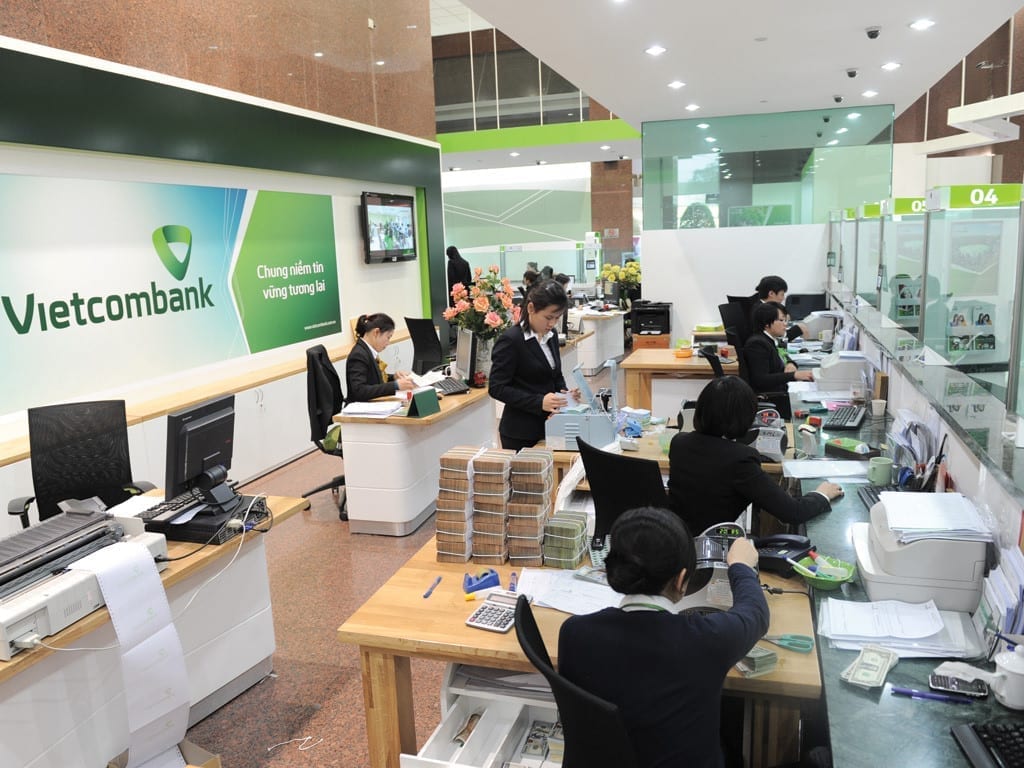
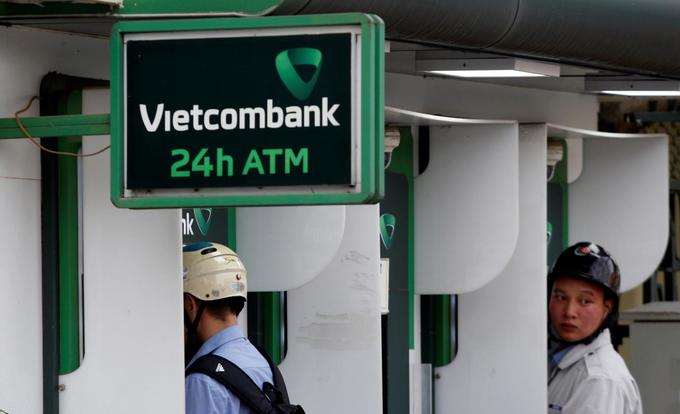
    Vietnam has 31 domestic commercial banks, with the biggest in terms of charter capital being state-owned lenders BIDV, Vietinbank and Vietcombank, according to the State Bank of Vietnam.

  • Sanctions Hit First Banks

    Sanctions Hit First Banks

    The first Eurozone Banks get hit by sanctions while Switzerland is waiting to see if the Federal Government follows in the EU’s steps.

    To some degree or another, Swiss banks will not be able to escape sanctions against Russia, whether they affect corporate loans, commodity trade financing or business with wealthy clients from Russia.

    Switzerland’s second-largest bank, Credit Suisse, has stopped financing of commodity trades out of Russia, for example.

    Swiss financial watchdog Finma told finews.com it is in talks with banks about the risks posed by sanctions on their Russian business. It is unclear to what extent subsidiary institutions operating in Switzerland such as Sberbank (Switzerland), Gazprombank (Switzerland) and VTB Capital, primarily in financing commodity deals, will be affected.

    Sberbank, Gazprombank and the Association of Foreign Banks in Switzerland declined comment to finews.com on the current situation.

    In the Eurozone, Russia’s Sberbank subsidiaries are teetering on bankruptcy due to sanctions imposed by the EU, the U.S. and U.K.. According to the ECB’s banking regulator, they are no longer able to service their debts or other liabilities, and the parent company is also prohibited from injecting funds.

    According to the report, Vienna-based Sberbank Europe and its two euro-area subsidiaries, Sberbank in Croatia and Sberbank Banka in Slovenia, are affected.

    Sberbank Europe and its subsidiaries experienced significant deposit outflows as a result of the impact of geopolitical tensions on their reputations,» the banking regulator said in a statement. «As a result, their liquidity position has deteriorated. Moreover, no measures are available where there is a realistic prospect that this position will be restored at the group level and at the level of individual subsidiaries in the banking union.

    The Austrian Financial Market Authority (FMA) also reacted, temporarily suspending nearly all business operations of Sberbank’s European subsidiary. The Vienna-based bank is «not allowed to carry out any withdrawals, transfers or other transactions.» Depositors, however, are allowed to withdraw 100 euros per day to cover daily needs.

    We are making every effort and fully support the authorities to use their powers to address this unprecedented situation in the best interest of customers, Sberbank Europe CEO Sonja Sarkoezi wrote in a statement.

    Several banks in the group have seen a significant outflow of customer deposits within a very short period of time, she said, resulting in daily cash withdrawals being restricted in some cases.

  • Banks dominate Vietnam’s profit makers list

    Banks dominate Vietnam’s profit makers list

    Seven banks are in the list of Top 10 most profitable listed companies in Q1, recording increases in pre-tax profits.

    Topping the list are two state-owned lenders Vietcombank and VietinBank. The former recorded VND8.6 trillion ($373.9 million) in pre-tax profits, up 65 percent year-on-year, while the latter posted VND8 trillion, up 171 percent.

    Another state-owned bank, BIDV, made it to the list at eighth place, with pre-tax profit surging 87 percent to VND3.4 trillion.

    The surge for the three state-owned banks follows very low figures recorded in the same period last year as a result of the onset of the Covid-19 pandemic.

    Of the four private banks in the top 10 list, Techcombank ranked fifth with a 77 percent surge in pre-tax profits to VND5.5 trillion. It was followed by MBBank and VPBank, posting 108 percent and 38 percent rises in pre-tax profits to VND4.58 trillion and VND4 trillion, respectively.

    Private lender ABC was in tenth place with pre-tax profits rising 61 percent to VND3.1 trillion.

    Like the state-owned lenders, the four private banks experienced an increase in net interest income as well as non-interest income well above the growth in operating costs and provision for doubtful debts.

    Brokerage Rong Viet Securities Corporation (VDSC) has forecast the banks will continue to see profit growth in the next three quarters. However, growth would not be as high as the 50 to 100 percent-plus rates of Q1.

    Steelmaker Hoa Phat Group was the most profitable non-bank enterprise on the list, ranking third, up from the eighth place in the same period last year.

    It was the only non-bank enterprise in the top 10 that saw a growth in pre-tax profit, which tripled to VND7.7 trillion.

    The steel giant has benefited from surging steel prices that have lifted its revenue for the period by 60 percent year-on-year to VND31 trillion.

    The other two non-bank enterprises in the list, real estate giant Vinhomes and diary giant Vinamilk, both experienced a drop in profits.

    Vinhomes reported VND7 trillion in pre-tax profits, down 30 percent, to rank fourth on the list.

    Vinamilk’s pre-tax profits fell 6 percent to VND3.15 trillion as it finished Q1 as the ninth most profitable listed firm.

    Two enterprises in Q1 2020 top 10 list, have fallen out – the state-owned Petrovietnam Gas Corp (PV Gas) and main airport operator Airports Corporation of Vietnam (ACV).

    PV Gas saw its pre-tax profits fall 10 percent due to surging selling expenses and operation costs. The ACV, meanwhile, saw its pre-tax profits fall to half that of the same period las year as the pandemic hit the aviation industry particularly hard, slashing deeply the number of flights and passengers.

  • Chinese Banks Accelerate Branch Cuts

    Chinese Banks Accelerate Branch Cuts

    Chinese lenders are increasingly closing down branches as online and mobile banking penetration continues to rise.

    Mainland lenders have closed 430 branches in the first three months of 2021, according to data from the China Banking and Insurance Regulatory Commission’s (CBIRC) annual report.

    This marks an accelerated reduction after the industry closed 1,300 branches in 2020.

    As a major leader by digital penetration of its population, China saw strong growth for transactions not executed via physical bank locations – or «off-counter rates.

    Such transactions, which include online and mobile banking, rose 12 percent to 2,308 trillion yuan ($352.5 trillion), according to the CBIRC report.

    Mobile banking transactions alone soar 31 percent to 439.2 trillion yuan – nearly one-fifth of total off-counter transactions.

    In addition to growing digital adoption, the branch cuts are part of a broader industry move to reduce costs especially after a year of concessions where borrowers were offered cheap loans, deferred payment options, and top Beijing officials even called for a 1.5 trillion yuan sacrifice of profits.

    Mainland lenders are also rebalancing the mix of their remaining branch network with a focus on maintaining brick-and-mortar locations in counties or rural areas as part of Beijing’s goal to promote financial inclusion.

  • State-owned banks lag behind in lending growth

    State-owned banks lag behind in lending growth

    State-owned lenders have been achieving slower credit growth than the industry average for the last five years while private banks are on the fast lane.

    Of the ‘Big Four’ state-owned banks, BIDV, Agribank and VietinBank recorded growth rates that were less than the industry average of 14.6 percent a year in 2016-20 period, according to a note by Rong Viet Securities.

    Vietcombank was the only one to buck the trend with growth of 16.2 percent.

    “Most of the increase in the credit market share in recent years went to private lenders, while the state-owned lenders’ share dwindled,” the report said.

    The latter lost a combined 1.42 percentage point of the market share, it said.

    Part of the reason has been state-owned lenders’ inability to increase capital and to dilute state ownership, it said.

    Meanwhile, private lenders like Techcombank, Military Bank and VPBank posted average growth of over 20 percent in the period, while Saigon Hanoi Bank achieve 18.8 percent and ACB, 17.4 percent.

    Some like TPBank and VIB even achieved growth rates of over 30 percent and 25 percent though their share of credit remained small at 1.4 percent and 1.9 percent.

    Rong Viet Securities analysts said since credit would continue to play an important role in helping the economy achieve GDP growth of 6-8 percent, lending growth is expected to remain in double digits.

  • Singapore Banks Throw Weight Behind Green Vehicles

    Singapore Banks Throw Weight Behind Green Vehicles

    Ahead of Tesla’s launch in Singapore, DBS is has announced financing for new and used electric and hybrid cars, while a partnership with OCBC will boost the availability of electric vehicle charging points.

    As part of DBS’ efforts to incentivize the adoption of green practices and carbon footprint reduction, the bank is rolling out Singapore’s first green car loan, which is priced at 1.68 percent per annum, it announced on Monday.

    The bank said there is much room for growth, citing Norway’s 54 percent electric car market share, compared to Singapore, where there are 43,000 electric and hybrid cars – only 6.8% of the car population.

    It also said that lending to the electric vehicle instead of the combustion engine vehicle sector has lower environmental and social costs of approximately 40 percent and 16 percent respectively.

    To accelerate the greening of Singapore’s land transport sector, OCBC Bank announced a strategic partnership with Charge+, an operator and provider of electric vehicle (EV) charging solutions that plans to install 10,000 EV charging points islandwide by 2030.

    Under the memorandum of understanding signed by the two parties, OCBC Bank will encourage its property developer and property owner customers to install charging points at their premises, implement digital payment solutions for the charging service, and look into the financing for the infrastructure, an announcement on Monday said.

    Just having the infrastructure is not good enough. There must be public adoption to enable a clean energy transportation system too. OCBC can therefore play the role as a meaningful financial services enabler in the electric vehicle ecosystem, Elaine Lam, OCBC head of global corporate banking, said in the announcement.

    Last week, electric carmaker Tesla began taking orders for its Model 3 Standard Range and the Model 3 Performance in Singapore, which are priced from S$116,334 ($88,000), excluding COE.

    The cars have a Vehicular Emissions Scheme (VES) banding, which entitles potential buyers to a S$25,000 rebate. Under the Electric Vehicle Early Adoption rebate scheme announced in 2020, customers who buy a new electric car also qualify for a 45 percent rebate on its Additional Registration Fee, capped at S$20,000.

    The Singapore government in 2020 said it aims to phase out fossil fuel vehicles by 2040.

  • Big state banks gradually lose credit market share

    Big state banks gradually lose credit market share

    The credit market share of Vietnam’s three largest banks has fallen by 2.7 percentage points in the last two years due to liquidity constraints.

    The three, all state-owned and listed and the country’s largest by assets, Vietcombank, Vietinbank and BIDV, account for 34 percent of all loans outstanding, securities company VDSC said in a note last week.

    But this represents a 2.74-percentage-point fall even as the four largest non-state banks, Techcombank, VPBank, Military Bank (32.42 percent state-owned), and ACB, increased their share of loans outstanding by 1.6 percentage points.

    During the two years ending in the third quarter of 2020, VietinBank’s share fell by 1.96 percentage points, BIDV’s by 0.7 percent and VCB’s by less than 0.1 percent.

    The big fall in VietinBank’s market share is because it has been strapped for cash. There have been no major infusions of capital in the past few years, return on equity has been low, bonuses and employee welfare funds cause a big drain on resources, and the government appropriates much of its earnings.

    This situation has been exacerbated by Basel II standards, which prescribe a capital adequacy ratio (CAR) of 8 percent of risk-weighted assets for all financial institutions. Thus, to lend more, banks have to increase their charter capital.

    Though the Government has agreed to reduce its ownership in state-owned banks from 65 percent to 51 percent by 2025, it has yet to be implemented.

    But the government issued a decree in October allowing state-owned banks to pay dividends in stocks to increase their capital, helping them improve their growth prospects in the medium and long terms.

    According to the State Bank of Vietnam, banks’ total outstanding loans were worth VND8.69 quadrillion ($376.87 billion) at the end of the third quarter.

    Credit growth is expected to be 11 percent in 2020, down from 13.5 percent in the previous year.

  • Private banks drive VN-Index pull-back

    Private banks drive VN-Index pull-back

    The VN-Index gained 1.11 percent to 1,066.99 points Tuesday, after seeing one corrective session, with private banking blue chips the best performers.

    The Ho Chi Minh Stock Exchange (HoSE), on which the VN-Index is based, was a sea of green with 296 stocks gaining and 134 losings. Total trading volume abated over 10 percent compared to Monday, reaching VND11.86 trillion ($514.79 million).

    Unlike the previous few sessions, where investors were focused on mid-caps with more growth potential, blue chips were the main driving force behind gains on the market this session.

    The VN30-Index for the HoSE’s 30 largest caps soared 1.65 percent, with 13 stocks gaining and three losings, soaking up over 50 percent of the trading volume.

    TCB of private lender Techcombank topped gains with 6.9 percent, followed by VPB of VPBank, up 4.3 percent, and STB of Sacombank, with 4.1 percent.

    Also in the private banking sector, HDB of HDBank added 0.7 percent, while EIB of Eximbank kept its opening price.

    State-owned banks were also some of the best performers. Of Vietnam’s three biggest lenders by assets, BID of BIDV was up 2.8 percent, VCB of Vietcombank 2.1 percent, and CTG of VietinBank, 1.1 percent. MBB of mid-sized Military Bank surged 3.5 percent.

    Another sector that outperformed this session was real estate. NVL of Novaland was up 2.4 percent, KDH of Khang Dien House 1.8 percent, ROS of FLC Faros 1.4 percent, VHM of giant Vinhomes 0.2 percent, while TCH of Hoang Huy Group was flat.

    Other major gainers, this session included VJC of budget carrier Vietjet Air with 2.5 percent, VRE of mall operator Vincom Retail with 1.3 percent, and SBT of agricultural exporter TTC-Sugar, with 1 percent.

    The only three losing stocks this session were SSI of top brokerage Saigon Securities Inc., down 1.8 percent, REE of appliances maker Refrigerated Electrical Engineering, and PLX of gasoline distributor Petrolimex, both by 0.4 percent.

    Indices for secondary main bourse Hanoi Stock Exchange (HNX), home to mid-and small-caps, and mezzanine bourse Unlisted Public Companies Market (UPCoM) rose 2.23 percent and 0.90 percent, respectively.

    Foreign investors continued to be net sellers to the tune of over 225 billion on all three bourses, with the most net offloaded stocks being HPG of steelmaker Hoa Phat Group, which gained 0.5 percent, and SSI of Saigon Securities Inc.

  • Citi Registers Record-High Wealth Inflows in APAC

    Citi Registers Record-High Wealth Inflows in APAC

    Citi in Asia Pacific posted record-high net new money of $20 billion across its wealth management business in the region. This represents a 10 percent year-on-year increase, according to a statement from the bank, and pushes total assets under management across the wealth business to $238 billion with approximately one-third of billionaires in the region as its clients.

    The figures include the whole wealth business covering from emerging affluent to ultra-high net worth clients including Citi Priority, Citigold, Citigold Private Client, and Citi Private Bank.

    The Asia Pacific wealth market stands out in its scale and growth potential. And this is not a cyclical opportunity – it is structural, driven by the emergence of a vast middle class and the rapid development of regional capital markets, said Peter Babej, Citi’s APAC CEO. Along with macro-level asset growth, Asian customers increasingly require portfolio advice, design and allocation geared toward diversification of asset types and geographic exposures.

    Not unlike its industry competitors, Citi is also boosting investments in technology with a new mobile banking platform that boasts enhanced wealth management tools and user growth of over 1 million.

    As we grow our wealth operations, we are focused on first-rate service – and that means staying ahead in technology, Babej said.

    Clients increasingly want world-class advisory delivered on their preferred terms – online, face-to-face, or both. Our wealth centers, with world-class RMs leveraging digital wealth management solutions, are geared to delivering the customized value propositions that our clients require.

    Also not unlike others, Citi also believes that the human touch remains very much relevant in the wealth management industry despite rapid technological advancements. The bank’s relationship managers are currently trained by the Citi Wharton Global Institute, a joint executive education program launched with business school Wharton in 2015.

    We continually invest in both our people and our technology to remain at the forefront of this fast-moving business,” Babej added.

  • Banks continue to cut deposit interest rates

    Banks continue to cut deposit interest rates

    With the Covid-19 pandemic acting as a drag on credit growth, banks are continuing to cut deposit interest rates.

    State-owned lenders BIDV, Agribank and VietinBank this week reduced their 12-month rates by 0.2 percentage points to 5.6 percent.

    The other “Big 4” state-owned lender, Vietcombank, kept its 12-month rate unchanged at 5.8 percent but cut the 24-month and 36-month rates by 0.2 percentage points to 5.7 percent and 5.4 percent.

    The largest private lender, Techcombank, reduced its 12-month rate by 0.4 percentage points to 4.5-5 percent depending on the deposit amount.

    The rates have thus dropped by 0.4 percentage points within two months.

    Banks have reported high liquidity but difficulty lending as the pandemic hits businesses.

    Banking credit growth in the first nine months of this year was just 5.12 percent, far below the double-digit figures recorded of the last three years, according to the General Statistics Office.

    In August the State Bank of Vietnam revised its credit growth target for this year from 14 to 10.1 percent. It has also cut its policy rates four times so far this year to pump-prime the economy.

  • Singapore Banks Unite to Boost Commodity Financing Standards

    Singapore Banks Unite to Boost Commodity Financing Standards

    The ABS Code of Best Practices for Commodity Financing, launched with the support of the Monetary Authority of Singapore (MAS), Enterprise Singapore (ESG) and Accounting and Corporate Regulatory Authority (ACRA), is the industry’s first set of commodity financing best practices.

    The Association of Banks in Singapore (ABS) has launched a set of best practices to ensure a more robust and disciplined financing approach to support the growth of Singapore’s commodity trading sector, it announced on Monday.

    Developed with feedback from a diverse range of commodity trading companies and an industry working group of 28 banks, the Code lays out key principles governing prudent commodity trade financing practices, providing a benchmark for banks’ lending standards in the sector to help enhance the resilience, relevance and competitiveness of Singapore as a global commodity trading hub.

    The Code is designed to provide broad guidance to banks, which are expected to ensure that appropriate policies and procedures, as well as controls, are in place to observe the principles in the Code in a risk proportionate manner, ABS said

    Samuel Tsien, chairman of ABS and Group CEO of OCBC, said the Code is «an important step to strengthen Singapore’s stature as a global commodity trading hub.»

    The Code is a step in the right direction to boost corporate transparency and enhance the trust between the banks and commodity trading companies. This will help to promote accountability and uphold the integrity of the commodity trading sector, Andy Sim, ACRA’s assistant chief executive, legal services and compliance, said in the announcement.

    Singapore’s oil trading sector has come under the spotlight since the commodity’s plunge earlier this year as a result of the Covid-19 pandemic, with several trading firms having trouble repaying their debts. Numerous banks including HSBC, DBS, OCBC, Societe Generale and ABN AMRO, were owed a total of $3.8 billion by oil trader Hin Leong, while Zenrock owes at least six banks a total of $166.1 million and has outstanding balances of $449 million