Tag: banks

  • Singapore and Indonesia Central Banks Extend Swap Arrangement

    Singapore and Indonesia Central Banks Extend Swap Arrangement

    The extension will support monetary and financial stability in both countries amid the COVID-19 pandemic, MAS said.

    Bank Indonesia (BI) and the Monetary Authority of Singapore (MAS) have agreed to extend a $10 billion bilateral financial arrangement for another year, MAS announced on Thursday.

    This is the second extension of the arrangement, which was launched in 2018 for one year. It enables the two central banks to access foreign currency liquidity from each other, if needed, to preserve monetary and financial stability.

    It comprises a local currency bilateral swap agreement that allows for the exchange of local currencies between the two central banks of up to S$9.5 billion or IDR 100 trillion ($7 billion equivalent), and an enhanced bilateral repo agreement of $3 billion that allows for repurchase transactions between the two central banks to obtain USD cash using G3 government bonds as collateral.

  • Banks Temporarily Close Branches Across Singapore

    Banks Temporarily Close Branches Across Singapore

    Banks across Singapore are closing branches due to the reduced traffic expected as a result of enhanced social distancing measures, announced on Friday to curb the spread of Covid-19.

    While the financial sector was exempted from Singapore government’s order to suspend activities at workplaces from 7 April until 4 May inclusive, banks across the island announced limited operations during this period.

    The Monetary Authority of Singapore (MAS) affirmed that financial services will remain open and available to all customers and counterparties in Singapore and globally.

    All financial markets in Singapore remain open, and payment services are unaffected, the regulator said in a statement.

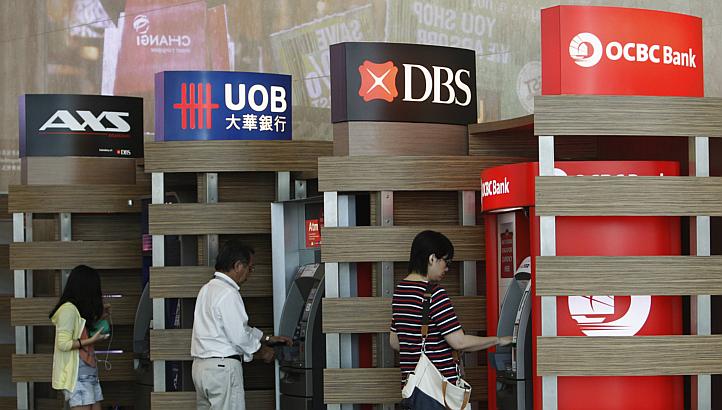
    DBS will progressively close 29 DBS/POSB branches until 4 May, starting with DBS Marina Bay Sands on 7 April, followed by POSB Newton and POSB Square 2 on 9 April. The remaining 28 branches that stay open will continue to operate regular banking hours but will reserve its first hour of operation for vulnerable customers like the elderly.

    The bank is also closing all DBS Treasures and DBS Treasures Private Client centers from 9 April to 4 May. Safe-deposit box access at DBS/POSB branches and DBS Treasures Centre will be available on Wednesdays by appointment. Full SME banking services will be available at branches in areas with higher trade and SME footfall. In addition, trade counters at Marina Bay Financial Centre, Jurong Gateway and Towner Road will also remain open, the bank said.

    OCBC Bank will close 22 of its 46 branches from 9 April to 4 May. Among the 24 branches that remain open are the 19 that offer Sunday banking services, as well as the five that offer safe deposit box services, with no changes to their banking hours. Its Trade Service Centres at OCBC Centre South and OCBC Tampines Centre 2 remain open.

    The bank said it has seen a 35-percent uptick in customers using digital solutions for their banking needs during this period and urged more to use its mobile and Internet banking platforms to minimize the need to visit bank branches.

    In a statement released on Friday, UOB said it «remain[s] committed to providing the banking services that are essential to them during these trying times.»

    The bank is expected to announce later today the details of branches that will remain open during this time.

    Standard Chartered is closing half of its 16 branches, while Maybank has closed six of its 15 branches. Seven of HSBC’s 13 branches in Singapore will shut, while Citi has closed eight branches, with its remaining locations operating revised hours, including a dedicated hour of vulnerable customers.

  • Australian Banks Launch Small Biz Relief Package

    Australian Banks Launch Small Biz Relief Package

    In the midst of an ongoing outbreak, Australian lenders help lighten the load for affected small businesses which are estimated to house 5 million workers in the country.

    The relief package will apply to more than A$100 billion of existing small business loans and provides a 6-month deferral of loan payments for those affected by the coronavirus, according to the Australian Banking Association. This follows recent collaboration between banks, the Australian treasurer and government to identify support measures.

    This could put as much as $4.6 billion back into the pockets of small businesses as they battle through these difficult times,» said the association’s CEO Anna Bligh in a statement. This is a multi-billion-dollar lifeline for small businesses when they need it most, to help keep the doors open and keep people in jobs.

    In a relatively rare scenario, banks globally have an opportunity to play the role of financial rescuer after the last crisis when large parts of the industry benefited from taxpayer-backed bailouts. Outside of Australia, for example, Swiss financial giant Credit Suisse’s chief executive had suggested co-establishing a lending fund targeting small businesses in the country alongside fellow giant UBS.

    While this is first and foremost a health crisis, this pandemic has begun to have serious impacts across the economy, with small businesses beginning to feel the devastating effects, Bligh added. Australia’s banks have supported the country through difficult times in the past and continue to do so.

  • Singapore Bank Shares Offer Value

    Singapore Bank Shares Offer Value

    Shares of Singapore banks offer good value now that they have fallen by 26 percent year-to-date. With better capital positions as compared to during the global financial crisis, they have the capacity to retain dividend payout.

    Even as the coronavirus outbreak drags Singapore into negative growth territories, Singapore banks are in better shape today as compared to the period during the global financial crisis (GFC). The higher capital ratios, high provisioning levels, and geographic diversity should serve to limit further falls in the share prices of the three local banks, said analysts.

    We expect a rapid rise in non-performing loans (NPLs) and credit charges may surpass levels seen during the 2017 O&M crisis. However, unlike past crises, these banks are starting with strong capital ratios, high provisioning levels, and wider geographic diversity. Unprecedented, coordinated fiscal and monetary stimulus efforts by governments focused on liquidity support should also provide downside support, in our view, wrote Thilan Wickramasinghe, an analyst with Maybank Kim-Eng on Wednesday.

    The three pressures on banks’ earnings include the COVID-19 pandemic, interest rate cuts, as well as the oil price war that continues. The coronavirus pandemic would affect small-medium enterprises most, followed by housing loans if employment levels fall. However, there are no indications of a rapid fall in asset qualities yet, wrote Tay Wee Kuang, an analyst with Philip Securities in a research note on Thursday.

    The oil price war reminiscent of the 2016 oil price meltdown will have a limited impact on asset quality because all three banks have taken steps to clean up their oil and gas loan books in prior periods by reducing exposures in the industry and accounting for necessary provisions. Banks’ exposure to the oil and gas sector has dwindled to below 2 percent of their loan books.

    Moreover, various fiscal and monetary stimulus rolled out by governments worldwide should provide cushions to the downside. For instance, Singapore has unveiled a fiscal boost to tackle the Covid-19 virus outbreak with an S$6.4 billion package targeted at epidemic containment, as well as support for industries that are directly impacted. Initiatives include Co-Funding schemes for affected sector SMEs, rebates on corporate and property tax, cash grants for retaining local employees and targeted assistance to defray business costs and other concessions for the aviation and maritime sector.

    The Malaysian government also unveiled its Covid-19 impact-targeting 20 billion ringgit Economic Stimulus Package late February, modeled after responses during the SARS crisis. These programs are primarily focused on ensuring liquidity flow to impacted SMEs and individuals, aimed at helping them weather uncertainty and keep their debt obligations current and staff employed. These should provide significant downside support in mitigating defaults and credit risks, in our view, wrote Wickramasinghe.

    The sector is now trading at 0.8 times forward price-to-book, or two standard deviations below mean. Despite aggressive cuts to earnings per share and target prices, the banks offer significant value, in our view. While valuations are about 30 percent above GFC troughs, we believe the sector is significantly different from then and so is its risk profile, wrote Wickramasinghe, who has upgraded OCBC on potential market share gains in the region.

    Meanwhile, the sector provides a highly visible dividend yield of 6.4 percent, 136 basis points higher than peers in Southeast Asia. The fact that the three banks’ Common equity tier 1 ratios are above 14 percent- comfortably above the regulated 10.5 percent set out in the Basel III accord – means that banks are unlikely to trim dividends, notes Tay.

    The last dividend cut undertaken by banks was during the GFC. However, the current situation is not comparable to the GFC, where the global financial system collapsed when the credit quality of the banks came under pressure, wrote Tay.

  • Singapore Banks Buy Back Shares

    Singapore Banks Buy Back Shares

    Singapore banks were among 32 primary-listed stocks conducting share buybacks over the five sessions ended 12 March 12, with a total consideration of S$169.6 million.

    DBS Group Holdings led the consideration tally, with 6.65 million shares bought back at an average price of S$21.272 per share, according to a report by the Singapore Stock Exchange (SGX).

    As of March 12, the lender had bought back 0.5492 percent of its issued shares (excluding treasury shares) as of the approval date of the current buyback mandate.

    For the five trading sessions spanning March 6 to 12, the Straits Times Index (STI) declined 11.3 percent with the Nikkei 225 Index, Hang Seng Index and S&P/ASX 200 Index averaging a 12.5 percent decline.

    In the same period, UOB and OCBC bought back 360,000 and 600,000 shares respectively, amounting to S$7.8 million and S$5.7 million respectively.

  • APAC Banks Brace for Hiring Freeze

    APAC Banks Brace for Hiring Freeze

    Hiring has slowed down significantly at banks in Asia-Pacific, according to job post data, and a prolonged freeze could last the entire year from the effects on the ongoing pandemic.

    At the beginning of March, the number of listed banking jobs closed surged to 1,200 per weak – more than the average of 500 – while new job posts fell to less than 300, according to GlobalData. The data provider noted that freezes could last for the full year even if the pandemic is moderated and contained this month and April.

    Clearly, the appetite for new personnel has dried up,» said Andrew Haslip, APAC head of financial services content at GlobalData, in a release. With major banks in the region facing a hit to revenue from the drop off in consumers’ demand for credit and even desire to consume more than bulk purchases of toilet paper; most banks are reluctant to take on new staff.

    Haslip forecasts that Asia Pacific will lead the hiring slowdown this month before similar trends will be witnessed across the world next month.

    Wealth managers in Asia are expected to miss client inflow targets en masse and register «heavy losses» on invested assets. But one of the bright spots GlobalData highlights is digital banking where automation capabilities require less physical interaction, though it noted that the area would also face a slowdown in hiring for specialized talent.

    Being able to extend credit and payment services without having to involve a person directly will also be a boon in a time when many bank employees are likely to be ill or self-isolating, Haslip added.

  • Standard Chartered Launches Singapore-Based Venture

    Standard Chartered Launches Singapore-Based Venture

    The bank is partnering with Australia-based start-up Assembly Payments to deliver next-generation payment solutions to merchants globally.

    Standard Chartered is launching a new payments venture to be headquartered in Singapore as part of a strategic partnership with Assembly Payments, the two parties announced on Tuesday.

    The joint venture will offer merchants globally a digital payment platform to manage transactions across multiple payment types and countries, including online, mobile and point-of-sale, digital wallets, debit and credit cards and real-time payments, a joint statement said.

    As the world moves towards platform-based e-commerce, the need for the next generation of tools to empower merchants and enable financial inclusion continues to grow, Alex Manson, head of SC Ventures, the bank’s innovation, fintech investment and ventures arm, said.

    The payments venture is the latest in a series of new business models the bank has launched recently, which include a strategic joint venture with PCCW, HKT and Ctrip Finance in Hong Kong to deliver a new standalone digital retail bank, virtual banking partnerships in Taiwan and Korea and SME-focused financial and business services platform Solv in India.

    Assembly, which already offers these services in its home market, said the partnership better positions it to capture a larger slice of the $29 trillion international payments market and exponentially grow its business.

    Since its founding in 2013, Assembly has already raised $70 million in equity financing. Its rapid growth has been spurred on by the introduction of the country’s fast payment network, the New Payments Platform.


  • Banks Inform Staff To Work From Home

    Banks Inform Staff To Work From Home

    At least two banks have advised their staff to work from home for 14 days if they have conducted personal or business travel to China recently. The measures were meant to safeguard staff and client interests.

    Credit Suisse staff who visited the mainland in the last two weeks should discuss with their division manager and HR before returning to work after the 14-day office ban, according to a memo seen by «Bloomberg»(behind paywall).

    Any person with fever or flu-like symptoms is required to work from home until a doctor certifies the person is well enough to return while non-essential business travel will also be curbed, the memo added.

    The bank has not responded to requests for comment on Monday as it was a public holiday. The Swiss-based bank had more than 45,000 employees worldwide at the end of 2018, according to its website. Hong Kong is its regional hub.

    In the memo, the bank said the measures were «to safeguard our staff and clients» after Hong Kong’s decision Saturday to raise its response level to an emergency to contain the spread of the novel coronavirus, which is believed to have an incubation period of around 14 days. The bank’s memo added that it would be commencing temperature checks at its main offices at the International Commerce Center tower.

    Citibank in Hong Kong said its employees were being asked to report any personal travel to Wuhan or the surrounding area and to work from home for two weeks after returning, according to a spokeswoman. Business travel to the area was restricted earlier, she added.

    The coronavirus began spreading in early December in Wuhan, in central China and has since spread around the country and abroad.

  • Lending, insurance boost 2020 bank profits

    Lending, insurance boost 2020 bank profits

    Commercial banks could see their pretax profit grow by 22.5 percent this year with a rising income from lending and insurance.

    Major state-owned Vietcombank is expected to lead with an after-tax profit of VND28.98 trillion ($1.25 billion), up 24.6 percent year-on-year, according to analysts at SSI Securities Corporation (SSI).

    It will be followed by BIDV, Techcombank, VPBank and Miltary Bank, with growth rates between 12.7 and 32.4 percent.

    The 22.5 percent growth among commercial banks, roughly the same as last year’s 23 percent estimation, will derive from rising net interest margins, increasing income from fees and bancassurance, or the sale of insurance products via banks, SSI said.

    Personal lending, especially at state-owned banks like BIDV, Vietinbank and Vietcombank, will additionally drive growth.

    Retail lending accounted for 32.2 percent of total credit among the 12 largest listed banks in 2017, but rose to 40 percent in Q3 last year.

    SSI said that credit growth could be up to 13.5 percent this year against a government target of 14 percent.

    “This growth rate comes with tightened credit regulations and an expanding corporate bond market with the increasing public distribution.”

    Although credit remains the top money source, companies have been issuing more bonds. Last year, corporate bonds issuance rose by 25 percent to VND280.14 trillion ($12.12 billion), according to SSI data.

    Banks meeting the capital adequacy ratio of Basel II, an international business standard, are expected to enjoy higher credit growth, as shown by the average 13.8 percent credit growth of Basel II banks in the first nine months of 2019, proving higher than the industry average of 9.54 percent, it was added.

    “We expect this situation to persist in 2020, as banks reaching Basel II standards would receive more credit limit and earn more market share compared to competitors.”

    Banks accounted for half of the 10 most profitable listed companies in Vietnam in the first nine months last year with pretax profits of VND110 trillion ($4.7 billion).

  • Wuhan Coronavirus Prompts Banks to Issue Travel Warnings

    Wuhan Coronavirus Prompts Banks to Issue Travel Warnings

    Concerns about the coronavirus outbreak originating from Wuhan are rapidly escalating this week with banks joining in to issue warnings against travel and ready their business continuity plans.

    The outbreak has so far infected more than 500 individuals globally and has reportedly claimed 17 lives thus far. Following President Xi Jinping’s announcement this week saying that it was a critical matter to combat the new virus, at least three cities including Wuhan have been on lockdown to control the spread of the epidemic.

    Meanwhile, banks are also issuing their own notices to address the matter. Standard Chartered, which has a branch in Wuhan, said it was monitoring the situation closely and is advising its staff to defer all business travel to the infected city until February 3 when it will consider whether a further suspension is warranted. HSBC, which experienced its own unrelated flu scare this week, issued its own travel advisory for Wuhan and said it had improved cleaning at its premises.

    UBS, Citi and J.P. Morgan reportedly told staff they are closely monitoring the situation but had not restricted travel.

  • Banks Talk Wuhan Virus

    Banks Talk Wuhan Virus

    Global banks discuss their views about the Chinese government’s response to the coronavirus outbreak as well as its potential near-term effect on markets.

    The coronavirus outbreak continues to escalate, having afflicted more than 500 people worldwide. 18 deaths have been confirmed including the first case outside of Wuhan earlier today. Chinese authorities have named it a top national priority to tackle the matter with a commentary issued by the Central Political and Legal Affairs Commission saying that any official deliberately hiding or delaying related information will be «nailed to the pillar of shame for eternity.

    Thus far, China’s response has yielded applaud from the banking sector which highlighted greater proactivity and transparency, especially when compared to the SARS outbreak of 2003.

    Global bank’s positive view towards China’s recent response was made in contrast to its previous efforts during the SARS outbreak which infected more than 8,000 people and claimed the lives of nearly 800. At the time, U.N.’s global health body had criticized China’s management of the outbreak, specifically citing the lack of transparency as a major issue.

    History does not repeat itself, but it rhymes. More importantly, China has learned lessons from Sars,» according to a research note by Wang Tao, head of Asia economic research and chief China economist at UBS’s investment banking arm. The government is now working much more proactively and transparently to contain the Wuhan pneumonia than it did with Sars, and China’s public health system is now more experienced than before as well.

    The evolving situation has brought some uncertainty to China’s near term growth outlook. However, Chinese authorities have been more responsive and transparent this time,» said according to a note from BNP Paribas Wealth Management’s chief investment office. With faster medical and public health measures being taken to limit transmission and to develop treatments, the overall impact may be less severe than SARS but it is still very uncertain at this stage.

    China’s retail sector will undoubtedly be impacted by the ongoing outbreak but newly emerging consumption trends could act as tailwinds to offset losses.

    Wendy Liu, a China strategist from UBS’s investment bank, said that hotel operators will be significantly affected while retailing, parks and movie theaters will see less seasonality-driven benefits from Chinese New Year. Food deliveries, video streaming services and e-commerce could marginally benefit in the near term, she added.

    The consumption pattern in China has changed quite dramatically over the past 20 years,» said Goldman Sachs’s chief equity strategist Kinger Lau. Definitely, people travel more, but a lot more consumption activities are now being conducted online. You don’t really have to go out to spend money. You can just do it online.

    According to BNP Paribas, the life cycle of SARS was considerably short-lived at seven months and led to limited economic and market disruption. China grew just 3.5 percent in 2Q03 after posting 12 percent growth in 1Q03 but ultimately closed 2003 with a strong 10 percent increase. The Hang Seng Index and MSCI China also experienced sharp drops during the period by had recovered all losses by 2H03.

    But whether the current virus will follow a similar trajectory is a question mark,» the bank said.

    Similarly, Goldman Sach’s chief APAC equity strategist Timothy Moe underlined greater global connectivity compared to 2003 as a risk factor for transmission making the matter all the more unpredictable.

    What makes this concerning and hard to handicap is that nobody really knows exactly how this is going to turn out, which really is why it’s that proverbial black swan,» Moe said. There certainly are reasons to be concerned, just citing the already published facts, which is that it’s now seen to be communicable between humans. We’ve seen how these things can propagate.
  • Bangkok Bank Snaps Up Bank Permata

    Bangkok Bank Snaps Up Bank Permata

    Bangkok Bank emerges as the buyer of PT Bank Permata after Singapore’s DBS and OCBC reportedly backed out from bidding. Thailand’s second-largest lender Bangkok Bank bought Permata for about $2.7 billion to obtain a near 90 percent stake from Standard Chartered and PT Astra. The deal, which was advised by Morgan Stanley, was valued at 1.77 times Permata’s book value.

    According to a Bangkok Bank release, it found the acquisition attractive due to Permata’s «leading retail deposit franchise and best-in-class digital capabilities» with more than 300 branches in 60 cities in Indonesia.

    According to a filing, the acquisition is part of Bangkok Bank’s strategic transformation to become a regional lender, describing Indonesia as a «highly attractive and fast-growing market”.

    International expansion is our key strategy,» said Piti Sithi-Amnuai, chairman of Bangkok Bank. «Indonesia, in particular, is a key focus for us, as it is one of the fastest-growing major economies in Asia with highly attractive macroeconomic fundamentals, favorable demographics, and increasing ASEAN regional integration.

    Standard Chartered had signaled its intention to dispose of the stake in February, as it was no longer core to its strategy, and the funds raised from the sales could be used to further its share repurchase program which has already returned $1 billion.

  • Banks Unprepared for Cyberattacks Risk More Than Half of Profits in Singapore

    Banks Unprepared for Cyberattacks Risk More Than Half of Profits in Singapore

    Thanks that lack measures to withstand cyberattacks risk up to 65 percent of their quarterly profits, according to a recent stress test study by the Monetary Authority of Singapore.

    Direct and indirect impact from cyberattacks against banks are estimated to cause losses of 35-65 percent and 20-50 percent of quarterly profits, respectively. According to the study, profit declines are attributable to reputational impact, funds were stolen, legal charges and marketing expenses.

    The stress tests revealed likely vulnerabilities from theft and disruption-related cyberattacks. Examples of theft-related attacks include hacking of ATMs to dispense cash and bank payment systems. Disruption-related impact includes denial-of-service (DoS) attacks to prevent access to the internet and mobile banking apps or disruption to internal payment processing systems. Damage or corruption of client data was also cited as another example of a cyberattack.

    The aforementioned figures reflect costs without contingency measures and when included, risks are significantly improved with banks expected to lose quarterly profits of 20-35 percent and 12-25 percent from direct and indirect impact, respectively. In order to reduce risks from cyberattacks, banks have adopted multiplied layers of security controls to protect data and funds; added DoS mitigation measures such as clean pipe services; and backed up critical data regularly.

    In-house measures aside, it is also heeding greater attention to third-party service providers. Periodic audits are made to verify the ongoing effectiveness of existing security and business continuity measures are in place for a switch to an alternative provider or to in-house operations in the event of a disruption.

  • Lower Margins Ahead For Singapore Banks

    Lower Margins Ahead For Singapore Banks

    Singapore’s three local banks are likely to experience margin squeeze in the third quarter as the Singapore Inter-bank Offered Rate heads south, following in the footsteps of Federal Reserve’s rate movement.  Analysts are also watching non-performing loan ratios amidst a weaker global economic environment.

    Even as loan growth is expected to remain steady, Singapore’s local banks – DBS, UOB, OCBC – could be seeing lower margins ahead caused by lower Singapore Inter-bank Offered Rate (Sibor), analysts say. The Singapore trio is due to report their Q3 results in November.

    Net interest margins (NIMs) for the banks are likely to see limited growth, if any, with the bulk of domestic mortgage repricing behind them, Maybank Kim Eng analyst Thilan Wickrama-singhe said in a report.

    DBS’s earnings are known to be the most sensitive to changes in the Sibor compared with its peers, said Wickramasinghe. He points out that the 12 basis point (bps) drop in Sibor since August following the interest rate cuts by the Fed may affect DBS’s NIMs more adversely, on the back of its larger, slow-to-reprice current and savings account funding base.

    UOB will kick off the results season for the three banks, announcing its results on November 1, followed by OCBC on November 5. DBS will cap off the earnings season for banks on November 11.

    RHB analyst Leng Seng Choon is cautious about OCBC and DBS’s loan exposure to Greater China, as there is a risk of higher Non-Performing-Loans (NPLs), given the U.S. -China trade war that is affecting China’s economic growth. According to brokerage, 29.9 percent of DBS’s loans are to Greater China, compared to OCBC’s 24.2 percent and UOB’s 15.7 percent.

    In a similar tone, DBS analyst Lim Rui Wen flagged that UOB is preferred for its smallest exposure to Greater China among the local banks, as well as the lowest sensitivity to falling interest rates in terms of NIMs.

    Even as net interest margins are expected to be softer, non-interest income is likely to see support from wealth management, analysts observe.

    New private banking inflows from North Asia should drive stronger non-interest income for DBS and OCBC, which in turn is likely to support positive earnings momentum, said the Maybank Kim Eng analyst.

  • HSBC Reviewing Bank’s Equities Team

    HSBC Reviewing Bank’s Equities Team

    HSBC will be reviewing its global equities sales and trading business as it tries to slash costs under Noel Quinn, raising the chances of more job cuts.

    With HSBC’s interim chief Noel Quinn looking to ax 10,000 jobs in Europe, the bank may look to sell or shut down its equities sales and trading business. Some of these headcount cuts could come from the sale of its French retail bank.

    Equity desks are becoming more automated — it wouldn’t be a shock if they take more bodies out,» said an investment banker, who was quoted on Sunday. Global equities revenues were $1.2bn (£930m) last year, representing about 2 percent of group revenues.

    Any job cuts implemented as part of the latest plan would come on top of 4,700 redundancies that HSBC recently announced, according to a report. The lender is struggling with thinning profits amid a challenging environment characterized by low-interest rates, trade conflicts, and Brexit uncertainty.  The bank’s global headcount stands at about 238,000.

    The planned cuts mark the lender’s most ambitious attempt to rein in costs in years, as it would result in a substantial reduction in HSBC’s current headcount. Observers also see it as a move by Quinn to make his mark on the bank, post the exit of John Flint, the previous chief.

    We’ve known for years that we need to do something about our cost base, the largest component of which is people — now we are finally grasping the nettle, said two sources quoted in the Financial Times article.

    There’s some very hard modeling going on. We are asking why we have so many people in Europe when we’ve got double-digit returns in parts of Asia, they added.

    Despite heavy cuts, the London-based bank with a strong franchise in Asia wants to hire more than 600 staff by the end of 2022 for the business in the Asia-Pacific region, said Kevin Martin, regional head of retail banking and wealth management who was quoted in «Bloomberg».