Tag: Business

  • India’s WoodenStreet eyes 15 stores by end of 2019

    India’s WoodenStreet eyes 15 stores by end of 2019

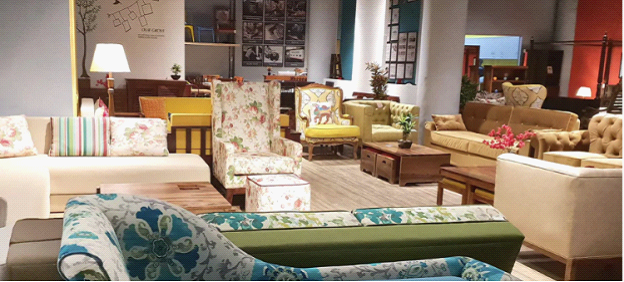
    In 2016, WoodenStreet entered the retail market with its first brick-and-mortar experience store in Bangalore. Established in 2015 as an online platform for quality custom furniture, WoodenStreet expanded its reach by opening 2 stores in 2017 and 9 stores in 2018, totalling to 12 experience stores. What’s next? 15 new experience stores by the end of 2019.

    Lokendra Ranawat, CEO, WoodenStreet expressed his aim to bring customization and quality a step closer to everyone’s home. “It’s not just about an online presence”, he elaborates, “but getting down there and interacting with our customers makes buying furniture a more personal experience, as it should be. We want people to not just visualize, but also feel the quality of furniture that we offer. We want them to see the limitless configurations, combinations and customization possibilities that they can actually get for themselves.”

    2018 was a long but fruitful year for WoodenStreet. Mumbai and Jaipur stores have been established in the last quarters of 2017, and the overwhelming response from these two stores, combined with a financial push from US$ 1 million Series A funding from RVCF, hardened the resolve to expand into further cities. Hence came the first stores of Ahmedabad, Hyderabad, Chennai, Pune, Noida, Gurgaon and Indore, with two more stores in Bangalore and Jaipur. This set up a large Omnichannel network, enabling greater penetration into the furniture market with a promise of quality and flexibility.

    “Last year was challenging but fun.”, says Virendra Ranawat, COO of WoodenStreet.com, commenting on the rocking journey. “But this hasn’t stopped us. We want to ensure that 2019 sees the addition of 15 more stores to our ever-growing roster. Which means that by the end of this year, we’ll have 27 brick-and-mortar stores in total.”

    WoodenStreet.com is a custom furniture store, with more than 30 delivery hubs and 12 experience stores spread across India, bringing quality solid wood furniture and the flexibility of customization closer to people and their dream of setting up a home flavoured to their tastes.

  • Alibaba Says China’s Slowdown Isn’t Hurting It All That Much

    Alibaba Says China’s Slowdown Isn’t Hurting It All That Much

    Alibaba Group VC Joseph Tsai says the firm is unperturbed by China’s economic slowdown. Quoted in a Bloomberg report, Tsai said Alibaba is “delinked” from a Chinese economy in which more and more business are moving online because “we’re in e-commerce and we’re digitising the whole sector”.

    He added that Alibaba’s growth is expected to continue to outpace the economy in general, as digital commerce grows at faster rates compared with more traditional retail business.

    The comments were made at the Goldman Sachs Group technology conference in San Francisco.

    According to the Bloomberg article, China’s economy expanded 6.4 per cent in the final three months of last year compared with a year earlier. Alibaba’s takings during the period rose 41 per cent to RMB117.3 billion (US$17.3 billion), representing its slowest pace of growth in more than two years. Its continued positive performance is buoyed by excursions into new business territories such as cloud services and entertainment, while assisting physical retailers with modernisation drives.

    According to the Alibaba Group VC, the situation is comparable to Amazon’s in terms of its consistent double-digit sales growth in the face of slowing economic growth within the US.

  • Japanese megastore Don Quijote to open its first Hong Kong store

    Japanese megastore Don Quijote to open its first Hong Kong store

    Don Quijote Hong Kong is set to make its debut in the middle of this year. The Japanese discount merchandise retailer – which has three stores in Singapore and also plans to make its Thai debut in Bangkok this year – has leased a 15,000sqft space in the basement of Mira Place Two on Nathan Road in Tsim Sha Tsui.

    In Japan, most of the company’s 160 discount stores trade 24 hours, but this is unlikely in Hong Kong.

    Helen Mak, senior director and head of retail services at Knight Frank said the basement location would appeal to local consumers and tourists.

    “Don Quijote’s Tsim Sha Tsui location can attract mainland tourists who travel via the high-speed rail and mega bridge. Instead of shopping for luxury items, these same-day visitors usually spend money on cosmetics, health care items and food, products that are most celebrated at [Don Quijote].”

    According to the SCMP, Don Quijote will pay HK$1 million (US$127,000) a month for the space, with the fitout expected to be complete by July.

    Besides its general merchandise and fresh food offer, the Don Quijote Hong Kong store will feature a cafe.

  • Swiggy India now opens Stores to deliver everyday needs

    Swiggy India now opens Stores to deliver everyday needs

    India’s food ordering and delivery platform Swiggy Tuesday said it has launched ‘Swiggy Stores’ moving beyond its core food delivery segment to provide access to consumers items across multiple categories. The company will deliver from these stores “in categories such as fruits and vegetables, kiranas and supermarkets, florists, baby care, health and supplements among others,” Swiggy said in a statement.

    With the launch of these stores, Swiggy wants to become the one-stop delivery app that enables access to every store in the city, it added.

    “Today’s announcement takes Swiggy to categories beyond food, where we hope to deliver the same level of delightful experiences to consumers for their everyday needs,” Sriharsha Majety, CEO, Swiggy said.

    It is the first milestone in Swiggy’s vision to elevate the quality of life for the urban consumer by offering unparalleled convenience, he added.

    Swiggy Stores will give its merchant-partners unmatched access to a combination of core assets to reach more existing and new customers, the statement said.

    For the delivery partners this will give them access to an additional avenue for income, it added.

    Founded in 2014, Swiggy currently connects consumers to over 60,000 restaurant partners across more than 80 cities.

  • Renault Korea still at odds with union

    Renault Korea still at odds with union

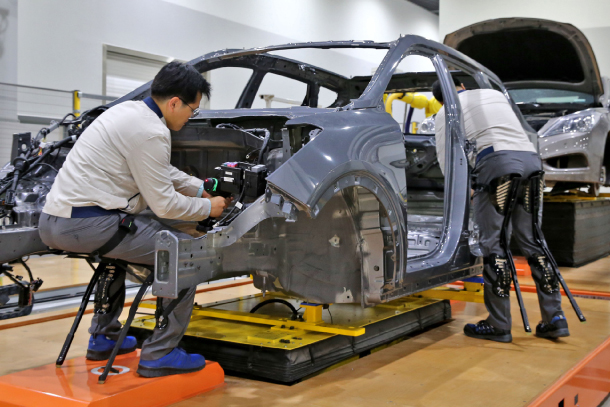
    Renault Samsung Motors and its labor union once again failed to reach a consensus on 2018 wages after negotiations fell through for a 14th time on Tuesday. Renault Samsung is the only domestic automaker that has still not clinched a wage deal for last year. A source from the automaker said the Tuesday talks lasted for about an hour and a half after the meeting began at 2 p.m. at Renault Samsung’s Busan factory, but ended in vain.

    The major issue of disagreement is over whether to raise the base pay.

    The labor union has been requesting a 100,667 won ($89.51) raise in base pay. The company has refused, citing bad timing, and offered incentives if the base pay is maintained instead.

    The wage deal is very important for both the company and the labor union, as it comes at a crucial time.

    While Renault Samsung’s Busan factory has been producing Nissan’s Rogue compact crossover on consignment, the contract ends in September.

    The Korean unit of Renault needs to negotiate with the French headquarters to win follow-up models to produce in Busan. As Rogue production accounts for nearly half the workload at the Busan factory, it could be seriously harmed if the deal falls through and may even end up following in the footsteps of GM Korea’s Gunsan factory in North Jeolla, which closed last year.

    The company claims raising the base pay at this time would negatively affect negotiations with the headquarters.

    The labor union, however, responded to the company with partial strikes. From October last year through last month, the labor union has gone on strike 28 times at the Busan factory. The labor union claims it deserves a base pay raise considering its wage is about 85 percent that of workers at Hyundai Motor factories and its productivity has been high.

    In response to the strikes, Jose Vicente de Los Mozos Obispo, Deputy Alliance Executive Vice President, Manufacturing & Supply Chain at Renault, sent a video message to employees at the Korean unit earlier this month, warning the Renault-Nissan-Mitsubishi Alliance cannot assign new models to the factory if the strikes continue. Renault considers labor cost, production cost and supply stability when allocating new models to factories.

    The two parties have yet to hammer out their differences in the negotiations that began in June last year.

    The company and the labor union will have another round of negotiations soon, though the exact date was not released Tuesday.

    Renault Samsung is in a hurry to finalize the deal as it is running out of time to win new models for the Busan factory before September. The factory needs several months of preparation to adjust production lines to produce a new model.

  • Blockchain in the business of fashion

    Blockchain in the business of fashion

    Fashion brands are finally beginning to take note of the rising consumer awareness on traceability and sustainability particularly driven by the millenniums. These evolving consumers are deep diving into knowing the history of the apparels before they buy – the story behind each garment and where and how are they manufactured.

    Moreover, mere claims or information is not enough to be trustworthy unless backed by detailed sequence of data on the complete value chain necessitated in wake of some or other global brand getting exposed of unethical sourcing or not being sustainable.

    This is making fashion companies to attempt towards transforming their business models focused on delivering transparency of data – both in backend and frontend by employing the emerging technologies.

    There has been a global buzz around new technologies like Artificial Intelligence, Augmented Reality, Virtual Reality and Blockchain for some time now and the global Fashion industry has also moved in the last few years to adopt some of these in ways it firmly resisted for a long time. However, blockchain applications haven’t really seen much adoption by fashion organisations.

    So, What is Blockchain?

    According to Digital Trends, blockchain is a database that’s validated by a wider community, rather than a central authority. It’s a collection of records that a crowd oversees and maintains, rather than relying on a single entity, like a bank or government, which most likely hosts data on a particular server.

    Each ‘block’ represents a number of transactional records, and the ‘chain’ component links them all together with a hash function. As records are created, they are confirmed by a distributed network of computers and paired up with the previous entry in the chain, thereby creating a chain of blocks, or a blockchain.

    Blockchain is the technology behind digital currencies like Bitcoin and involve cryptography while in a usability sense they are just shared database or digital ledgers that publicly show a record of transactions having happened. Every time a product changes hands, that information on change in custody is recorded by the user in the ledger and entry becomes linked to every other entry (or Block) and every other copy of the ledger is automatically synchronised via internet. The interconnection among all the blocks forms a chain and the complete application becomes the blockchain. The chain of custody on blockchain provides a record of the last party to gain custody of the product. So, blockchain means decentralised structure that provides security and transparency and thus making data trustworthy.

    In broader sense, blockchain is not just technology, its impact goes beyond the industry or the society for creating a fair, safe and more transparent fashion industry.

    Applicability into Fashion Business

    Blockchain applications are not only for tracking virtual payments and financial transactions but have wider applications in securely distributing other product and supply chain information including complete database at SKU level. In other words, blockchains may be understood as indexes of standardised information or in simple sense, these are community generated data maps by brand and product.

    Most promising application of blockchain in fashion industry could be in supply chain and inventory management. What blockchain technology can enable in the fashion business is uniform real-time access to updated product information supplied by brands, a universal pathway for retailers to immediately report back to suppliers on aspects like stock levels and customer feedback, the final consumer details and many more might come along once something like this new basic building block structure is in play. Distributed nature of blockchain technology makes it superior to other tracking technologies as here the records can’t be altered, destroyed or lost.

    Blockchains have merely begun transforming apparel supply chains through technology such as track-and trace and inventory management. But as other technologies like 3D printing and AI continue to advance, the fashion apparel industry may very well see much more dramatic changes in years to come.

    Greater transparency in fashion supply chains will create new incentives for companies to change the way they do business and even how they view themselves as an organisation. If so, adoption of blockchain is only the beginning as the fashion industry may be entering a new era with vastly different forms of production and consumption.

    Advantages of Blockchain in Fashion

    • Nowadays, one of the major trends in the fashion industry is sustainability and circular economy. Today’s consumers believe in fair trade practices and hence increasingly demanding transparency and want to know where the product is coming from not only in food but also in fashion.
    • Blockchain enables fashion companies to securely communicate to the public the complete product story (DNA) for each and every fashion garment. This includes comprehensive details on all stages of product life cycle starting from design inspiration, raw materials, manufacturing and distribution to the stores and also providing visibility of all stakeholders involved in the value chain to create traceability and transparency in true sense.
    • Blockchain applications allow customers to scan the tag and discover the history of every garment and thus help in improving the customer experience.
    • Global companies like Patagonia and Everlane have been successfully betting on sustainability and supply chain transparency as a distinct selling proposition enabling customers to identify their suppliers.
    • Authenticity of branded products can be verified by both retailers and consumers since branded garments pass through the blockchain steps and hence can be tracked. This could help reducing the counterfeiting and diverting out of authentic products. Every time a fashion item moves from one place to other, its tag or code gets scanned thus recording its location with the time stamp. Consumers would be able to scanthe item and trace its journey from raw material stage to their home and would be able to ascertain if the product is real or a counterfeit. Blockchain applications can help provide protection against the counterfeiting.
    • Blockchain applications also can help fashion companies who license their trademarks or designs in tracking the sales and working out the royalty payments. Similarly, it enables design houses to document design process steps and thus having the organic evidence of ownership on the designs.

    Blockchain helps create peer-to-peer and decentralised network that connects all stakeholders in the value chain (design houses, farmers, raw material suppliers, manufacturers, transporters, distributors, retail outlets, banks, consumers and other parties of the complete supply chain). Using decentralised system, all communication between these parties will be direct and will not pass through a specific central entity. Due to its decentralised nature, the blockchain platform will not have any single point of failure and will not rely on any single entity.

    Through this technology, there could be a possibility wherein everyone from the farmer to the textile mill to the garmenting factory can communicate directly with the brand that buys from them. And, even the consumer can interact directly with the brand/design house for co-creation or customisation of the garments, influencing pricing and even co-investing in the concept.

    Given all the advantages, blockchain clearly seems to be the future for fashion, however, to speed up the application, a single and comprehensive blockchain standard adopted by the fashion industry has to come in fast.

  • Skechers Takes Control of India Business

    Skechers Takes Control of India Business

    Skechers has bought its joint venture partner in Skechers India, taking the business inhouse. Skechers India has 223 retail locations across the country, 61 of which are company owned and operated, with the remainder franchised. Last year, Skechers saw double-digit increases in wholesale and retail sales and an 80 per cent increase in pairs sold, reaching 2.7 million.

    An additional 80 to 100 stores are planned for this year – of which about 20 will be company-owned.

    The dual-ownership model is expected to allow Skechers India to grow and expand its presence faster, the parent company said in a statement.

    “Skechers is still a relatively young brand in this country, having been in India for less than a decade, yet in the last five years, we have seen significant growth through our joint venture,” said Michael Greenberg, president of Skechers.

    “The substantial existing retail network of over 200 stores, a strong wholesale business and a recently launched e-commerce site is a solid foundation that we can build upon. These accomplishments, as well as opportunities we see to increase the brand’s exposure and drive sales, give us great optimism and confidence for the growth of Skechers in India.”

    Rahul Vira, CEO at Skechers South Asia, said the company was delighted to become a wholly-owned subsidiary of Skechers.

    “This development will enable us to amplify our growth plans, accelerate expansion of our operations and build a stronger network to further gain market share in India,” he said.

    Skechers India will continue operating under its existing structure and from its existing headquarters in Mumbai.

  • Vietnam’s Deputy PM wants Long Thanh airport construction to begin next year

    Vietnam’s Deputy PM wants Long Thanh airport construction to begin next year

    Construction of Long Thanh International Airport should begin next year with private funding prioritized, Deputy PM Trinh Dinh Dung has said. It has reached the highest level of priority since Saigon’s Tan Son Nhat has become overloaded, he said at a recent meeting. The deputy prime minister wanted the giant new airport in Dong Nai Province near HCMC to become an aviation hub for Southeast Asia.

    “If we get companies with deep pockets into the project, costs would surely be lower than using public funds or loans.”

    The Airports Corporation of Vietnam (ACV) recently proposed it should be the main investor.

    The ACV, which operates 21 airports in the country, said it could bring in the $1-1.5 billion needed for the first phase of the airport.

    It is currently working with the Ministry of Transport and Dong Nai authorities to acquire 1,800 hectares of land for the first phase.

    The ministry reported at the meeting that the consultancy consortium of the airport is now completing the preliminary design, which would be submitted next April.

    The ministry has instructed the consortium, JFV, to complete an environmental impact report by next month.

    JFV, comprising three Japanese, one French and two Vietnamese companies, will also need to submit a feasibility report for the airport by June.

    The Long Thanh International Airport, to be built in three phases over three decades, will become Vietnam’s largest airport.

    The first part is scheduled for completion in 2025 with a capacity of 25 million passengers a year. The next two phases will run from 2030 to 2035 and from 2040 to 2050.

    The total cost is estimated at $16 billion. Experts have warned that the cost could double every five years in case of delays.

    Once completed, the airport will have an annual capacity of 100 million passengers and five million tons of cargo.

    The tourism surge in Vietnam in recent years has resulted in a demand for upgrades to existing airports and construction of new ones.

    The country received 12.5 million air passengers last year, up 14.4 percent from 2017, according to the General Statistics Office.

  • India’s Zomato to convert 40 pc of delivery fleet into power-assisted bikes in 2 years

    India’s Zomato to convert 40 pc of delivery fleet into power-assisted bikes in 2 years

    Online restaurant guide and food ordering firm Zomato Monday said it is planning to convert 40 percent of its delivery fleet into power-assisted bikes in two years. Currently, the company has over 5,000 cyclists operating across 12 cities in India, with the majority of the fleet being in Delhi-NCR, Zomato said in a statement. The company provides food delivery services in 150 cities across the country with a last-mile delivery fleet of 1.5 lakh partners, it added.

    “We are working closely with our vendor partners to raise the scale of e-cycle adoption and aim to convert 40 percent of our fleet to power-assisted bikes within the next two years,” Mohit Gupta, CEO – Food Delivery Business, Zomato said.

    The company aims to build a future that creates more tangible value and leaves a lesser carbon footprint, he added.

  • All about Generation Z

    All about Generation Z

    People born in the year 2000 will turn 19 this year, entering university or finding jobs in a society struggling with slowing economic growth and a rapidly declining population. But as Korea adapts to a difficult economic environment, how will this new generation that prioritizes personal experiences and online communities fit in? The generation, known as Generation Z, follows the millennial generation, Generation Y, and refers to those born in the late ’90s and early 2000s.

    David Stillman, an expert and author on Generation Z, has named it as the first real global age group that has interacted with the world through mobile devices throughout their lives. He also said they are used to fierce competition after experiencing the realities of the global recession in the late 2000s.

    Korea’s Generation Z is unique in that it is the first to experience both low economic growth and a declining population.

    According to Statistics Korea, the number of births in the country decreased from 1 million in 1970 to 492,000 in 2002. The figure for last year is expected to be around 325,000.

    Economic growth has experienced a similar trajectory. While Korea recorded 8.9 percent in gross domestic product growth rate in 2000, the figure for 2018 was at 2.7 percent.

    The changing demographic toward smaller families, the shifting economic landscape and the availability of personalized technology have led Generation Z to place emphasis on personal standards and develop spending habits for products personalized for them.

    “They have a strong sense of individuality compared to past generations,” said Oh Jun-beom, a researcher at Hyundai Research Institute. “It is highly likely that they will become consumers with a lot of different needs.”

    A truly mobile generation

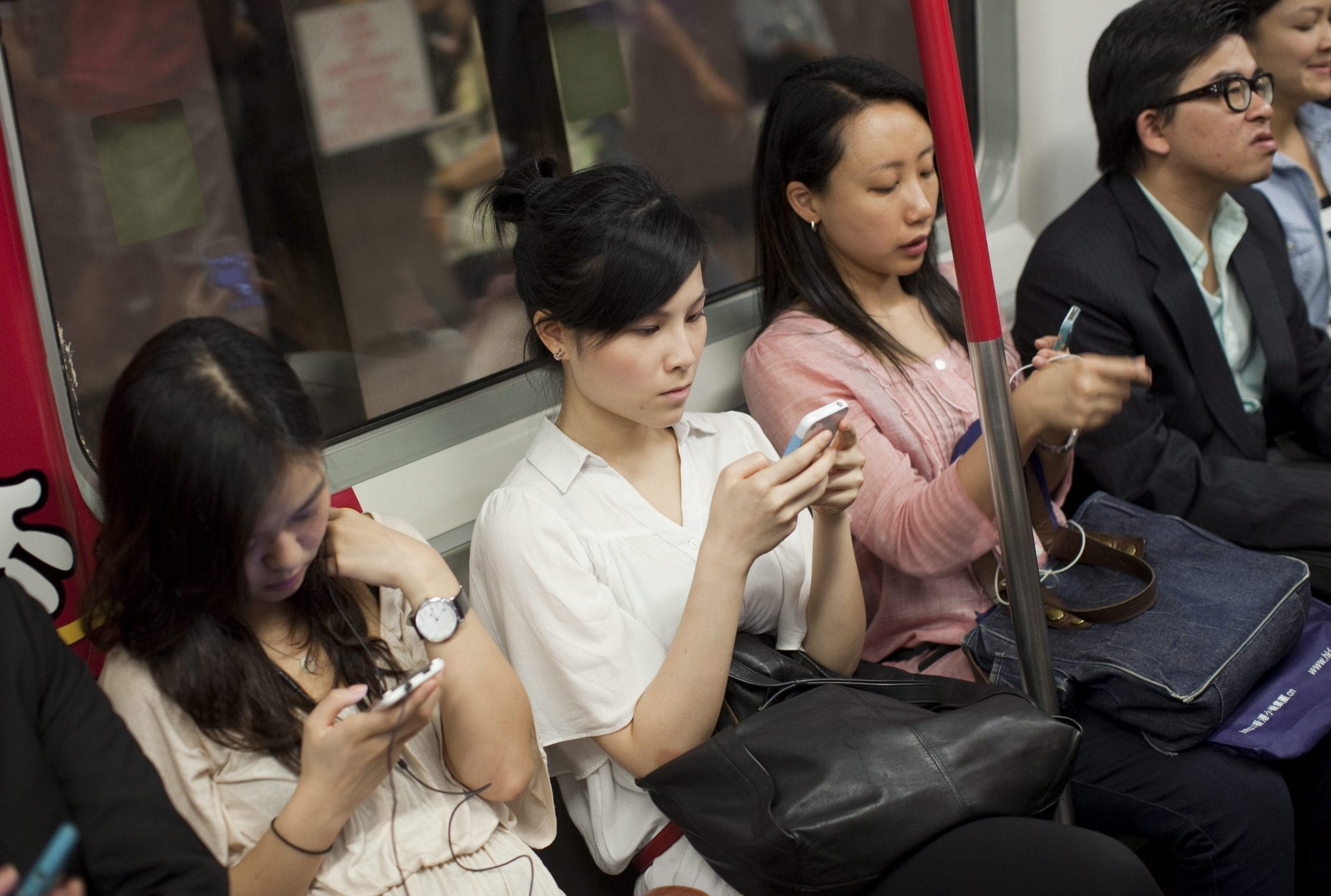
    Generation Z was raised with access to technology that connected them to the world. “If millennials are ‘digital natives’ of computers, Generation Z are ‘mobile natives’ used to smartphones,” said Hong Joo-eun, CEO of Ginger T Project, a consulting company specializing on non-profits.

    The technology allowed Generation Z to become more easily exposed to new and foreign cultures compared to previous generations. “Millennials were exposed to American TV shows by their experiences studying abroad,” said Hong. “Generation Z can watch YouTube videos from wherever they are.”

    According to the IBM Institute for Business Value’s survey on Generation Z, 74 percent of respondents said they spend their free time online, compared to 44 percent who said they spend time with their friends.

    The generation’s most preferred mobile device was the smartphone, at 75 percent. The preference for smartphones has led to a tendency to focus on personalized experiences.

    “Computers, largely used by previous generations, have a strong sense of co-ownership,” explained Shin Cheol-ho, CEO of mobile start-up OGQ. “On the other hand, smartphones have a sense of individualism.”

    Smartphones come with numerous apps and social media services, which Shin said allows users to create a completely individual experience, reflecting the generation’s preference for uniqueness.

    Korea’s Generation Z is different from Korea’s Generation Y, known for following trends en masse. Millennials played a leading role in the bench coat craze during their student years, with students wearing identical jackets as if they were uniforms advertised by famous celebrities.

    The new generation is different in that they are more accustomed to social media platforms and trust YouTube stars for product recommendations rather than advertisements by celebrities.

    With the rise of social media and content, the new generation also places importance on visual images.

    In a report by Park Hye-sook, a professor of design at Pyeongtaek University, the average concentration period of the new generation is eight seconds. It is more familiar with using emoticons and images rather than text. The study emphasized incorporating images in marketing to target young consumers.

    Very important babies

    Despite the slowing economy, Generation Z was brought up in an environment where their parents and grandparents went all out to invest in their upbringing. As they grew older, child-related industries in Korea developed a premium strategy to suit new demands.

    There are beauty parlors and skin care establishments that exclusively cater to children in the posh neighborhoods of Gangnam District in southern Seoul.

    Pharmaceutical company Yuhan even launched a premium skin care brand targeting young children in 2017.

    For baby products, imported goods have taken a market share of 64 percent in 2015 from around 20 percent in 2002.

    Expensive foreign children’s brands such as Rachel Riley, used by the British royal family, and Bonpoint, a premium French brand, have been widely popular in Korea.

    Meanwhile, local brands that have focused on mid-to-low range products have struggled.

    Agabang & Company, Korea’s first baby brand, was once the market leader, but its sales have decreased dramatically since the 2000s.

    “As more children are well cared for, almost like princes or princesses, sales for premium brands are on the rise each year,” explained Son Moon-guk, the head of the products division at Shinsegae Department Store.

    “There is a trend to emphasize distinction through premium or specialized services for younger children,” explained Hong. “The private education market will continue to grow separate from the government’s efforts to expand early childhood public education programs.”

    Through their upbringing, the Generation Z displays a strong sense of self-awareness and individualism, which reflects in their spending preferences.

    “Teenagers these days change their smartphone background image if someone else uses the same image, even if they really like it,” explained one mobile start-up executive.

    Living in the now

    Generation Z is different from previous generations as they place more importance on the present or the near future rather than long-term goals.

    Experts say the tendency to place importance on the present is based on the overall economic environment.

    “The 1997 Asian Financial Crisis changed the lives of Generation X [the parents of Generation Z],” said Shin Kwan-yeong, a professor of sociology at Chung-Ang University. “Generation Z seems to have come to the conclusion that it is meaningless to plan or save up for an uncertain future.”

    With the explosion of mobile technology and social media, Generation Z is familiar with the variety of apps and services that require effort to manage. This has led to a tendency to be strict in time management and prioritizing certain activities over others for the sake of efficiency.

    This trend is most noticeable in how the Generation Z does not spend much time on meals yet avoids fast food. Companies have picked up on the trend and Korea Yakult launched its meal kit business in 2017, targeting the younger generation with small, packaged dishes that were popular when they were children.

    With this focus on experience, Generation Z also avoids group tours.

    Airbnb launched its trip service, where the host provides local tours for visitors in 2016 and has found popularity among younger users.

    “It was neither a commercial nor generic trip,” said Kim Ye-seul, who used the service for a trip to Jeju in December. “It was very unique.”

    The retail industry is currently offering products that target Generation Z. Although they do not yet have purchasing power, younger consumers have a strong influence on their parents’ purchases based on their ability to get access to information on a wide variety of products for the best price.

    In December last year, the Ansan branch of the Lotte Department Store made a drastic change to its layout, placing a bar selling alcohol and drinks on the first floor instead of the usual cosmetics stores. The establishment installed a Muji store, which specializes in households goods with a no-logo policy, on the same floor and is popular with younger shoppers.

    “Retail companies can no longer ignore the preference of Generation Z on lifestyle and real experiences,” said Lee Seung-yun, a business professor at Konkuk University.

  • Trump says could extend March 1 China trade talks deadline

    Trump says could extend March 1 China trade talks deadline

    US President Donald Trump (pix) said Tuesday he would consider extending the deadline for a trade deal with China beyond March 1. “If we’re close to a deal, where we think we can make a real deal… I could see myself letting that slide for a little while,” Trump said at the White House. But he added: “Generally speaking I’m not inclined to do that.”

    The comments came as the third round of trade negotiations were set to resume in Beijing to avert more than doubling tariffs on $200 billion in Chinese imports.

    “China wants to make a deal very badly,” he said, and “things are going well” in the talks. And while no date has yet been agreed for a meeting with China’s President Xi Jinping, he said he expects that to happen “at some point.”

    The high-stakes dispute has raised concerns it could spill over into the global economy after Trump last year hit China with 25% punitive tariffs on $50 billion in goods, and then imposed 10% duties on another $200 billion in annual imports.

    The rate on all those imports are set to increase to 25% if no agreement is reached by March 1.

    China’s economy already has shown signs of slowing, while the trade war has shaken the confidence of US businesses, as retaliatory tariffs have raised prices and helped choke off a key export market.

    And Trump’s aggressive strategy has failed to produce a reduction in the US trade deficit with China, which he set as a primary goal.

    He repeated the incorrect statement that China is paying the duties, which in fact are paid by US companies importing goods.

    And economists say much of the intended effect of the duties in reducing imports, has been offset by the devaluation of China’s currency, which makes goods cheaper for importers.

  • Indonesian retail sales experiences rapid growth

    Indonesian retail sales experiences rapid growth

    Indonesian retail sales posted solid growth in December, according to a central bank survey. According to the data release, December sales grew at 7.7 per cent throughout the territory, a significantly faster rate than shown in figures from the year previous, are more than double November’s growth rate of 3.4 per cent.

    Sales throughout the month were predominantly underpinned by purchases of food, beverages and tobacco, alongside cultural and recreational goods.

    The survey predicts Indonesian retail sales will grow at a year-on-year rate of 4.8 per cent in January.

  • Today’s demanding consumers need tech-savvy food retailers: Walmart India CEO

    Today’s demanding consumers need tech-savvy food retailers: Walmart India CEO

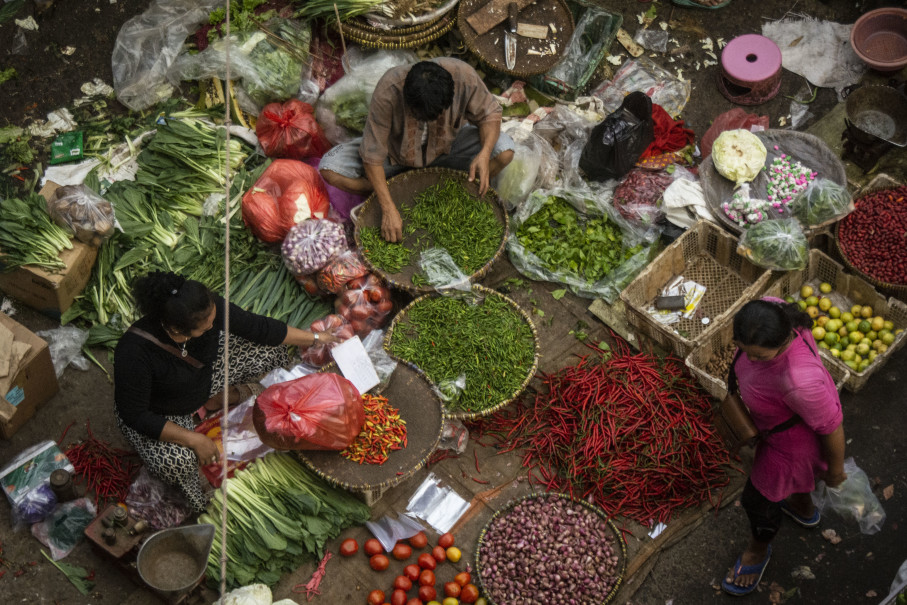
    Food is the largest retail consumption category in India, accounting for 33 percent of the overall consumption expenditure. It is also the largest opportunity area, especially in times when market dynamics are changing dramatically, and consumer behaviour is no longer generic.

    Indian consumers are becoming more and more indulgent with food (and vegetables), and they are experimenting with new and foreign cuisines; they are seeking variety and are open to international brands. They profess to enjoy foreign food and are ready to pay more for premium or organic food items. This is a huge shift from the last decade.

    The changes to Indian consumer behaviour are being driven by increasing incomes, younger profiles of consumers and growing access to the Internet.

    According to Krish Iyer, President & CEO, Walmart India and Chairman of India Food Forum, the key trend certainly is for on-demand food.

    “There are a lot of pressures on the disposable income of the consumer. Factors like rising costs of real estate and the need to invest in health – important today because of the awareness and education on health are taking away good chunk of consumer’s disposable income and the expectation of value is increasing,” Iyer said on the sidelines of India Food Forum 2019.

    Expectations, he said, have built up because the consumer has a lot of options, making him more demanding of quality and other conveniences. “Today’s consumer is time-starved. Working couples want ready-to-eat, on-the-go and on-demand food, and this is driving a lot of consumption,” he added.

    To meet the shift in consumer demands, FMCG players are gearing up make the changes in their retail stores.

    Share of E-Commerce in The Retail Pie

    Iyer stated that the share of e-commerce is set to rise over the next 10 years aided by a rise in the Omnichannel format. This, despite the growth in brick-and-mortar retail from 2 percent to 12 percent.

    “What works for today’s FMCG players is a ‘go-to market (GTM) strategy’. This is particularly true for small and medium enterprises who want to launch products. Since GTM is more about digital first, they use the opportunity to connect with consumers in today’s highly connected phygital environment,” he said, talking about the big change which the FMCG sector is witnessing today.

    He stressed on the fact that it is extremely important to bridge the gap between physical and digital retail, especially since the consumer is going digital in terms of experience as also his touchpoints.

    Tech-Savvy CX At Walmart

    Sharing his insights gleaned from years at being at the helm of Walmart India, Iyer explained that that by enriching customer experience, Walmart has observed that the consumer has started purchasing more using the Omnichannel format – Rs 180 over Omnichannel versus Rs 100 spent at the physical store.

    While citing technology adoption as the key to retail growth, Iyer also talked about the four key challenges that retailers need to face head on: food security, safety and nutrition, food wastage and sustainability.

    “Feeding a rising world population of 10 billion, amid rising deaths of infants due to malnutrition and changing climatic conditions are key challenges. In India, phenomenal efforts are made on the regulatory front for safety and nutrition that will follow with awareness, compliance and enforcement of law. Significant investment amounting to Rs 92,000 crore in food processing in catchment areas is needed to overcome the wastage of 30 percent of all food and 40 percent of fruits and vegetables in the country,” he concluded.

  • Vietnamese airlines excited, worried about direct US flights

    Vietnamese airlines excited, worried about direct US flights

    Vietnamese carriers are keen on operating direct flights to the US, but worried about recouping the large investments involved. The U.S. Federal Aviation Administration (FAA) is expected to grant a Category 1 rating to Vietnam soon, allowing direct flights between the two countries, reported earlier this month, citing two U.S. officials.

    Dinh Viet Thang, head of the Civil Aviation Authority of Vietnam (CAAV), said that direct routes to the U.S. would be a new market that Vietnamese airlines won’t have to face with strong competition from other foreign carriers. He did not elaborate.

    “Non-stop flights from Vietnam to the U.S. will be a brand-new market full of potential for local airlines, as no international airline has operated them so far,” he said.

    Local airlines are enthused about the possibility of operating direct routes. A Vietnam Airlines official who asked not be named said the carrier was considering the purchase of more airplanes which are capable of flying non-stop to the U.S.

    “None of our airplanes can fly directly, so we are considering the purchase of wide-body aircrafts such as Airbus 350-1000 or Boeing 787-8 Dreamliner,” the representative said.

    Budget airline Vietjet and new private airline Bamboo Airways have also said they are interested in opening direct flights between the two countries.

    The direct route is expected to cater to the large demand for travel between both countries. The number of tourists coming to Vietnam from the U.S. grew by 11.9 percent last year from 2017 to 687,000, according to the Ministry of Culture, Sports and Tourism.

    A Vietnamese population of over 2.1 million in the U.S., is also expected to be a stable source of travel demand, said industry insiders.

    Tourism companies are also having high hopes about prospects of direct flights. Nguyen Cong Hoan, vice general director of Hanoi Redtours, said that the number of customers travelling to the U.S. through his company has increased by 30 percent each year in the last few years.

    “A direct flight will make travel between the two countries much easier and reduce the time passengers have to wait in airports. We believe that our customers are willing to pay 20-40 percent more for a direct flight,” he said.

    Breaking even

    But there are also concerns about possible losses. Vietnam Airlines CEO Duong Tri Thanh had said earlier that the airline could face an average annual loss of $30 million in the first years of operation if it opens a direct route to the U.S.

    It would take at least five years for the national flag carrier to break even, he added.

    CAAV head Thang said that local airlines would need to purchase larger airplanes as most of the existing fleet cannot manage such long flights.

    Another option would be to reduce the number of passengers and/or cargo weight of existing aircraft to guarantee safety over a 13-hour flight, but this would reduce revenue, he added.

    The Vietnamese government had early last year approved plans to expand the network of national carriers to major markets including Australia, China, Europe and the U.S.

    Under these plans, Vietnam Airlines will go through with its proposal to open non-stop services to the U.S., starting with direct flights to San Francisco or Los Angeles.

    As Vietnam has never held an FAA rating, passengers travelling to the U.S. now have to transit through different countries and territories like China, Hong Kong and Japan, with a total time of 18-21 hours.

    In 2004, Vietnam Airlines sought permission from the U.S. to provide direct services. However, the request was denied because it was judged that the CAAV did not meet safety supervision requirements set by the FAA.

    Vietnam’s aviation industry has seen increasing demand in recent years. The country welcomed 12.5 million air passengers last year, up 14.4 percent from 2017, according to the General Statistics Office.

    The country’s aviation traffic increased 16 percent on average each year from 2010 to 2017, according to data from the civil aviation regulator.

  • Guess announces new CEO

    Guess announces new CEO

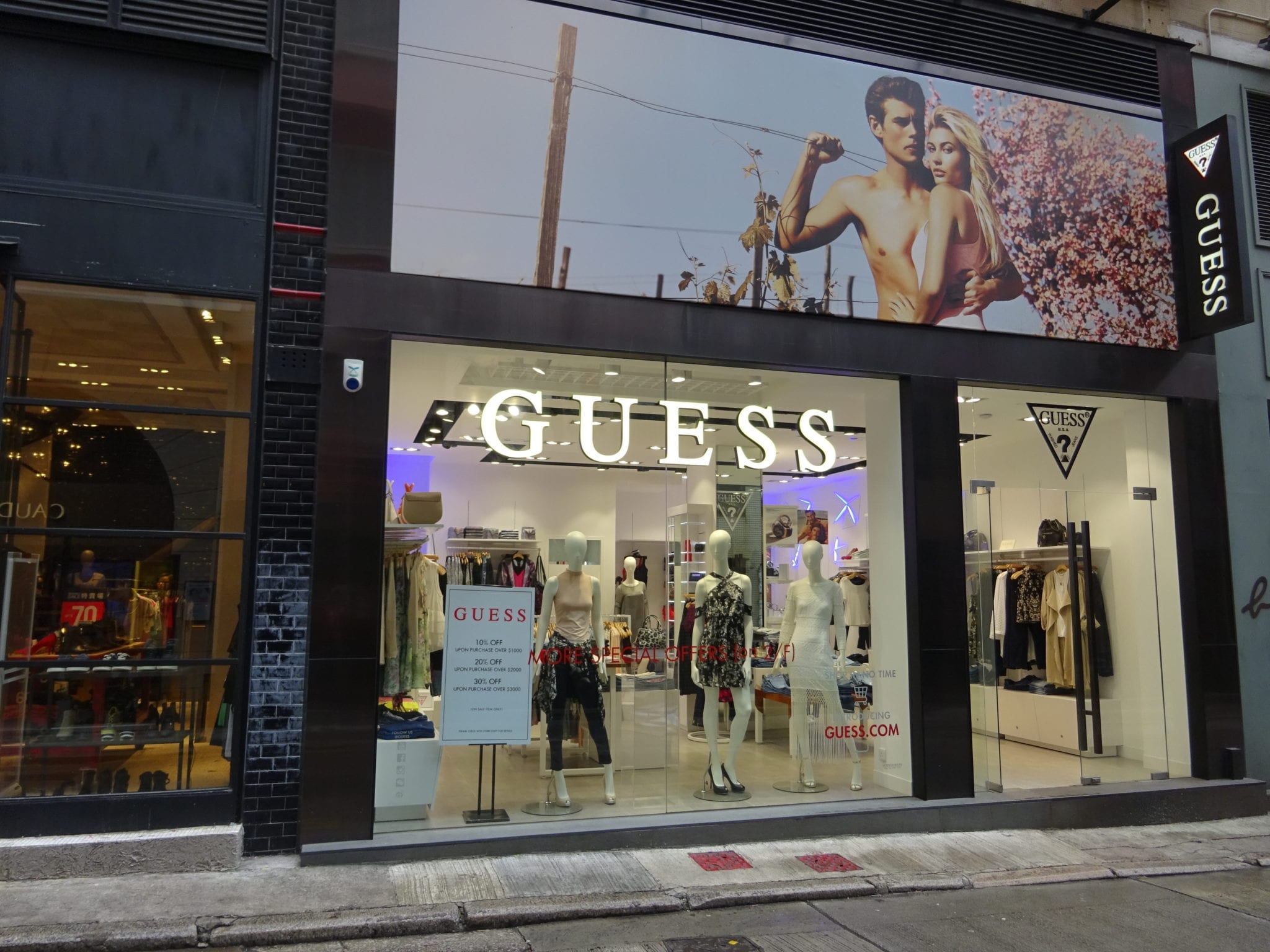
    Iconic American fashion brand Guess Inc. announced that its chief executive officer and director, Victor Herrero, is leaving the company effective February 2, 2019. Carlos Alberini, who served as Guess’s president and chief operating officer more than ten years ago, will replace Herrero.

    “On behalf of the Board of Directors, I want to thank Victor for his contributions during his tenure and wish him well in his endeavors,” said Maurice Marciano, chairman of the board.

    Alberini has been appointed as the new CEO and a Director of the company, “effective upon his separation from his current employer,” said Guess in a press release detailing the new hire on January 28.

    Alberini served as COO for the Californian company from 2000 to 2010. He was co-CEO of Restoration Hardware until 2014, and a director on the board of Restoration Hardware from 2010 until present.

    More recently, Alberini has been the Chairman and CEO of Lucky Brand, a role he took on from 2014.

    “I am very excited to have Carlos coming back as CEO at Guess. He was instrumental in building the international business in Europe and Asia during his 10-year tenure with the company,” said Maurice Marciano.

    The company also announced that Marciano has agreed to remain as Chief Creative Officer. His employment will be “at will”, according to Guess.
    During the transition, Marciano will be acting as interim Chief Executive Officer.

    In 2017-2018 financial year, Guess witnessed a steady growth track in Asia, notably in China.

    In March last year, the brand said it planned to open 60 stores in Asia, after also opening its first subsidiary in Singapore.

    In same financial year, the group said it improved its gross margin in Asia by 470 base points, with sales up 40 percent.